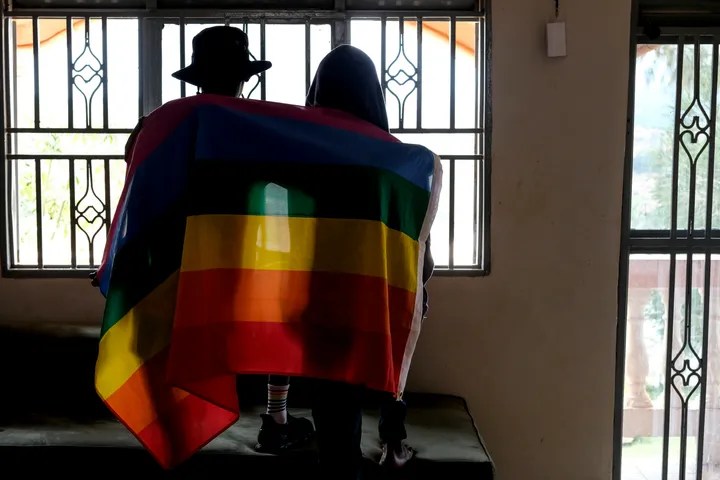
2025 LGBTQ rights update: African activists resist growing repression

Read more at Erasing 76 Crimes.

North Africa

Morocco: Morocco has been under a long-term project to revise its legal system, and this year published reforms to the code of criminal procedure that ought to at least make the justice system more fair and limit pre-trial detention. Then again, we’ve also heard reports this year of continued crackdowns on queer people for pro-LGBT expression on the internet. [See “Coalition demands release of Morocco LGBT activist after 100 days in prison” (November 2025)]

Morocco also intends to revise its penal code, and some campaigners have been pushing to delete its sodomy and extramarital sex provisions when that happens, but no progress was made this year. I think the likelihood Morocco actually deletes its sodomy law is very slim.

Meanwhile, in October, the UN Security Council backed Morocco’s plan to resolve the dispute over the Western Sahara/Sahrawi Arab Democratic Republic, which would make it autonomous under Moroccan rule. The UN called on both sides to negotiate an actual settlement, but this seems like a big step toward eliminating an entire country from the map (which would decrease by one the number of states that criminalize homosexuality).

Tunisia: Multiple mass arrests of queer people were reported this year. [For example, “Tunisia steps up anti-LGBTI crackdown with wave of arrests” (February 2025), “Queer people suffer double punishment in Tunisian prisons” (June 2025),  “Tunisia and Malaysia arrest dozens of queer people in escalating crackdowns” (July 2025), and “More than 70 arrested in Tunisia’s anti-LGBT crackdown” (November 2025).]

Chad: The government launched a commission on reinstating the death penalty, which was abolished in 2020.

West Africa

Burkina Faso, Mali and Niger: These three states run by military juntas following coups over the past half-decade took steps to deepen their integration into the Alliance of Sahel States (yes, the ASS), which is something between a supranational organization and a proto-state in its own right. They all withdrew from the Economic Community of West African States (ECOWAS), and they announced their intention to withdraw from the International Criminal Court. The states are motivated in part by antipathy to France and the West, Islamic faith, and support for and from Russia, all of which is exemplified in their pursuit of anti-LGBT policies.

Mali criminalized gay sex and promoting homosexuality in 2024, and Burkina Faso followed up in 2025. Niger has promised to enact a similar law but has not done so yet. Notably, as former French colonies, none previously had a sodomy law on the books.

Burkina Faso is also considering reinstating the death penalty as it overhauls its penal code, which ought to be a worrying sign. The new code also includes a crime of “promotion of homosexual practices and similar acts.”

Niger held a national conference that voted to extend the junta’s rule by five years and also to oppose any effort to legalize same-sex marriage.

Worryingly, some other neighbors, Chad and Togo (which both criminalize gay sex) have publicly mused about joined the ASS and have even taken some steps to integrate with them.

Of course, if the ASS ever does replace these three to five states, it would at least reduce the number of criminalizing states on the chart.

Ghana: A draconian anti-LGBTQ bill modelled after Uganda’s Anti-Homosexuality Act was reintroduced to parliament after a previous version lapsed without the president’s signature before the end of the term. This one is sponsored by a group of opposition MPs, but the government has said it intends to introduce its own version at some point. The current president has strongly suggested he will sign it.

Ghana also ratified the Treaty on the Prohibition of Nuclear Weapons.

The Trump administration used Ghana and Togo as places to deport asylum seekers, including at least one who was seeking asylum due to his sexual orientation.

The constitution review committee proposed an amendment to specifically bar the use of the death penalty. Ghana abolished the penalty in 2023 for ordinary crimes only, and the repeal was not retroactive, so those on death row still face execution.

Liberia: The government undertook a review of its laws for gender discriminatory effects – particularly around marriage, citizenship, rape, and children’s rights – but the review did not take sexual orientation or gender identity into account. I haven’t heard of further action being taken on this file.

The government intervened in the United Methodist Church over its support of same-sex marriage, including a senate investigation and even police detention. The local church has made clear its opposition to same-sex marriage.

A lawmaker was removed from a session of parliament after he disruptively attempted to introduce an anti-LGBT bill that would have imposed criminal penalties on same-sex marriage. Watch out for this to come back.

Nigeria: In a climate of regular violence against queer people, the governor of Kano state submitted a bill to the legislature to criminalize same-sex marriage. It’s already criminalized federally.

The senate was also considering a bill to expand the use of the death penalty.

Senegal: The government forced the UN and the Dutch embassy to cancel a planned film screening and discussion of LGBT issues. [Dozens of LGBTI Senegalese were arrested in police crackdowns as 2025 drew to a close.]

Cameroon: Erasing 76 Crimes reported on numerous cases of men being jailed for homosexuality. The government also accused the country’s most prominent human rights lawyer of money laundering and terrorism.

Gabon: A constitutional ban on same-sex marriage, passed in 2024, took effect in 2025.

Eastern Africa

Kenya: In August, the high court directed the government to protect transgender peoples’ rights, including recognition of their chosen gender and dignified treatment in government custody. The court ordered the government enact a specific Transgender Protection Rights Act or add amendments to that effect to the Intersex Persons Act.

Meanwhile, an MP vowed to bring forward a bill to criminalize LGBTQ advocacy, but he hasn’t done so yet. Parliament was also considering a bill to abolish the death penalty.

Uganda: The World Bank has ended its suspension of lending to Uganda, which was imposed in 2023 after the passage of the Anti-Homosexuality Act. The Bank now claims it has put in place mitigation measures to ensure its funds won’t be used to discriminate, which, frankly doesn’t make a lot of sense.

Erasing 76 Crimes filed multiple reports on attacks and human rights violations against queer Ugandans during 2025

Tanzania: The government has announced it is moving forward with toughening existing criminal laws banning same-sex intercourse to further ban same-sex relationships and marriages, but I haven’t actually seen legislation come forward yet.

Rwanda: Parliament passed a new health care law that specifically excludes same-sex couples from accessing surrogacy and assisted reproduction.

Mauritius: The UK and Mauritius finalized and published a treaty on the handover of the British Indian Ocean Territory, with the UK maintaining sovereignty over the military base on Diego Garcia. While the treaty hasn’t yet been ratified, once it does the BIOT will cease to exist as a separate jurisdiction where same-sex marriage is legal – unless the UK recreates it in some form to cover Diego Garcia only.

Comoros: Joined the Biological Weapons Convention.

Eritrea: Ratified the Convention on the Rights of Persons with Disabilities.

Southern Africa

Botswana: A lesbian couple filed a constitutional challenge seeking the right to marry, saying the current ban violates various sections of the constitution guaranteeing the right to equality. The high court struck down Botswana’s sodomy law in 2019, in part after finding that the constitutional prohibition on sex discrimination included sexual orientation discrimination, a decision that was upheld by the court of appeal in 2021.

Namibia: We’re still waiting on a ruling from the supreme court on the government’s appeal of 2024’s lower court decision decriminalizing sodomy.

The former president officially vetoed a bill that aimed to criminalize same-sex marriage and LGBT advocacy before leaving office (he signed a different bill late in 2024 that banned same-sex marriage, however). His successor – the country’s first female president – says she’ll fight for equality for everyone but has avoided saying anything about LGBT people. Meanwhile, Equal Namibia was seeking couples who want to challenge the country’s ban on same-sex marriage.

South Africa: The government continued to work on a unified marriage act which will combine several marriage laws for different religious communities and the same-sex Civil Union Act into a single law. It has not yet cleared parliament.

Eswatini: The leading LGBT advocacy group Eswatini Sexual and Gender Minorities went back to court to challenge the government’s decision to deny them a company registration. The supreme court had ordered the government to reconsider their application back in 2023, but the minister’s decision remained the same.

Malawi: The Minister of Justice said the country is committed to abolishing the death penalty, having already completed public consultations, but no bill has been brought forward yet.

Zambia: The constitutional court dismissed a challenge to the country’s sodomy laws, ruling that the court lacked jurisdiction as the challenge needed to be filed before the country’s high court first. The Zambia Civil Liberties Union says they will refile the case.

Zimbabwe: In July, the government launched a legal reform process to recognize the rights of intersex people. We’ll see what comes of this.

The ruling party’s national conference also vowed to intensify and enforce laws banning homosexuality in late 2024, though no new legislation has been put forward.
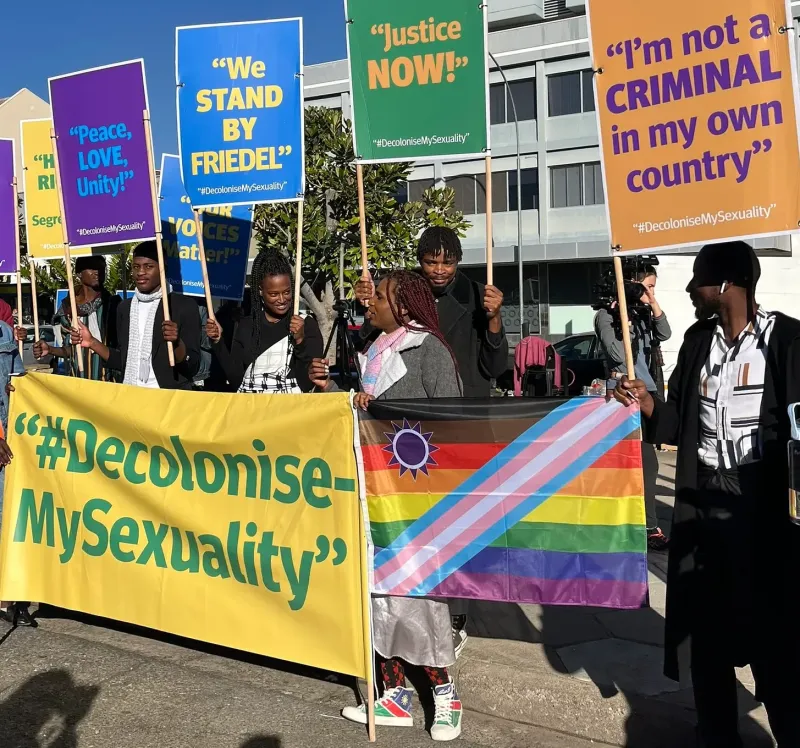
New bill would send people to prison for 10 years for identifying as LGBTQ+ in Uganda

Read more at LGBTQ Nation.

Not content with holding title to one of the harshest anti-LGBTQ+ laws in the world, Uganda’s parliament is considering a bill that would outlaw identifying as lesbian, gay, bisexual, transgender, or queer.

The country’s Anti-Homosexuality Act, passed in 2023, already provides a sentence of life in prison for gay men who have sexual relations, and in extenuating circumstances, even death.

The new measure would criminalize Ugandans for simply saying they’re anything but straight.

Among more than 30 African nations that ban same-sex relations, the proposed law would be the first to criminalize just identifying as LGBTQ+, according to Human Rights Watch.

The proposed law was introduced with the goal of combating “threats to the traditional, heterosexual family,” according to a copy shared with Reuters

In an awkward mashup of identifying prohibitions, language in the bill echoes executive orders issued by the U.S. president in his crusade against the transgender community.

The measure mandates punishment of up to 10 years in prison for any person who “holds out as a lesbian, gay, transgender, a queer or any other sexual or gender identity that is contrary to the binary categories of male and female.”

The bill also criminalizes the “promotion” of homosexuality and “abetting” and “conspiring” to engage in same-sex relations.

Much of the bill’s content is revived from the original “Kill the Gays” law, passed in 2013 but overturned by Uganda’s high court on technical grounds.

That law criminalized lesbianism.

“One of the most extreme features of this new bill is that it criminalizes people simply for being who they are as well as further infringing on the rights to privacy, and freedoms of expression and association that are already compromised in Uganda,” said Oryem Nyeko, Uganda researcher at Human Rights Watch.

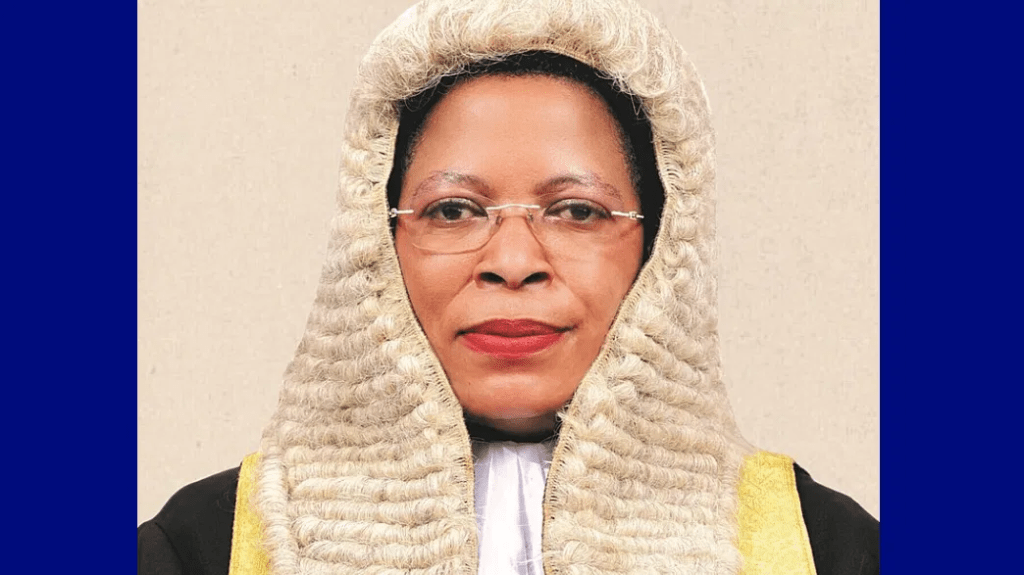
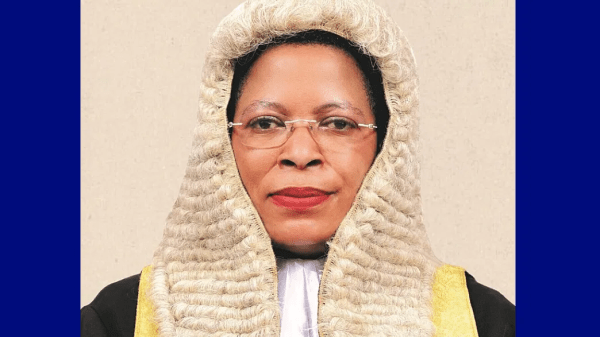
Speaker of the Parliament Anita Among, the rabidly homophobic lawmaker who helped usher the Anti-Homosexuality Act into law, sent the new bill to committee for debate and public hearings after it was read to legislators.  

Among urged fellow lawmakers to reject intimidation, referencing threats by Western countries to impose travel bans on those responsible for the legislation.

“This business of intimidating that ‘you will not go to America,’ what is America?” she asked.

Ugandan lawmakers, the speaker prominent among them, have for years warned of “degenerate Western values” threatening Ugandan families and sovereignty.

Among was urged on in her anti-Western pose by Russia’s ambassador to Uganda, who encouraged her to fast-track the “Kill the Gays” law through parliament in 2023. It passed overwhelmingly and was cheered by lawmakers.

“This is the time you are going to show us whether you’re a homo or you’re not,” Among told the packed chamber.

A major LGBTQ+ activist was brutally stabbed & Uganda’s anti-gay law is to blame

This blog originally appeared at LGBTQ Nation.

Police treated the activist as a criminal, raiding his home while he was still recovering in search of evidence to prove he was gay.

The resurgence of anti-LGBTQ+ bills and draconian laws in Africa has led to a surge of homophobic attacks across the continent, further endangering LGBTQ+ people whose lives were already at risk.

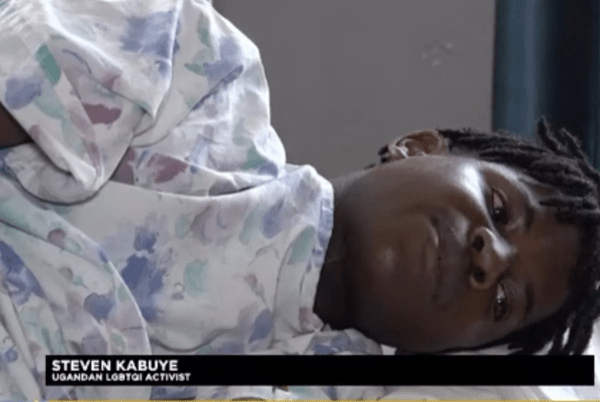
These anti-LGBTQ+ laws not only criminalize same-sex relationships but also systematically target LGBTQ+ activists. Steven Kabuye, a prominent Ugandan LGBTQ+ rights activist, was recently stabbed and left for dead outside his home by two men on a motorcycle who had been following him for a number of days. Graphic video footage shared on X shows Kabuye writhing in pain, a visible laceration stretched across his arm and a knife embedded in his abdomen.

Kabuye, an activist and editor of Coloured Voices Media Foundation-Truth to LGBTQ Uganda, was ambushed on his way to work. His helmet-wearing assailants swung the knife at him, aiming at his neck, which he shields with his right arm in the video. As he attempted to flee, the attackers chased him and stabbed him in the stomach. Kabuye was discovered by residents and taken to a nearby hospital for emergency surgery.

Uganda’s president, Yoweri Museveni, recently signed into law one of the most severe anti-gay bills in the world. The Anti-Homosexuality Act of 2023 stipulates long prison sentences and capital punishments for “aggravated homosexuality.” It has also intensified homophobic sentiment nationwide. A surge in attacks and arrests has been reported all over the country since the signing of the law. LGBTQ+ rights activists said the bill has led to a rise in abuse, including torture, rape, and evictions, against LGBTQ+ Ugandans by private citizens.

Kabuye, who is still recovering, disclosed on X that he’s already been harassed by the police since the attack. He said they forcefully entered his house searching for lubricants, rainbow flags, or any other incriminating items they could use as evidence to charge him under the Anti-Homosexuality Act. He said he believes the failed attempt on his life was a planned assassination.

A similar incident happened in 2011 in the tragic story of David Kato, a Ugandan teacher and LGBTQ+ rights activist. Considered a father of Uganda’s gay rights movement, Kato was murdered in cold blood after winning a court victory over a tabloid that called for homosexuals to be killed.

Kabuye went on to reveal that after being denied entry into his home, police arrested his flatmate and tortured and threatened him with forced anal examinations in a bid to get him to confess that he and Steven were lovers – at the same time asking him to stop the international community from putting pressure on them or he would be falsely charged with attempted murder.

Kabuye wrote on X, “When they came to get a statement from me, they kept on asking me questions like, ‘Who sponsors you?, How and when did you become gay? Have you ever engaged in any sexual activities with any man?’ Questions unrelated to the case at hand. They just didn’t want to accept it was a hate crime or an attempted murder/assassination.”

Another LGBTQ+ activist, Ronald Agaba, who has been speaking up and demanding justice for Kabuye, said the Ugandan police are trying to cover up the crime and are busy blaming the victim. He went on to post screenshots of the death threats he’s been receiving since he spoke up.

“Police won’t help you. Uganda is not for homosexuals” one X user said. 

“Look at this Gay, run for your life in Uganda because we’re killing the so-called LGBTQ,” another added.

Other victims around the country include Arianna, a transgender woman who was falsely accused in a viral TikTok video of forcing young men to take hormones. She came home after shopping one day to find an angry mob gathered outside her front door. “When they saw me, they started grabbing me and shouting that I needed to die,” she told The Guardian. “The only thing I remember next was waking up in a hospital.”

The new law also targets activists with 20 years of imprisonment for promoting homosexuality, leading to a crackdown on human rights organizations and the criminalization of any LGBTQ+ advocacy. A Ugandan MP, Hon. Cecilia Ogwal, who was one of the 387 members of Uganda Parliament to support the Anti-Homosexuality Act, called LGBTQ+ advocates “A force from the bottom of Hell” and urged Ugandans to “destroy” these LGBTQ+ forces.

Jane, a 24-year-old Ugandan activist, told LGBTQ Nation she is scared for her life and has been in hiding. “I’ve been receiving death threats online lately. One person promised to hunt me down, rape me, and slit my neck “ she said. “The disheartening part about this is that I can’t even report this to the police. The police are even the ones terrorizing us and encouraging this behavior.”

LGBTQ+ activists and campaigners in Africa have made no secret of their stance and how they feel about the new law. A petition was filed in the Constitutional Court to challenge it, but it’s uncertain if there will be a positive outcome. Court hearings began last month, but no ruling has been made yet.

Among the people to file the petition were the only two MPs who voted against the bill, Fox Odoi-Oywelowo and Paul Kwizera Bucyana, as well as prominent rights activists Pepe Onziema and Frank Mugisha. Additional petitions were filed by the Ugandan Human Rights Awareness and Promotion Forum and a host of international groups.

Activist Jackline Kemigisa wrote in OpenDemocracy that she joined the petition “because the law’s vaguely defined offense of ‘promotion of homosexuality’” endangers her “work and freedom as a journalist and researcher covering queer and feminist movements in Uganda.”

“Should my work, in which I write about minority communities with fairness and dignity, be deemed ‘promotion of homosexuality’ under Section 11 of the new law, I would face up to 20 years in prison,” she said.

Another Ugandan activist, Kira, explained how the new law has changed her life. “Uganda has always been homophobic,” she told LGBTQ Nation, “but since this new bill was signed things have changed. Prior to the new law, getting catcalled was the worst thing that could happen to you in public as people rarely attack you unprovoked. But the new law has emboldened them.”

“They publicly attack us now based on perception, some of them even go as far as stalking and ambushing us in our homes. Being a masculine-presenting woman, I’m scared to go out in public these days because not being traditionally feminine enough could possibly get me killed. We almost lost a friend last month after he was beaten up by a mob in the market for his feminine mannerisms.”

According to Reuters, Uganda’s Constitutional Court began hearing a challenge on December 18th that says the law violates constitutionally protected rights. A panel of five judges told the petitioners they would be notified when a ruling was reached.

“To be honest I don’t have any faith in our judiciary or this entire case having a positive outcome,” John Mukasa, a queer rights activist and medical officer living in Uganda told LGBTQ Nation. “Homosexuality is a very controversial subject in Africa and homophobia has eaten deeply into our society.”

“Our politicians are exploiting this hate for their own benefit in the disguise of protecting African cultures and would continue to do so no matter the cost. Uganda has a myriad of problems from insecurity to multidimensional poverty and hunger, these anti-laws are just being used to distract people from the problems that actually matter.”

This set of laws was pushed by American Evangelical ministers

Uganda Signs Tough Anti-Gay Law, With Death Penalty In Some Cases

This blog originally appeared at Huff Post.

The legislation has been widely condemned by rights activists and others abroad.

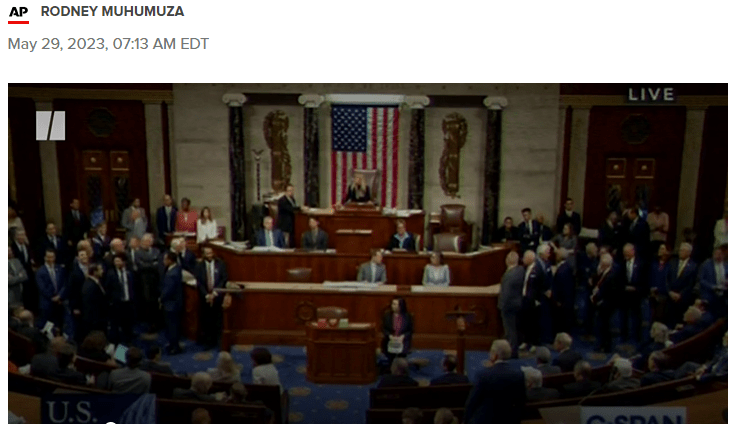
KAMPALA, Uganda (AP) — Uganda’s president has signed into law tough new anti-gay legislation supported by many in this East African country but widely condemned by rights activists and others abroad.

The statement refers to the signing of a bill by President Yoweri Museveni in Uganda. The bill mentioned in the statement is not specified, but based on the context, it appears to be referring to an anti-gay legislation that was signed into law in Uganda in the past. The specific details and provisions of the bill would need to be clarified for further information. However, it is mentioned that the version signed by President Museveni did not criminalize individuals based on their LGBTQ+ identity, which was a concern expressed by campaigners who opposed an earlier draft of the legislation. It is important to note that laws and their specific provisions can change over time, so it’s recommended to refer to the latest information or news sources for the most accurate and up-to-date details.

CLICK HERE TO SEE FULL BLOG: https://www.huffpost.com/entry/uganda-anti-gay-law_n_647487e9e4b0b4444c7a49b8

Uganda Signs Tough Anti-Gay Law, With Death Penalty In Some Cases

This blog originally appeared at Huff Post.

The legislation has been widely condemned by rights activists and others abroad.

In Kampala, Uganda, President Yoweri Museveni has signed a new anti-gay legislation into law, receiving support from many within the country but facing strong condemnation from rights activists and others internationally.

The final version of the law does not criminalize individuals based on their LGBTQ identity, addressing a key concern raised by campaigners. The earlier draft of the legislation was widely criticized for its severe violation of human rights.

While the specific details of the new law are not provided, it is important to note that Uganda has a history of enacting legislation that targets the LGBTQ community, which has faced significant discrimination and persecution in the country.

The signing of this law has sparked renewed discussions and debates surrounding human rights, LGBTQ rights, and the treatment of marginalized communities in Uganda and globally. International organizations and activists continue to advocate for the protection of human rights and the promotion of equality and inclusivity for all individuals, regardless of their sexual orientation or gender identity.

But the new law still prescribes the death penalty for “aggravated homosexuality,” which is defined as cases of sexual relations involving people infected with HIV as well as with minors and other categories of vulnerable people. A suspect convicted of “attempted aggravated homosexuality” can be imprisoned for up to 14 years, according to the legislation.

Uganda’s president Yoweri Museveni has signed into law tough new anti-gay legislation supported by many in the country but widely condemned by rights activists and others abroad.

Parliamentary Speaker Anita Among said in a statement that the president had “answered the cries of our people” in signing the bill.

“With a lot of humility, I thank my colleagues the Members of Parliament for withstanding all the pressure from bullies and doomsday conspiracy theorists in the interest of our country,” the statement said.

CLICK HERE TO SEE FULL BLOG: https://www.huffpost.com/entry/uganda-anti-gay-law_n_647487e9e4b0b4444c7a49b8

Blog at WordPress.com.

Up ↑