SAN ANTONIO NEWS: Congressman Chip Roy of San Antonio expresses desire to ‘ethnic cleanse’ white progressives

This blog originally appeared at SAN ANTONIO CURRENT.

In a tweet defending Donald Trump’s plan to deport 20 million migrants, Roy said he wants to deport “white progressive Democrats – with a special bonus for rich ones with an Ivy League degree.”
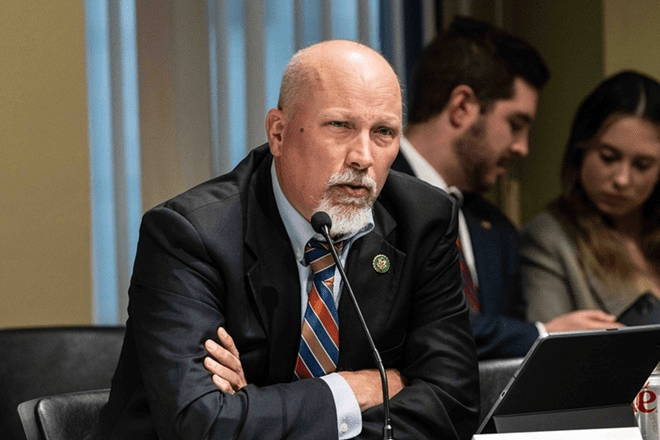
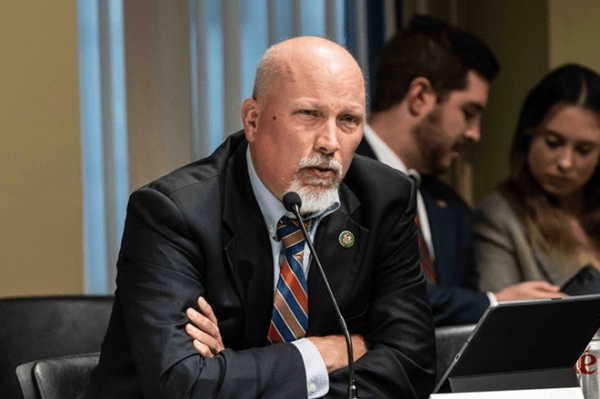
U.S. Rep. Chip Roy, a Republican representing a district covering parts of North San Antonio, advocated for the removal of progressives in a recent tirade posted on social media platform X.

The GOP congressman, known for his provocative remarks in politics, tweeted in support of Trump’s proposal to deport approximately 20 million migrants if elected president. Critics on social media have likened Trump’s plan to ethnic cleansing.

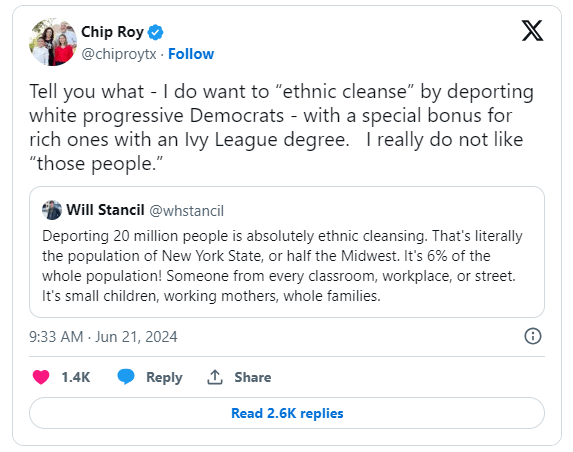
“I’ll tell you what – I do support ‘ethnic cleansing’ by deporting white progressive Democrats, especially those with Ivy League degrees and wealth,” Roy tweeted. “I have strong feelings about ‘those individuals.’
For context, Roy holds a bachelor’s degree from the University of Virginia and a law degree from the University of Texas at Austin—both prestigious institutions, though not Ivy League.

Roy’s remark was prompted by a tweet from Will Stancil, an attorney and research fellow at the Institute of Metropolitan Opportunity in Minneapolis, criticizing Trump’s deportation proposal.

“Deporting 20 million people is tantamount to ethnic cleansing,” Stancil tweeted. “That’s roughly the population of New York State or half of the Midwest. It represents 6% of the entire population—a person from every classroom, workplace, or street. It includes small children, working mothers, and entire families.”

While scholars have debated the definition of ethnic cleansing, it generally denotes the forced expulsion of a particular ethnic group or minority. Surprisingly, it is not recognized as an independent crime under international law, as per the United Nations.

Ethnic cleansing differs from genocide, which involves the systematic extermination of a specific ethnic group and constitutes a clear violation of international law.

Regardless, a remark suggesting “ethnic cleansing” by a sitting U.S. Congressman — even if intended humorously — sparked outrage on social media.

“Disgusting and racist! Shame on you!” tweeted user @DavidSmuts in response to Roy.

“Congressman, being so divisive all the time is harmful,” added user @isaiahmartin.

San Antonio U.S. Rep. Chip Roy Faces Backlash After Controversial “Ethnic Cleansing” Remark

In a tweet defending Donald Trump’s proposed deportation of 20 million migrants, U.S. Rep. Chip Roy, whose district covers parts of North San Antonio, sparked outrage with a call to “cleanse” progressives.

The GOP congressman, known for his provocative political style, tweeted in support of Trump’s deportation plans, which some critics on social media have likened to ethnic cleansing.

“Tell you what – I do want to ‘ethnic cleanse’ by deporting white progressive Democrats – with a special bonus for rich ones with an Ivy League degree,” Roy tweeted. “I really do not like ‘those people.'”

For the record, Roy holds degrees from the University of Virginia and the University of Texas at Austin, prestigious institutions though not Ivy League.

Roy’s comment was prompted by a tweet from Will Stancil, an attorney and research fellow at the Institute of Metropolitan Opportunity in Minneapolis, who strongly criticized Trump’s deportation proposal.

“Deporting 20 million people is absolutely ethnic cleansing,” Stancil wrote. “That’s literally the population of New York State, or half of the Midwest. It’s 6% of the whole population! Someone from every classroom, workplace, or street. It includes small children, working mothers, and whole families.”

While scholars debate the term “ethnic cleansing,” it generally refers to the forced removal of a specific ethnic group or minority and is not recognized as a standalone crime under international law by the United Nations. This differs from genocide, which involves the systematic extermination of an ethnic group and is a clear violation of international law.

Regardless, Roy’s reference to “ethnic cleansing”—even if intended humorously—prompted strong reactions on social media.

“Disgusting racist! Shame on you!” tweeted user @DavidSmuts in response to Roy.

“Congressman, being so divisive all the time isn’t healthy,” added user @isaiahmartin.

Some voices, however, supported Roy’s statement.

“We’re with you brother,” commented user @chrischownyk. “It’s time to take back our constitutional republic.”

This isn’t the first time Roy—a former chief of staff to U.S. Sen. Ted Cruz—has stirred controversy with outspoken remarks. Recently, he warned on the House Floor that Biden administration immigration policies could lead to the imposition of “Sharia Law” on Americans. In 2020, during Passover, Roy compared COVID stay-at-home orders to actions in “Nazi Germany” on a conservative talk show.

Roy faces reelection in November amid continued scrutiny of his outspoken style and controversial statements.
https://www.sacurrent.com/news/san-antonio-us-rep-chip-roy-says-he-wants-to-ethnic-cleanse-white-progressives-34866152?fbclid=IwZXh0bgNhZW0CMTEAAR3bvjHdw7qF15uDNa7j14-N_Q1GkhA5baF-poNCLLuAM4vaaLwXse2lci4_aem_WChhV_-hkbj4MMC9RQnFnQ&sfnsn=mo

SCOTUS Declines to Weigh in on Trans Students’ Bathroom Access Case | Them

This blog originally appeared at THEM.

A lower court ruling in favor of trans students will stand.

The Supreme Court has opted not to intervene in the ongoing dispute over transgender students’ rights to use bathrooms that match their gender identities. On Tuesday, the court declined an appeal from an Indiana school district seeking to overturn a ruling that required the district to permit trans boys to use the appropriate facilities.

In effect, this decision upholds a Seventh U.S. Circuit Court of Appeals ruling in favor of transgender students, requiring the Metropolitan School District in the Indianapolis suburb of Martinsville to continue allowing trans-inclusive restroom access.

The ACLU of Indiana initially filed a lawsuit in December 2021 on behalf of A.C., an anonymous transgender middle school student, and his parents. A.C. was required to use the girls’ restrooms or the single-person restroom in the nurse’s office, which was far from his classes. The ACLU of Indiana argued that these policies were unconstitutional, violating both the Fourteenth Amendment’s Equal Protection Clause and Title IX.

In April 2022, the plaintiffs were granted a preliminary injunction when a district court ruled to block the policy for the duration of the case. By August 2023, the Seventh Circuit ruled in favor of A.C., finding that the policies preventing him from using the boys’ restroom were indeed unconstitutional.

As The Hill noted, the Supreme Court has largely avoided directly weighing in on cases involving protections for trans youth, which often allows progressive lower court rulings to remain in place. In 2021, the Court declined to review a similar case in Virginia. Gavin Grimm, also represented by the ACLU, filed suit against his school district in 2015 after being required to use the girls’ restroom or the nurse’s bathroom. An appellate court found this policy unconstitutional in 2020, and the Supreme Court’s refusal to hear the case allowed that decision to stand.

Kenneth Falk, legal director of the ACLU of Indiana, expressed gratitude, stating that the organization was “thankful the Court allowed this momentous victory for the transgender youth of Indiana to stand.”

“In essence, this case is about safeguarding the fundamental right of every student to access a safe and inclusive learning environment. The policy at its core undermines the freedom of transgender youth to express their true selves,” Falk expressed in a press release. “We are committed to ongoing advocacy for transgender individuals and their families, standing firm wherever their legal equality is questioned.”

Kelley Robinson, President of the Human Rights Campaign, hailed the decision as a step in the right direction but stressed the ongoing need for further measures to safeguard transgender youth.

Robinson emphasized the universal importance of treating every child with kindness and respect, underscoring that while the decision is a positive affirmation of transgender students’ rights, significant efforts are still required to ensure comprehensive protection for all.

Beyond Horizons: Crafting and Expanding Your Global Venture

Beyond Horizons: Crafting and Expanding Your Global Venture


Building and expanding an international business involves more than just selling homes; it requires strategic vision, partnerships, and effective marketing.

Nick Fong, a U.S.-born entrepreneur, has achieved tremendous success in Mexico through strategic moves, such as collaborating with developers, leveraging online lead generation, and utilizing AI for optimal search results. As the top-performing agent in all of Baja, Nick manages eight offices and leads a team of 92 agents, catering to a diverse clientele.

In this podcast episode, I delve into Nick’s journey of scaling an international business and provide insights on how you can embark on a similar path.

If you’ve ever envisioned starting, diversifying, or expanding an international business, this episode is a must-listen for valuable tips and inspiration.

Pharmacies are allegedly disclosing private data to law enforcement without a warrant, according to lawmakers.

Democrats argue that it could aid prosecutors in states with strict abortion restrictions or bans.

Pharmacies disclose prescription records to law enforcement.

Lawmakers reveal that Americans’ prescription drug records are being shared with law enforcement without customer consent or a judge’s warrant in certain instances.


Democrats express concern over the disclosure, fearing that the policies of prominent retail pharmacy chains, permitted under federal regulations, might aid prosecutors in states with abortion restrictions to pursue individuals assisting women traveling for abortion procedures.


Lawmakers are urging Health and Human Services Secretary Xavier Becerra to enhance regulations, proposing that pharmacies should only disclose medical records to investigators upon judicial approval, seeking tighter control over the release of such sensitive information.


HHS has announced its efforts to finalize a rule that would reinforce current privacy regulations, especially safeguarding records linked to reproductive health.


“In our discussions with major pharmacies, it became evident that law enforcement agencies annually acquire the prescription records of numerous Americans in a clandestine manner, lacking a warrant,” they stated. “In numerous instances, pharmacies are disclosing confidential medical records without scrutiny by legal authorities. Despite the legal permission for pharmacies to notify customers about government requests for their data, most opt not to do so.”

Containers of abortion medications mifepristone (left) and misoprostol (right) at a clinic in Des Moines, Iowa, on September 22, 2010.


A letter, initially reported by The Washington Post, comes after an extensive congressional inquiry by Democrats into medical privacy following the U.S. Supreme Court’s decision to overturn Roe vs. Wade. It was endorsed by Senate Commerce Committee Chairman Ron Wyden, D-Oregon, and Democratic Representatives Pramila Jayapal of Washington and Sara Jacobs of California.


Pharmacies cited in the letter assert compliance with privacy laws and federal health regulations, which presently don’t necessitate a warrant signed by a judge. Frequently, law enforcement provides subpoenas endorsed by a government agency but not subjected to judicial review.

The CVS Pharmacy logo is visible on the building in Los Angeles, dated November 13, 2023.

CVS Health, one of the mentioned pharmacies, has proposed that regulators consider requiring a warrant or judge-issued subpoena. The company emphasizes that it depends on a legal team to ensure that all requests comply with the law.


“By law, we are obligated to keep most investigative requests from regulatory agencies and law enforcement confidential,” CVS stated in a response to ABC News. “For requests without a confidentiality directive, we assess on a case-by-case basis whether it is appropriate to inform the individual who is the subject of the request.”


According to the letter addressed to Becerra, pharmacies are contending with tens of thousands of requests annually, predominantly linked to civil litigation rather than criminal cases.


The matter is expected to gain heightened importance for Democrats as states continue to grapple with differing perspectives on abortion access, with some jurisdictions enacting laws targeting what they term “abortion trafficking,” or aiding a woman in traveling out of state for an abortion.

A generic image representing a medical prescription.


Federal regulations permit the prescription of mifepristone for patients up to 10 weeks of gestation, allowing them to pick it up at a local pharmacy under specific guidelines. Although the patient must be in a state where abortion is legal to obtain the drug, pharmacy access has helped abortion providers in states like California, Colorado, and Illinois serve more patients through virtual clinics.


Anti-abortion rights groups have filed lawsuits in an attempt to remove mifepristone from the market. The Supreme Court recently agreed to hear the case, with a likely ruling expected by next summer.


Lawmakers and privacy experts are concerned that large pharmacy chains, with access to a person’s medical records across multiple states, could be exploited by prosecutors seeking to target individuals assisting women in traveling for abortions.


Lawmakers are urging the Biden administration to mandate, under the Health Insurance Portability and Accountability Act (HIPAA), that pharmacies require a warrant before sharing sensitive information. They also advocate for notifying customers, unless a judge deems it would impede an investigation.


Forty-four out of 50 US states exacerbate inequality with ‘upside-down’ taxes.

Recent studies reveal that the poorest fifth of households pay, on average, a tax rate 60% higher than the top 1% of households.

An analysis has determined that 44 out of the 50 US states contribute to inequality by imposing a lower share of income taxes on the wealthy compared to lower-income individuals.

The latest research reveals that state and local tax systems are ‘upside-down,’ with inadequate or absent personal income taxes in several states enabling wealthier Americans to evade taxes. This imbalance is exacerbated by a dependence on regressive sales and excise taxes, which disproportionately affect lower-income individuals.

When surveying public opinion on a fair tax code, the consensus is overwhelmingly against the idea that the wealthiest should pay the least,” remarked Carl Davis, Research Director of the Institute on Taxation and Economic Policy (ITEP), the organization behind the analysis.


“But despite this public sentiment, a significant disparity exists between what citizens desire and the tax systems currently in place in most states. It’s a concerning mismatch between public preferences and the actions taken by state legislators,” highlighted Carl Davis, Research Director of the Institute on Taxation and Economic Policy (ITEP).


“Out of the 50 states, along with the District of Columbia, merely six states boast tax systems designed to alleviate rather than exacerbate inequality. On average, the poorest fifth of individuals face a tax rate 60% higher than the top 1% of households in the majority of states,” emphasized the report.


“The ultra-wealthy receive notably favorable treatment from the tax system, with the top 1% contributing less than any other income group in 42 states. Additionally, in 36 states, the most impoverished residents are subjected to a higher tax rate than any other demographic,” highlighted the analysis.

Ranked in order of regressive taxation, the states with the most inequitable tax systems are Florida, Washington, Tennessee, Pennsylvania, and Nevada. Conversely, the least regressive jurisdictions are the District of Columbia, Minnesota, Vermont, New York, and California.

State-level policies, including tax cuts benefiting the affluent under the guise of stimulating economic activity, have exacerbated this issue, according to the report. In recent decades, inequality in the US has surpassed that of comparable countries. While certain pandemic-era measures, like a child tax credit, temporarily alleviated the burden on the poorest, many of these interventions have expired.


“But we know this doesn’t have to be the case,” stated Aidan Davis, ITEP’s state policy director.


“There’s a clear path to reverse regressive tax systems, and we’ve seen several states come close to achieving it. The regressive state tax laws we witness today are a deliberate policy choice, and it’s evident that lawmakers have better options available,” expressed Aidan Davis, ITEP’s state policy director.

This article was updated on January 11, 2024. Due to inaccurate information provided to us, an earlier version incorrectly listed New Jersey as the fifth least regressive tax jurisdiction according to the ITEP report, when it should be California.

A federal judge has issued a block on the ban in Idaho that restricts gender-affirming care for transgender individuals.

This blog is originally appeared at ABC NEWS.

The legislation was scheduled to be enforced starting January 1, 2024.

A federal judge has provisionally halted the implementation of an Idaho law that prohibited gender-affirming healthcare treatments for transgender individuals under the age of 18. The law, initially scheduled to become effective on January 1, 2024, would have criminalized the provision of such care.

On Wednesday, District Court Judge Lynn Winmill declared that the limitations imposed by the law violate the Due Process Clause and the Equal Protection Clause within the Fourteenth Amendment of the U.S. Constitution.


“Transgender children deserve fair treatment within legal frameworks,” expressed Winmill in his verdict. “Parents should possess the right to make fundamental decisions regarding the care of their children.”

He went on to say, “Repeatedly, these cases highlight that the primary function of the Fourteenth Amendment is to safeguard disadvantaged minorities and uphold our essential rights against legislative overreach… and this remains equally valid for transgender children and their parents in the 21st Century.”


Governor Brad Little signed HB 71 into law in April. This legislation prohibits the use of puberty blockers, which enable children to explore their gender identity and temporarily halt the development of permanent sex characteristics. Additionally, the law bans hormone therapies and surgeries. Medical professionals interviewed by ABC News have emphasized that surgeries on adolescents are infrequent and are only considered after careful consideration on a case-by-case basis.


The law includes a provision for children with a “medically verifiable genetic disorder of sex development,” commonly referred to as intersex.


Restrictions on access to gender-affirming care have been enforced in at least 20 states, with many of them encountering legal challenges. The legislation in Arkansas, the inaugural of its kind in the U.S., was also deemed unconstitutional by a federal judge.

Advocates for these limitations assert that they safeguard children from “medically unnecessary interventions that result in irreparable infertility, chronic health problems, and mutilated reproductive organs,” as stated in a press release by the conservative Christian lobbying group Idaho Family Policy Center after the bill was signed.

The adolescent plaintiffs central to this legal action, who stand to be affected by the legislation, emphasize that gender-affirming care has been crucial for their mental well-being. This sentiment aligns with findings from several studies.


According to the CDC, transgender youth are at a higher risk of facing anxiety, depressed mood, and suicidal ideation and attempts, primarily linked to gender-related discrimination and gender dysphoria. A recent study in the New England Journal of Medicine has established that gender-affirming hormone therapy is effective in enhancing the mental health of transgender adolescents and teenagers.


A plaintiff noted that puberty blockers had “near immediate positive effects” on her. Winmill’s decision highlights that by interrupting the physical changes contributing to her depression and anxiety, her mental health significantly improved.


The second plaintiff initiated puberty blockers following “several months of therapy, additional visits with her doctor, and lab work.” As per the filing, after a few months, she commenced low-dose hormone therapy.


“As a pseudonym for the plaintiff, the filing stated, ‘Since receiving gender-affirming medical care, Jane’s mental health has significantly improved, but the debate over HB 71 and other anti-transgender bills has affected her mental health and her grades.’ ‘When the bill passed, Jane wept in the hallway at school, and her parents had to take her home. The passage of the bill has also caused the Doe family to consider leaving Idaho so that Jane can continue to access the medical care that has helped her so significantly.”


Prominent national medical associations, including the American Academy of Pediatrics, the American Medical Association, the American Academy of Child and Adolescent Psychiatry, and over 20 others, concur that gender-affirming care is safe, effective, beneficial, and medically necessary.

This Is the Most Popular Country to Move to from the U.S. Right Now

This blog originally appeared at Apartment Theraphy.

If you’re considering a move beyond U.S. borders, this country across the pond might be your ideal destination for a cup of (afternoon) tea.

HireAHelper, an online marketplace facilitating the search and hiring of professional movers, recently conducted a study unveiling the locations where Americans have been relocating the most since the onset of the pandemic. The findings were derived from an analysis of monthly Google searches incorporating keywords such as “moving to Mexico,” “moving to Canada,” and “moving abroad.”

The leading destination, according to these findings? The United Kingdom.

As indicated by the study, although searches for relocating abroad have decreased by 30% compared to last year, the count of U.S. citizens moving to the primary destination countries has risen. For example, more than 11,500 Americans relocated to the United Kingdom in the initial half of the year, marking a 30% increase from the corresponding period in 2022.

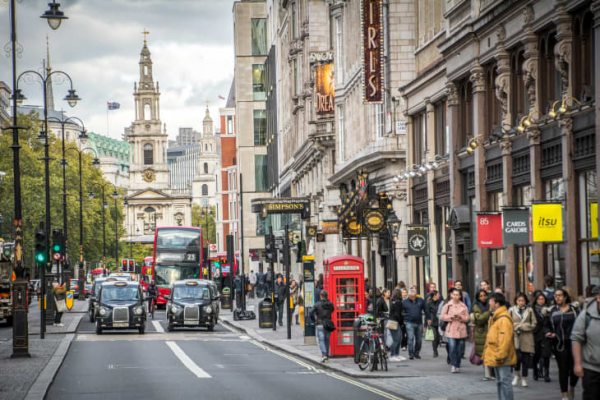
An article from The Evening Standard outlines several reasons why numerous Americans are opting to move to London, including the increasing cost of living, soaring house prices, a strengthened dollar, and domestic political uncertainties. If you’re among those who searched “moving to the U.K.” on Google, discover the necessary steps for relocating across the pond.

On a different note, the second most favored destination is Mexico, where 19,620 U.S. citizens have chosen to relocate.

North of the border, Canada garnered more searches than any other nation, despite a 53% decrease compared to last year. Furthermore, Canada witnessed a 10% increase in the number of Americans moving there in the first six months of 2023 compared to the same period in 2022. If you’re considering such a move, explore the steps for moving to Canada as an American.

Additional countries that attract American emigrants include various European nations, Japan, South Korea, Australia, New Zealand, Brazil, Costa Rica, and Israel. In total, more than 821,000 U.S. citizens have moved to 40 different countries since 2017, driven by factors such as lower taxation, improved quality of life, and the growing trend of digital nomadism, among other reasons.

You can read more about HireAHelper’s study here.

About 300 individuals participated in a “guerrilla drag show” as a form of protest against an anti-transgender event.

This blog originally appeared at LGBTQ Nation.

“I dislike the necessity of being present to demonstrate our existence…yet, I also appreciate witnessing so many individuals standing up for this community,” expressed one of the performers.


Approximately 300 individuals attended a “guerrilla drag show” held this week outside an event featuring anti-transgender speakers. The anti-trans event, organized by the conservative student group Turning Point USA, occurred on Cal Poly’s campus in San Luis Obispo, California. It included speeches by de-transition advocate Chloe Cole and Canadian anti-LGBTQ+ activist Chris Elston.

Cole and Elston are currently part of a speaking tour titled “A Dad & A Detransitioner’s Take on the Transgender Movement.” Promoted by Turning Point on Instagram, the event claimed that the speakers would “explain what the transgender movement really is, the truth about it, and the myths that surround it!”

Chloe Cole, a detransitioner with right-wing views, has emerged as a strong advocate for anti-trans laws and policies. Chris Elston, known for wearing sandwich-board signs with anti-trans slogans, gained attention in 2020 and 2021 by displaying a billboard and wearing a sign that declared “I (heart) J.K. Rowling.” He also engaged in confrontations with women whom he perceived as overly supportive of trans rights.

To counter the anti-trans event hosted by Turning Point USA, the Cal Poly Drag Club organized a drag show outside the venue.

“The Drag Club stands as a beacon for the queer community and our allies. We’re appalled by Turning Point USA’s anti-trans agenda on our campus. In protest, we’re hosting a guerrilla drag show to embrace the love and queer joy present here…”

“Unlike the 300 attendees at the drag show, only 100 were present inside to hear the anti-trans speakers, as reported by San Luis Obispo’s The Tribune.”

“Video footage of the drag show captures hundreds of students cheering and dancing joyfully as they witness the performances.”


“I dislike having to be present to affirm our existence and demonstrate our pride, success, and resilience as trans individuals. However, I appreciate the overwhelming support shown by so many people for our community,” expressed Vinny Torres, drag club vice president and performer known as Skinny Mocha. “It’s a mix of emotions, but the solidarity is heartening.”


A university spokesperson responded to upset students who accused the school of insufficient action against Turning Point’s event, asserting the institution’s position.

“We acknowledge the concerns about specific guest speakers at Cal Poly,” stated spokesperson Matt Lazier. “However, it is not the university’s responsibility to determine who can or cannot share their perspectives on campus.”

The US Supreme Court declines to hear a challenge to the ban on gay ‘conversion therapy’ in Washington state.

This blog originally appeared at Reuters.

The US Supreme Court rejects a challenge to the ban on gay ‘conversion therapy’ in Washington state.

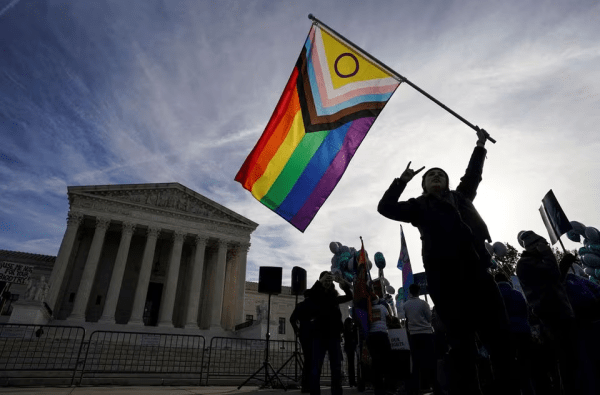
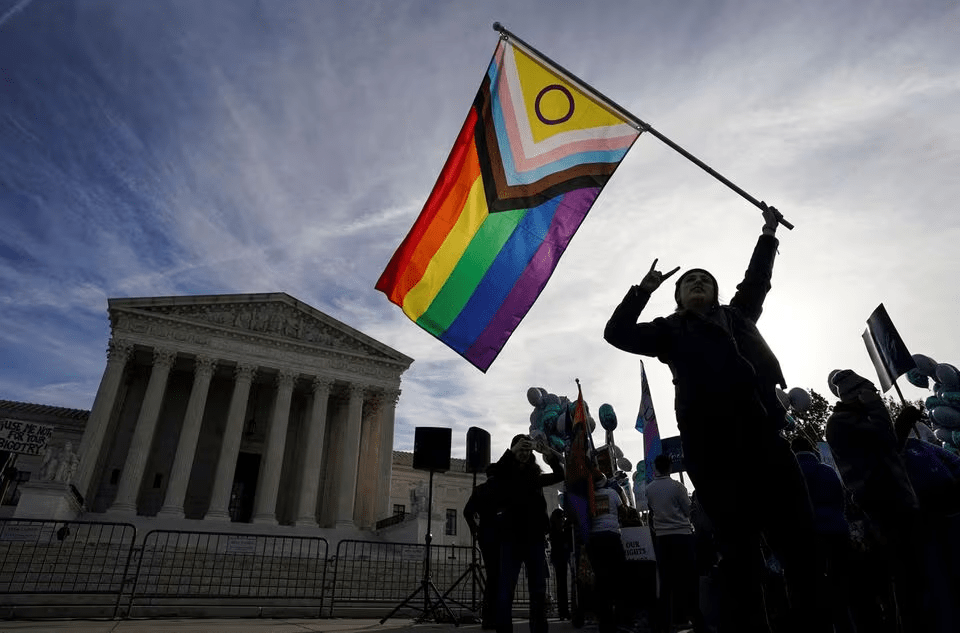
A demonstrator waves an LGBT rights ‘pride flag’ during a gathering outside the U.S. Supreme Court in Washington, D.C., on December 5, 2022.

On December 11, Reuters reported that the U.S. Supreme Court rejected a petition to review a case challenging Washington state’s law prohibiting “conversion therapy” for minors. This law, enacted in 2018, aims to prevent attempts to change a minor’s sexual orientation or gender identity. The case was brought by a Christian therapist who argued that the law violated free speech rights.

The Supreme Court declined to hear Brian Tingley’s appeal challenging the Washington state law on “conversion therapy.” Tingley argued that the law violated his freedom of speech under the First Amendment by restricting how he communicates with therapy clients. The court’s decision upheld the lower court’s dismissal of the case, with the state contending that it regulates professional conduct rather than speech.

Justices Clarence Thomas, Samuel Alito, and Brett Kavanaugh dissented from the decision to reject the case. This marked another clash between LGBT protections and the religious rights of individuals.


In June, the court’s 6-3 conservative majority ruled that certain businesses had a free speech right to decline providing services for same-sex weddings. The liberal justices who dissented characterized the decision as a “license to discriminate.”

Tingley, a licensed marriage and family therapist in Tacoma, Washington, contends that sexual relationships outside of a marriage between one man and one woman are “inconsistent with God’s design.” He also asserts that “the sex each person receives at conception” is “a gift from God.”

The Democratic-backed law bars licensed healthcare professionals from administering therapies to minors intended to “alter an individual’s sexual orientation or gender identity.” Violations may result in sanctions such as censure, fines, or the revocation of the professional’s license.

The law allows licensed therapists to engage in discussions or advocacy for conversion therapy, provide such therapy to adults, or recommend it to be carried out by others, including religious counselors. However, the law does not extend to non-licensed counselors operating under the umbrella of a church, religious denomination, or organization.


In a written opinion on Monday, Justice Thomas emphasized the importance of addressing the issue of gender identity and argued that the court should have considered the case. According to Thomas, Washington state’s law has effectively silenced one side of a “fierce public debate” by prohibiting counselors from assisting clients in “accepting their biological sex.”

He added, “That is pure viewpoint-based and content-based discrimination.”


He argued that there’s no evidence licensed therapists have ever employed abusive practices on children.

He argued that the law impermissibly provides the state with a free pass to censor professionals and targets individuals based on their religion.

The state argues that it has the authority to regulate the conduct of professionals, even if such regulation may impact speech. It points out that 26 states and the District of Columbia restrict or prohibit conversion therapy for minors.

Tingley filed a lawsuit against the state in 2021. U.S. District Judge Robert Bryan dismissed the case, stating that the law does not violate Tingley’s First Amendment rights because it is “rationally related” to the state’s interest in protecting the well-being of minors.

The judge’s ruling was affirmed by the San Francisco-based 9th U.S. Circuit Court of Appeals in 2022.

Tingley is being represented by the Alliance Defending Freedom, a conservative legal group that has contested various LGBT protections. The same group also represented the business owner in the Colorado same-sex weddings case.

Americans who renounced citizenship sue US over ‘astronomical’ fees | US news | The Guardian

This blog originally appeared at The Guardian.

Former U.S. citizens file a lawsuit against the U.S. government, claiming that the ‘renunciation fee’ of $2,350 is ‘unreasonable, whimsical, and unlawful.’

The suit accuses the US of wrongfully profiting from the ‘exorbitant’ fee it charges those who voluntarily cease to be Americans.


Individuals who have renounced their U.S. citizenship are collectively suing the U.S. government, alleging that the fees associated with renunciation are excessively high and violate the Constitution.

A class-action lawsuit was filed on Wednesday by four former U.S. citizens in a federal court in Washington D.C. The suit alleges that the U.S. government has been unjustly profiting from the exorbitant fee it charges individuals who voluntarily renounce their U.S. citizenship. Since 2014, U.S. citizens living abroad who wish to renounce their citizenship or who are unable to meet the demanding U.S. tax requirements have been required to pay a “renunciation fee” of $2,350.

The lawsuit contends that this fee is “arbitrary, capricious, and illegal” because, among other reasons, it has been utilized to finance government functions entirely unrelated to the renunciation process, thus violating federal law.

Exact figures are unavailable, but estimates suggest that there are between 5 million and 9 million U.S. citizens residing overseas. This group includes expatriates who relocated for work or to pursue a different life abroad, as well as “accidental Americans” – individuals born in the U.S. who automatically obtained citizenship but have never resided in the country for an extended period.

The United States imposes some of the most onerous requirements on its citizens living abroad, rivaled only by Eritrea. Notably, it mandates that all U.S. citizens, regardless of their place of residence, must submit annual tax returns to the Internal Revenue Service.

Click here to see full blog: https://www.theguardian.com/us-news/2023/oct/04/renounce-american-citizenship-passport-fee-lawsuit

Blog at WordPress.com.

Up ↑