Legislative attacks on the LGBTQ+ community have been pushed everywhere from city councils to the White House — but there are still some areas that are safe.
Over 1,000 anti-LGBTQ+ laws have been proposed across every state legislature in the U.S. over the past two years, according to the American Civil Liberties Union, and 126 have passed into law. Less than two months into the 2025 legislative session, 390 laws targeting LGBTQ+ people have been proposed.
Still, marriage equality and anti-discrimination protections based on sexual orientation and gender identity are still guaranteed federally by U.S. Supreme Court rulings (for now). On top of that, at least 15 states have “shield laws” protecting access to gender-affirming care and abortion.
Based on laws surrounding marriage, family rights, health care, education, and youth collected by the Movement Advancement Project, here are the 15 best states for LGBTQ+ people.
The states include California, Colorado, Connecticut, Illinois, Maine, Maryland, Massachusetts, Minnesota, Nevada, New Jersey, New York, Oregon, Rhode Island, Vermont, and Washington. Honorable mentions go to Washington DC, Delaware, Hawaii, Michigan, New Mexico, and Virginia.
You can read about each state in more detail in the Advocate’s article.
President Donald Trump suffered a pair of legal setbacks Thursday after a federal judge in Washington, D.C., blocked the Federal Trade Commission from enforcing investigative demands against two of the nation’s most influential medical organizations involved in transgender health care guidance.
Chief Judge James Boasberg of the U.S. District Court for the District of Columbia granted preliminary injunctions to both the World Professional Association for Transgender Health and the Endocrine Society, temporarily halting FTC investigations that the groups argued were politically motivated and unconstitutional.
The FTC investigations began earlier this year amid the administration’s broader effort to target institutions connected to gender-affirming treatment for trans youth. The agency issued civil investigative demands, or CIDs, seeking years of internal records, communications, financial information, conference materials, and documents related to medical guidance on transgender care.
In separate lawsuits filed in D.C., WPATH and the Endocrine Society accused the administration of weaponizing federal investigative powers to intimidate organizations that support evidence-based medical care for transgender patients.
The complaints argued the FTC was not conducting ordinary consumer protection oversight, but instead attempting to chill scientific debate, suppress protected medical speech, and deter physicians and researchers from participating in discussions about health care for transgender people.
Boasberg appeared deeply skeptical of the administration’s motives in both rulings, repeatedly pointing to what he described as evidence of hostility toward the organizations and their views on clinical standards for gender dysphoria treatment.
In the WPATH ruling, Boasberg wrote that the record “strongly suggests that the CID was issued at least in part because of hostility toward WPATH’s viewpoint and advocacy regarding transgender care.”
The judge explicitly tied that conclusion to the administration’s broader conduct surrounding transgender health care. “This Court’s Opinion in the parallel suit brought by the Endocrine Society details the range and depth of animus displayed by the President and agency leadership toward gender-affirming care,” Boasberg wrote.
He went further, writing that “[t]he circumstantial evidence of animus towards WPATH overlaps significantly with the record in the Endocrine Society’s case,” particularly through what he described as a “pattern of litigation and information demands” alongside “articulated hostility towards proponents of gender-affirming care.”
In one of the ruling’s sharpest passages, Boasberg concluded that “[o]n this preliminary record, with extensive evidence of animus and wafer-thin justifications lacking evidentiary support, it finds that WPATH is likely to demonstrate a causal link between its protected speech and the FTC’s issuance of the CID.”
Boasberg also noted that administration officials had publicly attacked WPATH before the FTC investigation began, including statements accusing the organization of lacking “scientific integrity” and contributing to “blatant harm done to children.”
At another point, the judge wrote that the evidence supported an inference of “viewpoint-based animus” toward WPATH and its advocacy surrounding gender-affirming care.
The court additionally found evidence that the investigation had already chilled protected speech and association. According to the opinion, WPATH leaders testified that they had curtailed educational programming and altered internal communications due to fears of retaliation and disclosure of sensitive member information.
“WPATH welcomes the Court’s decision to grant our request for a preliminary injunction against this unlawful and retaliatory investigative demand by the FTC,” the organization said in a statement to The Advocate late Thursday. “We are hopeful that this preliminary injunction will prevent further harm to the First Amendment rights of WPATH and its members.”
“For more than 50 years, WPATH has been committed to developing guidelines informed by established scientific standards, expert consensus, and patient-centered values,” the organization added. “WPATH’s dedication to this mission and the patient population it serves remains unwavering.”
In the parallel Endocrine Society case, Boasberg similarly warned that the FTC’s actions threatened constitutionally protected scientific discourse and associational rights. He wrote that the record raised “serious concerns that the agency’s investigatory power is being used not to police commercial fraud, but to target disfavored speech and advocacy.”
The judge also emphasized the breadth of the FTC’s demands, which sought years’ worth of records related to publications, internal deliberations, and communications involving transgender care recommendations. Boasberg concluded that the organizations had shown evidence of “ongoing self-censorship and withdrawal from protected expressive activity” as a result of the investigations.
“The D.C. District Court ruling is an important victory that recognizes medical guidelines are a valued resource that allow doctors to support patients in making decisions about their care,” the Endocrine Society said in a statement to The Advocate on Friday. “This ruling sends a powerful message that government efforts to pressure the medical and scientific community to abandon evidence-based practices are not permissible.”
The statement continued, “In addition to affirming the Endocrine Society’s First Amendment right to speak freely on matters of public health, the court recognized the chilling effect the government’s actions have on the Society’s work and the harm to public interest. This decision is a helpful step in ensuring the Endocrine Society can continue to advance endocrine health and patient well-being by providing clinicians with medically sound, evidence-based information.”
The rulings arrive as federal courts increasingly scrutinize whether the administration’s policies targeting transgender people and transgender health care are rooted in evidence or animus.
In Talbott v. United States, the ongoing challenge to the administration’s transgender military ban in D.C. courts, Judge Ana Reyes previously wrote that the policy was “soaked in animus and dripping with pretext.” Reyes also criticized government arguments portraying transgender service members as inherently dishonest or unstable, describing aspects of the administration’s rhetoric as evidence of unadulterated animus.
Boasberg’s rulings are not final decisions on the merits of either case, but they temporarily block the FTC from enforcing the investigative demands while the lawsuits proceed.
A 16-year FBI employee has filed a lawsuit alleging he was fired last month because he had a Pride flag draped near his desk.
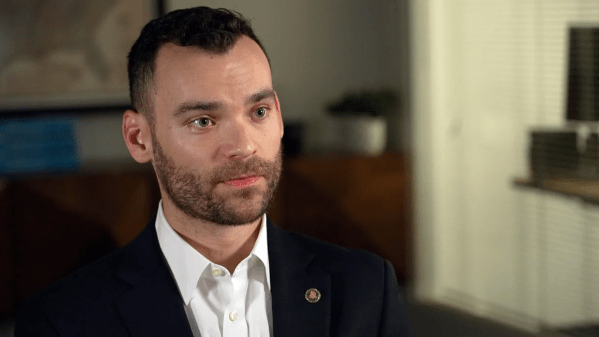
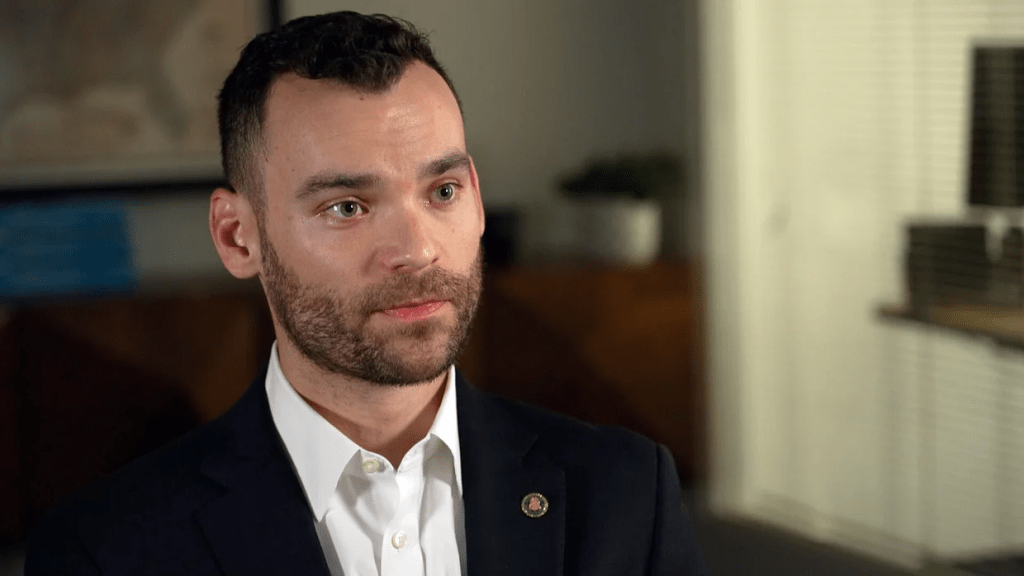
David Maltinsky, who was weeks away from being elevated to the position of agent, claims the firing was unlawful and sent a ripple of fear through the LGBT employees at the FBI.
“We’re not the enemy and we’re not some political mob. We’re proud members of the FBI, and we have a mission to do. We go to work every day to do it,” Maltinsky told CBS News in his first interview.
In a civil complaint filed Wednesday in the U.S. District Court for the District of Columbia, Maltinsky seeks a court order to restore his job.
The suit makes several allegations, including an argument that the FBI has violated Maltinsky’s First Amendment rights and retaliated against him for protected expression.
According to the lawsuit, the First Amendment “forbids government officials from firing government employees, or otherwise retaliating against them, simply for engaging in expressive conduct concerning a matter of public concern.”
The lawsuit states that Maltinsky was fired in a letter signed by FBI Director Kash Patel in October. A copy of the letter was provided by Maltinsky to CBS News. In it, Patel writes: “I have determined that you exercised poor judgment with an inappropriate display of political signage in your work area during your previous assignment at the Los Angeles Field Office. Pursuant to Article II of the United States Constitution and the laws of the United States, your employment with the Federal Bureau of Investigation is hereby terminated.”
The FBI had no comment regarding Maltinsky’s lawsuit.
Maltinsky, who began working at the FBI in 2008, was in the midst of a training program for future agents at the FBI’s facility in Quantico, Virginia, when he was fired, according to the lawsuit.
The rainbow flag that Maltinsky displayed at his workspace in the FBI’s Los Angeles Field Office was presented to him after it had previously been displayed outside the Bureau’s federal office complex there, according to the lawsuit.
Maltinsky said the federal government approved the display of Pride flags at federal office complexes in June 2021. His lawsuit alleges that a colleague filed a complaint with a supervisor about Maltinsky’s flag on Jan. 20, 2025, the day of President Trump’s second Inaugural.
In an hourlong interview with CBS News, Maltinsky said his firing has had a chilling impact inside the Bureau.
“The ripple effect of fear has been felt. Many gay colleagues have removed Pride flags from their desks, allies have removed Pride flags from their desk,” he said.
“David’s dream was to serve our country as an FBI Special Agent,” said Christopher M. Mattei, counsel for Maltinsky and a partner at Koskoff, Koskoff & Bieder, PC. “When that dream was cruelly taken from him, he stayed true to his oath and is now fighting to protect the rights of all Americans.”
“This case is about far more than one man’s career—it’s about whether the government can punish Americans simply for saying who they are,” Mattei said.
Under questioning at a congressional hearing in September, Patel told senators he was not taking action against any “enemies list,” including among FBI employees.
“The only actions we take, generally speaking, for personnel at the FBI, are ones based on merit and qualification and your ability to uphold your constitutional duty,” Patel said.
“You fall short, you don’t work there anymore.”
Maltinsky’s firing is part of a large and growing wave of terminations, resignations and retirements inside the Justice Department since Jan. 20. Justice Connection, an organization that supports the ex-employees, told CBS News more than 5,000 employees have left or been fired from the agency this year.
The purge includes agents and prosecutors who handled the U.S. Capitol riot prosecutions and the special counsel criminal probes of President Trump, which were dropped after Mr. Trump won the election in November 2024.
“It’s very sad that it’s happening,” Maltinsky told CBS News. “But part of this filing is that: I’m not intimidated. We’re not intimidated.”
“Diversity means so much to so many different people,” he added. “There is no one definition that everyone will agree on. What I believe is diversity brings strength.”
An unknown assailant in Washington D.C. attacked a gay man with a rock, causing him to bleed profusely. The victim suspects his attacker may be a young local teen who has yelled homophobic slurs in the past. Police are now investigating.
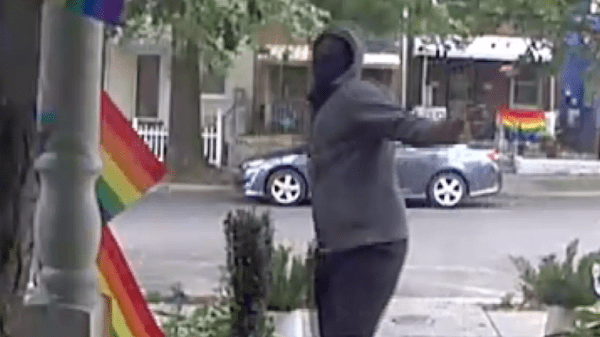
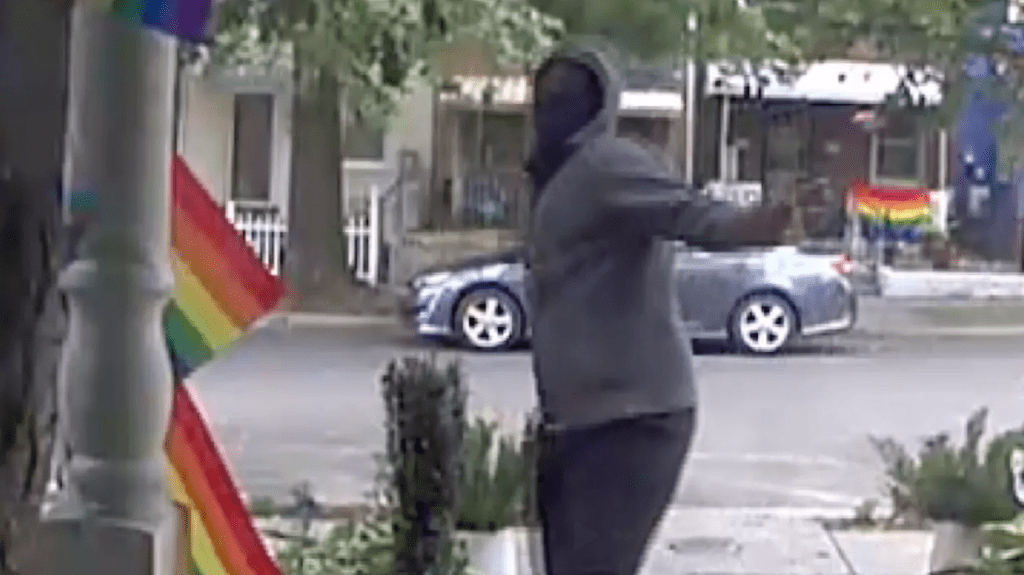
On Friday, around 12:30 p.m., Addam Schauer-Mayhew was seated on his couch watching tennis when his home camera recorded a masked individual walking up to he and his husband’s house — which was decorated in rainbows for Pride. The masked individual then threw a large rock through their living room window, hitting Schauer-Mayhew in the head.
“The rock that was thrown was about baseball size, and it was almost like a piece of concrete that had sharp, jagged edges,” the victim’s husband Bryan Schauer told WUSA, adding that he came downstairs when he heard his husband crying out in pain. Schauer said he saw broken glass and a lot of blood. “I can’t imagine how much it hurt.”
The couple had been preparing to attend the weekend WorldPride celebration. They suspect the attacker may have been a young local teen who shouted anti-gay slurs at them a year ago. They say the suspect wore an ankle monitor and was accompanied by a younger teen.
The men say the incident has left them afraid and are now asking for the public to help identify the attacker in the video. They’re also asking for the police to consider hate crime charges.
“I am proud of who I am. I’m proud to be a gay man, a queer man, living in the city that I love in. I’m just trying to be accepted.” Schauer-Mayhew said.
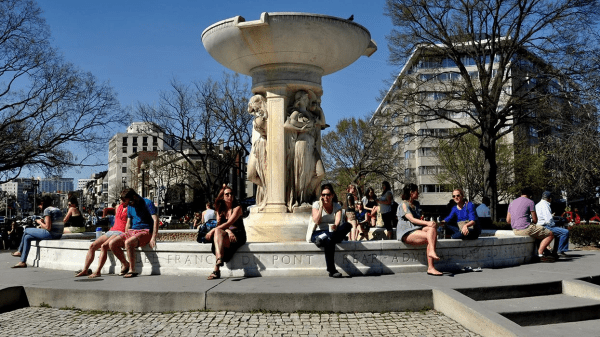
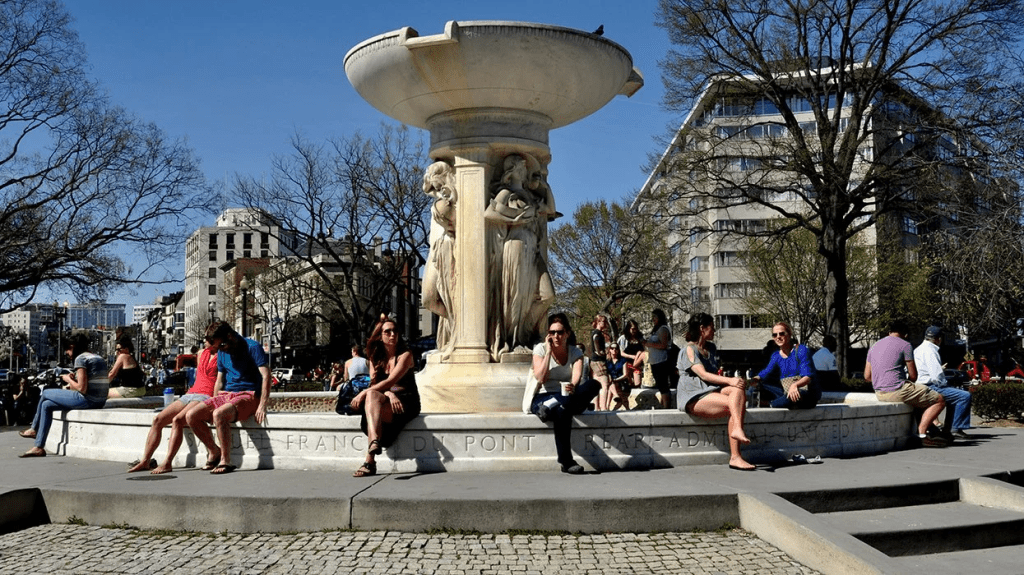
The Trump administration has closed Dupont Circle Park for the peak weekend of WorldPride in Washington, D.C., fencing off a landmark deeply tied to LGBTQ+ history despite objections from local officials and organizers.
The National Park Service and U.S. Park Police barricaded the park Thursday evening. The closure, which extends through Sunday night, includes the central fountain, grassy areas, and sidewalks within the circle but excludes the surrounding streets, according to Washington’s NBC affiliate, WRC.
Earlier this week, D.C. Councilmembers Brooke Pinto and Zachary Parker announced that the Metropolitan Police Department had withdrawn its request to close the park following backlash from community members. But federal officials proceeded with the shutdown anyway and have not responded to requests for comment.
“I am extremely disappointed and frustrated that Dupont Circle Park will be closed this weekend despite MPD’s commitment to keep folks safe there,” Pinto said in a statement to The Advocate. “This closure is disheartening to me and so many in our community who wanted to celebrate World Pride at this iconic symbol of our city’s historic LGBTQ+ community. I wish I had better news to share.”
According to a June 4 Record of Determination obtained byThe Washington Post, the National Park Service said that the closure was necessary “to secure the park, deter potential violence, reduce the risk of destructive acts and decrease the need for extensive law enforcement presence.”
Despite MPD’s reversal, the U.S. Park Police doubled down. In a memo to NPS Superintendent Kevin Greiss, USPP Commander Major Frank Hilsher wrote that “the threat of violence, criminal acts, and NPS resource destruction has only increased since MPD’s original April 22, 2025, park closure request.” He referenced a local DJ advertising an unpermitted party at Dupont Circle and said, “Less restrictive measures will not suffice.”
The Capital Pride Alliance, which is organizing WorldPride events, told The Advocate it was not consulted about the decision.
“This beloved landmark is central to the community that WorldPride intends to celebrate and honor,” the group said in a statement. “It’s much more than a park — for generations, it’s been a gathering place for D.C.’s LGBTQ+ community, hosting First Amendment assemblies and memorial services for those we lost to the AIDS epidemic and following tragic events like the Pulse nightclub shooting.”
“This sudden move was made overnight without consultation with the Capital Pride Alliance or other local officials,” the statement continued. “No official WorldPride activities have been planned in Dupont Circle this weekend; thus, no events will be impacted.”
While MPD had initially requested the closure, Chief Pamela Smith rescinded that request in a formal letter sent Tuesday. When asked for comment Friday, MPD spokesperson Tom Lynch told The Advocate, “We have nothing to share beyond the letter rescinding the request, which we shared on Tuesday.”
D.C. Mayor Muriel Bowser did not respond to The Advocate’s questions, but a spokesperson pointed to an appearance she made on local radio Friday in which she discussed the fencing.
She said the closure represented a breakdown in coordination between federal and local authorities. “I think I put this in the category of an unfortunate error,” Bowser told The Politics Hour With Kojo Nnamdi on WAMU. “We had a communication with the Park Service … and it looks like at this stage, they’re going to proceed with the closure, though we continue talks.”
Pressed on whether the decision originated at the White House or with Interior Secretary Doug Burgum, Bowser said, “I can’t say that with any clarity. I do know, unfortunately, the public safety issue rose to the top over the cultural celebration.” She added, “We don’t control the NPS, though we will continue to try to lean on them for a different decision.”
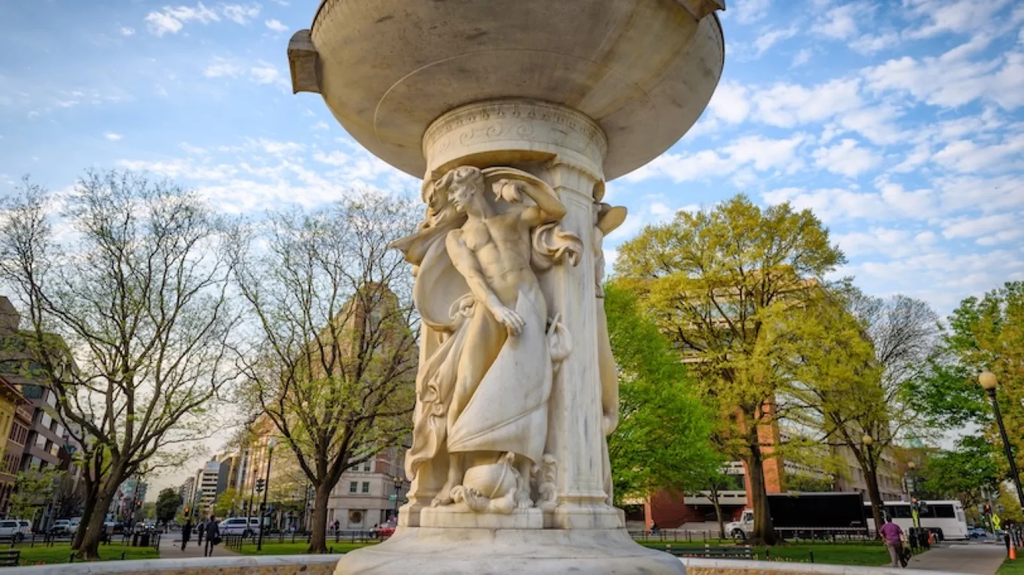
The Park Service has cited past incidents (none of which were linked to Capital Pride Alliance events), including $175,000 in damage to the fountain during Pride 2023, as well as a recent executive order from President Donald Trump instructing federal agencies to protect national monuments and public spaces. But LGBTQ+ advocates say the move appears politically motivated.
The Partnership for Civil Justice Fund filed Freedom of Information Act requests this week seeking communications and records from the Department of the Interior, the MPD, and the D.C. Mayor’s Office. In a statement Tuesday, Executive Director Mara Verheyden-Hilliard called the decision “a dangerous step and outside the legitimate authority of the Park Service.” Staff attorney Sarah Taitz said, “The LGBTQ+ community and general public deserve to know how and why the decision to shut Pride out of Dupont Circle was made, and how and why that decision was reversed.”
Though no official events were scheduled at the park, many saw its closure as symbolic — a federal message during a global celebration of queer life.
“World Pride will continue this weekend,” Pinto said, “and it will be a time of celebration and commitment to uplift our LGBTQ+ neighbors.”
In less than 24 hours, the National Park Service (NPS) has rescinded its decision to close off Dupont Circle Park in Washington D.C. for WorldPride, citing “significant” damage to the park’s fountain during a previous pride event, costing nearly $200 thousand. The rescinding of their decision followed pushback from LGBTQ+ community leaders and advocates, as the area is a vibrant gathering place for queer people with many nearby LGBTQ+-owned shops and gay bars.
On Monday, the NPS announced that, “at the request of the [local] Metropolitan Police Department,” they would be closing off Dupont Circle Park for the final weekend of WorldPride 2025 to prevent “disorderly and destructive behavior” from WorldPride participants. The closure was set to occur from Thursday, June 5 to Monday, June 9, as a public safety measure and to protect park resources, the NPS’ statement added.
“This decision was based on a history and pattern of destructive and disorderly behavior from unpermitted activities happening in the park during past DC Pride weekends, including vaŋdalism in 2023 that resulted in approximately $175,000 in damage to the historic Dupont Circle fountain,” the statement claimed.
Indeed, $175,000 is a substantial amount of money, but it is unclear how they arrived at this figure. Despite $175,000 in damages to public property being a newsworthy story in itself, there is little to no reporting to suggest the fountain sustained critical damage during a Pride event in 2023. The event they are likely referencing was The Capital Pride Parade and Block Party in 2023. Most news coverage on the event paints it as a mainly peaceful event with no significant rioting having occurred.
It is worth noting that the fountain had been undergoing numerous repairs at the time, including waterproofing at the base, upgrades to the water pump system, and pressure testing for the pipes.
During the initial decision to close the park, reporters from The Washington Bladeattempted to reach out to a spokesperson for the Metropolitan Police Department concerning the decision, but the spokesperson declined to comment and referred them to the NPS. Additionally, the office of D.C. Mayor Muriel Bowser also declined to comment.
“We have nothing else to add to the National Park Service statement at this time,” mayoral spokesperson Daniel Gleick told reporters.
In less than 24 hours after the announcement, the NPS rescinded their decision to close off the park this morning, according to D.C. Council member Zachary Parker.
In the moments leading up to NPS changing its mind, local LGBTQ+ rights activists condemned the agency for blocking off a major historic community within the LGBTQ+ movement.
Jeffrey Ruegauer, a member of the Dupont Circle Advisory Neighborhood Commission (ANC), in a public meeting, proclaimed, “The circle belongs to everyone, it is the city’s town square. It is intimately linked with the gay community and the gay rights movement and so many other rights movements over the years,” The Washington Post reported.
Fellow ANC commissioner and official with D.C.’s Rainbow History Project told the aforementioned publication, “The community should be as outraged as I am.”
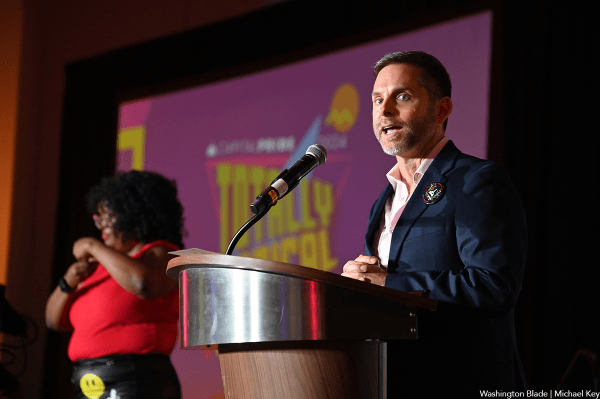
Ryan Bos, executive director of Capital Pride Alliance, the organization behind D.C.’s annual Pride events and that also helped organize this year’s WorldPride events, said no official WorldPride events were set to occur at Dupont Circle Park during the upcoming weekend, though he was unsure if independent individuals or groups had planned any events there.
Bos also said he felt certain that participants of Capital Pride events did not cause any damage to the park in past years.
In February, NPS removed all mentions of transgender people from its website for Dupont Circle to comply with the president’s executive orders prohibiting any federal recognition of trans people in any aspect of civic life.
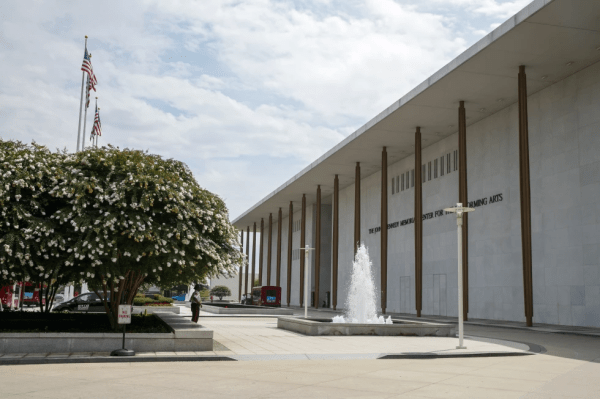
Organizers and the Kennedy Center have canceled a week’s worth of events celebrating LGBTQ+ rights for this summer’s World Pride festival in Washington, D.C., amid a shift in priorities and the ousting of leadership at one of the nation’s premier cultural institutions.
Multiple artists and producers involved in the center’s Tapestry of Pride schedule, which had been planned for June 5 to 8, told The Associated Press that their events had been quietly canceled or moved to other venues. And in the wake of the cancellations, Washington’s Capital Pride Alliance has disassociated itself from the Kennedy Center.
“We are a resilient community, and we have found other avenues to celebrate,” said June Crenshaw, deputy director of the alliance. “We are finding another path to the celebration … but the fact that we have to maneuver in this way is disappointing.”
The Kennedy Center’s website still lists Tapestry of Pride on its website with a general description and a link to the World Pride site. There are no other details.
The Kennedy Center did not respond to a request from the AP for comment.
The move comes on the heels of massive changes at the Kennedy Center, with President Donald Trump firing both the president and chairman in early February. Trump replaced most of the board with loyalists, who then elected him the new Kennedy Center chairman.
The World Pride event, held every two years, starts in just under a month — running from May 17 through June 8 with performances and celebrations planned across the capital city. But Trump administration policies on transgender rights and comments about Kennedy Center drag performances have sparked concern about what kind of reception attendees will receive.
“I know that D.C. as a community will be very excited to be hosting World Pride, but I know the community is a little bit different than the government,” said Michael Roest, founder and director of the International Pride Orchestra, which had its June 5 performance at the Kennedy Center abruptly canceled within days of Trump’s takeover.
Roest told the AP he was in the final stages of planning the Kennedy Center performance after months of emails and Zoom calls. He was waiting on a final contract when Trump posted on social media Feb. 7 of the leadership changes and his intention to transform the Kennedy Center’s programming.
Immediately the Kennedy Center became nonresponsive, Roest said. On Feb. 12, he said, he received a one-sentence email from a Kennedy Center staffer stating, “We are no longer able to advance your contract at this time.”
“They went from very eager to host to nothing,” he said. “We have not since heard a word from anybody at the Kennedy Center, but that’s not going to stop us.”
In the wake of the cancellation, Roest said he managed to move the International Pride Orchestra performance to the Strathmore theater in nearby Bethesda, Maryland.
Crenshaw said some other events, including a drag story time and a display of parts of the AIDS Memorial Quilt, would be moved to the World Pride welcome center in Chinatown.
Monica Alford, a veteran arts and culture journalist and event planner, was scheduled to organize an event June 8 as part of Tapestry of Pride, but said she also saw communication abruptly end within days of Trump’s takeover.
Alford has a long history with the Kennedy Center and organized the first-ever drag brunch on the Kennedy Center rooftop in 2024, and said she regarded the institution — and its recent expansion known as The Reach — as “my home base” and “a safe space for the queer community”
She said she was still finalizing the details of her event, which she described as “meant to be family-friendly, just like the drag brunch was family-friendly and classy and sophisticated.”
She said she mourns the loss of the partnership she nurtured with the Kennedy Center.
“We’re doing our community a disservice — not just the queer community but the entire community,” she said.
Roest said he never received an explanation as to why the performance was canceled so late in the planning stages. He said his orchestra would no longer consider performing at the Kennedy Center, and he believes most queer artists would make the same choice.
“There would need to be a very, very public statement of inclusivity from the administration, from that board, for us to consider that,” he said. “Otherwise it is a hostile performance space.”
One of the lead organizers of WorldPride 2025, set to take place in D.C. May 17-June 8, told members of the Metropolitan Washington Council of Governments, known as COG, on April 9 that due to the recently implemented anti-trans policies of the Trump administration, it may be dangerous for trans people traveling from abroad to attend WorldPride in D.C, according to a report by WTOP News.
The WTOP report says the message of concern was delivered by Ryan Bos, executive director of D.C.’s Capital Pride Alliance, which is the lead organizer of WorldPride 2025. The news report says Bos spoke at a meeting of COG, which consists of local government officials from D.C. and the surrounding suburban counties in Maryland and Virginia.
“It’s possible that we may actually issue a statement telling trans folks internationally not to come, or if they come, they come at their own risk,” WTOP quoted Bos as saying.
“So, these are the things that we will be discussing with the D.C. government and our partners to determine how best to communicate that to ensure that we’re getting the resources to the folks that need it,” Bos said according to the WTOP report.
WTOP reported that some members of the COG board expressed concern over the news that it may be harmful for trans people to travel to the D.C. area for WorldPride.
“It’s really shameful that you all are having to consider making statements like that,” WTOP quoted Frederick County, Md., Executive Jessica Fitzwater as saying. “It’s really heartbreaking.”
D.C. Council member Charles Allen (D-Ward 6), who attended the COG meeting, told Bos, “I’m disheartened to hear that, but I hope you also recognize you’ve got partners in this room that want to be right there with you to make sure this is a wonderful, successful event, a safe event, that’s going to take place across the whole region,” WTOP reports.
Capital Pride Alliance, in response to a request for further comment on Bos’s remarks at the COG meeting, said in a brief statement that Bos’s presentation was limited to what “may happen.” The statement said no official decision has been made regarding a possible warning for trans people considering attending WorldPride.
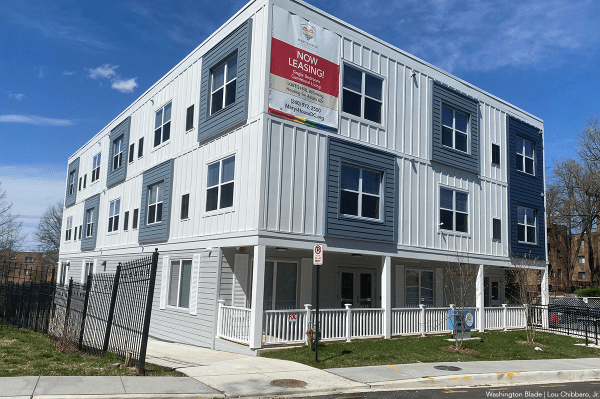
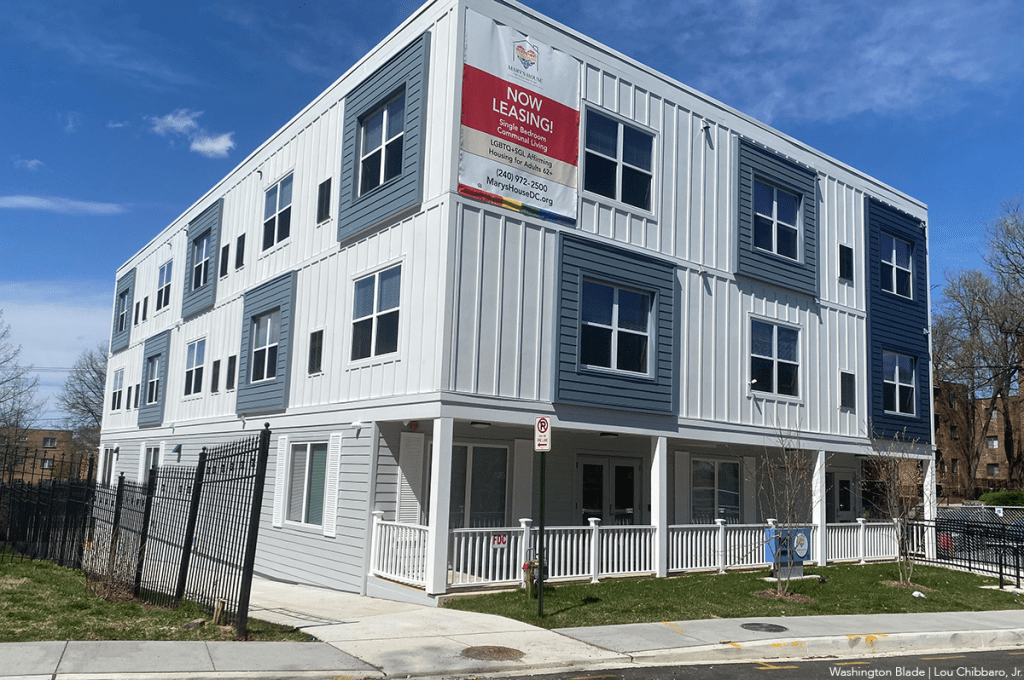
The first nine residents of Mary’s House For Older Adults, D.C.’s first LGBTQ home for seniors, are expected to move into the newly built group home within the next week or two, according to Mary’s House founder and CEO Imani Woody.
Located at 401 Anacostia Rd., S.E. in the city’s Fort Dupont neighborhood, a write-up on its website says the house includes 15 single-occupancy residential units and more than 5,000 square feet of shared communal living space.
Woody said construction of the three-story house was completed in January and leases have been obtained by the first nine of the 15 residents, with the remaining six still available for interested seniors. She points out that Mary’s House, which is a nonprofit operation, is not an assisted living facility.
A large sign hanging near the top of the front wall of the Mary’s House building says, “Now Leasing! Single Bedroom Communal Living—LGBTQ+ Affirming Housing for Adults 62+”
The sign also includes the Mary’s House phone number and website address that Woody said interested seniors or those who may know a senior who would be interested should use to contact the LGBTQ supportive seniors residence.
Woody said each of the individual units or suites includes a sleeping area, living room, bathroom, and kitchenette with a sink, microwave, and refrigerator but no stove. According to the Mary’s House website, the shared communal areas of the house include a “fully equipped kitchen, separate dining area and living room.”
It says the communal area also includes a computer room, arts and crafts room, an exercise room, laundry facilities, community meeting space for gatherings, a “tranquil quiet room for relaxation,” and an outdoor terrace with seating.
Woody said the monthly rent for Mary’s House residents, depending on their income, is currently set at $812 or $886.
“Our mission extends beyond providing housing,” a statement on the Mary’s House website says. “We strive to build welcoming communities that address affordability, accessibility, and the unique needs of LGBTQ/SGL [Same Gender Loving] older adults.”
The statement adds, “Through health and wellness programs, connections to community services, and advocacy efforts, Mary’s House for Older Adults endeavors to ensure that all elders, regardless of identity, can enjoy fulfilling and secure lives in their golden years.”
Woody said a ribbon-cutting ceremony to celebrate the opening, to be led by D.C. Mayor Muriel Bowser is planned for early May, with a specific date to be announced soon.
Further information about Mary’s House, including a lease application, can be obtained at MarysHouseDC.org or at 240-972-2500.


 fleeredstates.blog
You must be logged in to post a comment.