Walker’s Point Intersection Getting Rainbow Crosswalks To Honor Milwaukee’s LGBTQ History

Read more at the Milwaukee Journal Sentinel.

A Walker’s Point intersection will soon be bursting with color — new rainbow crosswalks.

The Wisconsin LGBTQ History Project announced Aug. 1 that the City of Milwaukee’s Paint the Pavement program has approved the crosswalks at the corner of South Second Street and West National Avenue.

They’ll be installed by Oct. 1. in honor of National LGBTQ History Month.

The crosswalks honor “the changemakers who’ve been creating safe spaces for our community for over eight decades,” a Wisconsin LGBTQ History Project news release said.

The project is entirely funded by donors, sponsors and grants. Artist Jeremy Novy, who has been decorating Milwaukee streets with his koi fish since 2006, will design the crosswalks. The koi fish will be part of the design, too.

Novy’s design includes all the colors associated with the LGBTQ community and conveys the message that Walker’s Point is everyone’s neighborhood.

“This is a place of belonging, and if you’re coming here, you have to be respectful,” said Michail Takach, the Wisconsin LGBTQ History Project’s president and chair.

The Friendly Bar, Walker Point’s first known gay bar, opened in 1944. Fluid Milwaukee is located where the Friendly Bar once was, at 819 S. Second St.

“I think that a lot of people are shocked when we tell them that there have been places for gay people to go in Walker’s Point since 1944,” Takach said.

Now, Walker’s Point is home to the seven surviving queer spaces in the city, according to the History Project.

“I’m very excited by this, and I think it’s been a long time coming,” said Dave Wolz, owner of La Cage Nite Club, 801 S. Second St., which has been open since 1984.

The crosswalks are meant to show that Walker’s Point is a safe space for LGBTQ people.

“The neighborhood will have this new symbol of acceptance, belonging, inclusion and safety,” Takach said.

Three Wisconsin counties are recognized among America’s ‘Healthiest Communities’ by U.S. News

This blog originally appeared at MILWAUKEE JOURNAL SENTINEL.

Exercise, a balanced diet, and safe habits play crucial roles in determining both the quality of life and life expectancy. However, did you know that your location also significantly impacts these metrics? U.S. News and World Report reveals that health outcomes are often shaped by factors such as a community’s economic performance, educational strength, housing availability, and affordability, among others.

In its latest “Healthiest Communities” report, U.S. News assessed nearly 3,000 counties across 92 metrics within 10 health categories—ranging from food and nutrition to housing, population health, education, and the economy—to identify the 500 healthiest counties in the nation. The analysis included factors such as housing affordability, food accessibility, and crime rates. Additionally, U.S. News ranked counties based on mental health, life expectancy, safety, and healthcare access.

Three southern Wisconsin counties secured top-25 positions in U.S. News’ rankings—Ozaukee and Waukesha counties were recognized as the 7th and 23rd healthiest counties overall, while Iowa County was ranked 17th for mental health.

Let’s take a closer look at how these Wisconsin communities achieved their impressive rankings.

Ozaukee County ranks among the healthiest in the U.S.

Home to Cedarburg, Mequon, and Port Washington, this northern neighbor of Milwaukee County was named the seventh-healthiest community in the nation by U.S. News.

Ozaukee County excelled in several categories, particularly in food and nutrition, population health, and infrastructure. The county boasts a food insecurity rate of just 4.4%, significantly lower than the national average of 11.5%. Moreover, its residents have lower rates of diabetes and obesity compared to state and national averages.

In terms of population health, Ozaukee County shines with a life expectancy of 81.3 years, which is 5.5 years longer than the national average of 75.8. Additionally, only about 4% of residents are uninsured, compared to 11.5% of Americans nationwide. Smoking rates are also lower, with only 11% of residents smoking compared to 19% nationally. The county also has a significantly lower rate of deaths of despair (suicide or drug/alcohol-related deaths), occurring at about half the national average. Residents here are more likely to engage in regular physical activity than both state and national averages.

Ozaukee County also surpasses national standards in infrastructure. Over 98% of residents have reliable internet access, compared to about 83% nationwide. The county is more walkable than average, and only 3.6% of residents have a commute longer than an hour, which is less than half the national average of 8.3%. Additionally, nearly three-quarters of Ozaukee residents live within walking distance of a library, museum, or park, compared to about 47% of Americans.

It’s important to note that Ozaukee County is one of Wisconsin’s wealthiest counties in terms of both per capita and median family income, according to U.S. Census data. U.S. News reports that the county’s median household income is just over $97,000, compared to the national median of just under $65,000. Clearly, wealth and privilege can significantly influence access to the resources and opportunities that contribute to a long and healthy life.

Waukesha County ranks among the top 25 healthiest counties in the U.S.

Continuing the trend, Wisconsin’s other wealthiest county secured the 25th spot on U.S. News’ list of the nation’s Healthiest Counties. Waukesha County excelled in the population health, economy, and infrastructure categories.

With a life expectancy of 80.7 years, Waukesha residents live nearly five years longer than the national average. Only 4.1% of residents are uninsured, compared to 11.5% nationwide. The county also boasts lower-than-average rates of smoking and heart disease, and its teen birth rate is just 3.3 per 1,000, significantly lower than the national rate of 21.7 per 1,000.

In terms of the economy, Waukesha County boasts an unemployment rate of just 2.6%, one percentage point lower than the national average. The median household income in the county is over $107,000, nearly $38,000 higher than the national average, and the poverty rate is a low 5%, compared to over 14% nationwide.

Similar to its neighbor Ozaukee, Waukesha County excels in infrastructure. Almost all residents have reliable internet access, while only about 83% of Americans can say the same. The rate of residents commuting over an hour to work is less than half the national average. The county is also rated as more walkable than average, with approximately 72% of residents living within walking distance of a library, museum, or park.

Iowa County is recognized as one of the best counties for mental health in the U.S.

Located in southwestern Wisconsin, Iowa County ranked 79th among the nation’s overall healthiest counties and 17th on U.S. News’ list of the Best Counties for Mental Health.

Home to Dodgeville, Mineral Point, and several major state parks, Iowa County scored 90 out of 100 points in U.S. News’ mental health category. In the county, 14.4% of adult residents report experiencing “frequent mental distress,” compared to just over 17% of U.S. adults. The county has a rate of 28.6 deaths of despair (suicide or drug/alcohol-related deaths) per 100,000 residents, significantly lower than the national rate of 63.5 per 100,000 and Wisconsin’s rate of 53.5 per 100,000.

Additionally, U.S. News found that 13% of Medicare beneficiaries in Iowa County have depression, compared to nearly 18% of beneficiaries nationwide and in Wisconsin.

What are the healthiest counties in Wisconsin?

These 10 Wisconsin counties ranked highest on U.S. News’s Healthiest Communities list:

  1. Ozaukee County (No. 7)
  2. Waukesha County (No. 23)
  3. Washington County (No. 46)
  4. St. Croix County (No. 65)
  5. Iowa County (No. 79)
  6. Calumet County (No. 89)
  7. Dane County (No. 97)
  8. Outagamie County (No. 120)
  9. Green County (No. 132)
  10. Portage County (No. 194)

Read more.

The Wisconsin Supreme Court has reversed a decision that prohibited the use of most ballot drop boxes

This blog originally appeared at NBC NEWS.

This ruling could significantly influence Wisconsin’s elections leading up to the 2024 presidential contest, especially as a battleground state.

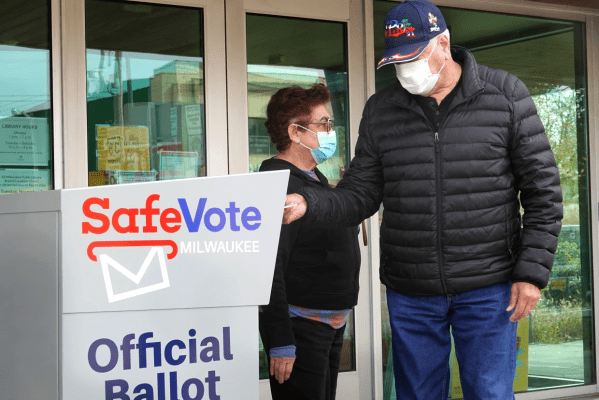
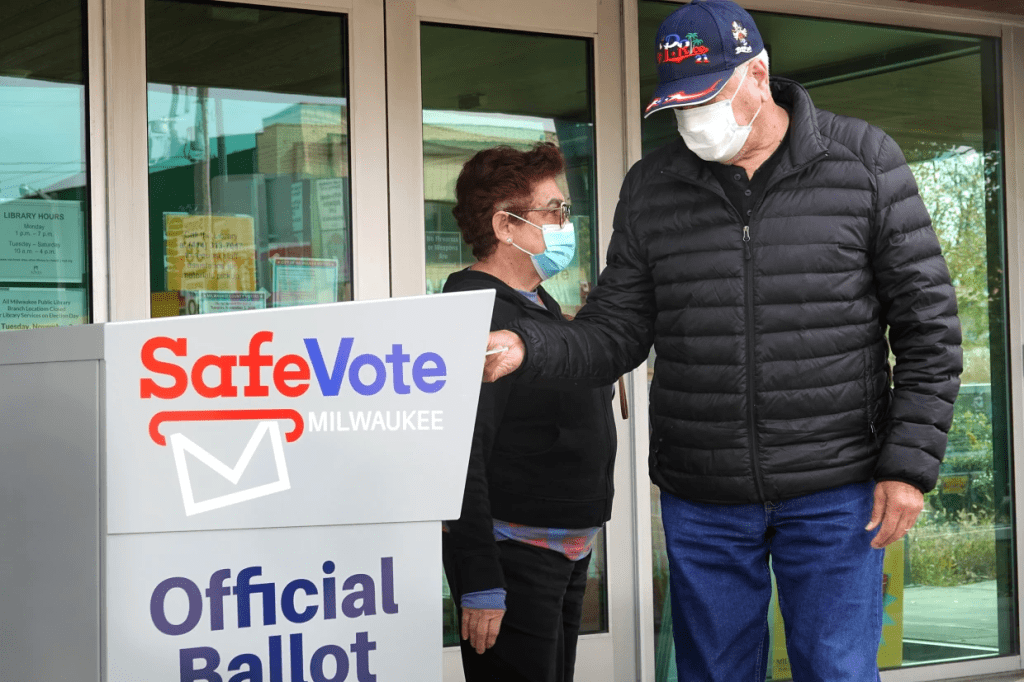
On Friday, the Wisconsin Supreme Court voted 4-3 to reverse a previous decision and allow the widespread use of ballot drop boxes across the crucial battleground state. This decision overturns a ruling from less than two years ago that restricted most drop boxes, emphasizing that municipal clerks now have the discretion to utilize secure drop boxes within the bounds of the law.

The decision, anticipated after liberal justices signaled their stance during May’s oral arguments, is poised to significantly impact Wisconsin’s 2024 presidential election dynamics. During the 2020 Covid-19 pandemic, Democrats widely encouraged drop box use among voters, a trend likely to continue this fall. Conversely, despite past Republican claims linking drop boxes to voter fraud, some Wisconsin Republicans are now advocating their use in light of the court’s ruling.

This ruling marks the latest development in Wisconsin’s electoral landscape, following a series of legal challenges and policy changes. Previously, the state Supreme Court, under conservative influence, restricted drop box locations to election clerk offices in a 2022 decision. However, with a shift in court composition favoring liberals in 2023, challenges led by Democratic groups sought to overturn these restrictions, arguing that Wisconsin law neither expressly prohibits nor mandates drop box use for returning absentee ballots.

With the court’s focus solely on the correctness of the 2022 ruling, this decision is expected to prompt further debate and adaptation among both political parties leading up to the upcoming elections in this pivotal swing state.

In the years following the 2020 election, former President Donald Trump and his allies frequently criticized the use of drop boxes for absentee ballots, falsely alleging widespread voter fraud. However, there has been a recent shift within the GOP nationally towards more favorable attitudes regarding early and alternative voting methods, including drop boxes. Even Trump himself has started to soften his stance on this issue.

NBC News reported in May that the Wisconsin GOP planned to encourage their supporters to use drop boxes in the upcoming presidential election if the state Supreme Court reinstated them, despite their previous criticisms. They also outlined plans to deploy volunteers to monitor drop boxes in Democratic-leaning areas.

The ruling on Friday, which reinstated the use of drop boxes, was largely expected. The four liberal justices on the Wisconsin Supreme Court had indicated during May’s oral arguments that they believed the court’s previous ruling 22 months ago was incorrect. They emphasized that Wisconsin law does not explicitly address drop boxes and dismissed conservative claims of fraud associated with their use in past elections, citing a lack of evidence of such wrongdoing in the 2020 election.

Conservatives in the state had argued against revisiting the issue so soon after the previous decision, citing the doctrine of “stare decisis” which upholds legal precedents. However, liberal justices on the court rejected this argument, drawing parallels to the U.S. Supreme Court’s recent decision overturning Roe v. Wade, where they criticized the earlier decision and its consequences.

Justice Jill Karofsky, who dissented in the original 2022 ruling, highlighted the flawed reasoning behind the decision and its potential negative impact. Janet Protasiewicz, whose election victory in 2023 shifted the court’s balance in favor of liberals, joined the majority in Friday’s decision to reinstate drop boxes.

The Supreme Court is avoiding cases related to transgender rights.

This blog originally appeared at VOX.


For the third instance in the past year, the Supreme Court declined a chance to significantly worsen the situation for transgender youth.


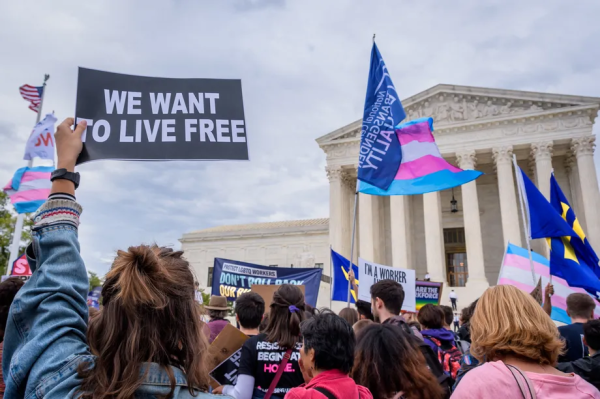
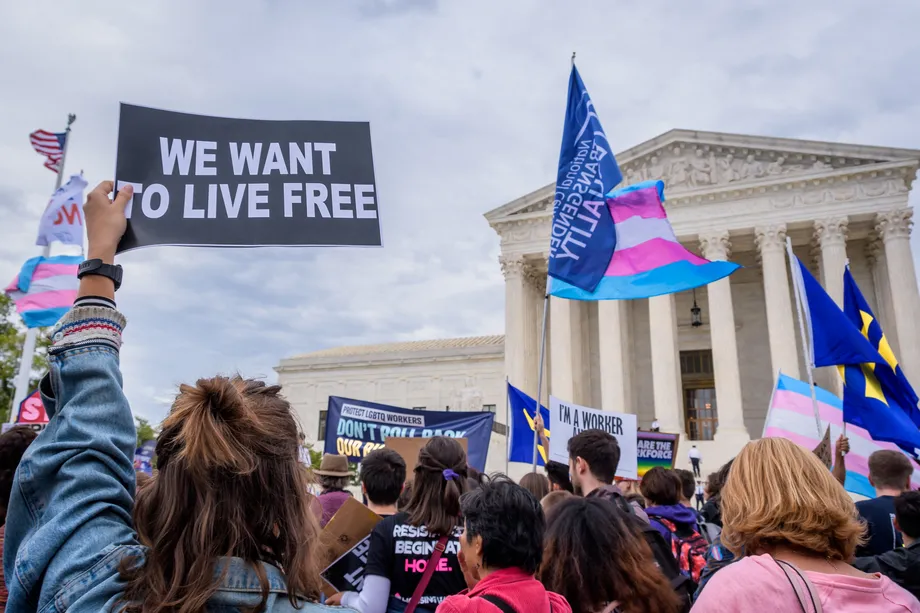
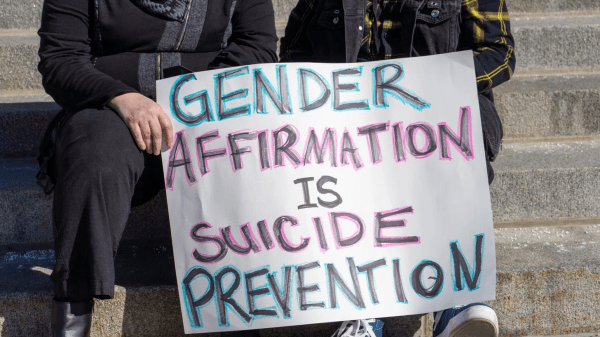
Protesters advocating for transgender rights outside the Supreme Court building in 2019.

For the third occasion in the past year, the Supreme Court surprisingly declined a case seeking to curtail the rights of young transgender individuals in a significant portion of the country.


On Tuesday, the Court declared its decision not to consider Metropolitan School District v. A.C., a case questioning whether public school districts can mandate transgender students to use bathrooms corresponding to their assigned birth sex rather than their gender identity.

In the A.C. case, the United States Court of Appeals for the Seventh Circuit sided with three transgender students, allowing them to use bathrooms that align with their gender identity. With the Supreme Court opting not to review this case, the Seventh Circuit’s decision will remain in effect, at least for the time being. The Seventh Circuit holds authority over federal legal matters in Illinois, Indiana, and Wisconsin.


Despite meeting the usual criteria the justices typically use to determine which cases to consider, the Court declined to take up this case. Notably, the issue of whether transgender students have the right to use bathrooms aligning with their gender identity has generated division among federal appeals courts, prompting the Supreme Court to often intervene and address such conflicts.


The opposition to transgender rights was also advocated by Republican attorney Paul Clement, a highly influential figure with considerable sway over the conservative wing of the Court, who previously served as the US Solicitor General.


A.C. marks the second occasion in slightly over a month where the Court has abstained from a significant LGBTQ rights dispute causing discord among lower court judges. In December, the Court similarly declared that it would not review Tingley v. Ferguson, a case challenging Washington state’s limitations on “conversion therapy” — a practice attempting to convert LGBTQ individuals into cisgender heterosexuals or hinder them from expressing their authentic sexual orientation or gender identity.


The lower court, which affirmed Washington’s restrictions, emphasized in its opinion that “every significant medical, psychiatric, psychological, and professional mental health organization opposes the utilization of conversion therapy.


Furthermore, in April of the previous year, in a case known as West Virginia v. B.P.J., the Court chose not to remove a transgender student from her middle school girl’s cross-country team. A lower court had halted a West Virginia state law preventing her from competing with other girls, and the Supreme Court declined a petition to temporarily reinstate that law during the ongoing litigation. (There remains a possibility that this case may return to the justices in the future.)


These rulings are unexpected for three main reasons. First, Republican appointees hold six out of the nine seats on the Supreme Court, and this Court has typically been highly receptive to concerns raised by the religious right. As recently as last June, the Court decided that a conservative Christian website designer possesses a constitutional right to discriminate against LGBTQ customers.


Moreover, both A.C. and Tingley met the standard criteria that justices typically employ to decide which cases to consider. In each instance, lower courts were in disagreement regarding the interpretation of federal law concerning LGBTQ rights.


Furthermore, in all three cases, the anti-LGBTQ side presented a plausible argument asserting that current law aligns with their desired result. The Tingley case hinges on conflicting language in a 2018 Supreme Court decision, which could be interpreted to endorse either outcome in Tingley. Meanwhile, the A.C. and B.P.J. cases pose questions that the Court left unresolved in its pivotal LGBTQ rights decision in Bostock v. Clayton County (2020).


In essence, it seems that, for the time being, the Court is avoiding cases related to transgender rights.


Cases involving transgender rights related to bathrooms and sports pose particularly intricate questions under the existing legal framework.


In the case of Bostock, the question revolved around whether a federal law prohibiting workplace discrimination based on “sex” also encompasses discrimination against LGBTQ individuals. Six justices determined that it does, and the Court affirmed that “it is impossible to discriminate against a person for being homosexual or transgender without discriminating against that individual based on sex.” For instance, if an employer dismisses a male employee for dating a man while allowing female employees to date men, it constitutes ordinary sex discrimination, as the employer permits women to engage in an activity not allowed for men.


Likewise, Bostock established that if an employer punishes an “employee who was identified as female at birth” for presenting as a man or participating in stereotypically male behavior, while not penalizing “a person identified as male at birth” for the same actions, it constitutes sex discrimination prohibited by federal law.

Although this marked a historic triumph for transgender rights, it also left unanswered one of the crucial questions in such cases: whether the legal concept of “gender” is distinct from the “status as either male or female [as] determined by reproductive biology.” Bostock, indeed, was decided under the assumption that the term “sex” exclusively pertains to “biological distinctions between male and female.”

Nevertheless, even under the assumption that the law pertains solely to “biological” sex, Bostock still determined that most forms of discrimination against transgender individuals contravene that law. This is because such discrimination inherently involves treating men (or individuals assigned male at birth) differently from women (or individuals assigned female at birth).


Federal law, nevertheless, allows for sex discrimination in specific restricted situations. For instance, the law prohibiting sex discrimination in most educational institutions permits these institutions to have “separate living facilities for the different

Likewise, longstanding interpretations of federal prohibitions against sex discrimination acknowledge the allowance of sex-segregated sports teams, as otherwise, women-only teams would not be viable.


Cases such as A.C. and B.P.J., in essence, pose a question that Bostock did not conclusively address. Bostock did not take a definitive stance on whether a transgender man is considered a man. In contrast, the Seventh Circuit had to determine, in deciding the A.C. case, “who counts as a ‘boy’ for the boys’ rooms, and who counts as a ‘girl’ for the girls’ rooms.”


If you seek a more in-depth examination of the legal arguments supporting and opposing the obligation for schools to treat transgender girls and boys equivalently to their cisgender counterparts, I delved into those arguments in greater detail in this piece. Presently, it’s worth noting that the Supreme Court seems resolute in avoiding a definitive resolution to this question, despite the ongoing divergence of opinions in lower courts on how it should be addressed.

Wisconsin Governor Vetoes Legislation Affecting Medical Care for Transgender Youth, Reiterates Support for Transgender Youth

This blog originally appeared at Human Rights Campaign.

Gov. Evers Makes Good on Promise to Stand With LGBTQ+ Youth, Fight for Equality


MADISON, WI — Today, the Human Rights Campaign (HRC), the nation’s largest LGBTQ+ civil rights organization, commended Wisconsin Gov. Tony Evers for vetoing AB465, legislation perceived as anti-LGBTQ+ and designed to limit healthcare options for transgender youth. Governor Evers’ veto aligns with his public pledge to uphold equality in the state and shield LGBTQ+ young individuals from discriminatory far-right policies.

Wendy Strout, HRC’s Wisconsin State Director, issued the subsequent statement:

“We appreciate Governor Evers, a crucial ally in Wisconsin’s equality struggle, for vetoing this divisive bill. It’s not a politician’s role to dictate medical decisions for constituents. That choice is exclusively between providers and families—end of story.”


In October, Governor Evers reaffirmed his support for LGBTQ+ youth on social media:


“I want LGBTQ folks, including our trans kids, to know they are welcome, wanted, and belong here in Wisconsin, and I will keep fighting every day to continue our work to build a state where they feel safe, supported, and loved being exactly who they are.”

AB465 would have compelled state medical boards to revoke the medical licenses of healthcare professionals offering life-saving, medically necessary healthcare to transgender youth. Despite transgender youth constituting a small percentage of the youth population, the care they receive is rooted in decades of clinical research and is endorsed by every major medical association in the US, representing over 1.3 million doctors.


Governor Evers’ rejection of the anti-LGBTQ+ legislation is the most recent instance of pro-equality leaders acting to safeguard LGBTQ+ individuals. In neighboring Michigan, the pro-equality majority in the state legislature extended current civil rights laws to ensure nondiscrimination protections for the LGBTQ+ community, signed into law by Governor Gretchen Whitmer. Similarly, in Arizona, Governor Katie Hobbs vetoed several anti-LGBTQ+ bills, including one targeting transgender individuals, pledging to veto any legislation aiming to harm children.

Non-medical politicians are overstepping by intruding on the rights of parents of transgender youth. No parent should face a situation where their chosen course of action, backed by their doctor and supported by the majority of medical experts, is forbidden by the government. This interference occurs when politicians attempt to prohibit best-practice healthcare.

THE FACTS: Gender-Affirming Care


Every reputable medical organization, representing over 1.3 million doctors in the United States, advocates for age-appropriate gender-affirming care for transgender and non-binary individuals.“Transition-related” or “gender-affirming” care varies for each transgender and non-binary individual. Decisions are collaboratively made by parents, their children, and doctors. No medical interventions with permanent consequences occur until a transgender person is old enough to provide fully informed consent.

This is the reason why majorities of Americans are against criminalizing or prohibiting gender-affirming care.Recent national surveys reveal that majorities of Americans, totaling 54% in the NPR/Marist survey conducted on 3/20-23, 2023, and 53% in the Grinnell College National Survey conducted on 3/14-19, 2023, oppose “criminalizing” or “banning” gender transition-related medical care for minors. The opposition is primarily driven by Democrats and Independents, indicating that support for such bans could pose risks in a general election context.


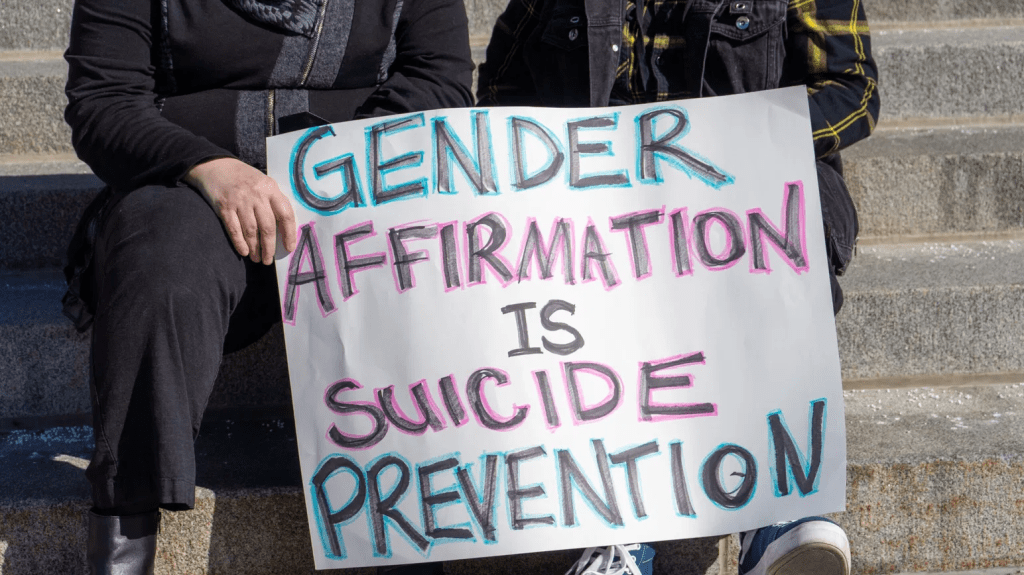
Gender transition is a personal journey encompassing changes such as wardrobe, names, and hairstyles to align with an individual’s gender identity. Individuals have the autonomy to decide whether to use medications or undergo surgeries as part of their gender transition. The process is a personal choice made in consultation with family and healthcare professionals. Therapists, parents, and healthcare providers collaborate to determine the most appropriate changes for a child’s well-being. For many young children, gender-affirming care is primarily social in nature.

  • New name
  • New hairstyle
  • New clothing
  • None of this care is irreversible.

Transgender identity is not a recent phenomenon. While the media may portray transgender issues more prominently nowadays, being transgender is not a recent development. Transgender individuals have always existed, and their experiences persist irrespective of legislative measures. It’s important to note that the vast majority of transgender individuals remain consistent in their identity over time.

All forms of gender-affirming care are tailored to the individual’s age, deemed medically necessary, endorsed by major medical associations, and determined collaboratively with medical, mental health experts, and parents. In numerous instances, this care proves to be life-saving. Recent research from the Trevor Project offers compelling data — transgender youth with access to gender-affirming hormone therapy experience reduced rates of depression and a lower risk of suicide.

For additional information, kindly visit hrc.org/transgender, along with these additional resources:

Why Wisconsin Republicans are talking about impeaching a new state Supreme Court justice

This blog originally appeared at AP News.

In the midst of a highly charged political landscape, Wisconsin finds itself at the center of a contentious debate that has sent shockwaves through its political circles. The topic of discussion? The potential impeachment of a newly appointed state Supreme Court justice. As the echoes of partisan discord reverberate, this blog delves deep into the intricacies of why Wisconsin’s Republicans are considering such a dramatic move and the implications it holds for the state’s judicial system, its citizens, and the broader national discourse. Join us as we unravel the unfolding controversy and explore the factors fueling this unprecedented debate.

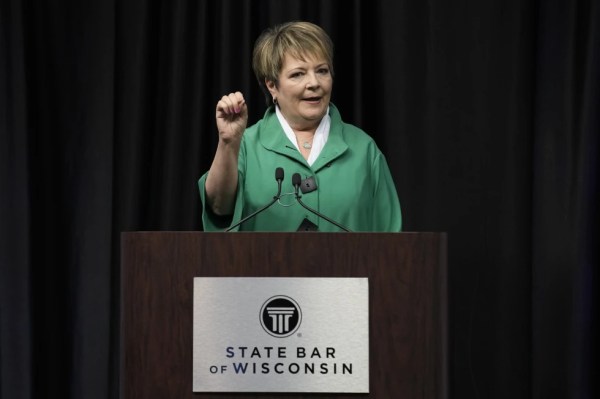
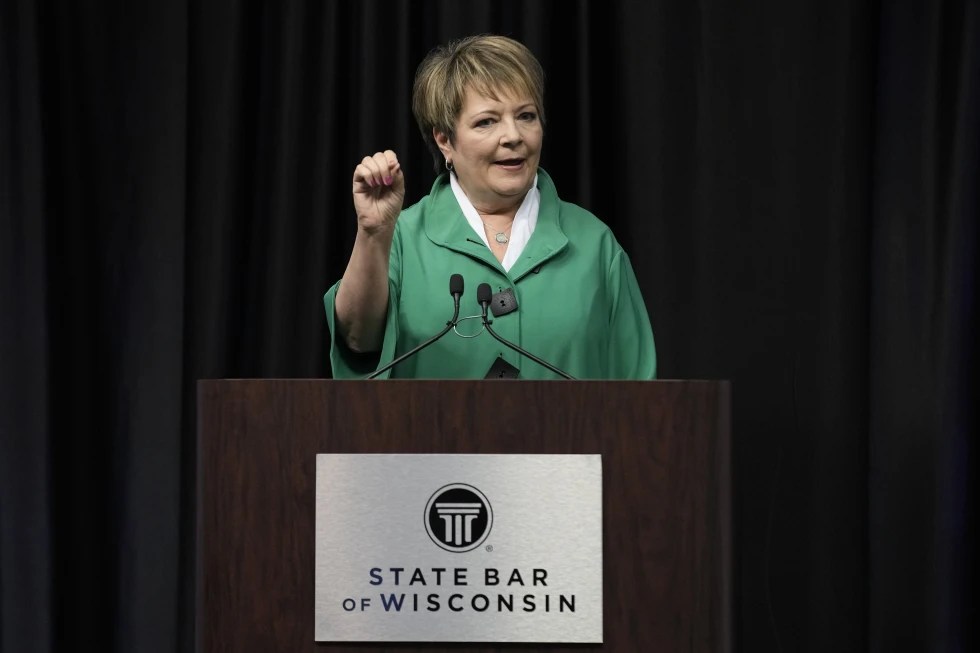
 Wisconsin Supreme Court candidate Democratic-supported Janet Protasiewicz participates in a debate, March 21, 2023, in Madison, Wis. Even before the newly elected justice who gave liberals a one-seat majority on the Wisconsin Supreme Court has heard a case, Republican lawmakers are talking about taking the unprecedented step of impeaching and removing her from office. And they have the votes to do it.

The Republican-controlled Legislature in Wisconsin is considering the impeachment of Justice Janet Protasiewicz, a newly elected liberal state Supreme Court justice, even before she has had the opportunity to hear a case. This move is highly unusual and has raised concerns about the politicization of the state’s judiciary.

The impeachment effort is taking place at a time when the state Supreme Court is being asked to review legislative electoral maps that were drawn by the Republican-controlled Legislature in 2011. These maps were instrumental in solidifying the Republican Party’s majorities in the state, with a 65-34 majority in the Assembly and a 22-11 supermajority in the Senate.

The situation raises questions about the separation of powers and the potential for political interference in the judicial branch. It underscores the broader national debate over the fairness and neutrality of the judiciary, particularly in cases related to redistricting and electoral politics.

The attempt to impeach a sitting justice is a rare and contentious move that has sparked debates about the role of the judiciary and the boundaries of political power in Wisconsin. It remains to be seen how this situation will unfold and what implications it may have for the state’s judicial system and political landscape.

Protasiewicz won election in April to a 10-year term on the Wisconsin Supreme Court beginning Aug. 1. Her 11-point victory gave liberals a 4-3 majority, ending a 15-year run with conservatives in control.

During her first week in office, two lawsuits were filed by Democratic-friendly groups and law firms seeking to overturn Republican-drawn legislative maps.

WHY IS THERE TALK OF IMPEACHMENT?

Republican lawmakers, including Assembly Speaker Robin Vos, have raised concerns about Justice Janet Protasiewicz’s impartiality in redistricting cases pending before the Supreme Court. They allege that comments she made during her campaign suggest she has prejudged the cases. Additionally, they argue that her acceptance of nearly $10 million in campaign funds from the Wisconsin Democratic Party disqualifies her from participating in these cases.

It’s worth noting that the state Democratic Party is not a party to either of the redistricting lawsuits, but they support the legal challenges.

As of now, the court has not made a decision on whether it will hear the redistricting challenges, and Justice Protasiewicz has not indicated whether she will recuse herself from these cases, including the decision on whether to hear them.

If Justice Protasiewicz were to recuse herself, the court would be evenly divided with three liberal and three conservative justices. However, it’s important to note that conservative Justice Brian Hagedorn has previously aligned with liberal justices on significant cases, which has caused frustration among Republicans.

This situation highlights the complex and contentious nature of judicial appointments and the potential for political considerations to impact the independence and neutrality of the judiciary. It also underscores the ongoing debate over the role of money in judicial campaigns and the challenges of maintaining public confidence in the judicial system.

Click here to see full blog: https://apnews.com/article/wisconsin-supreme-court-justice-impeachment-9b28383d30371c8c109b644f9b9a8d72

Blog at WordPress.com.

Up ↑