Music superstar Chappell Roan has announced the launch of her organization devoted to supporting trans youth.
The Midwest Princess Project — a nod to her album, The Rise and Fall of a Midwest Princess — has already raised more than $400,000 through fundraising efforts at Roan’s recent pop-up shows.
“Those funds will be donated to incredible organizations making a positive impact for trans youth in their communities,” Roan wrote on social media when launching the project in late October.
The post named six organizations to which it has already donated: The Ali Forney Center and The Center in New York City, the GLO Center and The Center Project in Missouri, and the TransLatin@ Coalition and Trans Wellness Center in Los Angeles.
The TransLatin@ Coalition and The Ali Forney Center are some of the first beneficiaries. The project’s website says its goal is to “uplift trans youth and LGBTQ+ communities through action, care, and connection.”
The project’s launch is in keeping with Roan’s pledge to donate a portion of ticket sales from her tour to trans organizations. During a red-carpet interview at the Grammy Awards in early February, Roan acknowledged the state of transgender rights in the U.S. in just the first month of the current presidential administration.
“It’s brutal right now,” Roan said, “but trans people have always existed, and they will forever exist, and they will never, no matter what happens, take trans joy away, and that has to be protected more than anything.”
“I would not be here without trans girls,” she added. “So, just know that pop music is thinking about you and cares about you. And I’m trying my best to stand up for you in every way that I can.”
During a live show in October, she also opened up about how she struggles with fame but that it’s all worth it to be able to spread queer joy.
She said she has questioned why she continues in her career when it makes her feel so “left out in public” and “so awkward all the time,” but that the tour helped her realize exactly why she keeps going.
“I always felt, actually, ‘Why am I putting myself through this? If this is taking so much away from me, what is this for?’ Then I started doing shows again and it all made sense, it was to literally bring queer people joy,” she said.
“There [are] so many things in the world that are so ‘F**k you’,” she continued, “and then there is this. It’s the only thing that matters is joy anymore to me, and protecting that, and peace and safety. So, I hope you know that when you are here, you are safe, and I want you here. You can be whoever you are tonight. You’re cherished for everything that you are.”
She said protecting that joy is one of the most important things, and “even if you’re not queer, I hope you know that I include you.”
President Donald Trump’s administration has warned Vermont that its policies meant to support LGBTQ foster youth may violate federal law, potentially threatening federal funding.
The Oct. 16 letter, written by Alex Adams, assistant secretary of the federal Administration for Children and Families, directed Vermont Secretary of Human Services Jenney Samuelson to provide a written response explaining how the state would address Adams’ concerns.
“It has been brought to my attention that certain policies and procedures in Vermont deny qualified foster and adoptive parents the opportunity to provide children a loving home solely because they cannot, in good conscience, commit to affirming a hypothetical child’s gender identity,” Adams wrote. “Such policies are contrary to the purpose of child welfare programs and inconsistent with our interpretation of federal diligent recruitment plans and constitutional protections, including the First Amendment.”
Other states, including Massachusetts, New York and California, have received similar letters. Vermont’s involvement was first reported by The Imprint, a nonprofit news publication focused on vulnerable children and families. About a third of foster youth identify as LGBTQ, according to multiple studies.
While Adams’ letter does not reference specific Vermont policies, in 2024, two Vermont couples sued the Department for Children and Families, arguing that policies requiring foster parents to affirm a foster child’s sexual orientation or gender identity are unconstitutional and discriminate against Christians. A second lawsuit related to foster parent policies was later brought by a separate family that year.
The prominent conservative legal firm Alliance Defending Freedom represented the couples in the first suit. Similar lawsuits have cropped up across the country, including in Oregon, where a federal appeals court eventually ruled the state’s policies intended to protect LGBTQ foster youth violated free speech. The Vermont lawsuits now sit with the 2nd U.S. Circuit Court of Appeals after the families appealed a lower court’s ruling against them.
Per Vermont’s Department for Children and Families policy, “discrimination and bias based on a child or youth’s real or perceived sexual orientation, gender identity, or gender expression” is prohibited.
A department spokesperson said no one was available Tuesday for an interview regarding the letter from the federal government and instead requested questions in writing.
In a statement, Aryka Radke, a Department for Children and Families deputy commissioner, wrote that the department “is committed to ensuring that young people in our custody are safe and supported. We are currently reviewing the letter with our legal team.”
Radke did not respond to questions about what funding could be at risk.
While Adams, in the letter, did not explicitly threaten to withhold federal funding from Vermont, he did allude to the possibility.
“Please provide a written response outlining how you will review and, where necessary, amend policies to bring them into alignment with these values and applicable law,” he wrote. “As you know, my responsibilities include monitoring the use of relevant federal funds and ensuring compliance with federal law.”
The Administration for Children and Families did not respond to a request for comment.
As first reported by Manchester Evening News, at least two children were given leaflets that featured the logo of Grace Fellowship Manchester, a group “dedicated to Biblical Christianity” and based at St Stephen’s Church in the town of Middleton, which is five miles northeast of Manchester. Its website shows that it appears to be linked to Grace Community Church in San Antonio, Texas.
The one leaflet, a photograph of which was shared by a parent on social media, was headlined “ARE YOU A GOOD PERSON?”
Underneath the header was a graphic of a mobile phone with a mimic text exchange.
“Hey, I’ve got a question for you. Are you a good person?” the first mock text message reads.
“YES! I’m good! Not perfect… but I’ve never done anything that bad!” the reply reads.
In response, the next text states: “The Bible says; Do not be deceived: neither the sexually immoral, nor idolaters, nor adulterers, nor homosexuals, nor thieves, nor the greedy, nor drunkards, nor revilers, no swindlers will inherit the Kingdom of God.”
“Is that really in the Bible?”
“Yes!” the text confirms. “It’s 1 Corinthians 6:9-10. But keep reading to find out how you can be forgiven and have eternal life.”
Surrounding the text exchange were the words including “Homosexuals”, “Drunkards”, “Idolators” and “Swindlers”.
“God designed marriage to be between one man and one woman”
Another leaflet including the statements: “God designed marriage to be between one man and one woman. And anyone who indulges in sex outside of marriage…. no such person will inherit the Kingdom of God. BE NOT DECEIVED!
“God isn’t being cruel in warning us. He shows us we’re in trouble so that we’ll realise how desperately we need his help to fix us.”
In Grace Fellowship Manchester’s Statement of Faith – which lists several pages of scripture from the Bible – whilst there are verses from Corinthians included, there is no direct citation from Corinthians 6:9-10.
The church says that its Statement of Faith was “written by the elders” of Grace Community Church in San Antonio, Texas, which does cite Corinthians 6:9-10 in its own Statement of Faith. A slightly differently worded version reads: “Or do you not know that the unrighteous will not inherit the kingdom of God? Do not be deceived: neither the sexually immoral, nor idolaters, nor adulterers, nor men who practice homosexuality, 10 nor thieves, nor the greedy, nor drunkards, nor revilers, nor swindlers will inherit the kingdom of God.”
Grace Community Church’s views on LGBTQ+ issues are not particularly inclusive, stating that God only created male and female, “God intends for sexual intimacy to occur only between a man and a woman who are so married to one another” and the “only acceptable alternative to marriage between one man and one woman is the faithful single life of celibacy”.
“Discriminatory and offensive”
Speaking to the Reach PLC outlet, mum Victoria Loop said she was “angry” with the content of the leaflets, saying it is “just not appropriate for young children”.
” I am not against people expressing their opinions for the most part but when it becomes discriminatory and offensive it is just wrong,” Loop said.
“There were other leaflets amongst the other children’s treats however they were more appropriately worded and not on this level. My views on the matter is that there was quite some degree of misjudgement when deciding to include this particular leaflet in treats to young children.
She added: “I have many friends and family that this would hurt very deeply and I am angry on their behalf as much as for my daughter having to ask questions as why some people haven’t yet got the message in this age that homophobia, no matter how benign this may seem to some, is not acceptable. Let alone giving this opinion to children with no consideration of their innocence or family circumstance.
“I am aware that this may be an unpopular stance from many different religious groups, however the method of delivery of their rhetoric and beliefs in this case needs questioning and scrutinising. We have age restrictions on many things such as films and television and restrictions on products and publications for the protection of children.”
“Blatantly homophobic literature”
Local councillor Dylan Williams, who is a gay man that attends church, criticised the leaflets for both their homophobic and sexually explicit content.
“I believe most Christians will be upset by this blatantly homophobic literature and would condemn it. I am also concerned that people think it acceptable to give literature on it with adult words and sexually explicit language to Children as young as six,” Williams told Manchester Evening News.
“Homophobia seems to be becoming more and more prevalent leading some members of the community to feel unsafe and this is and should not be acceptable in our society. We must say no to hate.”
PinkNews has approached Grace Fellowship Manchester for comment.
Roz Keith found out her son was transgender on his terms.
The suburban mom was asking about haircuts, and Hunter, just shy of 14 at the time, texted her some photos. “He started texting me pictures of boys with short haircuts. And I said, ‘Oh, these are very masculine. And Hunter said, ‘Uh huh,’ and walked out of the room.”
It was typical teenage behavior, but the conversation that followed was life-changing, Keith said.
“I went upstairs, knocked on his door, and said, ‘What’s going on?’ And that’s when he told me. He said, ‘I’m a boy. I’m transgender.’ That was how he came out to me.”
Keith was caught off guard on multiple fronts. “All the little things from the time he was super little then became the hammer over the head.” She thought about Hunter playing with boy dolls, preferring time with boys to girls, choosing Narnia’s Prince Caspian over all the Disney princess costumes.
“I saw this one male avatar in a game, this buff, masculine character that he had created, and I said, ‘Oh, that’s a guy.’ And he’s like, ‘Yeah, okay.’ You know, no explanation. So, all along, I just kept saying ‘Okay,’ too.”
Keith wasn’t a helicopter parent. “We really encouraged our kids to be independent,” she said, “and we wanted them to be happy and successful and productive, whatever that meant for them.” But she also said a transgender child “just wasn’t in my consideration set.”
“In my world, I didn’t have a friend who had a trans child. We didn’t have any adult in our community who was trans or in the process of coming out or identified in any way remotely that way. So it was really a foreign concept from that perspective.”
While those conversations weren’t happening in Keith’s world, they certainly were in her precocious online teenager’s.
“He figured it out because he was watching YouTube, and he saw a trans person on this show talking about their coming out. And that was his light bulb moment. And he said, ‘Oh my God, that’s me.’”
Hunter spent a long time contemplating his revelation and researching what to do about it before he shared anything with his family.
“He’d been researching for two years,” Keith recalled. “He had a checklist of everything he wanted to do.”
With Hunter’s declaration, his state of mind came into focus for his mom.
“Based on things he shared when he was younger, he felt different, and he didn’t know why he felt different, and he didn’t have language to explain it,” Keith realized. “And it created a lot of struggle and conflict, and, I think, anger for him.”
“He said, you know, ‘I just felt like the weird kid.’”
Keith decided to close that gap – for her son and for others.
In 2015, she founded Stand with Trans, a support network devoted to trans kids and their parents and caregivers. The nonprofit provides transgender and nonbinary youth with life-saving programs like mental health services, peer support groups, educational resources, and, most importantly, Keith says, “validation and empowerment.”
Stand With Trans also provides critical support to parents or guardians of trans youth. Its Ally Parents program allows loved ones to text, call, or email other parents of trans youth for connection and advice.
Letting go
“Parents can have a hard time when their child comes out and wants to transition to a different gender than the one they were assigned at birth,” Keith said.
“They struggle to let go of the child they thought they had and the dreams that they had, right? If a child was assigned female at birth, a parent might say, ‘I just imagined her walking down the aisle in the white dress,’ you know? And they grieve this child as if the child has died.”
“I never took that approach,” Keith said, “because I knew that my child was very much alive and that it was my job to make sure that he stayed that way. You know, it was my job to make sure that he was mentally well and that he got what he needed so he could thrive.”
For Hunter and his family, checking off those steps to transition wouldn’t come easily.
“There were no pediatric gender clinics who were seeing trans youth covered by our insurance. There were no therapists who we could find who were trained to see trans adolescents. There were no support groups. There were no parent groups. There was nothing for youth. Like, literally every phone call was a brick wall,” Keith said.
But Hunter wasn’t waiting on the details. He decided to come out on Facebook.
“My daughter came to me and said, ‘Did you see what Hunter posted?’ And I said, ‘No.’”
While Keith and her husband had talked to a few close friends about Hunter, the family hadn’t been sharing much “because it wasn’t our story to share — that was up to him.”
With Hunter’s announcement, “It was like the floodgates had opened,” Keith said.
The family agreed to tell their story.
They began speaking publicly about their experience. “And there was just like this swell of relief, I guess, and joy from families in the community who had been trying to manage this process with their kiddo and had no one to talk to. There was really nobody — medically, psychologically emotionally — just literally no one was there.”
“Families like mine, trans adults, multi-generational families, like, every member of the community were reaching out and saying, ‘Oh, my God, I could have uttered those words. Your son reminds me of my son.’”
Hunter’s story had inspired an outpouring of empathy and recognition, but the story he shared online didn’t address his lingering sense of isolation.
“Even my son said, ‘I don’t know anyone like me.’ And so as we started to meet families,” Keith said.
“I was literally arranging play dates for my 14-15-year-old. Like, I was inviting kids to come over and just hang out, and — fly on the wall — they talked about stupid stuff, like, ‘Oh, don’t you hate getting socks for Christmas presents?’ And it showed these kids that being trans didn’t mean that you weren’t like other kids. You know, you were just another teen.”
Those interactions became the heart of the mission that guides Stand with Trans today.
The rise of parents’ rights
The founding of Stand With Trans accompanied a rising awareness of gender diversity in the 2010s, but with that also came a conservative backlash wrought with anti-trans animus.
Before Hunter came out, “Nobody was talking about bathroom bills and trans girls in sports. Those conversations weren’t happening,” Keith said.
Since then, trans kids like Hunter have been buried under an avalanche of discriminatory legislation, from gender-affirming care bans to a trans-erasing, book-banning frenzy organized by groups like Moms for Liberty to an online hate campaign led by accounts like Libs of TikTok.
Adding fuel to the fire: the president’s obsession with “gender ideology” and his “us” vs “them” politics of division.
The right has hawked its anti-LGBTQ+ agenda under the same, one-sided banner: parents’ rights.
Keith said the phrase is self-serving.
“I don’t think that any government should be allowed to say what my child has or doesn’t have access to, because I’m the parent. They’re not in my home parenting my child, so they don’t know what they’re going through. How do you make that global statement?” she asked.
“It is up to me to make a decision about my child’s medical care,” Keith said. “And as far as my child goes, if he was denied the opportunity to go on testosterone and not medically transition, I think our conversation would be very different.”
Keith points to a perversion of theology as one basis of the far-right’s anti-trans animus.
“I’m not Christian. I was raised Jewish. But my understanding from my friends who are Christian and very affirming and very accepting, their response is, ‘The Jesus I know would open the door for everyone, and would welcome everyone to the table.’ There’s really a disconnect between saying you’re a Christian and then not being open to accepting people as they are, as they show up.”
“Far be it for me to tell anyone what they should believe,” Keith added, “but you don’t get to bring it into my home and tell me how to care for my child, because those aren’t my beliefs. That’s not what I understand, right? It’s a secular society.”
“Your belief system should not infringe on my rights.”
Seeing around the corner
Stand with Trans was born to help protect trans kids from the attacks by providing love, knowledge and support — and power over their own lives.
“Our mission is so simple,” Keith said. “It’s empowering and supporting trans youth and their loved ones. So that’s it. We know that if we educate and support the caregivers, the loved ones, the parents, that the young people are going to do better, and if we find ways to make life better and easier for them, they’re not only going to survive, but they’re going to thrive.
“I know with my own kid, they couldn’t see themselves having a future. I think it’s hard enough for young people who don’t see around the corners, right? It’s hard to even imagine, like, ‘What do I want to be when I grow up.’ But for trans kids, it’s even harder.
“So it’s really important for us to show these young people that they can do whatever they want to do,” Keith said.
“Being trans is one part of their identity. It doesn’t define who they are.”
A federal judge has quashed the Department of Justice’s subpoena for the records of QueerDoc, a telehealth service that prescribes medications and offers consulting for gender-affirming care in 10 states.
The DOJ subpoenaed QueerDoc June 11, requesting personnel information, documents identifying patients, patients’ medical records, billing records, insurance claims, communications with drugmakers, and more. It was among more than 20 such subpoenas issued.
The same day, the DOJ’s Civil Division issued a memo saying it would “prioritize investigations of doctors, hospitals, pharmaceutical companies, and other appropriate entities” for “possible violations of the Food, Drug, and Cosmetic Act and other laws” regarding medications used in gender-affirming care and False Claims Act violations by health care providers who “evade state bans on gender dysphoria treatments by knowingly submitting claims to Medicaid with false diagnosis codes.”
These investigations derived from Donald Trump’s executive order recognizing only male and female sexes as assigned at birth and another denouncing gender-affirming care for minors as “a stain on our Nation’s history” that “must end” and threatening federal funding that provide such care. He also directed the DOJ to investigate providers. In April, Attorney General Pam Bondi released a memo saying the DOJ would “act decisively to protect our children and hold accountable those who mutilate them under the guise of care.” She used the same language about mutilation in a later press release. That a day after QueerDoc filed motions with a U.S. District Court in Washington State to quash the subpoena and seal the court proceedings, according to the court.
“DOJ issued its inflammatory press release declaring that medical professionals have ‘mutilated children in the service of a warped ideology,’ one day after QueerDoc filed these motions, effectively destroying any claim to investigative confidentiality while attempting to sway public sentiment against healthcare providers like QueerDoc,” Judge Jamal Whitehead wrote in his ruling, which came out Monday. “Such conduct appears calculated to intimidate rather than investigate.”
“The question before the Court is whether DOJ may use its administrative subpoena power to achieve what the Administration cannot accomplish through legislation: the elimination of medical care that Washington and other states explicitly protect. The answer is no,” he continued. He noted that gender-affirming care is supported by major medical groups and many courts.
Whitehead added, “When a federal agency issues a subpoena not to investigate legal violations but to intimidate and coerce providers into abandoning lawful medical care, it exceeds its legitimate authority and abuses the judicial process.”
He denied the motion to seal the proceedings “because, despite legitimate safety concerns, transparency in judicial proceedings remains paramount when challenging executive power,” he wrote.
QueerDoc welcomed the ruling. “The court affirmed that government power cannot be used to intimidate providers or breach the confidentiality of patients seeking medically necessary care,” the organization said in a statement on its website. “This is a win not just for QueerDoc, but for every clinician and patient fighting for the right to safe, private healthcare.”
The subpoena was “a calculated attempt by the Trump administration and Attorney General Pam Bondi to weaponize the Department of Justice against transgender people and the clinicians who care for them,” the statement noted. QueerDoc did not surrender any patient information to the DOJ, and care was not disrupted, the group said.
Asked by Politico for comment on the QueerDoc ruling, the DOJ issued this statement: “As Attorney General Bondi has made clear, this Department of Justice will use every legal and law enforcement tool available to protect innocent children from being mutilated under the guise of ‘care.’”
Trump’s Department of Health and Human Services (HHS) seeks to end all Medicaid and Medicare funding for young people’s gender-affirming care (GAC), according to newly proposed rules shared by NPR. A trans activist said the rules would amount to a “de facto national ban” on GAC.
The proposed rules would prohibit all federal Medicaid and Medicare funding — as well as funding through the federal Children’s Health Insurance Program (CHIP) — for any services at hospitals that provide GAC for trans youth.
“These would be proposals that would go out for public comment, it would take months for the Trump administration to issue a final rule, and then, if past is prologue, we would see litigation over whatever the final rules are,” Katie Keith, director of the Center for Health Policy and the Law at Georgetown University, told NPR.
Terry Schilling, president of the American Principles Project, a right-wing think tank that has pushed national transphobia as an effective Republican political strategy, said of the proposed rules, “I think these restrictions are very good. It’s going to change the entire transgender industry, and it’s going to take away a lot of their funding streams.”
“This would be a de facto national ban,” wrote trans activist and civil rights attorney Alejandra Caraballo via Bluesky. “There would still be providers in blue states that don’t take federal funding but the large interdisciplinary teams of just a few years ago would be nearly impossible to maintain. The result is that the care that remains would largely be underground with worse support and likely outcomes.”
“They’ll never be able to fully ban this care,” Caraballo added. “There will always be providers willing to provide it like abortion. Even without access to providers, many trans youth will simply go DIY [do-it-yourself] like trans folks have done for decades. They’re not actually banning this care, they’re making it less safe.”
The administration’s “toxic” war on gender-affirming care
Though there is no federal law banning gender-affirming care, the current presidential administration has sought to eradicate the practice through a January executive order (that has since been blocked by several courts). The order instructed the DOJ to extend the time that patients and parents can sue gender-affirming doctors and to use laws against false advertising to prosecute any entity that may be misleading the public about the long-term effects of gender-affirming care (GAC).
In April, Bondi issued a memo to DOJ employees, telling them to investigate and prosecute cases of minors accessing gender-affirming care as female genital mutilation (FGM), even though hospitals don’t conduct such female genital surgeries. The memo threatened to jail doctors for 10 years if they provide gender-affirming care to young trans people.
The following June, the DOJ sent subpoenas to 20 medical providers who offer GAC to trans youth, demanding patients’ Social Security numbers, emails, home addresses, and information on the care they received, as well as other sensitive information dating back to January 2020. A federal judge blocked the subpoena in one instance and accused the DOJ of going on a “bad faith” “fishing expedition” to interfere with states’ rights to protect GAC within its borders, to harass and intimidate providers from offering such care, and to dissuade patients from seeking such care.
Fewer than 3,000 teens nationwide receive puberty blockers or hormone replacement therapy, according to a 2025 JAMA analysis of private insurance data. Gender-affirming care is supported by all major medical associations in the U.S., including the American Medical Association, the Endocrine Society, and the American Academy of Pediatrics, as safe and life-saving for young people with gender dysphoria.
One doctor interviewed by The Washington Post called the federal government’s crusade against gender-affirming care a “toxic plan” that will force some patients to detransition, potentially forcing them into adverse psychological and physical effects, including increased anxiety, depression, and the development of unwanted physical changes.
A Dallas pediatrician who became the first doctor to be sued under a Texas law banning gender-affirming care for minors has given up her license to practice in the state.
According to TownFlex, the Texas Medical Board confirmed that Dr. May Lau voluntarily surrendered her medical license. In a statement, Lau’s attorney, Craig Smyser, said that she has decided to move her practice to Oregon and sees no reason to maintain her license to practice in Texas.
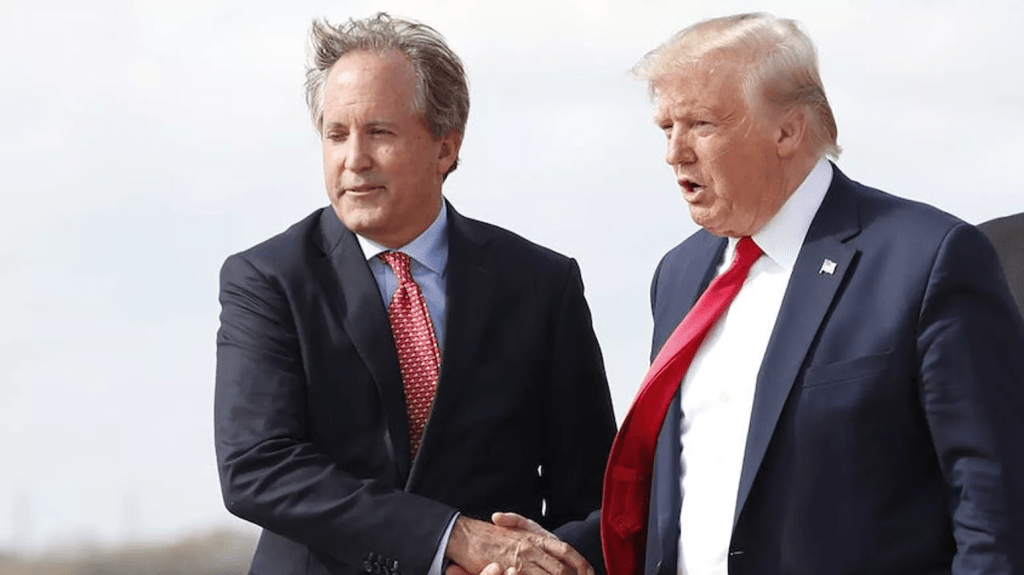
Last year, Texas Attorney General Ken Paxton (R) filed a first-of-its-kind lawsuit against Lau for allegedly providing gender-affirming care to minors in violation of S.B. 14. The state law, which went into effect in September 2023, bans doctors from prescribing hormone replacement therapy and puberty blockers to minors, and from performing gender-affirming surgery on minors.
Paxton’s suit accused Lau of prescribing hormone replacement therapy to at least 21 minors between October 2023 and August 2024. It further alleged that Lau “used false diagnoses and billing codes to mask these unlawful prescriptions.”
Notably, Paxton’s suit falsely referred to gender-affirming care as “dangerous and experimental” and a press release from his office claimed that there is “no scientific evidence” to support the benefits of gender-affirming medication.
In fact, puberty blockers and hormone replacement drugs have for decades been used safely for the purposes of gender transition in trans minors and to treat other medical issues in cisgender children. Gender-affirming care, which encompasses a range of both surgical and nonsurgical treatments, has been endorsed by every major American medical association and leading world health authority as evidence-based, safe, and in some cases lifesaving for transgender minors. Gender-affirming surgical intervention is rarely performed on minors.
In his statement, Smyser said that Lau “continues to deny the Texas Attorney General’s politically- and ideologically-driven allegations,” according to TownFlex.
Paxton, meanwhile, said that Lau’s surrender of her medical license was “a major victory for our state.”
“Doctors who permanently hurt kids by giving them experimental drugs are nothing more than disturbed left-wing activists who have no business being in the medical field. We will not relent in holding anyone who tries to ‘transition’ kids accountable,” he said in a statement, according to TownFlex.
As the outlet notes, Paxton has filed similar lawsuits against two other Texas doctors. Last month, the Texas AG withdrew the state’s suit against Hector Granados after finding no evidence that he violated S.B. 14. However, a lawsuit brought against M. Brett Cooper is ongoing and expected to go to trial in May.
Equality Texas noted that the enforcement of S.B. 14 has led many doctors who provide gender-affirming care to leave the state — making it harder for trans adults to access care.
In Arizona last week, a cisgender male 8th grader was “physically removed” from tryouts for his school’s boys’ basketball team because an error on his original birth certificate incorrectly identified him as being born female.
It’s the latest episode in a “gender ideology”-inspired nightmare for the teenager, Laker Jackson, and his family.
“I’m sad for everybody that it’s come down to this,” mom Becky Jackson told KNXV News in Phoenix.
The Kafkaesque drama was inspired by a clerical mistake 14 years ago, when hospital staff mistakenly identified Becky Jackson’s newborn son as a girl. It was an error Laker’s parents never noticed.
“I give him the birth certificate and they’re like, ‘Did you know this says female?’” Becky Jackson recalled about handing over enrollment paperwork to a school administrator last year.
“I was like, ‘What?’” Becky Jackson said. “I was like, ‘Oh man, that’s so funny.’ So we come home, everyone’s laughing.”
The busy mom of six said correcting the document wasn’t a priority.
“So we just put it in the drawer and moved on,” she said.
The mix-up didn’t cause issues until recently, she told AZ Family.
Last spring, school staff began treating Jackson as female, Becky Jackson said.
The district removed Laker Jackson from an all-boys gym class and mandated he use a separate restroom, despite the family’s assertion that their son is a cisgender boy, assigned male at birth.
Becky’s mom had already started work on changing Laker Jackson’s birth certificate, but “it’s not something that you can fix quickly. You have to have an affidavit signed,” she said.
In the meantime, the 14-year-old continued training to make the boys’ basketball team at his Mesa high school, a 7th to 12th-grade school in the Queen Creek Unified School District.
Becky Jackson said she received the corrected birth certificate over the summer and provided the district with the revised document, along with a doctor’s note confirming Laker’s sex.
But Queen Creek administrators said it wasn’t enough, standing by a rule stating that the school’s determination of a student’s sex would rely solely on an original birth certificate.
“They sent the athletic director of Eastmark High to physically remove Laker from the basketball tryouts in front of all of his friends, in front of the coach,” Becky Jackson said.
“I am a biological boy. I was born a boy,” said Laker Jackson, who heard from friends on the basketball team that “they were talking about it for the entire tryout and even the next day’s tryouts because they were really confused.”
After the family continued to raise objections to Laker Jackson’s treatment, a letter from an administrator said genetic testing to confirm their claim that the child is a boy “could be considered.”
“They may consider changing it if we get chromosomal testing. They didn’t say they would,” Laker’s mom said. She estimated the cost at $1500.
“So who’s going to pay that?” she asked.
In a statement, the district said it was “committed to ongoing dialogue.”
Becky Jackson also said her son will try out for a girls’ team if that’s what it comes to.
The ordeal is a prime example of what activists have long warned: that anti-trans policies are bad for everyone. It’s also quite ironic, considering the very people who want to stop anyone assigned male at birth from playing on girls’ sports teams may wind up forcing a cisgender boy to do just that.
Hate crimes against LGBTQ+ people are rising around the world as politicians target them through legislation and rhetoric.
Anti-LGBTQ+ hate crimes have increased in the past five years across the United States, the United Kingdom, and Europe, according to a new report by the Institute for Strategic Dialogue, with transgender and gender nonconforming people particularly affected. The spike may in part be attributed to world governments passing anti-LGBTQ+ policies, which has “escalated internationally in tandem with political rhetoric.”
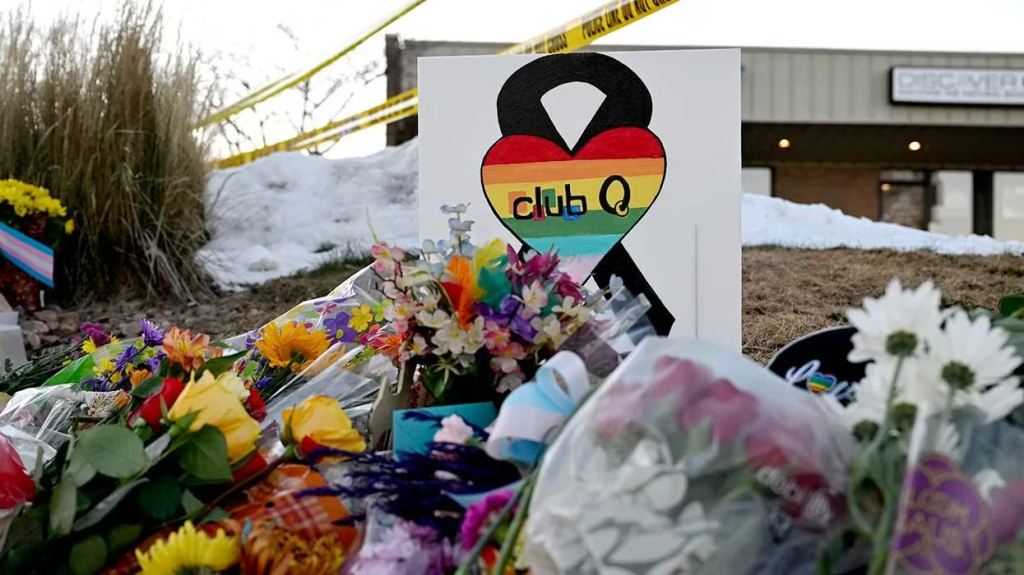
Some of the high profile incidents cited in the report include the mass shooting at the LGBTQ+ bar Club Q in Colorado that left five dead, the 2023 murder of a woman in California who was not LGBTQ+ because she flew a rainbow flag in her store, and the arrests of 20 members of the white supremacist group Patriot Front in 2023 who intended to riot at a Pride event in Idaho.
“These threats come from across the spectrum of ideological extremism, but frequently from groups that also pose a threat to the state and are openly opposed to democratic norms,” the report notes.
In the U.S., hate crimes against LGBTQ+ people remained high despite an overall decrease in violent crime. Out of 11,323 single-bias incidents the FBI reported in 2024, 2,278 (17.2 percent) were based on sexual orientation and 527 (4.1 percent) were based on gender identity. Hate crimes based on sexual orientation were the third-largest category, with crimes based on race, ethnicity, or ancestry being first and religiously motivated crimes second. Gender identity bias was the fourth-largest category.
Threats and harassment against school board officials in the U.S. also increased by 170 percent from the previous year in November, 2024 to April, 2025, the ISD report notes. Many of these threats were explicitly motivated by an anti-LGBTQ+ bias, with the perpetrators objecting to age appropriate queer books or content in public schools.
“LGBTQ+ individuals, who gained unprecedented civil rights in previous decades, are now increasingly targeted by online and offline hate, political rhetoric, censorship and legislation,” the report states. “A series of actions have sought to exclude LGBTQ+ people and culture from public life, ranging from book bans to a spread of legislation restricting trans people. In tandem, terror attacks (or the threat of terror attacks), violent extremist activity, and hate crimes targeting LGBTQ+ individuals have increased or remained consistently high since 2020.”
Juan Viana recalls having a happy childhood in a Christian community in Bogotá but when he came out as gay at age 18, that all changed.
“Unfortunately, that community of support became a place of deep repudiation of who I really was,” said Viana, now 48.
His family took him to a center for ‘conversion therapy’ — aimed at changing a person’s sexual orientation or gender identity — on the advice of a psychologist.
“I was told that homosexuality was a disease, that it was caused by a demonic force that was going to destroy my family,” Viana said.
He said he went to the center willingly and stayed for months, thinking he was protecting his loved ones from destruction but found himself living in a nightmare.
“They break you in all senses: physically, mentally,” he said.
Several times he thought of taking his own life and tried once, he said.
“They were the darkest moments of my life,” he said.
Such traumatic experiences could become illegal in Colombia, where an estimated one in five LGBTQ people have undergone conversion therapy, according to the government’s Ombudsman’s Office.
Lawmakers are considering a bill to ban conversion therapy in the South American nation. Other countries where it is permitted include China, South Africa and the United Kingdom.
An unknown number of unlicensed rehabilitation clinics in Colombia and elsewhere in Latin America offer such therapy based on the idea that homosexuality, bisexuality and transgender identities are a mental illness that needs to be cured, rights groups said.
The World Health Organization removed homosexuality from its list of mental illnesses in 1990.
In Colombia, LGBTQ advocates have documented a range of conversion therapy practices that include humiliation, exorcism, food deprivation, electroshocks, waterboarding and rape of lesbian women.
The new legislation aims to criminalize the therapy in the conservative and Catholic country, where activists say faith is often used to mask the practices.
“We hope that more and more Colombians will understand that this is what the right to liberty, the right to intimacy and the right to having an identity looks like,” said Carolina Giraldo, a lawmaker for the center-left Green Alliance and a proponent of the bill.
Third time’s the charm?
Two previous proposed bans were defeated after conservative lawmakers and evangelical and Catholic groups mobilized in opposition.
They argued that a ban on conversion therapy could land priests and parents in prison, and some said LGBTQ groups wanted to turn children gay and trans.
Such a ban “infringes upon family autonomy by preventing parents from guiding their children,” said conservative senator Maria Fernanda Cabal after voting against last year’s bill.
From Brazil and Mexico to Spain and Vietnam, at least 17 countries have nationwide legislation in the works targeting the practice, according to ILGA-World, an international LGBTQ rights group.
LGBTQ activists in Colombia hope the third time is the charm.
“When we first started to talk about these practices, people just didn’t believe something like this could still happen in Colombia,” said Danne Belmont, executive director at GAAT, a Bogota-based trans rights group.
Belmont, a trans woman, said she was given testosterone as a child and underwent exorcisms in efforts to change who she was.
Advocates have altered their approach since the first bill was introduced in 2022, trying to broaden its appeal.
In the current rendition, the campaign is not only that LGBTQ people have “nothing to heal” but it asks their parents to “always love them,” Belmont said.
“This bill is aimed at Colombia’s families, at offering safe spaces where people can ask questions about their sexual orientation and gender identity,” she said.
Contrary to claims made by some Catholic lawmakers and ultra-Catholic groups, Father Carlos Guillermo Arias Jimenez of Colombia’s Bishop’s Conference said the latest bill does not contradict religious freedom.
“The church could not accept, nor has it ever taught, the practice of actions aimed at changing or reversing people’s sexual orientation,” he said.
Colombia’s Evangelical Confederation did not reply to several requests for comment.
In Congress, the bill passed its first reading in April with support from members of various political parties, but it must pass two more readings before next year’s elections.
Survivors, not victims
Belmont said trauma often prevents many LGBTQ people from realizing they have undergone conversion therapy until they hear stories from their peers.
A national network was set up in May of more than 50 people who have undergone conversion therapy to share their stories on social media and at events in hopes they will help others.
“Sometimes conversion therapy is a gradual, sophisticated process that mixes religion, spirituality and psychology that lays the ground,” David Zuluaga, 27, who was raised in the small town of Antioquia.
What started as manipulation and social isolation at age 12 turned into being hit in the stomach at age 14 to make him “vomit the spirit of homosexuality,” he said.
The conversion therapy lasted until he was 17, but it took him far longer to understand what had happened, let alone speak about it.
“Fear has to change sides. We used to be ashamed of having gone through this,” said Zuluaga, now an out gay man.
“But they should be the ones who are ashamed of having done this, of still doing this — mistreating, abusing and torturing people.”
According to research by the United Nations’ independent expert on LGBTQ rights, which has documented conversion therapy in at least 100 countries including Uganda, the Philippines and the United States, the practices leave deep physical and psychological traces.
“It broke my relationship with my family, with spirituality, with my body,” said Viana, who added that it has taken decades to rebuild bonds with his family, trust people and find love.
“Darkness needs to be total to exist. For light to exist, a single spark is enough,” he said.
“The work we’re doing is to multiply these sparks along the way… which we all light up together.”













 fleeredstates.blog
You must be logged in to post a comment.