The Whitehall City Council voted unanimously to pass an LGBTQ-inclusive nondiscrimination ordinance and a conversion therapy ban at their regular meeting on Tuesday.
The Columbus suburb became the 37th location in Ohio to pass LGBTQ-inclusive nondiscrimination protections and the 14th location to ban conversation on minors.
Joseph Soza, Equality Ohio’s Central Ohio organizer, lives right on the border of Columbus and Whitehall.
“I was previously living with the awkward scenario of having legal protections at home, but not in many of the public spaces I frequent in Whitehall,” Soza said in a statement. “Until we achieve statewide nondiscrimination protections, I know that most Ohioans find themselves in a similar situation. While I’m grateful for the initiative taken by cities like Whitehall, it continues to be disappointing that we don’t have these protections statewide.”
Whitehall’s nondiscrimination ordinance covers a range of identities – including sexual orientation, gender identity and gender expression – with protections extending to employment, housing and public accommodations. The ordinance contains an exception for religious institutions to give preference to those who share their religion, provided that such “offerings are not for commercial purposes or supported by public funds.”
Whitehall’s conversion therapy ban prohibits mental health professionals from engaging in “any practices or treatments that seek to change a [minor’s] sexual orientation or gender identity, including efforts to change behaviors or gender expressions or to eliminate or reduce sexual or romantic attractions or feelings toward individuals of the same gender.”
Both the nondiscrimination protections and the conversion therapy ban are housed under Whitehall’s prohibition on “unlawful discriminatory acts or practices.” Violations could result in a civil penalty of up to $2,500.
Ohio does not have statewide LGBTQ-inclusive nondiscrimination protections, despite decades of attempts by legislators. The Ohio Fairness Act, which would grant these protections, currently sits in the Ohio House (HB 136) and Senate (SB 70), but has not been scheduled for a hearing in either chamber.
There also is no statewide ban on conversion therapy on minors, despite many years of attempts by legislators. A bill to ban conversion therapy on minors currently sits in the Ohio House (HB 300) and Senate (SB 71), but has not been scheduled for a hearing in either chamber.
LGBTQ+ advocates point to Whitehall as an example of what can be achieved locally, despite the lack of movement in the Columbus Statehouse.
“Equality Ohio is embarking on a journey to flip the state back to equality through our bold new local advocacy strategy,” said Dwayne Steward, executive director of Equality Ohio. “We have won before. And we will win again. But only if we do so together.”
Why it matters: President Trump’s slew of executive orders and policies attacking LGBTQ+ people, including halting funding for HIV research and denying passports that adhere to a person’s gender, have forced LGBTQ+ people to seek legal help.
Driving the news: Launching Monday, IL Pride Connect is a hotline for LGBTQ+ people seeking help with questions about health care, including gender-affirming care, discrimination, identity documents, housing and other legal issues.
It was developed by Illinois Legal Council for Health Justice, with support from the Illinois Department of Human Services and private funding.
Context: Gov. Pritzker announced the hotline Thursday after declaring Illinois “one of the most comprehensive systems of legal protection and health equity in the entire nation.”
He continues to frame Illinois as a refuge for people under attack by Trump, a regular Pritzker foe.
How it works: Attorneys and legal advocates at the Council will field calls to the 855-805-9200 hotline from 9am–4pm Monday–Thursday. Services are available in English and Spanish.
Callers from out of state will be directed to pro-bono legal aid in their own states.
Case in point:Orr v. Trump involves the ACLU suing the Trump administration on behalf of a class of plaintiffs who were denied passports that did not adhere to the person’s sex designation assigned at birth.
A judge in April temporarily barred enforcement of the passport policy and this summer expanded who can be included in that lawsuit.
IL Pride Connect can tell callers whether they can be included in that class and direct them to the ACLU.
What they’re saying: “We’ve seen all these anti-trans laws percolating in the state houses, and as more of the problems have come to fruition under the new administration, I think the time is just essential,” Council executive director Julie Justicz tells Axios.
“We’ve been getting calls from folks saying, ‘What do I do? I’m scared,’ and the time was right, and the political will was there,” referring to Pritzker’s support.
The Department of Justice (DOJ) has issued subpoenas to medical providers who offer gender-affirming care to transgender youth, demanding that they provide private information on their young patients. The subpoenas demand “billing documents, communication with drug manufacturers, patient’s Social Security numbers, addresses, emails, Zoom recordings, voicemails, encrypted text messages, as well as every writing or record of whatever type” doctors have made from January 2020 to the current day, The Washington Post reported.
While Attorney General Pam Bondi admitted last month to sending 20 subpoenas to hold “medical professionals and organizations that mutilated children in the service of a warped ideology” accountable, she didn’t specify which organizations and individuals received the subpoenas. Anonymous informants told the aforementioned publication that some of the subpoena recipients (who got the subpoenas in June) operate in states with laws protecting gender-affirming care for youth. One trans civil rights activist called the incident an “unprecedented and disgusting violation of medical privacy.”
“[The government] is using its investigative powers to target medical providers based on a disagreement about medical treatment rather than violations of the law,” Jacob T. Elberg, a former federal prosecutor specializing in health care fraud, told The Washington Post. He added that the DOJ must show that the information it demanded is “relevant to a legitimate law enforcement probe.”
The publication contacted numerous clinics and professionals offering gender-affirming care for youth, but none would say whether they had received a subpoena, citing fears of violent threats or government retaliation. Other hospitals have been closing their trans youth clinics and erasing any mention of gender-affirming care from their web pages to avoid federal threats to cut funding or pursue prosecutorial charges.
“The subpoena is a breathtakingly invasive government overreach,” said Jennifer L. Levi, senior director of transgender and queer rights at the LGBTQ+ legal advocacy group GLAD Law. “It’s specifically and strategically designed to intimidate health care providers and health care institutions into abandoning their patients.”
Fewer than 3,000 teens nationwide receive puberty blockers or hormone replacement therapy, according to a 2025 JAMA analysis of private insurance data, The Post noted.
Responding to the news, transgender civil rights lawyer Alejandra Caraballo wrote via Bluesky, “This is an unprecedented and disgusting violation of medical privacy,” adding, “The fact that no lawsuit has been commenced challenging these subpoenas in court is ominous. My best guess is that many of the providers have complied and now DOJ is potentially sitting on the records of thousands of trans youth covering everything from therapy notes to pre- and post-op photos.”
Though there is no federal law banning gender-affirming care, the current presidential administration has sought to eradicate the practice through a January executive order (that has since been blocked by several courts). The order instructed the DOJ to extend the time that patients and parents can sue gender-affirming doctors and to use laws against false advertising to prosecute any entity that may be misleading the public about the long-term effects of gender-affirming care.
In April, Bondi issued a memo to DOJ employees, telling them to investigate and prosecute cases of minors accessing gender-affirming care as female genital mutilation (FGM); even though hospitals don’t conduct such female genital surgeries. The memo threatened to jail doctors for 10 years if they provide gender-affirming care to young people.
Gender-affirming care is supported by all major medical associations in the U.S., including the American Medical Association, the Endocrine Society, and the American Academy of Pediatrics, as safe and life-saving for young people with gender dysphoria.
One doctor interviewed by The Washington Post called the federal government’s crusade against gender-affirming care a “toxic plan” that will force some patients to detransition, potentially forcing them into adverse psychological and physical effects, including increased anxiety, depression, and the development of unwanted physical changes.
“This goes way beyond any degree of moral or ethical dilemma that any of us have ever experienced,” the doctor said. “It is completely scientifically and medically unfounded.”
Republican attorneys general in Texas and Tennessee have demanded similar patient information from providers of youth-centered gender-affirming care outside of their states, but they dropped their demands after courts blocked their efforts.
A public school district in northern Virginia voted yesterday to keep its current pro-trans policies despite the administration’s orders to ban trans students from using the restrooms and locker rooms associated with their gender.
The Loudoun County School Board voted to maintain its current policies regarding the facilities just days after the U.S. Education Department (ED) ordered the district – along with four nearby school districts – to ban trans students from using the facilities associated with their gender. The administration claimed that letting trans students use the appropriate facilities violated Title IX, the law that bans discrimination on the basis of sex in education.
The current administration reversed President Joe Biden’s interpretation of Title IX, which found the statute’s prohibition on discrimination “on the basis of sex” includes anti-LGBTQ+ discrimination. The rules rely on the Supreme Court’s 2020 decision in Bostock v. Clayton County, which found that sex-based discrimination necessarily covers discrimination on the basis of sexual orientation and gender identity, because it’s impossible to discriminate against LGBTQ+ people without taking sex into account.
That is, denying trans students use of restroom facilities or making use of such facilities difficult solely because of their sex assigned at birth was, to the Biden administration, a form of illegal sex-based discrimination. And since many students can’t last an entire day of school without using the restroom, such discrimination could effectively deny trans students an education.
The ED investigated the Virginia school districts, saying it had gotten complaints alleging “that students in the Divisions avoid using school restrooms whenever possible because of the schools’ policies, and that female students have witnessed male students inappropriately touching other students and watching female students change in a female locker room.”
There is no evidence that trans people are a threat to cisgender girls and women in restrooms, but a 2021 study from UCLA’s Williams Institute found that trans people are four times more likely than cis people to be victims of violent crime.
The ED then ordered the schools to rescind their trans-inclusive policies within 10 days and to “adopt biology-based definition of the words ‘male’ and ‘female’ in all practices and policies relating to Title IX.”
But the school board in Loudoun County voted 6-3 to keep its current policy, explaining in a statement that they are following precedent set by the U.S. Court of Appeals for the Fourth Circuit. In 2020, that court affirmed a lower court decision in favor of trans student Gavin Grimm, who had sued his school district after he was told to use the bathroom in a bucket in a converted janitor’s closet and was called a “freak” at a school board meeting about his bathroom usage. The court found that Title IX and the Equal Protection Clause of the Constitution prohibited his school district from discriminating against him.
“Our priority remains the same: doing what is right for Loudoun County’s young people; focusing on educating our students and ensuring our schools are places where every child feels they belong,” the Loudoun County School Board said in a statement.
The other four school districts ordered to end trans equality have not yet said how they will proceed, but they have to respond by Friday, which will be the end of the 10-day period. Prince William County School Board members met with lawyers last week and issued a statement saying that it “continues to review and work through legal issues related” to the ED’s order and that the board “remains firmly committed to fostering a safe, inclusive, and respectful learning environment for all students and staff.”
Atrium Health recently stopped providing gender-affirming medication for people 18 and younger, a move that transgender rights and other LGBTQ organizations around the Charlotte region immediately decried. They claimed that the Charlotte area’s largest health care provider buckled under political pressure.
Four LGBTQ rights groups issued a blistering statement on Facebook late last week condemning the move. The statement was on the page for Time Out Youth, a Charlotte nonprofit providing resources for LGBTQ+ people ages 13 to 24. The group was joined by Charlotte Trans Health, the Gender Education Network, and PFLAG Charlotte. The groups said Atrium and its parent company, Advocate Health, are making a decision “based on fear of retaliation by hostile federal agencies or funding cuts.”
Atrium refused to make anyone available for an interview with The Charlotte Observer. Instead, it emailed a statement from parent company Advocate Health confirming it no longer provides or prescribes gender-affirming care medications for patients younger than 19. That’s a departure from a 2023 state law, which restricted gender-affirming care for minors, defined as people younger than 18. In January, President Donald Trump issued an executive order limiting youth access to gender-affirming care nationwide. It defines individuals under 19 as “children” and directs federal agencies to take action to restrict care. Advocate Health said it has been closely following the evolving health care regulatory environment, and acknowledged a “changing federal environment.”
“We recognize that this is a deeply complex issue, and this decision was made after a multi-disciplinary team spent numerous hours carefully considering the options and outcomes,” Advocate Health stated. “This new policy allows our hospitals, clinics and pharmacies to continue caring for all patients’ health needs in the changing federal environment.” Advocate leaders announced the policy change to Atrium-affiliated clinicians and pharmacists during what they called a “difficult” Microsoft Teams meeting on July 31. A doctor associated with Atrium Health who was in that meeting provided an audio recording of it to The Charlotte Observer, and asked not to be named because they were not authorized to share the recording. “We understand the complexity of this, we understand the emotion, the real concern around it. We share it, which is why there has been so much time and so many people weighing in on this,” Dr. Scott Rissmiller, chief clinical officer of Advocate, said on the recording. “And at the end of the day, ultimately, it is to protect our clinicians, our patients and our organization as we move forward.” The Justice Department also issued a new policy memo that could have significant implications for healthcare professionals, Advocate leaders said during the meeting.
It suggested that doctors and other clinicians who provide specific types of gender-affirming care, both medical and surgical, to individuals under 19 may face criminal charges. The memo also includes provisions that encourage and protect whistleblowers who report violations within their healthcare organizations. Atrium Health had not previously provided surgical gender transition procedures for minors under age 18, the company told the Observer. About gender-affirming care Advocate Health defines gender-affirming care as services including social, psychological, behavioral or medical interventions (including hormonal treatment or surgery) designed to support and affirm an individual’s gender identity. That’s according to the draft of a policy shared with physicians in July and provided to the Observer by the doctor associated with Atrium Health. Advocate reviewed protocols for gender-affirming care and considered the potential impacts of federal actions on patients, clinics and employees before deciding to end the medications for people younger than 19, according to the draft policy. “Gender-affirming care is medical care,” the advocacy groups stated. “It is endorsed by every major medical and behavioral health association. It saves lives.”
Gender-affirming care is a supportive form of health care, according to the U.S. Department of Health and Human Services. That may include medical, surgical and mental health services as well as non-medical services for transgender and nonbinary people. Atrium’s policy change wasn’t just about Trump’s executive order, but also took into consideration actions coming from the Federal Trade Commission, the Centers for Medicaid and Medicare, and other “elements,” according to Advocate officials on the audio recording. While health care companies may face regulatory threats, executive actions and other risks, the LGBTQ groups said “the real harm will fall on young people who already face disproportionate rates of depression, anxiety and suicidality when affirming care is withheld.” Advocate Health physicians have been reaching out to patients affected by the policy change so they are aware of what it means for their care and to provide support, according to the company. In its statement to the Observer, Advocate said it recognized “that this will be difficult news” for patients affected by the policy change, and created a 24/7 hotline to assist them, focusing on providing personalized counseling that might be needed.
‘Operating out of fear’ Dr. Holly Savoy, executive director for Charlotte Trans Health, an advocacy group for transgender people, expressed concern and disappointment over Atrium’s decision.
“One of the biggest challenges for trans people is stigma and discrimination,” Savoy said. “(Atrium) is operating out of fear, rather than standing up for evidence-based care,” Savoy said. “It’s not standing behind the science of gender-affirming care and their values of being an organization that says that they support health care for all.” Advocate Health will focus on alternative, non-invasive care, such as behavioral health and peer support for patients, health care officials said at the July meeting. The company is the third-largest nonprofit health system in the U.S. It serves about 6 million patients. More than 155,000 employees work in 68 hospitals and more than 1,000 locations. Novant Health is the second largest health care provider in the Charlotte region. The Winston-Salem-based company did not respond to an Observer request about the status of gender-affirming care for youths.
Concerns over resources LGBTQ advocates feared that Atrium’s decision could make it harder for patients to find new care in the area. “Our kids are now having to suffer because they are struggling now to find care that they’ve had at Atrium, some of them for a couple of years now,” said Joshua Jernigan, founder of the Gender Education Network, a nonprofit providing support and resources to transgender and gender-diverse children. “And it’s just very, very sad to us.”
The state law enacted in 2023, N.C. House Bill 808, prohibits puberty blockers and surgical gender transition procedures for minors who had not already started treatment as of Aug. 1, 2023. And it created penalties for doctors who perform those procedures or who prescribe, provide or dispense puberty-blocking drugs or cross-sex hormones to a minor. Atrium Health hasn’t provided surgical gender transition procedures for minors under 18 since the law passed and has followed the law, Advocate Health told The Charlotte Observer. Advocate’s medication changes went into effect Aug. 4, and also impacts patients previously grandfathered in to receive gender-affirming care services under the N.C. law, according to the draft policy. Gender-affirming care medications can still be prescribed for patients 19 and older, according to the policy. For patients under 19, these same medications can be prescribed for other medical reasons, such as post-chemotherapy needs, tumor removal surgery or to treat precocious puberty (when a child goes through puberty too early). Jernigan said transgender patients deserve access to care, regardless of age. “I would hope that major medical systems would treat their patients first and not act like the patient’s medical needs are not important,” Jernigan said.
Joshua Dumas, a board member of PFLAG Charlotte, said Advocate Health’s decision to cut gender-affirming care medication is a business decision based on the current political climate. The four advocacy groups want Atrium to rescind its decision. “To every trans and gender-diverse young person and their families: You are not alone,” they said. “We are fighting for you. And we will not stop.”
Four North Carolina Democratic lawmakers broke with their party in voting to override Governor Josh Stein’s veto of eight bills, a move that helped push several harmful measures into law.
The four Democrats who voted with state Republican lawmakers on one or more of the override votes were:
In both of the state’s legislative chambers, a 60% threshold is required to override a governor’s veto of a bill. Due to the four democratic lawmakers going against their party, House Democrats were unable to sustain Governor Stein’s vetoes on eight bills, including House Bill 805, House Bill 318, Senate Bill 266, and House Bill 193.
Here is a breakdown of the bills and how the four lawmakers voted:
Senate Bill 266 is a harmful bill that will raise utility bills for North Carolinians, roll back clean energy progress, and shift costs onto working families so that large corporations pay less.
The veto override passed 74-46, with Cunningham, Majeed, and Willingham being the deciding votes.
House Bill 193 is a dangerous policy that allows nearly anyone with minimal training to carry a concealed firearm at a private school, creating a serious safety risk for students, teachers, and school support staff.
The Republican veto override passed 72-48, with Willingham being the deciding vote.
In an interview with Bryan Anderson, Willingham stated that Governor Stein personally called him on Monday night to ask him to sustain his vetoes of several harmful bills.
Willingham declined, saying, “Governor Stein, he’s just getting to know me. I think now he knows that whatever I say I’m going to do, that’s what I’m going to do. So he could take that to the bank.”
“They say, ‘Well, we want you to sustain the governor’s veto,’” Willingham said. “My thing is I sustain my vote.”
House Bill 805 was originally a bipartisan bill that would have helped people who appeared in sexually explicit photos and videos online to have them removed. However, state Republicans changed the bill to attack transgender North Carolinians along with other controversial provisions.
In his veto statement, Governor Stein said that while he agreed with the portions of House Bill 805 protecting women and minors from sexual exploitation on websites, the attacks towards transgender North Carolinians are “mean-spirited.”
Governor Stein wrote, “My faith teaches me that we are all children of God no matter our differences and that it is wrong to target vulnerable people, as this legislation does.”
Ultimately, state Republicans overrode Governor Stein’s veto, 72-48, with Majeed being the deciding vote.
House Bill 318 is an anti-immigration measure that will force sheriffs to cooperate with Immigration and Customs Enforcement (ICE).
In a statement following his veto of HB 318, Governor Stein stated, “My oath of office requires that I uphold the Constitution of the United States. Therefore, I cannot sign this bill because it would require sheriffs to unconstitutionally detain people for up to 48 hours after they would otherwise be released. The Fourth Circuit is clear that local law enforcement officers cannot keep people in custody solely based on a suspected immigration violation. But let me be clear: anyone who commits a serious crime in North Carolina must be prosecuted and held accountable regardless of their immigration status.”
Despite the bill setting up a dangerous precedent, state Republicans overrode Stein’s veto, 72-48.
Rep. Carla Cunningham, who was the deciding vote, gave a speech on the House floor defending her action to help Republicans override Gov. Josh Stein’s veto of the anti-immigration bill.
In what Rep. Cunningham referred to as sharing her “unapologetic truth”, the Mecklenburg lawmaker went on to state, “First, as a people, we need to recognize that it’s not just the numbers that matter, but also where the immigrants come from and the culture they bring with them to another country. As the social scientists report, all cultures are not equal.”
“Some immigrants come and believe they can function in isolation, refusing to adapt,” Cunningham stated. “They have come to our country for many reasons, but I suggest they must assimilate, adapt to the culture of the country they wish to live in.”
She added, “It’s time to turn the conveyor belt off.”
North Carolina Democratic Leaders Push Back
Several Democrats decried the override vetoes on the eight bills, including the Duke Energy bill, attacks towards transgender North Carolinians, and allowing concealed carry on private school grounds.
On the floor, Rep. Marcia Morey, D-Durham, a former judge, pushed back against Cunningham’s remarks, stating, “We all agree we want safe communities. That’s no longer the issue with this bill — it is scapegoating. It is scapegoating immigrants.”
“Research has shown us that the immigrant community is less likely to commit crimes than the US citizen. That is a fact. We need to work towards finding solutions, not creating divisiveness and ignoring community concerns. This is furthering an anti-immigrant agenda no matter the cost. And when police act as immigration agents, witnesses or victims of crime are going to be less likely to report crime.”
According to the News & Observer, Senate Democratic Leader Sydney Batch called Cunningham’s remarks “absolutely uncalled for.”
“The very fact that you would say that not all people, or not all immigrants, are equal, is just – one, it’s contrary to our Constitution. It’s contrary to how this country was formed. This country was formed because of Native Americans, Blacks that were enslaved, and immigrants, including every single person that was here other than Native Americans,” Batch told reporters.
“To say that we are not equal goes and flies in the face of anything that a Democrat, in my opinion, believes and holds, near and dear.”
In a statement last week, the Young Democrats of North Carolina joined Democratic members in condemning Cunningham’s remarks, saying that the lawmaker “disgraced her office with a hate-filled speech attacking the very immigrant communities she was elected to serve.”
“You will be held accountable by your community,” the group stated. “Good luck.”
Fearful. Aggravated. Hurt. That’s how 16-year-old Ellie Bowling said she felt after the U.S. Department of Education told the Prince William County school division it must change its inclusive transgender policies or risk losing federal funding.
Ellie, who is trans, is a rising junior in Colgan High School’s Center for the Fine and Performing Arts. She’s excited to soon be driving and loves to be onstage. Last spring, she performed in the school’s production of “Guys and Dolls” and recently earned the role of “Candy” in the school’s fall production of “Zombie Prom.”
“I’m currently thriving in this environment; they created a great learning experience for me,” Ellie said of Prince William County schools.
Ellie was 11 when she started her transition. Since then, her parents, Adam and Erin Bowling, have legally changed her name and gender on government and school documents. After obtaining medical and psychological signoffs, Ellie began receiving gender-affirming hormone therapy at Children’s National Hospital in D.C.
At Colgan High, like all other Prince William County schools, transgender students use the bathrooms and locker rooms that match their gender identities in accordance with a regulation that guides how transgender and gender nonconforming students are treated in schools.
“I know that Colgan is a good place for me. I fit in well there, and that’s partially because these policies help me fit into this school and be able to find my place,” Ellie said. “Without these policies — I don’t know.”
The Bowlings are one of likely hundreds of Prince William County families facing uncertainty as the new school year approaches in less than two weeks. The schools are wrestling with the education department’s determination that its policies violate Title IX, a federal law that prohibits discrimination based on sex in educational settings that receive federal funding.
On July 25, the education department told five Virginia school divisions — Prince William, Fairfax, Loudoun, Arlington and Alexandria — they had 10 days to change their policies that allow transgender students to use the facilities that match their gender identities “or risk imminent enforcement consequences, including referral to the U.S. Department of Justice.”
School board has yet to act
The education department said its decision was based on a U.S. Supreme Court ruling in June that upheld Tennessee’s ban on gender affirming care for minors. The Northern Virginia school policies are based on an earlier case involving Virginia teen Gavin Grimm, who successfully sued Gloucester County schools in federal court to allow students to use restrooms that match their gender identities. In 2021, the U.S. Supreme court declined to review the case.
Babur Lateef, the Prince William County School Board chairman, called a special board meeting this week to receive legal advice on the decision, which will mostly be held in closed session. He declined further comment.
School board member Tracy Blake said he told parents to expect no changes when school begins on Aug. 18.
“Trans students and families do not need to worry about coming back to school on the first day because there will be no disruptions for trans students or any students,” he said in an interview on Friday, Aug. 1.
Blake said he believes removing the regulation would be wrong.
“We can’t discriminate against one person,” he said. “Once you let one thing go, what happens then? Then it’s the next thing. We’ve already seen this in history, and all of our students have to feel safe.”
Ruling adds to challenges for transgender youth
The move by the U.S. Department of Education wasn’t unexpected because trans people have been targeted by the Trump administration, said Lisanne Boddye, a mother of seven, including a transgender teen and a gender expansive teen who both attend Potomac High School. Boddye is also a special education teacher at Potomac High and the wife of Prince William Supervisor Kenny Boddye.
“My children, like thousands across the country, deserve to walk into their schools knowing they are respected, affirmed and protected,” Lisanne Boddye said. “When leaders target transgender students for exclusion or erasure, they send a chilling message — not just to those students, but to every family who believes in fairness, decency, and the right to learn without fear.”
About 3.3% of U.S. high school students identify as transgender, and about 2.2% of high school students are questioning their gender identity, according to a 2023 Centers for Disease Control and Prevention survey. That means about 1 in 20 high schoolers are either transgender or questioning their gender, or about 1,200 of the 24,000 students enrolled in Prince William County’s 13 high schools.
Delta Boddye, 16, a rising senior, rows on the Potomac High School crew team. She began transitioning two years ago and said her teachers have always used her correct name and “made sure they are affirming (her).”
“I’ve just been planning on just living as myself, just trying to be a kid, trying to be a student,” she said about returning to school.
But revoking the school’s policy could change that, she said. No matter the policy, Delta said she will insist that her correct name and pronouns are used at school.
The possible change in the school division’s policy comes on top of other challenges. Delta was considering joining the military but now can’t because of the recent ban on transgender troops. The Bowlings learned the Youth Pride Clinic at Children’s National Hospital, where Ellie is a patient, will no longer prescribe gender-affirming medications as of Aug. 30 due to “escalating legal and regulatory risks” to the hospital and its providers.
“This is supposed to be her happiest year, her senior year, and all of the horizons are supposed to be endless, and now most of them are not,” said Lisanne Boddye, who is an Army special operations veteran.
Both the Bowlings and Boddyes say they are speaking out not only for the safety and mental health of their own children, but for their trans classmates who may not have the same family and community support.
Equality Prince William, a nonprofit that advocates for the LGBTQIA+ community, sponsored a campaign urging the school board “to hold firm in their support for transgender and gender diverse students.” As of Aug. 5, 1,700 letters had been sent.
“Title IX exists to prevent exactly this kind of discrimination,” said Glorya Jordan, a registered nurse who is on the board of Equality Prince William and is the mother of a transgender adult. “The attempt to rescind protections for transgender youth is not only illegal but deadly. Trans youth already face staggering rates of bullying, depression and suicide.”
“Let’s stop hurting our children because of what we are afraid of and do not understand,” said the Casa BruMar Foundation, a nonprofit based in Gainesville that provides resources for the LGBTQIA+ community. “Let’s allow our children to know that being different is not dangerous.”
Adam Bowling hopes people realize there is so much more to his daughter Ellie than just being trans and she deserves to be her authentic self at school.
“Demonizing this group of people is just so wrong,” he said. “I just hope the majority of people hear stories like Ellie’s and realize that there are human beings that these decisions are affecting and it’s a life-or-death situation for some of them.”
Ellie wants people to know that she is a normal teenager.
“I hate how politicized trans youth is, because I am not a monster,” Ellie said. “There’s so much misinformation out there obviously for fear-mongering reasons. I’m not this predator who goes into women’s spaces just to, like, spy on them. I am a woman who is living her life.”
New Hampshire Gov. Kelly Ayotte (R) signed a gender-affirming care ban into law on Friday that bans anyone under 18 from using puberty blockers or hormone treatments for gender transition care.
H.B. 377 – the first of its kind in New England – also prohibits minors from receiving gender-affirming surgery, despite the fact that it is already almost never performed on trans kids under 18.
Starting January 1, 2026, providers are barred from providing hormone care and puberty blockers only “if the performance or administration of the procedure or medication is for the purpose of altering or attempting to alter the appearance of or affirm the minor’s perception of his or her gender or sex, if that perception is inconsistent with the minor’s biological sex.”
The ban does not hold medical providers criminally liable for violations, but rather subjects them to administrative disciplinary action by the state board of medicine. It also allows minors already receiving treatment to continue doing so. Minors and their parents can also sue medical providers for violating the law.
Ayotte also signed a second bill specially preventing minors from having top surgery except for “procedures needed to treat malignancy, injury, infection, or malformation and those needed to reconstruct the breasts after such procedures.”
“Medical decisions made at a young age can carry lifelong consequences,” Ayotte said in a statement, “and these bills represent a balanced, bipartisan effort to protect children.”
Despite Ayotte calling the legislation bipartisan, the bills passed overwhelmingly along party lines. Only two Democrats voted for H.B. 377, and only one voted for the top surgery bill.
While expressing support for the bill, State Sen. Kevin Avard (R) called trans identity a “craze” that “seems almost a cult-like following.”
“I do believe biology speaks volumes,” he said, according to NBC Boston.
Courtney Reed, policy advocate at the American Civil Liberties Union of New Hampshire, called the laws “merciless, cruel, and painful for transgender young people, their families, and their doctors.”
Chris Erchull, senior staff attorney at GLBTQ Legal Advocates & Defenders, said the legislation “epitomizes extreme government intrusion into the private lives and personal decisions of New Hampshire families.”
“The best way to protect the health and well-being of young transgender people is to ensure they have continued access to necessary, age-appropriate medical care provided by licensed physicians practicing in accordance with established standards of medical care,” he said.
Ayotte signed the bills despite the fact that earlier this Month, she vetoed several anti-LGBTQ+ bills, including an anti-trans bathroom bill, a book-banning bill, and a ban on teachers giving students “get to know you” questionnaires without parental permission. State Republicans lack the two-thirds majority needed in both the House and Senate to override the governor’s vetoes.
The US Supreme Court’s decision to uphold Tennessee’s ban on gender identity care for transgender minors earlier this summer has fueled ongoing polarization around LGBTQ issues and controversial policies across the nation. The high court has also agreed to take on more cases dealing with trans rights in its next session that begins in October.
Twenty-seven states have passed lawslimiting access to gender identity health care for transgender children and teenagers, according to KFF, a nonpartisan health policy think tank. An estimated 40% of trans youth ages 13 to 17 live in these states.
There have already been more anti-LGBTQ bills introduced in state legislatures so far this year than in any full year since at least 2020, a CNN analysis of American Civil Liberties Union data found. These bills span various aspects of everyday life, including bathroom access, school sports and identification documents.
CNN is tracking where these laws are being passed and where these bills are being introduced. This story will be updated.
Gender identity care includes medically necessary, evidence-based care that uses a multidisciplinary approach to help a person transition from their assigned sex— the one the person was designated at birth — to their affirmed gender, the gender by which one wants to be known.
Most of the states limiting gender identity care for trans minors adopted their bans in 2023, a record-breaking year for such laws. So far this year, one state — Kansas — has passed a ban, prohibiting the use of state funds to provide or subsidize health care for transgender youth.
Not all laws are currently being enforced, however. The ban in Arkansas has been permanently blocked by a federal court, though the state said it would appeal the ruling. Montana’s ban is also permanently blocked, according to KFF. Though Arizona has a 2022 law on the books banning surgical care for transgender minors, Democratic Gov. Katie Hobbs signed an executive order in 2023 ensuring access to gender identity health care.
Nearly 600 anti-LGBTQ bills have been introduced into state legislatures as of July 11, which is already more than any other year on record, according to the ACLU.
Education and health care continue to be key targets. There were more bills restricting student and educator rights — enforcing school sports bans and targeting students’ access to facilities consistent with their gender identities, for example — than any other category of bills, according to a CNN analysis of ACLU data.
Legislators in Texas have introduced 88 anti-LGBTQ bills so far this year, more than double the number of bills being considered in any other state. Four of those — including one that limits changes to gender markers on state medical records — have been passed into law.
Lawmakers in every state, except for Vermont, have filed at least one anti-LGBTQ bill in 2025, according to a CNN analysis. Twenty-two states have signed those bills into law.
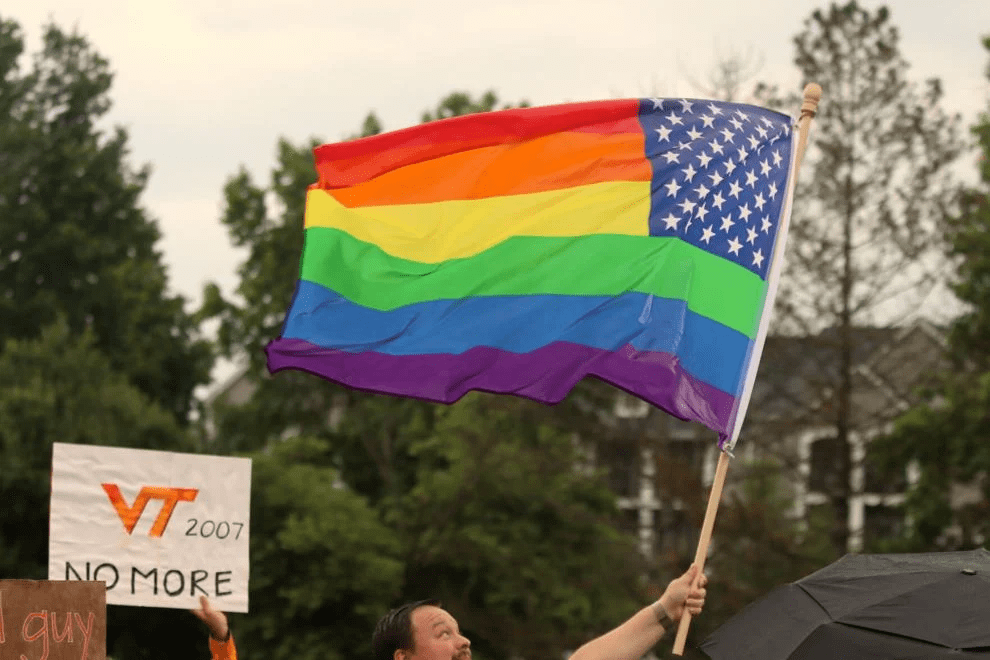
The school board of Johnston County, North Carolina, voted 4-2 to ban district schools from displaying rainbow Pride flags on Tuesday. The ban is just the latest in a long line of conservative efforts to ban the LGBTQ+ flag from schools and government property.
According to The Raleigh News & Observer, the newly approved policy states: “Principals and teachers shall limit displays in the classrooms, school buildings, ball fields, school grounds, and buses, such as signs and flags, to materials that represent the United States, the state of North Carolina, Johnston County, the school name, mascot, post-secondary institutions, school-sponsored events, sponsorships, military flags, family photos, student art and/or the approved curriculum.”
One board member who voted against the measure, Kay Carroll, said, “It’s important that they know when they see somebody wear a human rights pin or a rainbow pin, the message is that this is a safe place for people in the LGBTQ+ community…. It’s comforting to see these symbols of acceptance and tolerance. When they see these symbols — which are signals — they know they are safe to be their authentic selves. We’re just treating human beings decently.”
The school board claimed that it will continue to support “all students and school employees.” However, the board is currently considering removing sexual orientation and gender identity from its anti-bullying and anti-discrimination policies. The board will re-vote on the removal soon after failing to advance the measure in a 3-3 tie vote last Tuesday.
Numerous school districts nationwide have banned the display of Pride flags, with conservative school board members claiming that the flags are a “divisive” form of “indoctrination.”
However, recent polling by the Trevor Project suggests that LGBTQ+ students may benefit from visible displays of support, considering that 39% of LGBTQ+ young people and 46% of trans and nonbinary young people reported attempting suicide in the past year, and 49% of respondents between ages 13 to 17 said they experienced bullying in the past year. Young people who were bullied were also significantly more likely to have attempted suicide in the past year.
Earlier this year, both Utah and Idaho became the first U.S. states to pass laws restricting the flying of Pride flags in schools and on government property. The move led the capital city governments of Salt Lake City, Utah, and Boise, Idaho, to designate the Pride flags as official city flags, so they can still fly them under the bans.
You must be logged in to post a comment.