Here are the new Texas laws that will affect trans and LGBTQ+ people

*This is reported by the Texas Tribune.

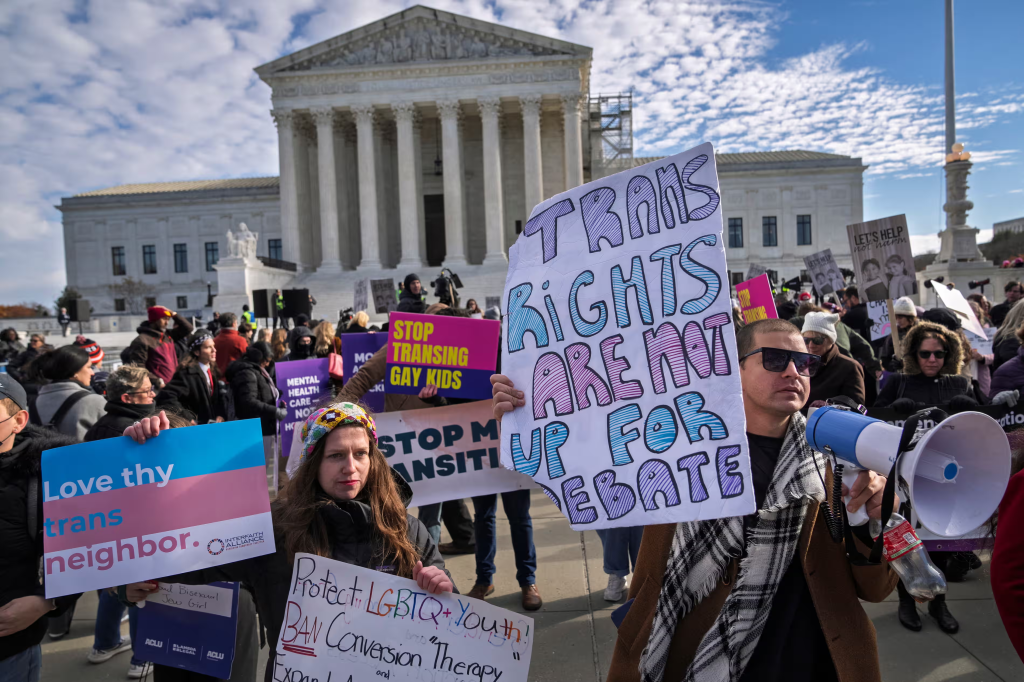
While largely avoiding the same level of heated pushback of years’ past, Texas lawmakers passed several bills that give LGBTQ+ people in Texas, specifically transgender residents, less opportunity to receive care and maintain their identities in state records.

Texas legislators filed over 100 anti-trans bills through the session, some containing provisions that have been shot down in years’ prior while others proposed new restrictions. Less than 10 were ultimately approved by lawmakers.

The new bills that are likely to be signed by Gov. Greg Abbott represent a yearslong movement from state conservatives to find new ways to restrict the presence of trans and LGBTQ+ Texans, advocates say. The bills that failed may also be resurrected by lawmakers in future sessions. Here’s what to know.

State definitions of man and woman

Several bills filed in the Legislature aimed to craft legal definitions of sex and gender in addition to their target goals — but House Bill 229 makes that goal its sole purpose, establishing state definitions for male and female and applying those definitions across statute.

HB 229 defines a woman as “an individual whose biological reproductive system is developed to produce ova,” and a man as “an individual whose biological reproductive system is developed to fertilize the ova of a female.”

Most immediately, the bill will bolster an already existing block from state agencies on changes to gender markers on state documents, which was backed by a nonbinding opinion from Attorney General Ken Paxton in March. The bill may also force those who have already switched their documents to match their identified gender to have changes reverted when they are renewed.

The longer-term effects of HB 229 are still not immediately apparent, as references to man and woman are used hundreds of times in statute and may ripple into other laws affecting people’s lives. Texas joins 13 other states that have also crafted their own definitions, and several other bills that also passed in the state have individual definitions for related terms like “biological sex.”

President Donald Trump issued an executive order named “Defending Women From Gender Ideology Extremism” in January providing federal definitions of male and female. Similarly, HB 229 has been dubbed the “Women’s Bill of Rights” by supporters, claiming it protects women in the state from men invading their spaces.

Abbott released an executive order of his own shortly after Trump’s affirming the president’s directive, but did not provide his own definitions. In a May post on social media, the governor said he would immediately sign HB 229 into law.

New requirements for medical records and insurance coverage

Tightening the ability to change the gender on state records like drivers’ licenses has been a key issue for conservative lawmakers for years, and while HB 229 sets a precedent in disallowing new changes, another bill creates new requirements entirely. Senate Bill 1188 creates a new section on all state medical records listing patients’ assigned sex at birth and any physical sexual development disorders. It also bans changes to those gender markers for any reason other than clerical errors, and creates civil penalties for medical professionals who do change them.

House Democrats opposing the measure during floor discussion worried that SB 1188 may scare medical providers into inputting vague or inaccurate health information out of fear of fiscal or legal retribution. The bill does allow the new section to include information on a patients’ gender identity, however health care services must opt-in to provide it.

The bill also creates restrictions on where health care providers can store patient data and the physical servers they use to store them, and new regulations on how artificial intelligence can be used to create diagnoses.

SB 1188 is not the only bill opponents have said will create a chilling effect on the LGBTQ+ community. Some bills may be more immediate in blocking options people have to do things like change their state records, but others like SB 1188 and Senate Bill 1257 may reduce what resources are available. SB 1257 was signed by Abbott in May and mandates that insurance companies provide coverage for gender detransitioning care if they already cover gender transition care.

Proponents of the law claim it enforces responsibility onto insurance companies. The law is not a ban on gender-affirming care, however opponents worry it may act as one by incentivizing insurance companies to pull coverage altogether rather than take on potential new costs.

SB 1257 is the first legal mandate for detransition care in the United States, making Texas a testing ground for insurance companies’ appetite to keep or pull coverage. Similar bills in Arizona, Florida and Tennessee did not pass out of their respective state legislatures in 2024.

Less protections and resources for LGBTQ+ youth

Medical gender transition care for minors was banned in Texas by the Legislature in 2023, a restriction that was upheld by the state Supreme Court in 2024. House Bill 18, primarily an overhaul of rural health care including a rural pediatric mental health care program, bans minors from accessing its resources for gender-affirming mental health counseling “inconsistent with the child’s biological sex.”

The current gender transition care ban for minors does not include mental health services, only puberty blockers, hormone therapy and surgery, which is rare for those under 18. Another proposal headed to Abbott’s desk, House Bill 1106, asserts that parents who do not recognize or affirm their child’s gender identity cannot be held liable for abuse or neglect because of that lack of recognition.

More restrictions on LGBTQ+ presence in schools

Access to materials and resources related to LGBTQ+ subjects are also being restricted by legislators through two key bills primarily aimed at schools. Senate Bill 12 bans Texas schools from teaching about sexual orientation or gender identity and forbids student clubs “based on” those subjects.

The bill would prevent clubs like Gay-Straight Alliances and pride clubs, which are often tailored toward anti-bullying initiatives in schools. Opponents of the bill claim a ban on those clubs would cut off LGBTQ+ students from communities and resources that can save lives.

“One of the deadliest things that our youth go through is experiencing the perception at least of isolation, and GSAs are a powerful way that we can combat that and make sure that our youth are getting support,” said Ash Hall, ACLU Texas’ policy and advocacy strategist for LGBTQIA+ rights.

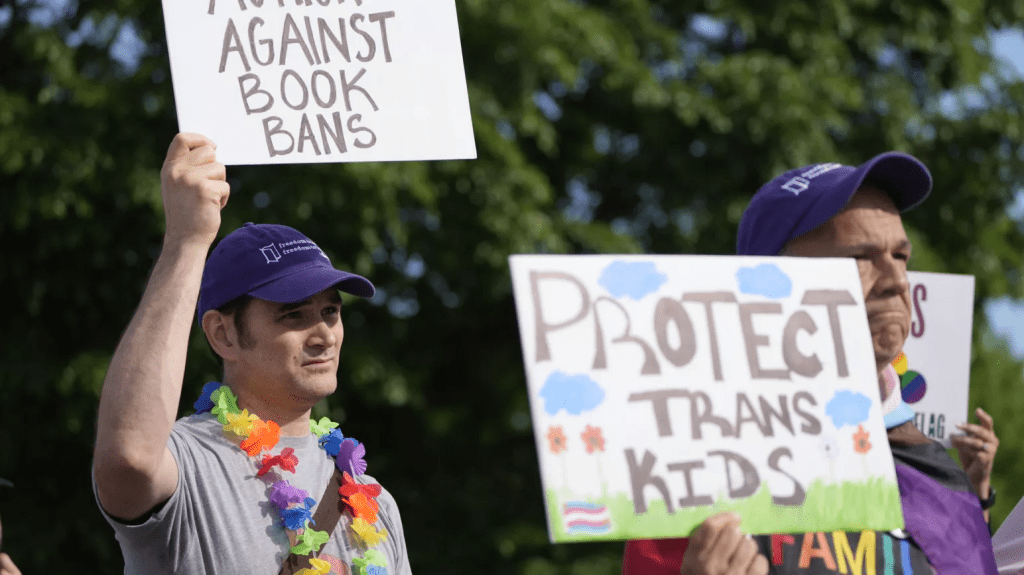
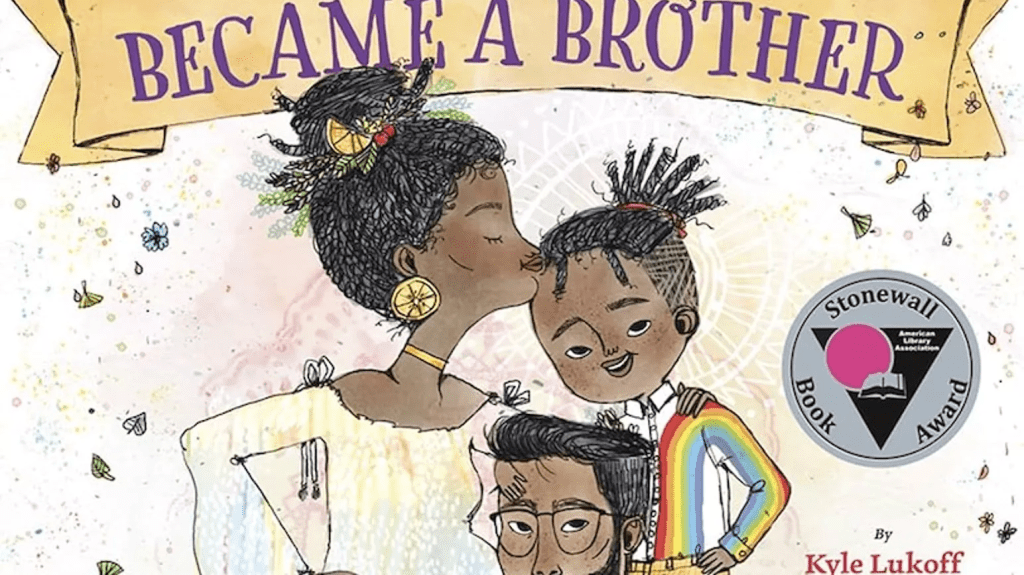
While SB 12 restricts instruction and student groups, Senate Bill 13 gives school boards and new advisory councils greater oversight to remove books from school libraries that go against “local community values.” Some lawmakers and advocates worry school boards and advisory councils would be able to restrict books containing LGBTQ+ material.

A third bill, Senate Bill 18, would have banned “drag-time story hours” at municipal libraries and cut funding to those who host them, however that bill was unintentionally killed by Lt. Gov. Dan Patrick after a procedural error at the end of the Senate’s deadline to pass bills.

Bills that failed to pass

The small set of bills passed by legislators shift the state’s treatment of LGBTQ+ Texans significantly, but still represent a fraction of what lawmakers proposed. House Bill 239, this session’s bathroom ban bill, was one of the over 100 bills that did not survive and was never heard by lawmakers despite half of the House signing on as coauthors. House Bill 2704 sought a similar ban through private lawsuits rather than criminal charges, but was never picked up by lawmakers.

Also left unheard was House Bill 3817, filed by Rep. Tom Oliverson, R-Cypress, which would have created a new felony charge for “gender identity fraud” if a person represented themselves as a gender besides the one they were assigned at birth to state agencies or employers.

Advocates like Johnathan Gooch, communications director for Equality Texas, say that the Legislature has kept its course on anti-trans legislation for the last few sessions, and that bills that didn’t get picked up by legislators may be at the forefront of future sessions.

“We’re hearing rhetoric that we’ve heard for a very long time and just more, more bills, a variety of new ways to narrow the rights of trans people,” Gooch said. “It just doesn’t come as a mistake that the number of bills is escalating.”

Amid Trump’s funding threats, a rural Colorado school district looks to remove LGBTQ policy protections

*This is reported by Chalkbeat.

Citing President Trump’s threat to cut off federal education funding for school districts that provide protections for LGBTQ people, school board members in the Montezuma-Cortez district in southwestern Colorado are poised to remove sexual orientation and gender identity from the district’s nondiscrimination policy.

“Our district uses federal grant monies and Trump has indicated those grants are at risk if any district continues to support certain previously protected classes like sexual orientation, gender expression, or gender identity,” Mike Lynch, a school board member and the policy committee chair, said at a board meeting late last month.

The proposed policy changes in Montezuma-Cortez represent just one example of how some Colorado school districts are rushing to comply — or over-comply — with federal ultimatums based on questionable legal foundations. Many legal experts say the Trump administration cannot, on its own, exclude transgender people from federal anti-discrimination law and that Colorado law, which includes protections for LGBTQ people, supersedes school district policy anyway.

But efforts to remove protections at the local level send harmful messages about who is valued and who isn’t, they say.

“I think it does damage to queer students because it signals that this school district … doesn’t believe that these students are worthy of protection,” Scott Skinner-Thompson, associate professor of law at the University of Colorado Boulder.

Montezuma-Cortez, a conservative-leaning district with about 2,400 students, has taken other steps to curtail LGBTQ symbols and school activities in recent years. The school board is scheduled to take a final vote on the proposed nondiscrimination policy on June 24.

MB McAfee, a retired social worker and district resident, said she doesn’t know of any case where federal funds were withheld by the Trump administration, but worries about that possibility, particularly when it comes to money for students with disabilities.

But she’s also angry about the proposed policy changes, calling them “another step toward exclusion.”

“If we do that,” she asked, “then what’s going to be next?”

School districts react to funding threats

Trump has targeted transgender rights since his first day in office. In January and February, he issued several executive orders on the topic, including one that describes sex as determined at conception and unchangeable and another that threatens to withhold federal funds from schools that allow transgender girls to play girls sports.

The Trump administration has moved to strip federal funding from Maine because that state allows transgender girls to compete on girls’ teams. A judge blocked the federal government from withholding school lunch money while the case continues.

So far, no school district has lost money because of policies protecting transgender students. But Lynch emphasized that risk when he explained the proposed policy revision to the school board in May.

Asked by Chalkbeat what executive order or federal guidance required the removal of “sexual orientation” from the policy, Lynch later said by email that he’d mistakenly cited the term when he spoke to the board about federal dollars being in jeopardy.

For now though, “sexual orientation” isn’t being restored to the policy, he said.

Montezuma-Cortez isn’t alone in making changes spurred by the Trump administration. Officials from several Colorado districts, including Woodland Park and District 49 near Colorado Springs, have cited Trump’s executive orders in pushing policy changes or other efforts aimed at revoking protections for transgender students.

In May, District 49 sued the state and the Colorado High School Activities Association arguing that Colorado law and the association’s policy violate students’ constitutional rights by allowing transgender youth to play on school sports teams that match their gender identity.

Montezuma-Cortez school board members had little to say about the implications of the proposed nondiscrimination policy changes.

Asked about the legal or practical implications, Lynch said he’s not an attorney and doesn’t know. School board President Sheri Noyes did not respond to Chalkbeat’s request for comment. Vice President Ed Rice declined to respond to specific questions from Chalkbeat, saying by email that the policy’s opening sentence “answers everything.”

As proposed, that sentence says, “The Board is committed to providing a learning and work environment where all members of the school community are treated with dignity and respect.” The current version of the policy says “safe learning and work environment” but the revision takes out the word “safe.”

A trans teen is fleeing the country after enduring years of hate for being good at track

*This is reported by LGBTQ Nation.

A teenage trans athlete is fleeing the country with her mother after experiencing severe bullying and harassment by right-wing media, fellow athletes, and politicians.

11th grader Ada Gallagher currently runs on the girls’ track team at Portland, Oregon’s McDaniel High School. She first became part of the national debate over trans athletes in 2023 when she won the state championship in the 200-meter race. A report from that time said the crowd met her victory with a chorus of boos, a sentiment that quickly spread across the country as the anti-trans right got its hands on the story.

Gallagher, who now competes with a security guard by her side, has endured years of death threats and vile insults, and she has also been a focal point of conservative media outlets.

Most recently, a video of Gallagher winning a March 19 400-meter race in a landslide was shared widely among conservatives. She also won the 200-meter race at the same meet.

Prominent anti-trans activist Riley Gaines – who has built an entire career off of tying for 5th place with a trans athlete three years ago – shared the video on X and misgendered Gallagher, writing, “Does he have no shame? Do his PARENTS have no shame?”

Gallagher’s mother, Carolyn, was not able to celebrate her daughter’s win like any mother should, as she knew the hate it would bring. She told Oregon Live she thought, “I know the optics of this are going to be horrible.”

But she wished people understood that the meet consisted of a total of three schools and that neither of the other two had strong competitors in the race Gallagher won so easily. She also wished people knew that, despite what Fox News claimed, Gallagher did not set a season record in the 400-meter race and actually ran a massive five seconds slower than she did in the same event at state the previous year, where she got second place.

For as long as she could, Gallagher tried to rise above it all, to keep her head in the game and just do what she loves: run.

But it has finally become too much.

“When they call me a predator, that’s the worst one. I hate it so much,” Gallagher told Oregon Live.

Only six days after Gallagher’s victory in March, the U.S. Department of Education’s Office for Civil Rights began investigating Portland Public Schools and the Oregon School Activities Association (OSAA), alleging the organizations are violating Title IX by allowing trans athletes to participate in sports on the teams that align with their gender (OSAA policy states it “endeavors to allow students to participate for the athletic or activity program of their consistently asserted gender identity while providing a fair and safe environment for all students”).

A statement from Portland Public Schools Superintendent Kimberlee Armstrong in the wake of the lawsuit expressed a dedication to protecting vulnerable students.

“I stand firm in our legal responsibilities, and I deeply value every student’s right to be treated with dignity, safety, and respect. PPS is in full compliance with Oregon state law, which may differ from federal guidance. We are actively working with our legal and state partners to navigate this complex legal landscape.”

“While I am limited in what I can share at this time due to the sensitive nature of the matter and our duty to protect student privacy, I want to be clear: my commitment—and our district’s commitment—to doing what’s right for all students, especially those most vulnerable, remains unwavering.”

But Gallagher and her mother hope all the noise will quiet down once they leave for Canada, where Carolyn was born and raised, despite the fact that Gallagher is devastated to leave her team, her friends, and especially, her girlfriend.

As Oregon Live states, Gallagher “joined the track team last spring not because she believed she would win, not out of some desire to manipulate the system and compete where she could win, but because her friends urged her to. Because they wanted her there.”

Now the team captain, she says the team is “the only place where people really know me.”

“I think people think I want to be this spotlight for trans people,” she said. “Not at all. I just like running.”

While competing is what also leads her to endure all this hate, she said it all goes away during the 23 or so seconds she is running.

“You hear the feet around you hit the ground,” she said. “Senses are heightened. There’s nothing to think about, it’s just track.”

Democrats lash out as Texas Legislature bans school clubs that support gay teens

*This is reported by the Texas Tribune

Democrats took to the floor of the Texas House on Saturday to label a ban on clubs that support gay teens the work of “monsters” and to say the ban endangers children and strips them of their dignity.

The Democratic representatives grew emotional in opposition to a bill that would ban K-12 student clubs focused on sexuality and gender identity.

Senate Bill 12, authored by Sen. Brandon Creighton, won final legislative passage Saturday after lawmakers in both chambers adopted the conference committee reports that specifically clarified that schools will be banned from authorizing or sponsoring student clubs based on sexual orientation or gender identity.

Backers proclaimed that the bill enshrines a parent’s rights and puts the parent not just at the table, but at the head of the table where the child’s best interests are decided. They also targeted diversity, equity and inclusion (DEI) policies, claiming that they project ideologies on students and put too much focus on race, sexuality and gender identity instead of the quality of education.

Rep. Gene Wu, D-Houston, emphasized that these clubs exist because of a long history of oppression against the LGBTQ+ community. He warned against demonizing students and teachers for discussing gender and sexuality.

“The real monsters are not kids trying to figure out who they are,” Wu said during the House discussion. “The monsters are not the teachers who love them and encourage them and support them. They are not the books that provide them with some amount of comfort and information. The real monsters are here.”

Lawmakers shared personal stories about LGBTQ+ youth. Rep. Rafael Anchía said his daughter was a vice president of a pride club at her school. He stressed that these clubs “are no more about sex than 4-H or ROTC or the basketball team.”

“It wasn’t a sex club,” Anchía said. “They’d get together and they’d watch movies. They’d color. They’d go to musicals. It was about a kid who felt weird who found her people and everything about it was good. I don’t know why grown-ups in this body are so triggered with my daughter getting together with her classmates in a school-sponsored activity.”

Anchía also told the Texas Tribune he “didn’t sign up for five anti-LGBT bills this session.”

Rep. Jolanda Jones, D-Houston, shared her experience as a Black woman and a lesbian, saying she didn’t come out until the age of 50 because she knew “the world wasn’t safe.” She warned that banning LGBTQ+ clubs could worsen bullying.

“And we have the nerve to say that we care about mental health,” Jones said. “We’ve passed bill after bill about access to care, about youth suicide, about prevention and treatment. But this bill makes kids sicker, sadder, more alone. This bill doesn’t protect children. It endangers them. It doesn’t give parents more rights. It strips children of their dignity.”

SB 12 is often referred to as the “Parental Bill of Rights” because it claims to give parents more control over their children’s schools. But Rep. Erin Zwiener, D-Driftwood, addressed those who are “afraid that your kids or your grandkids might grow up queer,” warning that the bill could harm family relationships.

“Getting silence in schools from the LGBTQ community, which is what this bill is designed to do, will not stop your kids from being gay,” Zwiener said. “It will just make them afraid to come out. It will make them afraid to live their lives as their full selves. It will make them afraid to tell you when they figure out that they’re LGBTQ and it might damage your relationship with them forever.”

Rep. Nicole Collier, D-Fort Worth, argued that allowing religious organizations in schools but banning “clubs that allow students to be who they are, is a double standard that flies in the face of the principles you say you support.”

“An LGBTQ person can’t change who they are any more than the fact that I can’t change that I’m Black,” Collier said. “What you’re saying to students today is that you will be accepted as long as you are who we say you should be.”

If signed by the governor, the bill will become law on Sept. 1.

Montana Court Strikes Down Ban on Healthcare for Transgender Youth

*This is reported by Lambda Legal.

Today, a Montana Court struck down SB 99, a 2023 Montana law that categorically bans often life-saving health care for transgender youth.  The Court granted Plaintiffs’ motion for summary judgment in Cross v. Montana, holding that SB 99 violates the constitutional rights of transgender youth who are seeking gender-affirming care and the healthcare professionals who are providing that care. 

The lawsuit challenging SB 99 was brought by Lambda Legal, the American Civil Liberties Union (ACLU), and the ACLU of Montana. This ruling removes completely the threat hanging over Montana transgender youth and their families that their access to critical medical care would be terminated. 

“I will never understand why my representatives worked so hard to strip me of my rights and the rights of other transgender kids,” said Phoebe Cross, a 17-year-old transgender boy. “It’s great that the courts, including the Montana Supreme Court, have seen this law for what it was, discriminatory, and today have thrown it out for good. Just living as a trans teenager is difficult enough, the last thing me and my peers need is to have our rights taken away.” 

“Today, the court saw through the state’s vitriol and hollow justifications and put the final nail in the coffin of this cruel, and discriminatory, law,” said Lambda Legal Staff Attorney Nora Huppert. “No parent should ever be forced to deny their child access to the safe and effective care that could relieve their suffering and provide them a future. Because Montana’s Constitution protects their right to privacy, transgender youth in Montana can sleep easier tonight knowing that they can continue to thrive.” 

“We are very pleased that the Court saw through the State’s unfounded arguments about why gender-affirming medical care should be treated differently from other forms of care,” said ACLU staff attorney Malita Picasso. “The Court recognizes SB 99 for what it truly is, an effort by the State to legislate transgender Montanans out of existence.” 

“The Montana Constitution protects the privacy and dignity of all Montanans,” said Akilah Deernose, ACLU-MT Executive Director. “In the face of those protections, cruel and inhumane laws like SB 99 will always fail.  Today’s decision should be a powerful message to those that seek to marginalize and harass transgender Montanans.” 

In its ruling, the court stated: 

“[t]he Court is forced to conclude that the State’s interest is actually a political and ideological one: ensuring minors in Montana are never provided treatment to address their “perception that [their] gender or sex” is something other than their sex assigned at birth. In other words, the State’s interest is actually blocking transgender expression.” 

Plaintiffs in the case include Molly and Paul Cross and their 17-year-old transgender son Phoebe; Jane and John Doe joining on behalf of their 16-year-old transgender daughter; and two providers of gender affirming care who bring claims on their own behalf and on behalf of their Montana patients. 

On December 11, 2024, the Montana Supreme Court upheld a preliminary injunction that SB 99 was likely unconstitutional under the Montana state constitution’s privacy clause, which prohibits government intrusion on private medical decisions. The ruling rested entirely on State constitutional grounds, insulating transgender adolescents, their families and health care providers from any potential negative outcome at the United States Supreme Court. 

The U.S. Supreme Court will soon rule in U.S. v. Skrmetti, the landmark case brought by Lambda Legal, the ACLU, and the ACLU of Tennessee, Lambda Legal on behalf of three families and a medical provider challenging a Tennessee ban on gender-affirming hormonal therapies for transgender youth on the grounds the ban violates the Equal Protection Clause of the U.S. Constitution.  

More information about the case is available here

Texas Senate passes bill that would allow teachers, students to misgender others without punishment

*This is reported by KERA News.

A proposed bill aimed at protecting public employees, teachers and students who misgender their peers cleared the Texas Senate on Thursday, moving one step closer to becoming law.

Senate Bill 1999, authored by Republican Sen. Bryan Hughes of Mineola, would prevent state agencies and schools from punishing employees or students who refer to another person using terms “consistent with (their) biological sex,” even if that term doesn’t match the person’s gender identity. According to the bill, this law wouldn’t limit a school “from adopting policies and procedures to prohibit and prevent bullying.”

“A teacher may have a moral or religious objection that prevents them from using language with a student or other person’s biological sex,” Hughes said. “No teacher, no public employee, should be punished for using a pronoun consistent with a person’s biological sex.”

The bill was passed on a vote of 20 to 11. This came after Sen. José Menéndez, a Democrat from San Antonio, offered a floor amendment on Wednesday that would’ve offered similar protections to those who choose to express their gender identity.

“There are gonna be people out there that are going to feel as if this legislation is trying to take away their right to exist as who they are,” Menéndez said on Wednesday. “Just like we can’t force anyone to use pronouns, we can’t also force someone not to have them or express them.”

Hughes pushed back against the proposed amendment, saying his bill wouldn’t prevent “someone from asking to be identified as whatever they wish,” but would instead prevent teachers and other public employees from being “punished because they get it wrong.”

Menéndez’s amendment was ultimately struck down on Wednesday, paving the way for the bill’s final passage one day later. The bill now heads to the Texas House for consideration.

HHS Plans to Cut the National Suicide Hotline’s Program for LGBTQ Youth

*This is reported by Mother Jones.

The federal government plans to eliminate services for LGBTQ youth who call 988, the national suicide and crisis hotline, according to a Health and Human Services budget draft leaked last week. The budget, first reported by the Washington Post, would go into effect in October if approved by Congress.

Since the hotline’s launch in 2022, callers have been able to speak with counselors trained to work with specific at-risk populations, including LGBTQ youth, who are four times more likely to attempt suicide than their peers.

The service for LGBTQ youth has received 1.3 million calls, texts, or chats since 2022. In February, the program received an average of 2,100 contacts per day.

“Here we are cutting off the nation’s lifeline to those in crisis,” says Paolo del Vecchio, former director of the Substance Abuse and Mental Health Administration’s Office of Recovery. “Due to the discriminatory practices of the Trump administration, they’re pulling that life preserver away from thousands and thousands of people.”

Mental health experts say that trained counselors provide key cultural competency to LGBTQ youth, understanding the stress caused by recent political attacks, the importance of using appropriate pronouns, and the ways in which the youth often face lack of family support and harassment.

“I worry deeply that we will see more LGBTQ young people reach a crisis state and not have anyone there to help them through that,” says Janson Wu, director of advocacy and government affairs at the Trevor Project, a LGBTQ suicide prevention organization. “I worry that LGBTQ young people will reach out to 988 and not receive a compassionate and welcoming voice on the other end—and that will only deepen their crisis.”

The Trevor Project, one of the handful of organizations that make up the LGBTQ+ Youth Subnetwork, responds to about half of 988’s calls and texts from LGBTQ youth. This year, the subnetwork received an estimated $50 million in federal funding.

Trump’s first months in office have been particularly harrowing for transgender youth. The president has signed executive orders restricting access to gender-affirming care for young people, barring transgender people from serving in the military, and threatening to prosecute teachers who support nonbinary students.

Under the leadership of health secretary Robert F. Kennedy Jr., HHS has already cut about a quarter of its workforce. SAMHSA has been eliminated, and mental health initiatives have been consolidated with disparate programs in a newly-created Administration for a Healthy America. The leaked budget proposes further sweeping cuts to HHS, including a 40 percent budget cut to the National Institutes of Health; elimination of funding for Head Start, the early childhood education program for low-income families; and a 44 percent funding cut to the Centers for Disease Control, including all the agency’s chronic disease programs.

Trump administration opens a “snitch line” to report trans kids getting health care

*This is being reported by LGBTQNation.

The Trump administration has opened a new “snitch line” to report what it calls violations of Trump’s executive order “Protecting Children From Chemical and Surgical Mutilation.” 

In twin actions this week, the Department of Health and Human Services (HHS) continued its efforts to end gender-affirming care for trans youth with the new whistleblower portal and the launch of an investigation of “a major pediatric teaching hospital” over the alleged firing of a nurse because she sought a religious exemption to avoid administering puberty blockers and hormones to minor patients.

Though unnamed, the nurse is likely whistleblower Vanessa Sivadge, who worked at Texas Children’s Hospital and provided testimony to Congress this week about her alleged termination.

The “snitch line” was shared publicly on Monday with guidance for potential whistleblowers published on the HHS website.

“You have three options to report a tip or complaint related to the chemical and surgical mutilation of children or whistleblower retaliation,” the guidance states, with instructions to provide identifying information of those involved in the alleged order violation.

“Please reference EO 14187 in your complaint,” the guidance states, referring to Trump’s “Chemical and Surgical Mutilation” order.

That order has been blocked by multiple federal judges with temporary restraining orders, but the Trump administration continues to invoke it in its crackdown on doctors and hospitals.

One ruling, by U.S. District Judge Lauren King in the Western District of Washington, termed the order a violation of constitutional protections by “treating people differently based on sex or transgender status.” Those cases continue to make their way through the courts.

The concurrent hospital investigation is designed to showcase the administration’s weaponization of 50-year-old federal anti-abortion provisions known as the Church Amendments to protect anti-trans whistleblowers. Those allow religious accommodation to anti-abortion healthcare providers based on “religious beliefs or moral convictions respecting sterilization procedures.”

Trump’s order characterizes gender-affirming care as “maiming and sterilizing.”

In January, the Justice Department dropped charges against Dr. Eithan Haim, a Texas surgeon accused of leaking private medical information about minors who received gender-affirming care at the same Texas hospital where Sivadge worked. He shared that information with rightwing media outlets.

The DOJ had previously charged Haim with violating HIPAA laws with “intent to cause malicious harm.” He called himself a whistleblower.

The Trump administration continues to characterize evidence-based trans healthcare as “mutilation”, despite every major medical association, including the American Academy of Pediatrics, the American Medical Association, and the Endocrine Society, supporting the practice.

Hate influencer Chaya Raichik harasses trans teacher & forces her to resign

*This is reported by LGBTQNation and a follow up to our earlier article breaking this news.

English teacher Rosia Sandri was left “heartbroken” after submitting her resignation on March 31 following a campaign of hate against her that followed a TikTok video she posted highlighting her experience as a trans woman in education. That video was shared by transphobes, who called for her to be fired.

Sandri came out as a trans woman seven years ago and taught English for three years at Red Oak High School in Ellis County, Texas. Sandri said her colleagues at the Red Oak Independent School District (ROISD) supported her, and she didn’t directly come out to her class but instead started dressing differently.

Students who noticed asked if they should call her by a different name or use certain pronouns; she told them they could call her “whatever they were comfortable with” but preferred she/her pronouns.

Sandri also has a TikTok account where she posts informative videos educating people on what it is like to be trans, and she filmed some videos after hours in her classroom.

Many of her former students follow her on that account and express their support in comment section, writing “best teacher ever” and “We miss you, stay strong. Lovely makeup.”

These videos, unfortunately, caught the attention of anti-trans influencer Chaya Raichik, who runs LibsOfTikTok. Raichik reposted one of Sandri’s videos, deadnaming and misgendering her. In the clip, Sandri talked about her pupils being supportive of her journey.

“They call me ‘ma’am. ’ They call me ‘miss,’” she said. “They use my correct pronouns and know my correct name, and it’s incredibly affirming.”

Raichik asked her over 4 million followers, “Would you feel comfortable with this person teaching your kid?”

Raichik is notorious for using her social media following to single out LGBTQ+ people and allies, presenting their innocuous interactions with children as “grooming.” Her followers harass and threaten businesses and institutions that support LGBTQ+ people, some going as far as to send bomb threats to children’s hospitals for providing gender treatment to trans youth. Schools targeted by Libs of TikTok faced similar repercussions.

Sandri was out sick when Libs of TikTok reposted her video but stated that she started receiving threats and harassment on her personal and school email. The human resources department at ROISD and the deputy superintendent reported that they have also received threats and have placed Sandri on administrative leave for two days while the school launches an investigation.

Texas state Rep. Brian Harrison (R) shared the Libs of TikTok post and called for Sandri to be fired.

“As the State Representative for Red Oak ISD, I am demanding that THIS TEACHER BE IMMEDIATELY TERMINATED!” Harrison tweeted.

On Monday, Sandri agreed with the school that she would resign.

“When I signed that resignation, it felt like my dream was being taken away from me,” Sandri told NBC“I’m not going to get hired again as a teacher in Texas, and that hurts. It hurts I have to leave my students in the middle of the year…they keep on messaging me and asking if it’s illegal to be a trans teacher.”

Harrison later told NBC News that he was proud to have helped remove Sandri from her job.

“Any teacher who claims to get gender euphoria from their minor students and teaches them that boys can become girls should be terminated immediately,” Harrison said.

Despite this, Sandri has stated that she still wants to be a teacher and hopes to find a way.

Governor stands with trans kids & won’t take ‘soul-sucking path’ of sacrificing their rights

*This is reported by LGBTQNation.

Illinois Gov. J.B. Pritzker (D) has never shied away from standing up to Donald Trump, and he has also made it clear he supports the LGBTQ+ community.

At a recent Human Rights Campaign dinner in Los Angeles, Pritzker reaffirmed his commitment to supporting queer folks and resisting Trump.

“The Trump administration and his Republican lackeys in Congress are looking to reverse every single victory this community has won over the last 50 years,” Pritzker said. “And right now it’s drag queens reading books and transgender people serving in the military. Tomorrow, it’s your marriage license and your job they want to take.”

“Bending to the whims of a bully will not end his cruelty. It will only embolden him. The response to authoritarianism isn’t acquiescence. Bullies respond to one thing, and one thing only, a punch in the face.”

He also spoke directly to transgender youth to tell them they are not alone.

“And in the midst of this existential fight, this battle that seems to consume everything, well, let’s not take the soul-sucking path of sacrificing the most persecuted for that which we deem to be most popular.”

“I know that there are transgender children right now looking out at this world and wondering if anyone is going to stand up for them and for their simple right to exist. Well, I am. We are. We will.”

He also spoke about his mother’s activism for LGBTQ+ rights and reproductive rights and declared, “I have to laugh when I hear the right-wing carry on about the dangers of exposing kids to trans people or same-sex couples, because I’m living proof that introducing your kids to the gay agenda might result in them growing up to be governor.”

Pritzker has long advocated for LGBTQ+ people as governor. In 2023, he signed a landmark bill making Illinois the first state to make it illegal for libraries to ban books.

Blog at WordPress.com.

Up ↑