The Trump administration is moving to restart the specialized LGBTQ+ option for youth who contact the 988 crisis intervention hotline – but the group that helped pioneer the idea is being shut out.
The Trevor Project, the New York-based leading non-profit for suicide prevention in LGBTQ+ young people in the US, may not be allowed to offer the service it had helped develop for the 988 Lifeline just a few years ago.
The 988 hotline, which has been dubbed the 911 for mental health emergencies, is credited with reducing teen and young adult suicide deaths. It offers specialized options for certain groups within minority communities, such as military veterans and Spanish speakers, but last July the Trump administration stopped offering the “press 3” option for LGBTQ+ youth, with a month’s notice.
The administration said it ended the service because the funding ran out. It is now working to bring it back by the end of the year because Congress directed officials to allocate $33m toward LGBTQ+ specific interventions for youth.
However, the Trevor Project might not be allowed to offer the services it developed and specializes in.
Dr Christine Yu Moutier, chief medical officer for the American Foundation for Suicide Prevention, said it “would not make sense” to keep the Trevor Project ineligible to help and it is a “longstanding, high-quality and trusted resource” to LGBTQ+ people.
The development is the latest in what has become a chaotic chapter for the service for LGBTQ+ youth, who attempt suicide at higher rates than the general population. Leaving the Trevor Project out is raising concerns about the relaunched service, especially given the Trump administration’s broader attempt to unravel protections for transgender and non-binary Americans at a time when more of them are reaching out in crisis.
“The Trump administration never should have shut down the ‘press 3’ option and put young Americans at further risk,” said Tammy Baldwin, a Democratic Wisconsin senator, and long one of the most prominent lesbian lawmakers in Washington DC. She was the first out gay person elected to the US Senate, in 2012, and she has led a bipartisan push to restore the service.
Baldwin called on Donald Trump to restore the service “without needless limitations and with the most qualified, experienced people answering the phone calls and text messages from these vulnerable young people”.
The lifeline’s specialized service allowed people to press 3, text “PRIDE” or use online chat to reach counselors who were specially trained to work with LGBTQ+ young people.
The umbrella of services broadly called the “press 3” option fielded 1.6m contacts while it was in operation, according to data from the Substance Abuse and Mental Health Services Administration. The Trevor Project handled about half of the program’s traffic.
When it cancelled the “press 3” option, federal officials said LGBTQ+ youth could still get help through 988’s general services, but it would “no longer silo” the services, instead “to focus on serving all help seekers”, including LGBTQ+ youth.
Now, the non-profit that administers the 988 service, Vibrant Emotional Health, has called for applications to manage the return of the “press 3” lines.
But applications are limited to crisis centers that are “current and active” members of the 988 network. The Trevor Project is not currently active in the program – only because the administration cancelled the service it specialized in.
The six other crisis centers that worked on the LGBTQ+ youth program are active in the 988 network. They work with the general population as well as LGBTQ+ people. Only the Trevor Project had a specific mission to serve LGBTQ+ youth.
“This troubling development indicates a dangerous step toward degrading the clinical standards to serve high risk groups that the ‘press 3’ specialized services were founded on,” said Jaymes Black, CEO of the Trevor Project, in a statement to the Associated Press.
Black worries that the next iteration of 988’s LGBTQ+ youth services “may exclude transgender and non-binary youth entirely”. The organization still independently runs its own 24/7 crisis line for LGBTQ+ young people.
A spokesperson for the Department of Health and Human Services did not directly respond to questions about the Trevor Project’s eligibility.
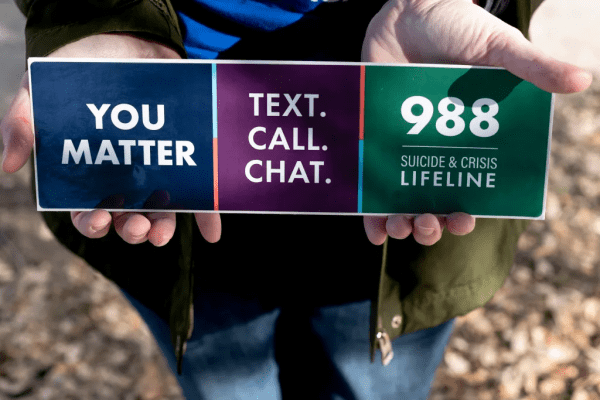
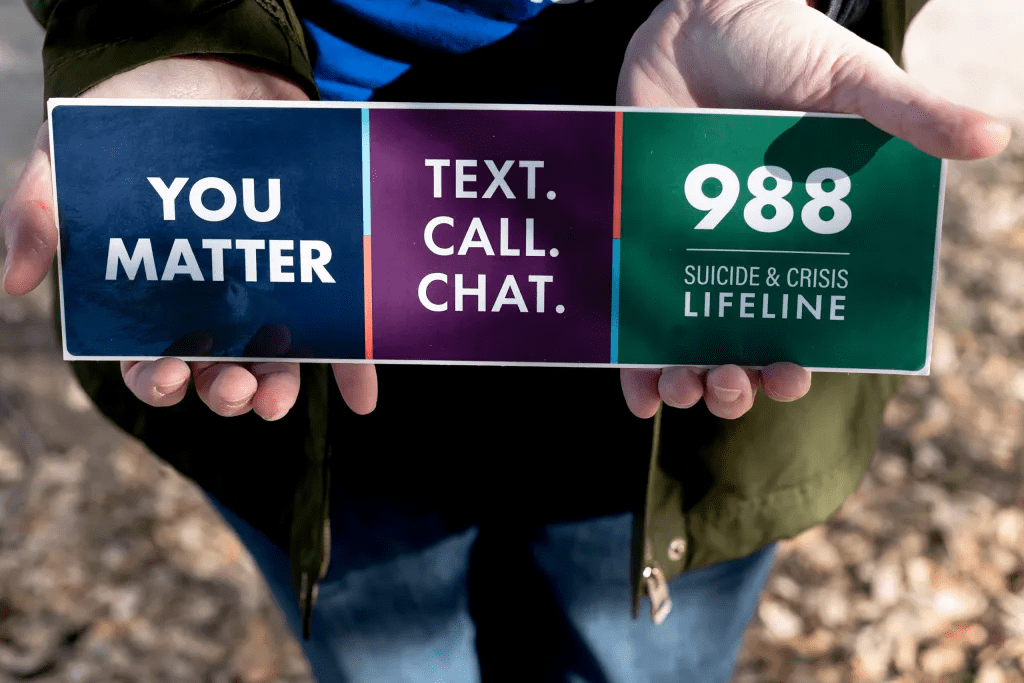
In the US, you can call or text the 988 Suicide & Crisis Lifeline at 988 or chat at 988lifeline.org. In the UK, the youth suicide charity Papyrus can be contacted on 0800 068 4141 or email pat@papyrus-uk.org, and in the UK and Ireland Samaritans can be contacted on freephone 116 123. In Australia, the crisis support service Lifeline is 13 11 14. Other international helplines can be found at befrienders.org
For Julia Hewitt, the removal of LGBTQ+ services from the 988 Suicide and Crisis Lifeline and potential funding freezes and cuts are a personal and professional issue.
As a suicide prevention leader with the American Foundation for Suicide Prevention, a lived experience adviser with Vibrant Emotional Health, which oversees the crisis line in Texas, and a parent of an LGBTQ child raised in Texas, Hewitt, who as a child witnessed her mother struggle with suicidal ideation, has spent decades putting her energy into providing reliable crisis services for everyone who needs them.
But now, she’s watching the foundation she and others created crumble.
“It was a punch to the gut because if you work or volunteer in this space, you know the families who are impacted by this; it can be hard to reconcile when you know how much good this does,” Hewitt said. “When access narrows for those at highest risk, the system becomes less protective overall.”
The 988 Lifeline was created through bipartisan legislation signed into law by President Donald Trump during his first term. This nationwide network of locally based crisis centers offers one-on-one support for mental health, suicide, and substance use-related problems for anyone 24/7.
When someone called 988 in the past, they would hear a greeting message, followed by a menu of choices offering access to specially trained counselors for veterans, Spanish speakers, and LGBTQ+ youth, or sometimes a local crisis counselor.
But last summer, the Trump administration announced in a press release that it will no longer silo LGBTQ+ youth services, which had been the “Press 3 option” for 988 callers, to focus on serving “all help seekers,” saying that these specific LGBTQ+ services had become too expensive.
The Trump administration and theSubstance Abuse and Mental Health Services Administration, the federal agency that provides the majority of the funding for the 988 Lifeline, said the specialized LGBTQ subnetwork’s initial pilot budget of $33 million had been exceeded and unifying services for all callers was a better option.
After the change, only veterans and Spanish speakers still received a tailored option through the 988 call line.
The call line had received nearly 1.3 million contacts nationally from LGBTQ+ people since its launch in 2022 — leaving a void that Texas crisis care centers, already operating at a $7 million funding deficit, are expected to fill.
In Texas, calls made to the line have increased over the years. In December 2025, the Texas 988 system received 25,511. A year prior, that figure was 18,916 and in December 2023, it was 14,961. It’s not clear from publicly available data how many calls are rerouted to LGBTQ+ subnetworks.
Texas Health and Human Services officials said the agency doesn’t have data on how many calls are rerouted to a subnetwork.
Veterans and LGBTQ+ youth have a higher risk of suicide compared to the general population, and canceling specialized services for only one group has mental health experts questioning the administration’s true intent.
“The program was created with overwhelming bipartisan support because, despite our political differences, we should all agree that every young person’s life is worth saving,” Jaymes Black, CEO of the Trevor Project, an organization that helped create option 3, said in a statement. “I am heartbroken that this administration has decided to say, loudly and clearly, that they believe some young people’s lives are not worth saving.”
This comes at a time when some federal funding for the hotline is set to expire, and budget freezes and cuts are wreaking havoc on the network of local crisis centers that the entire 988 infrastructure depends on.
“Currently, Texas’s 988 system faces a convergence of challenges,” said Christine Busse, a peer policy fellow for the Texas branch of the National Alliance on Mental Illness, a nonprofit mental health organization that provides education and peer-to-peer support. “Without additional investment, meeting current demand — let alone absorbing the additional contacts previously handled by specialized services — will remain difficult.”
The removal of option 3
For many LGBTQ+ youth, the hotline was a safe space to be themselves, where they could be transferred to specialists within the LGBTQ+ Youth Subnetwork who usually had the lived experience to relate to them and help them talk through problems like drug and alcohol abuse, bullying, relationship troubles and suicidal thoughts.
Busse said the hotline handled up to 70,000 contacts per month nationwide, and her organization is troubled by its sudden removal because those young people are more than four times as likely to attempt suicide as their peers.
Specialized services are still offered by the Trevor Project and other organizations, but advocates say including them in 988 made it easy for people in crisis to get help by remembering just three numbers.
Now that options have been removed, LGBTQ+ youth are left with 988 dispatchers who are trained to handle a crisis, but might not have the lived experience or training needed to make someone feel safe during an emergency.
“While all callers can still reach trained counselors through 988, the loss of Option 3 eliminates a service designed to address the specific needs of a higher-risk population,” Busse said.
Some states like California have decided to address this issue by having experts from the Trevor Project train their operators. However, Texas lawmakers have not committed any additional resources to this effort.
“LGBTQ+ young people need more resources to end suicide, not fewer,” said Mark Henson, vice president of advocacy and government affairs at The Trevor Project.
Hewitt said she is confident that local operators will receive the specialized LGBTQ+ training to provide the needed care, but the issue is why they need to do it at all.
“There was an entire network that was created just for this, and that is the difference,” she said. “But this means additional training, and that equates to time, experience, people, and hours.”
Busse said another advantage of option 3 was that it routed calls from LGBTQ youth out of the 988 system to other organizations, and its cancellation means a heavier workload for everyone in the system.
The month-to-month data on the crisis hotline shows a steady increase in calls to Texas crisis centers that were already overburdened before the removal of the LGBTQ+ subnetworks.
“Texas’s 988 system was already strained before the removal of Option 3,” Busse said. “Without additional investment, meeting current demand — let alone absorbing the additional contacts previously handled by specialized services — will remain difficult.”
The cost of saving a life
The Texas 988 system currently receives $19 million in funding from two federal grants: the Mental Health Block Grant and the 988 State and Territory Improvement Award. The latter is set to expire in September, and it’s unclear whether Congress will extend it or whether the Trump administration will establish new funding streams.
This comes at a time when local crisis care centers, where many of the 988 call centers operate out of or partner with for their resources, are seeing investment in their services disappear and reappear at the whims of the federal government.
In a span of 24 hours earlier this month, the Trump administration announced wide-ranging budget cuts that many in health care warned would cripple mental health and crisis services across the nation. Amid a national outcry, the administration reversed its decision before the end of the day.
“People got letters, and everyone was panicking, and then it got reversed,” Hewitt said. “A great outcome, but this terminal uncertainty is creating a really poor experience for not only the client but also the person answering the calls.”
The 988 system wasn’t meant to be supported by the federal government forever, and Texas lawmakers like state Sen. José Menéndez have attempted to create a safety net for it.
Last year, lawmakers established the 988 Trust Fund through House Bill 5342 and required a study on sustainable funding mechanisms, including a potential state telecommunications fee, due by December. However, no state dollars have been appropriated to the trust.
Menéndez, who authored the bill that created the trust fund, said the idea of using a telecommunications fee, similar to the fee that supports 911, was quickly shot down at the Capitol.
“I’m concerned that if we don’t have any state funds, 988 is going to have to get reliant on philanthropy, fundraising, and other methods, and we have already started reaching out about how people can make contributions because this year some funds run out,” he said.
As federal funds continue to dwindle and the state shows little interest in propping up the service, the future of 988 in Texas might depend on donations from Texans.
“That uncertainty is precisely why legislative action is imperative,” Busse said. “The infrastructure exists; what is needed now is the commitment to fund it. Without dedicated funding mechanisms, such as a telecommunications fee, Texans risk facing a mental health crisis without the community support network that took years to build.”
For mental health support for LGBTQ youth, call the Trevor Project’s 24/7 toll-free support line at 866-488-7386. For trans peer support, call the Trans Lifeline at 877-565-8860. You can also reach a trained crisis counselor through the Suicide and Crisis Lifeline by calling or texting 988.




You must be logged in to post a comment.