U.S. trans woman challenges Dutch asylum rejection

Read more at NBC News.

A 28-year-old transgender woman from the U.S. began a legal challenge on Wednesday to the rejection of her asylum application in the Netherlands where she had sought political asylum saying she no longer felt safe in the United States.

Veronica Clifford-Carlos, a visual artist from California, came to the Netherlands — the first country to legalize same-sex marriage and known for its strong protections of LGBTQ rights — because the Trump administration’s policies towards transgender people made her feel unsafe, her lawyer’s office said.

The case, the first of its kind in the Netherlands, will be heard in a court in Amsterdam starting Wednesday, with a ruling expected in four to six weeks.

Since taking office in January, President Donald Trump has issued executive orders limiting transgender rights, banned transgender people from serving in the armed forces, and rescinded anti-discrimination policies for LGBTQ people.

Dutch advocacy group LGBT Asylum Support, which backs the lawsuit, is currently assisting around 20 U.S. trans individuals with pending asylum claims.

According to data from the Immigration and Naturalisation Service (IND), 29 Americans applied for asylum in the Netherlands during the first half of this year. In previous years there were between nine and 18 applicants per year, an IND spokesperson said.

“The IND generally states that discrimination by authorities and fellow citizens can be considered an act of persecution if it is so severe that victims can no longer function socially and societally,” LGBT Asylum Support said in a statement.

“But the IND maintains that there are no grounds for exceptional treatment of transgender and queer refugees from the U.S.”

Congressional coalition demands wellness check on gay makeup artist held in torture camp

*This is reported by LGBTQ Nation.

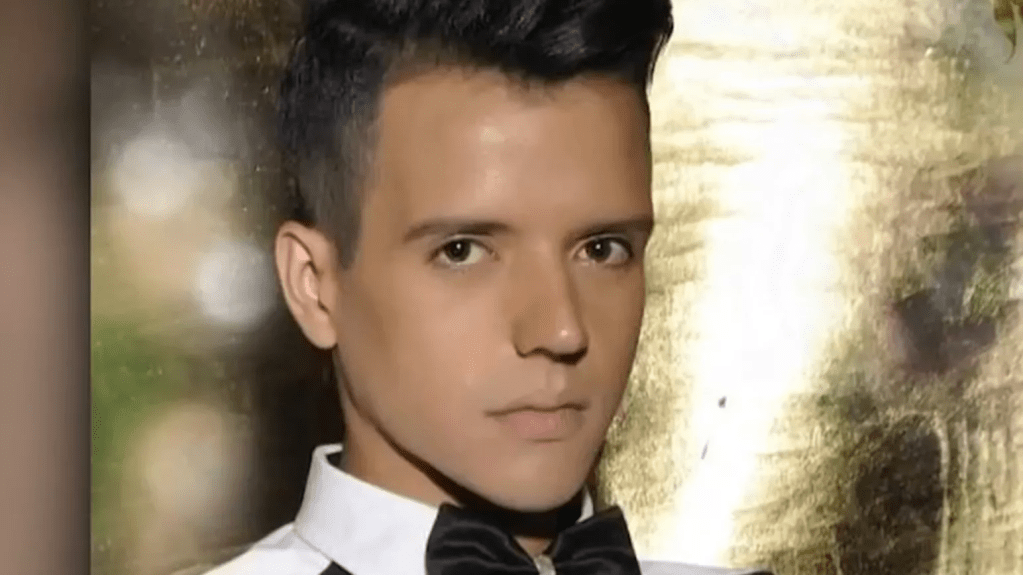
Out gay Rep. Robert Garcia (D-CA) talked to LGBTQ Nation about a new letter signed by a coalition of 50 other Democratic congress members demanding that the State Department conduct a wellness check on Andry José Hernández Romero, an openly gay 32-year-old Venezuelan makeup artist who was detained by Immigration and Customs Enforcement (ICE) on March 15 despite legally applying for asylum in the U.S. after fleeing anti-gay persecution in his home country.

Hernández Romero legally entered the U.S. last year via San Diego and passed a credible fear interview for his official asylum process but was arrested by ICE two days before his scheduled court hearing. For the last 86 days, he has been imprisoned at the Centro de Confinamiento del Terrorismo (CECOT), an El Salvador prison known for its human rights abuses. The letter’s signatories are demanding that the State Department facilitate his access to legal counsel and immediately facilitate his release, having presented no evidence of any crimes or wrongdoing.

Romero’s family and lawyers have had no contact with him in more than a month,” the letter states. “His mother does not even know whether he is alive. Given both the well-documented concerns about conditions at CECOT and the history of anti-LGBTQI+ persecution in El Salvador, there is serious cause for concern about Mr. Hernández Romero’s well-being.”

Romero was among 260 Venezuelans accused by the presidential administration of being members of Tren de Aragua, a terrorist group. A disgraced former police sergeant’s report accused Hernández Romero of having crown tattoos associated with the transnational Tren de Aragua gang. But both the Venezuelan government and Hernández Romero’s lawyer have said he has no connections whatsoever to the gang, and his family has said that his crown tattoos are in honor of his hometown’s annual Three Kings Day festival.

“The idea that our country said, ‘Come to your asylum appointment,’ and then we send him to a country he’s not even from — and we’re unwilling to check how he’s doing — is so wrong, and more people need to know Andrew’s story,” Garcia told LGBTQ Nation. “Our Constitution is clear that both citizens and non-U.S. citizens in the United States have a right to due process, and he has never even had a chance to see a judge or for anyone to rule. No one can prove that he was gang-affiliated, because he was not. He was described as a very sweet and gentle person by his family, and we just need to bring attention to his case.”

On April 21, Garcia and three other Congress members sent a letter to Secretary of State Marco Rubio and U.S. Ambassador William Duncan, urging them to confirm Hernández Romero’s safety through a wellness check inside CECOT. That month, Garcia visited El Salvador with a delegation of three other Democratic lawmakers. Though the delegation met with U.S. Embassy officials, the ambassador, and human rights advocates, they weren’t allowed to see Hernández Romero.

In a May 14 hearing, Homeland Security Secretary Kristi Noem refused Garcia’s request to let Romero’s mother know if he’s still alive — Noem callously claimed that prison is outside of her “jurisdiction” and told Garcia to ask the President or the Salvadoran government instead.

Political pundits have noted that the administration could proactively negotiate for Hernández Romero’s release but has so far refused to. In late May, a federal judge dismissed Hernández Romero’s asylum case, making it even harder to ensure his return to the United States. Hernández Romero’s deportation violated his constitutional rights to due process and his sexual orientation puts him at grave risk inside CECOT, Garcia says.

While Garcia admits that the State Department ignored his first letter, he told LGBTQ Nation, “With this [new] letter … a much broader coalition of folks are signed on, and so we’re hopeful that that continues to get more attention.”

The new letter’s signatories include Garcia and other out Democratic Congress members including Rep. Mark Takano (CA), Rep. Becca Balint (VT), Rep. Mark Pocan (WI), Rep. Sarah McBride (D-DE), and notable congressional allies like Rep. Alexandria Ocasio-Cortez (D-NY), Rep. Rashida Tlaib (MI), Rep. Jasmine Crockett (D-TX), and Sen. Adam Schiff (CA).

Garcia added that the American Civil Liberties Union (ACLU) has been actively involved with Hernández Romero’s legal team and hopes to pressure the administration to ensure that Hernández Romero is still alive.

Though LGBTQ+ people from all over the world have long come to the U.S. for the freedom to live authentically as themselves, Garcia acknowledges that queer would-be asylum seekers are currently scared and don’t see the U.S. as a place of refuge at the moment.

As an immigrant to the U.S. himself, Garcia told LGBTQ Nation, “What’s important is that the United States fight for folks that fight for a country that can still be welcoming of other people…. Our asylum system right now is broken and it we need to get back to a place where asylum is done as it has been in the U.S. We have a history in this country of welcoming people that are being persecuted in other countries, and that seems to be not the case right now, and I think it’s really horrible to see.”

Garcia has warned that — by kidnapping Hernández Romero and other undocumented immigrants off U.S. streets — the president has violated due process, the Constitution, and democratic norms in an attempt to intimidate immigrant communities. Federal courts and the U.S. Supreme Court have agreed, demanding that the administration return some detainees stateside and provide greater transparency about its immigration processes and possible defiance of court orders.

“If they’re going to break the Constitution, to illegally take someone that was in an asylum process to a foreign country, then that means that they’re going to continue to break due process, and that means that everyone is at risk in our country,” Garcia told LGBTQ Nation. “I think it’s a slippery slope — now we know that U.S. citizens have been deported, [including] children without any sort of due process. So this is only going to get more difficult if people aren’t engaged.”

“I think Pride Month, especially in Andrea’s case, provides an opportunity for more folks to hear his story,” he added.

Dozens of LGBTQIA+ Americans have fled to Netherlands since Trump took office

*This is being reported by the NL Times

At least dozens, but likely many more Americans from the LGBTQIA+ community have fled to the Netherlands in recent months out of fear of Donald Trump’s policies, AD reports after surveying organizations involved in helping them. The number of American asylum applications is already higher than in the whole of 2024, the Immigration and Naturalization Service (IND) told the newspaper.

Since Trump took office for his second term as United States president, the American government implemented policy to only recognize two genders, ban rainbow flags from government buildings, scrap the funding of transgender care for young people, and officially ban terms like “gender identity,” “non-binary,” and “transsexual.” Some conservative states are going even further. Arkansas, for example, is trying to ban hairstyles that “do not match” the gender children were assigned at birth.

Organizations like Transgender Network, LGBT Asylum Support, and Trans Rescue told AD that Trump is causing great unrest in the American LGBTQIA+ community. They all report an enormous increase in requests from Americans to find housing in the Netherlands. LGBT Asylum Support alone has received over 50 requests for aid since Trump took office.

“Our people are really afraid of persecution,” Wesley de Robles of Immigration Netherlands Services, an organization that helps American entrepreneurs obtain residency in the Netherlands via the Dutch-American Friendship Treaty (DAFT), told the newspaper. The treaty, intended to promote business relations, states that Americans who register as an entrepreneur with the Chamber of Commerce and present a business plan may be eligible for a residency permit.

According to De Robles, many transgender people, in particular, are using this route to flee the United States. “Since Trump, we have received around 30 applications every month, more than half of which come from the LGBTI community.” Before Trump, there were only a handful of applications per month.

The IND is also seeing an increase in asylum requests from Americans. In the first three months of 2025, there were 20 applications, while in previous years, between 9 and 19 Americans sought asylum in the Netherlands over a whole year. About half of the applicants are transgender, Transgender Network told AD, based on data from asylum doctors.

Fewer people use the official asylum route because the IND applies strict conditions. Only those who are at serious risk of persecution or inhumane treatment have a chance. LGBT Asylum Support has, therefore, asked Asylum Minister Marjolein Faber to “recognize the deteriorating situation for transgender people as a reason for asylum.”

But Faber refused. The PVV Minister responded that Trump’s policy “gives no reason to assume that transgender people should fear persecution.” So the conditions for asylum will remain unchanged, she said.

Americans living in the Netherlands will hold a protest in front of the American consulate on Saturday, one of the organizers told NL Times. The protest is not specifically due to Trump’s treatment of the LGBTQIA+ community, but against the American government’s “violation of due process rights” in general. This follows several immigrants being taken from American streets and detained in “a brutal prison in El Salvador.”

The demonstration will happen at 1:00 p.m. on Saturday in front of the American consulate on the Museumplein in Amsterdam, which is currently closed for renovations. “On April 19, we gather to say loudly and clearly: Hands Off Our Due Process Rights!” the organizer said. 

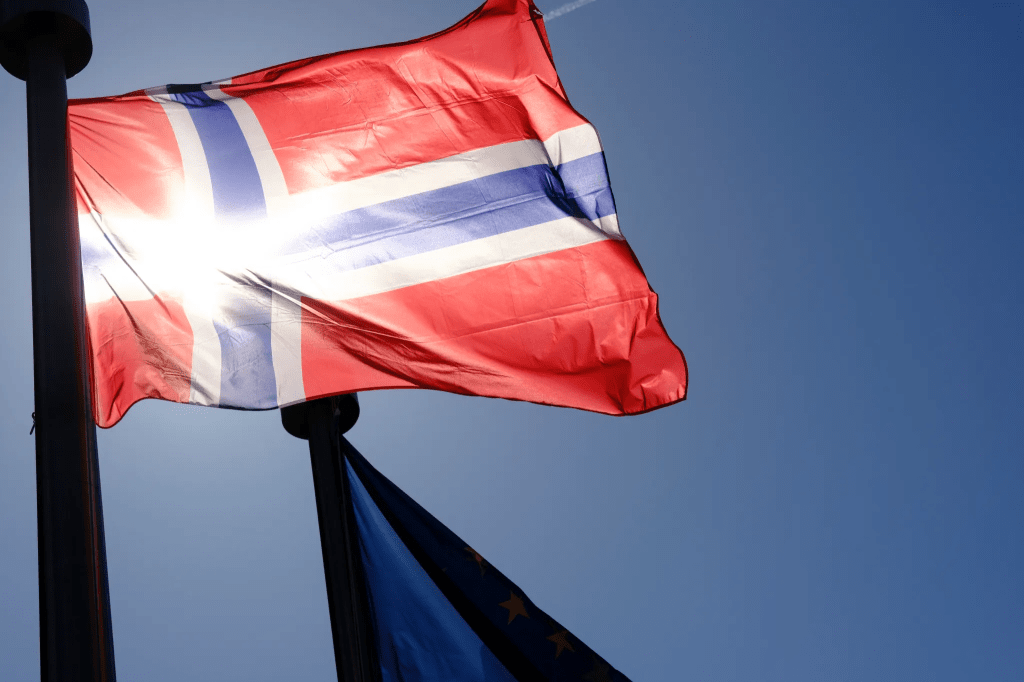
Politician calls for transgender Americans to be offered asylum in Norway: ‘We have to act’

*This is reported by Pink News

A Norwegian transgender politician, representing the Green Party (MDG), has advocated for transgender Americans to be granted asylum in Norway due to the anti-trans discrimination they are facing in the US.

Karina Ødegård, who is on track to becoming Norway’s first transgender member of parliament, has told Norwegian newspaper Afterposten that the challenges faced by trans people in the US are similar to the persecution experienced by marginalised groups in 1930s Germany.

The Green Party have supported Ødegård’s proposals.

Referring to the rise of fascism in Europe and the persecution of Jewish people and other minorities, she said: “What would we have done in the 1930s if we knew what was about to happen? That’s where we are now. Then we have to act,” she said.

Ødegård has said that in contrast to the US, the state and healthcare system in Norway helped her to be herself.

“One thing is that you see [in the US] the development of an illiberal democracy. I find that extremely problematic. Then it gets even worse because the Trump administration has singled out transgender people as scapegoats to be hanged and removed,” she explained.

This comes after President Trump signed a raft of executive orders targeting trans people, preventing them from serving in the military, banning trans women from participating in women’s sports, and requiring official documents to only list their gender registered at birth.

LGBTQ+ rights in Norway

Norway is generally considered to be a very LGBTQ+ friendly country, as it was one of the first countries to pass an anti-discrimination law that explicitly included sexual orientation in 1981.

Listen to this article

1:33 / 2:30

Also, same-sex marriage and adoption has been legal there since 2009.

Unfortunately, Norway doesn’t yet legally recognise non-binary identities, nor does it offer gender-affirming care for under-18s, stating a “lack of comprehensible research” despite the majority of Norwegian people believing that it should be accessible.

Norway has laws (The Tenancy Act, the Housing Association Act and the Residential Building Association Act) that all prohibit housing discrimination on the basis of sexual orientation. Married and committed same-sex couples are permitted to adopt under Norwegian law, and self-ID is also allowed: to change their gender, trans citizens only have to send a notification to the National Population Register.

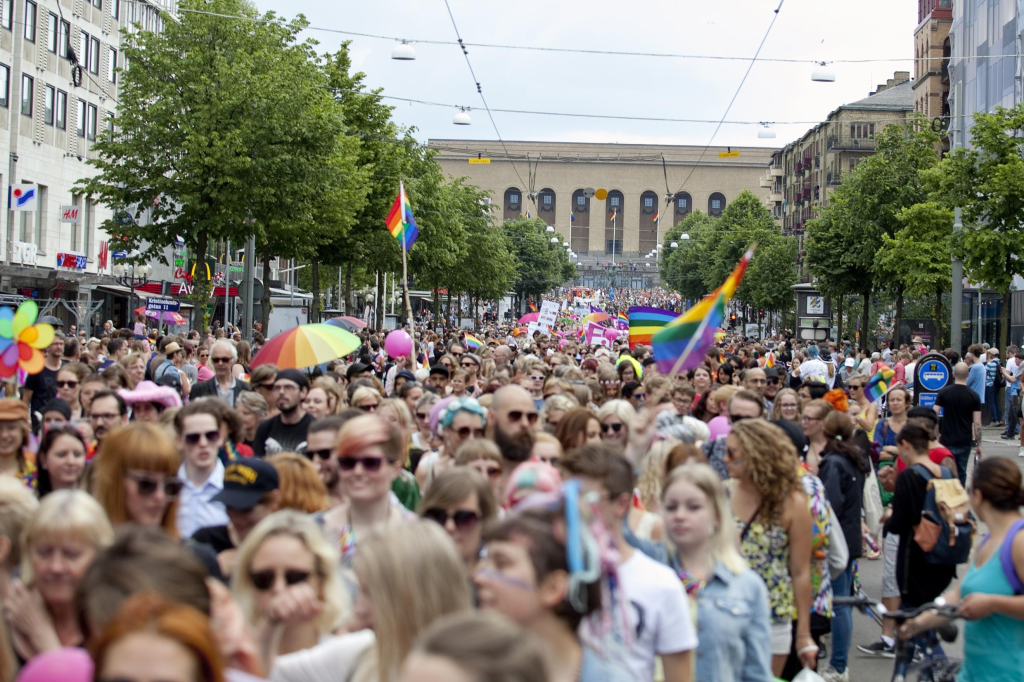
LGBTQ Refugees May Apply for Asylum in Sweden

The Swedish Migration Board has posted the following information for LGBTQ asylum seekers.

If you have a well-founded fear of being persecuted because of your sexual orientation, gender, gender expression, gender identity or other membership in a certain social group, you may be a refugee and have the right to protection in Sweden. This is stated in the Refugee Convention, Swedish law and EU rules.

Asylum application and rules

Persecution can be threats or violence against your life or health. It can also be about laws and regulations or people’s views that mean that you are subjected to serious violations because of your sexual orientation. It can be, for example, punishment or extensive discrimination such as not being able to go to school, choose a job or receive healthcare.

The right to express yourself and engage politically without fear of persecution regardless of ethnicity, religion, gender or sexual orientation are also examples of what can give you the right to stay in Sweden.

It does not matter whether the persecution comes from the authorities of your home country or if your family or other people threaten you. The Swedish Migration Board will then investigate what could happen to you if you return to your home country in the future and whether the authorities there are unable or unwilling to protect you against the persecution that you say you are at risk of.

The Swedish Migration Board will register you as an asylum seeker with the name, date of birth and legal gender that appears on your identity documents. Swedish law does not allow us to register you with a different name, but if you wish to use a different address or pronoun, you should tell us so that we can make a note of this.

Investigation

When the Swedish Migration Board decides whether you need protection and can therefore be granted a residence permit in Sweden, an investigation will be carried out with you to understand what your life has been like and why you are afraid of returning to your home country. If the reason is your sexual orientation, gender expression or gender identity, it is important that you tell us as early as possible.

Read more about how to apply for asylum

The Swedish Migration Board knows that it can be difficult to tell someone you have never met about such things. It may even be the first time you have talked about it with someone and the boundaries of what feels personal and private are different for everyone. It is important that you still tell us as much as possible about all your reasons for asylum. The more details you can talk about, the better basis the Swedish Migration Board has for its decision. The investigator will also ask questions about your sexual orientation, your gender expression or gender identity, the thoughts and feelings you have had about it and your relationships with family, friends and the society you have lived in. We are bound by confidentiality and do not tell people who are not working on your case about what you tell us.

If you feel that the officer conducting your investigation does not understand what you are saying, or if you have information that the officer does not ask for, you must tell them as soon as possible. Do not wait until you have received a decision on your case.

You have the opportunity to express your gender preferences for the interpreter, caseworker and assistant so that you feel safe during the asylum process, and the Swedish Migration Board will then try to help you with your preferences. If you are over 18 years of age, you will meet your assistant and your caseworker alone without other co-applicants. You can request an assistant with special knowledge of the situation of LGBTQ people if you know of, or receive help in finding, such an assistant.

If you are under 18 years old

The Swedish Migration Board must listen to all children seeking asylum and find out whether the children need protection here. It is therefore important that you tell the Swedish Migration Board about your life in your home country and what you think would happen to you if you went back there. If you are under 18 and have guardians with you in Sweden, the Swedish Migration Board must ask them if we can talk to you without them being in the room. If you do not have your parents with you in Sweden, it is your guardian who decides whether we can talk to you alone. If you want to talk to your case officer without your parents or guardian, it is important that you say so.

The interpreter

Words and concepts in Swedish and your own language can mean different things. The most important thing is that you describe your own feelings and experiences and explain how they relate to why you are afraid.

If you do not understand the interpreter or if you think the interpreter may not be translating everything you say impartially, you should speak up. Also, keep in mind that the interpreter may not always know the specific words used to talk about sexual orientation, gender identity or gender expression. It may therefore be a good idea to also explain to the interpreter what the words you are using mean to you.

Accommodation

In most of the Swedish Migration Board’s accommodation, two or more people of the same gender share a room. The wait during the asylum process can make the accommodation situation stressful and conflicts can arise in the accommodation.

It is important that you tell us as soon as possible about what you need or if you feel unsafe where you live. If there are problems in the accommodation that you need help solving, you must tell us. Speak to the caseworker at the reception unit or the staff at the accommodation where you are registered.

Health

In some cities there are clinics for, for example, sexual health and counselling for specific target groups. Examples of target groups could be women, young people or LGBTQ people. Ask your caseworker for more information.

Voluntary organizations

You always have the right to contact voluntary organisations during the asylum process for advice and support. The more information you have about your rights and possible options, the better prepared you are for the different stages of the asylum process. RFSL is one such voluntary organisation that works for LGBTQ rights, providing special support and social meeting places for LGBTQ asylum seekers.

RFSL NewcomersLink to another website, opens in a new window.

RFSL Youth, Newcomers youth

Blog at WordPress.com.

Up ↑