
Read more at The Texas Tribune.
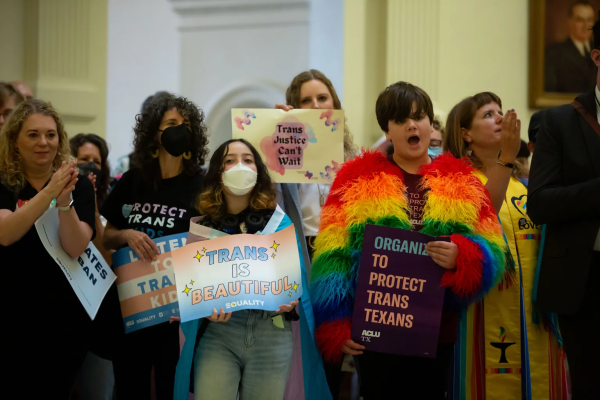
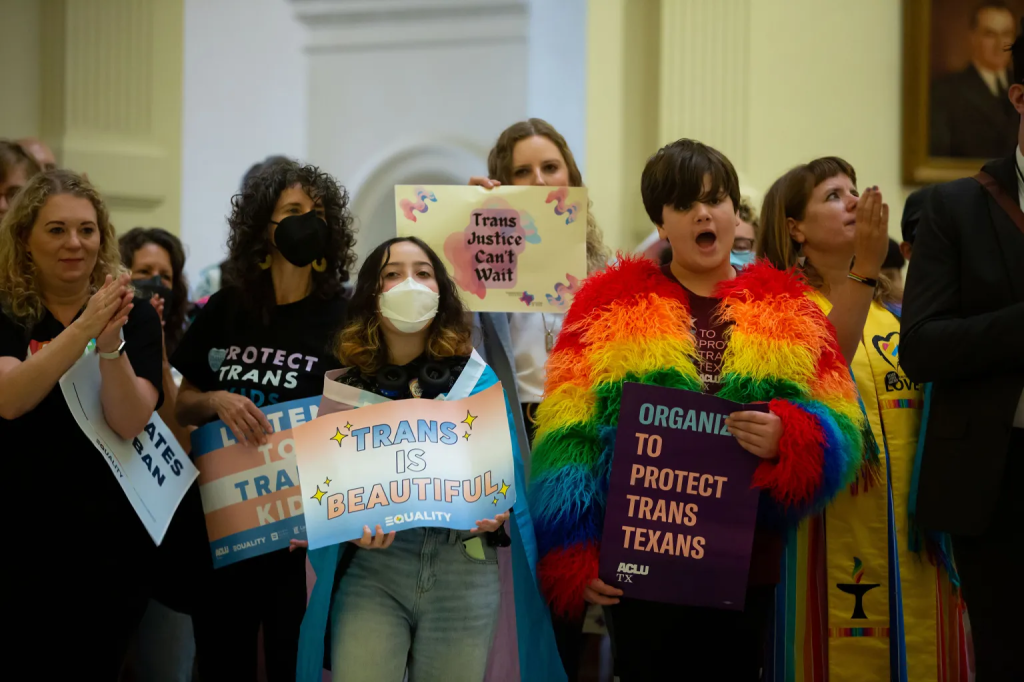
Arlington Mayor Jim Ross stood under the June sun and delivered an impassioned speech in front of a crowd awash in rainbows and glitter.
“You know Martin Luther King taught us way back in the ‘60s, that there’s only one thing strong enough to overcome hate,” the North Texas mayor said.
“Love! Love!” the crowd gathered at the city’s annual Pride celebration shouted, answering his call.
His faith, he continued, instructed him to love his neighbor regardless of their differences.
“So I wanted to come here and say thank you for loving us,” he said. “And I love you!”
Five months later, Ross faced a similar crowd at City Hall on Oct. 14. There was no love in the room.
The Dallas-area suburb was — in an effort to comply with new presidential executive orders — considering eliminating the city’s protections for LGBTQ+ people that prohibit employers and any business providing accommodation from discriminating against them.
More than $60 million in federal funds for parks, roads and public safety were at stake, city leaders said.
“It’s a horrible balancing attempt,” Ross said in a recent interview with The Texas Tribune, referring to protecting the city’s budget and its residents.
Other Texas cities, including Dallas and Fort Worth, have revised city policies and ended programs that comply with Trump’s executive orders that end diversity and inclusion efforts. Arlington is believed to be the first city to consider ending explicit protections for LGBTQ+ residents.
The City Council tabled its vote and is expected to revisit the issue Monday night. The impending vote is the result of a pressure campaign waged by conservative activists, state Republican lawmakers and the White House to roll back protections for LGBTQ+ people they say are unfair and harm women and children.
LGBTQ+ advocates, meanwhile, argue that such revisions push residents further away from public life. And these decisions erode the recognition and acceptance this community worked for decades to secure.
Texas — like many states — has a long history of criminalizing certain acts by LGBTQ+ people. While the U.S. Supreme Court has overturned sodomy laws and legalized same-sex marriage, Texas state lawmakers and Gov. Greg Abbott have since 2023 sought to undo those victories by passing a suite of laws that put new limits on how LGBTQ+ people live their lives and express their identities in public.
Meanwhile, at the federal level, President Donald Trump has, since returning to office in January, instructed government agencies to remove words and phrases associated with diversity, race and transgender people — exerting the full strength of the federal government across the U.S. to achieve its agenda.
It’s those executive orders that triggered the Arlington City Council to review its policies, which LGBTQ+ advocates fought to put in place to provide protections that don’t exist at the state and federal levels.
Brad Pritchett, interim CEO of Equality Texas, one of the state’s oldest advocacy groups, said the policies at the city level are one of this community’s few available safeguard.
“It has fallen on local municipalities to find a way to protect the folks that live in their communities,” he said. “And I think when we see these types of non-discrimination laws passed at the local level, what that’s really doing is sending a message to the residents of these cities that who you are should not impact whether or not you have a job, a roof over your head, or can access basic services.”
Many of the recent efforts to curtail the LGBTQ+ community have been largely targeted toward transgender people. However, Pritchett said the Arlington debate shows more is on the line for all LGBTQ+ people.
“When they shift their gaze to another group of people that they don’t like,” he said, “they’ve proven that they can weaponize government to harm anyone they want.”
Conservative leaders say they aim to reset an imbalance pushed by former Democratic presidential administrations and to protect women. Passing these laws and executive orders, conservatives argue, is a necessary step toward acknowledging the differences between the two genders.
“I think what’s been missing a lot of times from the opposition is the recognition of the rights of women and the vulnerability that women have in these private spaces,” said Mary Elizabeth Castle, director of government relations at Texas Values, a statewide nonprofit that advocates to end abortion, expand religious liberties, and other conservative causes. “It’s very important to have that in law because the dignity of the two sexes is not recognized. A lot of rights and modesty that belong to women are diminished.”
“I promised to obey the law”
Ross, the Arlington mayor, first learned the city might have to revisit its anti-discrimination policies when the city’s lawyer told him the municipality lost out on a $50,000 federal grant because a certain policy used the word “inclusive.”
Ignoring Trump’s orders could come at too great an economic loss for the city. And his job is to obey the law, he said.
“I took an oath, and I promised to obey the law,” Ross said. “I didn’t say I’ll follow the law unless I disagree with it, so I’m torn. I don’t want to do things that are harmful to any part of our community or that paint the perception that we don’t love every single person here.”
To be sure, executive orders are not laws. They serve as marching orders for agencies across state and local governments, said Cathryn Oakley, senior director of legal policy at the Human Rights Campaign, a nationwide LGBTQ+ advocacy group.
The manner in which the Trump administration has issued its orders is meant to intimidate and bully, Oakley said.
“It’s really frustrating if you’re a person who cares about the rule of law,” Oakley said. “It is not clear how folks are supposed to implement these things, and it sets up this culture of fear and intimidation because there’s no safe harbor. Either the president will come after you, or the governor will come after you.”
Presidents of both political parties have used executive orders increasingly to drive policy outcomes. For example, President Joe Biden used executive orders to push a climate-friendly agenda and diversity efforts in the wake of the 2020 Black Lives Matter movement.
Sherry Sylvester, a senior fellow at the conservative Texas Public Policy Foundation, said rolling back Biden-era DEI efforts was a return to the status quo — and fundamentally American.
“When you remove Diversity, Equity and Inclusion policies from agencies, universities and public schools, all you’re saying is all decisions must be made on merit,” Sylvester said. “When you interview people for a job, you’ve hired a person who is most qualified for the job. You get no points if you’re African American, no points if you’re female, no points if you have a gender identity based on your sexual preference.”
Executive orders are meant to spur local governments to act quickly and comply to win much-needed capital to keep their cities operating. Conservatives supporting Trump’s efforts say the tactic began with former President Barack Obama.
In 2011, Obama issued a directive intended to crack down on sexual violence in public schools and universities. In 2016, the U.S. Department of Education updated those rules and said that schools receiving federal funding had to respect a transgender student’s gender identity, which Castle said sparked a movement to oppose such acknowledgements, including in Texas.
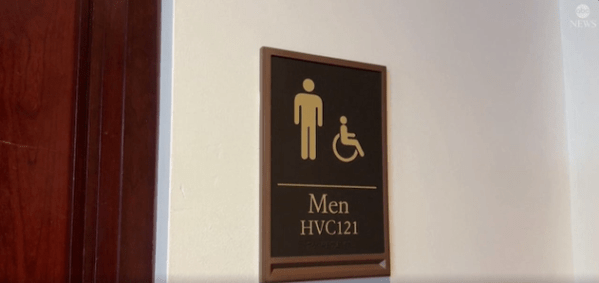
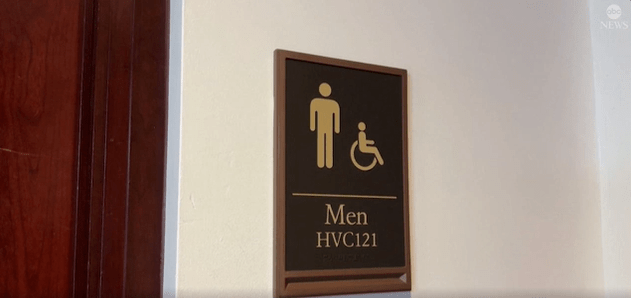
In 2017, the Texas Legislature attempted to pass a bill restricting transgender people’s access to restrooms. It died in the legislative process. With Trump back in office this year, the movement to regulate transgender people’s actions in public gained momentum and lawmakers passed a bill restricting the restrooms transgender people can use in government buildings and schools. Castle insisted that such a bill would promote safety in restrooms.
“No one is being denied going to the restroom,” Castle said. “They just have to go to the restroom based on their biological gender.”
The result of Trump’s orders naming transgender people undermines decades of work by the LGBTQ+, the scientific and medical community to participate in public life, said Elana Redfield, federal policy director for UCLA’s School of Law. And they undermine years of scientific research that helped governments and communities understand transgender people’s place in society.
“We can’t function in society without bathrooms,” Redfield said. “It’s very difficult to have a job, take public transportation, travel long distances, go shopping, or do anything without access to bathrooms. These kinds of laws really do have the potential to deeply, deeply exclude transgender people from all aspects of society.”
A renewed movement for queer equity
LGBTQ+ Texans are familiar with laws regulating their right to exist publicly and have fought for an equal standing with everyone else for just as long. The modern movement can be traced back to the 1960s, said Wesley Phelps, a historian at the University of North Texas whose focus is the LGBTQ+ community in the south.
At the time, Texas advocates fought sodomy laws banning sex for gay men and lesbian women.
“There were activists all over Texas who understood that as long as that sodomy law was on the books, as long as it was illegal to engage in sex with someone of the same sex, queer people would always wear that stigma of criminality,” Phelps said. “You could be denied employment, you could be denied housing, you could be denied food stamp assistance, because if you were gay, you were an admitted criminal.”
By the 1970s, advocacy groups had been established in major cities, including Dallas and Houston. And in these cities, activists formed political advocacy groups. The sentiment eventually spread farther, reaching Austin, San Antonio and El Paso. Part of that movement included adding local protections to city charters that prohibited housing and employment discrimination that don’t exist at the state or federal level.
And in 2003, the Texas Supreme Court ruled the sodomy law unconstitutional.
The push to eliminate protections for the broader LGBTQ+ community will trigger a backlash, Phelps said.
“I think things like that have reignited a movement for queer equality today,” Phelps said. “It’s not just that we’re entering a period where it’s going to be difficult to win victories, but the ones already achieved are under threat.”
Many Texans told The Texas Tribune that they plan to stay put, regardless of the policies seeking to regulate their everyday lives. They are turning to optimism and each other, reminding themselves of their right to live openly, they said.
In Houston, Daron Yanez Perez hosts support groups for transgender men. Trans Men Empowerment, which he founded in 2023, has more than 200 members and hosts meetings in person and online. As part of the programming, Perez invites policy and mental health experts who help the members understand how the policies affect them.
Many of Perez’s members are reluctant to use public restrooms, he said, out of fear for their safety. Perez said he would not use the women’s restroom because he does not think women would feel comfortable sharing a restroom with him.
“They’re using restrooms to go after us because they don’t like us, but we’re not going anywhere, we’ve always been here,” Perez said.
In Dallas, Javier Enriquez helps LGBTQ+ people who struggle with loneliness. Enriquez, who is president of the Dallas Social Queer Association, hosts about a dozen events a month. Up to 40 attended each event, which include gay trivia and activities tailored for disabled, elderly people, Hispanic and Asian Pacific Islanders who identify as LGBTQ+.
Enriquez said directives that spell out limits for transgender people and rainbow crosswalks are a distraction from real issues like potholes and unmet trash service. And LGBTQ+ Texans as a community are used to enact that distraction, he said. The resources spent on removing the rainbow colors from the crosswalks, he said, could be put to better use on the city’s infrastructure.
Still, he acknowledged that the orders have instilled fear.
“There are people, especially our transgender siblings, who are worried about being able to call Dallas their home with everything going on, and not all of them have the privilege of the resources to be able to move out,” he said. “And to some of them, this is home, where they built their lives and families… and despite what happens in this world, we are here and we aren’t going anywhere.”
 fleeredstates.blog
You must be logged in to post a comment.