Texas enacts controversial “bathroom bill” into law

Read more at CBS News.


Local News

Texas enacts controversial “bathroom bill” into law

By Marissa Armas

Updated on: September 27, 2025 / 1:01 PM CDT / CBS Texas

It’s a controversial new law that’s drawing sharp criticism from LGBTQ advocates across Texas.

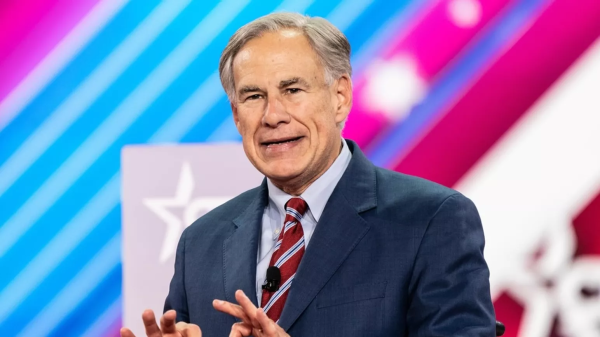
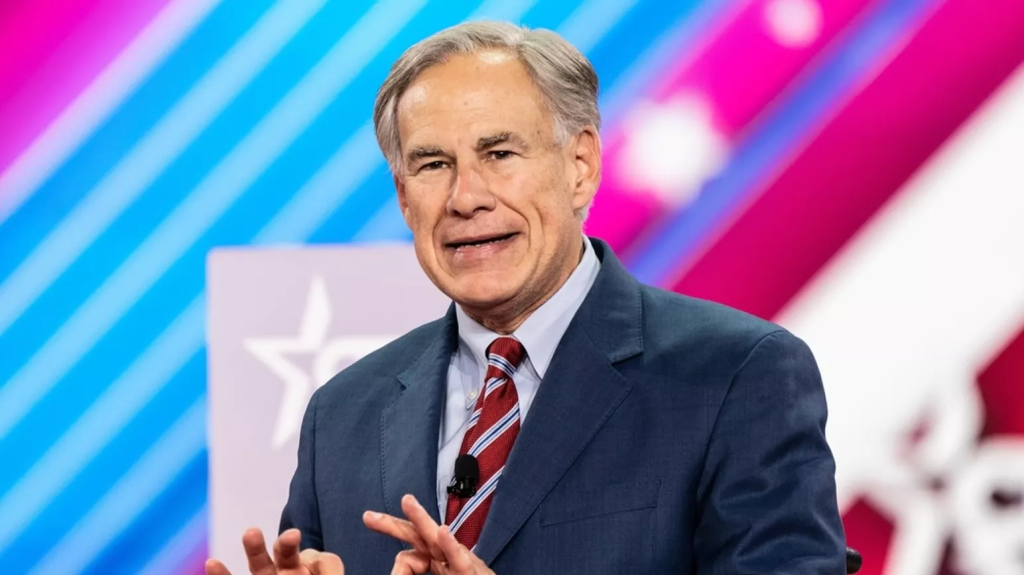
Gov. Greg Abbott officially signed the so-called “bathroom bill” on Monday. While some are applauding the move, others say it unfairly targets transgender people and others.

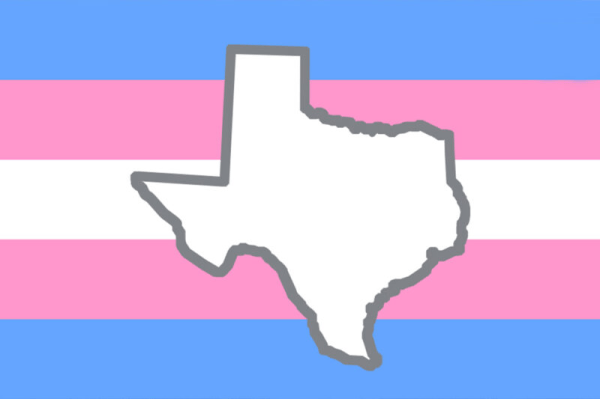
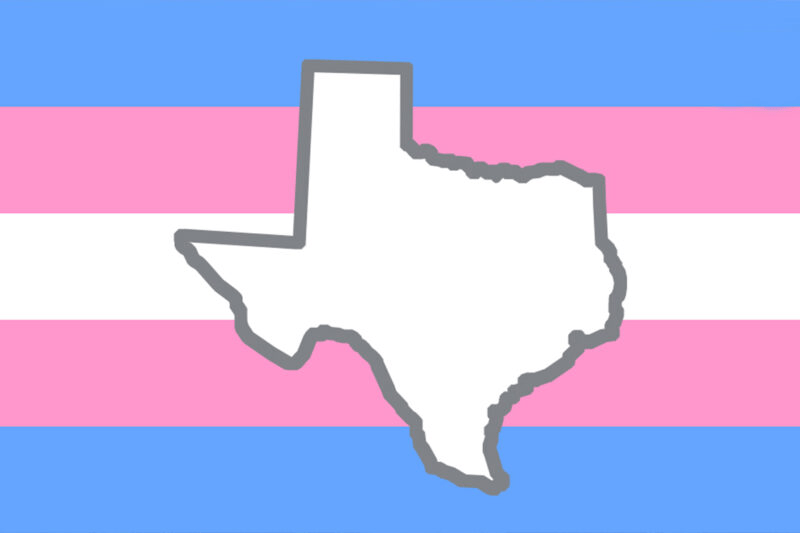
On Monday, Abbott signed Senate Bill 8 into law, which requires people in government buildings and schools to use certain facilities based on the sex they were assigned at birth.

Impact on public institutions statewide

The law applies to restrooms, locker rooms, and other changing facilities in public schools, universities, prisons, jails, and other government-owned buildings. It also limits which family violence shelters transgender people can access.

The only exceptions are for children under 10 accompanied by an adult, as well as custodians, law enforcement, and medical workers.

Community leaders express concern

Because of the new law, community engagement strategist Gordy Carmona is having tough conversations with many of the people they serve.

“It’s just heartbreaking,” said Carmona. “I know how it’s going to impact so many of the people that I care about that I know, both personally and professionally.”

Brad Pritchett, CEO of Equality Texas, said the law’s intent is clear.

“Even though the letter of this law is plainly written, the intent of the law is really about trying to keep transgender, nonbinary, and intersex Texans from being able to participate in public life here in the state of Texas,” Pritchett said.

Supporters call it ‘common sense’

Abbott posted a video Monday about the bill signing, saying, “I signed a law banning men in women’s restrooms. It is a common-sense public safety issue.”

State Rep. Angelia Orr echoed that message, saying, “Let’s hope more states follow suit. This is common sense policy to protect the women and girls of Texas!”

Enforcement details remain unclear

Pritchett said there are still many questions about how the law will be enforced.

“We don’t really know what cities or school districts, or political subdivisions are going to do to try to enforce this bill,” said Pritchett. “There are things that are reasonable, and there are things that are unreasonable, and our goal is to ensure that no unreasonable things are taking place, with regards to how people are accessing essential spaces for themselves.”

Fines target institutions, not individuals

While individuals won’t be fined for violating the law, institutions can face steep penalties — $5,000 for a first offense and up to $125,000 for subsequent violations

The law takes effect on Dec. 4.

“Bathroom bill” aimed at trans people approved by Texas House after decade of failed attempts

Read more at the Texas Tribune.

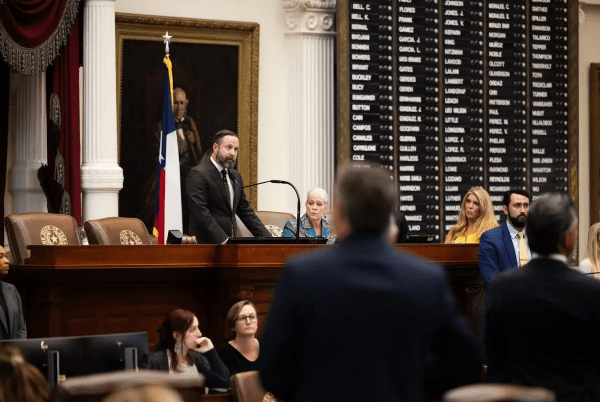
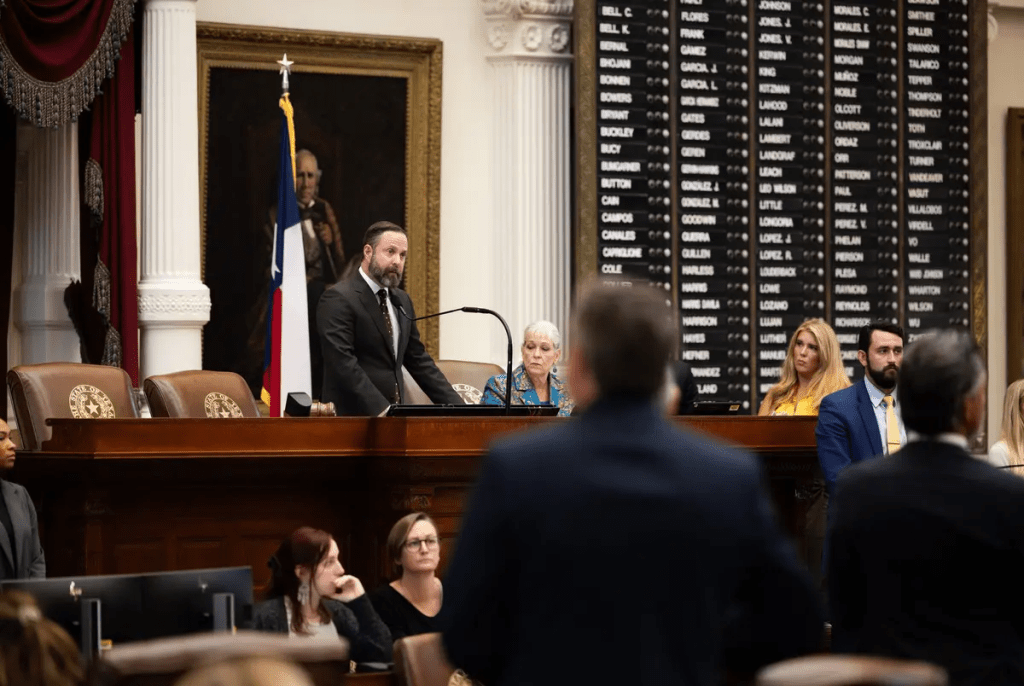
Texas House members clashed over a bill that would restrict which restrooms transgender people can use in government buildings and schools, but ultimately approved it late Thursday.

Representatives approved Senate Bill 8 on a 86-45 vote after several hours of tense debate that was at times interrupted by people in the gallery shouting insults at lawmakers who supported the bill. The House gallery, where visitors can watch proceedings, was emptied out by staff and Department of Public Safety officers after the disruptions continued.

SB 8 would restrict bathroom use in government-owned buildings, public schools and universities based of sex assigned at birth and would not allow exceptions for transgender inmates’ housing in prisons and jails. It would also bar those assigned male at birth from accessing women’s domestic violence shelters, unless they are under 17 and the child of a woman also receiving services.

Bathroom bills proposing civil or criminal penalties for entering restrooms not matching biological sex have been proposed in Texas for more than a decade, and 19 other states have successfully passed their own proposals. The Texas House, however, has largely failed to garner traction for bathroom bills after a tense battle over one proposal in 2017. The Texas Senate has passed six different bathroom bills since 2017.

A last-minute amendment from Rep. Steve Toth, R-Conroe, raised the proposed fines to $25,000 against institutions where violations occur, and $125,000 for any subsequent violations. The raised penalties would make SB 8 the most financially punitive bathroom bill in the country. The amendment was adopted without debate.

Supporters of SB 8, which has also been called the “Texas Women’s Privacy Act,” have said the bill is necessary to ensure safety and comfort for women in intimate spaces like changing rooms and bathrooms. The bill’s House sponsor, Rep. Angelia Orr, R-Itasca, said the goal of the bill is to prompt political subdivisions to create their own policies to ensure bathrooms are secure.

“The preference of someone’s sexual appearance does not override the safety and privacy of a biological female,” Orr said.

Orr said the bill does not affect privately owned or funded businesses, and will not create penalties against individuals.

Opponents of the bill have called the restrictions unnecessary, and that the bill would incite harassment against trans people and cisgender people falsely accused of entering the wrong facility. Rep. Jessica Gonzalez, D-Dallas, said she personally had been accused of entering the wrong restroom in the Texas Capitol, which already has a policy similar to SB 8’s proposal.

Questioning from Democrats who opposed the bill attempted to zero in on how the bill would be enforced, as it outlines that agencies will take “every reasonable step” to ensure the policy is followed. Orr said during questioning that it would be up to agencies how to enforce their policy. Previously when the bill was heard in committee, Orr said the policies would be determined based on how someone looked.

“Who do you think is more uncomfortable in the bathroom today? A cis woman, or a trans woman wondering if she’s about to be harassed?” Rep. Erin Zwiener, D-Driftwood, asked.

During testimony in both chambers through the session and on the House floor on Thursday, tensions between lawmakers for and against the bill flared. Several members argued in small groups multiple times and were separated by staffers as debate continued on the floor. At one point, Toth heckled Rep. Rafael Anchia, D-Dallas, for using Bible quotes as he spoke on a failed amendment designed to kill the bill. Toth was warned by a House staffer for the remarks.

Anchia later argued with Rep. Hillary Hickland, R-Belton, away from the floor debate after she chastised his use of the Bible and countered with her own quotes as she expressed support for the bill. Other members cited religion several times after to channel their support and opposition to the bill.

“Everyone is born a child of God, and everyone who is born into this life deserves to be treated that way,” Rep. John Bryant, D-Dallas said. “That is what the Bible says. That is what our hearts tell us. And the only time we act differently is when we get into politics.”

Representatives with family violence shelters expressed concern about the bill’s exclusivity during testimony earlier in the month, and said it could affect not just trans victims of domestic violence, but cisgender women with teenage dependents or adult dependents who are disabled. While four other states have similar sex-based restrictions on shelters, they still allow trans victims to be accepted if they have separate sleeping quarters.

“When you call the hotline, it is often the moment before you believe you will die. I don’t say that with hyperbole,” said Molly Voyles, director of public policy at the Texas Council on Family Violence, during the House State Affairs committee hearing last week when SB 8 was discussed. “Many women fleeing have a son who is 18 still in high school, or a child with a disability over that age for whom they are the primary caretaker. A choice to leave that includes leaving without your child is not a choice at all.”

SB 8 will be sent back to the Senate to approve the changes. Lawmakers have until Sept. 13 to approve any legislation during the second special session.

Texas GOP holds special session to address deadly floods & files an anti-trans bathroom bill instead

Read more at LGBTQ Nation.

Texas Gov. Greg Abbott (R) has called a special legislative session to address the deadly floods that have left 134 people dead and 101 others missing. However, in preparation for the session, state GOP lawmakers have filed 82 measures, none of which address the flooding. Instead, they seek to ban transgender women from using women’s facilities (and Abbott personally supports the idea).

In Abbott’s proclamation for the special session, he laid out 18 priorities. The first four addressed the need for improved emergency warning, communication, and aid systems. The other priorities included further restricting abortions and election access, gerrymandering the state electoral map to favor Republicans, and “legislation protecting women’s privacy in sex-segregated spaces.”

The state constitution says legislators can only file bills related to the governor’s priorities, but Republican legislators haven’t filed any bills related to the deadly floods, KXAN reported.

Instead, Republican state Rep. Valoree Swanson filed H.B. 32, which would require people only to use facilities in public schools, state universities, government-owned buildings, jails, and family violence shelters that match the “biological sex” assigned on their original birth certificate. Texas recently changed its laws to forbid transgender people from changing the gender markers on their birth certificates and driver’s licenses.

Anyone who allows the proposed law to be violated could be subject to civil fines from $5,000 to $25,000, as well as additional penalties. Swanson filed a similar bill during the previous legislative session, but it failed to pass after missing several legislative deadlines, Chron reported.

Three other special session bills, H.B. 37, 65, and 70, would punish any person or internet service provider who aids or abets the distribution of abortion medication.

H.B. 38, introduced by Democratic state Rep. Jessica Gonzalez (who is also chair of the Texas House LGBTQ Ca ucus), would prohibit workplace, housing, and public accommodations discrimination against LGBTQ+ people, but there’s no way it’ll pass the state’s Republican-majority legislative chambers. It’s also unclear how the bill relates to Abbott’s list of priorities.

“I am proud to have filed H.B. 38 in preparation for the upcoming special session of our legislature,” González wrote in a statement on Tuesday. “H.B. 38 is a comprehensive nondiscrimination bill that would codify equal protection for the LGBTQ+ community and military veterans in employment, housing, and public accommodations.”

During the last legislative session, Texas Republicans filed 88 anti-LGBTQ+ bills, four of which became law, including a ban on diversity, equity, and inclusion (DEI) initiatives in public schools and one mandating people’s genders be legally determined by their reproductive organs. The Texas House voted to repeal the state’s anti-sodomy law, but Republicans prevented the repeal from getting a vote in the state Senate.

Montana’s anti-transgender bathroom restrictions are on hold under a judge’s order

*This is being reported by the AP News.

A judge on Wednesday temporarily blocked a Montana law that restricts transgender people’s use of bathrooms in public buildings.

The measure, which Republican Gov. Greg Gianforte signed into effect last week, threatened to deprive transgender people of their constitutional right to equal protection under the law, Montana District Court Judge Shane Vannatta ruled. The law prevents people from using restrooms in public buildings that do not align with the sex they were assigned at birth.

The five people who sued over the law were likely to prevail, Vannatta added in his ruling.

The new law “is motivated by animus and supported by no evidence that its restrictions advance its purported purpose to protect women’s safety and privacy,” Vannatta wrote.

The judge’s order will be in effect at least until an April 21 hearing on whether it should continue to be blocked while the lawsuit moves ahead.

Gianforte spokesperson Kaitlin Price said the governor will defend the law “and the privacy and safety of women and girls.”

“We’re not surprised to see far-left activists run to the courts to stop this common sense law,” Price said in an emailed statement. “A man shouldn’t be in a women’s restroom, shouldn’t be in a women’s shower room and shouldn’t be housed in a women’s prison.”

The American Civil Liberties Union praised the ruling.

“Today’s ruling provides enormous relief to trans Montanans across the state. The state’s relentless attacks on trans and Two Spirit people cannot withstand constitutional scrutiny by the courts,” said a statement by Alex Rate, ACLU of Montana’s legal director.

The law passed this year despite opposition from Democrats who worried it would complicate daily life for two fellow lawmakers who are transgender and nonbinary. They included Rep. Zooey Zephyr, a Missoula Democrat who in 2023 was silenced and sanctioned by her Republican colleagues for comments she made on the House floor.

The law would require public buildings including the state Capitol, schools, jails, prisons, libraries and state-funded domestic violence shelters to provide separate spaces for men and women. It defines the sexes based on a person’s chromosomes and reproductive biology, despite a recent state court ruling that declared the definitions unconstitutional.

The order wasn’t unexpected, bill sponsor Republican Rep. Kerri Seekins-Crowe said in an emailed statement.

“I am thankful that there is a team of Montanans devoted to protecting women’s spaces from men who desire to invade them,” said Seekins-Crowe.

At least a dozen other states already have variations of bathroom bans on the books, many directed at schools. Even more states, including Montana, have passed laws to ban gender-affirming medical care for transgender children and keep trans girls out of girls sports.

Montana’s law allows people to sue a facility if it does not prevent people from using restrooms or changing rooms that do not align with their sex assigned at birth. They can recover nominal damages, generally $1, and the entity could be required to pay the plaintiff’s legal fees.

Trans student’s arrest for violating Florida bathroom law is thought to be a first

*This is being reported by NBCNews.

A transgender college student declared “I am here to break the law” before entering a women’s restroom at the Florida State Capitol and being led out in handcuffs by police. Civil rights attorneys say the arrest of Marcy Rheintgen last month is the first they know of for violating transgender bathroom restrictions passed by numerous state legislatures across the country.

Capitol police had been alerted and were waiting for Rheintgen, 20, when she entered the building in Tallahassee March 19. They told her she would receive a trespass warning once she entered the women’s restroom to wash her hands and pray the rosary, but she was later placed under arrest when she refused to leave, according to an arrest affidavit.

Rheintgen faces a misdemeanor trespassing charge punishable by up to 60 days in jail and is due to appear in court in May.

“I wanted people to see the absurdity of this law in practice,” Rheintgen told The Associated Press. “If I’m a criminal, it’s going to be so hard for me to live a normal life, all because I washed my hands. Like, that’s so insane.”

At least 14 states have adopted laws barring transgender women from entering women’s bathrooms at public schools and, in some cases, other government buildings. Only two — Florida and Utah — criminalize the act. A judge on Wednesday temporarily blocked Montana’s new bathroom law.

Rheintgen’s arrest in Florida is the first that American Civil Liberties Union attorneys are aware of in any state with a criminal ban, senior staff attorney Jon Davidson said.

Rheintgen was in town visiting her grandparents when she decided to pen a letter to each of Florida’s 160 state lawmakers informing them of her plan to enter a public restroom inconsistent with her sex assigned at birth. The Illinois resident said her act of civil disobedience was fueled by anger at seeing a place she loves and visits regularly grow hostile toward trans people.

Former NC Gov. Pat McCrory says transgender restrictions are ‘more complex’ than bathrooms

*This is being reported by WFMY 2.

A new bill introduced in the North Carolina Senate would significantly restrict transgender rights, drawing parallels to the controversial House Bill 2 from 2016 that sparked nationwide debate and economic backlash.

Senate Bill 516, filed by Sen. Vickie Sawyer from Iredell County and Sen. Brad Overcash from Gaston County, would require transgender individuals to use the bathroom or locker room of their biological sex in public schools and prisons. 

However, the bathroom rules aren’t as extensive as House Bill 2.  Some institutions that receive government funding, such as domestic violence shelters, would be impacted, but many government buildings would be exempt. It would also allow individuals to sue facilities if they believe these rules have been violated.

Senate Bill 516 also goes a step further, defining sex strictly as male and female and preventing individuals from changing their birth certificates or driver’s licenses after gender reassignment surgery.

The controversial 2016 bill, House Bill 2 was often referred to as the “bathroom bill.” However, former North Carolina Gov. Pat McCrory said that was a misleading description that he hopes is changed this time around.

“It’s much more complex than that. We’re dealing with locker rooms and showers and women’s sports and fairness and even security regarding what your driver’s licenses say,” McCrory said. “It’s a very complex issue. It’s a very emotional issue.”

McCrory acknowledged that many cite this controversy as the reason he narrowly lost his reelection campaign in 2016. It put North Carolina in the national spotlight due to the nationwide boycotts that followed, leading to an estimated $3.76 billion in economic losses. The law was partially repealed after a letter signed by more than 200 CEOs pushing for the change.

In the time since, many other states have passed similar legislation without such sweeping boycotts. McCrory said the companies owe North Carolina an apology.

“PayPal, Bruce Springsteen, Ringo Starr, you name it. And frankly, I think a lot of them owe North Carolina an apology,” McCrory said. “I don’t think corporations are ever going to get involved in this issue again, because public opinion now has turned, although it is still an extremely complex issue, and we ought to have good dialogue on it.”

Critics still worry this bill will cause an uptick in discrimination against the LGBTQ+ community, especially transgender youth.

Time Out Youth, a Charlotte-area nonprofit that provides support for LGBTQ+ kids and young adults including housing and mental health counseling, says it’s already seeing a steep increase in need.

“We saw more new young people last month than we’d seen all of the previous year in one month,” spokesperson Elissa Miller said.

While they are not able to comment on this specific bill, Miller says this is a reminder of what transgender youth are facing right now.

“Being a queer young person right now is very difficult,” she said. “Their very identities are kind of under debate, in the spotlight. Decisions are being made about them, without them.”

Equality NC also sent WCNC Charlotte a statement, saying in part: “We were disheartened to learn of yet another attack on our transgender community — this time in the form of SB 516.”

McCrory says he expects this version of the bill to face less scrutiny and hopes the people on both sides of the debate can avoid it as well.

“My family and I got a lot of physical and verbal threats during that three-month period, and it was not right, and I wanted to have good conversation,” he said. “It’s not time for anyone to spike the ball saying we were right 10 years ago. It’s time for respect and dignity.”

The bill’s sponsors did not immediately respond to requests for comment.

Ohio Senate Approves Controversial Transgender Bathroom Ban

This blog is originally appeared at LGBTQ Nation

The bill affects all students across the state and will limit the rights of thousands of transgender individuals if signed into law by the governor.

On Wednesday, the Ohio State Senate approved Senate Bill 104, a transgender bathroom ban for all students in the state, including those in higher education.

Titled the “Protect All Students Act,” the bill passed with a 24-7 vote, strictly along party lines.

The bill states, “A school shall designate each student restroom, locker room, changing room, or shower room that is accessible by multiple students at the same time, whether located in a school building or in a facility used by the school for a school-sponsored activity, for the exclusive use by students of the male biological sex only or by students of the female biological sex only.”

The bill will soon be sent to Governor Mike DeWine (R) for either approval or veto. While he is expected to sign it, the Associated Press reports that he will first conduct a legal review.

The ban exempts school faculty, children under 10 who require family assistance, and individuals with disabilities.

Rather than defining gender, the bill relies on the concept of biological sex, which it defines as “the biological indication of male and female, including sex chromosomes, naturally occurring sex hormones, gonads, and nonambiguous internal and external genitalia present at birth, without regard to an individual’s psychological, chosen, or subjective experience of gender.”

The bill does not address or provide exceptions for intersex individuals, who do not fit neatly into traditional biological sex categories.

The Ohio Center for Christian Virtue strongly supports the bill. “Today is a huge victory for children and families in Ohio,” said David Mahan, the group’s policy director, calling it “common-sense legislation.”

However, Jocelyn Rosnick, Policy Director for the American Civil Liberties Union of Ohio, expressed strong opposition. “We are incredibly disheartened by the Ohio General Assembly’s continuous attacks against transgender and gender non-conforming individuals across Ohio. Senate Bill 104 is a cruel invasion of students’ rights to privacy, which could result in unwarranted governmental disclosures of private, personal information.”

She added, “If allowed to go into effect, SB 104 will create unsafe environments for trans and gender non-conforming individuals of all ages. This bill ignores the material reality that transgender people endure higher rates of sexual violence and assaults, particularly while using public restrooms, than people who are not transgender. All Ohioans deserve to access the facilities they need, in alignment with their gender identity, without fear of harassment or bullying. The ACLU of Ohio remains steadfast in our commitment to standing with trans Ohioans and is closely considering next steps.”

Blog at WordPress.com.

Up ↑