Texas unveils “tip line” to report & send pictures of suspected trans women using the restroom

Read more at LGBTQ Nation.

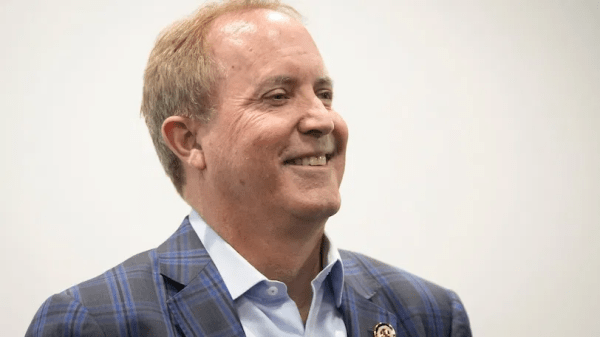
Texas’ virulently anti-trans attorney general, Ken Paxton (R), has launched a tip line that allows people to report on suspected trans people they believe are violating the state’s new bathroom ban.

In a statement announcing the tip line, Paxton said the Texas Women’s Privacy Act – which requires people in public buildings to use bathrooms based on sex assigned at birth – “was passed to ensure that women and girls in Texas are protected from mentally ill men wanting to violate their basic right to privacy.”

“It’s absolute insanity that action like this is even needed,” he claimed, “but unfortunately, in the day and age of radical leftism, it is.”

In reality, research has shown no evidence that allowing trans women access to single-sex spaces like bathrooms poses a safety risk to cisgender women.

In fact, forcing trans people to use facilities that do not align with their gender identity can result in “high rates of harassment and violence against transgender people as well as cisgender people, particularly women who do not conform to traditional ideas of femininity,” according to the Movement Advancement Project. A 2021 study from UCLA’s Williams Institute found that trans people are four times more likely than cis people to be victims of violent crime.

Nevertheless, the enactment of the legislation marks the culmination of a 10-year effort by Texas Republicans. The law does not allow an individual to be punished or fined by the state; rather, it fines the institution that allowed the infraction $25,000, plus an additional $125,000 per day for additional violations.

The law also requires the attorney general’s office to investigate complaints, but first, complaints must be filed with the accused agency. “Together, we will uproot and bring justice to any state agency or political subdivision that opens the door for men to violate women’s privacy, dignity, and safety,” Paxton said.

Paxton’s tip line requires folks to submit the original complaint that was filed with the accused agency in addition to filling out the online form and providing “evidence” that a trans person used the restroom. Perhaps most concerning, it also includes an option to submit up to five photos, even though taking pictures in restrooms is illegal.

Brian Klosterboer, senior staff attorney for the American Civil Liberties Union of Texas, said the tip line “wrongly encourages Texans to violate each other’s privacy in bathrooms.”

“The Attorney General has tried for years to vilify and dehumanize transgender Texans,” Klosterboer said, “but he can’t strip away every person’s right to privacy and right to live our lives free from gender stereotyping.”

Critics of the law have worried that it will spark violent over-policing by the institutions at risk of these massive fines. This policing will affect both trans and cis people who don’t fit strict gender norms.

The law has already been used in ways that lawmakers may not have intended. Students at the University of Texas San Antonio (UTSA), for example, are being forced out of their current dorm rooms and made to relocate because of the ban.

At UTSA, mixed-gender dorms include pairs of rooms separated by a shared bathroom; often, those rooms are occupied by people of different genders. Any students sharing a bathroom between their rooms with someone of a different sex assigned at birth are being forcibly rehoused to comply with the new law.

On December 6, transgender protestors with a group called the 6W Project visited the Texas Capitol and attempted to use the restrooms that aligned with their gender identities to make a point about the lack of enforcement mechanisms in the law.

At first, they easily entered the bathrooms of their choice, then proceeded to give speeches in the Capitol Rotunda, The Texas Tribune reported. But when they attempted to use the restrooms a second time, officers stopped them and asked to see their IDs.

Officers claimed in a statement that the ID requests were voluntary, though those who did not show their IDs were barred from entering the bathroom. The officers did allow two trans women with female markers on their IDs to enter the women’s restrooms. Officers also reportedly only guarded the women’s restroom and not the men’s.

“I think that the Texas government just established that they have no consistent enforceable standards for this law,” protester Matilda Miller told the Texas Tribune.

“What we did was not radical, it was not profound,” added 6W Project co-founder Ry Vazquez. “People use the restroom every day in a public setting, and for it to become what it is now, where it is now an active threat to someone who is not prepared, is utterly abysmal.”
Virginia school board votes to refuse to follow administration’s anti-trans order

Read more at LGBTQ Nation.

A public school district in northern Virginia voted yesterday to keep its current pro-trans policies despite the administration’s orders to ban trans students from using the restrooms and locker rooms associated with their gender.

The Loudoun County School Board voted to maintain its current policies regarding the facilities just days after the U.S. Education Department (ED) ordered the district – along with four nearby school districts – to ban trans students from using the facilities associated with their gender. The administration claimed that letting trans students use the appropriate facilities violated Title IX, the law that bans discrimination on the basis of sex in education.

The current administration reversed President Joe Biden’s interpretation of Title IX, which found the statute’s prohibition on discrimination “on the basis of sex” includes anti-LGBTQ+ discrimination. The rules rely on the Supreme Court’s 2020 decision in Bostock v. Clayton County, which found that sex-based discrimination necessarily covers discrimination on the basis of sexual orientation and gender identity, because it’s impossible to discriminate against LGBTQ+ people without taking sex into account.

That is, denying trans students use of restroom facilities or making use of such facilities difficult solely because of their sex assigned at birth was, to the Biden administration, a form of illegal sex-based discrimination. And since many students can’t last an entire day of school without using the restroom, such discrimination could effectively deny trans students an education.

The ED investigated the Virginia school districts, saying it had gotten complaints alleging “that students in the Divisions avoid using school restrooms whenever possible because of the schools’ policies, and that female students have witnessed male students inappropriately touching other students and watching female students change in a female locker room.”

There is no evidence that trans people are a threat to cisgender girls and women in restrooms, but a 2021 study from UCLA’s Williams Institute found that trans people are four times more likely than cis people to be victims of violent crime.

The ED then ordered the schools to rescind their trans-inclusive policies within 10 days and to “adopt biology-based definition of the words ‘male’ and ‘female’ in all practices and policies relating to Title IX.”

But the school board in Loudoun County voted 6-3 to keep its current policy, explaining in a statement that they are following precedent set by the U.S. Court of Appeals for the Fourth Circuit. In 2020, that court affirmed a lower court decision in favor of trans student Gavin Grimm, who had sued his school district after he was told to use the bathroom in a bucket in a converted janitor’s closet and was called a “freak” at a school board meeting about his bathroom usage. The court found that Title IX and the Equal Protection Clause of the Constitution prohibited his school district from discriminating against him.

“Our priority remains the same: doing what is right for Loudoun County’s young people; focusing on educating our students and ensuring our schools are places where every child feels they belong,” the Loudoun County School Board said in a statement.

The other four school districts ordered to end trans equality have not yet said how they will proceed, but they have to respond by Friday, which will be the end of the 10-day period. Prince William County School Board members met with lawyers last week and issued a statement saying that it “continues to review and work through legal issues related” to the ED’s order and that the board “remains firmly committed to fostering a safe, inclusive, and respectful learning environment for all students and staff.”

Restaurant employee corners lesbian teen in women’s toilet, demands “proof” of her gender

Read more at LGBTQ Nation.

Gerika Mudra — an 18-year-old cis biracial lesbian high school student in Minnesota — filed a discrimination complaint against Buffalo Wild Wings, alleging that, while enjoying dinner with a friend around the Easter holiday in April, a female employee at the chicken restaurant’s Owatonna location followed her into the women’s restroom and demanded proof of her female gender.

Minnesota has no laws restricting restroom use by transgender people. However, Mudra’s lawsuit — filed with the Minnesota Department of Human Rights by the LGBTQ+-inclusive legal group Gender Justice — alleges that the employee violated the Minnesota Human Rights Act, a law that explicitly prohibits discrimination in public accommodations based on sexual orientation and gender identity.

The employee reportedly pounded on a bathroom stall door and said, “This is a women’s restroom. The man needs to get out of here.” When Mudra exited the stall, she told the employee, “I am a lady,” NBC News reported. The server reportedly responded, “You have to get out now.”

In response, Mudra unzipped her hoodie to show that she has breasts. (Mudra was wearing a shirt that covered her chest.) The employee reportedly said nothing in response, but left the restroom. Buffalo Wild Wings didn’t respond to NBC News’ request for comment.

“This wasn’t the first time something like this happened, but this is like the worst time,” Mudra said in a video created by Gender Justice. “This one… she was like, mad, screaming. She made me feel very uncomfortable.”

“After that, I just don’t like going in public bathrooms. I just hold it in,” she added. “I want to be able to use the bathroom in peace.”

Mudra’s stepmother, Shauna Otterness, said she was “enraged” upon hearing about the incident, which she called “cruel and humiliating.”

“We know Gerika was targeted because of how she looks,” Otterness said. “She didn’t do anything wrong. She just didn’t fit what that server thought a girl should look like. I was shocked and heartbroken by how many people shared similar stories after I posted about it online.”

“This shouldn’t be normal,” Otterness added. “We can do better, and we have to.”

The Minnesota Human Rights Act explicitly forbids discrimination based on gender identity, whether real or perceived. As such, if the employee’s behavior arose from the suspicion that Mudra was trans, the employee’s actions are still potentially illegal. Additionally, the law requires businesses to train staff, enforce anti-discrimination policies, and ensure their spaces are safe and welcoming to everyone, Gender Equity noted.

While Minnesota doesn’t have laws restricting trans people’s restroom use, 19 states do. Republicans nationwide have repeatedly accused trans women of “invading” women’s spaces to harm girls and women. No evidence shows that trans-inclusive restroom policies contribute to a rise in restroom-related assaults.

Gender Justice also noted that nearly one-third of LGBTQ+ people report experiencing harassment for using a bathroom, and nearly 60% of trans people have avoided using public restrooms out of fear of harassment or violence.

“The transphobia that’s happening, it really affects everyone and it’s really bad for everyone because… there’s expectations about what women should look like, what women’s bodies should look like. And if you don’t meet those stereotypes, you’re gonna be targeted,” said Jess Braverman, Gender Justice’s legal director.

Holding one’s bodily waste to avoid restrooms can result in increased urinary tract infections, constipation, the presence of blood in the urine, and even kidney disease, according to the American Medical Association. Exclusionary bathroom policies can also contribute to increased anxiety, depression, and suicidality amongst trans individuals, according to the National Institutes of Health.

“Black girls and women also face relentless policing of their appearance and identity. In schools, they are suspended at six times the rate of white girls, often for subjective reasons tied to how they dress, speak, or wear their hair,” Gender Justice added. “These same biases follow them into places like restaurants and bathrooms where they are often treated as suspicious or out of place for simply being themselves.”

Morgan Peterson, Gender Justice’s executive director, said, “A growing culture of suspicion and control is targeting trans, gender-nonconforming, and Black girls and women—anyone who doesn’t match narrow ideas of how women should look or behave. When people are harassed just for existing, none of us are truly safe.”

Cis women are regularly harassed because of transphobic restroom policies

In March, Phoenix cops burst into a women’s restroom to remove a butch lesbian, accusing her of being a man. That same month, a 6’4″ cisgender female Walmart employee was followed into a women’s restroom by a customer who verbally assaulted her because he thought she was trans.

In January, anti-trans Rep. Lauren Boebert (R-CO) reportedly told a cis woman in a Capitol women’s restroom, “You shouldn’t be here,” before storming back into the restroom with her transphobic colleague, Rep. Nancy Mace (R-SC), only to realize the woman wasn’t trans.

“I made an error regarding a mistaken identity,” Boebert said in a statement after the incident. “I apologized, learned a lesson, and it won’t happen again.”

In November 2022, a cisgender woman harassed another cis woman with short hair in the public restroom of the Rampart Casino in Las Vegas, Nevada, because she thought she was transgender.

In May 2016, 22-year-old cis woman Aimee Toms was called “disgusting,” flicked off, and escorted out of the bathroom because a woman mistook her for being trans.

In other words, anti-trans restroom policies encourage people to harass the very women and girls that the laws purport to protect.

Blog at WordPress.com.

Up ↑