
Read more at Erin in the Morning.
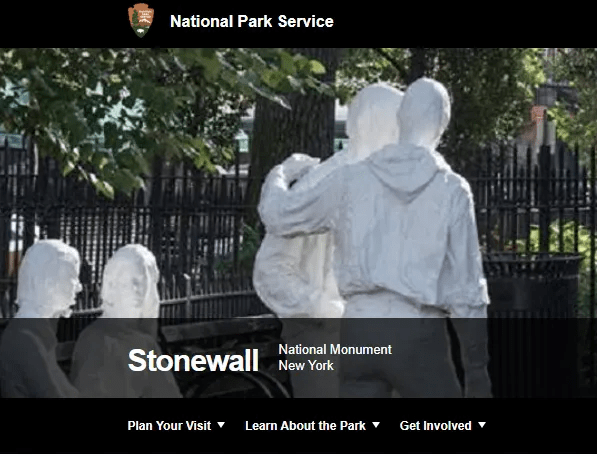
Earlier this year, the Trump administration digitally erased transgender people from the Stonewall National Monument, scrubbing them from the history they helped shape. The decision sparked widespread protests at the civil rights landmark and raised alarm about broader efforts to censor transgender people from the public record. Now, new signs suggest the administration has set its sights on another target: bisexual people. Key historical and cultural pages associated with the Stonewall site have been updated to describe the uprising as a milestone for “gay and lesbian rights,” quietly removing any mention of bisexual or transgender individuals.
Signs that the pages dedicated to Stonewall were being tampered with emerged early in Trump’s second presidency. Before the first update, the Stonewall National Monument page acknowledged that “before the 1960s, almost everything about living openly as a lesbian, gay, bisexual, transgender, or queer (LGBTQ+) person was illegal.” The revised version then stated, “almost everything about living openly as a lesbian, gay, bisexual (LGB) person was illegal.” Now, a new version of the page indicates that “Before the 1960s, almost everything about living authentically as a gay or lesbian person was illegal.”
You can see the changes here:

The changes were not limited to the front page. In the “History and Culture” section, the page once indicated “Stonewall was a milestone for LGBTQ civil rights that provided momentum for a movement.” Then it was changed to “Stonewall was a milestone for LGB civil rights that provided momentum for a movement” by the Trump administration. Now, the page says that it was a milestone for “gay and lesbian” civil rights. Likewise, the page now reads that living “openly as a member of the Stonewall comunity |SIC| was a violation of law,” rather than living as an openly LGBTQ+ person, as it had previously read.
The erasure is historically inaccurate. Stonewall was heavily led by transgender and gender-nonconforming leaders like Sylvia Rivera, Marsha P Johnson, and Zazu Nova. At Stonewall, Sylvia Rivera famously stated that while she did not “throw the first Molotov cocktail,” she did throw the second. Transgender woman Zazu Nova is among those credited with “throwing the first brick,” sparking the uprising. Marsha P. Johnson, another key figure in the protests that followed, played a critical role in shaping the movement.
Likewise, bisexual people played a pivotal role in the Pride movement that emerged from Stonewall. Brenda Howard, a bisexual rights activist often referred to as “the mother of Pride,” helped organize the rally that became the Christopher Street Liberation Day March on the first anniversary of the uprising. Both transgender and bisexual people have long viewed Stonewall as a civil rights milestone—and for good reason. Living openly as either in the 1960s carried enormous risk, and both communities were targeted in the police raid that sparked the movement.
These edits were not the only ones made to Stonewall since Trump took office. Individual pages dedicated to transgender figures instrumental in the Stonewall uprising were also altered to erase transgender references. The changes were often sloppy and rushed, revealing the haphazard nature of the effort. In one glaring example, Sylvia Rivera’s section originally stated, “At a young age, Sylvia began fighting for gay and transgender rights.” The revised version read, “gay and rights,” with the word “transgender” removed entirely, rendering the sentence nonsensical:

Bisexual, transgender, and queer people were at the forefront of the Stonewall movement. Though the language was still evolving, many of the patrons defied conventional categories of gender and sexuality, refusing to be neatly classified. Erasing them from Stonewall is not only historically false—it is a deliberate act of political revisionism. The recent removal of “bisexual” from official Pride histories is a warning: attacks on transgender people will never stop with us. They are part of a broader effort to narrow the scope of who is allowed to belong, to be seen, and even to be remembered.

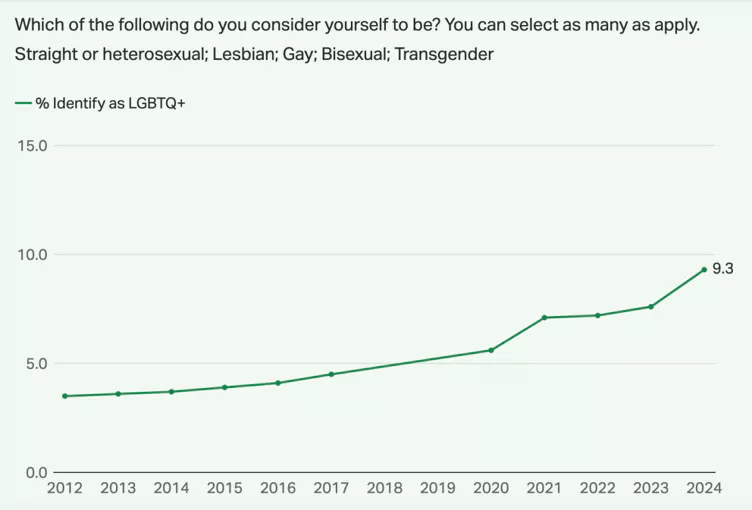
 fleeredstates.blog
You must be logged in to post a comment.