
This blog is originally appeared at LGBTQ Nation

In Georgia, where Republicans hold a trifecta with control of the governorship and both chambers of the state legislature, LGBTQ+ community leaders and political strategists are working hard to show that progressive values extend beyond Atlanta.
With about 8 million registered voters in the state, Georgia’s Secretary of State reports an increase of 121,898 active voters since the December 2022 runoff election, a critical number in a battleground state that could shape the nation’s future.
In September, the Georgia State Election Board decided that all ballots would be hand-counted, a move many see as an effort to delay or disrupt the election process. Democrats, who previously urged Gov. Brian Kemp (R) to hold an ethics hearing, filed a lawsuit to remove members of the elections board believed to be loyal to former President Donald Trump. While a judge dismissed the case in early October, a Fulton County Superior Court judge issued an injunction blocking the hand-counting rule on the first day of early voting, citing concerns over the rule’s timing and the potential for “administrative chaos.”
Georgia’s status as a battleground state has gained significant attention in recent years. Stacey Abrams’ 2018 gubernatorial campaign was seen as a test to prove that a sustained voter outreach effort by Democrats could turn the state from red to blue. In the 2020 election, Joe Biden narrowly defeated Donald Trump by 11,779 votes, securing Georgia’s Electoral College votes and reinforcing its potential influence on the national stage. This momentum was further solidified in 2022 when Sen. Raphael Warnock won his runoff against Republican Herschel Walker, affirming Georgia’s role as a true swing state.
A key factor in this shift has been the dedication of LGBTQ+ community leaders and political strategists. They have mobilized voters from diverse backgrounds across the state, proving that political power extends beyond Atlanta. Through grassroots organizing and voter engagement, they’ve built coalitions that reflect the growing diversity and progressive energy in Georgia, demonstrating their significant influence in shaping the state’s political landscape.
Georgians are championing people over politics.
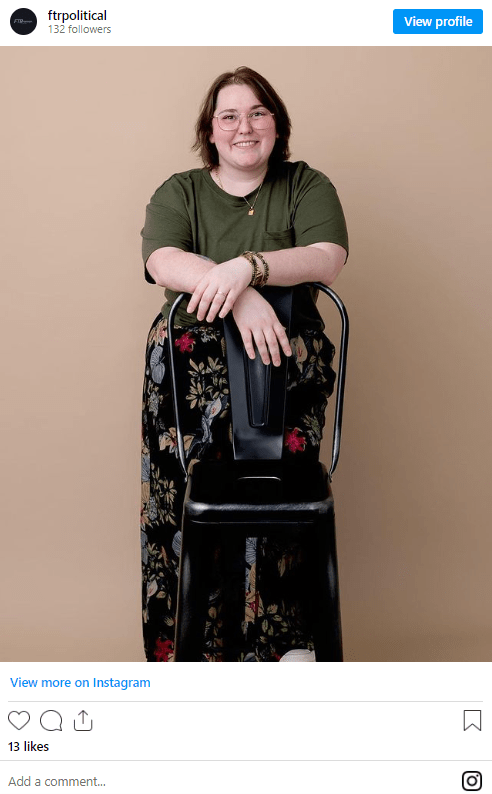
At just 28 years old, Mo Pippin (they/them) is one Georgian determined to shift the state from purple to blue. In 2023, they co-founded FTR Political Strategies to enhance local election engagement and voter education.
“Here in Roswell, which is just a stone’s throw from Athens, we’re working to simplify large, often daunting federal issues into local and state matters that are relatable and relevant to people,” Pippin shared with LGBTQ Nation. “We aim to connect voters with better representatives. I firmly believe that young people are ready to engage in conversations with those who are different from us. One of our main strategies for engaging voters is canvassing—we knock on doors.”
Pippin noted that some voters have cautioned them to be cautious while canvassing in traditionally conservative areas of Roswell, suggesting that the assumption is rooted in a belief that local residents might not be welcoming and could even be hostile.
“When I look at our state government and don’t see anyone who resembles me or shares my values, it’s easy to assume that those elected through popular vote naturally represent our entire population. But that’s not true,” they explained. “Voter turnout in the state is alarmingly low due to various structural barriers. People are often overwhelmed with responsibilities like getting their kids to school, commuting to work, and ensuring their families are fed and healthy. Many simply don’t have the time or energy to engage in the political process.”
Organizations like Georgia Equality, the state’s largest and oldest LGBTQ+ advocacy group, are actively engaging, educating, and advocating for the community. Over the past year, they played a crucial role in defeating nearly 20 anti-LGBTQ+ bills introduced in the state legislature by regularly attending hearings, votes, and meetings at the state Capitol alongside other pro-LGBTQ+ organizations. The group also mobilized the community, organizing over 5,000 individuals to call their representatives during the legislative session.
“Our priority is to ensure that no LGBTQ+ Georgian is left behind,” said Noël Heatherland (they/them), statewide organizing manager for Georgia Equality, in an interview with LGBTQ Nation. “We strive to remember and include everyone, especially those who don’t live in the Atlanta bubble, particularly during a time when civic engagement and making our voices heard is crucial.”
Heatherland, a native of Albany, Georgia, noted that the queer experience in the state’s southern region presents unique challenges and concerns. While recent reports indicate that many LGBTQ+ voters are motivated to support the Democratic Party due to issues like restrictions on women’s rights and bans on medical care for transgender youth, they are also focused on a range of issues affecting various communities.
Omarion Smart, a senior at Georgia State University and a native of Bainbridge, Georgia, shares this perspective. As the policy director for Voters of Tomorrow, a social welfare organization created for Gen Z by Gen Z, he emphasizes that housing, food security, and the cost of living are top priorities for queer voters heading to the polls this November. Heatherland adds that queer voters in Georgia are also concerned about providing quality education for their children and ensuring their safety in schools. According to the Williams Institute at UCLA School of Law, the LGBTQ+ population in Georgia constitutes about 4.7% of the state’s total population, with 27% of them being parents.
“The majority of Georgians share common ground on these issues,” Smart stated. “We all believe that housing should be affordable, that we deserve access to healthcare, and that Medicare and Medicaid should be expanded. Concerns about the economy, housing, the rise of anti-transgender rhetoric, and reproductive rights are all critical issues for voters in Georgia. No single issue takes precedence over the others. Yet, we have legislators who don’t represent the diverse population of our state, and it’s time for that to change.”
Smart’s concerns came to the forefront this August when Georgia Lt. Gov. Burt Jones (R) established the Georgia Senate Special Committee on the Protection of Women’s Sports, claiming it aims to ensure that female athletes in Georgia can compete fairly. Smart views this committee and its objectives as “disgusting.”
“It’s clear that this committee isn’t meant to genuinely address these issues,” Smart remarked. “That’s just the nature of politics in our state. Their true goal is to spread their blatant hatred without facing accountability for it.”
“The majority of Georgians share common ground on these issues,” Smart stated. “We all believe that housing should be affordable, that we deserve access to healthcare, and that Medicare and Medicaid should be expanded. Concerns about the economy, housing, the rise of anti-transgender rhetoric, and reproductive rights are all critical issues for voters in Georgia. No single issue takes precedence over the others. Yet, we have legislators who don’t represent the diverse population of our state, and it’s time for that to change.”
Smart’s concerns came to the forefront this August when Georgia Lt. Gov. Burt Jones (R) established the Georgia Senate Special Committee on the Protection of Women’s Sports, claiming it aims to ensure that female athletes in Georgia can compete fairly. Smart views this committee and its objectives as “disgusting.”
“It’s clear that this committee isn’t meant to genuinely address these issues,” Smart remarked. “That’s just the nature of politics in our state. Their true goal is to spread their blatant hatred without facing accountability for it.”
“The Cobb County school system has been enacting numerous book bans and implementing discriminatory policies,” strategist Pippin noted. “If she wins, control of the Cobb Board of Education would shift, putting a stop to the madness occurring there. Her district is highly competitive, and I’m fully supporting her.”
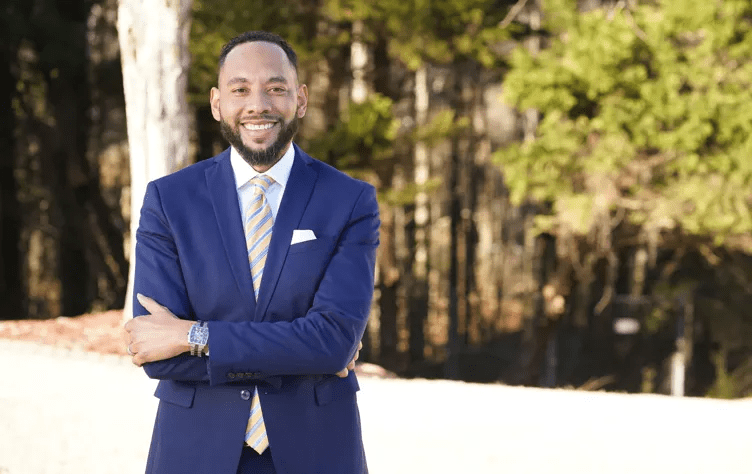
One candidate with a personal stake in the matter is JD Jordan, who is running against John Albers for Georgia Senate District 56.
“He is fighting to protect his children from harmful state policies. The incumbent is a co-sponsor of anti-trans legislation that jeopardizes healthcare access for JD’s kids,” Pippin explained. “He has five children aged 14 to 19, two of whom identify as transgender.”
Georgia Equality’s Heatherland emphasized that Albers is not friendly toward LGBTQ+ individuals or their allies and is unwilling to listen to them when they come to the Capitol to discuss issues—even if they are his constituents. The district is currently being viewed as one of the most “flippable” in the state.
“It’s one thing to advocate for LGBTQ+ children and, specifically, transgender individuals when you’re campaigning in Atlanta, where about 85% of your audience agrees with you,” Pippin added. “It’s a completely different challenge to do that in a district as red as SD56. JD is bravely fighting that battle and working to dispel the misinformation directed at the queer community. He embodies the supportive father figure many of us in the community wished we had while growing up.”
 fleeredstates.blog
You must be logged in to post a comment.