
Read more at CN Traveler.
I arrived at Chengdu East Station on a balmy spring night after taking the high-speed train from Hong Kong. The ride was roughly eight hours of idyllic countryside landscapes with brief station stops along the way. Pulling into the busy train station was my only reminder that Chengdu is a city of 21 million. Some 1,100 miles southwest of Beijing, the Sichuan provincial capital has long been considered one of China’s most livable metropolises, and after a chaotic itinerary, I was looking forward to the promise of a relaxed pace.
I found it everywhere: in teahouses where grandparents chatted as morning warmed to afternoon, in parks where friends took long strolls along the paths, and at streetside shops where people crouched over bowls of spicy noodles. Dubbed the queer capital of China, Chengdu is known as China’s most LGBTQ-friendly city, an extension of its broader temperament.
YuWei Tian, a Sichuan native and travel designer with WildChina, explains that “when we see a riverside, we don’t first think about how to develop it commercially—we imagine a teahouse, somewhere to sit, drink tea, and spend time with friends.”
That relaxed atmosphere and enjoyment of life is part of Chengdu’s culture, and in many ways a response to its past (Chengdu’s history includes generations of labor migration and the trauma of the 2008 earthquake—7.9 on the Richter scale—that devastated the entire region). The more I spoke to locals, the more I learned about this intentional way of living and saw it in action.
Read on for where to eat, stay, and spend your time in one of Asia’s most creative cities.
Where to stay in Chengdu
Chengdu’s best hotels are spread out across the city, in neighborhoods with distinct vibes. The Waldorf Astoria Chengdu rises 52 stories above the Financial City district in the High-Tech Zone, connecting to one of the city’s luxury shopping malls, in99. It’s also right by Jiaozi Park, the floating lotus park. Jinli Ancient Street, a tourist attraction, is a short drive away—more commercial than it once was, but still worth a visit for the architecture and street snacks. The hotel has all the luxuries associated with the Waldorf brand, including marble bathrooms, Aesop toiletries, and personal concierge staff. While there, visit the hotel’s 51st-floor bar, Limited Edition Sip, for craft beer and cocktails and an unbeatable view of the city. W Chengdu is also in the area.
Right by Taikoo Li, Upper House offers a different take on luxury. The property is built around a beautifully preserved Qing-era courtyard, with a century-old main building framed by contemporary glass towers and landscaping inspired by Sichuan’s rice terraces. Rooms overlook Taikoo Li, putting guests steps from Daci Temple and some of the city’s best shopping without compromising on tranquility. The standout experience is the signature bamboo massage at Mi Xun Spa, where warm bamboo canes are rolled and pressed across the body. Other great hotels in the Taikoo Li area include BuYuan Hotel, a visually appealing hotel with complimentary laundry and minimalistic design.
For a quieter part of the city, there’s Bliss Qintai Tibetan Boutique Hotel in Qingyang District. The family-run property is set in a preserved historic building, with traditional architecture, modern amenities, and complimentary butter tea in the mornings. Qingyang is one of Chengdu’s most historically rich neighborhoods, home to Wenshu Monastery and the kind of teahouse culture that Tian described.
What to do in Chengdu
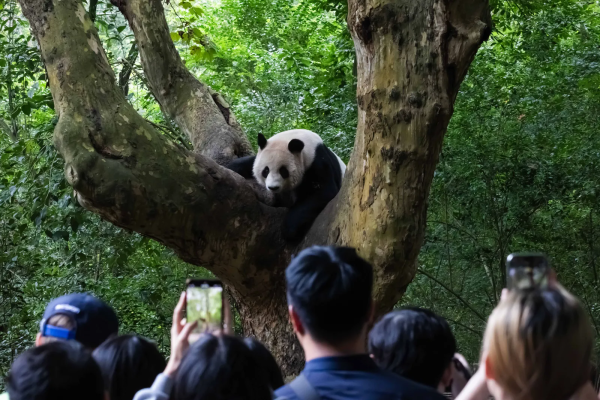
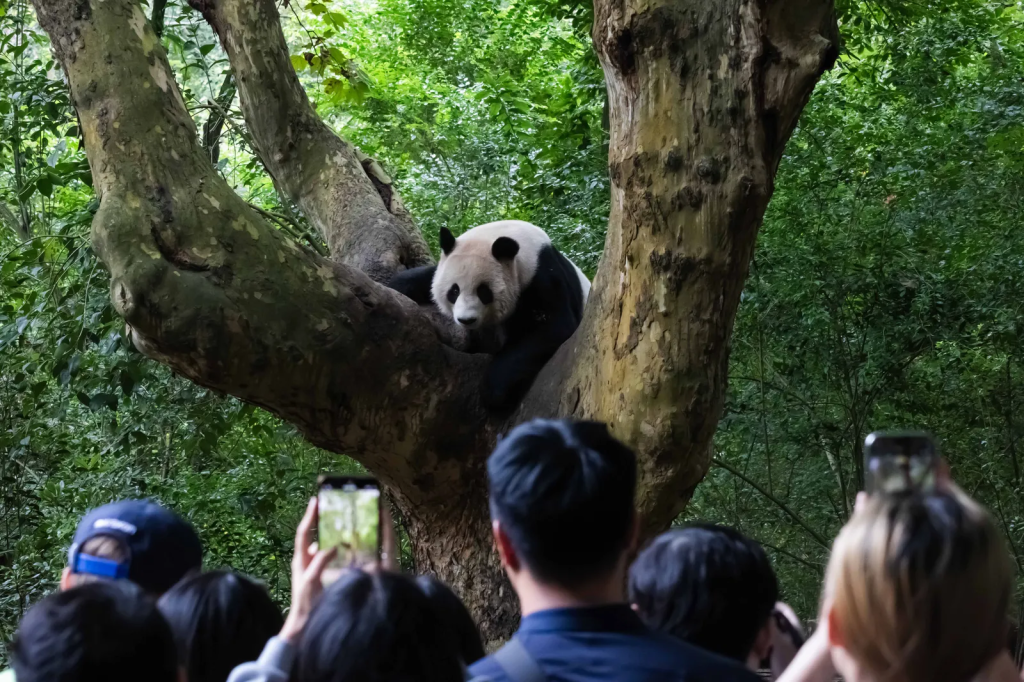
No mention of Chengdu is complete without pandas and the Chengdu Research Base of Giant Panda Breeding. Upon the recommendation of friends, I arrived early—the later it got, the more crowded the park became. The full circuit is about 7.5 miles of walking, and savvy visitors know the hop-on hop-off shuttle bus covers the highlights for about $5. Beyond the giant pandas, the base is home to red pandas, peacocks, and monkeys. For a more intimate encounter with fewer crowds, Tian recommends Dujiangyan Panda Base, about an hour outside the city, where smaller crowds mean closer access to the animals. The Jinsha Site Museum offers a deeper cultural window into the ancient Shu civilization and an archaeological dig dating back thousands of years. Currently undergoing renovation, the museum will reopen in 2027.
Part theater, part acrobatics, the Shufeng Yayun Theatre on Qintai Road stages nightly performances of Sichuan opera’s most celebrated tradition: face changing, or biànliǎn, in which performers swap elaborately painted masks in fractions of a second. The show also includes acrobatics and a captivating hand shadow puppet performance, and you can add on experiences like traditional face painting and ear cleaning.
For a sense of Chengdu’s creative presence, two districts are a must-visit. East District Memory (东郊记忆) is a converted industrial complex that has become a hub for the city’s younger generations. It’s a sprawling mix of live music venues, digital art museums, boutique fashion brands, and coffee shops that reflects Chengdu’s thriving music and arts scene. CPI, also known as Luxelakes Community (麓湖社区), expresses Chengdu’s creativity with stone steps across grassy plains—part open-air park, part retail village. It also skews younger and is family- and pet-friendly. With perfumeries, independent bookstores, bakeries, and restaurants woven through the grounds, you can linger all day, sprawled out on the grass.
The 600-year-old Shuijingfang Baijiu Distillery, whose distillation techniques are designated as National Intangible Cultural Heritage, offers guided tours and tastings of China’s most popular spirit, baijiu. Go in the morning to see production in full swing. A tasting of three different baijiu styles follows, and for those who want to go further, a blending experience can be booked separately.
To experience more of that unhurried Chengdu culture, Wangjiang Park offers mahjong tables, paths for long walks, and the unhurried rituals of a city that genuinely values its downtime. Walking down a Chengdu street, you might hear a metallic clinking sound. That’s the sound of Sichuan’s traditional ear-cleaning tongs, a tradition I didn’t have the courage to partake in, although the storefronts running highlight reels made a compelling case.
The bar scenes in the Yulin neighborhood and along Jiuyanqiao are equally worth your time. Bar Woody’s cocktails are built around unexpected wood flavor combinations, like a martini riff with sandalwood, grapefruit, and rhubarb. Papuwa leans into a funkier energy, my favorite being the Shy Pepper, a savory cocktail of vodka, chili, pomelo, and soy sauce. The Yulin area is also home to some of the city’s most inclusive spaces, among them Muchroom, a cocktail bar, and Junez, a feminist craft beer spot.
Where to eat in Chengdu
As the capital of Sichuan province and the first UNESCO City of Gastronomy in China, Chengdu has one of China’s strongest food cultures and its own Michelin Guide. Some of the most interesting meals here push well beyond the city’s reputation for heat and spice. Michelin Guide–recognized Infinite Luck, inside the Waldorf Astoria on the 50th floor, is worth a visit even if you’re not staying at the hotel. Executive chef Tony Yang, a Chengdu native with three decades of expertise in Sichuan cuisine, serves the full range of the region with beef Jell-O cubes, smoked pigeon, and Sichuan peppercorn–flavored rice crisps as highlights.
At Upper House, Mi Xun Teahouse has earned its Michelin star and Green star through a sustainability-forward vegetarian tasting menu drawing from culinary traditions across China’s regions, with tea pairings that include the kitchen’s own house-made kombucha. Because of its vegetarian menu, monks from a nearby monastery are said to dine here regularly.
You don’t have to dine at Michelin restaurants to experience Chengdu’s food culture, though. The city’s noodles alone are worth the trip, and dan dan noodles, the sesame-and-chili classic, appear on almost every corner, alongside chao shou, Sichuan’s version of wontons, and tian shui mian, sweet water noodles in a rich, subtly spiced sauce. Braised pig trotters and rabbit heads are also local staples to try. For neighborhood spots beyond the tourist trail, Dianping—China’s equivalent of Yelp—is the best tool for finding where locals are eating. And no trip to Sichuan is complete without trying hot pot in its birthplace; stop by Wuliguan Hotpot for a mouthwatering experience.


You must be logged in to post a comment.