Ohio Governor Approves Ban on Transgender Students Using Preferred Bathrooms
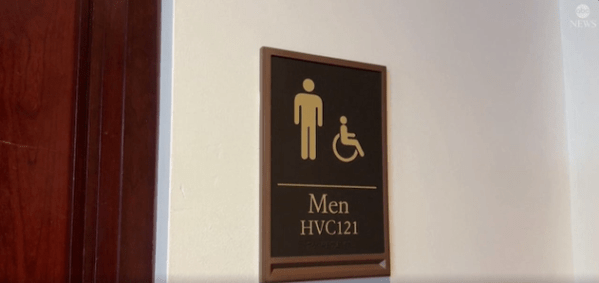
Texas Transgender Community Fights Back After Capitol Bathroom Ban
Residents of Odessa, Texas, are speaking out after the city council amended a local ordinance to ban transgender individuals from using public restrooms that align with their gender identity. Meanwhile, in Ohio, Republican Governor Mike DeWine has signed a law banning transgender students from using bathrooms that correspond to their gender identity. The new legislation mandates that students in K-12 schools, as well as colleges and universities, must use the restroom or facility designated for their sex assigned at birth.
The law clarifies that it does not prohibit schools from constructing single-occupancy restrooms and allows individuals of the opposite gender to enter a bathroom to assist someone else, if necessary.
MORE: Congressional Bathroom Ban Adds to Growing Transgender Policy Debate
Ohio now joins at least 14 other states in restricting transgender individuals from using bathrooms that match their gender identity, according to the Human Rights Campaign.
Supporters argue that the ban addresses concerns about student privacy and safety, while critics contend that it fuels baseless fears about transgender students and could put them at greater risk of discrimination or harm.
Governor DeWine’s office did not respond to ABC News’ request for comment prior to the bill’s signing. However, in the summer, he told reporters that he was reviewing the “specific language” of the legislation.
“I’m supportive of kids being able to use bathrooms that align with their gender assigned at birth for their protection, but I’ll need to review the specific language of the bill,” DeWine told reporters.
Transgender healthcare, bathroom access, sports participation, and other related issues have become central to the Republican legislative agenda across the country in recent years. This trend has led to a surge in anti-LGBTQ bills, with hundreds introduced during the 2024 legislative session alone, according to the American Civil Liberties Union.
DeWine has occasionally bucked the state’s Republican leadership on transgender matters. In December 2023, he vetoed a bill that would have banned gender-affirming care for transgender youth, including restrictions on puberty blockers, hormone therapy, and surgeries.
The White House has denounced the incident that occurred over the weekend.
President-elect Donald Trump has yet to take office, but are we already witnessing the impact of the racist rhetoric that shaped the election? Last week, a white supremacist openly used the N-word during a Senate committee meeting in Michigan. Now, Nazis are marching through the streets of Ohio.
On Saturday, November 16, a group of neo-Nazis marched through the streets of Columbus, Ohio, waving flags adorned with red swastikas and shouting racial slurs. Around a dozen individuals took part in the display, dressed in black pants, shirts, and face-covering attire.
The White House has now issued a statement condemning their actions. The Anti-Defamation League reports that there were 7,567 white supremacist incidents in 2023, marking a record high.
ABC News has reported that White House spokesperson Andrew Bates issued a statement saying that President Joe Biden “abhors the hateful poison of Nazism, Antisemitism, and racism.”
“Hate directed against any of us is a threat to every single one of us,” Bates added. Columbus public safety dispatchers received reports of the men marching around 1:30 p.m., and the footage has since gone viral on social media.
Before the White House issued its statement, Columbus Mayor Andrew Ginther called the march a “cowardly display” and affirmed that the city would always stand against “hatred and bigotry.”
“We will not allow any of our neighbors to be intimidated, threatened, or harmed because of who they are, how they worship, or whom they love,” the Democratic mayor wrote on X.
According to CNN, Republican Ohio Governor Mike DeWine also spoke out against the troubling trend of “spewing vile and racist speech against people of color and Jews.” “There is no place in this state for hate, bigotry, antisemitism, or violence, and we must denounce it wherever we see it,” DeWine stated.
No arrests were made during the event, although WBNS reported that officers briefly detained some of the participants. On Sunday, November 17, Columbus community leaders organized a unity march to demonstrate solidarity and affirm that hate will not be tolerated.
The bill affects all students across the state and will limit the rights of thousands of transgender individuals if signed into law by the governor.
On Wednesday, the Ohio State Senate approved Senate Bill 104, a transgender bathroom ban for all students in the state, including those in higher education.
Titled the “Protect All Students Act,” the bill passed with a 24-7 vote, strictly along party lines.
The bill states, “A school shall designate each student restroom, locker room, changing room, or shower room that is accessible by multiple students at the same time, whether located in a school building or in a facility used by the school for a school-sponsored activity, for the exclusive use by students of the male biological sex only or by students of the female biological sex only.”
The bill will soon be sent to Governor Mike DeWine (R) for either approval or veto. While he is expected to sign it, the Associated Press reports that he will first conduct a legal review.
The ban exempts school faculty, children under 10 who require family assistance, and individuals with disabilities.
Rather than defining gender, the bill relies on the concept of biological sex, which it defines as “the biological indication of male and female, including sex chromosomes, naturally occurring sex hormones, gonads, and nonambiguous internal and external genitalia present at birth, without regard to an individual’s psychological, chosen, or subjective experience of gender.”
The bill does not address or provide exceptions for intersex individuals, who do not fit neatly into traditional biological sex categories.
The Ohio Center for Christian Virtue strongly supports the bill. “Today is a huge victory for children and families in Ohio,” said David Mahan, the group’s policy director, calling it “common-sense legislation.”
However, Jocelyn Rosnick, Policy Director for the American Civil Liberties Union of Ohio, expressed strong opposition. “We are incredibly disheartened by the Ohio General Assembly’s continuous attacks against transgender and gender non-conforming individuals across Ohio. Senate Bill 104 is a cruel invasion of students’ rights to privacy, which could result in unwarranted governmental disclosures of private, personal information.”
She added, “If allowed to go into effect, SB 104 will create unsafe environments for trans and gender non-conforming individuals of all ages. This bill ignores the material reality that transgender people endure higher rates of sexual violence and assaults, particularly while using public restrooms, than people who are not transgender. All Ohioans deserve to access the facilities they need, in alignment with their gender identity, without fear of harassment or bullying. The ACLU of Ohio remains steadfast in our commitment to standing with trans Ohioans and is closely considering next steps.”
For decades, LGBTQ+ rights have been leveraged as a tool to mobilize conservative voters.
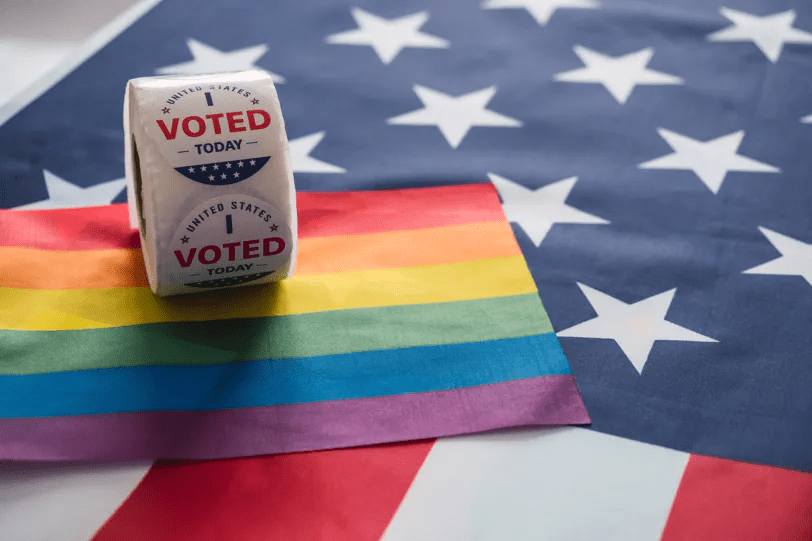
LGBTQ+ ballot initiatives have often served as a wedge issue to galvanize conservative voters, impacting freedoms typically protected by the government. The 2024 election continues this trend, with November marking another instance of LGBTQ+ civil rights being subject to public debate.
In New York, voters will decide whether to include sexual orientation, gender identity, and gender expression in the state constitution’s anti-discrimination amendment. Additionally, reproductive rights will also be on the ballot in ten states.
Voters in California, Colorado, and Hawaii will determine whether to repeal their states’ constitutional bans on same-sex marriage.
Same-sex unions have consistently been a prominent issue in state referendums, with 34 states presenting the question to voters since 1998, many passing constitutional amendments against same-sex partnerships. This tactic was notably used to rally conservative voters in the 2004 election, when 11 states enacted such amendments in support of George W. Bush.
Until 2012, marriage equality lost at the ballot box every time. That year, voters in Maine, Maryland, Minnesota, and Washington approved same-sex marriage, following a shift in national public opinion that saw support for same-sex marriage surpass 50% around 2009.
Though the Obergefell v. Hodges Supreme Court decision in 2015 invalidated all state anti-marriage equality amendments, many remain in state constitutions. Activists are now working to repeal these amendments, especially in light of concerns that the conservative-dominated Supreme Court could overturn Obergefell, as suggested by Justice Clarence Thomas after the overturning of Roe v. Wade.
“Saving” the Children
The first state ballot initiative related to LGBTQ+ rights emerged in California during the 1978 election. Proposition 6, known as the Briggs Initiative, aimed to ban individuals engaged in “public homosexual activity” from working in California public schools. It drew national attention and condemnation from then-President Jimmy Carter and then-Governor Ronald Reagan. This initiative reflected a broader trend of states repealing anti-discrimination measures, influenced by Anita Bryant’s successful 1977 campaign in Florida to repeal a local ordinance banning discrimination based on sexual orientation. Harvey Milk played a pivotal role in the campaign against Prop 6, which was defeated by a 16-point margin.
Over the years, various state ballot initiatives have sought to either legalize or ban discrimination based on sexual orientation and gender identity, with voters increasingly favoring anti-discrimination measures. For instance, in 1988, Oregon voters revoked the governor’s authority to ban discrimination based on sexual orientation, and in 2018, Massachusetts voters upheld a law prohibiting discrimination based on gender identity.
Maine and Oregon have frequently put LGBTQ+ rights to a vote. In Maine, voters initially blocked same-sex marriage in 2009 but approved it in 2012, both times with 53% of the vote. Anti-discrimination protections for LGBTQ+ individuals in Maine were denied by referendum in 1998 and 2000 but were later approved in 2005. In Oregon, voters defeated a “don’t say gay” measure in 2000 by a 5.7% margin.
The concept of recognizing sexual orientation as a protected identity has also been subject to multiple votes, often as a conservative strategy to prevent the inclusion of “homosexuality” in anti-discrimination ordinances. In the 1990s, voters in Oregon, Idaho, and Maine supported allowing sexual orientation to be a protected identity.
Additionally, ballot-driven voter ID laws in states like Arkansas and North Carolina may hinder voting access for transgender individuals and other marginalized members of the LGBTQ+ community.
Regardless of the specific ballot measures, the state representatives elected this year will greatly influence LGBTQ+ rights. Legislatures controlled by Republican officials have introduced or passed numerous anti-LGBTQ+ bills in recent years, targeting issues such as gender-affirming health care, bathroom access, accurate IDs, inclusive education, and participation in sports. Supporting pro-equality candidates at both the state and local levels will have long-lasting effects on these laws.
Vote Like Your Rights Depend on It
Civil rights for various groups have been subject to public referendum numerous times since 1868, similar to questions regarding the legality of discrimination based on race, sex, and disability. Initially, voters supported discriminatory measures, but over time, support for equal rights has increased. Women’s rights gained traction in the 1970s, while support for LGBTQ+ rights began to emerge in the 2000s.
The determination of civil rights is increasingly influenced by courts and legislatures, which are becoming more conservative. The notion that constitutional rights can be dictated by public opinion has permitted racism, sexism, homophobia, and other forms of discrimination to become codified into law.
Public opinion on LGBTQ+ rights, particularly for LGB and transgender individuals, remains conflicted and volatile. While the majority currently supports anti-discrimination laws, relying on ballot measures is not a guaranteed path to securing rights.
As LGBTQ+ rights are again on the ballot, it is crucial to vote this year—both on referendums concerning LGBTQ+ rights and for candidates who can promote pro-equality legislation.






 fleeredstates.blog
You must be logged in to post a comment.