Gay Spanish teacher has won $90,000 after suing her school district for allegedly punishing her for supporting LGBTQ+ students.
Eileen Brennock filed a lawsuit claiming she was subjected to a hostile work environment at Mountain View Middle School in Oregon’s Newberg School District. According to Brennock, the hostility stemmed from her speaking out against Principal Terry McElligot, who, she alleges, told staff at a September 2021 meeting that it was unacceptable to tell students it is okay to be LGBTQ+, as reported by Oregon Live/The Oregonian.
She also claims the now-retired administrator instructed staff not to display Black Lives Matter or Pride signs in their classrooms to avoid “poking the bear.” At the time, the school board had recently implemented a policy banning both types of displays, though a judge later ruled that policy unconstitutional a year after its enactment. The lawsuit claims that after the meeting, Brennock reported McElligot’s alleged statements to Assistant Principal Lindsey Kopacek, who dismissed her concerns, telling Brennock that McElligot never made those comments and that she must have imagined them “due to cortisol and stress levels.”
Brennock responded that if a student told her they were gay, she would say, “Me too!”
Following this exchange, the lawsuit states that Brennock endured a hostile work environment and filed a complaint with the Oregon Department of Education. Even after the department ruled in her favor, Brennock allegedly continued to face harassment from school officials. The department found that the school had violated its agreement, failing, among other things, to implement required staff training on LGBTQ+ issues.
Brennock also accused the district’s former superintendent, Stephens Phillips, of using a gay slur. She further claimed that the district altered the wording in an anti-discrimination presentation to refer to LGBTQ+ identities as a “lifestyle” and LGBTQ+ people as being from the “opposite side of the fence.”
The school district denied McElligot’s use of hateful language at the staff meeting but argued that even if she had said it, it wouldn’t have been discriminatory because it was “not intended to be.”
The Oregon Department of Education disagreed, stating in its ruling that the district “misunderstands what constitutes discrimination under the law.” The ruling emphasized that the alleged comments “clearly articulated that teacher conduct toward students belonging to certain protected classes should be different than conduct toward other students.”
Although the school district did not admit liability in the settlement, it agreed to publicly commit to fostering an inclusive environment for both students and staff. The district also promised to make discrimination complaint forms available online and in print starting the next school year.
She had to slog through deep snow to remove them herself.
Hateful flyers circulated in Billings, Montana, falsely accusing local trans activist Adria Jawort of “grooming children,” according to local news outlet KTVQ. The flyers, which perpetuate the false narrative from the anti-trans right that all trans people are pedophiles, were posted near schools in Jawort’s neighborhood just days before Thanksgiving.
Jawort had to travel across town in heavy snow to remove the flyers herself.
“I was annoyed about it,” she told KTVQ, describing how the flyers misgendered her and made hateful claims about her life and sexuality. “I was just thinking, why am I doing this? Why do I have to do this? Why do people think this is okay?”
“The thing the flyer said, calling me a groomer and stuff, and basically labeling me as a danger to the community,” Jawort added. “It’s like one of the most awful things you can say. How does that become normalized?”
Billings police are currently investigating the incident. Lt. Matthew Lennick spoke on what constitutes hate speech: “Once someone transitions from making a general statement about their beliefs or another group to a targeted attack on an individual… a victim could take civil action against someone attempting to defame them.”
Possible criminal charges could include disorderly conduct, stalking, intimidation, or harassment, among others.
While Jawort knows the group responsible, she says she’s more frustrated by the ongoing attacks on state Rep. Zooey Zephyr (D-MT). Recently, Republicans unsuccessfully attempted to ban her from women’s bathrooms.
Jawort has been targeted before. Last year, a lecture she was set to give at a library was canceled after a drag ban, with staff citing concerns that hosting a transgender person posed “too much of a legal risk.” This led her to file a lawsuit against the state.
This marks the first instance of a city allowing individuals to sue trans people for using public restrooms.
The city of Odessa, Texas, has implemented a $10,000 bounty for anyone who reports a transgender person using a restroom that matches their gender identity, according to independent journalist Erin Reed.
Under this ordinance, individuals—excluding local and state government officials—are allowed to sue transgender people for using such facilities. The rewards for successful claims include “injunctive relief” to prevent further violations, nominal and compensatory damages if the plaintiff can prove harm, statutory damages of at least $10,000 per violation, as well as court costs and attorney’s fees.
While the bounty is set at a minimum of $10,000, there is no maximum limit on how much the reward can grow.
In addition to the bounty, Odessa’s ordinance includes criminal penalties for individuals who use restrooms that align with their gender identity. Those found in violation of the law can be charged with a Class C misdemeanor, punishable by a fine of up to $500. Anyone who refuses to use a bathroom corresponding with what the city considers their biological sex—after being asked to leave by a building owner—could also face misdemeanor trespassing charges.
The law defines “biological sex” based on birth certificates, either the original or a corrected version in cases of clerical errors. This means that even if a transgender person has updated their birth certificate to reflect their gender identity, they could still be in violation of the ordinance if they use a bathroom that aligns with their gender.
There are no exceptions for disabled individuals who may be accompanied by someone of a different gender, and the law could potentially lead to lawsuits targeting people who are gender non-conforming or whose gender expression doesn’t fit societal norms.
Similar bathroom bans with criminal penalties have been enacted in states like Utah and Florida, while other states, like North Dakota, have laws without clear penalties or enforcement mechanisms. Erin Reed compared Odessa’s bounty system to the anti-abortion bounty laws in Texas, where private citizens are empowered to sue anyone who aids in an abortion. This strategy shifts the responsibility of enforcement from government officials to private individuals, circumventing the usual legal processes.
Johnathan Gooch, communications director for Equality Texas, condemned the ordinance, telling the Texas Tribune, “It’s a very aggressive way to alienate trans people from public life, and I think it is counter to the spirit of friendship that most Texans embody.”
He added, “It enables vigilantes to target anyone they don’t think matches the gender expression they expect to see in the bathroom, and that is truly insane.”
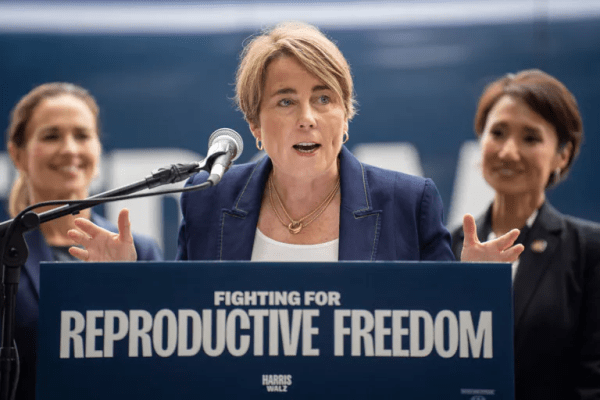
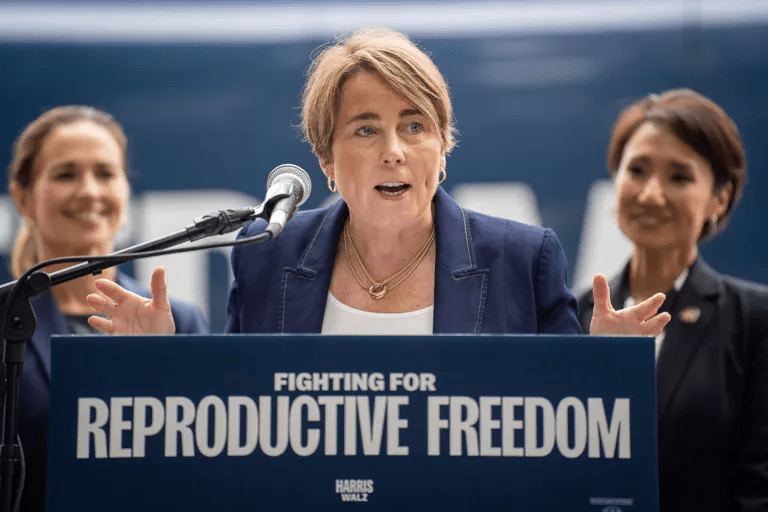
As a lesbian governor who took on the Trump administration nearly 100 times in court, Maura Healey understands that now is not the time to step away from the fight.
The Alabama Supreme Court’s decision granting embryos the same legal rights as children has sent a jolt through the LGBTQ+ community, threatening access to IVF and jeopardizing the future of queer family-building. LGBTQ+ couples, who often rely on fertility treatments like IVF to grow their families, already navigate steep financial, legal, and social obstacles. Now, with the GOP’s escalating opposition to LGBTQ+ and reproductive rights, hostility toward queer families is intensifying.
Still, the LGBTQ+ community remains resilient. Massachusetts Governor Maura Healey, an openly gay leader, offers a clear response: “Vote them out of office, and vote people who will stand with us and protect us into office.”
“I meet so many people who are using surrogacy, IVF, and other forms of assisted reproduction because of the rights and freedoms they enjoy under Massachusetts law,” Healey shared with LGBTQ Nation. “I’m proud of who I am, of the work I do every day, and of the freedoms we get to stand up for. We advance policies that foster inclusivity and protect our community, and people should take pride in that and not let the bullies and haters defeat our spirit.”
Healey’s administration is the embodiment of support and protection for LGBTQ+ rights.
Since becoming one of the country’s first out lesbian governors, Healey has led with purpose. In her first year and a half, she signed a landmark parentage act to secure legal protections for LGBTQ+ families, passed legislation ensuring IVF coverage for LGBTQ+ veterans, enacted a critical maternal health bill, issued an executive order to protect emergency abortion care, and increased funding to support LGBTQ+-owned businesses.
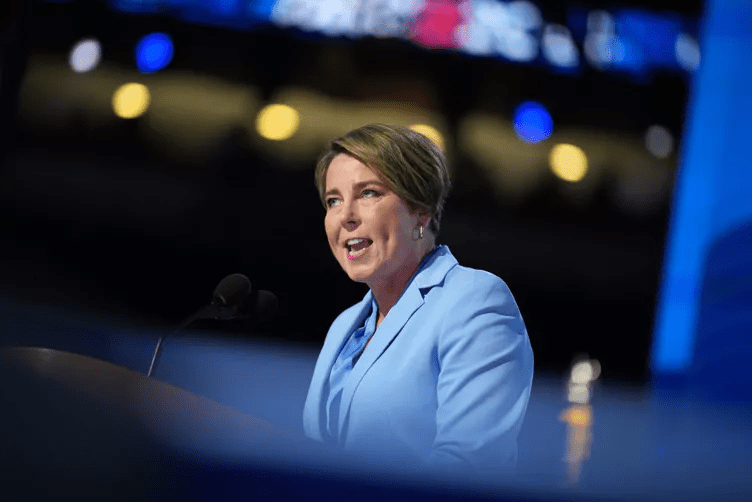
In addition, Healey has been a strong ally on the campaign trail for Vice President Kamala Harris, actively participating in the Democratic National Convention, speaking at Zoom rallies, and joining forces with other governors in the push for inclusive, forward-thinking leadership.
“People who believe in and want to protect civil rights and freedoms need to go vote,” Healey urged. “And they need to go vote for Kamala Harris and Tim Walz.”
Healey praised Vice President Harris and Governor Tim Walz as unwavering advocates for women’s rights and personal freedom. “They are champions of women and the freedom that women should have to make decisions for themselves,” she said. Healey also highlighted their dedication to LGBTQ+ rights, noting Harris’ longstanding commitment to equality and support for the LGBTQ+ community.
Healey and Harris served concurrently as attorneys general in their respective states. While Healey was actively suing then-President Donald Trump’s administration nearly 100 times, she noted that Harris was equally committed to advocating for LGBTQ+ rights.
She commended Harris for establishing a hate crimes unit dedicated to investigating anti-LGBTQ+ violence and for her efforts to eliminate the gay and trans panic defense in California. “She famously refused to defend Prop 8, which sought to outlaw same-sex marriage in the state,” Healey remarked. “Later, as a senator, she co-sponsored the Equality Act, defended the Affordable Care Act, and as vice president, she’s helped Joe Biden lead probably the most pro-equality administration in history.”
When asked about her concerns regarding a potential second term for Donald Trump, particularly in relation to bodily autonomy and family rights, Healey didn’t hesitate: “Everything.”
“It’s really, really scary,” she continued. “Trump probably led the most anti-LGBTQ administration in American history, stripping away freedoms and protections—banning transgender people from serving in the military, arguing in court that businesses should be allowed to refuse service to LGBTQ individuals, and eliminating medically necessary care for young people. Based on Project 2025 and his own statements, we know it will be even worse. They want to go after marriage equality, implement a national abortion ban, and restrict access to contraception.”
She expressed profound concern for the mental health of LGBTQ+ youth as lawmakers across the country propose hundreds of bills aimed at rolling back their rights and, in some cases, eliminating their right to exist altogether.
According to the Trevor Project, LGBTQ+ youth are over four times more likely to attempt suicide than their peers, and in the organization’s 2024 national mental health survey, 90% of LGBTQ+ young people reported that their well-being has been negatively affected by recent political developments.
“Rates of suicide are up,” Healey said. “And since Trump overturned Roe—let’s be clear, he did overturn Roe… he followed through on that—now one in three women in America lives in a state with an abortion ban. These are very real threats we face.”
The Trump campaign has consistently sought to distance itself from the alarming vision outlined in the Heritage Foundation’s Project 2025, which presents a chilling forecast for a potential second Trump term. However, Healey emphasizes Trump’s connections to this project, cautioning the public: “Don’t believe anything that Donald Trump says” because he’ll “say anything and everything depending on where the wind is blowing.”
Yet, Healey firmly trusts Trump to execute his party’s threats against the American people. Just as he dismantled Roe v. Wade, she warns that he is fully capable of realizing the goals outlined in Project 2025, which calls for the complete elimination of LGBTQ+ rights and explicitly states that “only heterosexual, two-parent families are safe for children.”
“These are promises he will fulfill,” Healey warned, drawing from her experience as a stepmother to two children. “It’s a very dangerous time right now.”
Trump and Project 2025 would undoubtedly disrupt the lives of LGBTQ+ families, but Healey highlights significant economic implications that would make their policies catastrophic.
“There’s a reason Massachusetts is ranked number one for our schools, for healthcare, and as the best place to have a baby and live if you’re a woman,” Healey stated. “Part of that is because we’re a state that has long protected civil rights and freedoms. I believe this is a critical piece of our economic competitiveness. We want colleges, universities, and businesses to have the opportunity to attract the very best talent to Massachusetts.”
“We want people to come, succeed, and thrive here—to grow families, build businesses, and develop careers. One of the ways we achieve this is by being a state that, through both government policy and the actions of our businesses and corporate stakeholders, emphasizes respect for and support of civil rights and freedoms.”
Reflecting on her time as the chief of civil rights in the attorney general’s office, Healey recounted her successful challenge against the Defense of Marriage Act, which helped lay the groundwork for nationwide marriage equality. “One of the briefs we prepared for the First Circuit, and later for the Supreme Court, was an amicus brief signed by businesses in support of equality,” she explained. “They understood the economic imperative: companies perform better when there’s greater representation on their boards and in their C-suites. This has been proven. Promoting an inclusive and open environment leads to better policies, ideas, results, and outcomes.”
Healey highlighted the importance of her state’s diverse elected officials as a key factor in the progress made to protect the rights of marginalized communities. As the nation’s first out lesbian governor, alongside Oregon Governor Tina Kotek, she and Lieutenant Governor Kim Driscoll represent the country’s first all-woman governor/lieutenant governor team.
“I know that we’ll achieve better policies and outcomes—most importantly, for people—when we have more representation,” she stated.
However, Healey is quick to emphasize that increased government representation is just part of the equation. “We owe so much to families and advocates who have bravely shared their stories over the years,” she said. “These community members, with lived experiences, have gone to the state legislature, testified in hearings, and spoken to the media. They truly deserve the credit.”
She urged LGBTQ+ families to continue to “speak out and speak up against the lies” and the “vile misinformation” that is often spread, particularly by figures like Trump and Vance.
“If you look at the arc of history in this realm, you can see the progress made for our community. Let’s build on that. Let’s draw upon that during what I acknowledge is a really challenging time. But people need to stand together and vote for equality leaders like Kamala Harris and Tim Walz.”
Texas and its GOP allies are “utilizing LGBTQ issues as a wedge,” civil rights advocates warn.
In May, the U.S. Department of Health and Human Services established a rule recognizing gender dysphoria as a disability under federal anti-discrimination laws, aligning with the findings of most courts over the past decade. This rule signaled to states that discrimination against transgender individuals in areas like employment, education, health care, child care, and housing could breach federal disability protections, with the Biden administration ready to defend it.
Now, a lawsuit spearheaded by Texas Attorney General Ken Paxton has 17 states seeking to have the rule completely overturned, including several provisions unrelated to transgender issues. Notably, this coalition consists of 15 states that have enacted restrictions on gender-affirming care and have adopted various anti-trans measures.
The states’ objections to the new federal rule include concerns about the time, money, and resources required to accommodate employees with gender dysphoria. This includes using appropriate pronouns, eliminating sex-specific dress codes, and allowing access to gender-aligned restrooms and locker rooms. Nebraska’s attorney general worries that the state’s restrictions on gender-affirming care could expose it to disability rights complaints and federal investigations. Meanwhile, South Dakota claims the rule effectively creates a new category of potentially disabled individuals whose gender care would need to be covered by Medicaid.
However, gender dysphoria is just one aspect of the comprehensive 130-page federal rule. It also includes protections for disabled parents in child welfare cases and ensures that hospitals do not use disability status to decide who receives care during crises, such as equipment shortages in a pandemic. Additionally, the rule adds Long Covid to the list of conditions that may be recognized as disabilities and enhances protections against unnecessary institutionalization, mandating that care be provided in the least restrictive environment, preferably within the community.
Striking down the entire rule would have significant repercussions for disabled Americans and other marginalized groups who depend on federal agencies to interpret long-standing laws that protect their rights, explains Mia Ives-Rublee, senior director of the Disability Justice Initiative at the Center for American Progress. “LGBTQ issues are being used as a wedge,” Ives-Rublee says. “The real attack is on the regulatory process of the federal government, and this will affect nearly every interaction disabled individuals have with the services and supports they rely on.”
The new rule addresses two federal laws aimed at protecting people with disabilities. The Rehabilitation Act of 1973 prohibits discrimination based on disability by the federal government, federal contractors, and—through Section 504—by organizations or employers receiving federal funds. The Americans with Disabilities Act (ADA), enacted in 1990, expanded these protections to cover most aspects of public life, such as education, public accommodations, and transportation. Both laws define a disability as “a physical or mental impairment” that “substantially limits” major life activities.
At the time the Rehabilitation Act and ADA were passed, gender dysphoria was not a recognized medical condition, and both laws explicitly excluded conditions like “transvestism, transsexualism,” and “gender identity disorders not resulting from physical impairments” from their definition of disability. However, over time, courts and medical professionals have recognized that many individuals who experience a mismatch between their gender identity and the one assigned at birth suffer significant psychological distress and negative impacts on their daily lives. In 2013, gender dysphoria was added to the Diagnostic and Statistical Manual of Mental Disorders.
Since then, individual lawsuits—the primary way the ADA is enforced—have helped shape legal precedent that views gender dysphoria as a protected health condition, with courts increasingly seeing its exclusion from disability protections as discriminatory. Ben Klein, senior director of litigation and HIV law at GLBTQ Legal Advocates and Defenders, notes that the exclusion of gender dysphoria was “rooted in clear bias,” a concept that judges easily recognize.
In 2022, the 4th Circuit Court of Appeals became the first federal appeals court to rule that gender dysphoria could be considered a disability under federal disability protection laws. The court’s decision centered on the distinction that gender dysphoria’s impact on daily life separates it from the ADA’s definition of gender identity disorder. (The U.S. Supreme Court declined to review the case in June 2023, allowing the ruling to stand.) Other federal courts have reached similar conclusions, recognizing that gender dysphoria is distinct from gender identity disorder, or that it arises from a physical impairment due to a mismatch between a person’s body and their gender identity—something that can be addressed through gender-affirming care.
When finalizing its updated rule—the first administrative update to Section 504 in 50 years—the Department of Health and Human Services cited this evolving body of case law, which it said has “shifted the legal landscape of disability discrimination protections.” But the states involved in the Texas-led lawsuit, filed quietly in September, appear uninterested in these legal developments.
The lawsuit focuses on the ADA’s original exclusionary language, arguing that what is now understood as gender dysphoria should still be classified as a gender identity disorder under the law. “The Biden Administration is again abusing executive power to sidestep federal law and impose unscientific, unfounded gender ideology on the public,” Texas Attorney General Ken Paxton said in a press release announcing the suit. “Texas is suing because HHS lacks the authority to unilaterally redefine statutory definitions and classify ‘gender dysphoria’ as a disability.”
Beyond the gender dysphoria issue, the lawsuit also raises concerns about the “new regulatory burdens” and “significant costs” the rule could impose on state Medicaid programs. States like Alaska, Montana, and Nebraska argue that the rule’s “least restrictive setting” requirement will be difficult to implement due to shortages of healthcare workers and the unique geographical challenges of their regions.
Klein and Ives-Rublee pointed out that both the Rehabilitation Act and the ADA were intentionally written in broad terms, allowing for ongoing reinterpretation and refinement by federal agencies as scientific and public understandings of disability evolved. When the ADA was enacted, Klein notes, transgender identities were pathologized. “One of the ADA’s primary goals is to combat discrimination and dispel myths and stereotypes, particularly surrounding stigmatized health conditions,” he explains. “Gender dysphoria is a prime example of a stigmatized health condition.”
The current Texas case is merely one front in the broader strategy employed by GOP officials to advance their anti-trans agenda. As previously reported, many Republican attorneys general—often from the same states involved in the Paxton lawsuit—are threatening major medical associations with criminal investigations for advocating for transgender youth’s access to gender-affirming care.
Ives-Rublee cautions that the Texas lawsuit is part of a larger, coordinated effort to undermine federal agencies’ authority to interpret civil rights laws, including protections for pregnant workers and access to reproductive healthcare. This extensive conservative initiative aims to weaken the administrative state and has gained momentum following a series of Supreme Court rulings last term, one of which diminished courts’ deference to federal agency interpretations of ambiguous laws.
Since the gender dysphoria lawsuit was filed in the federal district court in Lubbock, Texas, any appeal will be heard by the 5th Circuit Court of Appeals, known for its sharply conservative rulings in recent legal history. If the 5th Circuit sides with the states in this case, it could create a legal conflict with the 4th Circuit’s ruling, potentially compelling the Supreme Court—dominated by a far-right supermajority—to intervene. “I am almost 100 percent sure this is their intention,” Ives-Rublee asserts.
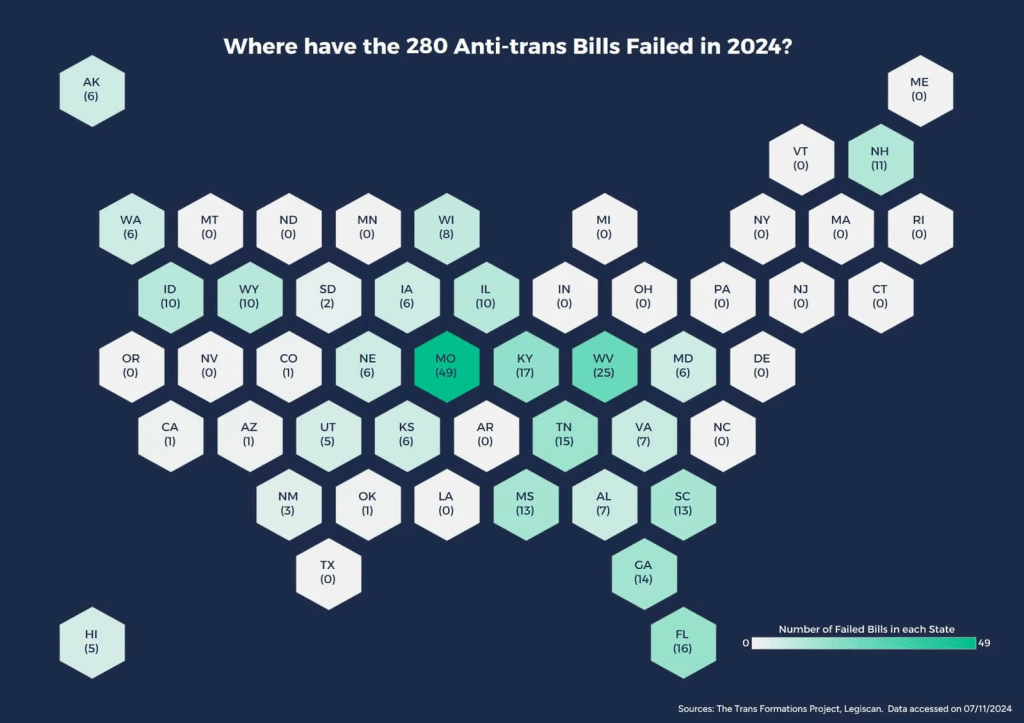
The following weekly digest is authored and curated by the Trans Formations Project, a grassroots nonprofit committed to monitoring and raising awareness about the ongoing crisis of anti-trans legislative efforts across the United States.
Editorial Focus: Project 2025
What does Project 2025, an ultraconservative initiative under a Trump presidency, reveal about its stance on trans individuals? The project’s blueprint, known as Mandate for Leadership, provides the rationale behind many of the anti-trans legislative measures tracked by TFP. This extensive manifesto advocates for goals such as eliminating comprehensive sex education (62, 477), limiting rights for trans employees (584-585), curtailing or banning gender-affirming care for minors (345), and imposing further restrictions on speech and expression (5).
This week, we have categorized and analyzed the primary anti-trans objectives within Project 2025, segmented by section.
Executive Actions and Anti-Trans Legislation in Project 2025
Idea: “[T]he primary purpose of consolidating political power is to undermine the family. Its aim is to substitute people’s natural affections and loyalties with unnatural ones” (4).
Goal: Remove “the terms sexual orientation and gender identity (‘SOGI’), diversity, equity, and inclusion (‘DEI’), gender, gender equality, gender equity, gender awareness, gender-sensitive, abortion, reproductive health, reproductive rights…” from all federal rules, agency regulations, contracts, grants, legislation, and regulations (5).
Goal: Replace Biden’s Gender Policy Council with a Domestic Policy Council to “eliminate… the new ‘woke’ gender ideology, which promotes ‘gender affirming care’ and ‘sex-change’ surgeries for minors” (62).
Civil Rights (especially pages 582-585)
dea: “During the Obama and Biden Administrations, every facet of labor policy was utilized to promote race, sex, and other classifications, often discriminating against conservative and religious viewpoints, including pro-life perspectives.”
Goals:
“Limit the application of Bostock’s sex discrimination protections to sexual orientation and transgender status specifically in hiring and termination contexts.”
“Revoke regulations that prohibit discrimination based on sexual orientation, gender identity, transgender status, and sex characteristics.”
“Instruct agencies to concentrate their enforcement of sex discrimination laws on the biological binary definition of ‘sex.'”
Education (especially pages 333-346)
Idea: “There is no scientific or legal justification for redefining ‘sex’ as ‘sexual orientation and gender identity’ under Title IX.”
Goal: “Restore the Trump Administration’s Title IX regulation, emphasizing that ‘sex’ refers to a biologically defined fact recognized at birth; and enhance protections for faith-based educational institutions, programs, and activities.”
Idea: “Federal lawmakers should prevent public school employees from keeping information about a child secret from their parents.”
Goal: “Prohibit educators from using a name other than the one listed on a student’s birth certificate or using a pronoun different from the student’s biological sex without permission from the student’s parent(s) or guardian(s).”
Health & Human Services
Idea: “Permitting parents or physicians to ‘reassign’ the sex of a minor constitutes child abuse” (5).
Goals:
Enact a federal Parents Bill of Rights (345).
Cease Medicare coverage for gender-affirming surgeries.
Eliminate discrimination protections for LGBTQIA+ individuals in the Affordable Care Act (475).
Military (104)
Idea: “Gender dysphoria is inconsistent with the requirements of military service.”
Goal: “Revoke policies permitting transgender individuals to serve in the military.” Note: This objective gained momentum recently in the Senate Armed Services Committee report on the 2025 Military Funding Bill, which includes provisions preventing the Department of Defense (DoD) and its insurance plan from funding gender-affirming surgeries for service members and gender-affirming care for their minor dependents.
The Things We Won
Yale Law School and Yale School of Medicine recently collaborated on a report criticizing the Cass Review, authored by Dr. Hillary Cass in the U.K., which evaluated National Health Service (NHS) guidelines on gender-affirming care. The NHS cited the Cass Report in its recent decision to restrict puberty blockers for transgender minors. Additionally, conservative Indiana lawmakers referenced the Cass Report in IN SB0480, a law banning gender-affirming care for minors enacted last year.
The Cass Report concluded that “there is not a reliable evidence base” to recommend clinical interventions for transgender minors. The Yale review highlighted several critical issues with this conclusion, asserting that the Cass Report “obscures key findings, misrepresents its own data, and misapplies the scientific method.”
Federal prosecutors are currently investigating Dr. Eithan Haim for leaking confidential transgender patient files to conservative journalist Christopher Rufo. Outrage over these documents significantly contributed to the passage of TX SB14, a ban on gender-affirming care for minors. Formerly employed by Texas Children’s Hospital in Houston, Dr. Haim claims whistleblower immunity, alleging exposure of “illegal gender surgeries” on minors.
The hospital contends that all care provided was lawful and accuses Dr. Haim of jeopardizing patient and physician safety by leaking the documents. Dr. Haim has garnered broad support from conservative media and politicians. Ryan Patrick, son of Texas Lt. Gov. Dan Patrick and former U.S. Attorney during the Trump Administration, will represent Dr. Haim in the ongoing legal proceedings.









 fleeredstates.blog
You must be logged in to post a comment.