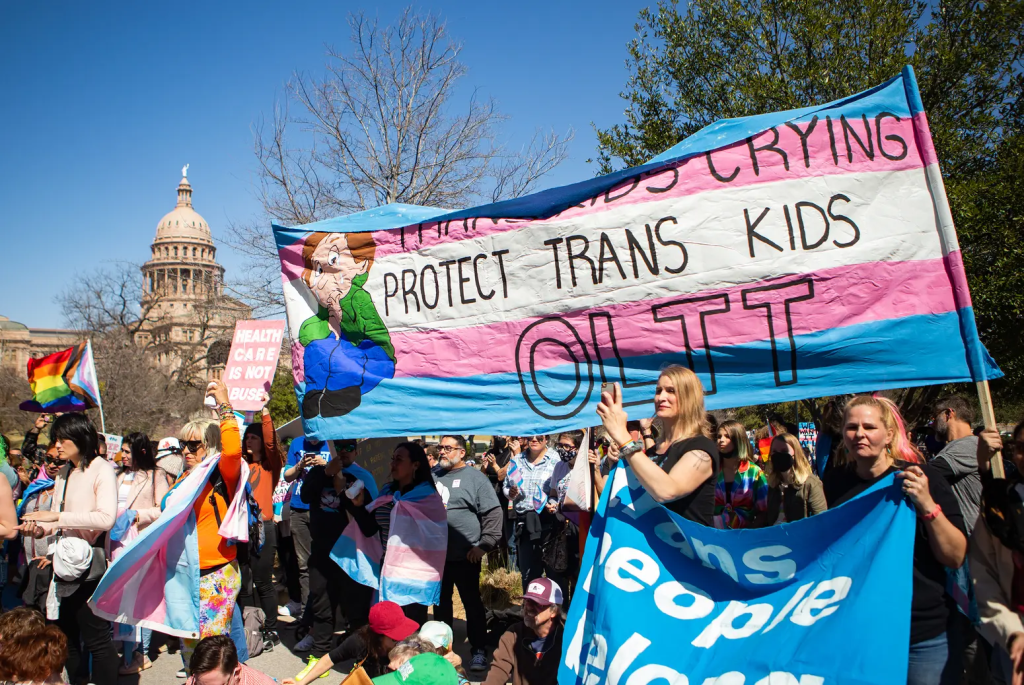
Colorado state sports association settles lawsuit by allowing schools to ban trans athletes

Read more at LGBTQ Nation.

The Colorado High School Activities Association (CHSAA) has settled a lawsuit brought by right-wing school districts for the right for schools to bar trans students from joining sports teams that align with their gender. The lawsuit targeted multiple defendants and will continue with the remaining ones without CHSAA’s involvement.

“Eligibility decisions have always been left to individual schools and districts, which is why being named in this lawsuit was both frustrating and unnecessary,” a CHSAA spokesperson said in a statement. She went on to call the organization’s inclusion in the lawsuit “much more performative than substantive.” 

The lawsuit was brought by several school districts but was led by District 49. That district’s board passed a controversial trans sports ban back in May by a narrow margin. The lawsuit against the state was filed the day after the policy was voted in, calling for Colorado to allow the ban to be enacted and to align policies with the demands laid out in the president’s “two sexes” executive order.

Colorado has state laws prohibiting discrimination against trans people, specifically people’s gender identity or gender expression. While the lawsuit cites the Equal Protection Clause of the Fourteenth Amendment in arguing that trans girls playing on the girls’ team affects the rights of cis girls, it does not mention the impact on the rights of trans girls.

To settle their part of the lawsuit, CHSAA agreed not to sanction the districts and schools named in the lawsuit for banning trans students from sports teams. It will also not respond to statements the schools make about “advantages of biological males over biological females in competitive sports” or potential propaganda about the hazards of “allowing biological males to play contact sports with or against biological females.” There will also be no penalties from CHSAA for forfeiting against a team because they allow trans children to play.

CSHAA has said that it will still sanction the schools and districts if any of those statements are demeaning in nature or call for violence against trans people. The organization is also recouping $60,000 in legal and operational fees.

While some Colorado school districts specifically allow trans students to play sports under their correct gender identity, others have no concrete rules about it. CSHAA has never stepped in over a trans person being allowed to play school sports, or not being able to.

The lawsuit will continue with the Colorado Attorney General Phil Weiser and other Colorado Civil Rights Division officials as the remaining defendants.

Colorado’s District 49 has around 27,000 students. In May, Board President Lori Thompson noted that, as far as she was aware, the district had only had one instance of a trans student trying to join a sports team that aligned with their gender identity. The student in question was a trans boy, and they did not pass tryouts.

Catholic preschools appeal to Supreme Court in Colorado case over LGBTQ rights and religious liberty

Read more at CPR News.

Two Denver-area Catholic parishes asked the U.S. Supreme Court on Thursday to reconsider a lower court decision that said parish preschools participating in Colorado’s state-funded preschool program couldn’t deny admission to LGBTQ children or children from LGBTQ families.

The appeal to the Supreme Court comes about six weeks after the 10th Circuit Court of Appeals ruled against the Catholic parishes, which had argued that enrolling children from LGBTQ families would conflict with their religious beliefs.

Gov. Jared Polis lauded the circuit court’s Sept. 30 ruling, which was a major win for the state.

If the Supreme Court agrees to hear the case, the justices could answer a question at the heart of the case: Can private religious schools that accept public education dollars refuse to enroll certain kids based on religious principles? The state and two lower courts have said no. The Supreme Court, which has a conservative majority, could give a different answer.

A spokesperson for Colorado Department of Early Childhood, which runs the state-funded preschool program, said officials won’t comment on pending or active litigation.

The Catholic preschools sued the state in 2023 as Colorado launched its new universal preschool program, which provides tuition-free preschool to 4-year-olds statewide. The $349 million program serves more than 40,000 children and allows families to choose from public, private, or religious preschools.

St. Mary Catholic Virtue School in Littleton and Wellspring Catholic Academy in Lakewood wanted to join the program when it started, but didn’t want to admit LGBTQ children or children from LGBTQ families.

They asked for an exemption from state rules banning discrimination based on sexual orientation and gender identity, but the Colorado Department of Early Childhood refused. The two preschools never joined the program, and in August 2023, the parishes that ran the preschools sued the state.

Of more than 2,000 preschools participating in Colorado’s universal preschool program this year, about 40 are religious.

Attorneys from The Becket Fund for Religious Liberty, which is representing the Catholic preschools in the case, have argued that Colorado is discriminating against the preschools based on religion.

“Colorado is picking winners and losers based on the content of their religious beliefs,” Nick Reaves, senior counsel at Becket, said in a press release Friday.

The release suggests that Colorado’s rules barring discrimination have hurt Catholic preschool enrollment.

Since universal preschool began, “enrollment at Catholic preschools has swiftly declined, while two Catholic preschools have shuttered their doors, including one that predominantly served low-income and minority families,” the press release said.

Wellspring, one of two parish preschools involved in the case, did close last year when the K-8 school it was part of closed because of low enrollment and financial problems. A Catholic preschool in Denver also shuttered when the K-8 school it was part of — Guardian Angels Catholic School — closed at the end of the 2024-25 school year. At the time the Archdiocese of Denver announced the closure of Wellspring and Guardian Angels, it also announced the consolidation of two Catholic high schools into one campus.

Appeals court rules for Colorado and LGBTQ rights and against Catholic parishes in state preschool case

Read more at KUNC.

Preschoolers with LGBTQ parents or who identify as LGBTQ can’t be shut out of religious preschools that are part of Colorado’s state-funded preschool program, a federal appeals court ruled Tuesday.

The decision, which upholds a key part of a lower court decision, represents a major win for the state and a defeat for the two Denver-area Catholic preschools at the center of the case.

Tuesday’s decision provides the latest answer to a question being asked in several cases percolating in state and federal courts: Can private religious schools that accept public education dollars refuse to enroll certain kids based on religious principles?

Along with the 10th Circuit Court of Appeal, a Maine federal district court and a Utah state court are among those who have said no.

It’s possible the U.S. Supreme Court could eventually weigh in, though it’s not clear which case will advance to the high court.

In its 54-page ruling, the 10th Circuit Court of Appeals wrote that it found no proof that the Colorado Department of Early Childhood took actions that “evidence religious hostility” as the two Catholic preschools claimed.

The state’s universal preschool program “went to great effort to be welcoming and inclusive of faith-based preschools’ participation,” the decision said.

The three-judge panel also found that the early childhood department, which runs the preschool program, had applied its nondiscrimination policy in a neutral way to both religious and non-religious preschools.

The policy bars preschools from discriminating based on a variety of factors, including sexual orientation and gender identity. State officials cited the policy in denying the Catholic preschools a waiver that would have allowed them to keep LGBTQ children or children from LGBTQ families from enrolling.

In a statement Tuesday, Gov. Jared Polis said, “We are building a Colorado for all, where every student is free from discrimination and this voter-approved initiative continues to enroll approximately 70% of all eligible four-year-olds each school year and many faith based and secular providers are operating terrific preschools that serve parents and children well.”

Tuesday’s ruling essentially upholds the status quo in the universal preschool program, meaning that participating preschools can’t shut out LGBTQ children or children with LGBTQ parents.

The three appeals court judges who ruled Tuesday were Gregory Phillips, Veronica Rossman, and Richard Federico. Phillips was appointed by President Barack Obama, and Rossman and Federico were appointed by President Joe Biden.

Nick Reaves, senior counsel at The Becket Fund for Religious Liberty, which is representing the Catholic preschools in the case, sent Chalkbeat a short statement about the ruling.

“Colorado is punishing religious schools and the families they serve for following their faith. The Tenth Circuit’s decision allows the state’s anti-religious gamesmanship to continue. We will keep fighting to ensure that every preschooler in Colorado can access quality, affordable education.”

Conflict arose as state preschool program rolled out

The Colorado case began in 2023 as the state was launching its new universal preschool program, which provides tuition-free preschool to 4-year-olds statewide. The $349 million program serves more than 40,000 children and allows families to choose from public, private, or religious preschools.

Of more than 2,000 preschools participating in the program this year, about 40 are religious.

St. Mary Catholic Virtue School in Littleton and Wellspring Catholic Academy in Lakewood wanted to join the program when it started, but didn’t want to admit LGBTQ children or children from LGBTQ families.

They asked for an exemption from state rules banning discrimination based on sexual orientation and gender identity, but the Colorado Department of Early Childhood refused. The two preschools never joined the program, and in August 2023, the parishes that ran the preschools sued the state. (Wellspring Catholic Academy closed in December 2024.)

In June 2024, a federal district court judge appointed by President Jimmy Carter largely ruled in the state’s favor.

He wrote of Colorado’s non-discrimination rules: “The purpose of the requirement is not to invade religious freedom but to further the implementation of a strongly embraced public value.”

The parishes quickly appealed.

Unfolding alongside the Catholic preschool case is a separate lawsuit over universal preschool brought by an evangelical Christian preschool in southern Colorado. Unlike the Catholic preschools, that school, Darren Patterson Christian Academy, joined the universal preschool program when it launched.

While officials there never sought to keep LGBTQ children or families out, their lawsuit said state non-discrimination rules could force the preschool to hire employees who don’t share its faith or to change school policies related to restrooms, pronouns, and dress codes.

In February, a federal judge appointed by Donald Trump ruled in favor of Darren Patterson Christian Academy.

The state appealed the ruling in March. The case is ongoing.

Amid Trump’s funding threats, a rural Colorado school district looks to remove LGBTQ policy protections

*This is reported by Chalkbeat.

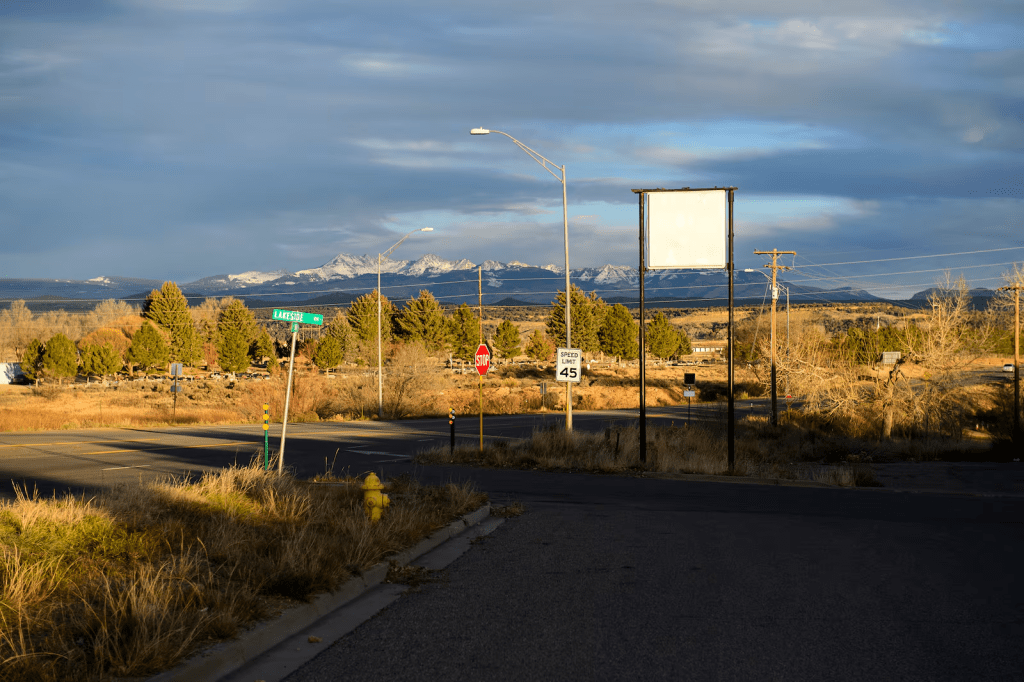
Citing President Trump’s threat to cut off federal education funding for school districts that provide protections for LGBTQ people, school board members in the Montezuma-Cortez district in southwestern Colorado are poised to remove sexual orientation and gender identity from the district’s nondiscrimination policy.

“Our district uses federal grant monies and Trump has indicated those grants are at risk if any district continues to support certain previously protected classes like sexual orientation, gender expression, or gender identity,” Mike Lynch, a school board member and the policy committee chair, said at a board meeting late last month.

The proposed policy changes in Montezuma-Cortez represent just one example of how some Colorado school districts are rushing to comply — or over-comply — with federal ultimatums based on questionable legal foundations. Many legal experts say the Trump administration cannot, on its own, exclude transgender people from federal anti-discrimination law and that Colorado law, which includes protections for LGBTQ people, supersedes school district policy anyway.

But efforts to remove protections at the local level send harmful messages about who is valued and who isn’t, they say.

“I think it does damage to queer students because it signals that this school district … doesn’t believe that these students are worthy of protection,” Scott Skinner-Thompson, associate professor of law at the University of Colorado Boulder.

Montezuma-Cortez, a conservative-leaning district with about 2,400 students, has taken other steps to curtail LGBTQ symbols and school activities in recent years. The school board is scheduled to take a final vote on the proposed nondiscrimination policy on June 24.

MB McAfee, a retired social worker and district resident, said she doesn’t know of any case where federal funds were withheld by the Trump administration, but worries about that possibility, particularly when it comes to money for students with disabilities.

But she’s also angry about the proposed policy changes, calling them “another step toward exclusion.”

“If we do that,” she asked, “then what’s going to be next?”

School districts react to funding threats

Trump has targeted transgender rights since his first day in office. In January and February, he issued several executive orders on the topic, including one that describes sex as determined at conception and unchangeable and another that threatens to withhold federal funds from schools that allow transgender girls to play girls sports.

The Trump administration has moved to strip federal funding from Maine because that state allows transgender girls to compete on girls’ teams. A judge blocked the federal government from withholding school lunch money while the case continues.

So far, no school district has lost money because of policies protecting transgender students. But Lynch emphasized that risk when he explained the proposed policy revision to the school board in May.

Asked by Chalkbeat what executive order or federal guidance required the removal of “sexual orientation” from the policy, Lynch later said by email that he’d mistakenly cited the term when he spoke to the board about federal dollars being in jeopardy.

For now though, “sexual orientation” isn’t being restored to the policy, he said.

Montezuma-Cortez isn’t alone in making changes spurred by the Trump administration. Officials from several Colorado districts, including Woodland Park and District 49 near Colorado Springs, have cited Trump’s executive orders in pushing policy changes or other efforts aimed at revoking protections for transgender students.

In May, District 49 sued the state and the Colorado High School Activities Association arguing that Colorado law and the association’s policy violate students’ constitutional rights by allowing transgender youth to play on school sports teams that match their gender identity.

Montezuma-Cortez school board members had little to say about the implications of the proposed nondiscrimination policy changes.

Asked about the legal or practical implications, Lynch said he’s not an attorney and doesn’t know. School board President Sheri Noyes did not respond to Chalkbeat’s request for comment. Vice President Ed Rice declined to respond to specific questions from Chalkbeat, saying by email that the policy’s opening sentence “answers everything.”

As proposed, that sentence says, “The Board is committed to providing a learning and work environment where all members of the school community are treated with dignity and respect.” The current version of the policy says “safe learning and work environment” but the revision takes out the word “safe.”

Heavily amended bill adding legal protections for transgender people passes Colorado Senate

*This is reported by Colorado Newsline.


The Colorado Senate gave final approval Tuesday to a heavily amended bill adding legal protections for transgender people in a 20-14 vote after hours of debate and opposition from Republican senators.

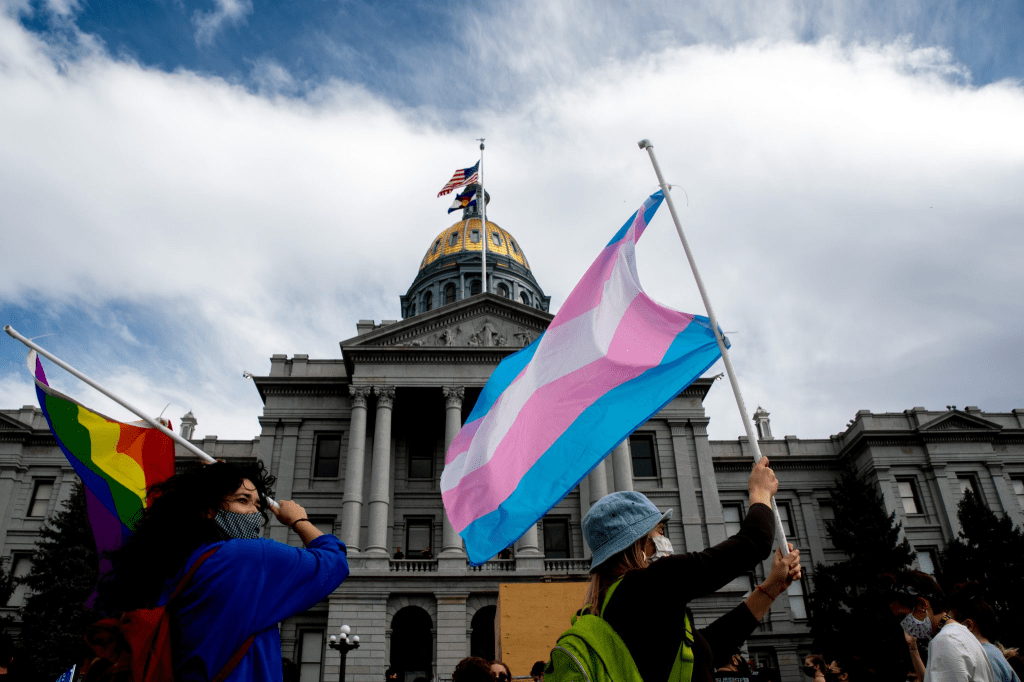
House Bill 25-1312, dubbed the Kelly Loving Act in honor of a transgender woman killed during the 2022 Club Q shooting in Colorado Springs, would make it a discriminatory act to intentionally not refer to a transgender person by their chosen name. It also requires school policies be “inclusive of all reasons” that a student changes their name, and it says schools must allow students to choose from any variation contained in dress code policies. 

The bill includes a provision that says someone does not need a court order if they want to change their gender marker on a driver’s license or other identification a second or third time. Colorado allows an “X” gender marker on state IDs, but that has led to some people having trouble with student loans and passport applications, so some people may want to change their gender markers back. It will also allow a county clerk to issue a new marriage license to someone who has legally changed their name. 

“This bill’s needed because if transgender residents were never harassed, denied services, or mocked in official settings, additional clarification would be unnecessary,” Sen. Chris Kolker, a Littleton Democrat, said Tuesday. “The lived evidence shows that gaps persist.” 

Kolker sponsored the bill alongside Sen. Faith Winter, a Broomfield Democrat, Rep. Lorena García, an Adams County Democrat, and Rep. Rebekah Stewart, a Lakewood Democrat.

The House voted 39-24 to accept the Senate’s many amendments to the measure and 40-24 to approve it again as amended. Democratic Reps. Regina English of Colorado Springs and Naquetta Ricks of Aurora joined Republicans in voting against accepting the amendments to the bill.

House Republicans continued echoing parental rights concerns during debate that went into late Tuesday evening, which bill supporters said were unfounded under the latest version of the bill.

“The continued mischaracterization of these policies needs to stop,” Garcia said Tuesday night. “It is a disservice to Coloradans who are really trying to understand what is in this bill, and we should be honest and truthful about what we are agreeing to or disagreeing with without exaggeration.”

The measure will now go to Colorado Gov. Jared Polis’ desk to be signed into law. Two Democrats in the Senate joined Republicans in voting against the bill: Sen. Kyle Mullica of Thornton and Sen. Marc Snyder of Manitou Springs. 

The Senate adopted an amendment Monday that removed a portion of the bill that would have shielded parents who help their child obtain gender-affirming care from laws in other states that outlaw the practice — a part of the bill some supporters had reservations about due to potential legal implications. A Senate committee cut part of the section last week, on top of many other substantial amendments, but bill sponsors offered an amendment deleting the section entirely. 

Colorado already has a shield law in place that protects people who travel to Colorado for abortion or gender-affirming care from lawsuits and criminal prosecution initiated in other states, and Winter said the original intent of the cut section was to strengthen those protections. 

We are proud to stand shoulder to shoulder with our community in full support of the Kelly Loving Act. Trans liberation is non-negotiable.

– Nadine Bridges, One Colorado executive director

Another two amendments added Monday made technical and terminology changes, and changed the description of a “chosen name” to mean a name someone wants to be known by related to “disability, race, creed, color, religion, sex, sexual orientation, gender identity, gender expression, marital status, familial status, national origin, or ancestry, so long as the name does not contain offensive language and the individual is not requesting the name for frivolous purposes.” Winter said that change made the policy inclusive of all reasons someone may want to change their name, not just gender identity.

Republican senators acknowledged and thanked bill sponsors for removing provisions that would have affected child custody decisions — the most controversial portion of the original bill — but said many constituents don’t realize that was removed and continue to express concern. Republicans still said the bill would affect parental rights related to chosen names and dress codes in schools. 

Senate Minority Paul Lundeen, a Monument Republican, said Tuesday on the Senate floor that the measure still interferes with the “sacred” parent-child relationship even as amended and draws the state into “personal family matters.”

“(House Bill) 1312, despite its protective intent, creates a system where schools and state agencies become the arbiter of deeply personal family decisions,” Lundeen said. “By mandating inclusive name policies, enforcing gender neutral dress codes, enlisting the (Colorado Civil Rights Division) to police speech, this bill risks transforming schools and courts into areas where the state overrides parental authority. We must not allow government to intrude into and fracture the trust between parents and children.”

Rod Pelton, a Cheyenne Wells Republican, said he received more communications related to House Bill 1312 than any other bill this session. Other senators from both sides of the aisle have said the same. 

One Colorado, one of the largest LGBTQ+ advocacy groups in Colorado, and Rocky Mountain Equality both support the bill in its current form after various amendments were adopted. The organizations initially supported the bill, but changed to an “amend” position with unspecified legal concerns after it passed the House. 

“We are proud to stand shoulder to shoulder with our community in full support of the Kelly Loving Act. Trans liberation is non-negotiable,” One Colorado Executive Director Nadine Bridges said in a statement the organization posted to Facebook. “Pro-equality legislation is not just about creating hope, but creating a better reality. It is a fight that we all need to be in together to protect our community, our family.”

Democrats control strong majorities in both chambers of the Legislature.

LGBTQ REALTORS discuss clients leaving Red States for Blue States and Better Countries

On this episode we are joined by the amazing Erin Morrison.

What happens when real estate meets resistance, advocacy, and identity?

In this candid conversation, LGBTQ+ real estate professionals Erin Morrison, Bob McCranie, Kimber Fox, and Leslie Wilson sit down to discuss the evolving challenges of being openly queer in an industry—and a country—facing political pushback.

🏳️‍🌈 Topics covered include: How anti-LGBTQ+ legislation affects clients and agents

The role of advocacy in real estate Why “just doing business” isn’t neutral anymore

Personal stories from the frontlines of inclusion in housing

📍 Whether you’re an agent, ally, or advocate, this video unpacks the real stakes of LGBTQ+ visibility in today’s market.

‘Colorado is for everyone’: Polis signs bill repealing same-sex marriage ban

*This is reported by KDVR.

 Colorado Gov. Jared Polis signed the “Protecting the Freedom to Marry Act” on Monday, repealing the state’s same-sex marriage ban from Colorado law.

The bill removes language that says marriage is only between a man and woman and aligns statute with the Colorado Constitution after voters in November decided to repeal that ban. The state House passed the bill in March after the Senate passed it in early February.

“Colorado is for everyone, no matter who you are or who you love,” Polis said in a press release. “Last November, the voters got rid of outdated language in our constitution that banned same-sex marriage. This is a long overdue step in the right direction and today’s law I’m signing ensures that Coloradans can marry who they love in our Colorado for all.”

First Gentleman Marlon Reis, in the press release, said this bill defends the progress made for LGBTQ+ rights.

“I am personally grateful to Senator Danielson, Representatives Garcia and Titone, and the countless community leaders and advocates whose hard work has made today possible,” Reis said. “This landmark legislation fulfills the hopes and dreams of so many across our LGBTQ+ and allied communities, and affirms that progress hard won is always worth defending, and in the end, love triumphs over all.”

Colorado’s previous same-sex marriage ban had been unenforceable since the U.S. Supreme Court’s 2015 Obergefell v. Hodges decision.

Supreme Court Could Legalize LGBTQ Conversion Therapy—The Consequences Could Cost Billions

*This is being reported by Forbes

The Supreme Court announced Monday it will hear a case regarding whether state bans on “conversion therapy” trying to change minors’ sexual orientation or gender identity are legal—a case that could carry billions of dollars in repercussions, as a 2022 study found conversion therapy carries an economic burden of approximately $9 billion annually for patients and their families.

Key Facts

The Supreme Court took up Chiles v. Salazar, a case challenging Colorado’s ban on LGBTQ “conversion therapy” for minors, which asks the justices to more broadly decide whether laws that “[censor] certain conversations between counselors and their clients based on the viewpoints expressed” are constitutional.

LGBTQ “conversion therapy,” as it’s commonly known, refers to any practices—including both emotional efforts, like talk therapy, or physical efforts, like electroconvulsive therapy—that aim to influence a patient’s sexual orientation or gender identity, which are typically framed as efforts to “cure” homosexuality or being transgender.

Repeated studies have shown such efforts are ineffective at changing people’s sexual orientation or gender identity and carry a variety of harmful effects—such as elevated risks for suicide, drug abuse and mental health issues—which has led to bans on conversion therapy for minors being enacted in more than 20 states.

Conversion therapy and its negative effects also have an economic impact, as a 2022 study published in JAMA Pediatrics found conversion therapy and its “associated harms” result in an economic burden of approximately $9.23 billion per year.

Conversion therapy alone costs approximately $650 million for participants annually in the U.S., with individuals who undergo it paying an extra $97,985 for treatment as compared with people who don’t undergo any counseling, according to the study, which was based on data from LGBTQ youth ages 13-24.

There are also significant costs associated with knock-on effects from conversion therapy and the study estimates each conversion therapy patient pays an extra $83,366 on average to treat the “downstream consequences” associated with the procedure, which combined raise the total economic burden of conversion therapy to $9.2 billion.

What To Watch For

The Supreme Court will hear the case on conversion therapy at some point during its next term, which begins in October, so any ruling in the case is likely more than a year away.

What Did The Study Conclude?

The study, which was conducted by pro-LGBTQ rights organization The Trevor Project and research group Cytel, concluded there is a “high economic burden and high societal costs” that come along with conversion therapy, which the study refers to as sexual orientation and gender identity change efforts (SOGICE). Researchers analyzed the difference in costs between patients who underwent conversion therapy, LGBTQ youth who received no therapy and those who received therapy that affirmed their sexual orientation or gender identity. The study found conversion therapy carried the highest economic burden: In addition to the $650 million per year in total attributed to the therapy itself, there are also total annual costs of $190 million related to anxiety or “severe psychological distress” among those that underwent conversion therapy, $1.36 billion related to depression, $2.42 billion from suicide attempts, $1.17 billion from fatal suicides, $1.26 billion from alcohol use disorder and $2.18 billion from substance abuse. The likelihood of those negative outcomes was largely markedly higher among those who underwent conversion therapy as compared with other LGBTQ populations—except alcohol use disorder, where those without any therapy registered the highest number by one percentage point (42.26% among those with no intervention versus 41.26% among conversion therapy patients). As a result, the total costs incurred by conversion therapy patients were higher than the $4.85 billion in total annual costs among those who hadn’t received any treatment, and $3.04 billion among those who received affirmative therapy.

Contra

Researchers noted there were some limitations with the study’s methodology that may affect its results, such as being based on studies in which patients self-reported their experiences. That means it might not be fully representative of all LGBTQ patients, as many people may be unwilling to discuss their experiences. It also assumes the risks are the same across the LGBTQ population and for various types of conversion therapy, which may not be the case. Researchers argued they took a “conservative approach” with their findings, however, and noted the $9 billion figure is likely an underestimate of the total economic impact. The study only looked at adverse impacts from conversion therapy for three years after the treatment, for instance—though such effects could likely extend for much longer—and did not examine some other potential impacts, like post-traumatic stress disorder or medical consequences from various medications or electroconvulsive therapy.

Big Number

13%. That’s the share of LGBTQ youth who have either been subjected to or threatened with conversion therapy, according to a 2024 survey conducted by The Trevor Project among more than 50,000 Americans ages 13-24. That includes 5% who have been subjected to the therapy and 8% who were threatened with it. The 5% share is down from 10% who said in 2020 they were subjected to the therapy, though that number could rise again should the Supreme Court outlaw state bans.

Key Background

The Supreme Court case was brought by Kaley Chiles, a licensed counselor in Colorado who said in a court filing “she believes that people flourish when they live consistently with God’s design, including their biological sex.” Chiles objects to Colorado restricting her from counseling clients to change their sexual orientation or gender identity, claiming it violates her First Amendment rights and classifying state bans on conversion therapy as “silenc[ing] counselors’ ability to express views their clients seek on a topic of ‘fierce public debate.’” Chiles asked the Supreme Court to take up the case after a federal appeals court upheld Colorado’s policy restricting conversion therapy, ruling that it was regulating counselors’ professional conduct, rather than chilling First Amendment-protected speech. The case is the latest in a string of major cases related to LGBTQ rights the 6-3 conservative-leaning court has decided in recent years—such as cases over businesses being allowed to discriminate against same-sex couples or discriminate on the basis of sexual orientation and gender identity—and the court is deliberating on a case this term over gender-affirming care for minors.

Further Reading

Humanistic and Economic Burden of Conversion Therapy Among LGBTQ Youths in the United States (JAMA Pediatrics)

Blog at WordPress.com.

Up ↑