
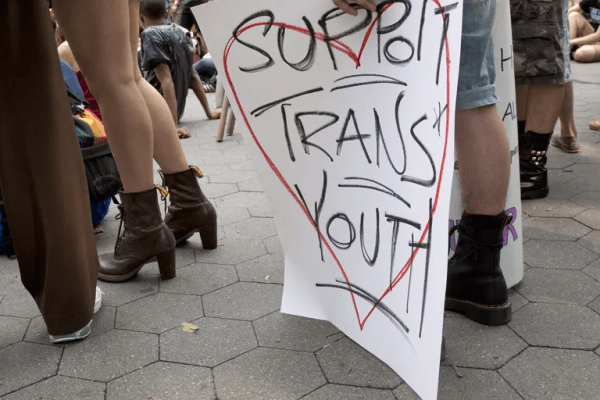
Judge Compares Gender-Affirming Care to Cigarettes and Alcohol While Upholding Youth Ban

This blog is originally appeared at LGBTQ Nation.
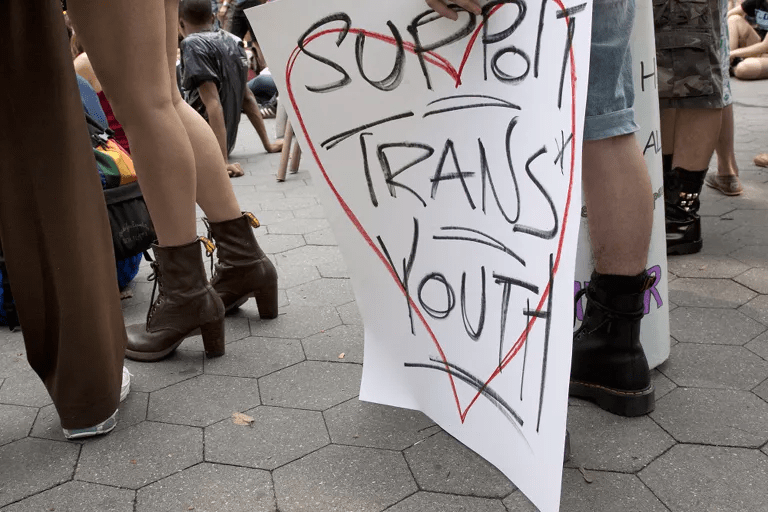
The nine-day trial featured witnesses with varying levels of credibility.

A Missouri county judge has upheld the state’s ban on gender-affirming care for minors.

In a 74-page ruling issued on Monday, Wright County Circuit Court Judge Craig Carter stated, “If we don’t let a 16-year-old buy a six-pack of beer and a pack of cigarettes, or allow an adult to purchase them for the teen, should we permit the same child and parent to decide to permanently alter the teenager’s sex?”

The restrictions on gender-affirming care, passed by Missouri lawmakers in 2023, prohibit minors from using hormones, puberty blockers, and undergoing gender-affirming surgeries. The law also blocks state funding for gender-affirming care for adults through Medicaid and for incarcerated individuals in state prisons.

The ACLU of Missouri and Lambda Legal have promised to appeal the ruling.

Judge Craig Carter acknowledged the “ethical minefield” of the case, writing that “the medical profession stands in the middle” with “scant evidence to lead it out.”

The nine-day trial featured witnesses of varying credibility, with the state’s Solicitor General Joshua Divine introducing partisan politics into the proceedings. Some experts presented research that had been retracted, which the plaintiffs argued was problematic. Divine maintained that the scientific community had dismissed the research due to “cancel culture.”

Carter’s ruling was partly based on testimony from Jamie Reed, a whistleblower who previously worked at the Washington University Transgender Center at St. Louis Children’s Hospital. Reed’s affidavit helped inspire the gender-affirming care ban. She testified that the hospital treated many patients with mental health issues without comprehensive psychological evaluations. There was disagreement at trial over whether a licensed therapist’s evaluation was sufficient for gender-affirming care, or if a psychologist or psychiatrist was required.

The judge found Reed’s testimony credible, noting, “Her testimony does not arise from any ideological or other bias.” He also pointed out that Reed is married to a transgender individual.

Reed is now the executive director of the LGBT Courage Coalition, an advocacy group that opposes gender-affirming care for minors. The day before she testified, her partner announced he was discontinuing testosterone treatments and “detransitioning.”

While Carter accepted Reed’s credibility, he was less convinced by some of the plaintiffs’ witnesses. He expressed concerns about deferring to organizations like WPATH, which the plaintiffs relied on. WPATH, the World Professional Association for Transgender Health, is a professional group that sets standards for gender-affirming care, but Carter noted that it self-describes as being “committed to advocacy.”

Ultimately, Carter’s ruling emphasized U.S. Supreme Court precedent that grants lawmakers broad discretion in areas “fraught with medical and scientific uncertainty.” He concluded that there is “an almost total lack of consensus as to the medical ethics of adolescent gender dysphoria treatment,” and therefore, the state legislature has the authority to ban the care.
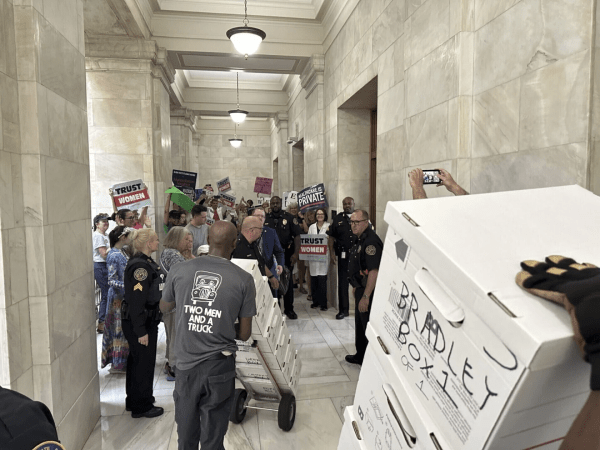
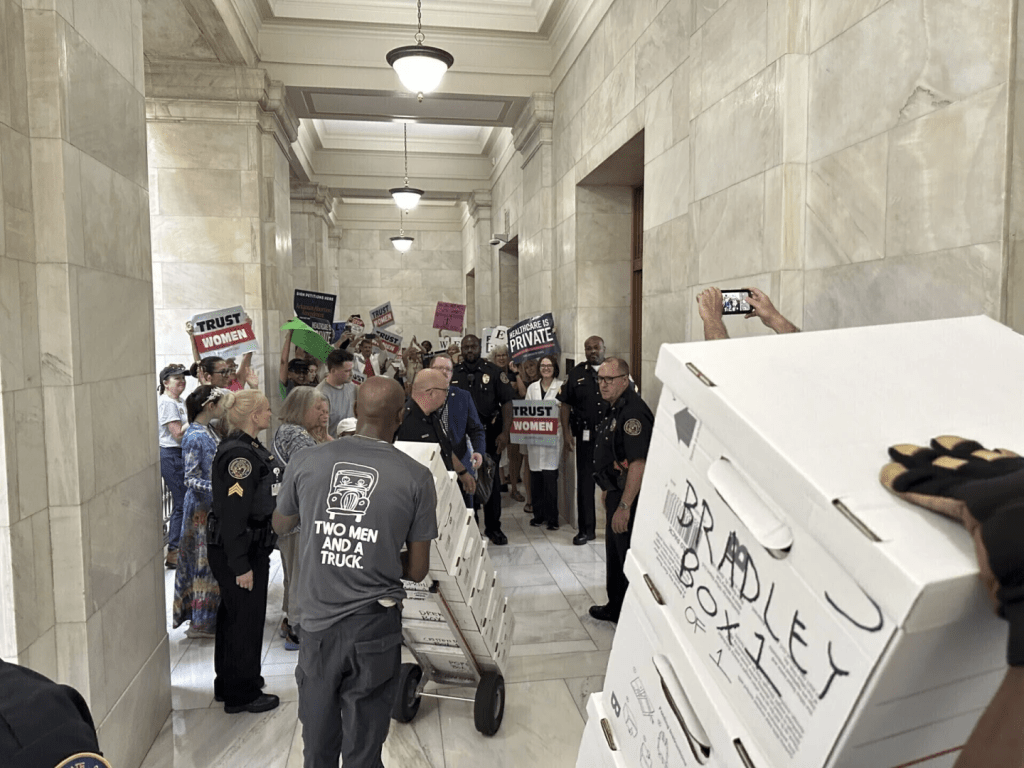
Arkansas Supreme Court Affirms Decision to Reject Abortion Rights Petitions | AP News

This blog originally appeared at AP News.

LITTLE ROCK, Ark. (AP) — On Thursday, the Arkansas Supreme Court upheld the state’s decision to reject petitions for an abortion rights ballot initiative, preventing the measure from appearing on the November ballot.

The ruling is a setback for organizers seeking a constitutional amendment in the heavily Republican state, where opposition to abortion is widely supported by top leaders.

Election officials ruled that Arkansans for Limited Government failed to meet state legal requirements, primarily because they submitted documents related to paid signature gatherers separately instead of as one bundle. The group argued they should have been allowed more time to submit any additional required documents.

“We find that the Secretary correctly refused to count the signatures collected by paid canvassers because the sponsor failed to file the paid canvasser training certification” in the proper manner required by law, Justice Rhonda Wood wrote in the 4-3 majority opinion.

A dissenting justice argued that the decision undermines Arkansans’ rights and essentially alters the state’s initiative process.

“Why are the respondent and the majority determined to keep this particular vote from the people?” wrote Justice Karen Baker, who is currently running against Wood for chief justice. “The majority has succeeded in its efforts to change the law in order to deprive the voters of the opportunity to vote on this issue, which is not the proper role of this court.”

Since the U.S. Supreme Court’s 2022 decision overturning the nationwide right to abortion, efforts have been made to let voters determine the issue state by state. On Tuesday, Montana became the eighth state to place an abortion measure on the ballot for this fall.

Supporters of abortion rights have prevailed in all seven states where abortion questions have gone before voters since Roe v. Wade was overturned.

In a statement, Arkansans for Limited Government called the ruling “a dark day in Arkansas.”

“This effort has generated a wave of fiercely engaged Arkansas women,” the group stated. “We are outraged. We will not back down. And we will remember this in November.”

Republican Gov. Sarah Huckabee Sanders took credit for the ruling on Thursday: “Proud I helped build the first conservative Supreme Court majority in the history of Arkansas, and today that court upheld the rule of law, and with it, the right to life,” she posted on X.

Arkansas currently enforces a near-total abortion ban, allowing the procedure only when the woman’s life is endangered by a medical emergency.

The proposed amendment would have blocked laws banning abortion within the first 20 weeks of pregnancy and permitted it afterward in cases of rape, incest, threats to the woman’s health or life, or if the fetus was unlikely to survive birth. However, it would not have established a constitutional right to abortion.

The ballot measure did not gain backing from major national abortion rights organizations like Planned Parenthood, as it still allowed abortion to be banned after 20 weeks—an earlier cutoff compared to other states where the procedure remains legal.

Had all the signatures been verified, the more than 101,000 signatures submitted by the July 5 deadline would have been enough to qualify the measure for the ballot. The threshold was 90,704 signatures from registered voters across at least 50 counties.

In a prior court filing, election officials stated that 87,675 of the signatures were collected by volunteers. However, they could not determine if 912 signatures came from volunteers or paid canvassers. The court’s majority ruled that only signatures gathered by volunteers could be counted, resulting in the campaign falling short of the required number.

“This is a win for the rule of law in Arkansas and for those who have followed the rules for years to participate in the state’s ballot initiative process,” said Republican Attorney General Tim Griffin, who represented the secretary of state’s office.

Arkansans for Limited Government and election officials clashed over whether the petitions complied with a 2013 state law that requires campaigns to identify each paid canvasser by name and confirm that they were informed of the rules for gathering signatures.

Supporters of the measure argued that they had followed the law regarding their documentation, including identifying each paid signature gatherer. They also claimed that the abortion petitions were being treated differently compared to other initiative campaigns this year, citing similar filings by two other groups.

State records indicate that on June 27, the abortion campaign submitted a signed affidavit with a list of paid canvassers and a statement affirming that the petition rules had been explained to them. Additionally, the July 5 submission included affidavits from each paid worker, acknowledging that the group had provided them with all the rules and regulations required by law.

The state argued in court that the documentation was non-compliant because it was signed by someone from the canvassing company, rather than a representative of the initiative campaign. The court did not issue a ruling on this specific point.

However, the majority on Thursday emphasized that the required documents needed to be submitted as one bundle to ensure that “the Secretary has all the necessary information together and organized when he begins the process.”

The court also noted that the June 27 filing did not account for 74 of the paid gatherers used by the abortion campaign.

In a separate dissent, Chief Justice Dan Kemp argued that the court should have instructed the state to count all of the signatures and appointed a special master to examine the contested facts.

“This case presents an anomaly in Arkansas jurisprudence,” Kemp wrote.

https://apnews.com/article/abortion-ballot-arkansas-supreme-court-48c208d49d82b467fbcc4b9c2724617a

Blog at WordPress.com.

Up ↑