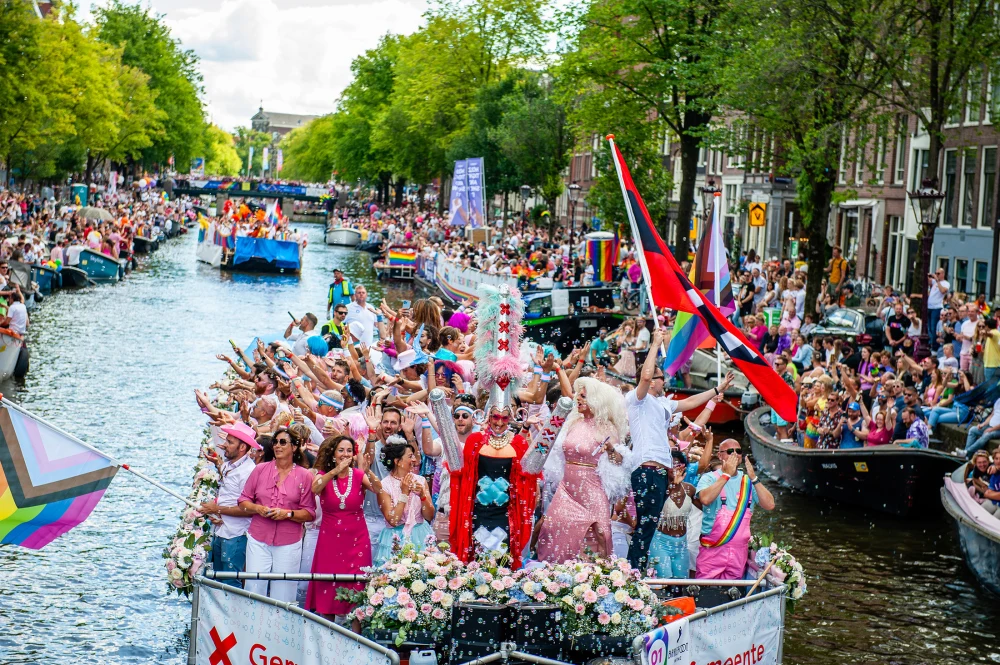
30-year-old American left the U.S. for the Netherlands, pays around $680/mo for essentials like rent, health insurance, groceries and transit

Read more at CNBC.

Austin Willingham, 30, grew up in Decatur, Alabama, and knew from a very early age that he wanted to leave home as soon as he turned 18.

While studying abroad in Sweden during his junior year at Troy University, he visited the Netherlands for the first time. Now almost 10 years later, Willingham and his partner are living in Rotterdam with the hope that they can obtain permanent residency or EU citizenship. 

It was a move that Willingham admits had been in the works since he returned from his semester abroad in Sweden. 

“Once I came back from Sweden, I was just determined to move back to Europe and had reverse culture shock. I was asking my parents if I could transfer to a different university and complete my degree abroad,” he tells CNBC Make It.

“Me being the first-generation college student in my immediate family, my parents were really adamant about me just going ahead and finishing my degree.”

Prior to moving to Rotterdam, Willingham lived in Ireland, traveled through Southeast Asia and was in and out of Australia for five years.

“We thought that it would be a good break. It would be a good change and transition from life in Australia. We also thought it would not be as difficult a change because Rotterdam is still the second-largest city in the country. We’re definitely city people, so we thought that this would just be the best space for us,” he says. “As soon as we got here, the people were so warm and they immediately welcomed us in.”

An estimated 5.5 million Americans live abroad, according to the Association of Americans Resident Overseas (AARO). That number continues to rise with an estimated 1,285 U.S. citizens expatriated in the first quarter of 2025 alone — a 102% increase compared to the same period a year ago, according to a report from CS Global Partners, which analyzed statistics from the U.S. Federal Register.

Life in the Netherlands

Willingham made the official move to Rotterdam in June of this year, on a DAFT (Dutch-American Friendship Treaty) visa. That visa stipulates that he be self-employed or work as a freelancer only.

To satisfy the visa requirements, Willingham works as an event planner and does commercial modeling, but his ultimate goal is to grow his relocation services business, Willing World.

Willingham and his partner live in a two-bedroom apartment with a roommate. The couple splits 430 euros or USD $498 a month for rent — paying 215 euros or USD $249 each — according to documents reviewed by CNBC Make It.

Including rent, Willingham’s monthly expenses in Rotterdam total approximately $680, covering utilities, transportation, health insurance, groceries, and his mobile phone bill.

“I like the freedom. This is coming from a privileged place, but I truly feel like anywhere outside the United States, it’s about being able to breathe and have a work-life balance. That’s what I love most about living abroad, even though I’m working for myself, there is still this balance and there’s not this societal pressure of needing to prove myself all the time.”

Willingham started sharing his journey abroad on TikTok and says that since moving to Rotterdam, he’s enjoyed building a community both online and in real life. He’s excited to see what the future holds, he says, but moving back to the United States is just not in the cards for him right now.

“I would love to live. I would love to own. I would love to say yes at some point, but not in the current situation that we have. It would be way down the line when the United States finally gets some change,” he says.

“I want to be able to be there for my parents, so maybe I wouldn’t move back permanently, but I would spend an extended amount of time.”

Willingham says that leaving the U.S. has taught him that he is capable of anything.

“I’ve learned that I can do it even when I’m scared because it still has to get done,” he says. “When living abroad, especially on your own, you don’t have anybody to depend on, so you learn to depend on yourself and trust yourself with it.”

Conversions from euros to USD were done using the OANDA conversion rate of 1 euro to $1.16 USD on October 14, 2025. All amounts are rounded to the nearest dollar.
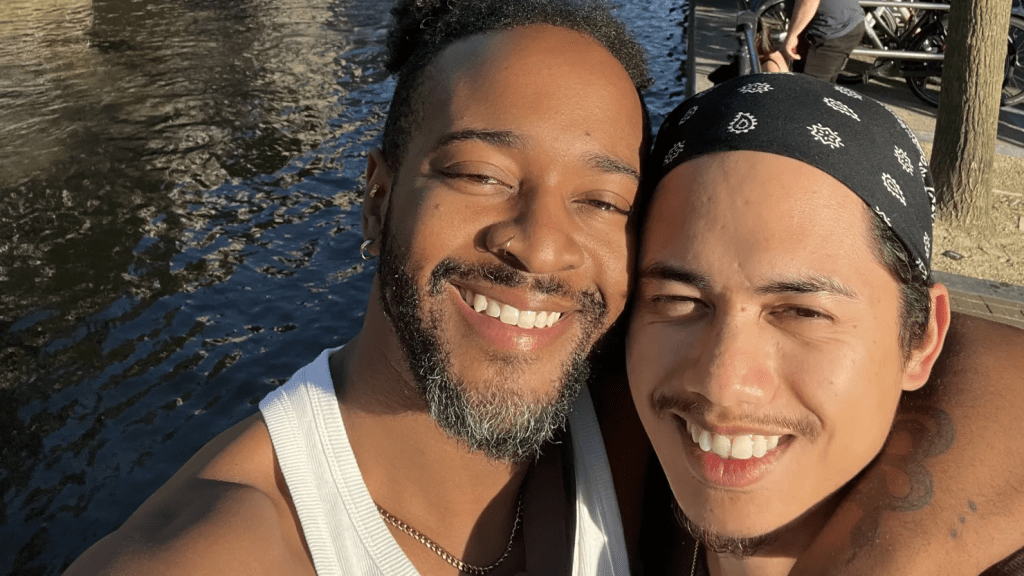
Going Dutch: LGBTQ Americans find Trump-free life in Netherlands

Read more at NBC News.

It had been months since Alex and Lucy, a trans couple from Arizona, felt safe enough to hold hands in public. They rediscovered that pleasure after moving to Amsterdam this year.

The couple, who did not want to give their last names because of the sensitivity of the subject, decided to leave the United States soon after Donald Trump was re-elected last year.

They arrived in the Netherlands on Jan. 19, the day before Trump was inaugurated and swiftly issued an executive order saying the government would only recognize two sexes — male and female.

“We’re both visibly trans and faced growing discrimination. It ramped up right after the election,” said Lucy, sitting alongside Alex in their De Pijp apartment in Amsterdam’s south.

“It felt like people had taken off their masks — waiting for an excuse to finally say what they wanted. We went from being tolerated to openly despised,” she added.

Alex, who is disabled, feared staying put might also mean losing access to their federal health insurance.

“In the end, it became a matter of life and death,” Alex said.

In his first six months in office, Trump has enacted multiple policies affecting the lives of LGBTQ Americans in areas from healthcare to legal recognition and education.

In the face of this rollback of rights, some LGBTQ people have voted with their feet.

While there is little official data, LGBTQ people and activists told the Thomson Reuters Foundation that many people head to Portugal and Spain, while Costa Rica and Mexico are also popular destinations, alongside France and Thailand.

The Netherlands stands out, though, for its strong legal protections, its record on LGBTQ+ inclusivity, and due to a Dutch–American Friendship Treaty (DAFT) and its affiliated visa.

DAFT — established as a 1956 act of Cold War cooperation — enables U.S. citizens to live and work in the Netherlands if they start a small business investing at least 4,500 euro ($5,200), can secure Dutch housing, and are able to prove they have enough money to live on.

The permit is valid for two years and can be renewed.

“Europe was always on the cards, but the Netherlands had a really high percentage of queer folks, and we knew people here (who) were trans and happy,” said Lucy, who got a DAFT visa.

‘Numbers increasing’

While the Dutch Immigration and Naturalization Service (IND) does not keep statistics on the sexual orientation or gender identity of DAFT applicants, overall applications have increased since 2016, with January 2025 registering the highest number of any single month on record — 80.

“The numbers are increasing. We don’t know why,” said Gerard Spierenburg, IND spokesperson.

Immigration lawyers also report an increase.

“From the day after the election, my inbox began filling up with requests of U.S. citizens wanting to move to the Netherlands,” said lawyer Jonathan Bierback, adding that about a fifth came from the LGBTQ+ community.

Three other lawyers in Amsterdam confirmed the trend in interviews with the Thomson Reuters Foundation.

Jack Mercury, a trans adult performer from California, moved to Amsterdam almost a year and a half ago — “literally the moment I knew Trump was going to be re-elected”.

He said the DAFT visa was “one of the few financially accessible visas” for him.

He now lives in west Amsterdam with a partner and two cats.

“The words to describe the U.S. in the last 100 days are uncertainty and fear. For trans people, it’s fear that they’ll lose access to healthcare, rights like housing or the ability to work. And for gay people and lesbians, it’s that they will become the next targets,” Mercury said.

This year, more than 950 anti-trans bills were introduced in U.S. state legislatures, according to the Trans Legislation Tracker, of which 120 have passed, 647 failed, and 186 are still under consideration.

“I feel very lucky. I know many people who cannot afford to move, because they’re not high earners, they are sick, have family or children,” said Mercury.

His friend Topher Gross, a trans hair stylist from New York who has been in Amsterdam for four years, offered housing tips and recommended a lawyer.

“Everyone’s exploring any possible way to get out,” said Gross. “But not everyone can — many trans people of colour can’t afford to leave. It’s terrifying.”

He noted that the climate of fear was exacerbated by deportations under Trump’s crackdown on illegal immigration.

“Basic rights are being stripped away.”

Jess Drucker, an LGBTQ relocation expert with U.S.-based Rainbow Relocation, said many U.S. clients choose to go Dutch.

“People see how quickly rights can erode, with the global rise of right-wing extremism, and want to move somewhere where those rights are more likely to hold,” Drucker said.

“We’ve seen a major increase in requests for consultations. We are absolutely full.”

Because not everyone can afford a DAFT visa, the Dutch NGO LGBT Asylum Support is urging the government to consider asylum options for LGBTQ Americans.

Spokesperson Sandro Kortekaas said about 50 trans Americans had contacted the group since Trump’s inauguration.

In June, the group asked the government to reassess the status of the United States as a safe country for queer asylum seekers. However, Bierback does not expect success as such a shift would be seen “as a provocation towards the U.S.”

Spierenburg from the IND said there had been more asylum applications from the United States this year than last, although the numbers were still low — 33 against 9 in 2024.

Lucy and Alex are grateful for their new life.

“When I came here, I felt more at home than I ever did. I have so much hope,” said Lucy.

But she does worry that a future Dutch administration — a right-wing coalition collapsed in June — could kill off DAFT.

“I’m really concerned that the treaty is going to be damaged by current political agendas. And so I’m doing everything I can to make sure that I stay within the rules. I don’t want to be extradited for any reason.”

Blog at WordPress.com.

Up ↑