73 Digital Nomad Visa Countries in 2025

Read more at Citizen Remote.

An Intro to Digital Nomad Visas

Over the last several years, the way we work has undergone a major transformation. More professionals and companies continue to embrace the flexibility of remote work, opening up new opportunities to live and work from anywhere in the world. In response, governments worldwide have rolled out digital nomad visa programs to attract remote workers, boost tourism, and support local economies.

HowThe shift to remote work accelerated dramatically in 2020 during the COVID-19 pandemic, when millions were suddenly working from home. While some companies have since returned to hybrid or in-office models, remote work remains a permanent fixture of the modern workforce. In fact, many professionals are now actively seeking out remote-friendly roles specifically to support a more location-independent lifestyle.

As we move through 2025, remote work continues to evolve—not as a temporary solution, but as a long-term career path. With advancements in technology and global connectivity, the once-rigid boundary between work and travel is becoming more flexible than ever. In response, a growing number of countries are introducing or refining their digital nomad visa programs to welcome remote workers with open arms.

Whether you’re an experienced digital nomad looking for your next base or you’re considering making the leap into this lifestyle, we’ve compiled the most up-to-date list of countries currently offering digital nomad visas in 2025.

What Is a Digital Nomad Visa?

A digital nomad visa is a temporary permit that allows visitors to stay in a country while they work remotely. Multiple countries offer these sorts of visas, and most of them have a duration of 12 months, with the possibility to extend your stay.

While they may not be for everyone, a digital nomad visa allows many remote workers to travel the world while they work from the comfort of their computers. They also help the countries impulse their economy by having foreigners stay for extended periods.

These visas are usually granted to anyone that can prove they have sufficient funds to support themselves (and their families, if needed) while working for a company outside the one issuing the visa.

The digital nomad visa differs from a tourist visa because it allows the visitor to stay longer. Plus, you’re technically not allowed to work while visiting on a tourist visa. Plus, some countries will provide other benefits, like tax exceptions, with a digital nomad visa.

Digital Nomad Visa Requirements

Applying for a digital nomad visa may seem like a long and complicated process. Some countries will have a longer processing time or require more documents, while others will issue visas quickly and easily.

Generally, the application processes are very similar in each country. They will all ask you to gather the necessary documents, like copies of a valid passport, proof that you can work remotely, proof of income, accommodation confirmations, etc.

Most countries will allow you to apply online, while others require you to go to the closest Embassy or Consulate to fill out your application. Most of the time, you’ll need to attend an interview and wait a certain period before getting your visa approval.

If you wish to see the requirements for a specific country, check out our website! You’ll find information on all the countries that offer a digital nomad visa.

Digital Nomad Visa Taxes

The tax situation regarding a digital nomad visa is complicated, and it varies from country to country.

Some countries will expect you to pay full tax, while others will have special rates or tax reductions. Some countries will even have no taxes for digital nomads!

Why Should I Get a Digital Nomad Visa?

A digital nomad visa is perfect for you if you wish to work remotely and live in a different country.

Some digital nomads prefer to move around more, so a 12-month digital nomad visa might not be worth it. However, if you wish to stay longer and truly enjoy everything a country has to offer while you work remotely, these visas are the way to go.

Not only will you be able to stay for much longer than with a tourist visa, but you can also enjoy tax benefits, explore the many attractions a country can offer, and experience life as a local.

It’s the perfect opportunity to expand your horizons!

Continue reading at Citizen Remote to see which countries off digital nomad visas!
Digital nomads are abandoning these once-popular destinations—here’s where they’re going instead

*This was published by Killer Startups.

Over the past decade, I’ve lived and worked all over the world — from bustling cities to sleepy beach towns. Being a digital nomad sounds glamorous (and it is sometimes), but it also means you have to keep moving as places change.

And lately, I’ve noticed a big shift: many digital nomads are quietly leaving some of the old hotspots behind. Places that used to be thriving hubs are now feeling… well, a little stale, crowded, or overpriced.

So why is this happening — and where are the new hotspots everyone’s talking about? Let’s dive in.

Why digital nomads are leaving the old favorites

When I first started traveling, certain cities were on every digital nomad’s bucket list. Think Bali, Chiang Mai, Lisbon, Medellín. These places had it all: cheap cost of living, great internet, good weather, and a ready-made community of like-minded people.

But over time, a few things have changed:

1. Rising costs

Let’s be real: many of the original “cheap” places aren’t so cheap anymore.
Take Bali, for example. Ten years ago, you could rent a decent villa for $400 a month. Now? It’s not unusual to pay $1,000 or more — and that’s before you even factor in co-working spaces, eating out, or transportation.

Lisbon, once a haven for budget-conscious remote workers, has become one of Europe’s most expensive cities relative to local wages. Prices skyrocketed after a flood of digital nomads and foreign investors entered the market.

When your income stays the same but your cost of living doubles, it’s only natural to start looking elsewhere.

2. Overcrowding and “Instagram fatigue”

When a place becomes the destination for digital nomads, it quickly loses its charm. Cafes get packed. Internet speeds slow down. Traffic becomes a nightmare.

And honestly? A lot of these places start to feel like Instagram theme parks — more about capturing the perfect latte art shot than actually living well.
Many long-term nomads are craving authenticity again. They want real experiences, not just curated content for social media.

3. Visa headaches

Governments are catching on to the digital nomad trend — but not always in a friendly way.
Some places have tightened visa restrictions or introduced new taxes aimed at foreigners. Others are rolling out digital nomad visas, but with strict income requirements that don’t fit everyone.

It’s making the decision of where to settle even more complicated.

So, where are digital nomads going instead?

Luckily, there are still amazing spots around the world where you can live well, work efficiently, and avoid the chaos. Here are a few places seeing a lot more love lately:

1. Mexico City, Mexico

Mexico has been quietly becoming a new favorite — especially for nomads from North America.

Mexico City offers an incredible lifestyle:

  • Affordable rent (outside the fancy expat neighborhoods)
  • Fast internet
  • Amazing food
  • A vibrant, creative energy that’s hard to match anywhere else

You get big-city conveniences without the big-city price tag (at least for now).

Bonus: Mexico offers a six-month tourist visa to most nationalities, so you have more breathing room to settle in without visa stress.

2. Tbilisi, Georgia

If you want somewhere totally different but still affordable, Georgia should be on your radar.

Tbilisi has a growing digital nomad scene thanks to:

  • Low living costs
  • Fast, cheap mobile data and internet
  • A warm, welcoming culture
  • One-year visa-free stays for many nationalities

The city is a fascinating blend of old and new, with medieval streets alongside modern co-working spaces. Plus, the food and wine are incredible.

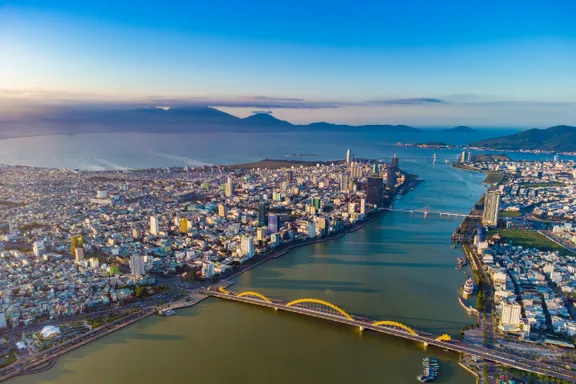
3. Da Nang, Vietnam

Southeast Asia isn’t dead — it’s just moving to new places.

Da Nang, Vietnam, is picking up steam as a quieter, more livable alternative to Bali or Chiang Mai.
You get:

  • Affordable beachside living
  • A growing café and remote work culture
  • Good internet
  • A relaxed vibe without the Bali-style crowds

And Vietnam offers relatively easy long-term visa options compared to neighboring countries, although things change often, so it’s worth checking before you go.

4. Madeira, Portugal

Lisbon is getting crowded, but Portugal has a hidden gem: Madeira.
This island is now actively marketing itself to remote workers, even creating a dedicated “Digital Nomad Village” in Ponta do Sol.

Madeira offers:

  • Mild weather year-round
  • Gorgeous natural scenery
  • Strong internet
  • A calmer pace of life than mainland cities

If you want Europe without the chaos, Madeira is definitely worth a look.

5. Buenos Aires, Argentina

Argentina’s economy has had its challenges, but for digital nomads earning in dollars or euros, Buenos Aires is incredibly affordable right now.

You can enjoy:

  • World-class steak and wine
  • Stylish apartments for a fraction of the price you’d pay elsewhere
  • A rich cultural scene (tango, theaters, live music)
  • A very cosmopolitan vibe

The downside? Inflation and political instability. But if you’re adaptable, it’s a fantastic place to spend a few months.

Final thoughts

As someone who’s been a digital nomad for over 10 years, I can tell you: the dream isn’t dying — it’s just evolving.
It’s less about finding the next Bali or Chiang Mai, and more about finding a place that suits your lifestyle now.
Maybe you want a bit more authenticity. Maybe you want better value. Maybe you just want somewhere quieter to actually get some work done.

The best thing about being a digital nomad today? You have more options than ever.
And sometimes, the places you haven’t heard hyped up yet are the ones where you’ll find your best adventures.

Here’s to finding your next great base — and making it your own.

Italy’s digital nomad visa: Advice and tips from one of the first ever recipients

This blog originally appeared at Euro News.

After years of anticipation, Italy officially introduced its digital nomad visa in April this year, allowing remote workers to live and work in the country for up to a year.

Though the visa has only been available for a few months, adventurous travelers are already seizing the opportunity.

Chelsea Waite, a US native, started her own business in 2020 and has been working remotely ever since. After visiting Italy for the first time in 2017, she knew it was where she wanted to settle.

“When I found out in April that Italy launched the digital nomad visa, I was so excited and knew I had to pursue it with everything I had,” she told Euronews Travel.

I tried to do as much research as possible… But since this is such a new visa, there’s barely any information available beyond the fact that it exists,” she explains.

Fortunately, Chelsea navigated the process and is now one of the first to be granted the visa, currently living in Milan.

Here, she shares her experience and top tips for securing Italy’s digital nomad visa.

Is it difficult to get Italy’s digital nomad visa?
Navigating the process of this new visa came with several challenges. Chelsea attributes her success to perseverance and thorough preparation.

One major hurdle she encountered was securing a rental contract, a critical document for the digital nomad visa application.
“In Italy, it’s notoriously difficult to get a rental contract,” Chelsea says. Many assume you need a ‘codice fiscale’—an Italian tax code—to sign a lease. This code, issued to Italians at birth, is essential for services like opening a bank account or getting a phone number. However, obtaining a codice fiscale can be tough if you’re not already living in Italy or don’t yet have a visa.

Chelsea found that working with a real estate agent was key.
“My real estate agent informed me that there’s a way to register the contract for individuals moving to Italy who don’t yet have a codice fiscale,” she explains. “So if you get pushback from a property owner or management company, let them know this option exists and see how they can help.”

Italy’s digital nomad visa also differs from others in Europe. It targets highly skilled workers performing “highly qualified work activities” and earning at least €28,000 a year.

Part of Chelsea’s application involved having her degree certified. Initially, she thought having it notarized by the US Secretary of State’s office would suffice. However, Italy requires foreign degrees to be verified through CIMEA (the Information Centre on Academic Mobility and Equivalence), which manages recognition of degrees.
“You need to upload your degree, transcripts, and then it goes through an internal review that can take days or months,” she says. Nuanced requirements like these can slow down the process.

What are Chelsea’s top tips for getting Italy’s digital nomad visa?

Chelsea shares three key tips for anyone pursuing Italy’s digital nomad visa:

  1. Come overprepared:
    “Make sure you have all the necessary documents upfront,” she advises. “It’s better to be overprepared than underprepared so you don’t risk having to restart the whole process.”
  2. Seek help in Italy:
    She recommends getting local support for crucial steps, especially when it comes to finding accommodation.

“I would also recommend, if possible, visiting Italy between the time you schedule your appointment with the Italian consulate and the actual appointment date,” Chelsea suggests.

She explains that building relationships with locals is much easier in person than online.

“And my third piece of advice would be to stay flexible and come financially prepared,” she adds.

Chelsea emphasizes that digital nomads should factor in costs like deposits for housing, health insurance, document verification fees, and the visa fee itself.
“The whole process ended up costing a bit more than I expected.”

The non-refundable visa application fee alone is €116 per person.

With limited information available on how to apply for Italy’s digital nomad visa, Chelsea is now writing a guide to help others navigate the process.

Watch the video above to learn how Chelsea became one of the first recipients of Italy’s digital nomad visa.

“I would also recommend, if possible, visiting Italy between the time you schedule your appointment with the Italian consulate and the actual appointment date,” Chelsea suggests.

She explains that building relationships with locals is much easier in person than online.

“And my third piece of advice would be to stay flexible and come financially prepared,” she adds.

Chelsea emphasizes that digital nomads should factor in costs like deposits for housing, health insurance, document verification fees, and the visa fee itself.
“The whole process ended up costing a bit more than I expected.”

The non-refundable visa application fee alone is €116 per person.

With limited information available on how to apply for Italy’s digital nomad visa, Chelsea is now writing a guide to help others navigate the process.

Watch the video above to learn how Chelsea became one of the first recipients of Italy’s digital nomad visa.

“I would also recommend, if possible, visiting Italy between the time you schedule your appointment with the Italian consulate and the actual appointment date,” Chelsea suggests.

She explains that building relationships with locals is much easier in person than online.

“And my third piece of advice would be to stay flexible and come financially prepared,” she adds.

Chelsea emphasizes that digital nomads should factor in costs like deposits for housing, health insurance, document verification fees, and the visa fee itself.
“The whole process ended up costing a bit more than I expected.”

The non-refundable visa application fee alone is €116 per person.

With limited information available on how to apply for Italy’s digital nomad visa, Chelsea is now writing a guide to help others navigate the process.

Watch the video above to learn how Chelsea became one of the first recipients of Italy’s digital nomad visa.

Quality vs. Quantity: Thailand Introduces New Visas to Attract Foreigners—But Is It Too Late?

This blog originally appeared at CNA.

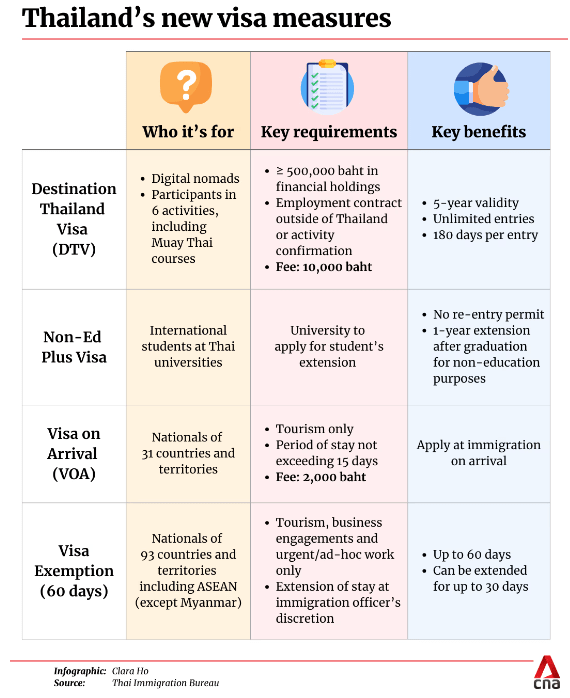
Thailand has launched a series of new visa programs designed to simplify long-term stays and remote work. This move aligns with a global trend where governments are focusing on attracting higher-spending visitors with a smaller environmental impact.

Steve Lim, a content creator, has made Thailand his home over the past two years. (Photo: Supplied)

BANGKOK: Content creator Steve Lim never intended to settle in Thailand—his original destination was New York. However, during a brief stopover in Bangkok in 2022, his U.S. visa plans collapsed, leaving the New Zealand native faced with unexpected life-changing decisions.

For Steve Lim, who has spent most of his time in Bangkok dealing with the unpredictability of short-term visas, the introduction of a visa tailored to his work needs is a relief.

“I started out on a holiday visa, constantly doing visa runs in and out of the country. It eventually became exhausting,” he said, describing a situation familiar to many expatriates and digital nomads living in Thailand.

After about six or seven months in Thailand, Lim switched to an education visa, allowing him to stay in the country while learning Thai remotely through a local institution. However, he knew it was only a temporary solution.

Within his personal network, particularly among those in the creative industry both in Thailand and abroad, Lim noticed an “influx of people” eager to secure their future in the country or come for the first time using the DTV.

“Southeast Asia has long attracted online remote workers, and for the past few years, there hasn’t been much recognition of these workers,” he explained. “Now, it’s great that we’re finally being acknowledged.”

Lim also appreciated the flexibility offered by the new visa. “During COVID, many companies and individuals realized that you don’t need to spend eight or nine hours in an office. You can work from home, travel, and still get the job done,” he added.

VISAS ARE ‘TRIED AND TESTED’

The travel industry has clearly shifted toward longer stays and higher spending over the past few years. Although Thailand’s overall visitor numbers have not yet returned to pre-COVID 2019 levels, data indicates a rise in people opting for extended stays.

Olivier Ponti, director of intelligence and marketing at travel data firm ForwardKeys, noted that a quarter of all current visitors to Thailand are staying for more than two weeks. He added that stays of 22 or more nights have fully recovered to 2019 levels, while short-term visits remain 19 percent lower.

“Visas are undoubtedly a tried and tested method for boosting tourism to a destination. Since the pandemic, many locations have introduced new visas to cater to the surge in remote workers,” Ponti said.

“The rise of digital nomads and the shift towards remote working will certainly have a global impact, including in Thailand,” Ponti said.

He also pointed out that similar visa schemes launched in other countries, like Indonesia’s B211a visa and the UAE’s Virtual Working Program, have led to positive growth in long-term visitors, even as short-term tourism remains sluggish.

In Southeast Asia, Malaysia now offers a 12-month stay for qualified digital nomads through the DE Rantau Nomad Pass, and the Philippines has plans to introduce a similar scheme.

Peter Guis, owner of TMT Visa Service Phuket, noted that interest in Thailand’s new Destination Thailand Visa (DTV) has been immediate, offering a flexible and affordable option for those who may have previously hesitated to stay longer due to unclear visa regulations. However, he acknowledged that since the DTV is still new, there are uncertainties about how it will function in the long run.

“The DTV is a game changer in many ways, but it’s still unclear just how much of one it will be. There will definitely be positive effects,” said Peter Guis.

However, he cautioned that the government needs to closely monitor the visa’s impact. “It’s also likely to attract individuals who may not have the best intentions for a long-term stay.”

Stephen Noton, international marketing advisor for Tourism.co.th, noted that broader economic factors will play a significant role in determining whether Thailand can attract as many international visitors as it hopes. For instance, Chinese travelers have been slower to return post-pandemic, despite visa schemes designed to ease their entry.

“It’s not just about visas. Global economic conditions, inflation, airline prices, and political stability also have a major influence,” Noton said. “If people feel uncertain about spending or face other barriers, the expected growth might not be as large as anticipated.”

Thailand is increasingly focused on attracting long-stay travelers, as part of its broader strategy to boost tourism. By offering more flexible visa options and targeting remote workers, digital nomads, and high-spending visitors, the country hopes to reshape its tourism landscape and recover from the pandemic’s impact on short-term tourism.

QUALITY OVER QUANTITY

Attracting travelers who prioritize “quality over quantity” brings both revenue and social benefits, according to Paul Pruangkarn, chief of staff at the Pacific Asia Travel Association (PATA).

“If I’m focused on revenue generation, I’ll definitely target long-haul markets and digital nomads. They tend to stay longer and spend more,” he explained.

He also highlighted the recent backlash from local communities against tourists, citing incidents in Barcelona where residents protested against international visitors due to rising rents driven by Airbnb listings, the closure of local businesses in favor of tourist-centric enterprises, and poor conditions for service workers.

The Thai government has set an ambitious target of 40 million visitors for 2024. Paul Pruangkarn emphasized the need to “walk a tightrope” between allowing the private sector—such as hotels and airlines—to benefit from high visitor numbers while ensuring a sustainable industry and social cohesion.

“It’s crucial to balance people, profit, and the planet, especially now that everyone is rushing to attract visitors and generate revenue post-COVID,” he noted.

This relentless pursuit of growth can strain infrastructure and negatively impact the tourist experience, a concern that longer stays could help mitigate. To address these issues, Thailand’s main airports are set to undergo capacity expansions in the coming years, including a major upgrade to U-Tapao International Airport near Pattaya, expected to start this year, and a high-speed rail network connecting it with Bangkok’s Suvarnabhumi and Don Mueang airports, scheduled for 2025.

“There is pressure on our entry and exit infrastructure, particularly at popular airports and border crossings during peak seasons. A shift towards quality tourism over quantity could alleviate some of these pressures,” said Nithee Seeprae from the Tourism Authority of Thailand (TAT).

The TAT plans to collaborate with tourism partners to offer special packages for longer stays and encourage year-round travel. “Longer stays provide more stable tourism income, helping to smooth out seasonal fluctuations,” he added.

“When we refer to ‘quality tourists,’ we mean travelers who contribute more than just economic value. They stay longer, immerse themselves in local culture, and prioritize sustainable and responsible travel practices. They seek meaningful experiences that allow for deeper connections with the places they visit,” he explained.

In a highly competitive tourism sector, Pruangkarn expects governments to continue adapting their immigration policies. While Thailand may have been slower than others to welcome this new wave of workers, he believes the country recognizes the value they bring.

“Am I surprised it took so long? Yes. Do I understand why it took so long? Of course; there are challenges,” he said. “But you have to stay competitive. You need to ask yourself, ‘What can I do to ensure I’m one step ahead of my neighbor?’”

Read more.

The Sardinian village tempting remote workers with free rent, party invites and immersive culture | Euronews

This blog originally appeared at EuroNews.

A village in Sardinia opens its doors to its first digital nomad as part of a program that provides rent-free accommodation to remote workers.

Interested in working from a location so picturesque it could outshine even the scenes on chocolate boxes?

Your dreams can come true as you settle into a charming setting with rolling hills and charming terracotta rooftops, all without paying rent for three months. This opportunity is thanks to a fresh initiative in Sardinia.

The inaugural beneficiary of this offer is Clarese Partis, a 39-year-old software designer hailing from Los Angeles.

Eager to evade the hustle and bustle and embrace a more off-the-grid lifestyle, she hopped on a flight from the US, touching down on the island last week. She has now settled into her new abode in the quaint village of Ollolai.

“I felt I needed a change of place,” she explains.

“Not a touristy one” Partis insists but one “surrounded by nature, fresh air, mountains, beautiful beaches, where I could find more solace, peace and a slower-paced lifestyle.”

This is a desire that many employees have been yearning for since the onset of the COVID-19 pandemic. As a result, accommodations and travel packages catering to digital nomads have been working tirelessly to meet this surging demand.

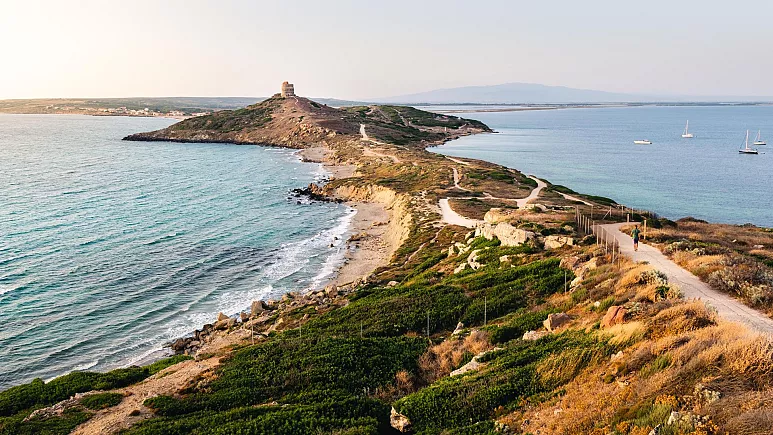
Situated in central Sardinia, Ollolai is a world apart from the country’s well-frequented and frequently overcrowded coastlines. It serves as a kind of time capsule, preserving Italy’s cultural heritage, which is still very much alive. This cultural richness is clearly evident in the way of life that thrives in the village.

“I love going to the farmers’ market to pick fresh ingredients such as truffles, making pasta and gnocchi with pesto,” Partis says. “The food is amazing.”

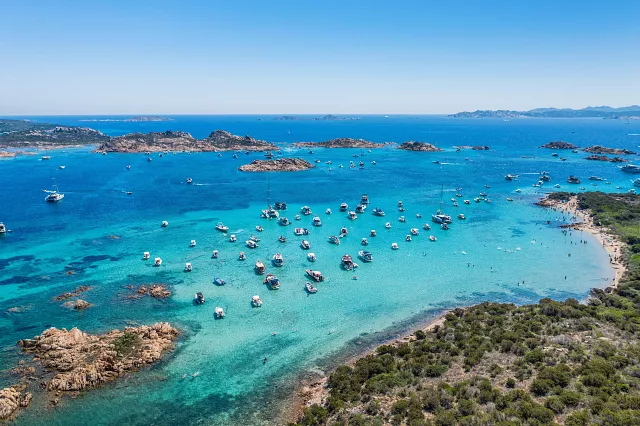
Sardinia’s sparkling coastlines draw thousands of tourists every year

Why is Ollolai offering digital nomads a free stay?

While Ollolai is undeniably beautiful and a tourist attraction, its population has been steadily declining. Over the past century, it has decreased from 2,250 residents to just 1,300. This issue is part of a larger demographic challenge that Italy has been grappling with for some time, which they have classified as a national emergency. In 2022, Italy experienced historically low population growth.

Italy has been making efforts to attract visitors, both for short-term and long-term stays. One of their initiatives, known as the ‘buy a house for €1’ program, has successfully drawn residents from various parts of the world. Ollolai also joined this initiative with the hope that foreigners would invest in renovating its historic district.

“That was a major success – many foreigners bought and restyled dozens of forsaken dwellings,” Mayor Francesco Columbu told CNBC.

Columbu is now backing his vision with concrete actions. Through the ‘Work from Ollolai’ program, he intends to develop the village into a digital nomad hub, allocating €20,000 euros for this purpose. In the coming two years, Ollolai will welcome individual remote workers for stays of up to three months each (the maximum duration for non-European visitors without a visa). Aspiring digital nomads must submit their applications online before December’s end.

What is the accommodation like for digital nomads in Sardinia?

For those enticed by the idea of immersing themselves in local culture, Ollolai provides an ideal setting. Prospective residents in Ollolai will inhabit homes that once served as dwellings for farmers and shepherds, who shared their living spaces with animals and slept on the floor. Now, these same spaces are equipped with office setups and high-speed internet connections.

As the sole nomad in the vicinity, socializing becomes effortless. The local community is enthusiastic about welcoming visitors, extending invitations to partake in regional fairs and festivals.

“Locals are so warm and welcoming,” Partis says, “and it’s not because they want to sell you something, like in touristy places.”

The municipality covers expenses such as rent, utilities, bills, and service taxes for the nomads, but transportation costs are not included.

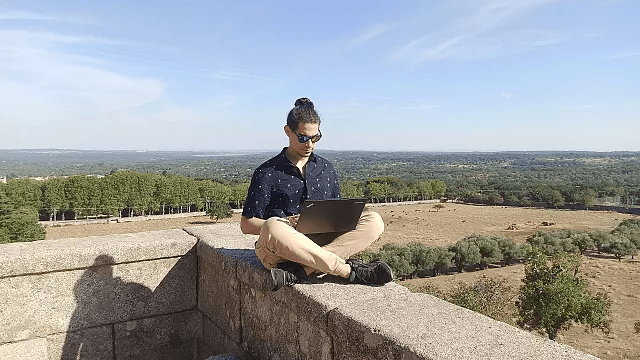
Remote working has been on the rise since the COVID-19 pandemic

Not quite a free stay

There’s a minor condition, if you can even call it that.

“This is not a free holiday,” said Veronica Matta, head of local cultural association Sa Mata.

“[Workers] must have a proven background as a digital nomad and leave a concrete piece of work at the end of their stay – be it a conference, an essay, research paper or documentary.”

She stressed that “professional remote workers from all fields are encouraged to apply: technology, media, finance, real estate, architecture — also artists, writers, musicians, scientists and academics.”

Everyone is welcome as long as they are open to the reciprocal agreement, agreeing to leave behind a “knowledge jolt” that enriches the village culture.

20 Most Visited Countries by Digital Nomads in 2023

This blog originally appeared at MAPPR.

The ascent of digital nomadism in the wake of the COVID-19 pandemic has been nothing short of remarkable. A growing number of individuals worldwide now have the flexibility to work remotely and explore the globe, and certain destinations are particularly well-suited for this lifestyle.

In this article, we’ll delve into the 20 countries that have become top destinations for digital nomads in 2023, based on findings from a recent survey. These countries are frequently chosen for their cultural and geographical appeal, pleasant climates, and the presence of conveniences that support remote work, such as high-speed internet connectivity and coworking facilities.

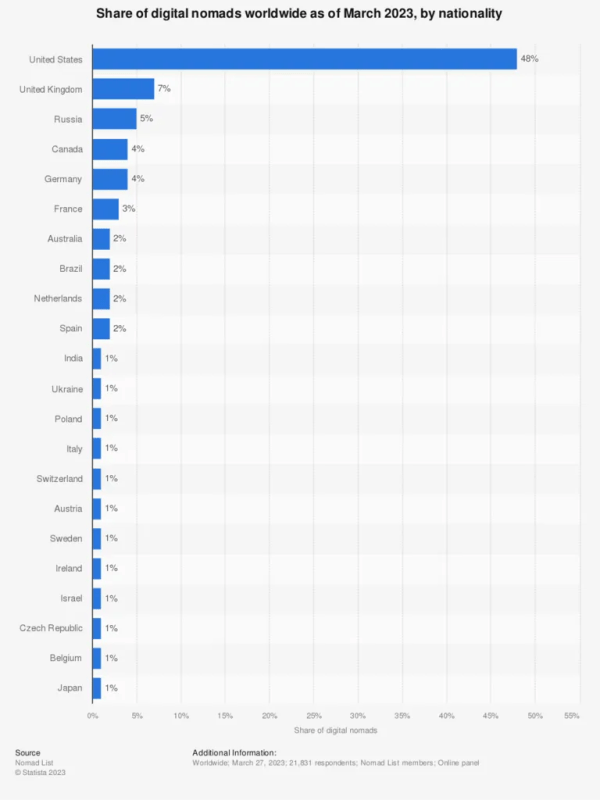
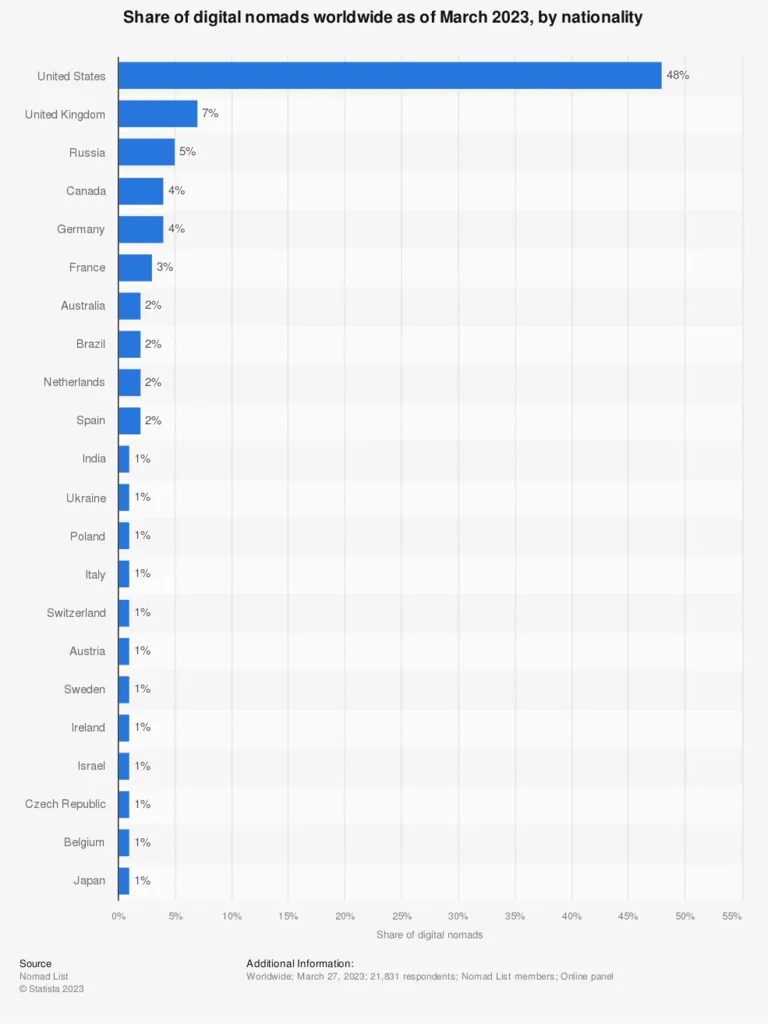
Initially, let’s examine the countries of origin for the majority of digital nomads, as depicted in the table below. Subsequently, we’ll explore the most frequented countries and cities by digital nomads in 2023.

Where are digital nomads from?

The Most Visited Countries by Digital Nomads

20. Poland


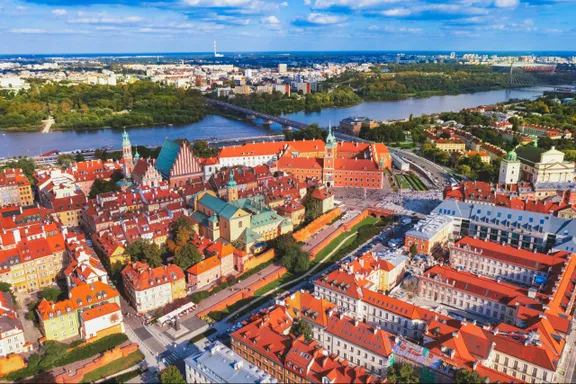
Poland boasts medieval architecture, a multifaceted history, delectable dishes such as kielbasa and pierogies, and the distinction of hosting the world’s largest castle. When coupled with its relatively affordable cost of living compared to other European countries, it’s no surprise that Poland ranks among the top destinations for digital nomads.

Best Digital Nomad Cities in Poland

Warsaw

As the capital and largest city of Poland, Warsaw stands out as a prime destination for digital nomads in the country. Many digital nomads highlight its advantages, including safety, walkability, and high-speed internet access.

Krakow

Krakow, Poland’s second-largest city and one of its oldest, is another popular destination among digital nomads. While the city may not be the most female or LGBTQ-friendly in Europe, nomads appreciate its walkability, relative safety, and abundance of coworking spaces.

19. Turkey

Turkey’s geographical location, bridging the continents of Europe and Asia, adds to its unique and attractive appeal for various types of travelers. This multifaceted country is part of both the Black Sea and Mediterranean regions and boasts a rich history shaped by numerous civilizations and empires.

Best Digital Nomad Cities in Turkey

Istanbul

Formerly known as Constantinople, Istanbul occupies a unique position astride the Bosphorus Strait, serving as a bridge between Europe and Asia. This city stands apart from any other in the world, offering a plethora of activities such as sunset cruises along the Bosphorus, visits to iconic landmarks like the Hagia Sophia, and tantalizing Turkish food tours that provide endless opportunities for exploration and enjoyment.

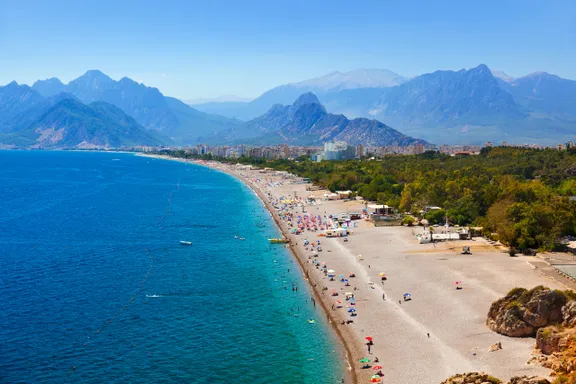
Antalya

For digital nomads seeking a sun-soaked coastal escape with less urban hustle and bustle, Antalya in Turkey is a top contender. What makes this city particularly enticing are its vibrant atmosphere, proximity to beautiful beaches, and welcoming attitude towards foreigners.

18. Colombia

Colombia, the first South American country on this list, offers a harmonious fusion of natural splendor, vibrant culture, and bustling urban centers. It boasts the title of one of the world’s most biodiverse nations, is the birthplace of cumbia music and dance, and houses thriving tech hubs like Medellín.

Best Digital Nomad Cities in Colombia

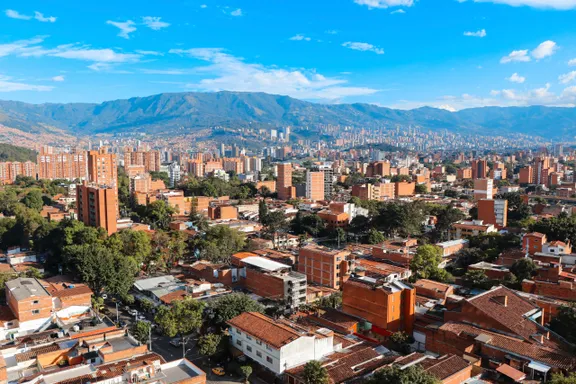
Medellín

Medellín, a city in Colombia, enjoys a well-deserved reputation among digital nomads as a must-visit destination in South America. Dubbed the “City of Eternal Spring” due to its consistently delightful weather, it offers an enticing blend of affordable living costs and numerous work-friendly spaces, making it a top choice for digital nomads.

Bogotá

Bogotá, the capital of Colombia, sits at an impressive elevation of 2,640 meters (8,660 ft) above sea level. Renowned for its historical importance, vibrant arts and culinary scenes, and budget-friendly cost of living, it remains a cherished destination for digital nomads in Colombia.

17. Australia

Certainly, Australia might have its share of perilous wildlife, but it’s equally famous for its endearing kangaroos, koalas, and wombats. This Oceania nation holds the 17th spot among countries frequented by digital nomads in 2023. Let’s explore the top cities to visit in Australia.

Best Digital Nomad Cities in Australia

Melbourne

Melbourne, a sprawling metropolis situated in the Australian state of Victoria, boasts a reputation for its temperate climate, vibrant culinary landscape, and its role as host to numerous sporting events. Digital nomads are drawn to Melbourne for its safety, lively nightlife, and abundant workspaces.

Sydney

The Sydney Opera House, an iconic architectural masterpiece, is globally renowned, and the city’s pristine beaches are a major draw. Sydney appeals to digital nomads with its pleasant climate, widespread availability of free Wi-Fi, and its LGBTQ-friendly atmosphere.

16. Vietnam

Vietnam, one of the world’s ancient nations, is highly favored by digital nomads. This Southeast Asian country boasts an incredibly affordable cost of living, stunning jungle and coastal scenery, and one of the most adored cuisines worldwide.

Best Digital Nomad Cities in Vietnam

Da Nang

Da Nang, situated along Vietnam’s South Central Coast and renowned for its extensive sandy beaches and close proximity to the tourist hub of Hoi An, is a city highly favored by digital nomads. Its appeal lies in its safety, affordable cost of living, and welcoming atmosphere for foreigners.

Phu Quoc

Phu Quoc, an island situated near the southern tip of Vietnam renowned for its fish sauce, is also an exquisite tropical destination with an affordable cost of living. Despite not offering the best internet connectivity or a plethora of workspaces, digital nomads find this location highly enjoyable.

Click here to see full blog: https://www.mappr.co/most-visited-countries-digital-nomads/

Blog at WordPress.com.

Up ↑