Life for LGBTQ+ people has gotten worse since Donald Trump was elected for a second term — and they’re been forced to make major changes to protect themselves.
Since the November election, the majority (57 percent) of LGBTQ+ people — including 84 percent of transgender and nonbinary people — have made significant life decisions, according to a new report from the Movement Advancement Project. This includes considering or actually moving to a different state, considering or actually finding a different job, attempting to update legal name or gender markers on identity documents, and crossing state lines to receive medical care.
While nearly half of all trans people (43 percent) and one quarter of all LGBTQ+ people (25 percent) have considered moving to a different state, only 9 percent of trans people and 5 percent of all LGBTQ+ people report they’ve actually moved since November.
Part of what is forcing their hands is the increased discrimination and violence against queer people, as 60 percent of LGBTQ+ people, including 82 percent of trans and nonbinary people, report that they or an immediate family member have had at least one negative experience related to being LGBTQ+ since the November, 2024 election.
Trans respondents reported these experiences nearly twice as often as all LGBTQ+ respondents, with 56 percent saying they or an immediate family member have been discriminated against due to being LGBTQ+, and 53 percent saying they have been harassed online.
Six in 10 LGBTQ+ people say they are worried about the impacts of Trump’s anti-LGBTQ+ policies on them or their families. For trans people, the number is nine in 10. Trans people are also significantly more likely to say they are “very worried,” with 60 percent agreeing compared to 36 percent of all LGBTQ+ people.
“As political attacks on LGBTQ people by federal, state, and local governments continue into the future, it is likely that these impacts will only accumulate,” the report concludes. “While the survey illustrates some of the many ways LGBTQ people are taking action to protect not only themselves but also their broader community, it is vital that people beyond LGBTQ people join in these efforts to protect their LGBTQ neighbors, friends, and family members, and to stop the ongoing attacks on LGBTQ people.”
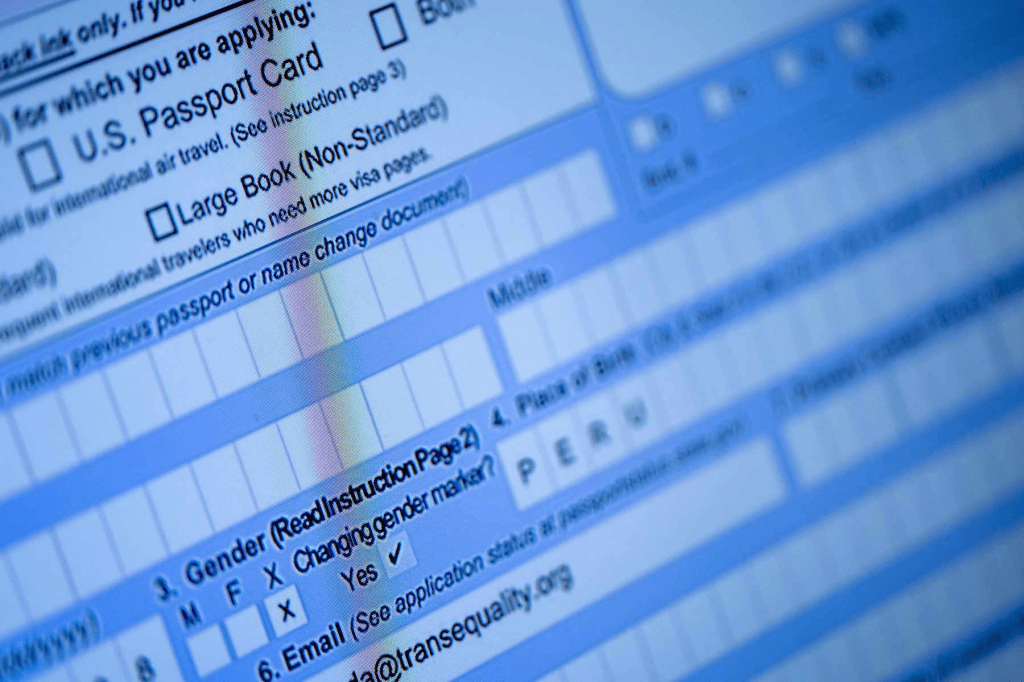
U.S. District Judge Julia E. Kobick has issued a partial preliminary injunction against the Trump administration’s executive order barring trans people from changing the gender markers on their passports.
Kobick’s decision mandates that six of seven trans and nonbinary plaintiffs in a lawsuit filed by the American Civil Liberties Union (ACLU) receive passports that accurately reflect their gender identities. This includes allowing an X marker for those who do not identify as male or female.
“The Executive Order and the Passport Policy on their face classify passport applicants on the basis of sex and thus must be reviewed under intermediate judicial scrutiny,” Kobick stated, as reported by the Associated Press. “That standard requires the government to demonstrate that its actions are substantially related to an important governmental interest. The government has failed to meet this standard.”
She agreed that the plaintiffs could successfully prove the administration’s order is “based on irrational prejudice toward transgender Americans,” is “arbitrary and capricious,” and “was not adopted in compliance with the procedures required by the Paperwork Reduction Act and Administrative Procedure Act.”
“This ruling affirms the inherent dignity of our clients, acknowledging the immediate and profound negative impact that the Trump administration’s passport policy would have on their ability to travel for work, school, and family,” said Jessie Rossman, legal director at ACLU of Massachusetts, in a statement. “By forcing people to carry documents that directly contradict their identities, the Trump administration is attacking the very foundations of our right to privacy and the freedom to be ourselves. We will continue to fight to rescind this unlawful policy for everyone so that no one is placed in this untenable and unsafe position.”
The ACLU also plans to file a motion requesting Kobick’s decision apply to all trans and nonbinary people across the country.
“This decision is a critical victory against discrimination and for equal justice under the law,” said Li Nowlin-Sohl, senior staff attorney for the ACLU’s LGBTQ & HIV Project. “But it’s also a historic win in the fight against this administration’s efforts to drive transgender people out of public life. The State Department’s policy is a baseless barrier for transgender and intersex Americans and denies them the dignity we all deserve. We will do everything we can to ensure this order is extended to everyone affected by the administration’s misguided and unconstitutional policy so that we all have the freedom to be ourselves.”
The ACLU filed Orr v. Trumpin February after the president signed an executive order declaring that there were only two immutable genders: male and female. Afterward, Secretary of State Marco Rubio ordered that all passport applications requesting an “X” gender marker be suspended, as well as any applications listing a person’s gender identity rather than the sex they were assigned.
“I thought that 18 years after transitioning, I would be able to live my life in safety and ease,” trans man and plaintiff Reid Solomon-Lane said in a statement when the lawsuit was filed. “Now, as a married father of three, Trump’s executive order and the ensuing passport policy have threatened that life of safety and ease. If my passport were to reflect a sex designation that is inconsistent with who I am, I would be forcibly outed every time I used my passport for travel or identification, causing potential harm to my safety and my family’s safety.”
The lawsuit argues the passport policy is a violation of the Constitution’s Equal Protection and Due Process clauses and is also a violation of the First Amendment by compelling speech from trans, nonbinary, and intersex passport holders.
The Trump administration has argued the policy will not harm anyone.
“Some Plaintiffs additionally allege that having inconsistent identification documents will heighten the risk that an official will discover that they are transgender,” the Justice Department said. “But the Department is not responsible for Plaintiffs’ choice to change their sex designation for state documents but not their passport.”
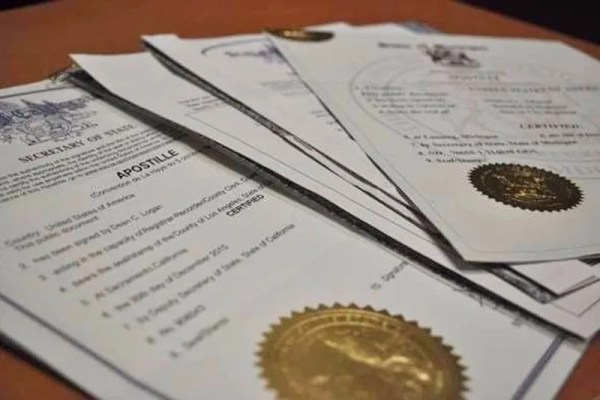
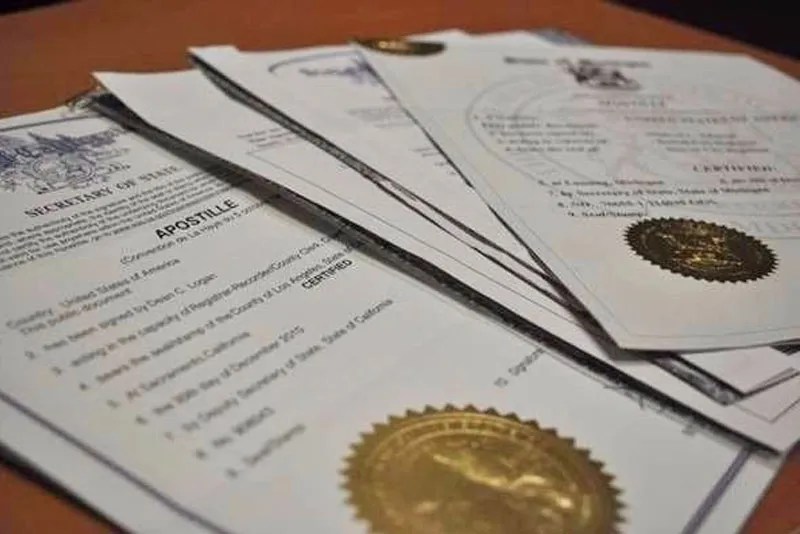
Moving overseas is a whirlwind of logistics, from packing boxes to visa applications. Amidst the chaos, you might encounter a term that sounds like a fancy pastry: “apostille.” But it’s far from edible; it’s a crucial authentication for your documents. So, when exactly do you need an apostille stamp for your international move?
The simple answer: whenever you need to prove the authenticity of a public document issued in one country for use in another country that is a member of the Hague Apostille Convention. This convention streamlines the legalization process, making it easier for documents to be recognized internationally.
Think of it as a global stamp of approval. But what kinds of documents might require this stamp when you’re relocating?
Common Documents Needing an Apostille:
Birth Certificates: Essential for proving your identity and family relationships, especially when registering children in a new country or applying for residency.
Marriage Certificates: Necessary for legal recognition of your marriage abroad, especially for visa applications or property purchases.
Divorce Decrees: Required for legal recognition of your marital status in your new country.
Educational Documents (Diplomas, Transcripts): Often needed for employment or further education in your destination country.
Background Checks/Police Clearances: Frequently requested for visa applications or employment.
Power of Attorney: If you’re authorizing someone to act on your behalf in your home country while you’re abroad, an apostille is vital.
Business Documents: If you’re relocating your business or starting a new one, articles of incorporation, certificates of good standing, and other business-related documents might require an apostille.
Why is an Apostille Necessary?
Foreign governments need assurance that your documents are genuine. An apostille confirms that the signature, seal, or stamp on the document is authentic and was issued by a competent authority. Without it, your documents might be rejected, delaying your move or hindering your ability to access essential services.
The Process:
The process of obtaining an apostille varies by country and even by state within the US. Typically, you’ll need to:
Identify the issuing authority: Determine which government agency issued the document (e.g., state registrar for birth certificates, secretary of state for business documents).
Obtain a certified copy: Ensure you have a certified copy of the original document.
Submit the document to the designated authority: In the US, this is usually the Secretary of State’s office.
Pay the required fee: Apostille services usually involve a fee.
Planning Ahead is Key:
Don’t wait until the last minute to obtain your apostilles. The process can take time, and delays can disrupt your moving plans. Research the specific requirements of your destination country and start the process well in advance.
By understanding when and why you need an apostille, you can navigate the bureaucratic hurdles of moving overseas with greater ease, ensuring your documents are recognized and accepted in your new home.
*We are providing this as information only. Please consult an attorney and/or government officials for more detailed information on when this may be necessary.
The State Department is no longer issuing U.S. passports with “X” gender markers and has suspended processing all applications from Americans seeking to update their passports with a new gender marker. This suspension, made in response to President Donald Trump’s executive order signaling his administration’s opposition to gender diversity, affects all transgender and nonbinary Americans, including those currently traveling or overseas.
The agency says that it will issue guidance on previously issued passports with an “X” marker and that more information will be available on its travel website. However, no formal policy has been released, which is fueling confusion among trans and nonbinary people trying to update their documents.
That includes Ash Lazarus Orr, a trans activist living in West Virginia. Orr applied to update their name and gender marker on their passport on January 16 — days before Trump was sworn into office.He paid $300 for expedited service, but his paperwork wasn’t processed until January 22. When Orr called the agency’s hotline for Americans waiting on passports who have upcoming international travel, they were told that the agency had no guidance to offer and that their documents had been “set aside.”
Now Orr is without his passport, without his birth certificate and without his marriage license. Over the phone, he was told that his documents are being held in San Francisco, where they were originally being processed.
“They have my documentation that is very personal to me, and they cannot tell me if I’m going to be getting that back,” they said.
The American Civil Liberties Union has warned trans and nonbinary Americans that if they submit a new application to change the gender marker on their passport, they risk losing access to their passport and supporting documents while their application is being processed. An ACLU spokesperson attributed this information to reports of discrimination received through the organization’s online intake form, as well as direct conversations with people who have described this happening to them.
Trump’s executive order directed federal agencies to require that government-issued identification documents, including passports and visas, reflect sex assigned at birth. Since this order states that it is the policy of the United States to recognize two sexes, male and female, and that these sexes are not changeable, “the department’s issuance of U.S. passports will reflect the individual’s biological sex,” an agency spokesperson said in an emailed statement on Friday evening. Under Trump’s executive order, “sex” explicitly excludes gender identity.
Secretary of State Marco Rubio reportedly instructed agency staff on Thursday to implement that executive order as it pertains to passports immediately, as first reported by The Guardian and The Intercept.Now, Orr is without his personal identity documents six weeks before pre-planned international travel and in the middle of planning a move out of West Virginia.
The Biden administration made it easier for trans and nonbinary people to update their federal identity documents. Accurate and consistent gender markers on identity documents dramatically reduces the risk that trans people will face violence, harassment and discrimination, according to the Movement Advancement Project, which tracks LGBTQ+ policy.
The dismantling of this policy has radical consequences, said a former State Department official who spoke on condition of anonymity due to fear of lingering retaliation from the agency under the Trump administration. Not only does it force transgender people to carry identity documents that don’t accurately reflect their identity, this move also signals globally that U.S. policy on trans rights is moving backward, they said.
“The confusion that this decision creates is intentional. It is designed to make things harder for trans and nonbinary people,” they said.
When The 19th called the National Passport Information Center on January 23 to ask for more information, an employee on the technical support desk said that the State Department is aware of Trump’s executive order and that guidance will be posted online once information is available.
Erin Ryan Heyneman, a nonbinary person living in Massachusetts, called that same hotline. They don’t need to renew their passport; they said they just wanted to find out what was going on. Although they feel safe in their state, which has nondiscrimination protections in place for LGBTQ+ people, they still felt the need to act because of the way confusion can endanger their wider community.
“People just really don’t know who to believe or what to believe,” they said. More LGBTQ+ people need to seek information from trusted sources, they said. But when trying to seek that information from an official source, Heyneman was met with more uncertainty. The employee on the phone was sympathetic, but they had no information about passports being confiscated.
As Orr waits to learn whether they will get their passport back due to federal anti-trans policies, they are facing down the prospect of leaving their home because of transphobia within the state.
West Virginia has become increasingly hostile to trans and nonbinary people like himself amid a surge in anti-trans rhetoric across the country, and Orr expects a surge in state anti-trans bills introduced in West Virginia’s next legislative session. After receiving death threats and recently being attacked inside a men’s bathroom, he doesn’t leave the house without his spouse.
“I can’t stay in the state. And it’s heartbreaking, because I love it here. I love the people, but it is truly, at this point in time, it’s either I leave or I die,” they said.




 fleeredstates.blog
You must be logged in to post a comment.