The summer of 1985, I turned 16. In Belgium. While I lived primarily in rural, red Florida, summers sometimes had me staying with Dad’s family. At the time, my Army father was assigned to the American embassy in Brussels. With $100 in American Express “travelers’ cheques,” our go-to global currency of the time, it was a thrilling summer.
In Florida, I would’ve spent those months mopping floors or working the grill at a mall job. Instead, I had urban mass transit and could drink in bars. Granted, my Euro ’80s summer was more Depeche Mode than anything as explicit as Call Me By Your Name. Though virginal, at least I passed for something seedier one afternoon.
On a gray August Sunday, I was to meet my pal, Alex. Forget texting, as we didn’t even have email yet. Phone tag was possible, but nobody wanted to leave a message with somebody’s parents. We’d usually just make a vague plan in person. Probably, the previous Friday, it was, “Let’s meet by Rainbow Sunday round 4.” Ironic that a bar in 1985 could be called “Rainbow,” yet have no LGBTQ connection whatsoever. It was, loosely, an American-themed bar, popular with the small cohort of American teens in the city.
As I stood outside in whatever place of Brussels was near Rainbow, I did not know I was to be stood up. In what I thought was my coolest new piece of clothing, a plaid blue-and-white sport coat I’d bought in a cheap-chic bin in Italy, I waited. I checked my Swatch as the minutes passed. At least an hour went by before two Brussels police officers approached me. They wanted to see my “papers.” This was a new experience. The two suspicious policemen were asking me questions in French, which I did my best to translate. Was I meeting someone? Where did I live? How long had I been waiting? It seemed rather invasive, but they were cops, and I was 16.
Back home, my dad told me bluntly that the cops obviously thought I was a sex worker. I knew that new coat looked hot! Then again, the only attention I got was from the police. Ouch.
A few weeks later, I told this story to my mom. Her own upbringing took her from Baltimore to Switzerland to Brazil. With that background, she rather patriotically told me that being asked for your “papers” was relatively common outside of the U.S. We Americans, she opined, were used to a degree of anti-authoritarian freedom not found elsewhere. So, “land of the free” was more than jingoistic marketing? Great!
While I’d never been asked for my papers in my home country, I’m not sure I’d ever perceived it as free as my mother had. Sure, there were plenty of scary Soviet stories during the Cold War, the nightmare of the Khmer Rouge my father had seen firsthand…. But I was familiar with Reagan’s arguably racist drug war, kid-glove approach to Apartheid, and support for dictators like Augusto Pinochet and Ferdinand Marcos. At 16, I was definitely more cynical than my mother.
Sadly, today I have more reason than ever to be. Though I guess it’s not cynicism so much as disgust, anger, and resistance to our government’s new police state. A few years ago, I interviewed a man, Butch Merritt, who told tales of working clandestinely for Nixon’s citizen-surveillance machine. I was shocked when he recalled scooping up protest petitions and sign-up sheets from shops and venues around Dupont Circle, which he’d turn over to his FBI or police handlers.
The tools the federal government — along with several other governments around the world — is setting on America makes stealing a petition from Community Bookshop on P Street seem quaint. Hello, Facial-Recognition Technology.
Sure, so many of us use facial recognition to get into our phones and think nothing of it. It did not seem so innocent, however, when Hungary’s authoritarian government passed a law in March allowing it to use the tech to identify anyone who dared to show their face, literally, at Budapest Pride this year. At least Pride-goers threw that threat back in the horrible government’s face, with attendance hitting more than 100,000.
It is a very short line from Budapest to the “Ballroom,” considering the current regime of Viktor Orbán is celebrated in Trump World. The administration’s attacks on universities, media, and law firms reek of Orbán.
So, while I’m shocked to learn that ICE and its adjacent goons have rolled out handheld facial recognition tech across the country, to what is likely an unprecedented level, I’d be embarrassingly naive to be surprised.
Rep. Bennie Thompson (D-Miss.), a veteran of the civil rights movement and ranking member of the House Homeland Security Committee, last month told 404 Media, as reported by Common Dreams, “ICE using a mobile biometrics app in ways its developers at CBP never intended or tested is a frightening, repugnant, and unconstitutional attack on Americans’ rights and freedoms.” Amen.
Now that Trump has issued National Security Presidential Memorandum 7, we are all suspects. “There are common recurrent motivations and indicia uniting this pattern of violent and terroristic activities under the umbrella of self-described ‘anti-fascism,’” reads NSPM-7, in part. “Common threads animating this violent conduct include anti-Americanism, anti-capitalism, and anti-Christianity; support for the overthrow of the United States Government; extremism on migration, race, and gender; and hostility towards those who hold traditional American views on family, religion, and morality.”
Are my views on gender “extreme”? Am I “hostile” toward systems that have long been used to oppress me? Are you? Who knows? Who defines these vague, subjective terms? I’m guessing it’s the folks who have decided to throw facial-recognition tech into the surveillance mix, with little, if any, legal restraint. The use of this technology is apparently new enough, that no one has bothered to set down laws to restrain it. Instead, we have protocols and suggestions as the only limits on an administration that delights in destroying whatever stands in its way.
COVID has waned, but this new Big Brother era may soon have us all masking up again for our personal safety, whether for Pride or protests.
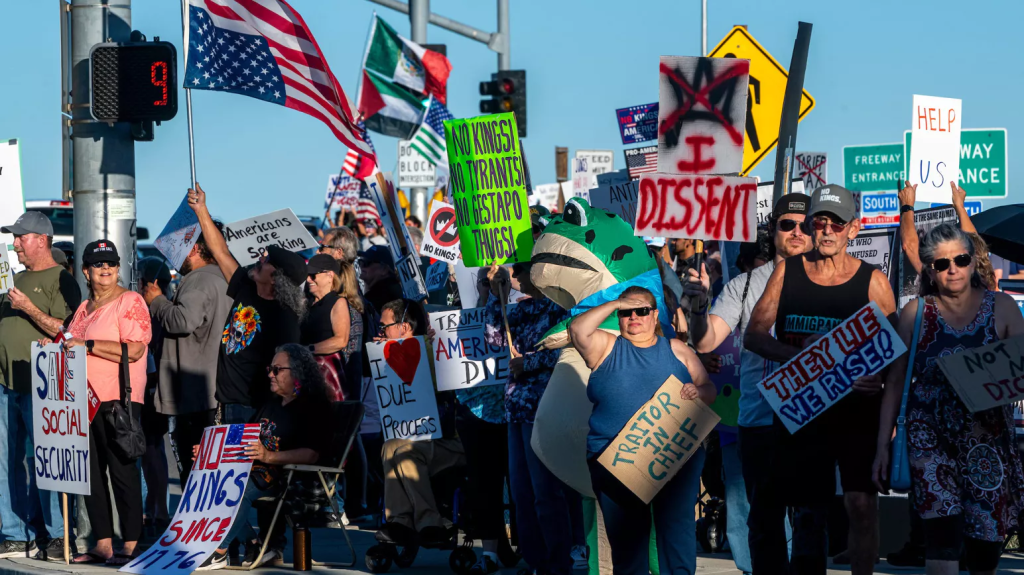
“Hey hey, ho ho, Donald Trump has got to go,” protestors chanted in the middle of Times Square, among a sea of signs that read “love reigns not kings,” “gays against faux-king Trump,” “we stand with … our trans family,” and “the future is coming.”
On Saturday, independent analysts estimated that the No Kings March drew between 5 and 8 million people, and organizers say over 7 million people attended 2,700 events across all 50 states. The event, which was organized to push against the rise of authoritarianism in the U.S., was the largest single-day protest in America since 1970.
Among the crowd were countless LGBTQ people, fighting back against an administration that has introduced a litany of anti-LGBTQ executive orders and used vile rhetoric to denigrate queer people. This backsliding of LGBTQ rights, according to experts, has a deep connection to authoritarianism, with research showing that when governments weaken protections for queer and trans people, they often turn to broader democratic institutions next.
“Threats to democratic institutions and threats to LGBTQ rights are mutually reinforcing, generating a vicious cycle that strengthens authoritarian control,” Ari Shaw, director of International Programs at the Williams Institute, told Uncloseted Media. “Increased persecution of minority groups, including LGBTI people, is itself evidence of democratic backsliding by indicating the erosion of liberal democratic norms [meant to protect] minority rights.”
Legal Abuse of Power
One of the ways the Trump administration’s abuse of power has been most evident is through its legal actions.
He’s also slashed HIV funding at a staggering rate. Uncloseted Media estimates that the National Institutes of Health has terminated more than $1 billion worth of grants to HIV-related research, including 71% of all global HIV grants.
It was these cuts that prompted Brooklynite Jeffrey Cipriano to turn out to protest. “The specific reason that I’m protesting is actually on the shirt I’m wearing,” says Cipriano, referring to his red “This is what an HIV advocate looks like” t-shirt.
“My best friend works for an organization called AIDS United. … His job is to travel the country and help people get AIDS medication, specifically trans and unhoused community members. But his job is at risk,” he says. “The end outcome of his work is that people who have issues in their lives have the issues resolved, and that’s going away under the current administration.”
Executive orders are based on powers granted to the president by the U.S. Constitution or by Congressional statutes. The president cannot use an executive order to create new laws or spend money unless Congress has authorized it. They are meant to direct how existing laws are implemented. But Trump has ignored democratic norms, often filling agencies with loyal supporters, using orders to go after political opponents, and pushing the limits of what the law allows.
In some cases, he has moved illegally. “The President is directing various executive branch officials to adopt policy that has either not yet been adopted by Congress or is in violation of existing statutory law,” says Jodi Short, professor of law at UC Law San Francisco. “The analogy to a king and what has troubled many about this presidency is the sheer consolidation of executive branch power in one individual.”
Short’s colleague, Dave Owen, agrees. “Illegality has been rampant,” he told Uncloseted Media in an email. “People are often cynical about the government, and they might think what Trump’s doing is nothing new. But most of the time, the executive branch takes the law seriously, and both legal constraints and norms of good governance matter,” he wrote. He says that through history, there’s been “a lot more integrity and a lot less lawlessness than most people realize.”
“This administration has broken with those traditions,” he adds.
Revolt Against Executive Orders
Many Americans have recognized this. A survey from April found that 85% of Americans agreed or strongly agreed that the president should obey federal court rulings even if he doesn’t like them.
In response to Trump’s overreach, more than 460 legal challenges have been filed across the country challenging his executive actions. One of these is a federal lawsuit by Lambda Legal and the Human Rights Campaign Foundation that challenges the constitutionality of the Trump administration’s ban on military service by transgender people. Another lawsuit challenges Trump’s order directing federal agencies to withhold funds from medical providers and institutions that provide gender-affirming medical treatments for people under 19.
Both of those lawsuits are one reason 17-year-old Zoe Boik came out to protest with her friends and her dad. “Obviously, I’m disappointed and kind of helpless because there’s nothing I can directly do to change or impact anything that’s going on,” says Boik, who identifies as pansexual and gender fluid and is not legally allowed to vote.
Boik—who was seven years old when Trump announced his run for presidency in 2015—says she’s doing a research paper on Trump’s trans military ban and is frustrated because she sees it as inexplicable discrimination. “They’re not letting trans people serve… which doesn’t make any sense.”
LGBTQ Rights and Democratic Backsliding
This type of blatant discrimination is often a key sign of a country moving closer to authoritarianism and away from democracy. According to a 2023 research paper by Shaw and his colleagues, anti-LGBTQ stigma may contribute “to the erosion of democratic norms and institutions.”
The paper found that when a country with relatively high acceptance of LGBTQ rights introduces anti-LGBTQ legislation, it clashes with what most people believe and can weaken public trust in democracy, deepen political divides, and make it easier for populist or extremist movements to gain power.
“The level of acceptance of LGBTQ people is closely associated with the strength of democracy in a country,” Shaw says. “In some cases, we even saw that rising anti-LGBTQ rhetoric or policies preceded a broader decline in democracy.”
In Brazil, for example, early democratic gains coincided with rising LGBTQ acceptance, including legal recognition of same-sex unions and workplace protections. But as populist President Jair Bolsonaro came into power in 2019, he began questioning—without evidence—the security of Brazil’s voting systems, saying he would only lose his re-election campaign if there were fraud. He was also accused of trying to intervene in operations held by the Federal Police about the alleged criminal conduct of his sons, and he told his ministers that he had the power and he would interfere—without exception—in all cabinet ministries. At the same time, LGBTQ protections were rolled back, and schools and civil society faced censorship, suggesting that falling LGBTQ acceptance may have “preceded Brazil’s democratic erosion,” according to Shaw’s paper. In September of this year, Bolsonaro was sentenced to 27 years in prison for plotting a military coup.
Another example is Poland’s democracy weakening since 2015 under the Law and Justice Party, which consolidated power by undermining the Constitutional Tribunal, installing loyal judges, and restricting independent media. Anti-LGBTQ rhetoric became central to the party’s nationalist platform, fueling the creation of nearly 100 “LGBT ideology-free zones,” inciting violence against LGBTQ individuals, and stymying legal recourse through politicized courts.
When it comes to LGBTQ rights, Trump has mimicked the moves of these leaders even though most of his constituents don’t want it: A 2022 survey from the Public Religion Research Institute found that 80% of Americans favor laws that would protect LGBTQ people against discrimination.
“The definition of an authoritarian system is a system where power is consolidated in one individual whose power is unchecked by any other institution. And I fear that in certain domains, that’s the direction in which this administration is trying to move us,” says Short. “I think it’s incredibly dangerous.”
Attacks on Higher Education
Another common tool in the authoritarian playbook is attacking higher education.
While many universities are rejecting Trump’s demands, others are experiencing a chilling effect, changing their policies before the administration tries to hold up funds.
“I’m here because I’m angry and I feel that we aren’t angry enough,” Maddy Everlith, a sophomore gender studies major at Pace University, told Uncloseted Media as she marched with her friends. “Being a woman of color in America and having so many intersectional identities is also what affects me.… I want to stand up and advocate for other people.”
Everlith’s university responded to Trump’s threats in September by renaming its DEI office to the “Division of Opportunity and Institutional Excellence.”
“I am beyond horrified how quickly our university was willing to bend the knee on this decision,” Austin Chappelle, a senior at Pace, told the student newspaper. This change comes in the midst of uncertainty under the Trump administration, which has already caused many LGBTQ students to feel uneasy on campus.
“It’s part of an electoral strategy to try to mobilize right-wing voters to distract from other sorts of political or economic scandals,” Shaw says, adding that this tactic is another way to gain power.
The pain of this rhetoric has affected millions of trans Americans and allies alike, including Lars Kindem, a 64-year-old retired pilot from Minnesota who was marching to support his transgender sister.
“What Trump has done is he’s taken people that haven’t done anything wrong and has turned them into scapegoats,” he says, adding that Trump’s language is “hateful, petty, mean, and hurtful.”
He says his sister and her partner are having issues getting the correct gender markers issued on their passports. Because of the Trump administration’s treatment of the community, they are making plans to move to Denmark, where “there’s a lot more acceptance.”
Christian Nationalism
This scapegoating has played into the hands of Trump’s voter base of white evangelical Protestants, the only major Christian denomination in the U.S. in which a majority believes society has gone too far in accepting transgender people.
Since 2020, Trump has increasingly embraced Christian nationalism in his rhetoric and imagery. He’s sold Bibles, created a federal task force on anti-Christian bias, and been intrinsically linked to Project 2025, the 920-page plan calling for the establishment of a government imbued with “biblical principles” and run by a president who holds sweeping executive powers.
Experts say that “a strong authoritarian streak” runs through conservative Christianity. A 2023 study found that supporters of Christian nationalism tend to support obedience to authority and the idea of authoritarian leaders who are willing to break the rules. Nearly half of Christian nationalists support the notion of an authoritarian leader.
“They are trying to use the language of Christianity, but they are abusing it and misusing it constantly,” Rev. Chris Shelton, a gay pastor at the protest, told Uncloseted Media. “Our faith is all about reaching out to the marginalized, reaching out to the people who are ostracized by society and embracing them and offering love and welcome and a sense of dignity and worth. And to see any human being’s worth being denied is just a mockery of our faith.”
Heidi Beirich, the vice president and co-founder of the Global Project Against Hate and Extremism, says that “the LGBTQ community is the prime target of modern authoritarian regimes.”
“For Christian nationalists, attacking LGBTQ rights is the first pillar in destroying civil rights for all. This has happened in countries like Hungary and Poland as authoritarianism consolidated, and now it’s happening here,” Beirich told Uncloseted Media.
Moving Forward
As the country bleeds toward authoritarianism, LGBTQ protestors are encouraging people to use their voice, something the queer community is familiar with doing: One 2012 survey found that queer folks are 20 times more likely to be active in liberal social movements than their straight, cis counterparts.
“It is imperative that people continue to pay attention,” Short says. “There is so much going on, a lot of it is disturbing and intense, and there’s such a strong impulse to look away. But we have to engage in political action and resist inappropriate assertions of authority and continue to show up and vote for our democracy.”
17-year-old Zoe Boik is ready. She remembers being in second grade and crying the day after Trump won his first election in 2016. She couldn’t believe how he could lead the country despite “all the bad things he said.”
Boik can’t wait until the midterm elections, when she will be 18 and finally able to vote. “If we don’t vote, then our voices won’t be heard,” she says.
Despite this, she’s also concerned about her freedom to exercise that right being jeopardized.
“My fears about Trump don’t stem specifically from me being queer, but from his authoritarianism as a whole,” she says. “I am scared about how far he will move into dictatorship, [and] my biggest fear is that our right to vote will be compromised, leaving us no recourse.”
Ugandan officials have expressed support for the incoming U.S. president.
As the results of the U.S. presidential election were revealed on November 5, showing that former President Donald Trump had secured a second term, homophobic political leaders in Uganda celebrated 7,000 miles away, in the capital city of Kampala.
“The sanctions are gone,” said Anita Among, Uganda’s parliamentary speaker, addressing members of parliament. She was referring to her previous U.S. travel ban imposed by the Biden administration on June 16, 2023, after Uganda passed the controversial “Kill The Gays” law on May 28, 2023.
The law, officially named the Anti-Homosexuality Act, was signed into effect by President Yoweri Museveni on May 28, 2023. The legislation imposes life imprisonment for same-sex acts, up to 20 years in prison for “recruitment, promotion, and funding” of same-sex “activities,” and the death penalty for those convicted of “attempted aggravated homosexuality.”
As the results of the U.S. presidential election were revealed on November 5, showing that former President Donald Trump had won a second term, homophobic political leaders celebrated 7,000 miles away in Uganda’s capital, Kampala.
“The sanctions are gone,” said Anita Among, Uganda’s parliamentary speaker, referring to the fact that she had been barred from entering the U.S. by the Biden administration on June 16, 2023, following Uganda’s passage of the “Kill The Gays” law on May 28, 2023.
The law, officially called the Anti-Homosexuality Act, was signed into law by President Yoweri Museveni on May 28, 2023. It mandates life imprisonment for same-sex acts, up to 20 years in prison for the “recruitment, promotion, and funding” of same-sex “activities,” and the death penalty for those convicted of “attempted aggravated homosexuality.”
On May 8, Among declared that the law’s enactment proved “the Western world will not come and rule Uganda.” The following day, she tweeted: “The president … has assented to the Anti-Homosexuality Act. As the parliament of Uganda, we have answered the cries of our people. We have legislated to protect the sanctity of [the] family. We have stood strong to defend our culture and [the] aspirations of our people,” thanking Museveni for his “steadfast action in the interest of Uganda.”
Among further stated that Ugandan MPs had resisted pressure from “bullies and doomsday conspiracy theorists” and urged the country’s courts to enforce the new law. The passage of this bill, along with Among’s and other African homophobes’ celebrations of Trump’s re-election, indicates the likely direction for Africa’s LGBTQ+ community over the next four years.
For years, political and religious leaders across Africa, including both Christian and Muslim zealots, have exploited homophobia to consolidate political and religious power. They claim that same-sex relations and gay rights are foreign imports from the West and use homophobia to position themselves as defenders of African values. By stoking fear and division, they galvanize popular support and votes.
However, as others have pointed out, homophobia itself is a Western import, rooted in colonial history. From sodomy laws inherited from colonial rule to the parliaments passing these laws today, the tools used by homophobes in Uganda and elsewhere in Africa are themselves colonial legacies.
And homophobia in Africa is intensifying.
In mid-March 2023, Museveni told the Monitor newspaper that “Western countries should stop wasting the time of humanity by imposing their social practices on us.” Kenyan President William Ruto echoed these sentiments in the same month, declaring that “our culture and religion does not allow same-sex marriages.”
On April 2, 2023, Museveni called on African leaders to reject “the promotion of homosexuality,” claiming that homosexuality posed a “big threat and danger to the procreation of the human race.” He further asserted that “Africa should provide the lead to save the world from this degeneration and decadence, which is really very dangerous for humanity.”
On December 29, 2023, Burundian President Evariste Ndayishimiye, speaking in Cankuzo province, made a defiant statement that powerful nations “should keep” their aid if it came with an obligation to extend rights to LGBTQ+ people. He added, “If we find these people in Burundi, they should be taken to stadiums and stoned, and doing so would not be a crime.”
In Ghana, lawmakers have been debating the Proper Human Sexual Rights and Ghanaian Family Values Bill, which was introduced in August 2021. Under current law, same-sex relations are punishable by up to three years in prison. However, the new bill criminalizes even identifying as LGBTQ+, outlaws being transgender, and introduces jail sentences of up to 10 years for advocating for LGBTQ+ rights. It also mandates that all citizens report perceived LGBTQ+ individuals or activities to the authorities.
The bill passed in the Ghanaian parliament on February 28, though President Nana Addo Dankwa Akufo-Addo has not yet announced whether he will sign it, pending the outcome of two Supreme Court cases challenging its constitutionality. On July 17, the Supreme Court postponed a ruling on the bill until all legal challenges are resolved.
Former Ghanaian President John Dramani Mahama, a leading candidate in the upcoming elections, expressed his opposition to same-sex marriage and transgender rights. He stated during a meeting with clergy in eastern Ghana, “The faith I have will not allow me to accept a man marrying a man, and a woman marrying a woman.” He also rejected the notion of someone changing their gender, stating, “I don’t believe that anyone can get up and say I feel like a man although I was born a woman and so I will change and become a man.”
In Kenya, opposition parliamentarian Peter Kaluma introduced the Family Protection Bill in February 2023. The bill, which mirrors aspects of Uganda’s law, would impose prison sentences of up to 10 years or even the death penalty for same-sex relations. The bill is currently being reviewed by a parliamentary committee, with a full vote expected soon. President William Ruto, an evangelical Christian, has endorsed this legal crackdown on LGBTQI+ rights.
In Mali, the National Transitional Council, effectively the country’s legislature after a military coup in 2020, approved a new penal code on October 31 that criminalizes same-sex relations by 132 votes to one. The exact penalties for same-sex acts remain unclear, but the Justice and Human Rights Minister, Mamadou Kasogue, confirmed that “anyone who indulges in this practice, or promotes or condones it, will be prosecuted.”
Trump’s foreign policy advisors are already preparing an explicitly anti-LGBTQ+ rights agenda for his second term. The Project 2025 report, crafted under the guidance of the Heritage Foundation, proposes that the U.S. “stop promoting policies birthed in the American culture wars” and cease pressuring African governments to respect human rights, including LGBTQ+ rights, women’s rights, and abortion rights.
The report claims that “African nations are particularly (and reasonably) non-receptive to the US social policies such as abortion and pro-LGBT initiatives,” and suggests that the U.S. should focus on “core security, economic, and human rights engagement” without promoting “divisive policies that hurt shared goals.”
The implementation of this policy shift on LGBTQ+ rights in Africa will be overseen by Trump’s nominee for Secretary of State, Marco Rubio, and his selection for Assistant Secretary of State for African Affairs. They will be tasked with promoting and funding homophobic groups across the continent, a strategy that is expected to be pursued with enthusiasm.
While African leaders claim they are defending the continent from Western influences, they are in fact advancing their own agendas, often in partnership with right-wing Christian nationalists in the West. However, LGBTQ+ communities in both Africa and the West share a common interest in resisting these attacks, and civil society groups, along with human rights advocates, are increasingly active. As LGBTQ+ activist Eric Gilari from Kenya stated, “One day we shall defeat these assaults on our human rights and triumph in equality and inclusion for LGBTQ persons within African countries. This ideal must be our guiding light in this moment of darkness and tears.”
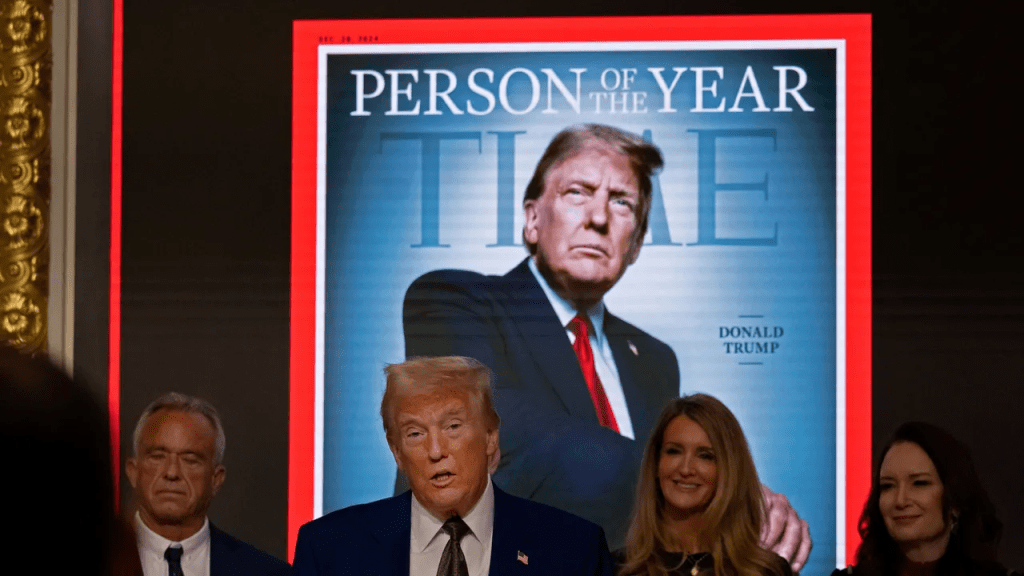
“I want everyone to be treated fairly,” Trump told TIME, apparently without irony.
In an interview with TIME magazine this week, President-elect Donald Trump expressed confusion over the growing attention to transgender issues, stating that he didn’t understand where all the fuss was coming from, but that “we’re all trying to find the guy who did this.”
In a surreal “Person of the Year” interview published Thursday, Trump made a series of false and misleading statements on various topics, including vaccines, immigration, and military policy. When asked about his views on transgender rights and his campaign’s aggressive anti-trans ad campaigns, Trump offered vague responses, emphasizing his desire for “all people [to be] treated fairly.” When the TIME staff reminded him of his 2016 comments supporting equal public bathroom access for trans individuals, Trump avoided the issue, stating he would not “get into the bathroom issue.” He then, somewhat ironically, claimed that the debate had “ripped apart our country.”
“I am a big believer in the Supreme Court, and I’m going to go by their rulings… but we’re talking about a very small number of people, and it gets massive coverage, and it’s not a lot of people,” Trump told TIME.
When asked about his “Kamala is for They/Them” ad campaign, which flooded the U.S. with over $200 million worth of anti-trans attack ads this year, Trump once again sidestepped a direct response. Instead, he portrayed himself as a champion of fairness. “I mean, Trump is definitely for us, okay? And ‘us’ is the vast, vast majority of people in this country. And also, I want to have all people treated fairly. You know, forget about majority or not majority. I want people to be treated well and fairly,” he said.
Trump’s remarks, however, gloss over his prominent role in stoking transphobia for political gain. Both the Republican Party and Trump himself have spent years pushing an increasingly anti-trans agenda, which some experts see as a strategic move to solidify support among evangelical voters. On the campaign trail, Trump decried what he called “transgender insanity” and promised to effectively ban gender-affirming care for trans youth. When asked if he would repeal President Biden’s trans-inclusive changes to Title IX—something he has vowed to do—Trump said he would “look at it very closely.”
Trump also expressed agreement with Delaware Representative-elect Sarah McBride’s statement that Congress should be “focused on more important issues,” as TIME phrased it in their question to the President-elect. McBride, who recently won her election, has reportedly told fellow Democrats that Republican attacks against her—particularly the push by Reps. Nancy Mace and Mike Johnson to restrict Capitol bathrooms based on sex, following her November victory—are mere distractions. She has since stated in a press release that she is “not here to fight about bathrooms.” Reactions from the trans community to McBride’s stance have been mixed, with some telling The Advocate this week that they believe she should be more vocal in opposing such restrictions. The bathroom proposals, if enacted, would primarily affect trans staffers and visitors to the Capitol, as each member of Congress has a private bathroom in their office. Mace has since expanded her proposal to include public parks, government offices outside Capitol Hill, and other public spaces. Them reached out to McBride for comment but did not receive a reply by the time of writing.
Later in the interview, Trump misgendered and spread misinformation about trans athletes, claiming that Americans “don’t want to see a girl get beat up in a boxing ring by a man”—likely referencing boxer Imane Khelif, who is not transgender but was the subject of an anti-trans backlash at this year’s Olympics. Khelif also appeared in an early-November Trump ad. “People don’t want to see, you know, men playing in women’s sports… They don’t want to see all of this transgender [stuff], which is—it’s just taken over,” Trump added.
At various points in the interview, Trump reiterated false claims, including tying vaccines to autism—a debunked conspiracy theory that has nevertheless been endorsed by Robert F. Kennedy Jr., whom Trump has selected as his pick for Secretary of Health and Human Services. He also distanced himself from Project 2025, the Heritage Foundation’s manifesto for his presidency, despite already nominating at least five of its contributors for government positions. Trump told TIME that he disagreed with parts of Project 2025, calling it “inappropriate” that it was published before the election. His own “Agenda47” platform largely mirrors Project 2025, though it notably excludes some of the more controversial elements of the Heritage document, such as a universal ban on pornography.
As with many of Trump’s interviews, it’s unclear whether he truly believes or will act on any of the statements he made to TIME. A 2021 tally by The Washington Post found that Trump made roughly 30,573 false or misleading claims during his first term. Among those, his assertion that he was a “real friend” to LGBTQ+ people might stand out as one of the biggest exaggerations.
The Oklahoma Superintendent of Schools recently spent $25,000 in state funds on Trump Bibles.
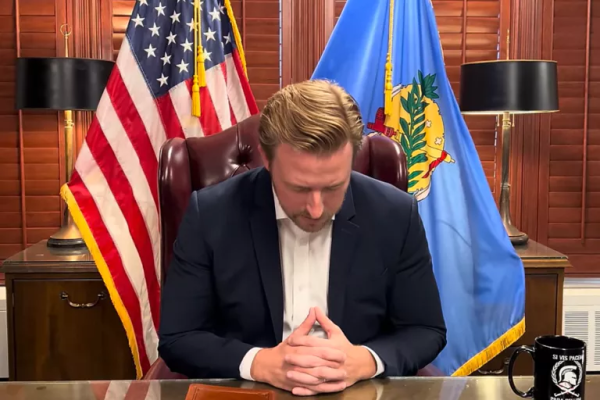
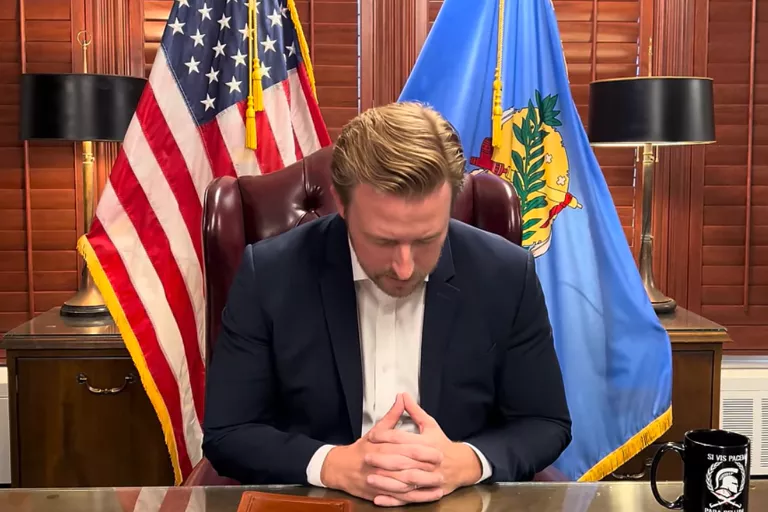
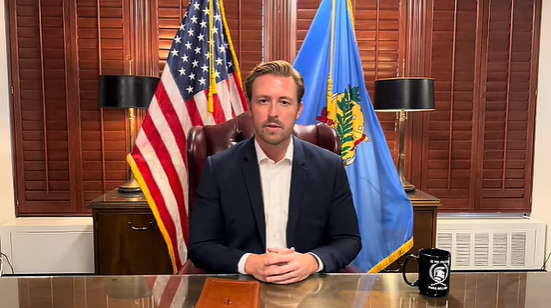
Ryan Walters, the controversial Oklahoma Superintendent of Schools, has directed school districts statewide to show a video of him praying for President-elect Donald Trump. This unusual and politically charged directive, issued amidst a recall effort against Walters, has sparked strong opposition from local school administrators. The video and accompanying order were sent out to schools on Thursday.
At least seven major Oklahoma school districts announced Friday that they will not show a video in which Superintendent Ryan Walters discusses the objectives of his newly established Office of Religious Liberty and Patriotism, concluding with a prayer for former and future President Donald Trump.
The video, which carries a highly partisan tone, criticizes the “radical left” for attacking religious freedom in schools and accuses teacher unions of undermining patriotism.
“We will not tolerate that in any school in Oklahoma,” Walters declares in the video. “We want our students to be patriotic. We want our students to love this country, and we want all students’ religious liberty to be protected.”
The video wraps up with a prayer in which Walters asks for divine guidance for the nation’s leaders and specifically prays for Trump and his team.
“Dear God, thank you for all the blessings you’ve given our country. I pray for our leaders to make the right decisions. I pray in particular for Donald Trump and his team as they continue to bring about change to the country,” Walters says.
Edmond Public Schools Superintendent Angela Grunewald informed parents on Friday that her district will not disrupt its locally approved curriculum to show Walters’ video.
Grunewald emphasized that her district will continue to teach the Oklahoma state standards and the curriculum set by the local school board. “Any changes to that would be based on local decisions,” she said, citing a recent ruling by the Oklahoma Supreme Court that upheld the authority of local school districts to make such decisions.
Similarly, Midwest City-Del City Public Schools Superintendent Rick Cobb told the Oklahoma Voice that his district will not show the video. “We do not believe he has the statutory authority to require us to share this content,” Cobb said.
The Oklahoma Attorney General’s Office supported this stance, declaring the mandate unenforceable. “Not only is this edict unenforceable, it is contrary to parents’ rights, local control, and individual free-exercise rights,” said Attorney General spokesperson Phil Bacharach.
Newly sworn-in Democratic state Sen. Mark Mann, a former member of the Oklahoma City Board of Education, also urged other districts to resist the mandate. “When Oklahoma needs to make gains in reading and math scores, the last thing we need to be doing is pushing the superintendent’s blatant, self-serving political agenda,” Mann remarked.
Walters’ controversial order, which is seen as unenforceable, accompanies his ongoing effort to distribute 55,000 Bibles to Oklahoma schools. On the same day his prayer video was released, Walters posted another video celebrating the arrival of the first 500 Bibles in AP Government classrooms.
Walters’ budget request was specifically aimed at purchasing a version of the Bible known as the “Trump Bible,” which combines the Declaration of Independence, the U.S. Constitution, and the Old and New Testaments into a single Christian nationalist text. The initial purchase of these Bibles amounted to $25,000.
Walters has been mentioned as a potential candidate for Secretary of Education in Trump’s second-term Cabinet. Both Walters and Trump have advocated for the abolition of the U.S. Department of Education.



 fleeredstates.blog
You must be logged in to post a comment.