House Republicans introduced legislation Tuesday to ban transgender girls from participating in girls’ school sports, moving to advance one of the Trump administration’s top priorities.
The measure, titled the Safety and Opportunity for Girls Act, would define “male,” “female” and “sex” by reproductive function in Title IX, the federal civil rights law against sex discrimination in education. Schools receiving federal funds would be barred from allowing transgender students to use restrooms or locker rooms or play on sports teams that match their gender identity, according to the bill, sponsored by Rep. Mary Miller (R-Ill.).
Miller introduced a similar measure to block locker room access for transgender students in March and spearheaded an earlier effort to reverse former President Biden’s expanded nondiscrimination protections for transgender students under the Congressional Review Act last summer.
A news release from Miller’s office says the latest bill, which has 11 Republican co-sponsors, would preserve Title IX’s “original intent” and shield the decades-old law from reinterpretation “by radical leftists or activist judges.”
President Trump’s administration has argued repeatedly that Title IX already prohibits transgender girls from competing on girls’ sports teams or using girls’ bathrooms and changing rooms at school. More than two dozen investigations into states, schools and athletic associations that accommodate transgender students have been opened since Trump’s return to office in January.
School officials in states including California, Maine, Minnesota and Virginia assert their policies are compliant with state and federal law.
A February executive order signed by Trump states that the U.S. opposes “male competitive participation in women’s sports” as a matter of “safety, fairness, dignity, and truth.” Trump warned schools at a signing ceremony that his administration was putting them “on notice.”
“If you let men take over women’s sports teams or invade your locker rooms, you will be investigated for violations of Title IX and risk your federal funding,” he said.
The Supreme Court agreed in July to decide whether states can ban transgender athletes from competing in girls’ and women’s school sports. Since 2020, more than half the nation has adopted laws barring trans students from participating on teams that match their gender identity.
Laws in four states — Arizona, Idaho, Utah and West Virginia — are blocked by court orders, and New Hampshire’s ban on trans athletes is partially blocked. In February, the two New Hampshire high schoolers suing the state expanded their challenge to include the Trump administration.
House Republicans, joined by two Democrats, passed legislation in January to ban transgender student-athletes from girls’ sports teams — an effort ultimately thwarted by Senate Democrats.
The Trump administration directed 40 states, five territories and Washington, D.C., to remove references to transgender people from their sex education programs or risk losing federal funding.
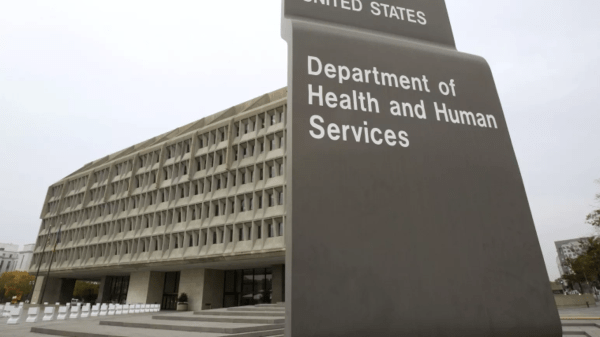
The Administration for Children and Families (ACF), a division of the Department of Health and Human Services, sent letters Tuesday demanding that the health departments in these states and territories remove “all references to gender ideology” from their Personal Responsibility Education Program, or PREP. The program is a federally funded initiative created in 2010 to help prevent teen pregnancy and sexually transmitted infections.
“Accountability is coming,” acting Assistant Secretary Andrew Gradison said in a statement. “Federal funds will not be used to poison the minds of the next generation or advance dangerous ideological agendas. The Trump Administration will ensure that PREP reflects the intent of Congress, not the priorities of the left.”
The 40 states that received letters are: Alabama, Alaska, Arizona, Colorado, Connecticut, Delaware, Georgia, Hawaii, Illinois, Iowa, Kentucky, Louisiana, Maine, Maryland, Massachusetts, Michigan, Minnesota, Mississippi, Missouri, Montana, Nebraska, Nevada, New Jersey, New Mexico, New York, North Carolina, Ohio, Oklahoma, Oregon, Pennsylvania, Rhode Island, South Carolina, South Dakota, Tennessee, Utah, Vermont, Washington, West Virginia, Wisconsin and Wyoming. The five U.S. territories are: Guam, Northern Mariana Islands, Palau, Puerto Rico and the U.S. Virgin Islands.
Links to all 46 letters were included in the administration’s press statement. The ACF’s four-page letter to New York, for example, includes a bulleted list of course content that was flagged during a “medical accuracy review” earlier this year and “must be removed from New York’s PREP curricula and program materials.”
The content flagged for removal includes definitions of gender identity and gender expression and directives that program facilitators allow students to share their pronouns and “demonstrate acceptance and respect for all participants, regardless of personal characteristics, including race, cultural background, religion, social class, sexual orientation or gender identity,” according to the letter.
If New York’s health department declines to comply, it could lose more than $6 million in federal funds, according to data provided by ACF. The other states and territories stand to lose $300,000 to $4.6 million each.
The letters come just days after the ACF terminated $12 million of California’s remaining PREP funding after the state’s health department declined to remove references to trans people from the curriculum, arguing that the references had already been approved by the agency, the materials were medically accurate and relevant to the statute, and ACF does not have the authority to take such an enforcement action, according to ACF’s termination letter to the state.
California’s health department has 30 days to appeal.A spokesperson for the department said in a statement that the state maintains its position that its PREP curriculum “is medically accurate, comprehensive, and age-appropriate.”
“CA PREP sexual health education curriculum promotes healthy relationships and reduces the rates of sexually transmitted infections (STIs) and unintended pregnancy, as well as leads to delayed sexual activity in youth — all outcomes that lead to a healthier state,” the spokesperson said.
In an emailed statement, Elana Ross, a spokesperson for California Gov. Gavin Newsom, said, “If it’s a day ending in y, President Trump is attacking kids’ safety, health, and access to education as part of his culture war.”
The action from ACF is part of the Trump administration’s ongoing effort to prohibit federal recognition of trans people and penalize the use of federal funds for any program that includes or mentions them.
Federal officials have also removed mentions of trans or intersex people from agency websites, including from the website for the Stonewall National Monument commemorating the site of the 1969 Stonewall uprising in New York, which is widely considered a turning point in the modern gay rights movement.
Why it matters: President Trump’s slew of executive orders and policies attacking LGBTQ+ people, including halting funding for HIV research and denying passports that adhere to a person’s gender, have forced LGBTQ+ people to seek legal help.
Driving the news: Launching Monday, IL Pride Connect is a hotline for LGBTQ+ people seeking help with questions about health care, including gender-affirming care, discrimination, identity documents, housing and other legal issues.
It was developed by Illinois Legal Council for Health Justice, with support from the Illinois Department of Human Services and private funding.
Context: Gov. Pritzker announced the hotline Thursday after declaring Illinois “one of the most comprehensive systems of legal protection and health equity in the entire nation.”
He continues to frame Illinois as a refuge for people under attack by Trump, a regular Pritzker foe.
How it works: Attorneys and legal advocates at the Council will field calls to the 855-805-9200 hotline from 9am–4pm Monday–Thursday. Services are available in English and Spanish.
Callers from out of state will be directed to pro-bono legal aid in their own states.
Case in point:Orr v. Trump involves the ACLU suing the Trump administration on behalf of a class of plaintiffs who were denied passports that did not adhere to the person’s sex designation assigned at birth.
A judge in April temporarily barred enforcement of the passport policy and this summer expanded who can be included in that lawsuit.
IL Pride Connect can tell callers whether they can be included in that class and direct them to the ACLU.
What they’re saying: “We’ve seen all these anti-trans laws percolating in the state houses, and as more of the problems have come to fruition under the new administration, I think the time is just essential,” Council executive director Julie Justicz tells Axios.
“We’ve been getting calls from folks saying, ‘What do I do? I’m scared,’ and the time was right, and the political will was there,” referring to Pritzker’s support.
The Trump administration has removed all references to violence against LGBTQ+ people and gender-based violence in drafts of the State Department’s much anticipated annual report on international human rights.
The draft of the report, which was leaked to and first reported by The Washington Post on Wednesday, scales back its critiques of abuses in countries with a record of human rights abuses. In particular, the Post learned of drafts of human rights reports for El Salvador, Israel and Russia that completely excise references of LGBTQ+ people and violence toward those communities.
The erasure of LGBTQ+ people and the abuses they face in the draft report underscores the Trump administration’s intention to scale back references to human rights broadly and take its anti-LGBTQ+ agenda worldwide.
“The 2024 Human Rights report has been restructured in a way that removes redundancies, increases report readability and is more responsive to the legislative mandate that underpins the report,” a senior State Department official, speaking on the condition of anonymity to brief the news media, told reporters on Wednesday. “The human rights report focuses on core issues.”
The State Department did not immediately respond to HuffPost’s request for comment.
In a section about El Salvador, the draft report notes the country had “no credible reports of significant human rights abuses.” In a previous report from 2023, the State Department found “significant human rights issues” in El Salvador, including “politically motivated killings” and “harsh and life-threatening prison conditions.”
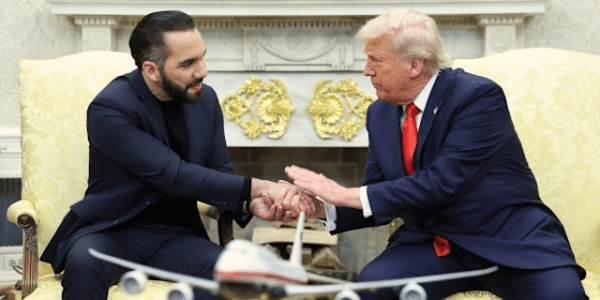
This spring, President Donald Trump secured a multimillion-dollar deal with El Salvador’s President Nayib Bukele to allow 252 Venezuelan men in the U.S. to be deported and housed within the country’s notorious new Terrorism Confinement Center, known as CECOT.
After being jailed for more than 120 days at CECOT, the men, most of who had no criminal history, told stories of being physically and mentally abused for days on end.
Jerce Reyes Barrios, one of the men held at CECOT, told HuffPost reporters Jessica Schulberg and Matt Shuham about his harrowing experience inside the prison. Reyes Barrios recalled a prison official saying, “Welcome to hell on earth, where you’ll be condemned to spend the rest of your lives; where I’m going to make sure that you never eat chicken or meat again.”
Andry José Hernández Romero, a gay Venezuelan makeup artist, alleged that CECOT guards groped him and forced him to perform oral sex while he was in solitary confinement.
A former State Department employee, Keifer Buckingham, said the removal of references to violence against LGBTQ+ people was a “glaring omission,” especially when it comes to Russia. In 2023, Russia’s supreme court deemed what it called an “international LGBT public movement” as extremist, and the courts began their first convictions of people last year under the order.
In February of 2024, a man in Volgograd was found guilty of “displaying the symbols of an extremist organisation” after posting a photo of the LGBTQ pride flag on social media. That same month, a woman near Moscow was sentenced to five days detention for wearing frog-shaped earrings that were rainbow colored.
The drafts of the reports for El Salvador and Russia were marked “finalized,” and the draft for Israel was marked “quality check,” according to the Post. It is still unclear when the reports, which are typically released to the public each March or April, will be sent to Congress and then the public, and if they will include these omissions.
U.S. diplomats have released the State Department’s annual human rights reports for nearly 50 years. Historically their findings have been widely read and anticipated by foreign leaders and diplomats, and have been used in legal proceedings both domestically and abroad.
However, this year human rights advocates decried the news about the ways in which the Trump administration has softened the descriptions of human rights abuses, especially the violence against LGBTQ+ people.
Uzra Zeya, the CEO of Human Rights First, an international human rights nonprofit, said in a statement that the changes were “a radical break” from the original goal to “objectively and even-handedly describe the human rights situation in every country and territory in the world.”
“This severely undermines their credibility and value in guiding U.S. decision-making on a wide range of critical foreign policy issues. Purging mention of elections, corruption, and global human rights abuses against LGBTQI+ persons, persons with disabilities, women and girls, refugees and other vulnerable groups runs counter to American interests and values and makes Americans abroad less safe and informed,” she continued.
Amanda Klasing, the national director of government relations for Amnesty International, said in a statement that she believes the mandate to scale back the report came from Secretary of State Marco Rubio, who instructed employees to delete sections that included stories from survivors of human rights violations and to ignore instances of repression in certain countries.
“The secretary’s instructions were to cut everything not legislatively mandated, but the leaked documents appear to show effort to narrow the scope of what the world hears about human rights abuses around the world,” she wrote.
“The downplaying or exclusion of key issues, such as discrimination and attacks on civil society, from this year’s report will hinder efforts from governments and civil society organizations around the world to respond to these abuses,” she continued.
The Trump administration’s erasure of LGBTQ+ people and gender-based violence has continued on other international stages. At a United Nations meeting in June, a U.S. delegate spent much of her time in a routing meeting on pollution to discuss the United States’ new “national position” on gender.
“Use of the term ‘gender’ replaces the biological category of sex with an ever-shifting concept of self-assessed gender identity and is demeaning and unfair, especially to women and girls,” the delegate said.
In at least six speeches before the United Nations, U.S. delegates have condemned what it calls “gender ideology,” and pushed the Trump administration’s support for recognizing so-called “biological sex,” according to ProPublica.
During his first day in office, Trump signed an executive declaring that the federal government only recognizes “two sexes, male and female,” and signaled that all references to “gender” would thus be replaced with the term “biological sex.”
On Sunday, Texas Democrats denied House Republicans a quorum to approve a new Congressional map redrawn to add GOP seats to the slim majority Republicans hold in the U.S. House of Representatives.
They did it by fleeing the state.
While the Republicans’ gerrymandering power grab was top of mind for Texas Dems, another piece of legislation will also die without a vote if the lawmakers make good on their promise to stay absent from a special session called by Gov. Greg Abbott (R) to push the redistricting plan through the Republican-dominated House.
On Monday, Texas Senate Republicans passed a draconian new anti-trans “bathroom bill” through committee that provides a rigid penalty system for any facility that does not comply. A first offense would trigger a $5,000 fine, while subsequent violations would earn $25,000 fines for each infraction, the Dallas Observer reports.
Sponsors added S.B. 7 to the special session agenda at the request of Abbott, who called the discriminatory legislation a priority.
If Democrats remain out of state for the next two weeks, the quorum break-up would last through the session’s expiration. That means that even if S.B. 7 passes the Senate, it would be dead on arrival in the Texas House of Representatives.
Out state Sen. Venton Jones (D), who made news earlier this year when he proposed to his boyfriend on the Texas House floor, urged the public to testify against the bill regardless of its poor prospects in the Democrats’ absence, as he stood on a tarmac about to leave the state.
“Texas, it’s time to stand up against harmful legislation targeting the LGBTQ community,” Jones posted to Instagram. S.B. 7 “aims to erase transgender, non-binary, and intersex Texans from public life spaces. We encourage Texans to show up and testify against this bill, and to follow organizations like Equality Texas to stay informed and get involved in the defense of this special session.”
“Venton makes clear that at least for him, and it would seem to be the LGBTQ caucus as well, the quorum break was not only about ending the redistricting plan, but also cutting short these discriminatory bills like SB 7,” said a spokesperson for the LGBTQ+ advocacy group Equality Texas.
“While the maneuver might have been about redistricting, I think the timing considered what other legislation was still on the table.”
Over 100 people signed up to testify for and against S.B. 7 at Monday’s hearing.
“I was born female and I continue to identify as a woman, but I get mistaken for a man or a teenage boy when I go to the bathroom. I am who this bill claims to protect, but in execution, I will only be harmed,” said Caroline Green, an Austin resident.
While the extraordinary, mid-decade redistricting plan won’t affect state lawmakers like Jones, it does put the seat of Texas’ only out member of Congress, Rep. Julie Johnson (D), in jeopardy.
The new map would turn Johnson’s district from 68% Democratic to 60% Republican, the Dallas Voice reports. Texas’ 32nd Congressional District currently includes parts of Plano and Dallas. The new district would only include a portion of Dallas and more rural parts of eastern Texas.
Johnson called the proposed map a “disaster” and a “desperate move from a party losing its grip on a changing state.”
In 2021, when Johnson represented Dallas as a state representative, she and her Texas House Democratic colleagues fled the state in another walkout, denying Republicans a quorum, slowing down a right-wing, so-called voting rights bill from passage.
Out gay Rep. Robert Garcia (D-CA) talked to LGBTQ Nation about a new letter signed by a coalition of 50 other Democratic congress members demanding that the State Department conduct a wellness check on Andry José Hernández Romero, an openly gay 32-year-old Venezuelan makeup artist who was detained by Immigration and Customs Enforcement (ICE) on March 15 despite legally applying for asylum in the U.S. after fleeing anti-gay persecution in his home country.
Hernández Romero legally entered the U.S. last year via San Diego and passed a credible fear interview for his official asylum process but was arrested by ICE two days before his scheduled court hearing. For the last 86 days, he has been imprisoned at the Centro de Confinamiento del Terrorismo (CECOT), an El Salvador prison known for its human rights abuses. The letter’s signatories are demanding that the State Department facilitate his access to legal counsel and immediately facilitate his release, having presented no evidence of any crimes or wrongdoing.
Romero’s family and lawyers have had no contact with him in more than a month,” the letter states. “His mother does not even know whether he is alive. Given both the well-documented concerns about conditions at CECOT and the history of anti-LGBTQI+ persecution in El Salvador, there is serious cause for concern about Mr. Hernández Romero’s well-being.”
Romero was among 260 Venezuelans accused by the presidential administration of being members of Tren de Aragua, a terrorist group. A disgraced former police sergeant’s report accused Hernández Romero of having crown tattoos associated with the transnational Tren de Aragua gang. But both the Venezuelan government and Hernández Romero’s lawyer have said he has no connections whatsoever to the gang, and his family has said that his crown tattoos are in honor of his hometown’s annual Three Kings Day festival.
“The idea that our country said, ‘Come to your asylum appointment,’ and then we send him to a country he’s not even from — and we’re unwilling to check how he’s doing — is so wrong, and more people need to know Andrew’s story,” Garcia told LGBTQ Nation. “Our Constitution is clear that both citizens and non-U.S. citizens in the United States have a right to due process, and he has never even had a chance to see a judge or for anyone to rule. No one can prove that he was gang-affiliated, because he was not. He was described as a very sweet and gentle person by his family, and we just need to bring attention to his case.”
On April 21, Garcia and three other Congress members sent a letter to Secretary of State Marco Rubio and U.S. Ambassador William Duncan, urging them to confirm Hernández Romero’s safety through a wellness check inside CECOT. That month, Garcia visited El Salvador with a delegation of three other Democratic lawmakers. Though the delegation met with U.S. Embassy officials, the ambassador, and human rights advocates, they weren’t allowed to see Hernández Romero.
In a May 14 hearing, Homeland Security Secretary Kristi Noem refused Garcia’s request to let Romero’s mother know if he’s still alive — Noem callously claimed that prison is outside of her “jurisdiction” and told Garcia to ask the President or the Salvadoran government instead.
Political pundits have noted that the administration could proactively negotiate for Hernández Romero’s release but has so far refused to. In late May, a federal judge dismissed Hernández Romero’s asylum case, making it even harder to ensure his return to the United States. Hernández Romero’s deportation violated his constitutional rights to due process and his sexual orientation puts him at grave risk inside CECOT, Garcia says.
While Garcia admits that the State Department ignored his first letter, he told LGBTQ Nation, “With this [new] letter … a much broader coalition of folks are signed on, and so we’re hopeful that that continues to get more attention.”
The new letter’s signatories include Garcia and other out Democratic Congress members including Rep. Mark Takano (CA), Rep. Becca Balint (VT), Rep. Mark Pocan (WI), Rep. Sarah McBride (D-DE), and notable congressional allies like Rep. Alexandria Ocasio-Cortez (D-NY), Rep. Rashida Tlaib (MI), Rep. Jasmine Crockett (D-TX), and Sen. Adam Schiff (CA).
Garcia added that the American Civil Liberties Union (ACLU) has been actively involved with Hernández Romero’s legal team and hopes to pressure the administration to ensure that Hernández Romero is still alive.
Though LGBTQ+ people from all over the world have long come to the U.S. for the freedom to live authentically as themselves, Garcia acknowledges that queer would-be asylum seekers are currently scared and don’t see the U.S. as a place of refuge at the moment.
As an immigrant to the U.S. himself, Garcia told LGBTQ Nation, “What’s important is that the United States fight for folks that fight for a country that can still be welcoming of other people…. Our asylum system right now is broken and it we need to get back to a place where asylum is done as it has been in the U.S. We have a history in this country of welcoming people that are being persecuted in other countries, and that seems to be not the case right now, and I think it’s really horrible to see.”
Garcia has warned that — by kidnapping Hernández Romero and other undocumented immigrants off U.S. streets — the president has violated due process, the Constitution, and democratic norms in an attempt to intimidate immigrant communities. Federal courts and the U.S. Supreme Court have agreed, demanding that the administration return some detainees stateside and provide greater transparency about its immigration processes and possible defiance of court orders.
“If they’re going to break the Constitution, to illegally take someone that was in an asylum process to a foreign country, then that means that they’re going to continue to break due process, and that means that everyone is at risk in our country,” Garcia told LGBTQ Nation. “I think it’s a slippery slope — now we know that U.S. citizens have been deported, [including] children without any sort of due process. So this is only going to get more difficult if people aren’t engaged.”
“I think Pride Month, especially in Andrea’s case, provides an opportunity for more folks to hear his story,” he added.
The Trump administration is justifying the president’s claim that top U.S. law firm Susman Godfrey is a national security threat by citing its donations to an LGBTQ+ legal nonprofit.
Trump targeted Susman Godfrey in an April 9 executive order which sought to revoke security clearance from Susman lawyers and restrict their access to federal buildings. The order was seen as retaliation for the firm having represented Dominion Voting Systems in its 2021 defamation suit against Fox News after the right-leaning media outlet repeated Trump’s claims that Dominion’s voting machines helped “steal” the 2020 election from Trump. During a signing ceremony in the Oval Office last month, White House Deputy Chief of Staff went so far as to falsely suggest that the firm “is very involved in the election misconduct,” according to Bloomberg Law.
Susman challenged Trump’s order in court, arguing that it violated the firm’s and its clients’ constitutional rights to free speech and due process. On April 15, a federal judge granted the firm a temporary restraining order barring the administration from enforcing parts of the order while the case proceeds. The case was back in court last week, where a lawyer for Trump’s Justice Department faced sharp questioning from U.S. District Judge Loren AliKhan about the administration’s justification for Trump’s order, according to Reuters.
On Monday, May 12, Lawfare senior editor Roger Parloff posted a screenshot from court filings on Bluesky that indicates the administration’s flimsy rationale.
In his order, Trump alleged that Susman “funds groups that engage in dangerous efforts to undermine the effectiveness of the United States military through the injection of political and radical ideology.” As evidence for the claim, which Susman denies, the Trump Department of Justice cites the fact that the firm “has provided funds to GLBTQ Legal Advocates and Defenders (GLAD), which previously sued the Federal Government to enjoin Department of Defense policy, based on a radical theory of gender ideology.”
In August 2017, GLAD filed a lawsuit on behalf of five transgender servicemembers challenging Trump’s first term trans military ban. The organization later joined Equality California and the National Center for Lesbian Rights as co-counsels in another case challenging the ban.
While Above the Law’s Joe Patrice notes that the administration’s argument that charitable contributions to an LGBTQ+ nonprofit constitute a national security threat is laughable, he also notes that the administration’s characterization of GLAD’s legal challenge is alarming.
“To call a federal [civil rights] lawsuit an effort to undermine the government requires adopting the premise that it’s a threat to make sure the government isn’t doing anything illegal,” Patrice writes.
Susman Godfrey is one of several top law firms that have been the subject of Trump’s recent executive orders. While the firm and three others have chosen to fight the administration in court, nine firms have reportedly struck deals with Trump, promising over $900 million worth of pro bono work for the administration, according to Business Insider.
“The whole point of the Susman Godfrey executive order and those like it is to intimidate law firms into abandoning advocacy on behalf of their clients,” a lawyer for the firm argued in court last week, according to Reuters. “That is unconstitutional, full stop.”
Meanwhile, as Bloomberg Law notes, the firms that have challenged Trump’s executive orders have been winning in court. Like Susman Godfrey, WilmerHale and Jenner & Block have both been granted court orders temporarily blocking large parts of Trump’s orders. And on May 2, a federal judge struck down Trump’s order against Perkins Coie in its entirety, accusing the president of “settling personal vendettas” with his executive orders.
According to CBS News, in her April 15 decision granting Susman’s request for a temporary restraining order, Judge AliKhan also said that Trump’s executive order targeting the firm was “based on a personal vendetta,” adding that the administration’s attempt “to use its immense power to dictate the positions that law firms may or may not take” threatens the foundation of legal representation in the U.S.
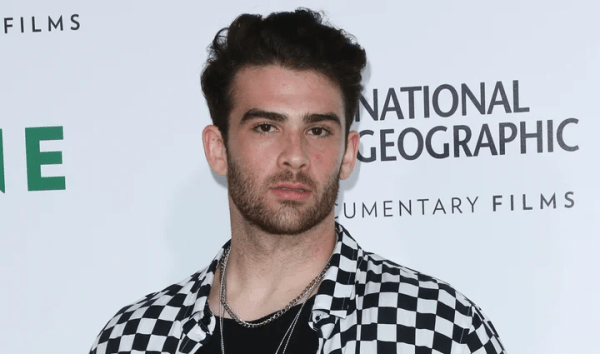
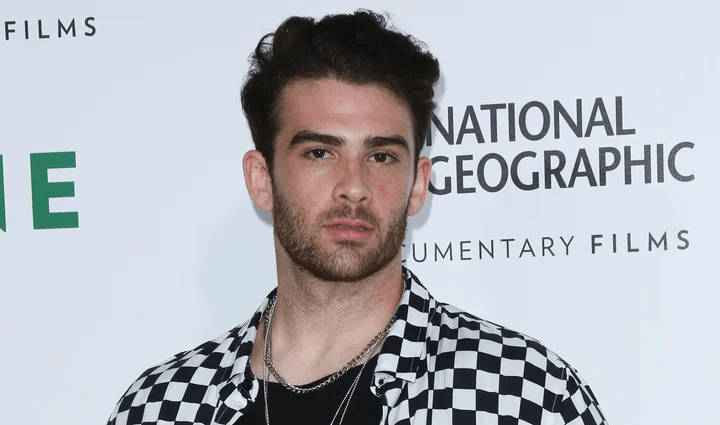
Hasan Piker, an online streamer and political commentator, was detained for several hours by Customs and Border Protection officers over the weekend and asked leading questions about what he thought of President Donald Trump and Hezbollah, among other topics, he said.
Piker discussed the surprise detention in a Monday afternoon stream on Twitch, telling his nearly 3 million followers he was questioned at O’Hare International Airport in Chicago after returning from a trip to France.
“They literally, they tried to straight-up get something out of me that I think they could use to basically detain me permanently,” he said.
“He kept asking over and over again, Hamas, Houthis, all this shit, trying to be like, ‘Oh, do you support them, do you like them? What do you think about them?’”
Piker conceded that he probably “yapped away” more than was in his own interest because he was hoping to cut the detention short, and also because he wanted to see what sort of information they were looking for.
“Instead of just pleading the Fifth as I’m supposed to do in situations like this, I just kept giving him answers,” he said.
“Knowing full well that they know exactly what they’re looking for, I saw no reason to hold back on certain things, so I said, ‘I don’t like Trump. What are you going to do? It’s protected by the First Amendment … [Trump] said he was going to end the wars. He hasn’t ended the wars. What the f**k is up with that?’”
Piker said he was bracing for the officer to ask for his phone. In preparation, he’d turned off Face ID on his iPhone and set it to only use a passcode to unlock, which CBP officers can’t legally compel you to provide if you’re detained.
Reflecting on his detention, Piker said he suspects his it was a deliberate attempt to sow fear in the media.
“The reason for why they’re doing that is, I think, to try to create an environment of fear,” he said. “To try to get people like myself, or at least others that would be in my shoes that don’t have that same level of security, to shut the fuck up.”
He later called it a “completely idiotic and ridiculous [tactic] not knowing that I’m a stubborn piece of shit, and that’s not going to work at all.”
A Customs and Border Protection spokesperson couldn’t immediately verify Piker’s detention, nor could they discuss why Piker might’ve been selected for additional questioning.
While Piker may be the highest-profile person detained by CBP on their return to the United States, he’s far from the only one.
In April, Amir Makled, a lawyer representing a pro-Palestinian student protester, was detained at the Detroit Metro Airport on his way back from a spring break trip abroad with his family.
Makled told HuffPost at the time that federal agents did seize his phone, though he stood his ground amid the 90-minute detention as he argued that, as a lawyer, his phone contained privileged work-related information.
“I don’t know if it was a fishing expedition or not,” he told HuffPost. “My gut tells me they were trying to see who I was associating with. But there’s no real way to tell.”
Piker didn’t immediately respond to a request for comment.
When Maine Gov. Janet Mills (D) told President Donald Trump, “See you in court,” she meant it.
On Monday, Maine sued the U.S. Department of Agriculture (USDA) and Secretary of Agriculture Brooke Rollins over the department’s halt on federal funding for education programs in the state in retaliation for its refusal to ban transgender women and girls from school sports.
As Reuters notes, Rollins announced the funding freeze in an April 2 letter to Mills, saying that the decision was “only the beginning” but that the governor could “end it at any time by protecting women and girls in compliance with federal law.” The funding freeze jeopardizes programs that provide free or reduced-price meals to children in Maine schools, childcare centers, and after-school programs.
Mills has publicly clashed with the administration, and with Trump specifically, over its assertion that allowing transgender women and girls to participate in women’s and girls’ sports violates Title IX, the federal civil rights law that prohibits discrimination on the basis of sex in schools that receive federal funding.
In February, the Maine Principals Association announced that it would not comply with Trump’s February 5 executive order banning transgender student-athletes from participating in girls’ and women’s sports. After Trump threatened to cut off the state’s funding, Mills and Maine Attorney General Aaron Frey accused the president of using school children “as pawns in advancing his political agenda” and vowed to “take all appropriate and necessary legal action to restore that funding and the academic opportunity it provides.”
“The State of Maine will not be intimidated by the president’s threats,” Mills said.
During a February 21 meeting with Democratic and Republican governors at the White House, Trump singled out Mills, asking whether she planned to comply with his anti-trans executive order. Mills said that her state was “complying with the state and federal laws.” When Trump continued to petulantly insist that Mills comply with his order, the governor told the president she would see him in court.
In its lawsuit, Maine calls the USDA’s funding freeze a “blatantly unlawful action” in violation of the Administrative Procedures Act. Rollins, the state argues, “took this action without following any of the statutory and regulatory requirements that must be complied with when terminating federal funds based on alleged violations of Title IX.”
The state argues that Rollins provided no legal basis for her assertion that by allowing trans students to participate in women’s and girls’ sports, Maine is in violation of Title IX and that her interpretation of the law is wrong. “Indeed, several federal courts have held that Title IX and the Equal Protection Clause require schools to permit transgender girls and women to play on girls’ and women’s teams,” the complaint reads.
However, the state is not asking the court to interpret Title IX. It merely asks the court to vacate Rollins’s “arbitrary, capricious” funding freeze for failing to meet the “statutory and regulatory requirements that the federal government must comply with before it may freeze federal funds owed to a state.”
In a statement, Frey said that Trump “and his cabinet secretaries do not make the law, and they are not above the law, and this action is necessary to remind the president that Maine will not be bullied into violating the law.”
A surge of grant cancellations hit researchers focused on the health of gay, lesbian and transgender people last week, as the Trump administration continues to target what it describes as ideologically driven science.
Last week the U.S. government terminated at least 68 grants to 46 institutions totaling nearly $40 million when awarded, according to a government website. Some of the grant money has already been spent, but at least $1.36 million in future support was yanked as a result of the cuts, a significant undercount because estimates were available for less than a third of grants.
Most were in some way related to sexual minorities, including research focused on HIV prevention. Other canceled studies centered on cancer, youth suicide and bone health.
Health and Human Services spokesman Andrew Nixon said the agency is “dedicated to restoring our agencies to their tradition of upholding gold-standard, evidence-based science.” The grants were awarded by the National Institutes of Health, an agency under HHS.
One canceled project at Vanderbilt University had been following the overall health of more than 1,200 LGBTQ people age 50 and older. Most of the money has been spent from the grant funding the project, but it was up for renewal in April, said Tara McKay, who leads Vanderbilt’s LGBTQ+ Policy Lab.
She said the grant won’t be renewed because of the termination, which jeopardizes any long-term results. Still, the Vanderbilt project had already generated two dozen published papers, including work used to train doctors to provide better care to LGBTQ people, increasing the likelihood of cancer screenings and other preventive care.
“That saves us a lot of money in health care and saves lives,” McKay said.
Insights from minority populations can increase knowledge that affects everyone, said Simon Rosser, who studies cancer in gay and bisexual men at the University of Minnesota.
“We now no longer have anywhere studying LGBT cancer in the United States,” said Rosser, who saw his grants canceled on Friday.
“When you decide to cancel all the grants on sexual minorities, you really slow down scientific discovery, for everyone,” Rosser said. Young researchers will lose their jobs, and the field as a whole will suffer, he added.
“It’s a loss of a whole generation of science,” Rosser said.
Termination letters seen by The Associated Press gave as reasons that the research was “unscientific” or did “nothing to enhance the health of many Americans.”
That language felt personal and stinging, McKay said.
“My project’s been accused of having no benefit to the American people. And, you know, queer and trans folks are Americans also,” McKay said.
You must be logged in to post a comment.