Texas A&M System bans drag shows from its universities

*This was reported by The Texas Tribune.

The Texas A&M University System Board of Regents on Friday passed a resolution banning all drag performances from taking place on its 11 university campuses.

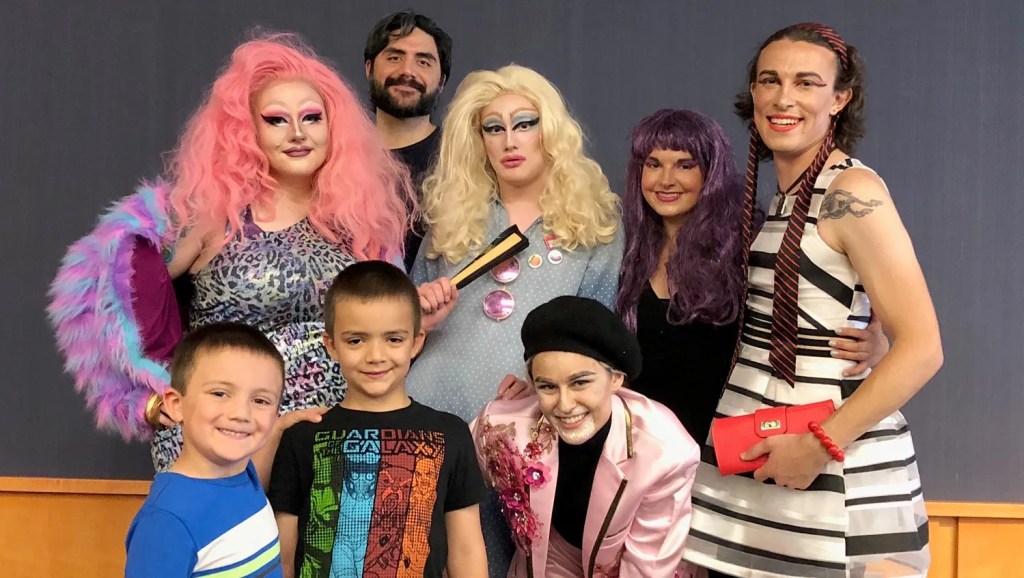
This means that Draggieland, a beloved annual event scheduled for March 27 at the Rudder Theatre on the College Station campus, will have to find a new venue. Students have also held drag shows at Texas A&M University Corpus Christi and East Texas A&M University.

The move potentially sets up another First Amendment fight between students and university administrators.

The resolution says the board recognizes the need for universities to foster a sense of community and belonging among students but adds that drag shows are “inconsistent with [the system’s] mission and core values, including the value of respect for others.”

The resolution also says drag shows are “likely to create or contribute to a hostile environment for women,” contrary to university and federal anti discrimination policies.

“These events often involve unwelcome and objectively offensive conduct based on sex for many members of the respective communities of the universities, particularly when they involve the mockery or objectification of women,” the resolution says.

The resolution says having on-campus drag shows may be seen as promoting gender ideology and that both President Donald J. Trump and Gov. Greg Abbott have said federal and state funds may not be used for that purpose. It directs the system’s chancellor and the president of each institution to implement the policy, including canceling any upcoming drag shows.

The vote was unanimous. Regent Mike Hernandez III was absent.

The Queer Empowerment Council, a student group that hosts Draggieland and other LGBTQ+ events at Texas A&M University, said in a statement Friday evening that it was “profoundly disheartened” by the decision.

“The power of drag as a medium of art is undeniable, serving as a platform for self-discovery, inclusivity, and celebration of diversity. QEC firmly believes that the Board of Regents’ decision undermines these values, which are vital to fostering a supportive and inclusive environment for all students,” the council said.

It is exploring whether it can hold Draggieland on the same or a different date at a different venue.

“We are committed to ensuring that our voices are heard, and that Draggieland will go on, no matter the obstacles we face,” the group said.

In 2023, West Texas A&M University President Walter Wendler canceled an on-campus drag show, similarly arguing such performances degrade women.

The students said his comments were off base and sued him for violating their First Amendment rights as well as a state law that prohibits universities from barring student organizations from using their facilities on the basis of the political, religious, philosophical, ideological or academic viewpoints the organizations express. The court has allowed Wendler’s cancellation to stand while it makes a decision.

“They are imposing a restraint on an entire category of protected speech under the First Amendment and in no public college campus should that ever occur per our Constitution,” said JT Morris, senior attorney at the Foundation for Individual Rights and Expression, of the regent’s decision Friday. Morris is representing the students in the West Texas A&M case.

Civil rights groups also condemned the resolution. Ash Hall, policy and advocacy strategist for LGBTQIA+ rights at the ACLU of Texas, said the West Texas A&M lawsuit plus one her organization spearheaded and ultimately blocked a statewide ban on drag shows “makes this kind of absurd.”

“To do this now, while that’s already happening, is a waste of time and resources and makes it seem like the Board of Regents is more focused on culture wars than educating their students,” they said.

Sofia Sepulveda, field director for Equality Texas, noted that not all drag is performed by men.

“Women performers also delight in a chance to poke fun at stereotypes that have held women back for generations,” she said.

She also criticized the gender disparities among the flagship’s faculty.

“If A&M is worried about creating a hostile environment for women, then why don’t they hire more women?” Sepulveda said. “Right now, only 40% of the faculty at Texas A&M are women, 60% are men. That’s a serious issue.”

Draggieland organizers have said the event is an important outlet for the LGBTQ+ community at a time when it has come under attack from conservative policymakers in Texas and across the nation.

Students raised funds to keep the show going when the university stopped sponsoring it in 2022. In the years since, they’ve seen LGBTQ+ representation and resources on campus diminish.

Last year, Texas A&M University cut an LGBTQ+ studies minor and stopped offering gender-affirming care at the Beutel Student Health Center. In a statement Friday afternoon, the university said it had begun coordinating with the division of student affairs to notify student organizations about the board’s decision.

Regents were also expected to discuss Friday who should be the system’s next leader after Chancellor John Sharp retires this year. Regents met in Houston earlier this week to interview candidates. They did not make a decision on a finalist Friday.
LGBTQ advocates fear Iowa bill targeting ‘obscenity’ would deter drag performances

*This was originally published by the Des Moines Register.

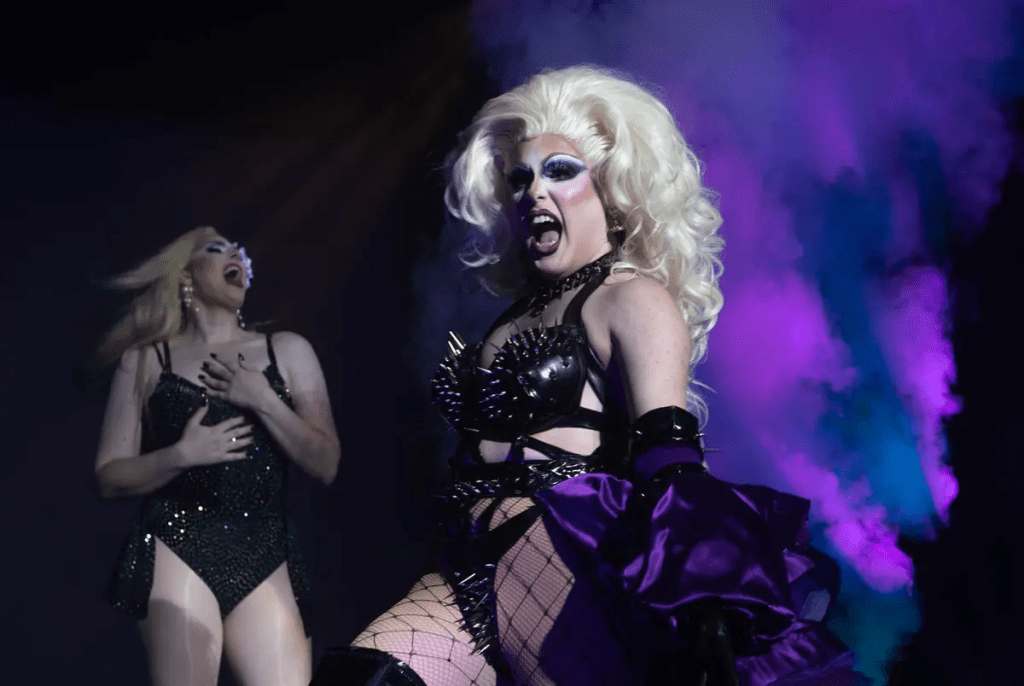
Exposing minors to an “obscene performance” would be a crime under a bill winding through the Iowa Senate that critics fear could discourage drag shows and spur lawsuits against venues offering LGBTQ pride programming.

The legislation, Senate File 116, would make knowingly exposing anyone younger than 18 to such a performance an aggravated misdemeanor, as well as knowingly selling a ticket or admitting a minor to a venue where such a performance is held.

Similar to legislation that was introduced but did not pass last year, the bill that advanced out of subcommittee Wednesday defines “obscene performance” as one that exposes genitals, invokes sexual acts or “appeals to the prurient interest and is patently offensive.”

“I brought this bill forward because I had constituents complain to me about performances that, if not meeting the definition of obscenity in our law, at least approach that definition, and concerned about this in our communities and the exposure of minors to it,” said Sen. Sandy Salmon, R-Janesville, who was part of a group of GOP lawmakers who introduced the legislation.

Critics argue the bill would encourage frivolous lawsuits

Keenan Crow, policy and advocacy director for One Iowa, a statewide LGBTQ advocacy organization, raised concerns with a provision establishing a private civil cause of action allowing parents of minor children to sue to determine whether something is obscene.

The bill states “a cause of action may be brought against any person that has knowingly disseminated or exhibited obscene material to the minor or who engaged in or caused or allowed a person to knowingly engage in an obscene performance in the presence of the minor.” It sets the minimum award of damages at $10,000.

While drag shows are not explicitly labeled in the bill as obscene performances, those opposed to the legislation fear it would target drag performances.

“What we are doing is we are allowing parents to target these venues for SLAPP suits, Strategic Lawsuits Against Public Participation, which are not designed to actually win the suit,” Crow said. “They are designed to make venues spend money and to reconsider hosting drag events entirely, lest they be sued on the off chance that it meets the obscenity definition, which obviously Drag Story Time does not.”

Drag Story Time events are sometimes held at libraries or other venues where drag performers read stories to children. In recent years, the events have increasingly been at the center of a larger GOP-led effort to restrict public drag events as conservative critics suggest they “sexualize” children.

Sen. Janice Weiner, D-Iowa City, said she worried the provision would incentivize frivolous lawsuits.

“This bill, as written, could encourage potential frivolous or bad actors to shake down local governments and private businesses, and that’s the taxpayer on the hook,” said Weiner, who opposed the bill.

Elizabeth Hall, a local trans woman, said bills targeting the LGBTQ population create “an aura of fear” among trans people that has pushed those she knows into psychiatric care.

“We fear for our communities,” Hall said. “We fear for our lives, and even if the particulars of how this bill would come into effect aren’t necessarily like that extreme, that fear still has a tangible effect on our lives and has caused so many people that I know to reach ends that I fear have continued to lead to detrimental effects.”

Supporters say the bill ensures performances shown to minors are ‘age appropriate’

Ryan Benn, a lobbyist for the conservative religious group The Family Leader, said the group supported the law because obscene materials that may be illegal to show children in movies or other material are not illegal to perform.

“I think it fixes that loophole,” Benn said.

Sen. Jeff Taylor, R-Sioux Center, said he would like to see a more clear definition of a “performance,” but overall obscenity is rarely prosecuted.

“In general, obscenity does not have constitutional protection in terms of freedom of speech,” Taylor said. “Something that’s obscene is, by definition, not protected by the First Amendment, and that’s regardless whether you’re sharing that with adults or with children. But to me, especially in the case of children, I feel like this is appropriate.”

Sen. Cherielynn Westrich, R-Ottumwa, said she supported the bill to protect children from obscenities.

“I think that what the one thing that we all in this room have agreed on is that we need to protect children from those sort of obscene or performances that are sexual in nature,” Westrich said.

Bill would repeal exemptions for public institutions

Melissa Peterson, with the Iowa State Education Association, said the group opposed the bill, especially a proposal to repeal an Iowa code section that allows minors to access appropriate material for educational purposes, at art exhibitions or in public libraries.

She said Senate File 496, the 2023 state law that requires school staff to remove books depicting sex acts, already sought to establish what content was age appropriate by existing obscenity standards.

“We worked closely together in a compromised fashion to come with what we thought would be considered age appropriate, and we would really like to see that exemption maintained for public institutions that are public spaces,” Peterson said.

Weiner also opposed repealing the exemption for public institutions.

“To repeal it is in some ways to admit that this bill really isn’t about obscenity,” Weiner said.

Police arrest suspect accused of attempting to set fire to queer bar just days after its opening

This blog is originally appeared at LGBTQ Nation

“There are many people who clearly do not want us to be here.”

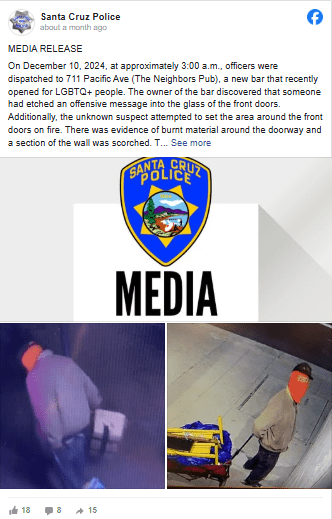
Police in Santa Cruz, California, have charged 45-year-old James Eason with vandalizing The Neighbor’s, a queer bar, just days after it opened. Eason faces charges of vandalism, arson, and committing a hate crime.

The incident occurred early last Tuesday morning when a suspect set fire to a button panel outside the bar’s front door, which is used to assist disabled patrons. The vandal also attempted to push burning napkins through the door’s cracks and carved a homophobic slur into the glass, according to bar owner Frankie Farr, who spoke with Lookout.

“I was like, ‘You’ve got to be kidding, we’re not even open a week,’” Farr said. “[We are] still a bit in shock that it happened so quickly… There are clearly many people who do not want us to exist.”

They contacted the police, and detectives were able to identify the suspect after reviewing surveillance footage from nearby businesses. At the time Eason was named a suspect in the vandalism, he was already in custody at the county jail for an unrelated offense.

The bar opened in early December with a ribbon-cutting ceremony attended by Santa Cruz Mayor Fred Keeley, City Councilmember Sonja Brunner, and more than 100 patrons eager to explore the new space.

Although the city is home to LGBTQ+-inclusive businesses, Farr felt there was a lack of dedicated spaces for queer individuals to meet, socialize, and build a sense of community. In addition to offering food and serving as a performance venue for regional DJs, queer performers, and drag artists, Farr hopes the bar can also support environmental and social movements and attract LGBTQ+ tourists to Santa Cruz.

“It’s pretty depressing to think of all these people driving over the hill or all the way to San Francisco just to find [queer] community when we have it right here,” Farr said.

Months before the opening, Farr shared, “I really want [the bar] to be a place for people who aren’t out or in unsafe situations where they can’t disclose their sexuality to family or others they live with—where they can give a sly little wave and say, ‘I’m just going to hang out at The Neighbor’s.’”

Despite the attack, the bar resumed normal business hours right away. Farr expressed gratitude that the incident wasn’t worse.

“We’re very fortunate that nobody was inside,” Farr said. “However, there are apartments above, and those residents don’t deserve this either. They could have been seriously injured.”

Blog at WordPress.com.

Up ↑