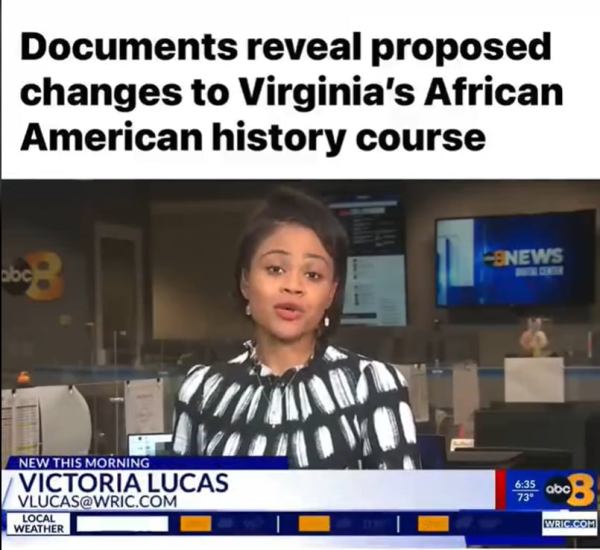
Documents reveal proposed changes to Virginia’s African American history course

RICHMOND, Va. (WRIC) — Virginia’s Department of Education has proposed significant revisions to an African American history elective offered in 89 schools. Documents reveal plans to remove content on “implicit bias” and replace terms like “racism” with “discriminatory practices” in the course curriculum.

The proposed changes, detailed in documents obtained by the nonpartisan watchdog American Oversight and shared with The Washington Post, include dozens of recommended revisions to the course’s content and curriculum outline. These recommendations have not yet been implemented and are not currently scheduled to take effect as the course is still under review by the state education department, according to spokesperson Todd Reid.

The review is part of the department’s compliance with Republican Governor Glenn Youngkin’s first executive order, which prohibits the use of “inherently divisive concepts” in K-12 education. The proposed revisions address a range of topics, including the history of racism in the U.S., Richmond’s role in the slave trade, economic disparity, redlining, systemic racism, the Black Lives Matter movement, and even the size of Africa on maps.

Former Governor Ralph Northam (D) established the course and created a commission to develop it. Last school year, over 1,700 students were enrolled in this elective, which is offered at 89 schools across 45 divisions in Virginia.

American Oversight requested records from the Virginia Department of Education related to changes in public education curriculum prompted by Youngkin’s executive order. Among the proposed revisions are the removal of definitions of “Black joy,” content on equity and implicit bias, and the sentence “Institutional racism remains” from the course’s objectives.

Other proposed changes include replacing terms like “rise of racism” and “white supremacy” with “discriminatory practices” and “racial violence.” The department also suggested altering the course’s content on societal and economic changes after Reconstruction, changing “mostly-white legislatures in the South” to “state legislatures in the South.”

Additional revisions involve modifying course content on topics like the Eugenics movement and the impact of “white moderates” on civil rights progress. For instance, a lesson on “Economic Disparity and Privilege” would remove a paragraph detailing the effects of white privilege.

“These documents reveal attempts to whitewash and erase America’s legacy of racism, similar to actions seen in other states like Florida,” said Chioma Chukwu, interim executive director of American Oversight.

The course aims to provide a comprehensive exploration of African American history with a specific focus on Virginia, acknowledging both positive and negative historical aspects. Youngkin has expressed a similar sentiment about teaching history inclusively.

The proposed changes align with Youngkin’s broader efforts to focus education on race, history, and gender, and to restrict critical race theory from the curriculum.

In 2023, Youngkin reviewed a proposed Advanced Placement African American studies course to ensure it complied with his executive order. The course was found to be in compliance.

Youngkin’s administration has faced criticism for its review process of K-12 history standards and for the tip line created to report “inherently divisive practices,” which led to backlash and lawsuits over the records collected. Reid noted that since the course was created by Northam’s directive and the education department does not develop courses, it is unique and lacks a standardized review process.
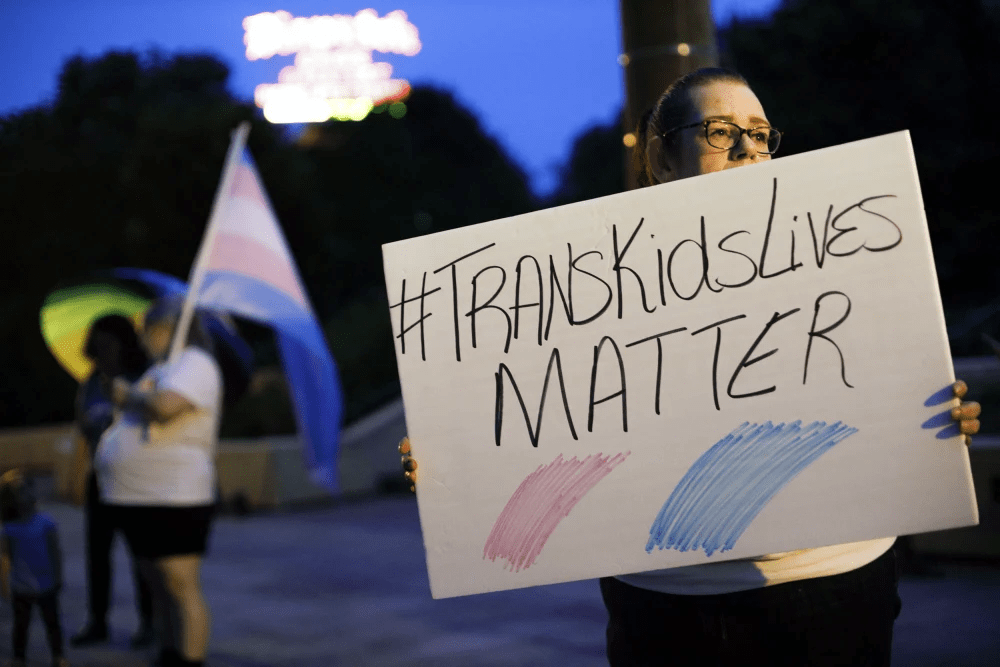
Appeals court denies request to remove injunction on rule designed to enhance protections for LGBTQ students

This blog originally appeared at NBC NEWS.

Republicans contend that the policy is a ploy to permit transgender girls to join girls’ athletic teams.

A federal appeals court on Wednesday refused to lift a judge’s order temporarily blocking the Biden administration’s new Title IX rule aimed at expanding protections for LGBTQ students.

The ruling from the 6th U.S. Circuit Court of Appeals upheld a preliminary injunction issued last month by a federal district judge in Kentucky. This order blocked the new rule in six states — Kentucky, Indiana, Ohio, Tennessee, Virginia, and West Virginia — though similar legal battles are ongoing in Republican-led states nationwide.

“In our view, the district court likely correctly concluded that the Rule’s definition of sex discrimination exceeds the (U.S. Education) Department’s authority,” the 6th Circuit’s three-judge panel stated in its majority ruling.

The Education Department did not immediately respond to requests for comment via email and phone.

Kentucky Attorney General Russell Coleman praised the ruling as “a victory for common sense.”

“For 50 years, Title IX has created equal opportunities for women and young girls in the classroom and on the field,” said Coleman, a Republican. “Today, the 6th Circuit becomes the first appellate court in the nation to halt President Biden’s blatant assault on these fundamental protections.”

Chris Hartman, executive director of the Fairness Campaign, a Kentucky-based LGBTQ advocacy group, warned that the ruling would endanger transgender children.

“We believe Kentucky schools have an obligation to protect all students, including transgender students, and that they should implement the new Title IX Rule regardless of the 6th Circuit’s opinion,” Hartman said in a statement Wednesday evening.

The rule aims to expand Title IX civil rights protections to LGBTQ students, broaden the definition of sexual harassment in schools and colleges, and introduce additional safeguards for victims. While civil rights advocates have praised the new protections, opponents argue that they undermine the spirit of Title IX, a 1972 law that prohibits sex discrimination in education.

Most Republican state attorneys general have taken legal action to challenge the new rule.

The regulation is set to take effect on Aug. 1, but judges have temporarily blocked its enforcement while legal cases proceed in 15 states: Alaska, Indiana, Idaho, Kansas, Kentucky, Louisiana, Mississippi, Montana, Ohio, Tennessee, Texas, Utah, Virginia, West Virginia, and Wyoming.

The regulation faces legal challenges from 12 other states where enforcement has not been paused: Alabama, Arkansas, Florida, Georgia, Iowa, Missouri, Nebraska, North Dakota, Oklahoma, Oregon, South Dakota, and South Carolina.

Republicans argue the policy is a ploy to allow transgender girls to participate in girls’ athletic teams. The Biden administration clarified that the rule does not apply to athletics.

In its ruling on Wednesday, the 6th Circuit panel noted that critics of the rule warned that implementing it just before the start of the new school year would impose an “onerous burden” on the states.

The 6th Circuit panel also expedited a full hearing of the case for this fall.

In granting the preliminary injunction last month, U.S. District Judge Danny C. Reeves in Kentucky noted that Title IX was intended to “level the playing field” between men and women in education, but said the department was seeking to “derail deeply rooted law” with the new policy.

“At bottom, the department would turn Title IX on its head by redefining ‘sex’ to include ‘gender identity,’” he said in his ruling. “But ‘sex’ and ‘gender identity’ do not mean the same thing. The department’s interpretation conflicts with the plain language of Title IX and therefore exceeds its authority to promulgate regulations under that statute.”

Responding at the time to Reeves’ action, the Education Department stated: “Title IX guarantees that no person experiences sex discrimination in a federally funded educational environment. The department crafted the final Title IX regulations following a rigorous process.”

The appeals court ruling included a partial dissent from one member of the three-judge panel.

“All three members of the panel, it bears emphasis, agree that these central provisions of the Rule should not be allowed to go into effect on August 1,” the majority ruling said. “Our modest disagreement turns on the question, in this emergency setting, of whether the other parts of the Rule can be separated from these central provisions.”

Read more.

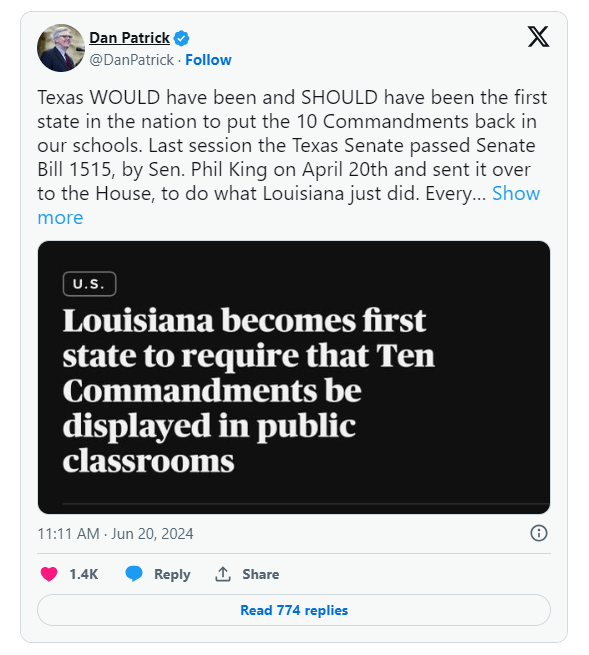
Texas Lt. Governor Suggests State Should Have Implemented Ten Commandments in Schools Before Louisiana

On X, Lt. Gov. Dan Patrick directly called out Texas House Speaker Dade Phelan for killing the bill “by letting it languish in committee for a month.”

AUSTIN, Texas — Following reports that Louisiana might become the first state to mandate the display of the Ten Commandments in every public school classroom, Texas Lieutenant Governor Dan Patrick criticized Texas House Speaker Dade Phelan for allowing similar legislation to stall in committee.

On Thursday, Lt. Governor Patrick made multiple posts on X, formerly known as Twitter, calling out House Speaker Phelan.

“Texas WOULD have been and SHOULD have been the first state in the nation to put the 10 Commandments back in our schools,” Patrick said in a post on X. “But, SPEAKER Dade Phelan killed the bill by letting it languish in committee for a month assuring it would never have time for a vote on the floor.”

Senate Bill 1515, which failed to advance from committee in the last legislative session, aimed to mandate the display of the Ten Commandments in Texas public elementary and secondary school classrooms.

In his post, Patrick pledged to reintroduce the bill in the Senate during the next session.

In another X post, the lieutenant governor persisted in attributing the demise of Senate Bill 1396, which proposed a “period of prayer and Bible reading” in Texas public schools, to House Speaker Phelan.

Read more: https://www.wfaa.com/article/news/politics/texas-lieutenant-governor-says-state-should-have-put-ten-commandments-back-in-schools-before-louisiana/287-c7f9ced1-2d98-4c05-ba93-1680662e39b8

Blog at WordPress.com.

Up ↑