‘Just trying to be kids’: Students, families speak out against federal ruling against schools’ transgender policies

Read more at the Prince William Times.

Fearful. Aggravated. Hurt. That’s how 16-year-old Ellie Bowling said she felt after the U.S. Department of Education told the Prince William County school division it must change its inclusive transgender policies or risk losing federal funding.

Ellie, who is trans, is a rising junior in Colgan High School’s Center for the Fine and Performing Arts. She’s excited to soon be driving and loves to be onstage. Last spring, she performed in the school’s production of “Guys and Dolls” and recently earned the role of “Candy” in the school’s fall production of “Zombie Prom.”

“I’m currently thriving in this environment; they created a great learning experience for me,” Ellie said of Prince William County schools.

Ellie was 11 when she started her transition. Since then, her parents, Adam and Erin Bowling, have legally changed her name and gender on government and school documents. After obtaining medical and psychological signoffs, Ellie began receiving gender-affirming hormone therapy at Children’s National Hospital in D.C.

At Colgan High, like all other Prince William County schools, transgender students use the bathrooms and locker rooms that match their gender identities in accordance with a regulation that guides how transgender and gender nonconforming students are treated in schools.

“I know that Colgan is a good place for me. I fit in well there, and that’s partially because these policies help me fit into this school and be able to find my place,” Ellie said. “Without these policies — I don’t know.”

The Bowlings are one of likely hundreds of Prince William County families facing uncertainty as the new school year approaches in less than two weeks. The schools are wrestling with the education department’s determination that its policies violate Title IX, a federal law that prohibits discrimination based on sex in educational settings that receive federal funding.

On July 25, the education department told five Virginia school divisions — Prince William, Fairfax, Loudoun, Arlington and Alexandria — they had 10 days to change their policies that allow transgender students to use the facilities that match their gender identities “or risk imminent enforcement consequences, including referral to the U.S. Department of Justice.”

School board has yet to act

The education department said its decision was based on a U.S. Supreme Court ruling in June that upheld Tennessee’s ban on gender affirming care for minors. The Northern Virginia school policies are based on an earlier case involving Virginia teen Gavin Grimm, who successfully sued Gloucester County schools in federal court to allow students to use restrooms that match their gender identities. In 2021, the U.S. Supreme court declined to review the case.

Babur Lateef, the Prince William County School Board chairman, called a special board meeting this week to receive legal advice on the decision, which will mostly be held in closed session. He declined further comment.

School board member Tracy Blake said he told parents to expect no changes when school begins on Aug. 18.  

“Trans students and families do not need to worry about coming back to school on the first day because there will be no disruptions for trans students or any students,” he said in an interview on Friday, Aug. 1.

Blake said he believes removing the regulation would be wrong.

“We can’t discriminate against one person,” he said. “Once you let one thing go, what happens then? Then it’s the next thing. We’ve already seen this in history, and all of our students have to feel safe.”

Ruling adds to challenges for transgender youth

The move by the U.S. Department of Education wasn’t unexpected because trans people have been targeted by the Trump administration, said Lisanne Boddye, a mother of seven, including a transgender teen and a gender expansive teen who both attend Potomac High School. Boddye is also a special education teacher at Potomac High and the wife of Prince William Supervisor Kenny Boddye. 

“My children, like thousands across the country, deserve to walk into their schools knowing they are respected, affirmed and protected,” Lisanne Boddye said. “When leaders target transgender students for exclusion or erasure, they send a chilling message — not just to those students, but to every family who believes in fairness, decency, and the right to learn without fear.”

About 3.3% of U.S. high school students identify as transgender, and about 2.2% of high school students are questioning their gender identity, according to a 2023 Centers for Disease Control and Prevention survey. That means about 1 in 20 high schoolers are either transgender or questioning their gender, or about 1,200 of the 24,000 students enrolled in Prince William County’s 13 high schools.

Delta Boddye, 16, a rising senior, rows on the Potomac High School crew team. She began transitioning two years ago and said her teachers have always used her correct name and “made sure they are affirming (her).”

“I’ve just been planning on just living as myself, just trying to be a kid, trying to be a student,” she said about returning to school.

But revoking the school’s policy could change that, she said. No matter the policy, Delta said she will insist that her correct name and pronouns are used at school.

The possible change in the school division’s policy comes on top of other challenges. Delta was considering joining the military but now can’t because of the recent ban on transgender troops. The Bowlings learned the Youth Pride Clinic at Children’s National Hospital, where Ellie is a patient, will no longer prescribe gender-affirming medications as of Aug. 30 due to “escalating legal and regulatory risks” to the hospital and its providers.

“This is supposed to be her happiest year, her senior year, and all of the horizons are supposed to be endless, and now most of them are not,” said Lisanne Boddye, who is an Army special operations veteran.

Both the Bowlings and Boddyes say they are speaking out not only for the safety and mental health of their own children, but for their trans classmates who may not have the same family and community support.

Equality Prince William, a nonprofit that advocates for the LGBTQIA+ community, sponsored a campaign urging the school board “to hold firm in their support for transgender and gender diverse students.” As of Aug. 5, 1,700 letters had been sent. 

“Title IX exists to prevent exactly this kind of discrimination,” said Glorya Jordan, a registered nurse who is on the board of Equality Prince William and is the mother of a transgender adult. “The attempt to rescind protections for transgender youth is not only illegal but deadly. Trans youth already face staggering rates of bullying, depression and suicide.”

“Let’s stop hurting our children because of what we are afraid of and do not understand,” said the Casa BruMar Foundation, a nonprofit based in Gainesville that provides resources for the LGBTQIA+ community. “Let’s allow our children to know that being different is not dangerous.”

Adam Bowling hopes people realize there is so much more to his daughter Ellie than just being trans and she deserves to be her authentic self at school. 

“Demonizing this group of people is just so wrong,” he said. “I just hope the majority of people hear stories like Ellie’s and realize that there are human beings that these decisions are affecting and it’s a life-or-death situation for some of them.”

Ellie wants people to know that she is a normal teenager.

“I hate how politicized trans youth is, because I am not a monster,” Ellie said. “There’s so much misinformation out there obviously for fear-mongering reasons. I’m not this predator who goes into women’s spaces just to, like, spy on them. I am a woman who is living her life.”

Project 2025’s Mike Howell targets UNC courses that mention diversity and LGBTQ+ topics

Read more at The Advocate.
A senior Heritage Foundation official and co-author of the far-right Project 2025 agenda has filed a comprehensive public records request targeting more than 70 courses at the University of North Carolina at Chapel Hill, demanding access to teaching materials that reference diversity, race, gender, and LGBTQ+ identities.

According to UNC’s public records portal, Mike Howell, executive director of the Heritage Foundation’s Oversight Project, submitted the request on July 2, asking UNC to turn over syllabi, lecture slides, assignments, and internal communications that include any of 30 flagged terms. Among them: “transgender,” “LGBTQ+,” “cisgender,” “queer,” “intersectionality,” “nonbinary,” “white privilege,” and “restorative justice.” The request spans content shared since Jan. 19, 2025, and directs the university to search platforms such as Canvas, Microsoft Teams, Signal, and Slack.

The courses flagged by the Oversight Project include Gender and Sexuality in Islam, Transnational Black Feminist Thought and Practice, Islam and Sexual Diversity, Race and Gender in the Atlantic World, and Black Families in Social and Contemporary Contexts. Also targeted are courses like Diversity and Inclusion at Work, Diversity in Education, Social Theory and Cultural Diversity, and Gender and Sexuality in Middle Eastern Literature.

Howell cited two executive orders signed by President Donald Trump earlier this year, Executive Orders 14151 and 14173, which condition federal funding on the elimination of DEI-related content. In the request, Howell argued that the records “will shed light on potential inconsistencies between internal practices and public representations made by officials in a matter of substantial national importance.”

Since taking office in January, Trump has aggressively implemented policies that target diversity, equity, and inclusion efforts, as well as gender and LGBTQ+ protections. Though he previously distanced himself from Project 2025, calling some of its authors “severe right” and its proposals “seriously extreme,” his administration has moved swiftly to enact many of its recommendations. The nearly 1,000-page blueprint, authored by the Heritage Foundation and allied organizations, calls for the dismantling of DEI programs, bans on transgender military service, elimination of non-discrimination protections, and the closure of the Department of Education. Many of the document’s contributors now hold key posts in federal agencies.

Scholars have long cautioned that excluding race, gender, and sexuality from coursework risks reinforcing bias rather than promoting academic neutrality. The American Psychological Association encourages inclusive curricula that reflect students’ lived experiences. In a 1992 paper, psychologist Susan B. Goldstein noted that even cross-cultural psychology can marginalize women and LGBTQ+ people when it generalizes findings from white, heterosexual men as universal. She urged faculty to treat diversity as central to understanding human behavior, not an elective or ideological add-on. A study in the Harvard Educational Review found that engagement with racially diverse peers enhances students’ critical thinking, academic growth, and civic awareness.

UNC has not yet fulfilled the Oversight Project’s request. A university spokesperson told Inside Higher Edwhich first reported the story, that course materials are “the intellectual property of the preparer” and the university is still determining what, if any, documents will be released.

Chris Petsko, a professor whose course was among those targeted, told Inside Higher Ed he will not comply. He said the request is an intimidation tactic designed to distort academic work and stifle inclusive teaching. On LinkedIn, he advised fellow faculty to review institutional intellectual property policies.

Howell dismissed objections. “Syllabi are public records and belong to the public,” he told Inside Higher Ed. “If a professor is too much of a wimp to let me read his syllabus then he’s in the wrong business.”

Howell has previously drawn scrutiny for hypocrisy. In 2024, The Advocate reported on a 2012 Yelp photo showing Howell smiling beside a friend in drag, despite his vocal condemnations of drag culture and LGBTQ+ rights. When contacted, Howell confirmed the photo’s authenticity and dismissed it as Halloween mischief.

GLAAD President Sarah Kate Ellis called Howell’s behavior “the definition of hypocrisy” at the time, adding that Project 2025 is a “dangerous, unhinged playbook” that exposes the intent of “anti-LGBTQ extremists hell-bent on destroying democracy.”

NH Republican governor vetoed anti-LGBTQ+ book ban and bathroom bills

Read more at The Advocate.

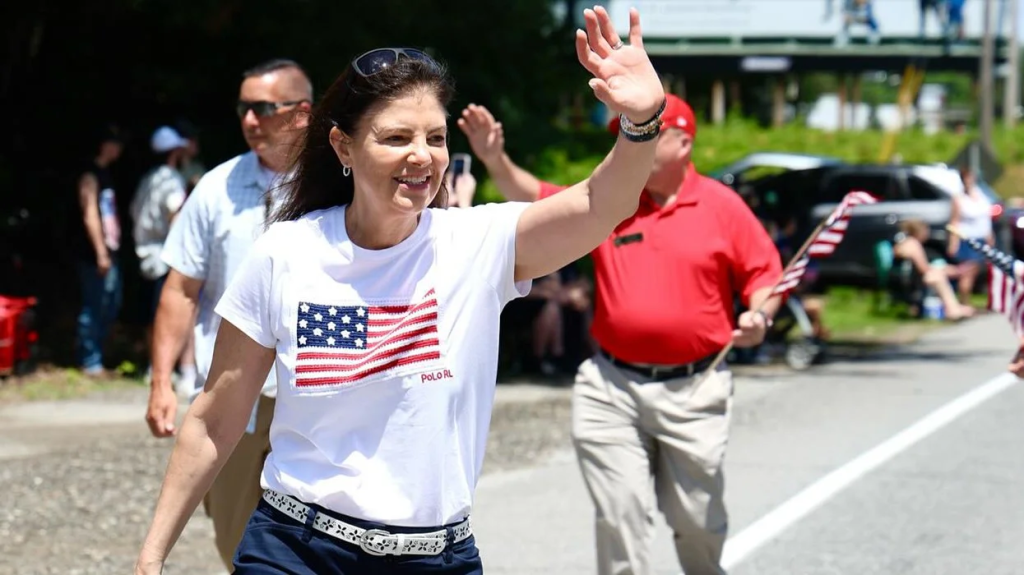
New Hampshire Republican Gov. Kelly Ayotte has gone against her party and vetoed two anti-LGBTQ+ bills and three other far-right ones.

Ayotte vetoed the bills Tuesday, while signing 101 others into law.

House Bill 324 would have barred schools from distributing books and other materials deemed “harmful to minors.” It was aimed primarily at sexual content and likely would have been used against books with LGBTQ+ characters and themes. It also would have required school districts to strengthen the process through which parents could challenge these materials.

“Current state law appears to provide a mechanism for parents through their local school district to exercise their rights to ensure their children are not exposed to inappropriate materials,” Ayotte said in her veto message. Under this law, “parents must be notified at least two weeks in advance of course materials that involve human sexuality, sexual education, sexual orientation, gender, gender identity, or gender expression,” she noted. “If a parent objects in writing, New Hampshire law further requires an alternative agreed upon between the school district and the parent.”

“Therefore, I do not believe the State of New Hampshire needs to, nor should it, engage in the role of addressing questions of literary value and appropriateness, particularly where the system created by House Bill 324 calls for monetary penalties based on subjective standards,” Ayotte added. Parents who were dissatisfied could have filed lawsuits.

House Bill 148 would have let businesses and correctional facilities to classify and segregate people by sex assigned at birth rather than gender identity, affecting restroom and locker room use. State law bans discrimination based on gender identity, but under the bill, these classifications would not have been considered a violation of the law.

“I believe there are important and legitimate privacy and safety concerns raised by biological males using places such as female locker rooms and being placed in female correctional facilities,” Ayotte wrote. “At the same time, I see that House Bill 148 is overly broad and impractical to enforce, potentially creating an exclusionary environment for some of our citizens.” It could have led to lawsuits as well, she said. Her immediate predecessor as governor, fellow Republican Chris Sununu, had vetoed a similar bill.

Additionally, Ayotte vetoed House Bill 358, “which would make it easier for parents to apply for religious exemptions to child vaccine requirements in school,” House Bill 446, “which would require schools to get explicit parental permission before giving students non-academic surveys,” and House Bill 667, “which would require sex education courses to include ‘a high quality computer generated animation or ultrasound video that shows the development of the heart, brain, and other vital organs in early fetal development,’” the New Hampshire Bulletin reports. She also vetoed two budget-related bills.

It would take a two-thirds majority in both the state House and Senate to override Ayotte’s vetoes. Republicans do not have a veto-proof majority in the House.

House Democratic Leader Alexis Simpson issued a statement Tuesday praising the vetoes without mentioning Ayotte. “We’re grateful that today New Hampshire chose to protect the rights and dignity of our transgender neighbors — and House Democrats will keep fighting until every Granite Stater can live freely, openly, and safely, no matter who they are,” Simpson said, according to the Bulletin.

Ayotte was not always an LGBTQ+ ally, having once opposed marriage equality and adoption by same-sex couples. But “Ayotte’s vetoes are a rejection of her party’s attempt to assert cultural control throughout the state, and the country,” The New Republic notes.

These are the 15 worst states for LGBTQ+ people

Read more at The Advocate.

A lot of states are passing laws that target the LGBTQ+ community — but these 15 are the absolute worst.

Over 1,000 anti-LGBTQ+ laws have been proposed across every state legislature in the U.S. over the past two years, according to the American Civil Liberties Union, and 126 have passed into law. Less than two months into the 2025 legislative session, 390 laws targeting LGBTQ+ people have been proposed.

While marriage equality and anti-discrimination protections based on sexual orientation and gender identity are still guaranteed federally by U.S. Supreme Court rulings (for now), LGBTQ+ people are still concerned about their rights being taken away, especially when only 15 states have “shield laws” protecting access to gender-affirming care and abortion.

Based on laws surrounding marriage, family rights, health care, education, and youth collected by the Movement Advancement Project, here are the 15 worst states for LGBTQ+ people.

Related: What states are the best for LGBTQ+ people? These are the top 15

Alabama

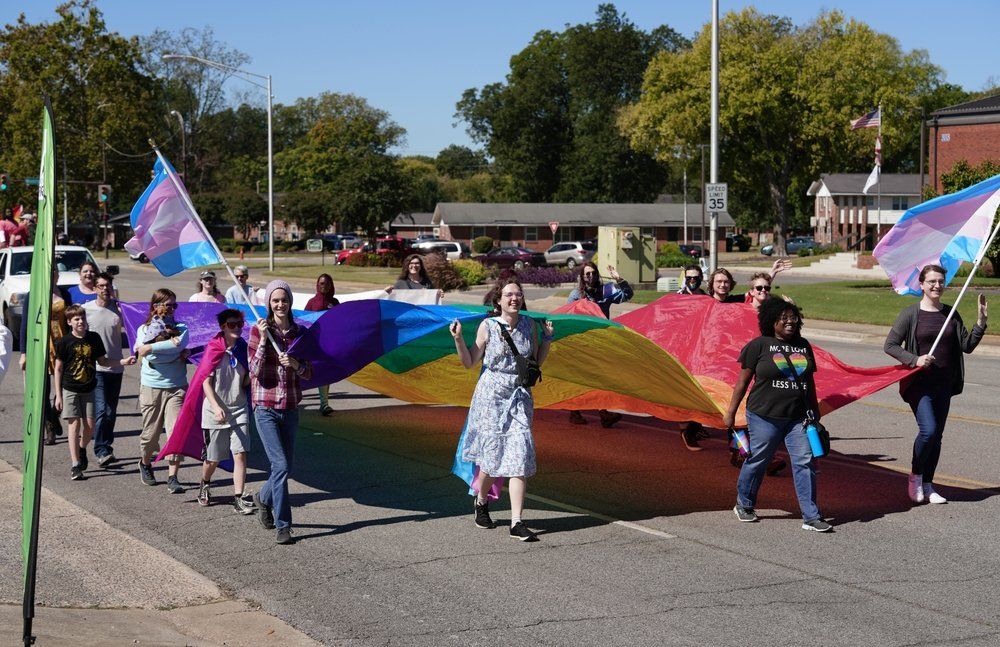
Pride Parade in Huntsville, Alabama

Katssoup / Shutterstock.com

Pride Parade in Huntsville, Alabama (October 1, 2022)

    Nondiscrimination laws: Alabama does not have nondiscrimination laws in employment, housing, health care, education, public accommodations, or credit/lending. Its state code incorrectly defines sex as exclusively male or female, and it prohibits transgender people from using public facilities that align with their identities.

    Marriage equality and parental rights: Alabama does not have adoption or foster care nondiscrimination protections for LGBTQ+ parents. It does not have second-parent adoption for unmarried couples, confirmatory adoption, nor recognition for parents using assisted reproductive technologies. It also does not have family leave laws that encompass LGBTQ+ people.

    Education and youth policies: Alabama has a “Don’t Say Gay” law restricting discussion of LGBTQ+ identities in classrooms. It has banned trans students from participating in sports or using school facilities based on their identities, and it requires staff to forcibly out LGBTQ+ students to their guardians. The state also has a “religious exemption” law for Child Welfare Services.

    Healthcare access and rights: Alabama has banned life-saving gender-affirming care for youth, though it permits the discredited and harmful practice of so-called conversion therapy for youth. Health insurance companies, including Medicaid, are not required to provide coverage related to gender transition or fertility treatments. The state also has a “religious exemption” law for healthcare providers.

    Criminal justice: Alabama’s hate crime laws do not encompass sexual orientation and gender identity, and it has not banned the so-called “LGBTQ+ panic” defense.

    Arkansas

    Pride Walk at Hot Springs National Park

    Danielsen_Photography / Shutterstock.com

    3rd annual Pride Walk at Hot Springs National Park, Arkansas (June, 4 2021)

      Nondiscrimination laws: Arkansas does not have nondiscrimination laws in employment, housing, health care, education, public accommodations, or credit/lending. The state bans cities and local ordinances from passing nondiscrimination laws, and it has law about “adult” performances that could be used to target or restrict drag.

      Marriage equality and parental rights: Arkansas does not have adoption or foster care nondiscrimination protections for LGBTQ+ parents. It does not have second-parent adoption for unmarried couples, confirmatory adoption, nor recognition for parents using assisted reproductive technologies. It also does not have family leave laws that encompass LGBTQ+ people.

      Education and youth policies: Arkansas has a “Don’t Say Gay” law restricting discussion of LGBTQ+ identities in classrooms. It has banned trans students from participating in sports or using school facilities based on their identities, and it requires staff to forcibly out LGBTQ+ students to their guardians.

      Healthcare access and rights: Arkansas has banned life-saving gender-affirming care for youth, though it permits the discredited and harmful practice of so-called conversion therapy for youth. Medicaid is forbidden from providing coverage related to gender transition to minors, and insurance companies are not required to cover fertility treatments. The state also has a “religious exemption” law for healthcare providers.

      Criminal justice: Arkansas’ hate crime laws do not encompass sexual orientation and gender identity, and it has not banned the so-called “LGBTQ+ panic” defense. It has an HIV criminalization law that may require sex offender registration.

      Florida

      Pulse Nightclub memorial

      Chris_Harris / Shutterstock.com

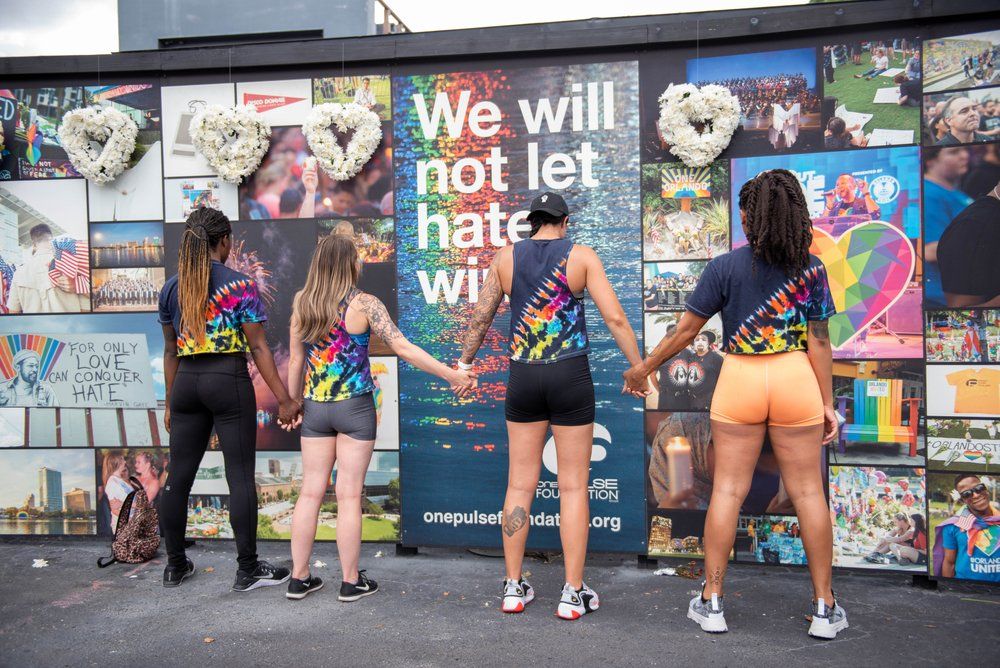
      Mourners pay their respects to the fallen at the Pulse Nightclub memorial on the 5th anniversary of the Pulse mass shooting in Orlando, Florida (June 12, 2021)

        Nondiscrimination laws: Florida has nondiscrimination laws in employment, housing, and public accommodations, but not in credit/lending, health care, nor education. The state prohibits transgender people from using public facilities that align with their identities, and it does not allow updating gender markers on driver’s licenses or birth certificates. It has law about “adult” performances that could be used to target or restrict drag

        Marriage equality and parental rights: Florida does not have adoption or foster care nondiscrimination protections for LGBTQ+ parents. It does not have second-parent adoption for unmarried couples, confirmatory adoption, nor recognition for parents using assisted reproductive technologies. It also does not have family leave laws that encompass LGBTQ+ people.

        Education and youth policies: Florida originated the “Don’t Say Gay” laws restricting discussion of LGBTQ+ identities in classrooms. It has banned trans students from participating in sports or using school facilities based on their identities, and it requires staff to forcibly out LGBTQ+ students to their guardians.

        Healthcare access and rights: Florida has banned life-saving gender-affirming care for youth, though it permits the discredited and harmful practice of so-called conversion therapy for youth. Medicaid is forbidden from providing coverage related to gender transition for all ages, and insurance companies are not required to cover fertility treatments. The state also has a “religious exemption” law for healthcare providers.

        Criminal justice: Florida’s hate crime laws only encompass sexual orientation, not gender identity. It has not banned the so-called “LGBTQ+ panic” defense, and it has an HIV criminalization law.

        Idaho

        Boise rally for transgender youth

        Venture Out Media / Shutterstock.com

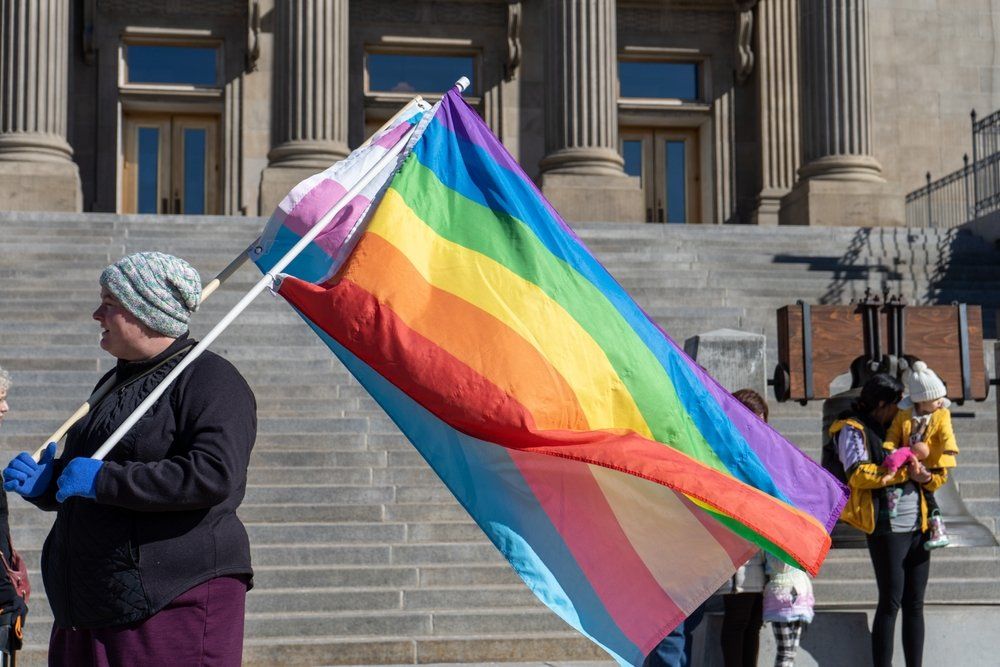
        Rally in support of transgender youth and gender-affirming care in Boise, Idaho (February 24, 2023)

          Nondiscrimination laws: Idaho has nondiscrimination laws in employment, housing, and public accommodations, but not in credit/lending, education, health care, nor for state employees. Its state code incorrectly defines sex as exclusively male or female.

          Marriage equality and parental rights: Idaho does not have adoption or foster care nondiscrimination protections for LGBTQ+ parents. It has second-parent adoption for unmarried couples, but not confirmatory adoption nor recognition for parents using assisted reproductive technologies. It also does not have family leave laws that encompass LGBTQ+ people.

          Education and youth policies: Idaho has banned trans students from participating in sports or using school facilities based on their identities, and it requires staff to forcibly out LGBTQ+ students to their guardians. The state also has a “religious exemption” law for Child Welfare Services, though it has protections for LGBTQ+ youth in the Child Welfare System.

          Healthcare access and rights: Idaho has banned life-saving gender-affirming care for youth, though it permits the discredited and harmful practice of so-called conversion therapy for youth. Medicaid is forbidden from providing coverage related to gender transition for all ages, and insurance companies are not required to cover fertility treatments. The state also has a “religious exemption” law for healthcare providers.

          Criminal justice: Idaho’s hate crime laws do not encompass sexual orientation and gender identity. It has not banned the so-called “LGBTQ+ panic” defense, and it has an HIV criminalization law.

          Indiana

          IUB students at Indy Pride

          Umut Tolga Pehlivan / Shutterstock.com

          Indiana University Bloomington Students walking at Indy Pride in Indianapolis, Indiana (June 4, 2008)

            Nondiscrimination laws: Indiana has weaker nondiscrimination laws in employment, housing, and public accommodations, but not in credit/lending, education, nor health care. The state also has a broad “religious exemption” law.

            Marriage equality and parental rights: Indiana has adoption or foster care nondiscrimination protections based on sexual orientation, but not gender identity. It has second-parent adoption for unmarried couples, but not confirmatory adoption nor recognition for parents using assisted reproductive technologies. It also does not have family leave laws that encompass LGBTQ+ people.

            Education and youth policies: Indiana has a “Don’t Say Gay” law restricting discussion of LGBTQ+ identities in classrooms. It has banned trans students from participating in sports or using school facilities based on their identities, and it requires staff to forcibly out LGBTQ+ students to their guardians.

            Healthcare access and rights: Indiana has banned life-saving gender-affirming care for youth, though it permits the discredited and harmful practice of so-called conversion therapy for youth. Medicaid and state health insurance plans are not required to provide coverage related to gender transition or fertility treatments, but it has trans-inclusive health benefits for state employees.

            Criminal justice: Indiana’s hate crime laws do not encompass sexual orientation and gender identity, and it has not banned the so-called “LGBTQ+ panic” defense. It has an HIV criminalization law that may require sex offender registration.

            Louisiana

            Southern Decadence Parade march

            Scott Colesby / Shutterstock.com

            Southern Decadence Parade march through the French Quarter in New Orleans, Louisiana (September 1, 2024)

              Nondiscrimination laws: Louisiana does not have nondiscrimination laws in employment, housing, health care, education, public accommodations, or credit/lending. Its state code incorrectly defines sex as exclusively male or female, and it prohibits transgender people from using public facilities that align with their identities. The state also has a broad “religious exemption” law.

              Marriage equality and parental rights: Louisiana does not have adoption or foster care nondiscrimination protections for LGBTQ+ parents. It does not have second-parent adoption for unmarried couples, confirmatory adoption, nor recognition for parents using assisted reproductive technologies. It also does not have family leave laws that encompass LGBTQ+ people.

              Education and youth policies: Louisiana has a “Don’t Say Gay” law restricting discussion of LGBTQ+ identities in classrooms. It has banned trans students from participating in sports or using school facilities based on their identities, and it requires staff to forcibly out LGBTQ+ students to their guardians.

              Healthcare access and rights: Louisiana has banned life-saving gender-affirming care for youth, though it permits the discredited and harmful practice of so-called conversion therapy for youth. Health insurance companies, including Medicaid, are not required to provide coverage related to gender transition or fertility treatments, and state employees do not have trans-inclusive benefits.

              Criminal justice: Louisiana’s hate crime laws only encompass sexual orientation, not gender identity. It has not banned the so-called “LGBTQ+ panic” defense, and it has an HIV criminalization law that may require sex offender registration.

              Mississippi

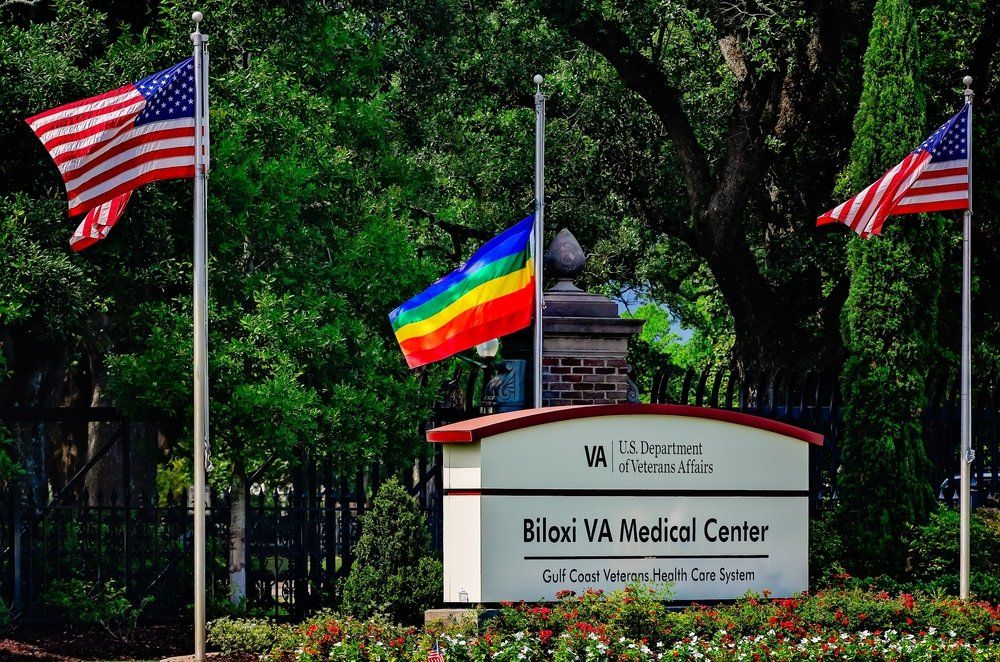
              Rainbow flag at Biloxi VA Medical Center

              Carmen K. Sisson / Shutterstock.com

              A rainbow flag supporting Pride month flies a the Biloxi VA Medical Center in Biloxi, Mississippi (June 5, 2023)

                Nondiscrimination laws: Mississippi does not have nondiscrimination laws in employment, housing, health care, education, public accommodations, or credit/lending. Its state code incorrectly defines sex as exclusively male or female, and it prohibits transgender people from using public facilities that align with their identities. The state also has a broad “religious exemption” law.

                Marriage equality and parental rights: Mississippi does not have adoption or foster care nondiscrimination protections for LGBTQ+ parents. It has second-parent adoption for unmarried couples, but not confirmatory adoption nor recognition for parents using assisted reproductive technologies. It also does not have family leave laws that encompass LGBTQ+ people.

                Education and youth policies: Mississippi has a “Don’t Say Gay” law restricting discussion of LGBTQ+ identities in classrooms. It has banned trans students from participating in sports or using school facilities based on their identities, and it requires staff to forcibly out LGBTQ+ students to their guardians. The state also has a “religious exemption” law for Child Welfare Services.

                Healthcare access and rights: Mississippi has banned life-saving gender-affirming care for youth, though it permits the discredited and harmful practice of so-called conversion therapy for youth. Medicaid is forbidden from providing coverage related to gender transition for youth, and insurance companies are not required to cover fertility treatments. The state also has a “religious exemption” law for healthcare providers.

                Criminal justice: Mississippi’s hate crime laws do not encompass sexual orientation and gender identity. It has not banned the so-called “LGBTQ+ panic” defense, and it has an HIV criminalization law.

                Missouri

                Saint Louis PrideFest

                Ryanzo W. Perez / Shutterstock.com

                A view down one of the streets filled with celebrants during Saint Louis PrideFest in Missouri (June 24, 2023)

                  Nondiscrimination laws: Missouri has weaker nondiscrimination laws in housing, and public accommodations, but not in employment, credit/lending, education, nor health care. The state also has a broad “religious exemption” law.

                  Marriage equality and parental rights: Missouri’s adoption or foster care nondiscrimination protections only encompass sexual orientation, not gender identity. It does not have second-parent adoption for unmarried couples, confirmatory adoption, nor recognition for parents using assisted reproductive technologies. It also does not have family leave laws that encompass LGBTQ+ people.

                  Education and youth policies: Missouri has banned schools and districts from passing nondiscrimination or anti-bullying policies protecting LGBTQ+ students. It has banned trans students from participating in sports based on their identities, but not from using facilities that align with their identities.

                  Healthcare access and rights: Missouri has banned life-saving gender-affirming care for youth, though it permits the discredited and harmful practice of so-called conversion therapy for youth. Medicaid is forbidden from providing coverage related to gender transition for all ages, and insurance companies are not required to cover fertility treatments. The state also has a “religious exemption” law for healthcare providers.

                  Criminal justice: Missouri’s hate crime laws encompass sexual orientation and gender identity, though it has not banned the so-called “LGBTQ+ panic” defense, and it has an HIV criminalization law.

                  Montana

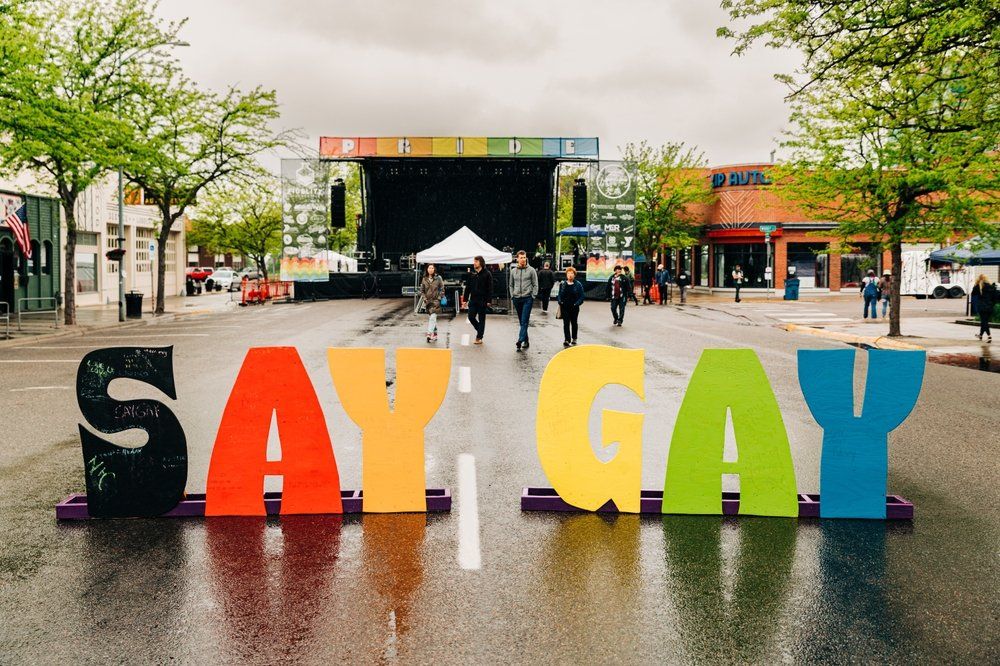
                  "Say Gay" sign at Missoula Pride\u200b

                  Cavan-Images / Shutterstock.com

                  “Say Gay” sign at Missoula Pride in Montana (March 29, 2024)

                    Nondiscrimination laws: Montana does not have nondiscrimination laws in employment, housing, health care, education, public accommodations, or credit/lending. Its state code incorrectly defines sex as exclusively male or female, and it has a broad “religious exemption” law. The state has also explicitly restricted drag performances, and does not allow updating gender markers on birth certificates

                    Marriage equality and parental rights: Montana’s adoption or foster care nondiscrimination protections only encompass sexual orientation, not gender identity. It has second-parent adoption for unmarried couples, but not confirmatory adoption nor recognition for parents using assisted reproductive technologies. It also does not have family leave laws that encompass LGBTQ+ people.

                    Education and youth policies: Montana requires that parents be notified of LGBTQ+ curricula so they can opt out. It has banned trans students from participating in sports based on their identities, but not from using facilities that align with their identities. The state requires staff to forcibly out LGBTQ+ students to their guardians.

                    Healthcare access and rights: Montana has banned life-saving gender-affirming care for youth, though it permits the discredited and harmful practice of so-called conversion therapy for youth. Health insurance companies and Medicaid are required to cover care related to gender transition, and there is some coverage for fertility treatments. However, the state has a “religious exemption” law for healthcare providers.

                    Criminal justice: Montana’s hate crime laws do not encompass sexual orientation and gender identity. It has not banned the so-called “LGBTQ+ panic” defense, and it has an HIV criminalization law.

                    Oklahoma

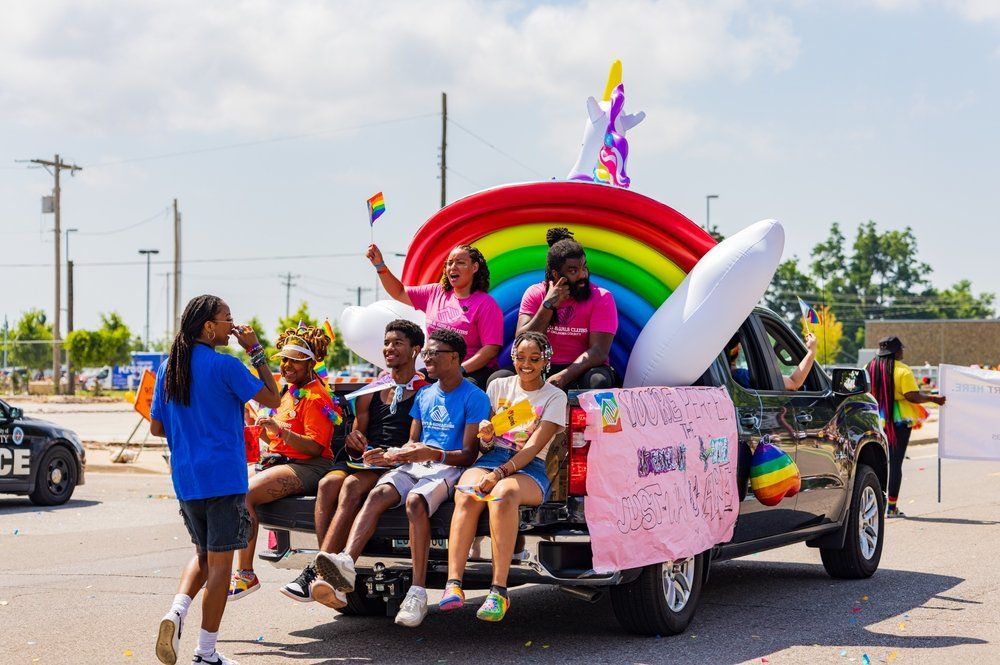
                    Pride Parade in Oklahoma

                    Kit Leong / Shutterstock.com

                    Pride Parade in Oklahoma (June 26, 2023)

                      Nondiscrimination laws: Oklahoma does not have nondiscrimination laws in employment, housing, health care, education, public accommodations, or credit/lending. Its state code incorrectly defines sex as exclusively male or female, and it prohibits updated gender markers on birth certificates. It also has a broad “religious exemption” law.

                      Marriage equality and parental rights: Oklahoma does not have adoption or foster care nondiscrimination protections for LGBTQ+ parents. It has second-parent adoption for unmarried couples, but not confirmatory adoption nor recognition for parents using assisted reproductive technologies. It also does not have family leave laws that encompass LGBTQ+ people.

                      Education and youth policies: Oklahoma has a weaker version of a “Don’t Say Gay” law that restricts the discussion of “homosexuality” in specific school subjects. It has banned trans students from participating in sports or using school facilities based on their identities. The state also has a “religious exemption” law for Child Welfare Services, though it has protections for LGBTQ+ youth in the Child Welfare System.

                      Healthcare access and rights: Oklahoma has banned life-saving gender-affirming care for youth, though it permits the discredited and harmful practice of so-called conversion therapy for youth. Health insurance companies, including Medicaid, are not required to provide coverage related to gender transition or fertility treatments, and state employees are not permitted trans-inclusive benefits.

                      Criminal justice: Oklahoma’s hate crime laws do not encompass sexual orientation and gender identity. It has not banned the so-called “LGBTQ+ panic” defense, and it has an HIV criminalization law.

                      South Carolina

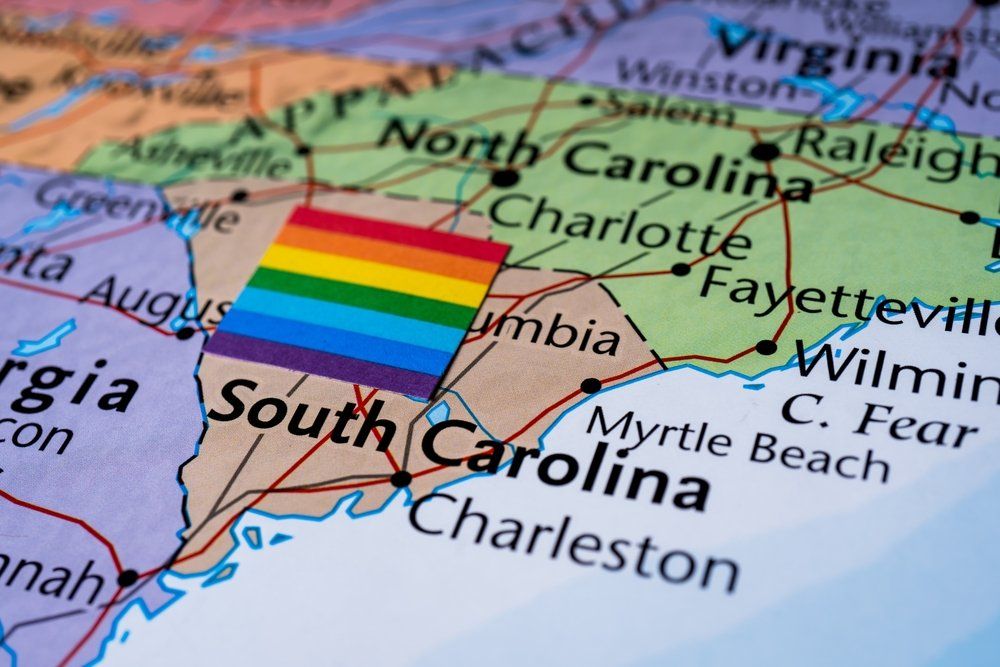
                      Rainbow flag on a map of South Carolina\u200b

                      Shuttershock creative

                      Rainbow flag on a map of South Carolina

                        Nondiscrimination laws: South Carolina does not have nondiscrimination laws in employment, housing, health care, education, public accommodations, or credit/lending. It has a broad “religious exemption” law.

                        Marriage equality and parental rights: South Carolina‘s adoption or foster care nondiscrimination protections only encompass sexual orientation, not gender identity. It does not have second-parent adoption for unmarried couples, confirmatory adoption, nor recognition for parents using assisted reproductive technologies. It also does not have family leave laws that encompass LGBTQ+ people.

                        Education and youth policies: South Carolina has banned trans students from participating in sports based on their identities, but not from using facilities that align with their identities. The state requires staff to forcibly out LGBTQ+ students to their guardians. The state also has a “religious exemption” law for Child Welfare Services.

                        Healthcare access and rights: South Carolina has banned life-saving gender-affirming care for youth, though it permits the discredited and harmful practice of so-called conversion therapy for youth. Medicaid is forbidden from providing coverage related to gender transition for all ages, and insurance companies are not required to cover fertility treatments. The state also has a “religious exemption” law for healthcare providers.

                        Criminal justice: South Carolina‘s hate crime laws do not encompass sexual orientation and gender identity. It has not banned the so-called “LGBTQ+ panic” defense, and it has an HIV criminalization law.

                        South Dakota

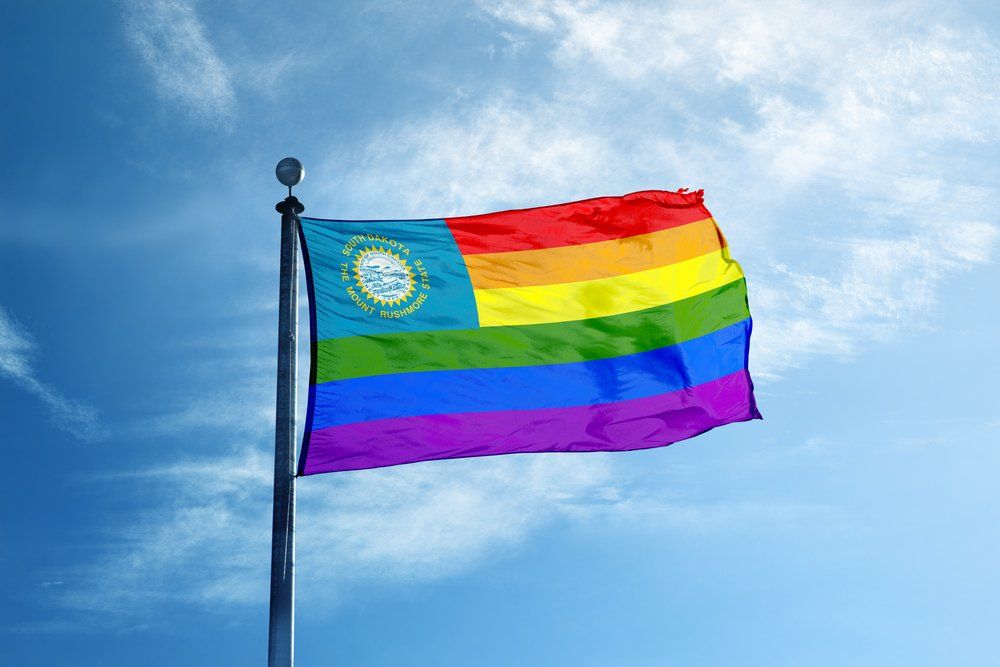
                        South Dakota state flag with rainbow stripes \u200b

                        Shuttershock creative

                        South Dakota state flag with rainbow stripes

                          Nondiscrimination laws: South Dakota does not have nondiscrimination laws in employment, housing, health care, education, public accommodations, or credit/lending. It has a broad “religious exemption” law.

                          Marriage equality and parental rights: South Dakota’s adoption or foster care nondiscrimination protections encompass sexual orientation and gender identity. However, it does not have second-parent adoption for unmarried couples, confirmatory adoption, nor recognition for parents using assisted reproductive technologies. It also does not have family leave laws that encompass LGBTQ+ people.

                          Education and youth policies: South Dakota has banned schools and districts from passing nondiscrimination or anti-bullying policies protecting LGBTQ+ students. It has banned trans students from participating in sports based on their identities, but not from using facilities that align with their identities. The state also has a “religious exemption” law for Child Welfare Services, though it has protections for LGBTQ+ youth in the Child Welfare System.

                          Healthcare access and rights: South Dakota has banned life-saving gender-affirming care for youth, though it permits the discredited and harmful practice of so-called conversion therapy for youth. Health insurance companies, including Medicaid, are not required to provide coverage related to gender transition or fertility treatments, and state employees are not permitted trans-inclusive benefits.

                          Criminal justice: South Dakota‘s hate crime laws do not encompass sexual orientation and gender identity, and it has not banned the so-called “LGBTQ+ panic” defense. It has an HIV criminalization law that may require sex offender registration.

                          Tennessee

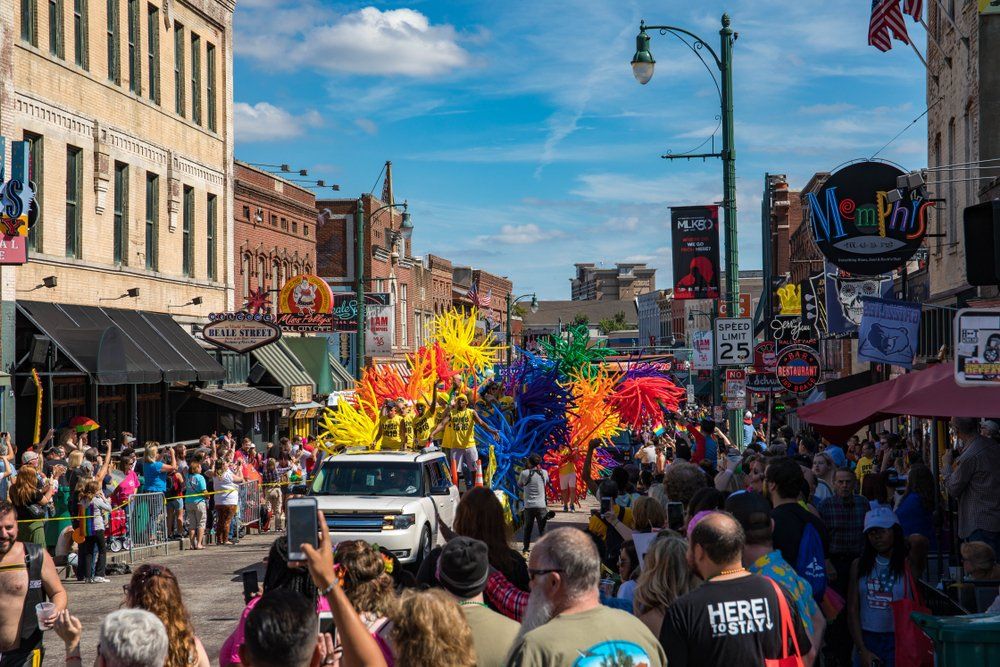
                          Pride Parade on Beale Street in Memphis

                          evenfh / Shutterstock.com

                          Pride Parade on Beale Street in Memphis, Tennessee (September 28, 2018)

                            Nondiscrimination laws: Tennessee does not have nondiscrimination laws in employment, housing, health care, education, public accommodations, or credit/lending. It instead bans cities and local ordinances from passing nondiscrimination laws. State code incorrectly defines sex as exclusively male or female, and it does not allow updating gender markers on driver’s licenses or birth certificates. The state has a broad “religious exemption” law that even allows officials to deny marriage licenses based on their personal beliefs. It has also explicitly restricted drag performances.

                            Marriage equality and parental rights: Tennessee’s adoption or foster care nondiscrimination protections encompass sexual orientation and gender identity. However, it does not have second-parent adoption for unmarried couples, confirmatory adoption, nor recognition for parents using assisted reproductive technologies. It also does not have family leave laws that encompass LGBTQ+ people.

                            Education and youth policies: Tennessee requires that parents be notified of LGBTQ+ curricula so they can opt out. It has banned trans students from participating in sports based on their identities and from using facilities that align with their identities. The state requires staff to forcibly out LGBTQ+ students to their guardians. The state also has a “religious exemption” law for Child Welfare Services, though it has protections for LGBTQ+ youth in the Child Welfare System.

                            Healthcare access and rights: Tennessee has banned life-saving gender-affirming care for youth, though it permits the discredited and harmful practice of so-called conversion therapy for youth. Medicaid is forbidden from providing coverage related to gender transition for all ages, and insurance companies are not required to cover fertility treatments. The state also has a “religious exemption” law for healthcare providers, and state employees are not permitted trans-inclusive benefits.

                            Criminal justice: Tennessee’s hate crime laws encompass sexual orientation and gender identity, though it has not banned the so-called “LGBTQ+ panic” defense, and it has an HIV criminalization law that may require sex offender registration.

                            Texas

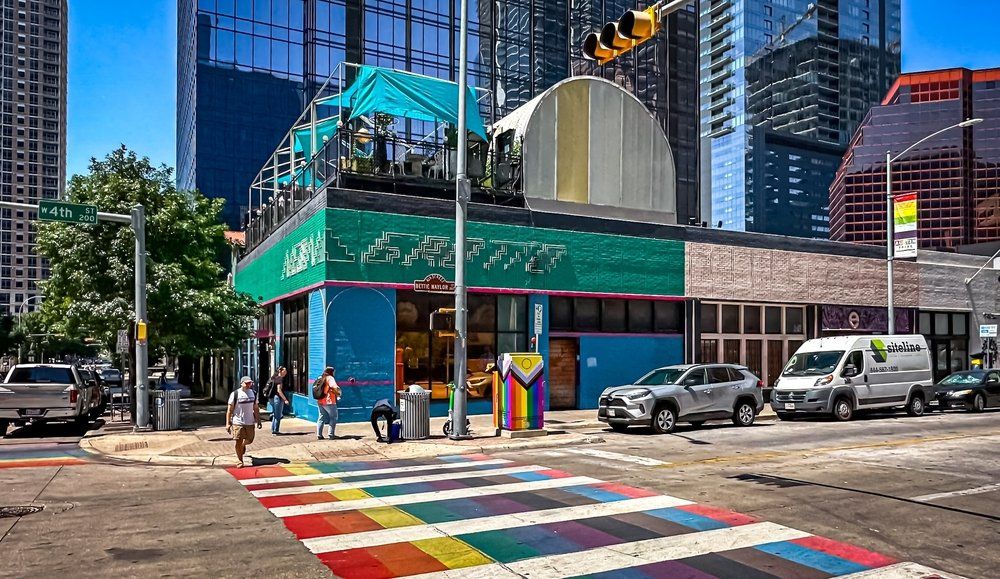
                            Rainbow crosswalk in Austin

                            eric laudonien / Shutterstock.com

                            Rainbow crosswalk outside Neon Grotto nightclub in Austin, Texas (May 29, 2024)

                              Nondiscrimination laws: Texas has nondiscrimination laws in employment and for state employees, but not in housing, public accommodations, credit/lending, education, nor health care. The state does not allow updating gender markers on driver’s licenses or birth certificates, and it has a broad “religious exemption” law.

                              Marriage equality and parental rights: Texas does not have adoption or foster care nondiscrimination protections for LGBTQ+ parents. It does not have second-parent adoption for unmarried couples, confirmatory adoption, nor recognition for parents using assisted reproductive technologies. It also does not have family leave laws that encompass LGBTQ+ people.

                              Education and youth policies: Texas has a weaker version of a “Don’t Say Gay” law that restricts the discussion of “homosexuality” in specific school subjects. It has banned trans students from participating in sports based on their identities, but not from using facilities that align with their identities. The state also has a “religious exemption” law for Child Welfare Services without protections for LGBTQ+ youth.

                              Healthcare access and rights: Texas has banned life-saving gender-affirming care for youth, though it permits the discredited and harmful practice of so-called conversion therapy for youth. Medicaid is forbidden from providing coverage related to gender transition for all ages, and insurance companies are not required to cover fertility treatments. State employees are not permitted trans-inclusive benefits.

                              Criminal justice: Texas’s hate crime laws only encompass sexual orientation, not gender identity. It has not banned the so-called “LGBTQ+ panic” defense.

                              Wyoming

                              Double rainbow against a black sky in Wyoming

                              Shuttershock creative

                              Double rainbow against a black sky in Wyoming

                                Nondiscrimination laws: Wyoming does not have nondiscrimination laws in employment, housing, health care, education, public accommodations, or credit/lending.

                                Marriage equality and parental rights: Wyoming does not have adoption or foster care nondiscrimination protections for LGBTQ+ parents. It does not have second-parent adoption for unmarried couples, nor confirmatory adoption. It also does not have family leave laws that encompass LGBTQ+ people. However, it does have recognition for parents using assisted reproductive technologies.

                                Education and youth policies: Wyoming has a weaker version of a “Don’t Say Gay” law that restricts the discussion of “homosexuality” in specific school subjects. It has banned trans students from participating in sports based on their identities, but not from using facilities that align with their identities.

                                Healthcare access and rights: Wyoming has banned life-saving gender-affirming care for youth, though it permits the discredited and harmful practice of so-called conversion therapy for youth. Health insurance companies, including Medicaid, are not required to provide coverage related to gender transition or fertility treatments.

                                Criminal justice: Wyoming’s hate crime laws do not encompass sexual orientation and gender identity, and it has not banned the so-called “LGBTQ+ panic” defense.

                                Dishonorable mentions

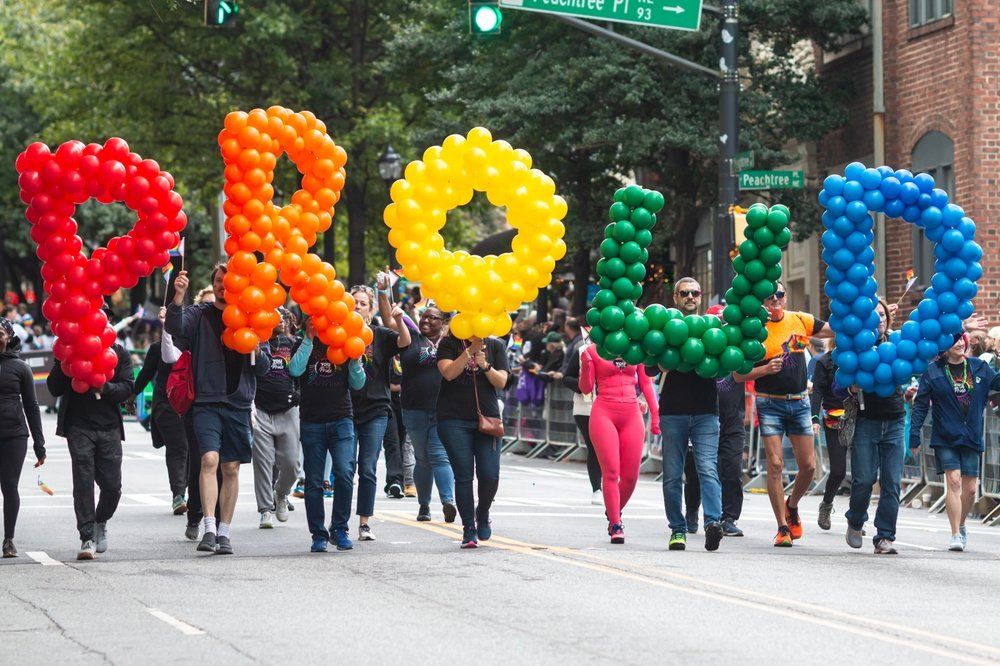
                                "Proud" balloons at Atlanta Pride

                                BluIz70 / Shutterstock.com

                                People carry large balloon letters that spell out “Proud” as they walk in the annual pride parade in Atlanta, Georgia (October 15, 2023)

                                  Other states that ranked below average include: Alaska, Arizona, Georgia, Iowa, Kansas, Kentucky, Nebraska, North Carolina, North Dakota, Ohio, Utah, and West Virginia.

                                  What states are the best for LGBTQ+ people? These are the top 15

                                  Read more at The Advocate.

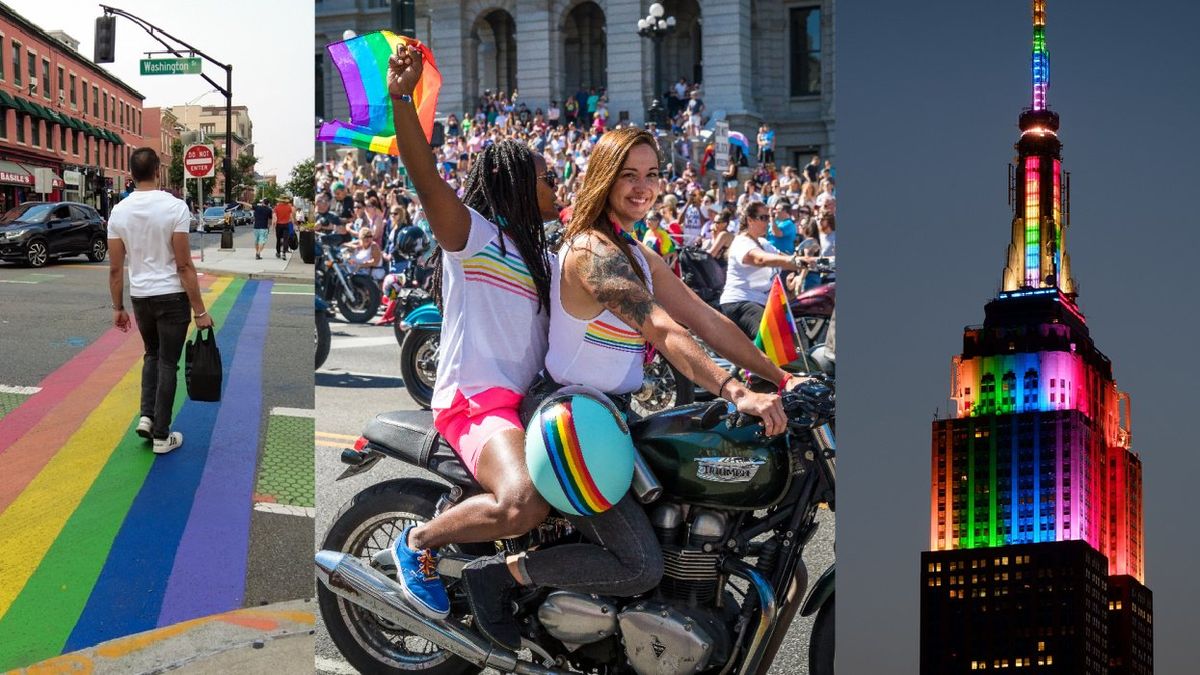
                                  \u200bRainbow crosswalk in Hoboken (L); Women on motorcycles at Denver Pride (M); Empire State Building in rainbow colors (R)

                                  Kirkam / Shutterstock.com; Philipp Salveter / Shutterstock.com; anaglic / Shutterstock.com

                                  Rainbow LGBTQ+ Pride crosswalk in Hoboken, New Jersey (L); Women on motorcycles at Pride celebration in Denver, Colorado (M); Empire State Building in NYC lit up in rainbow colors (R)

                                    Legislative attacks on the LGBTQ+ community have been pushed everywhere from city councils to the White House — but there are still some areas that are safe.

                                    Over 1,000 anti-LGBTQ+ laws have been proposed across every state legislature in the U.S. over the past two years, according to the American Civil Liberties Union, and 126 have passed into law. Less than two months into the 2025 legislative session, 390 laws targeting LGBTQ+ people have been proposed.

                                    Still, marriage equality and anti-discrimination protections based on sexual orientation and gender identity are still guaranteed federally by U.S. Supreme Court rulings (for now). On top of that, at least 15 states have “shield laws” protecting access to gender-affirming care and abortion.

                                    Based on laws surrounding marriage, family rights, health care, education, and youth collected by the Movement Advancement Project, here are the 15 best states for LGBTQ+ people.

                                    Related: What states are the most dangerous for LGBTQ+ people? Here are the worst 15

                                    California
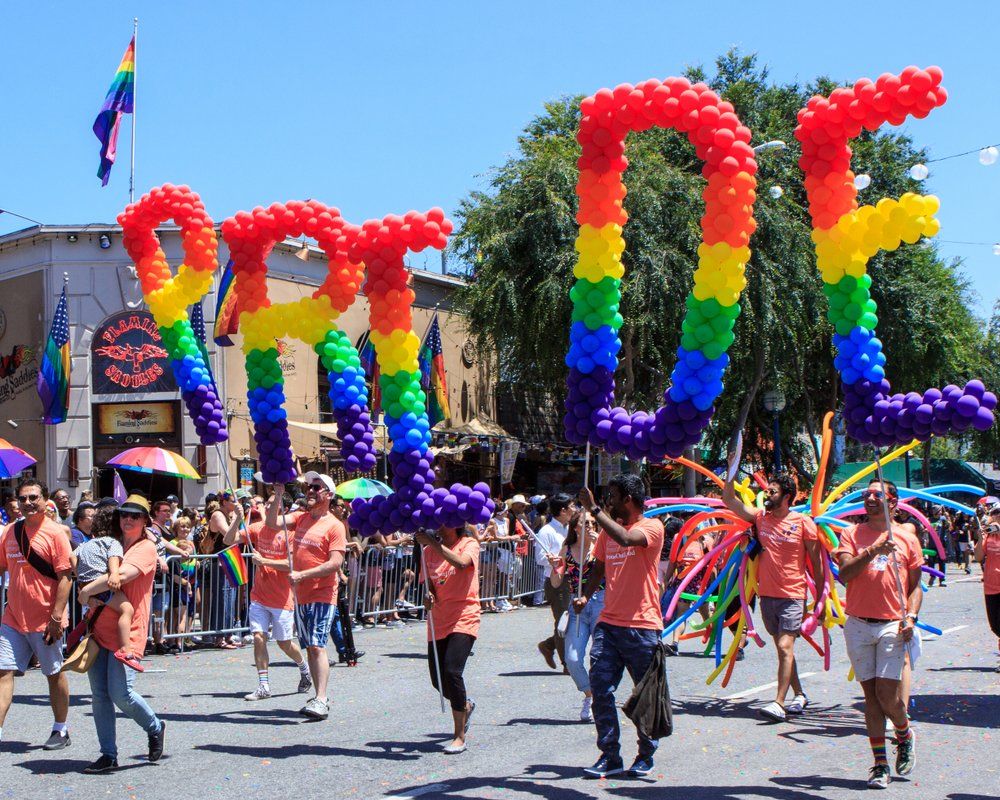
                                    West Hollywood Pride balloons

                                    GrandAve / Shutterstock.com

                                    Pride celebration in West Hollywood, California – June 9, 2019

                                      Nondiscrimination laws: California has nondiscrimination laws in employment, housing, health care, education, public accommodations, and credit/lending.

                                      Marriage equality and parental rights: California has adoption and foster care nondiscrimination protections for LGBTQ+ parents, second-parent adoption for unmarried couples and confirmatory adoption, and recognition for parents using assisted reproductive technologies. It also has family leave laws, which include LGBTQ-inclusive definitions.

                                      Education and youth policies: California does not restrict discussion of LGBTQ+ identities in classrooms, and instead requires curriculum to be LGBTQ-inclusive, which parents are not required to be notified of. It does not prevent transgender students from participating in sports or using school facilities based on their identities, and it does not require staff to forcibly out LGBTQ+ students to their guardians.

                                      Healthcare access and rights: California has “shield” laws protecting access to gender-affirming care for youth, as well as abortion. The state has also banned so-called conversion therapy for youth. Health insurance companies, including Medicaid, are not allowed to deny coverage related to gender transition. However, they are not required to cover fertility treatments.

                                      Criminal justice: California’s hate crime laws encompass sexual orientation and gender identity, and it has banned the so-called “LGBTQ+ panic” defense. While the state does not criminalize HIV, it does have sentencing enhancements for sex-related convictions for those with HIV.

                                      Colorado
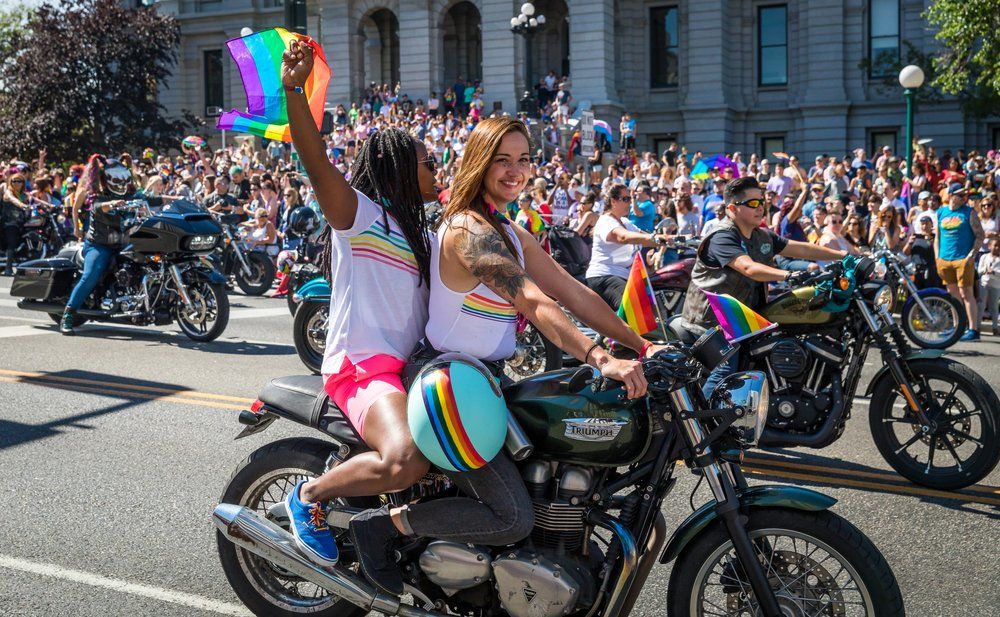
                                      Women on motorcycles at Denver Pride celebration

                                      Philipp Salveter / Shutterstock.com

                                      Women on motorcycles at Pride celebration in Denver, Colorado, USA – June 16th 2019

                                        Nondiscrimination laws: Colorado has nondiscrimination laws in employment, housing, education, health care, public accommodations, and credit/lending.

                                        Marriage equality and parental rights: Colorado has adoption and foster care nondiscrimination protections for LGBTQ+ parents, second-parent adoption for unmarried couples and confirmatory adoption, and recognition for parents using assisted reproductive technologies. It also has family leave laws, which include LGBTQ-inclusive definitions.

                                        Education and youth policies: Colorado does not prevent transgender students from participating in sports or using school facilities based on their identities, and it does not require staff to forcibly out LGBTQ+ students to their guardians. It does not restrict discussion of LGBTQ+ identities in classrooms, and instead requires curriculum to be LGBTQ-inclusive, which parents are not required to be notified of.

                                        Healthcare access and rights: Colorado has “shield” laws protecting access to gender-affirming care for youth, as well as abortion. The state has also banned so-called conversion therapy for youth. Health insurance companies, including Medicaid, are not allowed to deny coverage related to gender transition. However, state employees who are transgender do not have inclusive health benefits. Insurance companies are also not required to cover fertility treatments.

                                        Criminal justice: The state’s hate crime laws encompass sexual orientation and gender identity, and it has banned the so-called “LGBTQ+ panic” defense. Like California, Colorado does not criminalize HIV, but it does have sentencing enhancements for sex-related convictions for those with HIV.

                                        Connecticut
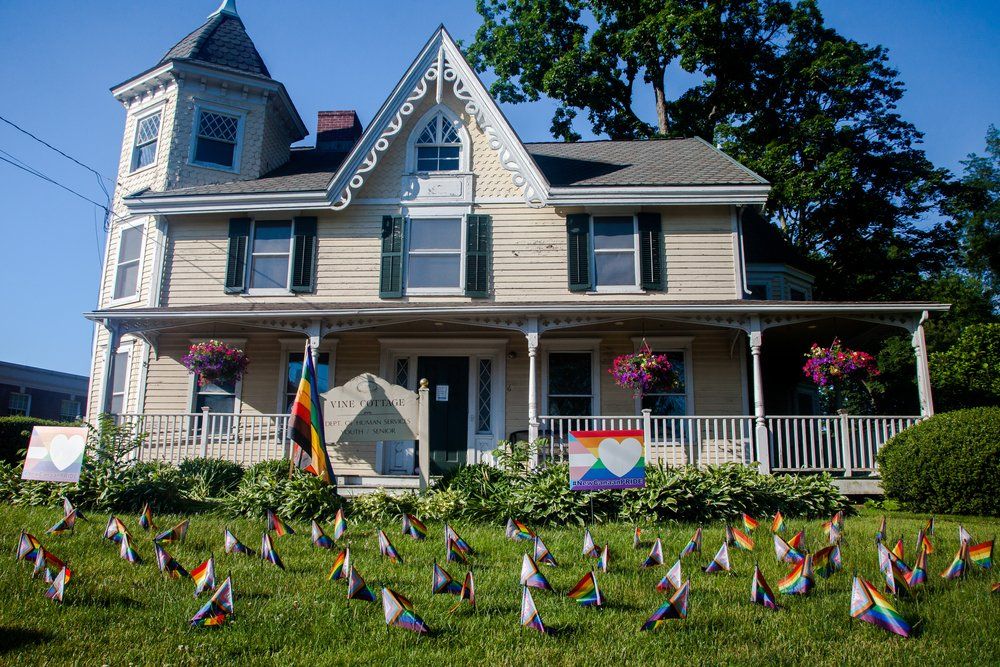
                                        Pride flags outside Vine Cottage CT

                                        Miro Vrlik Photography / Shutterstock.com

                                        LGBTQ+ Pride flags outside Vine Cottage in New Canaan, Connecticut – June 13, 2021

                                          Nondiscrimination laws: Connecticut has nondiscrimination laws in employment, housing, education, public accommodations, and credit/lending. It does not have nondiscrimination laws for private healthcare, and it does have a broad “Religious Exemption” law.

                                          Marriage equality and parental rights: Connecticut has adoption and foster care nondiscrimination protections for LGBTQ+ parents, second-parent adoption for unmarried couples and confirmatory adoption, and recognition for parents using assisted reproductive technologies. It also has family leave laws, but their LGBTQ-inclusive definitions are not as robust as those of California or Colorado.

                                          Education and youth policies: Connecticut does not restrict discussion of LGBTQ+ identities in classrooms, but it does not have LGBTQ-inclusive curriculum. It does not prevent transgender students from participating in sports or using school facilities based on their identities, and it does not require staff to forcibly out LGBTQ+ students to their guardians.

                                          Healthcare access and rights: Connecticut has “shield” laws protecting access to gender-affirming care for youth, as well as abortion. The state has also banned so-called conversion therapy for youth. Health insurance companies, including Medicaid, are not allowed to deny coverage related to gender transition. Private insurance is required to cover some fertility treatments, but Medicaid is not.Criminal justice:Connecticut’s hate crime law encompasses sexual orientation but not gender identity. It also does not have nondiscrimination laws for LGBTQ+ people in jury selection.

                                          Illinois
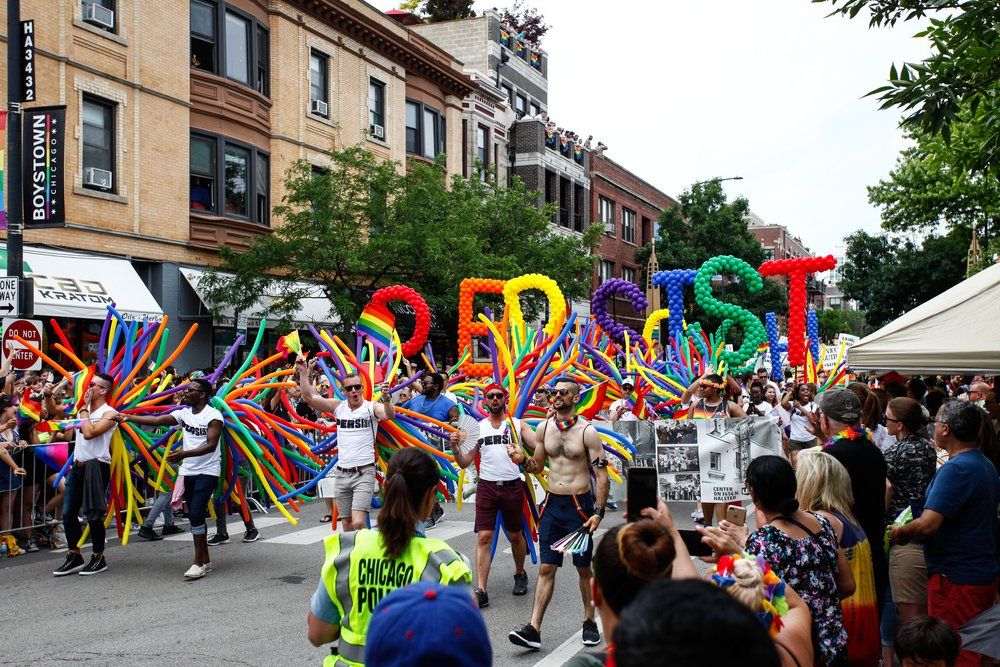
                                          "Persist" balloons at Chicago

                                          Dominique Robinson / Shutterstock.com

                                          LGBTQ+ Pride in Chicago, Illinois – June 30th 2019

                                            Nondiscrimination laws: Illinois has nondiscrimination laws in employment, housing, health care, education, public accommodations, and credit/lending. However, it does have a broad “Religious Exemption” law.

                                            Marriage equality and parental rights: Illinois has adoption and foster care nondiscrimination protections for LGBTQ+ parents, second-parent adoption for unmarried couples, and recognition for parents using assisted reproductive technologies. It also has family leave laws, which include LGBTQ-inclusive definitions. It does not have confirmatory adoption.

                                            Education and youth policies: Illinois does not restrict discussion of LGBTQ+ identities in classrooms, and instead requires curriculum to be LGBTQ-inclusive, which parents are not required to be notified of. It does not prevent transgender students from participating in sports or using school facilities based on their identities, and it does not require staff to forcibly out LGBTQ+ students to their guardians.

                                            Healthcare access and rights: Illinois has “shield” laws protecting access to gender-affirming care for youth, as well as abortion. The state has also banned so-called conversion therapy for youth. Health insurance companies, including Medicaid, are not allowed to deny coverage related to gender transition or fertility treatments.

                                            Criminal justice: Illinois’ hate crime laws encompass sexual orientation and gender identity, and it has banned the so-called “LGBTQ+ panic” defense.

                                            Maine
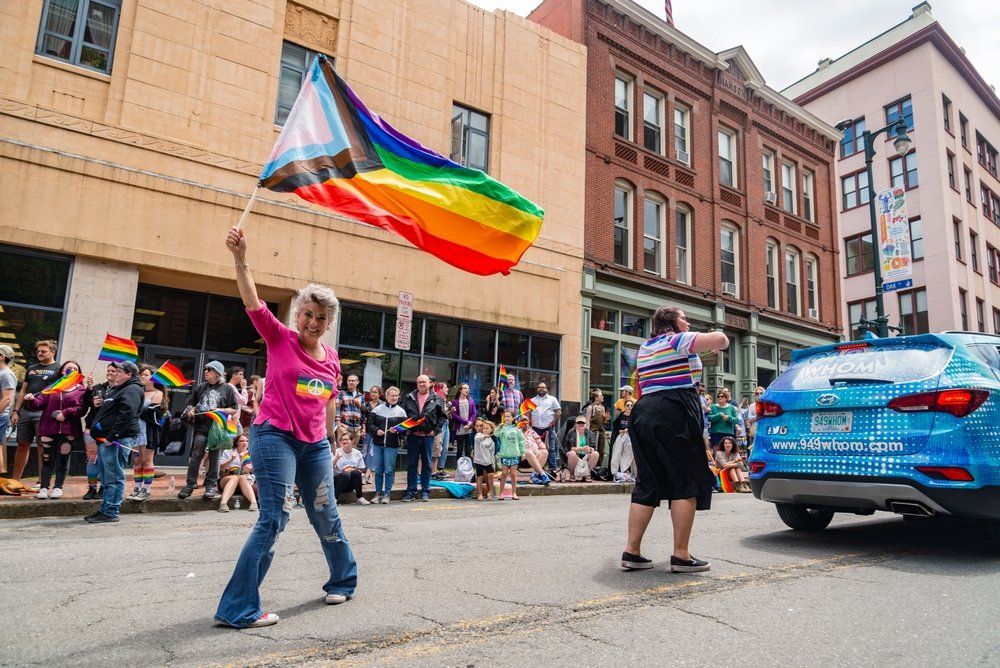
                                            Woman waving flag at Pride in Portland, Maine

                                            Enrico Della Pietra / Shutterstock.com

                                            LGBTQ+ Pride in Portland, Maine – June 18, 2022

                                              Nondiscrimination laws: Maine has nondiscrimination laws in employment, housing, health care, education, public accommodations, and credit/lending.

                                              Marriage equality and parental rights: Maine has adoption and foster care nondiscrimination protections for LGBTQ+ parents, second-parent adoption for unmarried couples and confirmatory adoption, and recognition for parents using assisted reproductive technologies. It also has family leave laws, which include LGBTQ-inclusive definitions.

                                              Education and youth policies: Maine does not restrict discussion of LGBTQ+ identities in classrooms, but it does not have LGBTQ-inclusive curriculum. It does not prevent transgender students from participating in sports or using school facilities based on their identities, and it does not require staff to forcibly out LGBTQ+ students to their guardians.

                                              Healthcare access and rights: Maine has “shield” laws protecting access to gender-affirming care for youth, as well as abortion. The state has also banned so-called conversion therapy for youth. Health insurance companies, including Medicaid, are not allowed to deny coverage related to gender transition. Private insurance is required to cover some fertility treatments, but Medicaid is not.Criminal justice:Maine’s hate crime laws encompass sexual orientation and gender identity, and it has banned the so-called “LGBTQ+ panic” defense.

                                              Maryland
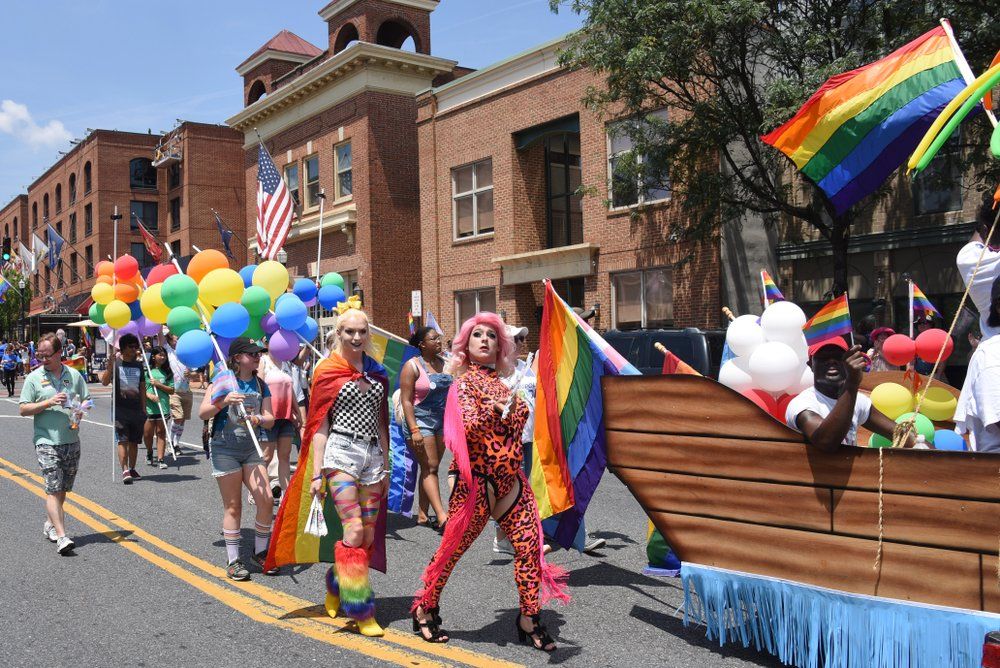
                                              Marchers and floats in the first Annapolis Pride parade

                                              Keri Delaney / Shutterstock.com

                                              The inaugural Pride Parade in Annapolis, Maryland – June 29, 2019

                                                Nondiscrimination laws: Maryland has nondiscrimination laws in employment, housing, health care, education, public accommodations, and credit/lending.

                                                Marriage equality and parental rights: Maryland has adoption and foster care nondiscrimination protections for LGBTQ+ parents, confirmatory adoption, and recognition for parents using assisted reproductive technologies. It does not second-parent adoption for unmarried couples. It also has family leave laws, but their LGBTQ-inclusive definitions are not as robust as others.

                                                Education and youth policies: Maryland does not restrict discussion of LGBTQ+ identities in classrooms, but it does not have LGBTQ-inclusive curriculum. It does not prevent transgender students from participating in sports or using school facilities based on their identities, and it does not require staff to forcibly out LGBTQ+ students to their guardians.

                                                Healthcare access and rights: Maryland has “shield” laws protecting access to gender-affirming care for youth, as well as abortion. The state has also banned so-called conversion therapy for youth. Health insurance companies, including Medicaid, are not allowed to deny coverage related to gender transition. Private insurance is required to cover some fertility treatments, but Medicaid is not.

                                                Criminal justice: Maryland’s hate crime laws encompass sexual orientation and gender identity, and it has banned the so-called “LGBTQ+ panic” defense. It does have a law criminalizing the transmission of HIV.

                                                Massachusetts
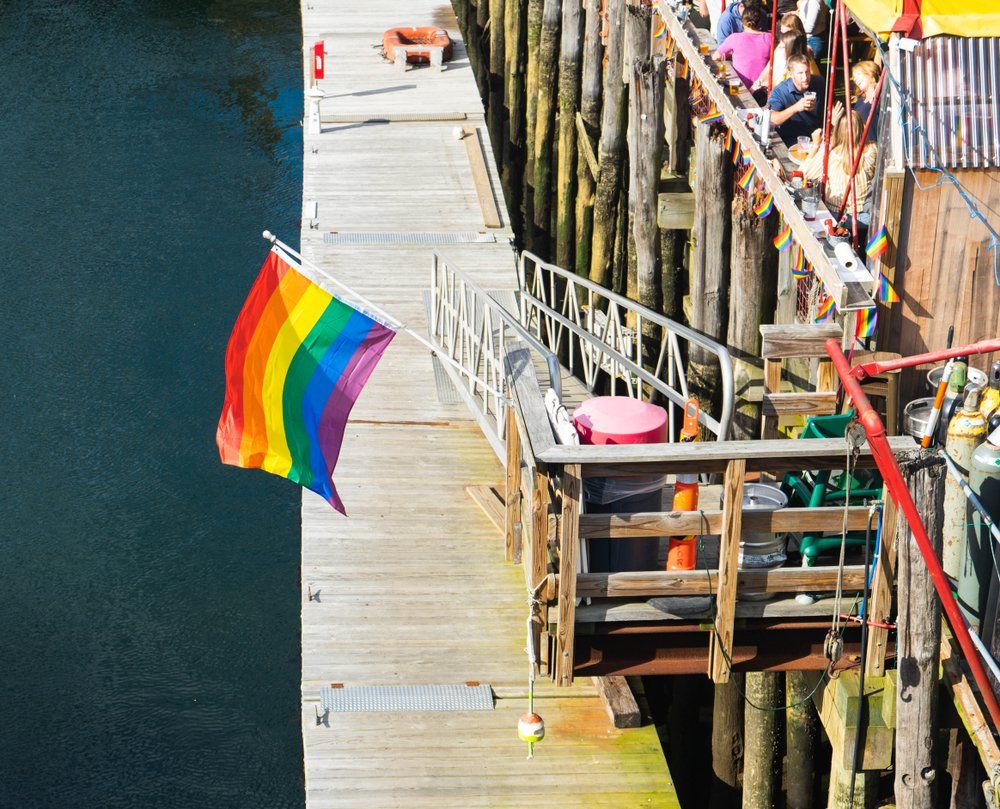
                                                Pride flag over Boston Seaport

                                                Michael Moloney / Shutterstock.com

                                                LGBTQ+ Pride flag waving in the wind over the Boston Seaport – JUNE 2, 2019

                                                  Nondiscrimination laws: Massachusetts has nondiscrimination laws in employment, housing, education, public accommodations, and credit/lending. It has nondiscrimination laws for gender identity in private healthcare, but not for sexual orientation.

                                                  Marriage equality and parental rights: Massachusetts has adoption and foster care nondiscrimination protections for LGBTQ+ parents, second-parent adoption for unmarried couples, and recognition for parents using assisted reproductive technologies. It also has family leave laws, which include LGBTQ-inclusive definitions. It does not have confirmatory adoption.

                                                  Education and youth policies: Massachusetts does not restrict discussion of LGBTQ+ identities in classrooms, but it does not have LGBTQ-inclusive curriculum. It does not prevent transgender students from participating in sports or using school facilities based on their identities, and it does not require staff to forcibly out LGBTQ+ students to their guardians.

                                                  Healthcare access and rights: Massachusetts has “shield” laws protecting access to gender-affirming care for youth, as well as abortion. The state has also banned so-called conversion therapy for youth. Health insurance companies, including Medicaid, are not allowed to deny coverage related to gender transition. Private insurance is required to cover some fertility treatments, but Medicaid is not.

                                                  Criminal justice: Maryland’s hate crime laws encompass sexual orientation and gender identity, but it has not banned the so-called “LGBTQ+ panic” defense. It does not have nondiscrimination protections based on gender identity for jury selection.

                                                  Minnesota

                                                  Lowry Avenue Bridge in Minneapolis lit in Rainbow Colors

                                                  Shuttershock Creative

                                                  Lowry Avenue Bridge in Minneapolis lit in Rainbow Colors in Honor of Orlando Victims

                                                    Nondiscrimination laws: Minnesota has nondiscrimination laws in employment, housing, health care, education, public accommodations, and credit/lending.

                                                    Marriage equality and parental rights: Minnesota has adoption and foster care nondiscrimination protections for LGBTQ+ parents. It does have family leave laws, which include LGBTQ-inclusive definitions. It does not have second-parent adoption for unmarried couples, confirmatory adoption, nor recognition for parents using assisted reproductive technologies.

                                                    Education and youth policies: Minnesota does not restrict discussion of LGBTQ+ identities in classrooms, but it does not have LGBTQ-inclusive curriculum. It does not prevent transgender students from participating in sports or using school facilities based on their identities, and it does not require staff to forcibly out LGBTQ+ students to their guardians.

                                                    Healthcare access and rights: Minnesota has “shield” laws protecting access to gender-affirming care for youth, as well as abortion. The state has also banned so-called conversion therapy for youth. Health insurance companies, including Medicaid, are not allowed to deny coverage related to gender transition. However, they are not required to cover fertility treatments.

                                                    Criminal justice: Minnesota’s hate crime laws encompass sexual orientation and gender identity, and it has banned the so-called “LGBTQ+ panic” defense.

                                                    Nevada
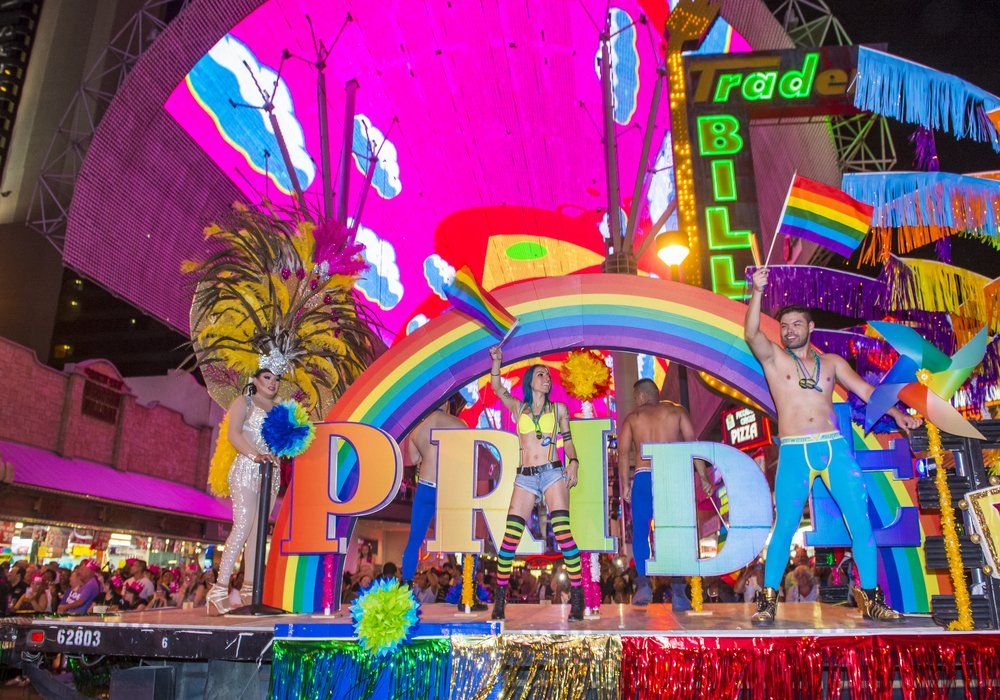
                                                    Las Vegas Pride parade float

                                                    Kobby Dagan / Shutterstock

                                                    LGBTQ+ Pride parade in Las Vegas, Nevada – October 21 , 2016

                                                      Nondiscrimination laws: Nevada has nondiscrimination laws in employment, housing, health care, education, public accommodations, and credit/lending.

                                                      Marriage equality and parental rights: Nevada has adoption and foster care nondiscrimination protections for LGBTQ+ parents, second-parent adoption for unmarried couples, and recognition for parents using assisted reproductive technologies. It also has family leave laws, which include LGBTQ-inclusive definitions. It does not have confirmatory adoption.

                                                      Education and youth policies: Nevada does not restrict discussion of LGBTQ+ identities in classrooms, and instead requires curriculum to be LGBTQ-inclusive, which parents are not required to be notified of. It does not prevent transgender students from participating in sports or using school facilities based on their identities, but it does not require staff to forcibly out students who change their gender identity to their guardians

                                                      Healthcare access and rights: Nevada does not have shield laws for gender-affirming care and abortion. The state has also banned so-called conversion therapy for youth. Health insurance companies, including Medicaid, are not allowed to deny coverage related to gender transition. However, they are not required to cover fertility treatments.

                                                      Criminal justice: Nevada’s hate crime laws encompass sexual orientation and gender identity, and it has banned the so-called “LGBTQ+ panic” defense. It does not have nondiscrimination protections based on gender identity for jury selection.

                                                      New Jersey
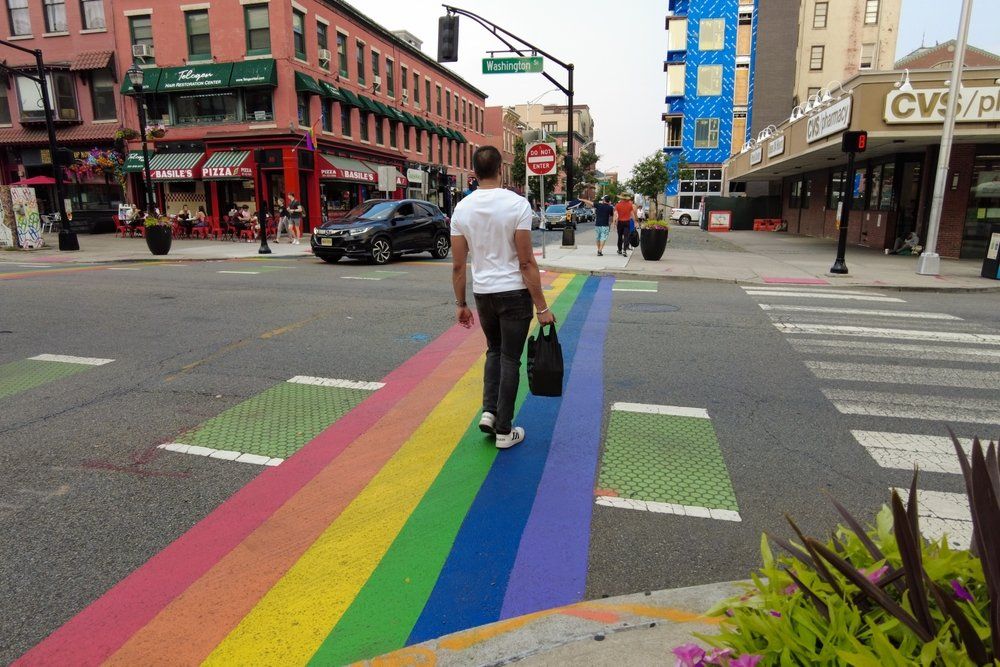
                                                      Rainbow crosswalk in Hoboken, New Jersey

                                                      Kirkam / Shutterstock.com

                                                      Rainbow LGBTQ+ Pride crosswalk in Hoboken, New Jersey, – June 25, 2023

                                                        Nondiscrimination laws: New Jersey has nondiscrimination laws in employment, housing, education, public accommodations, and credit/lending. It has nondiscrimination laws for gender identity in private healthcare, but not for sexual orientation.

                                                        Marriage equality and parental rights: New Jersey has adoption and foster care nondiscrimination protections for LGBTQ+ parents, and second-parent adoption for unmarried couples and confirmatory adoption. It also has family leave laws, which include LGBTQ-inclusive definitions. It does not have recognition for parents using assisted reproductive technologies.

                                                        Education and youth policies: New Jersey does not restrict discussion of LGBTQ+ identities in classrooms, and instead requires curriculum to be LGBTQ-inclusive, which parents are not required to be notified of. It does not prevent transgender students from participating in sports or using school facilities based on their identities, and it does not require staff to forcibly out LGBTQ+ students to their guardians.

                                                        Healthcare access and rights: New Jersey has “shield” laws protecting access to gender-affirming care for youth, as well as abortion. The state has also banned so-called conversion therapy for youth. Health insurance companies, including Medicaid, are not allowed to deny coverage related to gender transition. Private insurance is required to cover some fertility treatments, but Medicaid is not.

                                                        Criminal justice: New Jersey’s hate crime laws encompass sexual orientation and gender identity, and it has banned the so-called “LGBTQ+ panic” defense. It does not have nondiscrimination laws for LGBTQ+ people in jury selection.

                                                        New York
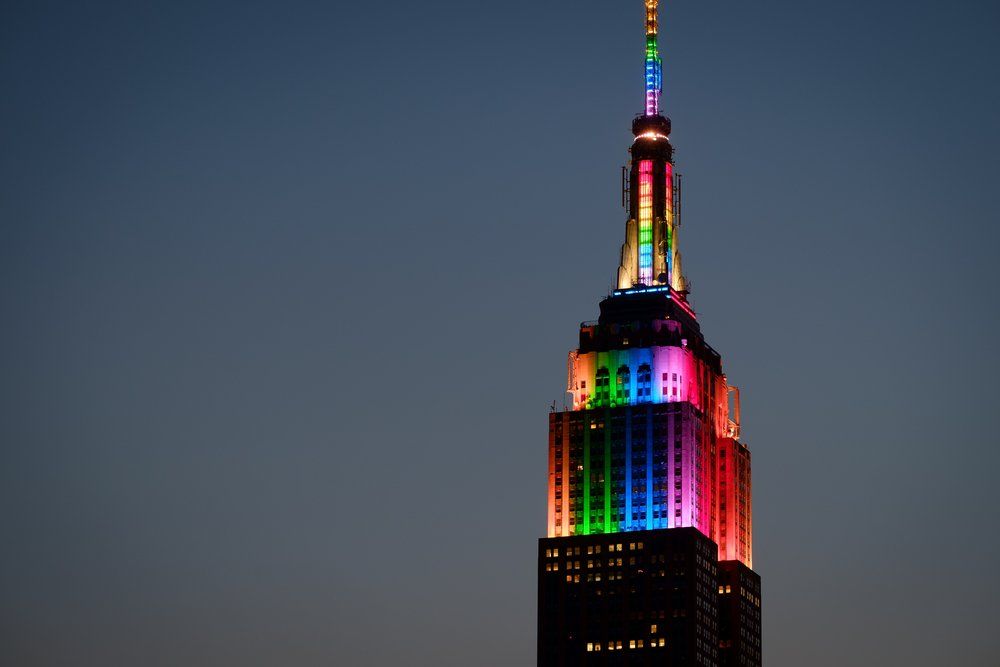
                                                        Empire State Building in rainbow colors

                                                        anaglic / Shutterstock.com

                                                        Empire State Building in rainbow colors in honor of the Orlando shooting victims, New York City – June 26, 2016

                                                          Nondiscrimination laws: New York has nondiscrimination laws in employment, housing, health care, education, public accommodations, and credit/lending.

                                                          Marriage equality and parental rights: New York has adoption and foster care nondiscrimination protections for LGBTQ+ parents, second-parent adoption for unmarried couples, and recognition for parents using assisted reproductive technologies. It also has family leave laws, which include LGBTQ-inclusive definitions. It does not have confirmatory adoption.

                                                          Education and youth policies: New York does not restrict discussion of LGBTQ+ identities in classrooms, but it does not have LGBTQ-inclusive curriculum. It does not prevent transgender students from participating in sports or using school facilities based on their identities, and it does not require staff to forcibly out LGBTQ+ students to their guardians.

                                                          Healthcare access and rights: New York has “shield” laws protecting access to gender-affirming care for youth, as well as abortion. The state has also banned so-called conversion therapy for youth. Health insurance companies, including Medicaid, are not allowed to deny coverage related to gender transition. Private insurance and Medicaid are also required to cover some fertility treatments.

                                                          Criminal justice: New York’s hate crime laws encompass sexual orientation and gender identity, and it has banned the so-called “LGBTQ+ panic” defense.

                                                          Oregon
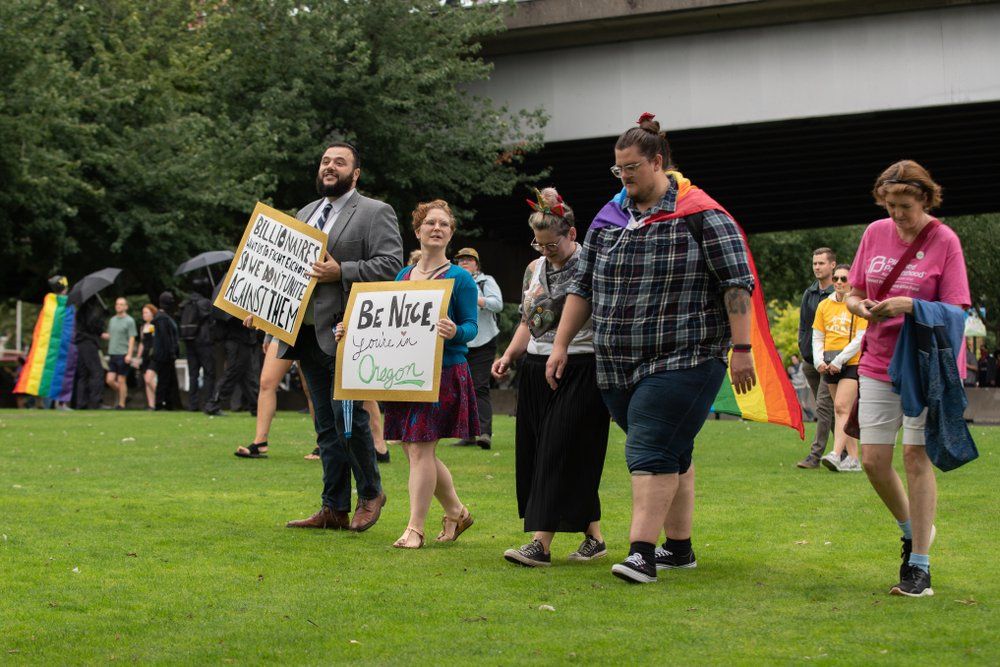
                                                          Protestors wear rainbow flag capes and carry a sign reading "Be nice, you're in Oregon"

                                                          Alexander Oganezov / Shutterstock.com

                                                          Protestors wear rainbow flag capes and carry a sign reading “Be nice, you’re in Oregon” at anti-fascism protest in Portland, Oregon – August 17, 2019

                                                            Nondiscrimination laws: Oregon has nondiscrimination laws in employment, housing, health care, education, and public accommodations. It does not have nondiscrimination laws in credit/lending.

                                                            Marriage equality and parental rights: Oregon has adoption and foster care nondiscrimination protections for LGBTQ+ parents and second-parent adoption for unmarried couples. It does have family leave laws, which include LGBTQ-inclusive definitions. It does not have confirmatory adoption, nor recognition for parents using assisted reproductive technologies.

                                                            Education and youth policies: Oregon does not prevent transgender students from participating in sports or using school facilities based on their identities, and it does not require staff to forcibly out LGBTQ+ students to their guardians. It does not restrict discussion of LGBTQ+ identities in classrooms, and instead requires curriculum to be LGBTQ-inclusive, which parents are not required to be notified of.

                                                            Healthcare access and rights: Oregon has “shield” laws protecting access to gender-affirming care for youth, as well as abortion. The state has also banned so-called conversion therapy for youth. Health insurance companies, including Medicaid, are not allowed to deny coverage related to gender transition. However, they are not required to cover fertility treatments.

                                                            Criminal justice: Oregon’s hate crime laws encompass sexual orientation and gender identity, and it has banned the so-called “LGBTQ+ panic” defense.

                                                            Rhode Island
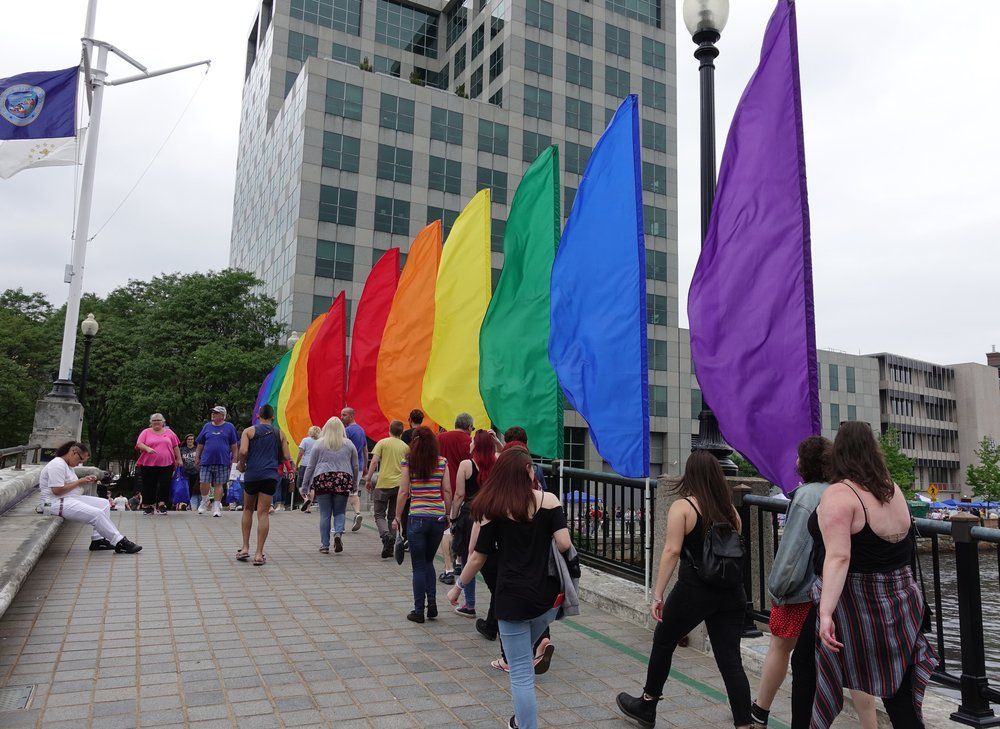
                                                            Rainbow flags on bridge over water in Providence, Rhode Island

                                                            Anthony Ricci / Shutterstock.com

                                                            Pride festival in downtown Providence, Rhode Island – June 17, 2017

                                                              Nondiscrimination laws: Rhode Island has nondiscrimination laws in employment, housing, education, public accommodations, and credit/lending. It has nondiscrimination laws for gender identity in private healthcare, but not for sexual orientation. It also has a broad “Religious Exemption” law.

                                                              Marriage equality and parental rights: Rhode Island has adoption and foster care nondiscrimination protections for LGBTQ+ parents, second-parent adoption for unmarried couples and confirmatory adoption, and recognition for parents using assisted reproductive technologies. It also has family leave laws, but their LGBTQ-inclusive definitions are not as robust as others.

                                                              Education and youth policies: Rhode Island does not restrict discussion of LGBTQ+ identities in classrooms, but it does not have LGBTQ-inclusive curriculum. It does not prevent transgender students from participating in sports or using school facilities based on their identities, and it does not require staff to forcibly out LGBTQ+ students to their guardians.

                                                              Healthcare access and rights: Rhode Island has “shield” laws protecting access to gender-affirming care for youth, as well as abortion. The state has also banned so-called conversion therapy for youth. Health insurance companies, including Medicaid, are not allowed to deny coverage related to gender transition. Private insurance is required to cover some fertility treatments, but Medicaid is not.

                                                              Criminal justice: Rhode Island’s hate crime laws encompass sexual orientation and gender identity, and it has banned the so-called “LGBTQ+ panic” defense. It does not have nondiscrimination laws for LGBTQ+ people in jury selection.

                                                              Vermont
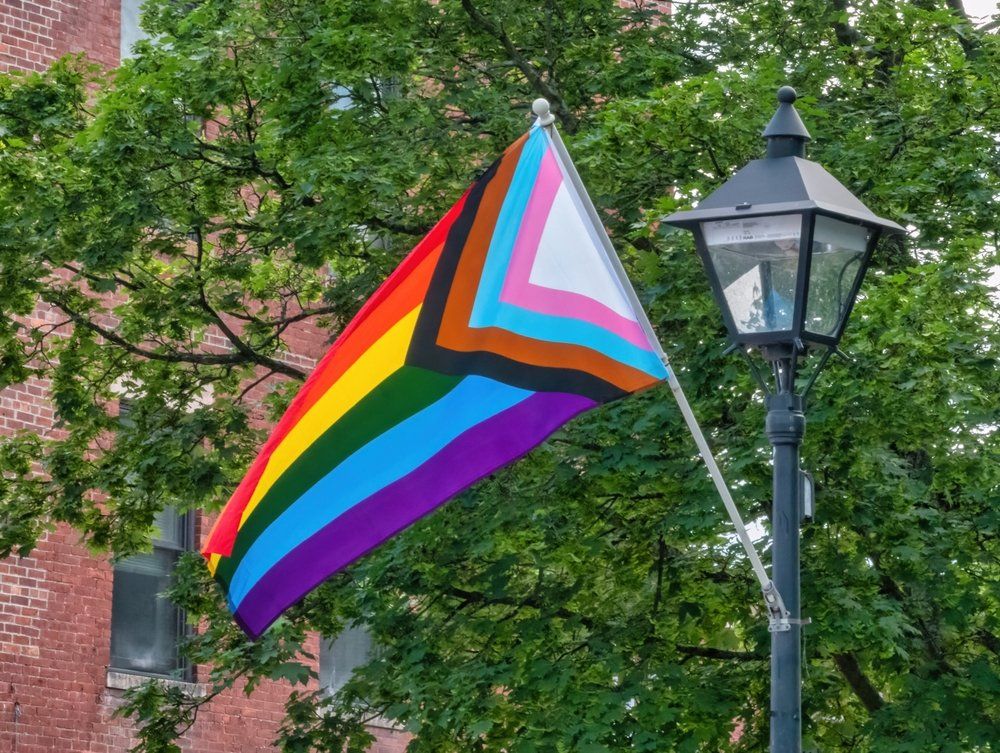
                                                              Pride flag on lamppost in Montpelier, Vermont

                                                              Charles Patrick Ewing / Shutterstock.com

                                                              LGBTQ+ Pride flag on lamppost in Montpelier, Vermont – June 11, 2022

                                                                Nondiscrimination laws: Vermont has nondiscrimination laws in employment, housing, health care, education, public accommodations, and credit/lending.

                                                                Marriage equality and parental rights: Vermont has adoption and foster care nondiscrimination protections for LGBTQ+ parents, second-parent adoption for unmarried couples, and recognition for parents using assisted reproductive technologies. It also has family leave laws, which include LGBTQ-inclusive definitions. It does not have confirmatory adoption.

                                                                Education and youth policies: Vermont does not restrict discussion of LGBTQ+ identities in classrooms, but it does not have LGBTQ-inclusive curriculum. It does not prevent transgender students from participating in sports or using school facilities based on their identities, and it does not require staff to forcibly out LGBTQ+ students to their guardians.

                                                                Healthcare access and rights: Vermont has “shield” laws protecting access to gender-affirming care for youth, as well as abortion. The state has also banned so-called conversion therapy for youth. Health insurance companies, including Medicaid, are not allowed to deny coverage related to gender transition. However, state employees who are transgender do not have inclusive health benefits. Insurance companies are also not required to cover fertility treatments.

                                                                Criminal justice: Vermont’s hate crime laws encompass sexual orientation and gender identity, and it has banned the so-called “LGBTQ+ panic” defense. It does not have nondiscrimination laws for LGBTQ+ people in jury selection.

                                                                Washington
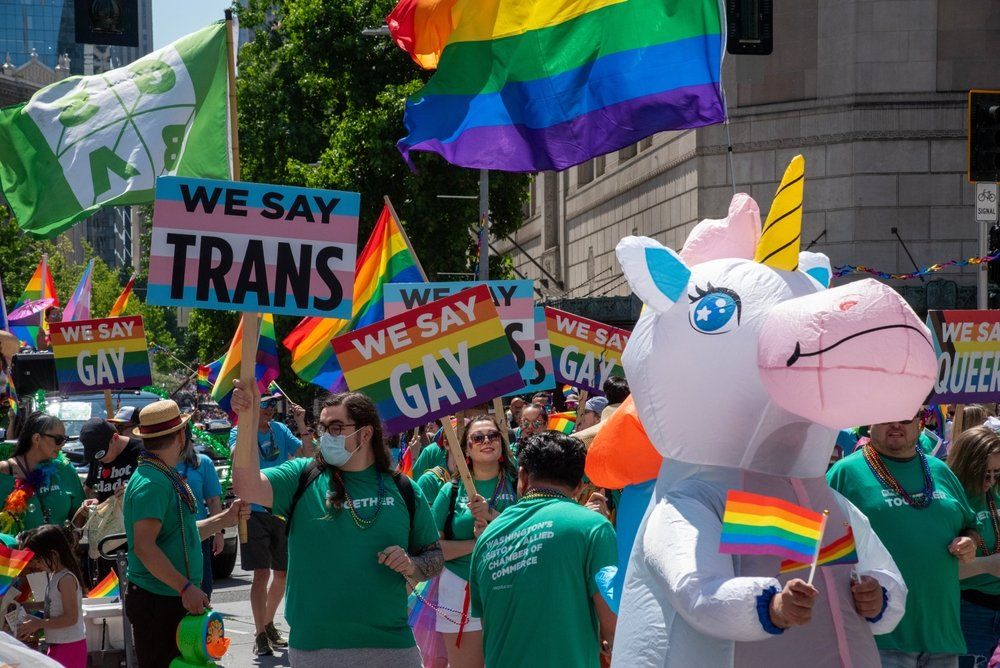
                                                                People carrying "We say trans" and "We say gay" signs at Seattle Pride

                                                                SeaRick1 / Shutterstock.com

                                                                People carrying rainbow signs reading “We say trans” and “We say gay” at LGBTQ+ Pride in Seattle, Washington – June 25, 2023

                                                                  Nondiscrimination laws: Washington has nondiscrimination laws in employment, housing, health care, education, public accommodations, and credit/lending.

                                                                  Marriage equality and parental rights: Washington has adoption and foster care nondiscrimination protections for LGBTQ+ parents and recognition for parents using assisted reproductive technologies.. It does have family leave laws, which include LGBTQ-inclusive definitions. It does not have second-parent adoption for unmarried couples, nor confirmatory adoption.

                                                                  Education and youth policies: Washington does not restrict discussion of LGBTQ+ identities in classrooms, and instead requires curriculum to be LGBTQ-inclusive, which parents are not required to be notified of. It does not prevent transgender students from participating in sports or using school facilities based on their identities, and it does not require staff to forcibly out LGBTQ+ students to their guardians.

                                                                  Healthcare access and rights: Washington has “shield” laws protecting access to gender-affirming care for youth, as well as abortion. The state has also banned so-called conversion therapy for youth. Health insurance companies, including Medicaid, are not allowed to deny coverage related to gender transition. However, they are not required to cover fertility treatments.

                                                                  Criminal justice: Washington’s hate crime laws encompass sexual orientation and gender identity, and it has banned the so-called “LGBTQ+ panic” defense. It does have a law criminalizing the transmission of HIV.

                                                                  Honorable mentions
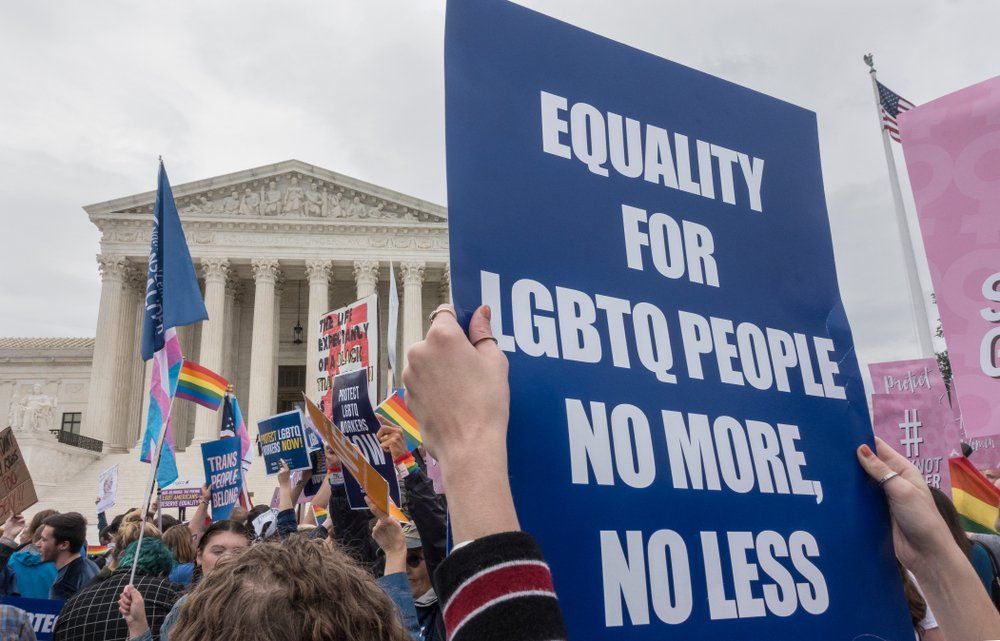
                                                                  Sign outside SCOTUS reading "Equality for LGBTQ people no more, no less"

                                                                  Bob Korn / Shutterstock.com

                                                                  Rally for LGBTQ rights outside Supreme Court in Washington, D.C. – OCT. 8, 2019

                                                                    Washington, D.C. also ranked high on MAP’s assessment, though it does not currently have statehood.

                                                                    Other states that ranked above average include: Delaware, Hawaii, Michigan, New Hampshire, New Mexico, and Virginia.

                                                                    A school district just banned rainbow flags. It may soon remove protections for LGBTQ+ students too.

                                                                    Read more at LGBTQ Nation.

                                                                    The school board of Johnston County, North Carolina, voted 4-2 to ban district schools from displaying rainbow Pride flags on Tuesday. The ban is just the latest in a long line of conservative efforts to ban the LGBTQ+ flag from schools and government property.

                                                                    According to The Raleigh News & Observer, the newly approved policy states: “Principals and teachers shall limit displays in the classrooms, school buildings, ball fields, school grounds, and buses, such as signs and flags, to materials that represent the United States, the state of North Carolina, Johnston County, the school name, mascot, post-secondary institutions, school-sponsored events, sponsorships, military flags, family photos, student art and/or the approved curriculum.”

                                                                    One board member who voted against the measure, Kay Carroll, said, “It’s important that they know when they see somebody wear a human rights pin or a rainbow pin, the message is that this is a safe place for people in the LGBTQ+ community…. It’s comforting to see these symbols of acceptance and tolerance. When they see these symbols — which are signals — they know they are safe to be their authentic selves. We’re just treating human beings decently.”

                                                                    The school board claimed that it will continue to support “all students and school employees.” However, the board is currently considering removing sexual orientation and gender identity from its anti-bullying and anti-discrimination policies. The board will re-vote on the removal soon after failing to advance the measure in a 3-3 tie vote last Tuesday.

                                                                    Numerous school districts nationwide have banned the display of Pride flags, with conservative school board members claiming that the flags are a “divisive” form of “indoctrination.”

                                                                    However, recent polling by the Trevor Project suggests that LGBTQ+ students may benefit from visible displays of support, considering that 39% of LGBTQ+ young people and 46% of trans and nonbinary young people reported attempting suicide in the past year, and 49% of respondents between ages 13 to 17 said they experienced bullying in the past year. Young people who were bullied were also significantly more likely to have attempted suicide in the past year.

                                                                    Earlier this year, both Utah and Idaho became the first U.S. states to pass laws restricting the flying of Pride flags in schools and on government property. The move led the capital city governments of Salt Lake City, Utah, and Boise, Idaho, to designate the Pride flags as official city flags, so they can still fly them under the bans.

                                                                    GOP official just banned “Everyone is Welcome Here” signs in schools because they’re too Democratic

                                                                    Read more at LGBTQ Nation.

                                                                    The attorney general of Idaho issued an opinion telling schools not to allow teachers to post signs that say “Everyone is Welcome Here,” claiming that the message that public education is for everyone regardless of race, gender, sexual orientation, or other categories is Democratic in nature and therefore illegally partisan.

                                                                    “These signs are part of an ideological/social movement which started in Twin Cities, Minnesota, following the 2016 election,” Idaho Attorney General Raúl Labrador (R) said in guidance issued to a school. “Since that time, the signs have been used by the Democratic party as a political statement.”

                                                                    .Labrador also noted that the state Democratic Party is selling signs that say “Everyone is Welcome Here,” but state Democrats say that they only started selling those signs at cost in order to draw attention to conservatives’ early attempts to ban them.

                                                                    The conflict centers on Idaho’s H.B. 41, which took effect last week and bans school employees from displaying flags or banners that show “opinions, emotions, beliefs or thoughts about politics, economics, society, faith or religion.”

                                                                    Earlier this year, the state’s West Ada School District banned Sarah Inama, a teacher at Lewis and Clark Middle School, from displaying a sign that says, “Everyone is Welcome Here.” It showed a drawing of people’s hands with different skin tones, each with a heart on it.

                                                                    The district also ordered her to take down another sign that read, “In this room everyone is welcome, important, accepted, respected, encouraged, valued, equal” on top of a background of rainbow colors. The rainbow colors included seven stripes, which differs from the six-striped rainbow Pride flag.

                                                                    The controversy over the signs garnered national headlines in March, and the state attorney general’s office looked into how the law would apply in such cases, issuing an opinion last week.

                                                                    The attorney general determined that these specific signs would violate H.B. 41 and claimed that the statements in the signs are part of a political movement and not, as defenders of the signs argued, generally agreed-upon beliefs about the nature of public education.

                                                                    Labrador’s guidance hyperlinked a 2017 news story about a group of women who protested racist graffiti that appeared at a local high school the day after the president was elected to his first term, according to the Idaho Capital-Sun, which posted the attorney general’s opinion. The women carried signs that read, “All are Welcome Here.”

                                                                    The guidance then claimed that Inama started posting the “Everyone is Welcome Here” sign in 2017, “during the height of the above-referenced social movement.”

                                                                    In March, Inama disagreed that the message is political or partisan.

                                                                    “I don’t agree. I don’t agree that this is a personal opinion,” she told KTVB at the time. “I feel like this is the basis of public education.”

                                                                    Inama resigned in May.

                                                                    SCOTUS rules parents have a right to prevent their kids from reading books with LGBTQ+ characters

                                                                    *This is reported by LGBTQ Nation.

                                                                    The Supreme Court has ruled in favor of the plaintiffs in Mahmoud v. Taylor, the case brought by parents who said that their First Amendment rights were violated when schools used books that included LGBTQ+ characters.

                                                                    The decision was 6-3 along ideological lines, with the Republican-appointed justices siding with the religious parents who wanted to opt their children out of reading books like Prince & Knight and Uncle Bobby’s Wedding in the Montgomery County, Maryland, school system.

                                                                    “The Court does not accept the Board’s characterizations of the LGBTQ+-inclusive instruction as mere ‘exposure to objectionable ideas’ or as lessons in ‘mutual respect,’” Justice Samuel Alito wrote for the majority. “The storybooks unmistakably convey a particular viewpoint about same-sex marriage and gender.”

                                                                    “Regardless, the question in cases of this kind is whether the educational requirement or curriculum at issue would ‘substantially interfere with the religious development’ of the child or pose ‘a very real threat of undermining’ the religious beliefs and practices the parent wishes to instill in the child.”

                                                                    “Casting aside longstanding precedent, the Court invents a constitutional right to avoid exposure to ‘subtle’ themes ‘contrary to the religious principles’ that parents wish to instill in their children,” Justice Sonia Sotomayor wrote in her dissenting opinion. “Exposing students to the ‘message’ that LGBTQ people exist, and that their loved ones may celebrate their marriages and life events, the majority says, is enough to trigger the most demanding form of judicial scrutiny.”

                                                                    The case involved several sets of Christian and Muslim parents who objected to their kids reading books that mentioned LGBTQ+ people. The district had an opt-out policy that they later rescinded because, the district claimed, the opt-outs were becoming “unworkable.”

                                                                    Some parents in the district protested to get the opt-out policy reinstated, while others protested in favor of learning about LGBTQ+ people.

                                                                    “The books geared to younger kids are just showing a diverse range of families,” said Christina Celenza, a mother of a student in the district, during one of the 2023 protests. “We have a two-mom household, so my wife and I are really proud and out, and, of course, my kid in kindergarten or pre-K is going to probably talk about his family and his two moms.”

                                                                    The district didn’t budge, so several parents sued. Two lower courts denied them a preliminary injunction, but the Supreme Court just granted them one.

                                                                    The parents want the courts to ultimately order teachers to notify them of every possible discussion where LGBTQ+ people may come up so that they could opt their children out, lest their kids learn that LGBTQ+ people exist. They claimed that knowing that LGBTQ+ people exist is contrary to their religious beliefs and violates their right to direct their children’s religious upbringing.

                                                                    Public education advocates warn that the ruling could lead to even more requests for opt-outs of public education on wide-ranging topics including Earth Day, critical thinking, and anti-drug programs.

                                                                    Free speech and LGBTQ+ advocates denounced the ruling.

                                                                    “This ruling is a deeply disappointing blow to the right to read under the First Amendment,” said U.S. Free Expression Programs staff attorney for PEN America Elly Brinkley in a statement. “It is a fundamental betrayal of public schools’ duty to prepare students to live in a diverse and pluralistic society. By allowing parents to pull their children out of classrooms when they object to particular content, the justices are laying the foundation for a new frontier in the assault on books of all kinds in schools.”

                                                                    “While religious liberty is fundamentally important, it should not force public schools to exempt students from lessons that don’t align with their families’ personal religious or cultural beliefs,” said Equality California Executive Director Tony Hoang in a statement. “LGBTQ+ themed books are already among the most banned and challenged in school districts and libraries across the country. Today’s decision will make it even harder for these books to find their way into the hands of students who simply want to read — and who may find validation and acceptance in the process.”

                                                                    “Today’s ruling does not change schools’ obligation to prepare students to interact with and thrive in a diverse and ever-changing world,” said GLAD Law’s Mary L. Bonauto. “LGBTQ+ people and families exist, students in our public schools have LGBTQ+ parents, and books that include LGBTQ+ people should not be treated differently than those without LGBTQ+ people.”

                                                                    “The Court’s decision does not require our schools to abandon these efforts. Parents, students, educators, and neighbors can encourage opportunities for learning about diverse people and families by staying involved with school districts, school boards, and in our local communities.”

                                                                    Amid Trump’s funding threats, a rural Colorado school district looks to remove LGBTQ policy protections

                                                                    *This is reported by Chalkbeat.

                                                                    Citing President Trump’s threat to cut off federal education funding for school districts that provide protections for LGBTQ people, school board members in the Montezuma-Cortez district in southwestern Colorado are poised to remove sexual orientation and gender identity from the district’s nondiscrimination policy.

                                                                    “Our district uses federal grant monies and Trump has indicated those grants are at risk if any district continues to support certain previously protected classes like sexual orientation, gender expression, or gender identity,” Mike Lynch, a school board member and the policy committee chair, said at a board meeting late last month.

                                                                    The proposed policy changes in Montezuma-Cortez represent just one example of how some Colorado school districts are rushing to comply — or over-comply — with federal ultimatums based on questionable legal foundations. Many legal experts say the Trump administration cannot, on its own, exclude transgender people from federal anti-discrimination law and that Colorado law, which includes protections for LGBTQ people, supersedes school district policy anyway.

                                                                    But efforts to remove protections at the local level send harmful messages about who is valued and who isn’t, they say.

                                                                    “I think it does damage to queer students because it signals that this school district … doesn’t believe that these students are worthy of protection,” Scott Skinner-Thompson, associate professor of law at the University of Colorado Boulder.

                                                                    Montezuma-Cortez, a conservative-leaning district with about 2,400 students, has taken other steps to curtail LGBTQ symbols and school activities in recent years. The school board is scheduled to take a final vote on the proposed nondiscrimination policy on June 24.

                                                                    MB McAfee, a retired social worker and district resident, said she doesn’t know of any case where federal funds were withheld by the Trump administration, but worries about that possibility, particularly when it comes to money for students with disabilities.

                                                                    But she’s also angry about the proposed policy changes, calling them “another step toward exclusion.”

                                                                    “If we do that,” she asked, “then what’s going to be next?”

                                                                    School districts react to funding threats

                                                                    Trump has targeted transgender rights since his first day in office. In January and February, he issued several executive orders on the topic, including one that describes sex as determined at conception and unchangeable and another that threatens to withhold federal funds from schools that allow transgender girls to play girls sports.

                                                                    The Trump administration has moved to strip federal funding from Maine because that state allows transgender girls to compete on girls’ teams. A judge blocked the federal government from withholding school lunch money while the case continues.

                                                                    So far, no school district has lost money because of policies protecting transgender students. But Lynch emphasized that risk when he explained the proposed policy revision to the school board in May.

                                                                    Asked by Chalkbeat what executive order or federal guidance required the removal of “sexual orientation” from the policy, Lynch later said by email that he’d mistakenly cited the term when he spoke to the board about federal dollars being in jeopardy.

                                                                    For now though, “sexual orientation” isn’t being restored to the policy, he said.

                                                                    Montezuma-Cortez isn’t alone in making changes spurred by the Trump administration. Officials from several Colorado districts, including Woodland Park and District 49 near Colorado Springs, have cited Trump’s executive orders in pushing policy changes or other efforts aimed at revoking protections for transgender students.

                                                                    In May, District 49 sued the state and the Colorado High School Activities Association arguing that Colorado law and the association’s policy violate students’ constitutional rights by allowing transgender youth to play on school sports teams that match their gender identity.

                                                                    Montezuma-Cortez school board members had little to say about the implications of the proposed nondiscrimination policy changes.

                                                                    Asked about the legal or practical implications, Lynch said he’s not an attorney and doesn’t know. School board President Sheri Noyes did not respond to Chalkbeat’s request for comment. Vice President Ed Rice declined to respond to specific questions from Chalkbeat, saying by email that the policy’s opening sentence “answers everything.”

                                                                    As proposed, that sentence says, “The Board is committed to providing a learning and work environment where all members of the school community are treated with dignity and respect.” The current version of the policy says “safe learning and work environment” but the revision takes out the word “safe.”

                                                                    Democrats lash out as Texas Legislature bans school clubs that support gay teens

                                                                    *This is reported by the Texas Tribune

                                                                    Democrats took to the floor of the Texas House on Saturday to label a ban on clubs that support gay teens the work of “monsters” and to say the ban endangers children and strips them of their dignity.

                                                                    The Democratic representatives grew emotional in opposition to a bill that would ban K-12 student clubs focused on sexuality and gender identity.

                                                                    Senate Bill 12, authored by Sen. Brandon Creighton, won final legislative passage Saturday after lawmakers in both chambers adopted the conference committee reports that specifically clarified that schools will be banned from authorizing or sponsoring student clubs based on sexual orientation or gender identity.

                                                                    Backers proclaimed that the bill enshrines a parent’s rights and puts the parent not just at the table, but at the head of the table where the child’s best interests are decided. They also targeted diversity, equity and inclusion (DEI) policies, claiming that they project ideologies on students and put too much focus on race, sexuality and gender identity instead of the quality of education.

                                                                    Rep. Gene Wu, D-Houston, emphasized that these clubs exist because of a long history of oppression against the LGBTQ+ community. He warned against demonizing students and teachers for discussing gender and sexuality.

                                                                    “The real monsters are not kids trying to figure out who they are,” Wu said during the House discussion. “The monsters are not the teachers who love them and encourage them and support them. They are not the books that provide them with some amount of comfort and information. The real monsters are here.”

                                                                    Lawmakers shared personal stories about LGBTQ+ youth. Rep. Rafael Anchía said his daughter was a vice president of a pride club at her school. He stressed that these clubs “are no more about sex than 4-H or ROTC or the basketball team.”

                                                                    “It wasn’t a sex club,” Anchía said. “They’d get together and they’d watch movies. They’d color. They’d go to musicals. It was about a kid who felt weird who found her people and everything about it was good. I don’t know why grown-ups in this body are so triggered with my daughter getting together with her classmates in a school-sponsored activity.”

                                                                    Anchía also told the Texas Tribune he “didn’t sign up for five anti-LGBT bills this session.”

                                                                    Rep. Jolanda Jones, D-Houston, shared her experience as a Black woman and a lesbian, saying she didn’t come out until the age of 50 because she knew “the world wasn’t safe.” She warned that banning LGBTQ+ clubs could worsen bullying.

                                                                    “And we have the nerve to say that we care about mental health,” Jones said. “We’ve passed bill after bill about access to care, about youth suicide, about prevention and treatment. But this bill makes kids sicker, sadder, more alone. This bill doesn’t protect children. It endangers them. It doesn’t give parents more rights. It strips children of their dignity.”

                                                                    SB 12 is often referred to as the “Parental Bill of Rights” because it claims to give parents more control over their children’s schools. But Rep. Erin Zwiener, D-Driftwood, addressed those who are “afraid that your kids or your grandkids might grow up queer,” warning that the bill could harm family relationships.

                                                                    “Getting silence in schools from the LGBTQ community, which is what this bill is designed to do, will not stop your kids from being gay,” Zwiener said. “It will just make them afraid to come out. It will make them afraid to live their lives as their full selves. It will make them afraid to tell you when they figure out that they’re LGBTQ and it might damage your relationship with them forever.”

                                                                    Rep. Nicole Collier, D-Fort Worth, argued that allowing religious organizations in schools but banning “clubs that allow students to be who they are, is a double standard that flies in the face of the principles you say you support.”

                                                                    “An LGBTQ person can’t change who they are any more than the fact that I can’t change that I’m Black,” Collier said. “What you’re saying to students today is that you will be accepted as long as you are who we say you should be.”

                                                                    If signed by the governor, the bill will become law on Sept. 1.

                                                                    Blog at WordPress.com.

                                                                    Up ↑