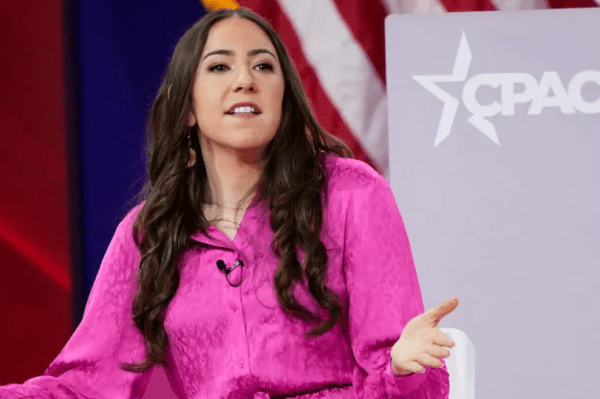
A school district just banned rainbow flags. It may soon remove protections for LGBTQ+ students too.

Read more at LGBTQ Nation.

The school board of Johnston County, North Carolina, voted 4-2 to ban district schools from displaying rainbow Pride flags on Tuesday. The ban is just the latest in a long line of conservative efforts to ban the LGBTQ+ flag from schools and government property.

According to The Raleigh News & Observer, the newly approved policy states: “Principals and teachers shall limit displays in the classrooms, school buildings, ball fields, school grounds, and buses, such as signs and flags, to materials that represent the United States, the state of North Carolina, Johnston County, the school name, mascot, post-secondary institutions, school-sponsored events, sponsorships, military flags, family photos, student art and/or the approved curriculum.”

One board member who voted against the measure, Kay Carroll, said, “It’s important that they know when they see somebody wear a human rights pin or a rainbow pin, the message is that this is a safe place for people in the LGBTQ+ community…. It’s comforting to see these symbols of acceptance and tolerance. When they see these symbols — which are signals — they know they are safe to be their authentic selves. We’re just treating human beings decently.”

The school board claimed that it will continue to support “all students and school employees.” However, the board is currently considering removing sexual orientation and gender identity from its anti-bullying and anti-discrimination policies. The board will re-vote on the removal soon after failing to advance the measure in a 3-3 tie vote last Tuesday.

Numerous school districts nationwide have banned the display of Pride flags, with conservative school board members claiming that the flags are a “divisive” form of “indoctrination.”

However, recent polling by the Trevor Project suggests that LGBTQ+ students may benefit from visible displays of support, considering that 39% of LGBTQ+ young people and 46% of trans and nonbinary young people reported attempting suicide in the past year, and 49% of respondents between ages 13 to 17 said they experienced bullying in the past year. Young people who were bullied were also significantly more likely to have attempted suicide in the past year.

Earlier this year, both Utah and Idaho became the first U.S. states to pass laws restricting the flying of Pride flags in schools and on government property. The move led the capital city governments of Salt Lake City, Utah, and Boise, Idaho, to designate the Pride flags as official city flags, so they can still fly them under the bans.

GOP official just banned “Everyone is Welcome Here” signs in schools because they’re too Democratic

Read more at LGBTQ Nation.

The attorney general of Idaho issued an opinion telling schools not to allow teachers to post signs that say “Everyone is Welcome Here,” claiming that the message that public education is for everyone regardless of race, gender, sexual orientation, or other categories is Democratic in nature and therefore illegally partisan.

“These signs are part of an ideological/social movement which started in Twin Cities, Minnesota, following the 2016 election,” Idaho Attorney General Raúl Labrador (R) said in guidance issued to a school. “Since that time, the signs have been used by the Democratic party as a political statement.”

.Labrador also noted that the state Democratic Party is selling signs that say “Everyone is Welcome Here,” but state Democrats say that they only started selling those signs at cost in order to draw attention to conservatives’ early attempts to ban them.

The conflict centers on Idaho’s H.B. 41, which took effect last week and bans school employees from displaying flags or banners that show “opinions, emotions, beliefs or thoughts about politics, economics, society, faith or religion.”

Earlier this year, the state’s West Ada School District banned Sarah Inama, a teacher at Lewis and Clark Middle School, from displaying a sign that says, “Everyone is Welcome Here.” It showed a drawing of people’s hands with different skin tones, each with a heart on it.

The district also ordered her to take down another sign that read, “In this room everyone is welcome, important, accepted, respected, encouraged, valued, equal” on top of a background of rainbow colors. The rainbow colors included seven stripes, which differs from the six-striped rainbow Pride flag.

The controversy over the signs garnered national headlines in March, and the state attorney general’s office looked into how the law would apply in such cases, issuing an opinion last week.

The attorney general determined that these specific signs would violate H.B. 41 and claimed that the statements in the signs are part of a political movement and not, as defenders of the signs argued, generally agreed-upon beliefs about the nature of public education.

Labrador’s guidance hyperlinked a 2017 news story about a group of women who protested racist graffiti that appeared at a local high school the day after the president was elected to his first term, according to the Idaho Capital-Sun, which posted the attorney general’s opinion. The women carried signs that read, “All are Welcome Here.”

The guidance then claimed that Inama started posting the “Everyone is Welcome Here” sign in 2017, “during the height of the above-referenced social movement.”

In March, Inama disagreed that the message is political or partisan.

“I don’t agree. I don’t agree that this is a personal opinion,” she told KTVB at the time. “I feel like this is the basis of public education.”

Inama resigned in May.

SCOTUS rules parents have a right to prevent their kids from reading books with LGBTQ+ characters

*This is reported by LGBTQ Nation.

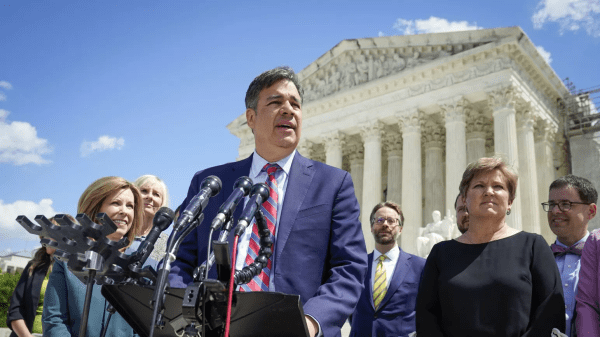
The Supreme Court has ruled in favor of the plaintiffs in Mahmoud v. Taylor, the case brought by parents who said that their First Amendment rights were violated when schools used books that included LGBTQ+ characters.

The decision was 6-3 along ideological lines, with the Republican-appointed justices siding with the religious parents who wanted to opt their children out of reading books like Prince & Knight and Uncle Bobby’s Wedding in the Montgomery County, Maryland, school system.

“The Court does not accept the Board’s characterizations of the LGBTQ+-inclusive instruction as mere ‘exposure to objectionable ideas’ or as lessons in ‘mutual respect,’” Justice Samuel Alito wrote for the majority. “The storybooks unmistakably convey a particular viewpoint about same-sex marriage and gender.”

“Regardless, the question in cases of this kind is whether the educational requirement or curriculum at issue would ‘substantially interfere with the religious development’ of the child or pose ‘a very real threat of undermining’ the religious beliefs and practices the parent wishes to instill in the child.”

“Casting aside longstanding precedent, the Court invents a constitutional right to avoid exposure to ‘subtle’ themes ‘contrary to the religious principles’ that parents wish to instill in their children,” Justice Sonia Sotomayor wrote in her dissenting opinion. “Exposing students to the ‘message’ that LGBTQ people exist, and that their loved ones may celebrate their marriages and life events, the majority says, is enough to trigger the most demanding form of judicial scrutiny.”

The case involved several sets of Christian and Muslim parents who objected to their kids reading books that mentioned LGBTQ+ people. The district had an opt-out policy that they later rescinded because, the district claimed, the opt-outs were becoming “unworkable.”

Some parents in the district protested to get the opt-out policy reinstated, while others protested in favor of learning about LGBTQ+ people.

“The books geared to younger kids are just showing a diverse range of families,” said Christina Celenza, a mother of a student in the district, during one of the 2023 protests. “We have a two-mom household, so my wife and I are really proud and out, and, of course, my kid in kindergarten or pre-K is going to probably talk about his family and his two moms.”

The district didn’t budge, so several parents sued. Two lower courts denied them a preliminary injunction, but the Supreme Court just granted them one.

The parents want the courts to ultimately order teachers to notify them of every possible discussion where LGBTQ+ people may come up so that they could opt their children out, lest their kids learn that LGBTQ+ people exist. They claimed that knowing that LGBTQ+ people exist is contrary to their religious beliefs and violates their right to direct their children’s religious upbringing.

Public education advocates warn that the ruling could lead to even more requests for opt-outs of public education on wide-ranging topics including Earth Day, critical thinking, and anti-drug programs.

Free speech and LGBTQ+ advocates denounced the ruling.

“This ruling is a deeply disappointing blow to the right to read under the First Amendment,” said U.S. Free Expression Programs staff attorney for PEN America Elly Brinkley in a statement. “It is a fundamental betrayal of public schools’ duty to prepare students to live in a diverse and pluralistic society. By allowing parents to pull their children out of classrooms when they object to particular content, the justices are laying the foundation for a new frontier in the assault on books of all kinds in schools.”

“While religious liberty is fundamentally important, it should not force public schools to exempt students from lessons that don’t align with their families’ personal religious or cultural beliefs,” said Equality California Executive Director Tony Hoang in a statement. “LGBTQ+ themed books are already among the most banned and challenged in school districts and libraries across the country. Today’s decision will make it even harder for these books to find their way into the hands of students who simply want to read — and who may find validation and acceptance in the process.”

“Today’s ruling does not change schools’ obligation to prepare students to interact with and thrive in a diverse and ever-changing world,” said GLAD Law’s Mary L. Bonauto. “LGBTQ+ people and families exist, students in our public schools have LGBTQ+ parents, and books that include LGBTQ+ people should not be treated differently than those without LGBTQ+ people.”

“The Court’s decision does not require our schools to abandon these efforts. Parents, students, educators, and neighbors can encourage opportunities for learning about diverse people and families by staying involved with school districts, school boards, and in our local communities.”

Amid Trump’s funding threats, a rural Colorado school district looks to remove LGBTQ policy protections

*This is reported by Chalkbeat.

Citing President Trump’s threat to cut off federal education funding for school districts that provide protections for LGBTQ people, school board members in the Montezuma-Cortez district in southwestern Colorado are poised to remove sexual orientation and gender identity from the district’s nondiscrimination policy.

“Our district uses federal grant monies and Trump has indicated those grants are at risk if any district continues to support certain previously protected classes like sexual orientation, gender expression, or gender identity,” Mike Lynch, a school board member and the policy committee chair, said at a board meeting late last month.

The proposed policy changes in Montezuma-Cortez represent just one example of how some Colorado school districts are rushing to comply — or over-comply — with federal ultimatums based on questionable legal foundations. Many legal experts say the Trump administration cannot, on its own, exclude transgender people from federal anti-discrimination law and that Colorado law, which includes protections for LGBTQ people, supersedes school district policy anyway.

But efforts to remove protections at the local level send harmful messages about who is valued and who isn’t, they say.

“I think it does damage to queer students because it signals that this school district … doesn’t believe that these students are worthy of protection,” Scott Skinner-Thompson, associate professor of law at the University of Colorado Boulder.

Montezuma-Cortez, a conservative-leaning district with about 2,400 students, has taken other steps to curtail LGBTQ symbols and school activities in recent years. The school board is scheduled to take a final vote on the proposed nondiscrimination policy on June 24.

MB McAfee, a retired social worker and district resident, said she doesn’t know of any case where federal funds were withheld by the Trump administration, but worries about that possibility, particularly when it comes to money for students with disabilities.

But she’s also angry about the proposed policy changes, calling them “another step toward exclusion.”

“If we do that,” she asked, “then what’s going to be next?”

School districts react to funding threats

Trump has targeted transgender rights since his first day in office. In January and February, he issued several executive orders on the topic, including one that describes sex as determined at conception and unchangeable and another that threatens to withhold federal funds from schools that allow transgender girls to play girls sports.

The Trump administration has moved to strip federal funding from Maine because that state allows transgender girls to compete on girls’ teams. A judge blocked the federal government from withholding school lunch money while the case continues.

So far, no school district has lost money because of policies protecting transgender students. But Lynch emphasized that risk when he explained the proposed policy revision to the school board in May.

Asked by Chalkbeat what executive order or federal guidance required the removal of “sexual orientation” from the policy, Lynch later said by email that he’d mistakenly cited the term when he spoke to the board about federal dollars being in jeopardy.

For now though, “sexual orientation” isn’t being restored to the policy, he said.

Montezuma-Cortez isn’t alone in making changes spurred by the Trump administration. Officials from several Colorado districts, including Woodland Park and District 49 near Colorado Springs, have cited Trump’s executive orders in pushing policy changes or other efforts aimed at revoking protections for transgender students.

In May, District 49 sued the state and the Colorado High School Activities Association arguing that Colorado law and the association’s policy violate students’ constitutional rights by allowing transgender youth to play on school sports teams that match their gender identity.

Montezuma-Cortez school board members had little to say about the implications of the proposed nondiscrimination policy changes.

Asked about the legal or practical implications, Lynch said he’s not an attorney and doesn’t know. School board President Sheri Noyes did not respond to Chalkbeat’s request for comment. Vice President Ed Rice declined to respond to specific questions from Chalkbeat, saying by email that the policy’s opening sentence “answers everything.”

As proposed, that sentence says, “The Board is committed to providing a learning and work environment where all members of the school community are treated with dignity and respect.” The current version of the policy says “safe learning and work environment” but the revision takes out the word “safe.”

Democrats lash out as Texas Legislature bans school clubs that support gay teens

*This is reported by the Texas Tribune

Democrats took to the floor of the Texas House on Saturday to label a ban on clubs that support gay teens the work of “monsters” and to say the ban endangers children and strips them of their dignity.

The Democratic representatives grew emotional in opposition to a bill that would ban K-12 student clubs focused on sexuality and gender identity.

Senate Bill 12, authored by Sen. Brandon Creighton, won final legislative passage Saturday after lawmakers in both chambers adopted the conference committee reports that specifically clarified that schools will be banned from authorizing or sponsoring student clubs based on sexual orientation or gender identity.

Backers proclaimed that the bill enshrines a parent’s rights and puts the parent not just at the table, but at the head of the table where the child’s best interests are decided. They also targeted diversity, equity and inclusion (DEI) policies, claiming that they project ideologies on students and put too much focus on race, sexuality and gender identity instead of the quality of education.

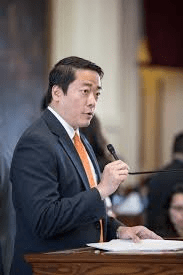
Rep. Gene Wu, D-Houston, emphasized that these clubs exist because of a long history of oppression against the LGBTQ+ community. He warned against demonizing students and teachers for discussing gender and sexuality.

“The real monsters are not kids trying to figure out who they are,” Wu said during the House discussion. “The monsters are not the teachers who love them and encourage them and support them. They are not the books that provide them with some amount of comfort and information. The real monsters are here.”

Lawmakers shared personal stories about LGBTQ+ youth. Rep. Rafael Anchía said his daughter was a vice president of a pride club at her school. He stressed that these clubs “are no more about sex than 4-H or ROTC or the basketball team.”

“It wasn’t a sex club,” Anchía said. “They’d get together and they’d watch movies. They’d color. They’d go to musicals. It was about a kid who felt weird who found her people and everything about it was good. I don’t know why grown-ups in this body are so triggered with my daughter getting together with her classmates in a school-sponsored activity.”

Anchía also told the Texas Tribune he “didn’t sign up for five anti-LGBT bills this session.”

Rep. Jolanda Jones, D-Houston, shared her experience as a Black woman and a lesbian, saying she didn’t come out until the age of 50 because she knew “the world wasn’t safe.” She warned that banning LGBTQ+ clubs could worsen bullying.

“And we have the nerve to say that we care about mental health,” Jones said. “We’ve passed bill after bill about access to care, about youth suicide, about prevention and treatment. But this bill makes kids sicker, sadder, more alone. This bill doesn’t protect children. It endangers them. It doesn’t give parents more rights. It strips children of their dignity.”

SB 12 is often referred to as the “Parental Bill of Rights” because it claims to give parents more control over their children’s schools. But Rep. Erin Zwiener, D-Driftwood, addressed those who are “afraid that your kids or your grandkids might grow up queer,” warning that the bill could harm family relationships.

“Getting silence in schools from the LGBTQ community, which is what this bill is designed to do, will not stop your kids from being gay,” Zwiener said. “It will just make them afraid to come out. It will make them afraid to live their lives as their full selves. It will make them afraid to tell you when they figure out that they’re LGBTQ and it might damage your relationship with them forever.”

Rep. Nicole Collier, D-Fort Worth, argued that allowing religious organizations in schools but banning “clubs that allow students to be who they are, is a double standard that flies in the face of the principles you say you support.”

“An LGBTQ person can’t change who they are any more than the fact that I can’t change that I’m Black,” Collier said. “What you’re saying to students today is that you will be accepted as long as you are who we say you should be.”

If signed by the governor, the bill will become law on Sept. 1.

France creates platform to attract US and other disaffected researchers

*this is reported by Science Business.

The French government has launched a platform to pair universities and research organisations with international researchers looking to relocate. Called Choose France for Science, the platform is particularly interested in attracting researchers working in areas related to health, climate change, digital technologies and space. 

While created as a response to the mounting pressure on US scientists, the initiative will be open to all. “We suspect that there will be a lot of Americans, [and] it’s essentially for them that we’re doing this, but it’s not reserved for American researchers,” an official at the French higher education and research ministry told Science|Business.

The platform will feature at a high-profile meeting for the global research community hosted by French president Emmanuel Macron on May 5. But it has been opened early so that the National Research Agency can start pre-selecting projects and applications, in order to “avoid wasting time and prepare to welcome [researchers] in the best way possible,” the ministry official said.

The international scientists will be selected according to the relevance of their research work, he added.

The government intends to mobilise new resources, outside of the national research budget, to support their recruitment. This will cover up to 50% of the costs, with host institutions making up the rest from their own funds, with the help of local authorities and the private sector. 

The French scheme is also intended to spur Brussels and other EU nations to follow suit. “If Europe wants to act, it can very well build on what has been done on the French level,” the ministry official said.

Other EU member states have started to mobilise. Earlier this week, the Research Council of Norway launched a €8.4-million fund to facilitate the recruitment of top international researchers, while Germany could spend some of its €500-billion infrastructure and climate package to attract US scientists.

France’s earlier willingness to court US researchers has received a mixed reaction from the academic community. In an opinon column published by Le Monde, Université Paris Cité lecturer Théo Besson claimed that the intention was “laudable” but its realisation “unrealistic” given the substantial lack of investment in research in France and uncompetitive salaries.

In another article, economist Philippe Askenazy said that it was “futile” to think that a wave of US academics would leave an environment that remains “exceptional” despite the Trump administration’s crackdown on science. Yet there are signs of movement, with data from Nature indicating that US scientists submitted 32% more applications for jobs abroad between January and March 2025 than during the same period last year.


    Meanwhile, Aix-Marseille University has received nearly 300 applications to its Safe Place for Science programme in less than a month. Many come from experienced researchers at organisations like NASA and universities such as Yale and Stanford. According to university president Éric Berton, who provided details in an op-ed published last week by Libération, most applications were sent via encrypted messaging services, along with “worrying, sometimes chilling, testimonies.”

    Some cited the lack of clarity regarding future funding sources as a reason to move, others mentioned limits on their research freedom or the political climate sparking general anxiety within the research community.

    Up to 40 candidates will be interviewed in May. The first batch of researchers selected should arrive in early June.

    Scientific refugees

    In the Libération article, Berton joins forces with former French president François Hollande to propose the creation of a “scientific refugee” status for researchers experiencing political pressure. “Just like journalists or the political opposition, when they are hindered, scientists must necessarily be able to be recognised as refugees in their own right,” they write.

    The idea has already been turned into a bill in the National Assembly, with the aim of supporting relocation procedures. This could include the creation of an “emergency scientific visa” at a time when “current asylum mechanisms fail to consider the specificities of the academic environment and the threats weighing on scientists within authoritarian regimes,” the document says.

    According to Berton, the refugee status would be offered “to all researchers whose academic freedom is restricted, whether from countries at war or in the grip of obscurantism,” such as the beneficiaries from the French government’s Pause programme.

    No date is set for the bill to be discussed by the National Assembly, but Berton told Science|Business that he hoped that Macron would back the idea at the May 5 meeting. This will “provide lasting protection for scientists threatened worldwide by dictators and conservatives,” he said.

    Ekaterina Zaharieva, the European commissioner responsible for research, has previously alluded to a potential “special passport for science,” but no concrete proposals have been brought forward.

    Texas Senate passes bill that would allow teachers, students to misgender others without punishment

    *This is reported by KERA News.

    A proposed bill aimed at protecting public employees, teachers and students who misgender their peers cleared the Texas Senate on Thursday, moving one step closer to becoming law.

    Senate Bill 1999, authored by Republican Sen. Bryan Hughes of Mineola, would prevent state agencies and schools from punishing employees or students who refer to another person using terms “consistent with (their) biological sex,” even if that term doesn’t match the person’s gender identity. According to the bill, this law wouldn’t limit a school “from adopting policies and procedures to prohibit and prevent bullying.”

    “A teacher may have a moral or religious objection that prevents them from using language with a student or other person’s biological sex,” Hughes said. “No teacher, no public employee, should be punished for using a pronoun consistent with a person’s biological sex.”

    The bill was passed on a vote of 20 to 11. This came after Sen. José Menéndez, a Democrat from San Antonio, offered a floor amendment on Wednesday that would’ve offered similar protections to those who choose to express their gender identity.

    “There are gonna be people out there that are going to feel as if this legislation is trying to take away their right to exist as who they are,” Menéndez said on Wednesday. “Just like we can’t force anyone to use pronouns, we can’t also force someone not to have them or express them.”

    Hughes pushed back against the proposed amendment, saying his bill wouldn’t prevent “someone from asking to be identified as whatever they wish,” but would instead prevent teachers and other public employees from being “punished because they get it wrong.”

    Menéndez’s amendment was ultimately struck down on Wednesday, paving the way for the bill’s final passage one day later. The bill now heads to the Texas House for consideration.

    Police officers forcibly remove mom of trans kid from meeting for saying just one word

    *This is being reported by LGBTQNation.

    The mother of a transgender child who tried to speak out against proposed changes to her school district’s diversity, equity, and inclusion (DEI) policies was forcibly removed by four police officers when she said one word at a meeting of the City Schools of Decatur Board of Education on Tuesday evening.

    That word was “cowards.”

    “I’m practicing my rights as a parent. I’m in no way resisting,” she said as she was carried out. “I’m not resisting, and this is what fascists do!”

    Kotler went to the emergency board meeting to speak against changes to the district’s DEI policy, which used to require that “all learning environments… be inclusive, safe, secure, and supportive while also ensuring that no student group is marginalized.” This policy, as well as four others, was changed to remove words like “equity” and “Americans with Disabilities Act.” Two of the policies were rescinded completely.

    The district’s DEI policy now states that it is “designed to achieve fair and just access to opportunity and resources that provide all humans the ability to thrive.”

    Kotler, who is the mother of three children, including one transgender daughter and one nonbinary child, went to the meeting and shouted “Cowards!” at the board. Advocate reports that Board Chair Carmen Sulton asked her to leave.

    “I said one word, I have already stated I have no intention of speaking again until public comment,” she responded. “I’m going to sit here. I have offered that if it makes the board feel comfortable, you, as a security employee, are welcome to sit next to me. If I speak again outside of public comment, I will leave. I have the right to be here, I have not used harsh language or threats.”

    Police then approached her, but she didn’t get up. So they lifted her out of her seat and dragged her away, dropping her off on the stairs in front of the building.

    “I’m practicing my rights as a parent. I’m in no way resisting,” she said as she was dragged off. “I’m not resisting and this is what fascists do!”

    “It’s beyond evil that anyone is threatening these programs,” she later told Atlanta News First. “Our children spend a huge chunk of their lives at school. Their own sense of self and self-worth is developed at school. If we stop policies and programs that make those spaces inclusive and safe for everyone, we know what happens.”

    “There are marginalized children and economically disadvantaged children in our district who rely on these programs.”

    Decatur’s is one of many school districts across the country rewording their DEI policies in light of the new presidential administration’s antipathy towards promoting equal rights for minority students, particularly those who are transgender and nonbinary.

    “Cherished” teacher fired for calling student by preferred name. The community is rallying for her.

    *This is reported by LGBTQNation.

    A Florida teacher has lost her job for calling a student by their preferred name without obtaining parental consent. Melissa Calhoun has taught in Brevard County for 11 years and is thought to be the first to fall prey to a new state policy requiring parents to sign a consent form for a student to go by something other than their legal name at school.

    Administrators at Brevard County’s Satellite High School decided not to renew Calhoun’s contract for the 2025-2026 school year after a parent complained she’d been calling their child something other than their legal name. The student’s gender identity has not been revealed, but Florida Today reported that “community members believe” the case is “related to the student’s gender identity.”

    The parental consent rule—which was signed by Gov. Ron DeSantis (R) in 2023—does not specify the consequences for breaking it, but the school chose not to renew Calhoun’s contract since the state will now be reviewing her teaching contract due to the parent’s complaint, district spokeswoman Janet Murnaghan explained to the Washington Post. She has, however, been permitted to finish the school year.

    “Teachers, like all employees, are expected to follow the law,” Murnaghan said.

    But many in the Brevard County community are not on board with the school’s decision. Many people showed up to advocate for Calhoun at a recent school board meeting, even though her issue was not on the agenda.

    “There was no harm, no threat to safety… Just a teacher trying to connect with a student. And for that her contract was not renewed, despite her strong dedication and years of service,” the school’s media specialist, Kristine Staniec, whose kids were taught by Calhoun, reportedly told the board.

    Over 12,000 people have signed a Change.org petition to reinstate Calhoun, calling her “a cherished teacher” and “dedicated educator” who “is being punished merely for showing respect to a student’s choices.”

    “Ms. Calhoun is an embodiment of what proper education should be: inclusive, understanding, and respectful of individuality,” the petition continued. “Losing her would be a significant loss to Brevard County’s education community.”

    Brian Dittmeier, director of public policy for LGBTQ+ student advocacy organization GLSEN, told the Post that Calhoun’s firing “is an indicator of bureaucratic overreach of antitransgender policy,” in addition to the blatant anti-trans attacks it represents.

    “A teacher could potentially be fired for calling a student Tim instead of Timothy,” he emphasized, pointing out how anti-trans laws hurt everyone in the end.

    Hate influencer Chaya Raichik harasses trans teacher & forces her to resign

    *This is reported by LGBTQNation and a follow up to our earlier article breaking this news.

    English teacher Rosia Sandri was left “heartbroken” after submitting her resignation on March 31 following a campaign of hate against her that followed a TikTok video she posted highlighting her experience as a trans woman in education. That video was shared by transphobes, who called for her to be fired.

    Sandri came out as a trans woman seven years ago and taught English for three years at Red Oak High School in Ellis County, Texas. Sandri said her colleagues at the Red Oak Independent School District (ROISD) supported her, and she didn’t directly come out to her class but instead started dressing differently.

    Students who noticed asked if they should call her by a different name or use certain pronouns; she told them they could call her “whatever they were comfortable with” but preferred she/her pronouns.

    Sandri also has a TikTok account where she posts informative videos educating people on what it is like to be trans, and she filmed some videos after hours in her classroom.

    Many of her former students follow her on that account and express their support in comment section, writing “best teacher ever” and “We miss you, stay strong. Lovely makeup.”

    These videos, unfortunately, caught the attention of anti-trans influencer Chaya Raichik, who runs LibsOfTikTok. Raichik reposted one of Sandri’s videos, deadnaming and misgendering her. In the clip, Sandri talked about her pupils being supportive of her journey.

    “They call me ‘ma’am. ’ They call me ‘miss,’” she said. “They use my correct pronouns and know my correct name, and it’s incredibly affirming.”

    Raichik asked her over 4 million followers, “Would you feel comfortable with this person teaching your kid?”

    Raichik is notorious for using her social media following to single out LGBTQ+ people and allies, presenting their innocuous interactions with children as “grooming.” Her followers harass and threaten businesses and institutions that support LGBTQ+ people, some going as far as to send bomb threats to children’s hospitals for providing gender treatment to trans youth. Schools targeted by Libs of TikTok faced similar repercussions.

    Sandri was out sick when Libs of TikTok reposted her video but stated that she started receiving threats and harassment on her personal and school email. The human resources department at ROISD and the deputy superintendent reported that they have also received threats and have placed Sandri on administrative leave for two days while the school launches an investigation.

    Texas state Rep. Brian Harrison (R) shared the Libs of TikTok post and called for Sandri to be fired.

    “As the State Representative for Red Oak ISD, I am demanding that THIS TEACHER BE IMMEDIATELY TERMINATED!” Harrison tweeted.

    On Monday, Sandri agreed with the school that she would resign.

    “When I signed that resignation, it felt like my dream was being taken away from me,” Sandri told NBC“I’m not going to get hired again as a teacher in Texas, and that hurts. It hurts I have to leave my students in the middle of the year…they keep on messaging me and asking if it’s illegal to be a trans teacher.”

    Harrison later told NBC News that he was proud to have helped remove Sandri from her job.

    “Any teacher who claims to get gender euphoria from their minor students and teaches them that boys can become girls should be terminated immediately,” Harrison said.

    Despite this, Sandri has stated that she still wants to be a teacher and hopes to find a way.

    Blog at WordPress.com.

    Up ↑