She had to slog through deep snow to remove them herself.
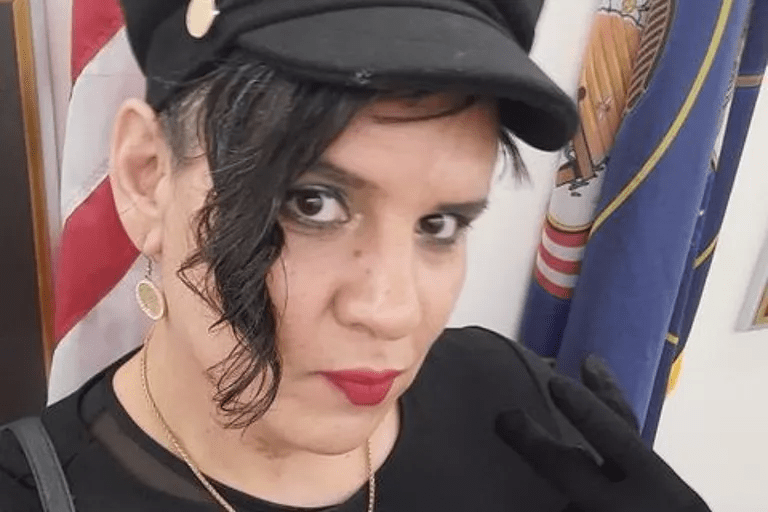
Hateful flyers circulated in Billings, Montana, falsely accusing local trans activist Adria Jawort of “grooming children,” according to local news outlet KTVQ. The flyers, which perpetuate the false narrative from the anti-trans right that all trans people are pedophiles, were posted near schools in Jawort’s neighborhood just days before Thanksgiving.
Jawort had to travel across town in heavy snow to remove the flyers herself.
“I was annoyed about it,” she told KTVQ, describing how the flyers misgendered her and made hateful claims about her life and sexuality. “I was just thinking, why am I doing this? Why do I have to do this? Why do people think this is okay?”
“The thing the flyer said, calling me a groomer and stuff, and basically labeling me as a danger to the community,” Jawort added. “It’s like one of the most awful things you can say. How does that become normalized?”
Billings police are currently investigating the incident. Lt. Matthew Lennick spoke on what constitutes hate speech: “Once someone transitions from making a general statement about their beliefs or another group to a targeted attack on an individual… a victim could take civil action against someone attempting to defame them.”
Possible criminal charges could include disorderly conduct, stalking, intimidation, or harassment, among others.
While Jawort knows the group responsible, she says she’s more frustrated by the ongoing attacks on state Rep. Zooey Zephyr (D-MT). Recently, Republicans unsuccessfully attempted to ban her from women’s bathrooms.
Jawort has been targeted before. Last year, a lecture she was set to give at a library was canceled after a drag ban, with staff citing concerns that hosting a transgender person posed “too much of a legal risk.” This led her to file a lawsuit against the state.
In recent years, an increasing number of LGBTQ+ individuals have been relocating from red states to blue states, and even abroad. This video examines the factors driving this migration, the challenges faced by those making the move, and the effects on both the places they leave and the communities they join. We’ll explore the political and social forces behind this trend, its economic implications, and the potential long-term consequences for both the LGBTQ+ community and society at large. Join us as we share the stories of those who’ve made this tough decision and the communities they’ve left behind.
For decades, LGBTQ+ rights have been leveraged as a tool to mobilize conservative voters.
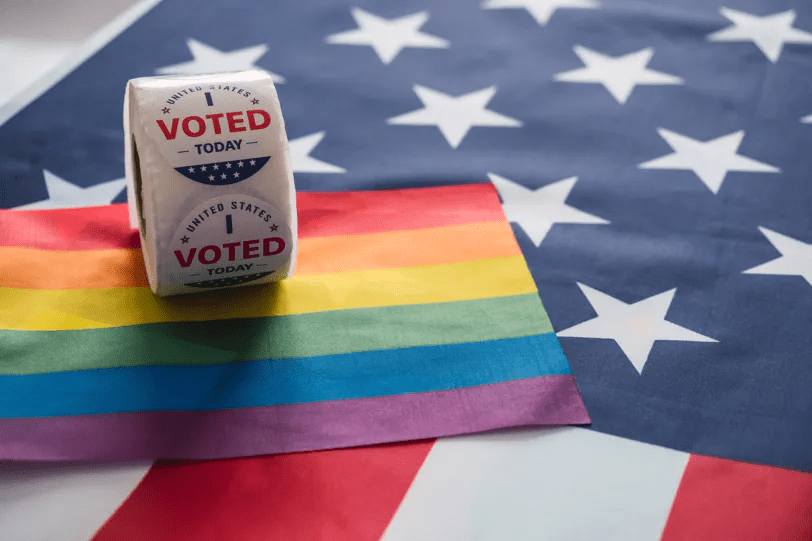
LGBTQ+ ballot initiatives have often served as a wedge issue to galvanize conservative voters, impacting freedoms typically protected by the government. The 2024 election continues this trend, with November marking another instance of LGBTQ+ civil rights being subject to public debate.
In New York, voters will decide whether to include sexual orientation, gender identity, and gender expression in the state constitution’s anti-discrimination amendment. Additionally, reproductive rights will also be on the ballot in ten states.
Voters in California, Colorado, and Hawaii will determine whether to repeal their states’ constitutional bans on same-sex marriage.
Same-sex unions have consistently been a prominent issue in state referendums, with 34 states presenting the question to voters since 1998, many passing constitutional amendments against same-sex partnerships. This tactic was notably used to rally conservative voters in the 2004 election, when 11 states enacted such amendments in support of George W. Bush.
Until 2012, marriage equality lost at the ballot box every time. That year, voters in Maine, Maryland, Minnesota, and Washington approved same-sex marriage, following a shift in national public opinion that saw support for same-sex marriage surpass 50% around 2009.
Though the Obergefell v. Hodges Supreme Court decision in 2015 invalidated all state anti-marriage equality amendments, many remain in state constitutions. Activists are now working to repeal these amendments, especially in light of concerns that the conservative-dominated Supreme Court could overturn Obergefell, as suggested by Justice Clarence Thomas after the overturning of Roe v. Wade.
“Saving” the Children
The first state ballot initiative related to LGBTQ+ rights emerged in California during the 1978 election. Proposition 6, known as the Briggs Initiative, aimed to ban individuals engaged in “public homosexual activity” from working in California public schools. It drew national attention and condemnation from then-President Jimmy Carter and then-Governor Ronald Reagan. This initiative reflected a broader trend of states repealing anti-discrimination measures, influenced by Anita Bryant’s successful 1977 campaign in Florida to repeal a local ordinance banning discrimination based on sexual orientation. Harvey Milk played a pivotal role in the campaign against Prop 6, which was defeated by a 16-point margin.
Over the years, various state ballot initiatives have sought to either legalize or ban discrimination based on sexual orientation and gender identity, with voters increasingly favoring anti-discrimination measures. For instance, in 1988, Oregon voters revoked the governor’s authority to ban discrimination based on sexual orientation, and in 2018, Massachusetts voters upheld a law prohibiting discrimination based on gender identity.
Maine and Oregon have frequently put LGBTQ+ rights to a vote. In Maine, voters initially blocked same-sex marriage in 2009 but approved it in 2012, both times with 53% of the vote. Anti-discrimination protections for LGBTQ+ individuals in Maine were denied by referendum in 1998 and 2000 but were later approved in 2005. In Oregon, voters defeated a “don’t say gay” measure in 2000 by a 5.7% margin.
The concept of recognizing sexual orientation as a protected identity has also been subject to multiple votes, often as a conservative strategy to prevent the inclusion of “homosexuality” in anti-discrimination ordinances. In the 1990s, voters in Oregon, Idaho, and Maine supported allowing sexual orientation to be a protected identity.
Additionally, ballot-driven voter ID laws in states like Arkansas and North Carolina may hinder voting access for transgender individuals and other marginalized members of the LGBTQ+ community.
Regardless of the specific ballot measures, the state representatives elected this year will greatly influence LGBTQ+ rights. Legislatures controlled by Republican officials have introduced or passed numerous anti-LGBTQ+ bills in recent years, targeting issues such as gender-affirming health care, bathroom access, accurate IDs, inclusive education, and participation in sports. Supporting pro-equality candidates at both the state and local levels will have long-lasting effects on these laws.
Vote Like Your Rights Depend on It
Civil rights for various groups have been subject to public referendum numerous times since 1868, similar to questions regarding the legality of discrimination based on race, sex, and disability. Initially, voters supported discriminatory measures, but over time, support for equal rights has increased. Women’s rights gained traction in the 1970s, while support for LGBTQ+ rights began to emerge in the 2000s.
The determination of civil rights is increasingly influenced by courts and legislatures, which are becoming more conservative. The notion that constitutional rights can be dictated by public opinion has permitted racism, sexism, homophobia, and other forms of discrimination to become codified into law.
Public opinion on LGBTQ+ rights, particularly for LGB and transgender individuals, remains conflicted and volatile. While the majority currently supports anti-discrimination laws, relying on ballot measures is not a guaranteed path to securing rights.
As LGBTQ+ rights are again on the ballot, it is crucial to vote this year—both on referendums concerning LGBTQ+ rights and for candidates who can promote pro-equality legislation.
The Human Rights Campaign State Equality Index (SEI) is a comprehensive state-by-state report that offers a review of statewide laws and policies impacting LGBTQ+ individuals and their families.
The SEI rates all 50 states plus Washington, D.C. in six areas of law and assigns the states to one of four distinct categories.
Check your state’s scorecard by texting SEI to 472472 from your mobile phone. (msg & data rates may apply. Text STOP to quit, HELP for info.)


 fleeredstates.blog
You must be logged in to post a comment.