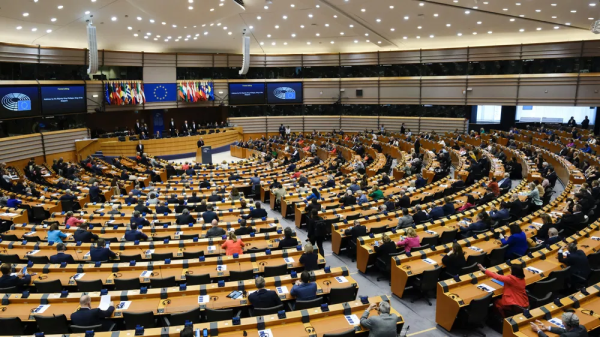
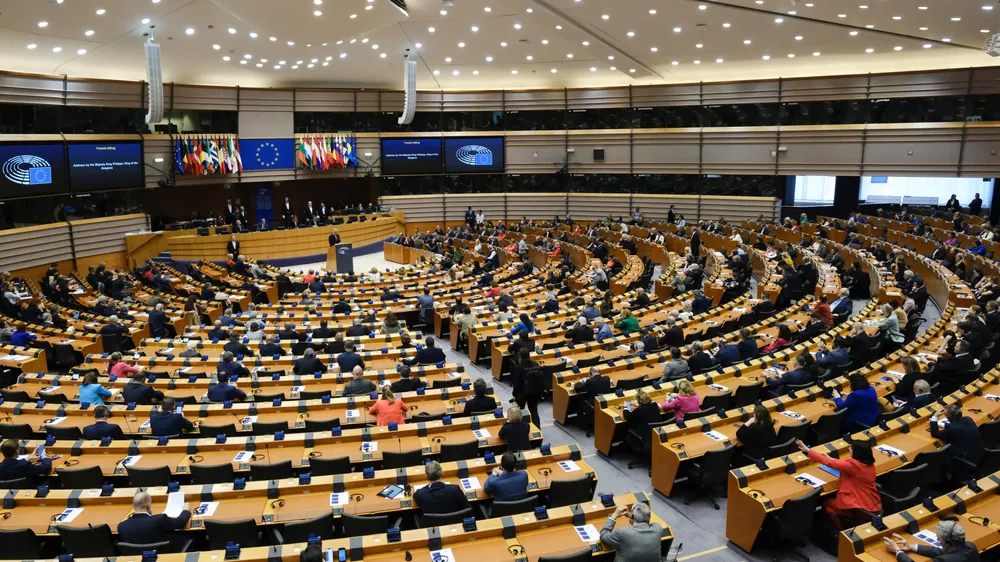
The European Parliament agreed to a resolution that says that trans women are women last Wednesday.
The resolution was to adopt recommendations concerning the European Union’s priorities for the 70th session of the U.N. Commission on the Status of Women, which is set to take place next month in New York. The U.N. Commission on the Status of Women is charged with promoting gender equality across the globe.
Citing the U.N. Convention on the Elimination of All Forms of Discrimination against Women, as well as several other international proclamations, the council set a list of recommendations for the E.U. to pursue at the convention, including: “emphasize the importance of the full recognition of trans women as women, noting that their inclusion is essential for the effectiveness of any gender-equality and anti-violence policies; call for recognition of and equal access for trans women to protection and support services.”
The resolution also mentioned LGBTQ+ people in several other places, including in the statement about needing a “comprehensive tool to monitor and counter democratic backsliding and backsliding in women’s rights” and citing “attacks by anti-gender and anti-rights movements” that “undermine democracy and target women’s and LGBTIQ+ rights.”
The section on funding cuts to non-governmental organizations included “LGBTIQ+ organizations” as needing support. The section on sexual and reproductive health and rights (SRHR) mentioned “access to gender-sensitive mental health services for young women and LGBTIQ+ people.” And a section about the E.U. commitment to foreign policy stressed the need to prioritize “the needs of women and LGBTIQ+ human rights defenders.”
The resolution was adopted in a 340-141 vote, with 68 abstentions.
Independent journalist Erin Reen notes that this now puts the E.U. “on a direct collision course with the United States,” which will also be at the session, a reference to the current presidential administration’s stated policy that trans people’s existence must be denied by the federal government.
While the European Parliament’s recommendations aren’t binding, they are expected to have significant influence on the E.U.’s positions at the forum.
The Spanish government has announced a plan to legalise the status of undocumented migrants, a measure expected to benefit at least half a million people.
Regularisation will be available to foreign nationals who do not have a criminal record and can prove they lived in Spain for at least five months prior to 31 December 2025.
“This is an historic day for our country,” said Elma Saiz, Spain’s minister of inclusion, social security and migration.
The measure will provide beneficiaries with an initial one-year residence permit, which can then be extended. Requests for legalisation are expected to begin in April and the process will remain open until the end of June.
“We are reinforcing a migratory model based on human rights, integration, co-existence and which is compatible with economic growth and social cohesion,” Saiz said.
Spain has seen a large influx of migrants in recent years, mainly from Latin America.
The conservative think-tank Funcas found that the number of undocumented migrants in Spain had risen from 107,409 in 2017 to 837,938 in 2025 – an eight-fold increase.
The highest number of undocumented arrivals currently living in Spain are believed to be from Colombia, Peru and Honduras.
Spain’s socialist-led coalition government has been an outlier on this issue among the larger European nations, underlining the importance of migrants for the economy.
The country has been outperforming the other main EU economies in recent years, posting expected growth of close to 3% in 2025.
Unemployment, a longstanding weakness of the Spanish economy, has dipped below 10% for the first time since 2008, according to figures released on Tuesday.
Prime Minister Pedro Sánchez has described immigrants as representing “wealth, development and prosperity” for Spain, pointing to their contribution to the social security system.
The government and parties on the left have also emphasised the need to treat migrants in a humane way.
“Providing rights is the answer to racism,” said Irene Montero, of the far-left Podemos party and a former minister in a coalition government with the Socialists.
She has campaigned for this measure, which followed an agreement between the party and the government. A civic legislative proposal, calling for a mass migrant regularisation, received the support of around 700,000 people but had been languishing in parliament.
This measure will be approved by royal decree, meaning it does not require parliamentary approval.
It is the first large-scale migrant regularisation in Spain for two decades.
Several such initiatives, by governments of both the Socialists and the conservative People’s Party (PP), legalised the status of an estimated half a million migrants between 1986 and 2005.
However, Alberto Núñez Feijóo, leader of the PP, said the latest mass legalisation would “increase the pull effect and overwhelm our public services”.
Pepa Millán, spokeswoman for the far-right Vox, said the initiative “attacks our identity”, adding that the party would appeal before the Supreme Court in a bid to block it.
Are you thinking about leaving the United States for safety, stability, or a better quality of life? In this powerful conversation, we sit down with Dan Brotman, an American expat based in Montreal who specializes in investment migration—including Golden Visas, Digital Nomad Visas, and residency-by-investment options tailored to the LGBTQ+ community.
With an academic background in immigration policy, multiple citizenships, and years of frontline experience helping people relocate, Dan brings unmatched insight into how Americans can legally, safely, and strategically build a future outside the U.S. Follow Dan on Instagram: @danbrotman linktr.ee/danbrotman
🏡 IN THIS VIDEO, WE COVER:
🌍 Why Americans—Especially LGBTQ+ People—Are Exploring Life Abroad
We discuss political extremism, threats to civil rights, financial instability, and what it means to live somewhere your rights are not up for debate.
💶 Golden Visas & Migration Pathways
Dan explains the residency-by-investment programs opening doors across Europe, Latin America, and beyond—and why securing a visa before your “red line” is crossed is essential.
❤️🩹 Healthcare Without Fear
Real stories from Spain, Uruguay, and Canada:
€80/month private healthcare in Spain
A 5-day ICU stay for $19
An emergency room visit in Canada that cost $0
A U.S. insurance premium high enough to rent an apartment in Valencia
🧠 Financial Relief & Peace of Mind
We explore how predictable, low-cost healthcare abroad reduces anxiety for families who worry about a single medical emergency derailing their finances.
🎓 Education & Opportunity
Why families are sending their children to Europe—especially the Netherlands—for nearly free, world-class university education.
🏳️🌈 Rights, Safety & Community
Dan discusses LGBTQ+ rights, abortion access, universal healthcare, and gun laws in Canada—issues considered settled and not weaponized politically.
🚨 Red Lines & Safety Planning
We explore how LGBTQ+ people can assess danger, decide their personal boundaries, and obtain the documentation needed to leave quickly if the situation in the U.S. deteriorates.
This is an essential conversation for anyone considering relocation for safety, rights, opportunity, or long-term stability.
🔔 Subscribe for more guides on LGBTQ+ migration, Golden Visa pathways, and global relocation options.
Austin Willingham, 30, grew up in Decatur, Alabama, and knew from a very early age that he wanted to leave home as soon as he turned 18.
While studying abroad in Sweden during his junior year at Troy University, he visited the Netherlands for the first time. Now almost 10 years later, Willingham and his partner are living in Rotterdam with the hope that they can obtain permanent residency or EU citizenship.
It was a move that Willingham admits had been in the works since he returned from his semester abroad in Sweden.
“Once I came back from Sweden, I was just determined to move back to Europe and had reverse culture shock. I was asking my parents if I could transfer to a different university and complete my degree abroad,” he tells CNBC Make It.
“Me being the first-generation college student in my immediate family, my parents were really adamant about me just going ahead and finishing my degree.”
Prior to moving to Rotterdam, Willingham lived in Ireland, traveled through Southeast Asia and was in and out of Australia for five years.
“We thought that it would be a good break. It would be a good change and transition from life in Australia. We also thought it would not be as difficult a change because Rotterdam is still the second-largest city in the country. We’re definitely city people, so we thought that this would just be the best space for us,” he says. “As soon as we got here, the people were so warm and they immediately welcomed us in.”
An estimated 5.5 million Americans live abroad, according to the Association of Americans Resident Overseas (AARO). That number continues to rise with an estimated 1,285 U.S. citizens expatriated in the first quarter of 2025 alone — a 102% increase compared to the same period a year ago, according to a report from CS Global Partners, which analyzed statistics from the U.S. Federal Register.
Life in the Netherlands
Willingham made the official move to Rotterdam in June of this year, on a DAFT (Dutch-American Friendship Treaty) visa. That visa stipulates that he be self-employed or work as a freelancer only.
To satisfy the visa requirements, Willingham works as an event planner and does commercial modeling, but his ultimate goal is to grow his relocation services business, Willing World.
Willingham and his partner live in a two-bedroom apartment with a roommate. The couple splits 430 euros or USD $498 a month for rent — paying 215 euros or USD $249 each — according to documents reviewed by CNBC Make It.
Including rent, Willingham’s monthly expenses in Rotterdam total approximately $680, covering utilities, transportation, health insurance, groceries, and his mobile phone bill.
“I like the freedom. This is coming from a privileged place, but I truly feel like anywhere outside the United States, it’s about being able to breathe and have a work-life balance. That’s what I love most about living abroad, even though I’m working for myself, there is still this balance and there’s not this societal pressure of needing to prove myself all the time.”
Willingham started sharing his journey abroad on TikTok and says that since moving to Rotterdam, he’s enjoyed building a community both online and in real life. He’s excited to see what the future holds, he says, but moving back to the United States is just not in the cards for him right now.
“I would love to live. I would love to own. I would love to say yes at some point, but not in the current situation that we have. It would be way down the line when the United States finally gets some change,” he says.
“I want to be able to be there for my parents, so maybe I wouldn’t move back permanently, but I would spend an extended amount of time.”
Willingham says that leaving the U.S. has taught him that he is capable of anything.
“I’ve learned that I can do it even when I’m scared because it still has to get done,” he says. “When living abroad, especially on your own, you don’t have anybody to depend on, so you learn to depend on yourself and trust yourself with it.”
Conversions from euros to USD were done using the OANDA conversion rate of 1 euro to $1.16 USD on October 14, 2025. All amounts are rounded to the nearest dollar.
Is France less safe than Rwanda and Bangladesh? The new World Safety Index has raised questions on security across Europe.
People feel less safe walking alone at night in Italy and France than in dozens of other countries, including Iraq, Rwanda, and Bangladesh, according to a new report.
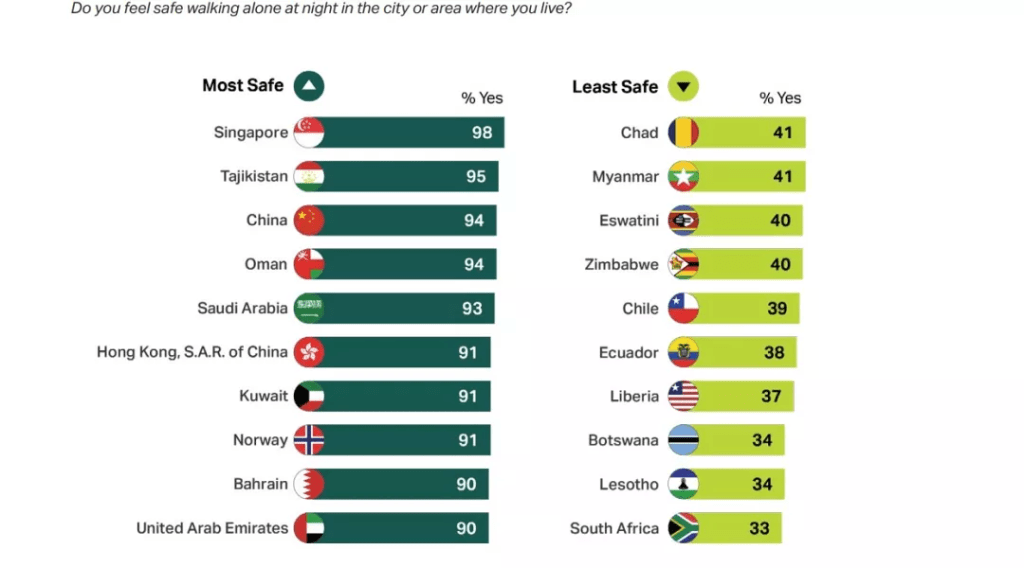
In fact, the 2025 edition of The Global Safety Report features only one European nation in the top 10 countries with the highest sense of security: Norway (91%).
Denmark and Kosovo, both with 89%, are the second-highest ranking European countries, respectively 11th and 12th worldwide.
Italians feel least safe in Europe, France 56th worldwide
With 60%, the perception of security among Italians is the lowest in Europe, and the 95th in the world, behind war-torn Ukraine (62%), Nicaragua (63%), Mauritania (64%) and Niger (67%).
France, ranked in 56th place with 73%, fared higher than Italy but placed behind similar European economies such as Spain (81%), Germany (78%) and the UK (76%), as well as non-European nations like Egypt (82%), Bangladesh (74%) and Belize (74%).
The Gallup report surveyed 145,170 adults aged 15 and older across 144 countries and territories.
How does Europe compare to the rest of the world?
Globally, 73% of adults worldwide said they feel safe walking alone at night in the city or area where they live.
It’s the highest level on Gallup’s record (which began in 2006) and a 13% increase over the past decade.
“The paradox is striking,” the researchers said in the report. “We are living through more armed conflicts than at any time since the Second World War. And yet, Gallup finds that more people than ever say they feel safe in their communities.”
The world region with the highest sense of security is Asia-Pacific (79%).
Western Europe follows in second place (77%), ahead of the Middle East and North Africa (74%).
Security perception: Post-Soviet Europe nearly overtakes America
With a 34-point jump over the past two decades, the former Soviet bloc has experienced the greatest growth in safety perceptions across all macroregions, reaching 71%.
If the trend continues, the former USSR countries — Russia excluded — could surpass North America, which now stands at 72%.
Along with sub-Saharan Africa, North America has been the only world region to see a decline in security perception since 2006 (-4%).
Overall, the region where people feel the least safe globally is Latin America and the Caribbean (50%).
Gender gap: Many more women feel unsafe than men
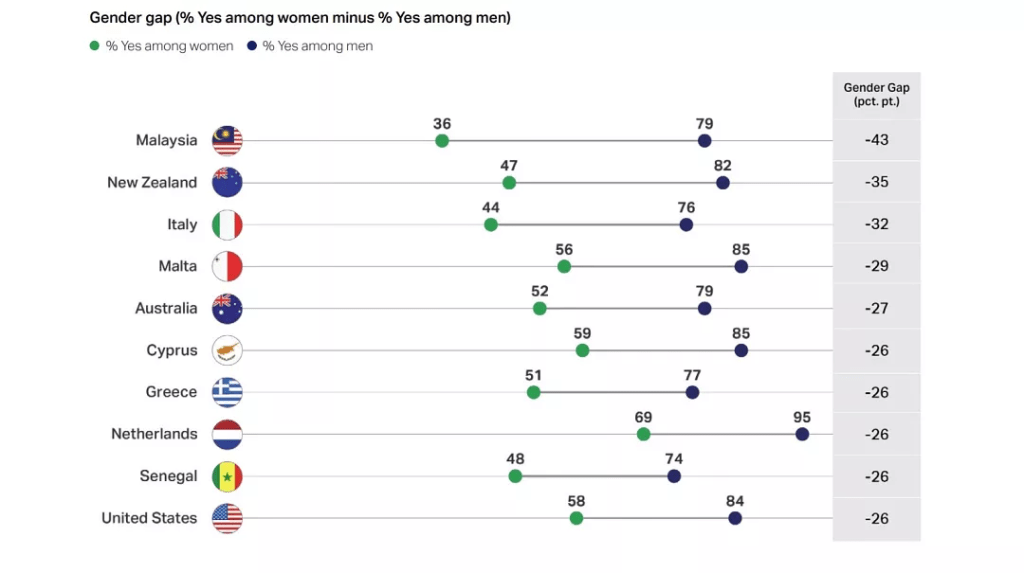
The Gallup report also highlights a stark gender gap: 32% of women, globally, claim they don’t feel safe compared to 21% of men.
Five of the world’s 10 countries with the highest gender gap in this sense are EU member states.
Again, Italy’s performance here is the worst in Europe, with a 32-point gap between the security perception of Italian men versus that of Italian women — 76% of men feel safe walking alone at night versus 44% of women.
The report says that “56% of intentional homicides where the victim is a woman or girl are perpetrated by an intimate partner or family member, compared to 11% when the victim is male.”
“While men are more likely to be victims of lethal violence in public, rates of reported non-lethal violence are much closer between genders,” it adds.
Perception vs reality: Which countrie see themselves better — or worse — than they really are?
A low sense of safety doesn’t always mean a country is actually unsafe and vice versa.
TheGlobal Peace Index — which factors in Gallup’s safety perception along with other, more pragmatic data like homicide rates, violent crime, access to firearms, terrorism and political instability — often paints a more nuanced picture.
Across Europe, many nations turn out to be safer than they think.
Germany, for instance, ranks 20th worldwide in the Global Peace Index, yet only 34th when it comes to their citizens’ perception.
Italians and Brits also seem to underestimate their safety levels, with a gap of 62 and 15 positions, respectively, between perception and estimated reality.
France, on the other hand, tends to perceive itself as more secure than it might be — ranking 56th by its own perception but 74th in the Global Peace Index.
Still, it remains more secure than several non-European nations, including the aforementioned Rwanda (91st) and Bangladesh (123rd).
Spain seems to have a more grounded perception of reality. The country placed 25th in the Global Peace Index and 29th in Gallup’s safety perception table.
*This is reported by Reuters. For corresponding graphs, check their original article.
As global investors consider reducing their exposure to U.S. financial assets, the key question is where money flowing out of the U.S. will go. While Europe may be the obvious destination, relative value metrics may favour emerging Asia.
Even though U.S. equities have recovered from the steep losses suffered in the week following U.S. President Donald Trump’s announcement of his ‘Liberation Day’ tariffs, the same cannot be said of the U.S. bond market. Since hitting a recent low on April 4, the 10-year Treasury yield has spiked by around 50 basis points, with bond investors demanding more compensation for the risk of holding longer-dated U.S. debt. Worryingly, the benchmark Treasury yield has surged higher than nominal U.S. GDP growth – a key risk measure.
Additionally, the usual positive correlation between Treasury yields and the U.S. dollar has broken off, as rising yields are no longer attracting money to the “safest” asset in the world. Broad-based depreciation of the greenback suggests that – despite the equity rebound – many U.S. assets are being sold and the funds are flowing into markets whose currencies are appreciating.
EUROPEAN ALTERNATIVE
The euro’s almost 10% rise against the dollar this year suggests that a significant portion of the capital flowing out of the U.S. is going to Europe, likely driven both by concerns about U.S. policy as well as expectations of higher regional growth.
Further monetary easing by the European Central Bank should promote economic activity, as should the expected surge in fiscal spending following Germany’s recent constitutional reform, opens new tab, which approved partial removal of the “debt brake” for infrastructure and defence spending.
The fiscal splurge is already offering a boost to European equities – the surprise winner thus far in 2025 – especially defence, industrial and technology stocks.
DEBT WOES
But there are reasons to question the new ‘European exceptionalism’ narrative.
One likely cause of investors’ growing apprehension with U.S. assets is the Trump administration’s apparent inability to narrow the country’s gaping fiscal deficit or reduce its debt-to-GDP ratio, which has risen to more than 120%.
But elevated debt metrics are also an issue across the pond, as they are found in Italy (135% of GDP), France (113%) and the UK (96%). Importantly, both Italy and France have seen their 10-year bond yields rise above their nominal GDP growth rates.
While the latter metric is also true of Germany, the country’s debt load is modest at only 62% of GDP, so the statistic mostly reflects a stagnating economy that’s about to get a spending boost.
Fiscal expansion in Europe will likely continue to benefit the region’s equities, but whether it is good news for fixed income investment there is still an open question.
ASIAN OPTION
Meanwhile, in emerging Asia – another potential destination for U.S. capital outflows – the debt picture is better and the growth outlook is stronger.
Government debt in many Asian countries is low, ranging from 37% of GDP in Indonesia to around 85% in China and India.
Benchmark bond yields across the region have been declining since October 2023, speaking to fixed income investors’ limited concerns about Asian countries’ fiscal situations. In fact, yields in China, Thailand and Korea are all below those in the U.S., though those in Indonesia and India remain higher.
Modest debt burdens mean there is also plenty of room for more fiscal stimulus in many countries, which could improve consumption, while the benign inflation environment should enable central banks in the region to continue cutting rates to stimulate growth.
Emerging Asia also offers far more high-growth, technology companies than Europe. The release of the affordable Chinese artificial intelligence model, DeepSeek, Beijing’s focus on semiconductors and advanced manufacturing and the country’s electric vehicle dominance could all attract tech-focused investors looking for an alternative to the U.S..
RELATIVE VALUE
Even though European equities have outperformed their U.S. counterparts significantly in 2025, the twelve-month forward price-to-earnings multiple of the major European index, the STOXX50, is considerably lower than that of the S&P 500, at 15.4x and 21.0x, respectively, as of May 23. But the major emerging Asia equity index, the MSCI Asia ex Japan, is even cheaper at 13.4x.
Moreover, earnings growth forecasts are higher in Asia than in either the U.S. or Europe through 2026.
Finally, reallocation of assets from the U.S. could potentially have a bigger positive impact on Asia than on Europe because of their relative sizes. Let’s say 5% of the U.S. free floating market cap of around $58 trillion, or roughly $3 trillion, moves out. That would represent 36% of Asia’s market cap, but only 22% of Europe’s.
NO SLAM DUNK
Caution remains warranted, though. Asian nations’ ongoing trade negotiations with the U.S. will likely still encounter numerous twists and turns, and increasing protectionism could hinder the region’s more export-oriented economies. Moreover, Chinese economic growth remains tepid despite the monetary and fiscal stimulus delivered over the past eight months.
Finally, the capital flowing into emerging Asia is a double-edged sword because of the impact on Asian currencies versus the U.S. dollar. If Asian currencies strengthen much more, the region’s export engine could stutter.
Investors, thus, have to keep a close eye on macroeconomics, geopolitics and policy statements, not just valuation metrics.
But given emerging Asia’s benign debt environment and positive growth outlook, both the region’s equity and fixed income markets have the potential to benefit from the death of American exceptionalism.
(The views expressed here are those of Manishi Raychaudhuri, the founder and CEO of Emmer Capital Partners Ltd and the former Head of Asia-Pacific Equity Research at BNP Paribas Securities).
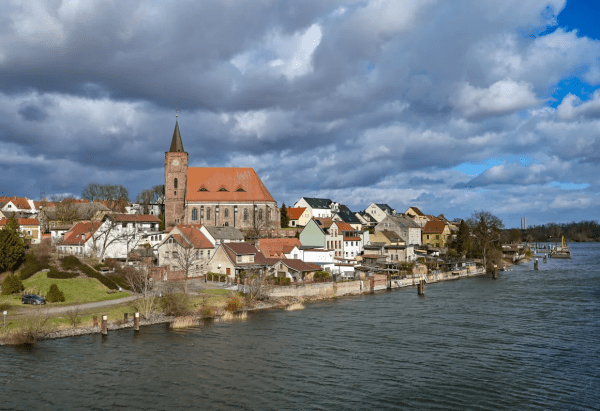
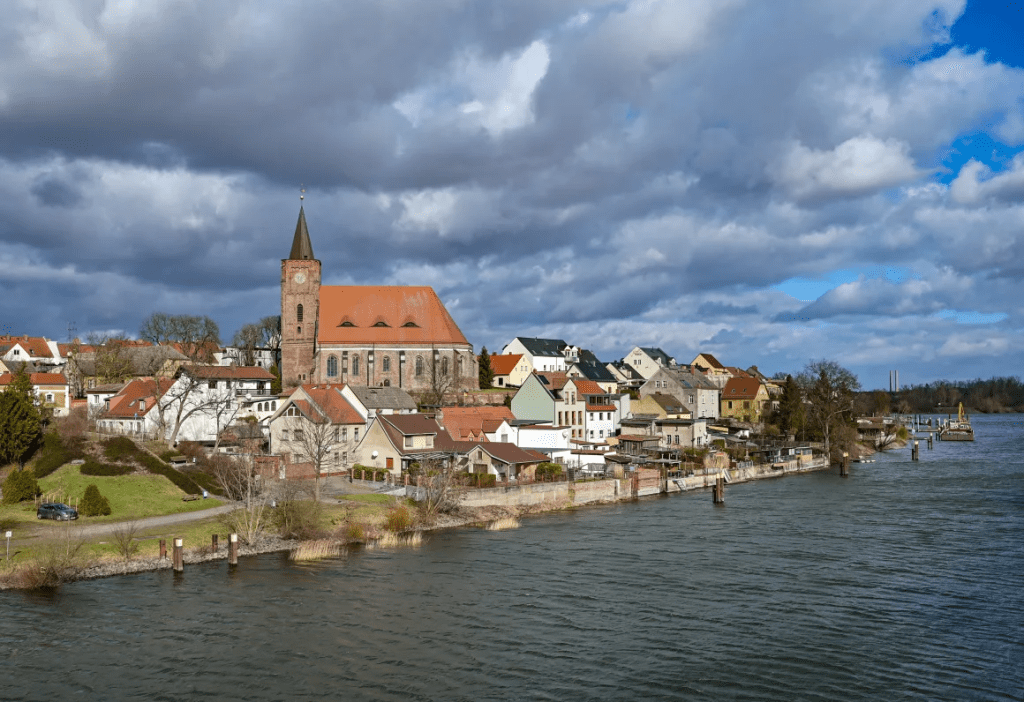
A town in eastern Germany is offering two weeks free accommodation to encourage people to relocate there in a bid to boost its population.
Eisenhüttenstadt, which sits on the border with Poland around 60 miles from the German capital Berlin, is offering a 14-day trial stay for potential new residents, according to a statement from the local council on May 13.
“The project is aimed at anyone interested in moving to Eisenhüttenstadt—such as commuters, those interested in returning to the town, skilled workers, or self-employed individuals seeking a change of scenery,” it said, with applications open until the beginning of July.
Selected participants will live for free in a furnished apartment from September 6-20 as part of an “innovative immigration project” named “Make Plans Now,” said the council.
They “will have the opportunity to get to know the life, work and community of (Eisenhüttenstadt) in a 14-day living trial — for free and in the middle of the town,” reads the statement.
In order to help participants get a feel for the town, the council will lay on a number of activities including a tour, a factory tour and various outings.
The council will also encourage participants to stay permanently, with local businesses offering internships, job shadowing and interview opportunities.
Founded in 1950, Eisenhüttenstadt, which can be translated as Steel Mill Town, was the first fully planned town built under the socialist government of the former East Germany.
Sitting on the banks of the Oder River, socialist planners built the town around a huge steelworks.
Previously known as Stalinstadt, or Stalin Town, after former Soviet leader Joseph Stalin, it was renamed after East and West Germany reunified following the fall of the Berlin Wall in 1989.
Like many towns and cities in the former East Germany, it has seen its population decline since reunification, from a peak of more than 50,000 to the current level of around 24,000, local official Julia Basan told local media outlet RBB24.
The scheme aims to attract more permanent residents, particularly skilled workers, said Basan.
Today, Eisenhüttenstadt is home to the largest integrated steelworks in eastern Germany, which employs 2,500 people, as well as being a hub for metals processing.
Many of the socialist-era buildings are listed as historical monuments and the openness of the town’s layout is striking, attracting visitors interested in architecture.
One recent new arrival said that the architecture was responsible for his decision to move to the town.
It was “a complete coincidence,” the man said in a video posted on the town hall Instagram account.
“We were travelling to Ratzdorf with friends and drove through Karl-Marx-Straße. And I saw these houses, this architecture that completely blew me away and I said to my wife, ‘I’m going to move here,’” he said.
The man later organized a tour of the town with a local historian to learn more.
“After the tour we were so blown away by this architecture, that was actually the trigger,” he said.
Ten years after the far-right Law and Justice Party was elected to power in Poland, and two years after their defeat in national elections, a last vestige of the party’s state-sanctioned anti-LGBTQ+ policies has finally been eliminated.
On Thursday, a council in the southeastern Polish town of Łańcut officially abolished the country’s last remaining ‘LGBT-free’ resolution.
The resolution, introduced by the previous government, was one among about 100 that declared local regions “LGBT-free” or banning “LGBT ideology,” barring the “promotion” of homosexuality and other minority sexual identities, especially in schools.
The declarations drew criticism from human rights groups as well as the European Union, which withheld funding from Poland on the grounds the resolutions were discriminatory and breached the multi-national bloc’s fundamental values.
The move resulted in the freezing of billions of Euros worth of funding to Poland.
In 2022, Poland’s Supreme Administrative Court ruled that the effect of the resolutions was a “violation of the dignity, honor, good name and closely related private life of a specific group of residents,” and deemed them unconstitutional.
The court held that Poland has a duty to protect all its citizens, including members of minority groups. In the aftermath, all of the local resolutions were repealed, leaving Łańcut the final holdout in the country.
“Councilors have been taught a lesson not to succumb to propaganda that appeals to their emotions,” said Jakub Gawron, an activist who ran the so-called Atlas of Hate, an interactive online map illustrating the regions with the “LGBT-free” declarations.
European leaders punished Poland for its anti-LGBTQ+ zones
In 2021, the European Commission warned five Polish regions that “declaring LGBTIQ-free/unwelcome territories, workplace or services constitutes an action that is against the values set out in Article 2 of the Treaty on European Union.” Municipalities with those discriminatory policies were notified that they wouldn’t receive funding for infrastructure, environmental initiatives, and other EU-sponsored projects.
Later in 2021, the EU Parliament formally condemned Poland for trying to create “LGBT-free” zones, with lawmakers comparing the policies to “Jew-free” zones that existed in the years before and during World War II.
European Commission President Ursula von der Leyen said in a State of the Union address the same year that “LGBT-free zones” are “humanity-free zones.”
“They have no place in our Union,” von der Leyen told European lawmakers. “I will not rest when it comes to building a union of equality. A Union where you can be who you are and love who you want – without fear of recrimination or discrimination.”
“Let me be clear: LGBTQ+ rights are human rights — and ‘LGBT-free zones’ have no place in the European Union or anywhere in the world,” Biden posted to Twitter.
The repeal in Poland comes amid a wave of anti-LGBTQ+ legislation arising in the fellow EU member nation of Hungary, as well as Vladimir Putin’s continued crackdown on LGBTQ+ identity in Russia with his implementation of successively broader anti-“gay propaganda” laws.
*This is being reported by CNBC. We are also unsure if it applied to legally married same sex couples, since Croatia has a different law with similar rights for same sex couples under the Life Partnership Act, which is not marriage equality.
Forget a penny for your thoughts; what about 13 cents for a house in Croatia?
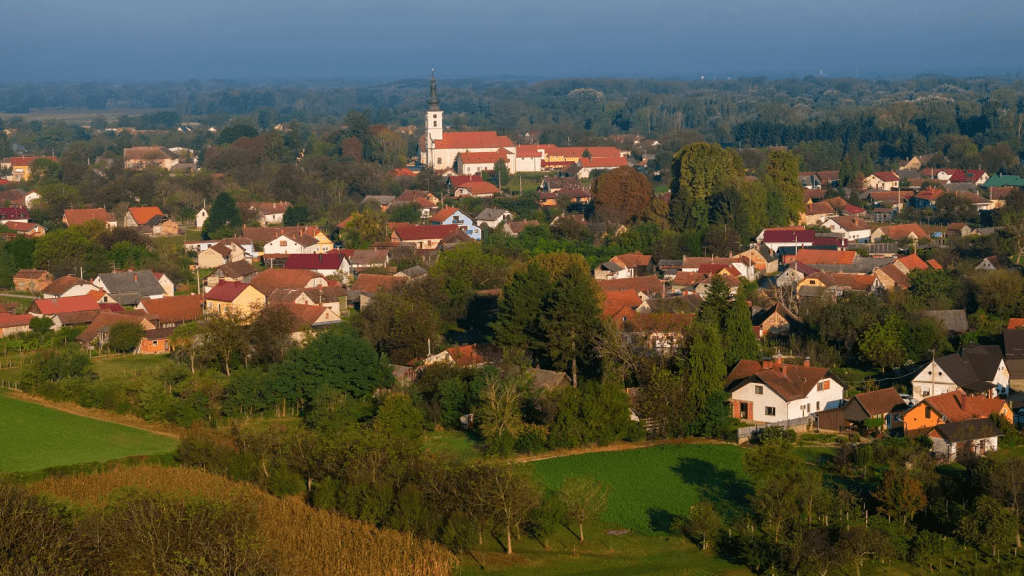
Legrad, a town in northern Croatia, has been trying to get more people to settle in the area by offering houses for pennies. It’s an initiative they started in 2018.
The small town, with around 2,000 people, borders Hungary and has seen its population dwindle since the collapse of the Austro-Hungarian empire in 1918.
In January, government officials announced another batch of houses is ready for sale at just 13 cents.
To be eligible to buy one of the houses, applicants must be under 45 years old, in a marital or extramarital partnership, and have no criminal record.
Most notably, if you want to snag one of these low-cost homes, applicants can’t already own property — though officials don’t specify if that means in Croatia or anywhere else in the world.
Local Croatian media outlet HRT reported that since the program started in 2018, there are more children today than there were five years ago, and as a result, they’re even building a new daycare center.
“A total of five houses ready for occupancy have been sold. Three families have already moved in, and what delights us is that all three families welcomed a new member during their move-in. This has increased the number of children in the daycare center,” Ivan Sabolić, the mayor of Legrad, told HRT.
In 2021, Legrad put up 19 empty houses and abandoned construction sites for sale at the price of 1 kuna, Croatia’s currency at the time. Seventeen were sold, according to Reuters. The houses were in various states of disrepair, so to help out, the municipality said it would pay $25,000 kuna (about $3,558) for any necessary renovations.
For new residents who wanted to buy a privately owned home, the town offered to cover 20% of the price or up to 35,000 kuna (about $5,056). It’s unclear if the town will offer the same incentives this time around.












 fleeredstates.blog
You must be logged in to post a comment.