European Parliament passes resolution that says trans women are women

Read more at LGBTQ Nation.

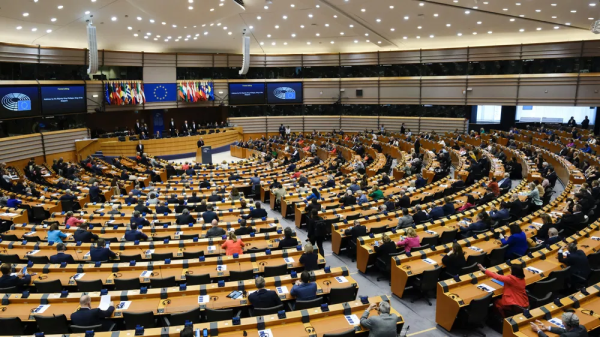
The European Parliament agreed to a resolution that says that trans women are women last Wednesday.

The resolution was to adopt recommendations concerning the European Union’s priorities for the 70th session of the U.N. Commission on the Status of Women, which is set to take place next month in New York. The U.N. Commission on the Status of Women is charged with promoting gender equality across the globe.

Citing the U.N. Convention on the Elimination of All Forms of Discrimination against Women, as well as several other international proclamations, the council set a list of recommendations for the E.U. to pursue at the convention, including: “emphasize the importance of the full recognition of trans women as women, noting that their inclusion is essential for the effectiveness of any gender-equality and anti-violence policies; call for recognition of and equal access for trans women to protection and support services.”

The resolution also mentioned LGBTQ+ people in several other places, including in the statement about needing a “comprehensive tool to monitor and counter democratic backsliding and backsliding in women’s rights” and citing “attacks by anti-gender and anti-rights movements” that “undermine democracy and target women’s and LGBTIQ+ rights.”

The section on funding cuts to non-governmental organizations included “LGBTIQ+ organizations” as needing support. The section on sexual and reproductive health and rights (SRHR) mentioned “access to gender-sensitive mental health services for young women and LGBTIQ+ people.” And a section about the E.U. commitment to foreign policy stressed the need to prioritize “the needs of women and LGBTIQ+ human rights defenders.”

The resolution was adopted in a 340-141 vote, with 68 abstentions.

Independent journalist Erin Reen notes that this now puts the E.U. “on a direct collision course with the United States,” which will also be at the session, a reference to the current presidential administration’s stated policy that trans people’s existence must be denied by the federal government.

While the European Parliament’s recommendations aren’t binding, they are expected to have significant influence on the E.U.’s positions at the forum.
Court grants big victory for same-sex marriage rights in European Union

Read more at LGBTQ Nation.

The European Court of Justice has issued a ruling that all nations in the European Union (EU) must recognize lawful same-sex marriages that were performed in other EU countries. Previously, a country could refuse to recognize a marriage if it had taken place in another country and did not align with its own laws.

The court declared that EU citizens have a right to “a normal family life” regardless of borders. “When they create a family life in a host member state,” they said, “in particular by virtue of marriage, they must have the certainty to be able to pursue that family life upon returning to their member state of origin.”

Citizens of the European Union have the right to freedom of movement between the different nations within the union. The court suggested that this right, as well as the right to “respect for private and family life,” would be breached if one country could refuse to acknowledge a lawful marriage from another country.

The court added in a press release, “Member States are therefore required to recognize, for the purpose of the exercise of the rights conferred by EU law, the marital status lawfully acquired in another Member State.”

The case was brought to the Luxembourg-based court on behalf of a Polish couple who had been married in Berlin, Germany, where same-sex marriage is recognized. When, years later, they returned to their home country, they submitted their marriage certificate, which was in German, to the Polish government to be transcribed and recognized in the Polish civil register.

The Polish government denied their request, as the country does not recognize same-sex marriages. With this new ruling, they will no longer be able to refuse legally.

The decision does not require that same-sex marriage be legalized by all EU nations, only that the marriages conducted in other EU countries be recognized, regardless of the citizenship of the people involved.

Of the 27 EU member states, only 18 have legalized same-sex marriage.

LGBTQ+ rights have taken some big hits in Poland in recent years. The far-right Law and Justice Party held power from 2015 to 2023 and enacted a range of anti-LGBTQ+ policies during that time. It was only in April of this year that the last “LGBT-free” zone created by the party was finally repealed.

Poland is currently led by a coalition government. The prime minister, Donald Tusk, campaigned on introducing same-sex civil unions and has pushed for such legislation to be passed. However, Poland’s president, Karol Nawrocki of the Law and Justice Party, has said that he would veto any legislation that would legalize same-sex marriage.

Blog at WordPress.com.

Up ↑