
This blog is originally appeared at LGBTQ Nation
The Trump-appointed judge argued that trans youth can still access talk therapy, suggesting that treatment options remain available to them.
A three-judge panel from the United States Court of Appeals for the Seventh Circuit has approved the implementation of Indiana’s ban on gender-affirming care for minors.
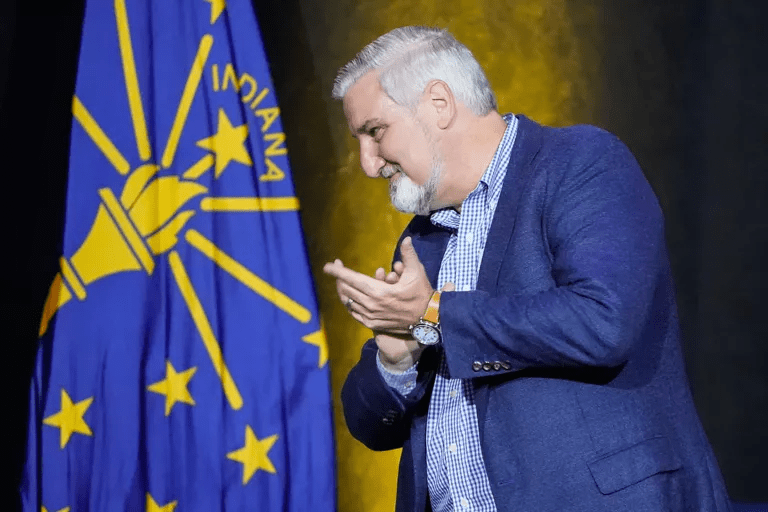
The law, signed by Governor Eric Holcomb (R) in April 2023, prohibits doctors from prescribing puberty blockers and hormone therapy to transgender minors. Despite acknowledging that the bill was “clear as mud,” Holcomb still signed it into law. The bill passed with overwhelming support in both chambers of the state legislature, giving lawmakers the ability to override a potential veto.
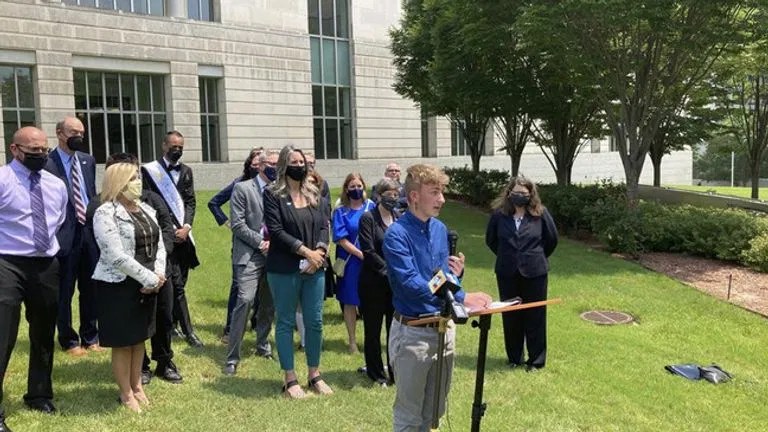
The ACLU of Indiana filed a lawsuit on behalf of four families to prevent the law from taking effect, and a district court judge issued a preliminary injunction to halt its implementation while the case proceeded through the legal system.
The state appealed this injunction to the Seventh Circuit, which lifted it in February and has now issued its final ruling against it. The judges concluded that the district court was wrong to claim that the law would cause “irreparable harm” to transgender youth forced to detransition, arguing that “psychotherapy and parasocial support” could serve as alternatives to gender-affirming care for treating gender dysphoria.
Judge Michael Brennan, appointed by Donald Trump, wrote, “It might be different if Indiana barred all treatment for gender dysphoria, but SEA 480 does no such thing.”
All major medical organizations in the U.S. endorse gender-affirming care as safe and effective.
The majority of the panel also ruled that the state law does not violate the due process or equal protection rights of transgender youth, noting that both transgender boys and girls are prohibited from accessing gender-affirming care.
Brennan wrote, “So, sex does not indicate on what basis treatment is prohibited. The law does not create a class of one sex and a class of another and deny treatment to just one of those classes.”
This argument hinges on not recognizing transgender people as a distinct class. Cisgender youth are still permitted to access gender-affirming care under the law, which specifically bans certain treatments only when used to alter someone’s appearance to “resemble a sex different from the individual’s sex” assigned at birth.
Judge Candace Jackson-Akiwumi, appointed by President Joe Biden, dissented from Brennan’s decision, while Judge Kenneth Ripple, appointed by Ronald Reagan, joined Brennan in the 2-1 ruling.
“We are disappointed and are considering our options,” said Kenneth Faulk of the ACLU of Indiana.
Indiana Attorney General Todd Rokita (R) praised the decision, citing God in his statement.
“The Seventh District Court of Appeal’s decision today is a huge win for Hoosiers and will help protect our most precious gift from God — our children,” he said.


 fleeredstates.blog
You must be logged in to post a comment.