An estimated 60,000 Canadian citizens flock to Florida each year, including many “snowbirds” who spend their winters in the Sunshine State.
In the wake of a new Trump administration policy requiring background checks and fingerprints if they plan to stay more than 30 days, as well as an ongoing trade war with our neighbors to the north, some Canadians say they’re leaving Florida for good.
“I live here six months. This is my home, but I’m leaving April 2nd,” a Canadian woman named Susan told NBC affiliate WBBH. She wasn’t comfortable giving her last name, fearing Canadians could become targets amid escalating tensions with U.S. leadership.
Susan was just one of several Canadians who said they’re selling their properties with no plans to return to Florida.
“We don’t want to be the 51st state, but we just want to be very good allies and wants things to go back to the way they were,” Canadian Janet Rockefeller said.
One family had plans to put down permanent roots in Florida, but have been eyeing other sunny locations like Mexico.
“The truth of the matter is, if I hadn’t prepaid everything and wasn’t here and your weather wasn’t so damn nice, I’d go home now,” Canadian Barry Presement told WBBH.
Presement’s wife, Ruth, wants to make clear that Canadian citizens still have plenty of love for Americans.
“We love the Americans,” Ruth Presement said. “No issue, but its very disturbing to have the president that he doesn’t need Canada for anything.”
Some Canadian homeowners are taking a wait-and-see approach, but some business owners said they’re worried this could affect their bottom line.
“It’s not only having a negative impact on the tourism market, but business as a whole,” Cole Peacock, who owns a business called Seed and Bean Market, told WBBH. “You need those extra visits to kick that profit margins to another level.”
Florida state Republican lawmakers have advanced a bill that would allow public employees and state contractors to openly discriminate against LGBTQ+ co-workers without fear of punishment.
The so-called “Freedom of Conscience in the Workplace Act” (S.B. 440) would forbid public employers from requiring workers to use transgender people’s personal pronouns and forbid employers from punishing any employee for expressing “a belief in traditional or Biblical views of sexuality and marriage, or … gender ideology.”
The legislation would also remove “nonbinary” gender options from employment forms and forbid any entities from requiring workers to undergo LGBTQ+ cultural competence training. The bill would not apply to private employers.
“The bill really does promote government employees and contractors to harass transgender individuals by allowing them to intentionally misgender them by using disrespectful pronouns and having no consequences,” Florida state Sen. Kristen Arrington (D) said, according to Advocate. “And this is a license to discriminate free from accountability.”
The Senate Government Oversight and Accountability Committee initially declined to vote on the bill last week after receiving hundreds of comment cards opposing it. However, the committee ultimately voted 5-2 along party lines to advance it. It now heads to the state’s Senate Judiciary Committee for consideration.
Florida resident Claudia Thomas, the first out gay commissioner of Sanford City, said the bill insults LGBTQ+ people like her and wastes government resources, Florida Politics reported.
“I would love to get back to trying to solve my city’s problems about water, clean water, housing, etc,” Thomas said. “And if I have to start wasting my time talking about pronouns and people not respecting my friends, it would make me sad.”
One bill would ban local governments from enacting diversity, equity, and inclusion (DEI) policies (including any recognition of Pride Month) by defunding these initiatives and removing local officials who promote them. Another would prohibit any taxpayer funds from supporting DEI initiatives in state agencies, among state contractors, or grantees.
Yet another bill would ban Pride flags on government property, and another would restrict the ability of people under the age of 18 to seek reproductive healthcare without parental consent.
However, Democratic lawmakers have also introduced legislation that would formally repeal the state’s ban on same-sex marriage, repeal the so-called “Don’t Say Gay” law, which forbids instruction on LGBTQ+ issues in K-12 schools, eliminate so-called “LGBTQ+ paníc defenses in queer-bashing criminal cases and restore parents’ rights to access gender-affirming care for trans kids.
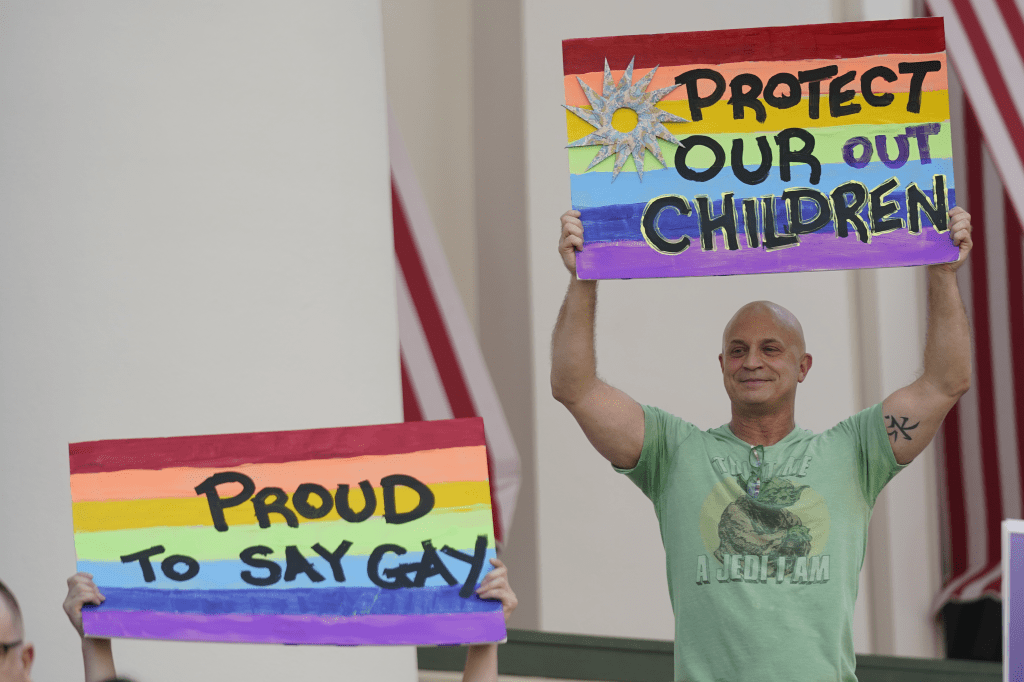
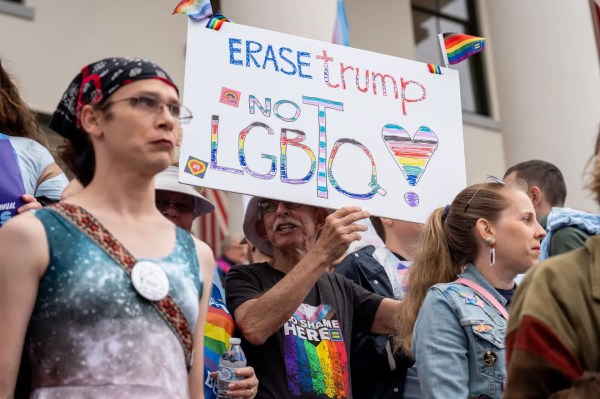
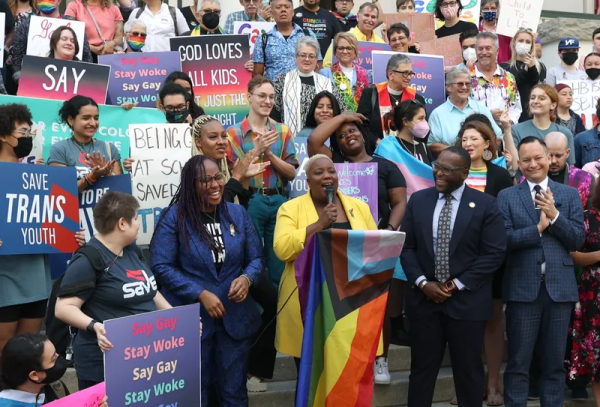
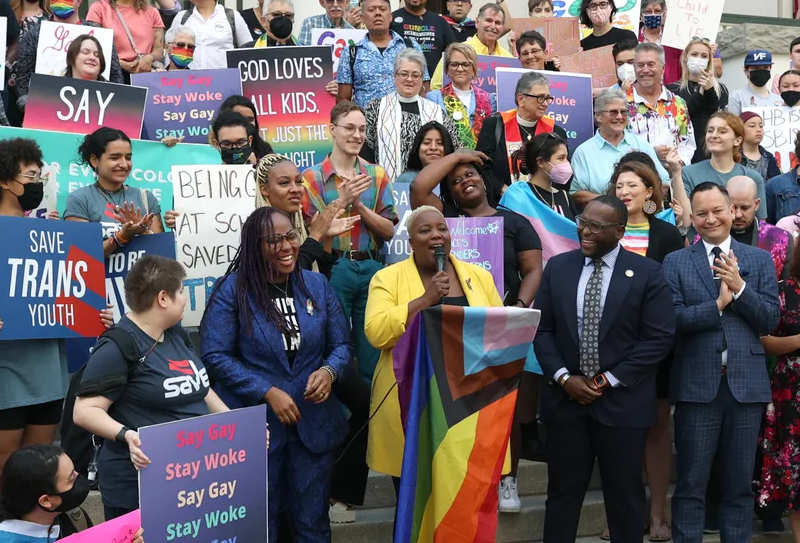
LGBTQ rights advocates from across Florida walked the streets of Tallahassee and met at the steps of the Historic Capitol Thursday to protest legislation that they say would further roll back their rights.
Wearing blue shirts that said “Let Us Live,” protesters chanted, “This is what democracy looks like,” in fierce wind and rain.
“We need to start running for office,” said Jules Rayne, a community organizer for Equality Florida and Manatee County resident. “We need to be everywhere, in every school district, in every county commissioner’s seat, in every mayor’s office.”
After years of the Florida Legislature passing bills that target the transgender community, the Republican-led branch of government still isn’t letting up. There are multiple bills attempting to further prohibit state funding for diversity, equity and inclusion in K-12 schools, state agencies and higher education.
Hundreds of Floridians marched from Cascades Park to the Capitol Thursday morning for the “Let Us Live March” to protest these bills and hold a rally on the front Capitol steps with trans leaders, who said they weren’t letting up, either.
LGBTQ advocates highlighted a small win that happened earlier this week, when two anti-DEI bills, “Gender Identity Employment Practices” (SB 440) and “Prohibited Preferences in Government Contracting” (SB 1694) were postponed in their committee on Tuesday.
SB 440, sponsored by Sen. Stan McClain, R-Ocala, and called the “Freedom of Conscience in the Workplace Act,” would prohibit employers from being required to use certain pronouns or requiring them to use a pronoun that does not correspond to the employee’s or contractor’s sex. Critics are calling it the “Don’t Say Gay or Trans at Work” bill.
And SB 1694, sponsored by Sen. Randy Fine, R-Melbourne Beach, would prohibit an awarding body from giving preference to a vendor on the basis of race or ethnicity.
More than 1,000 members of the public signed up to comment during the Senate Committee on Governmental Oversight and Accountability, which Sen. Carlos Guillermo Smith, R-Orlando, said attributed to the bills getting delayed. Smith said it’s evidence that “people power works.”
“All of this other stuff related to DEI is not solving any problems. It’s not improving anyone’s life, and it’s just honestly needlessly dividing us,” he said.
There are still other anti-DEI bills making their way through committees, however, including one that some say would push the controversy over book bans into overdrive and another that would potentially halt funds for efforts like domestic abuse shelters for women.
“Prohibitions and Limitations on Diversity, Equity, and Inclusion and Requirements for Medical Institutions of Higher Education” (SB 1710) was passed through the same committee that temporarily postponed SB 440 and SB 1674. That measure, sponsored by Sen. Nick DiCeglie, R-St. Petersburg, prohibits state agencies from expending certain funds for a DEI office or officer.
Another measure by McClain, the same sponsor as the so-called “Don’t Say Gay or Trans at Work” bill, would define the term “harmful to minors,” and further limit classroom materials. “Material that is Harmful to Minors,” (SB 1692), says: “The school board may not consider potential literary, artistic, political, or scientific value as a basis for retaining the material.” That bill passed through a Senate Criminal Justice Committee and is headed to the Committee on Education K-12.
If passed, work “by Shakespeare or other very well-known authors would be on the chopping block in our public schools, which brings us in the wrong direction all over again,” Smith said.
And most worrisome for Rayne, the Manatee County community organizer, is “Official Actions of Local Governments” (SB 420), which would prohibit counties and municipalities from funding, promoting or taking official action as it relates to DEI.
It would prohibit local governments from promoting or providing differential or preferential treatment or special benefits to a person or group based on that person’s or group’s race, color, sex, ethnicity, gender identity or sexual orientation.
Critics of the bill included some Republicans, who said the bill needed more work, especially with the word “differential” versus “preferential.”
“If we provide differential treatment to a person based on sex, that could create a problem with a program that was intended for abused women, which nobody would want to get rid of,” said Sen. Kathleen Passidomo, R-Naples. “We really need to hone in on where you’re trying to go.”
The bill still passed along party lines, with all Republicans voting yes.
Rayne said she believes this bill, along with many of the other anti-DEI measures, are broadly written, poorly defined and don’t serve the diverse, unique population of Florida.
“It’s going to put Floridians’ lives at risk and further erase our culture,” she said. “These bills are not what people are talking about at their kitchen table.
“Culture wars are not what Floridians care about.”
We’re heading into week #3 of the legislative session — and there’s a LOT happening. But reinforcements are on the way! Soon, we’ll be welcoming hundreds of volunteers to Tallahassee for our Pride At The Capitol kick-off campaign on Tuesday and Wednesday — and we have a packed schedule! Multiple bad bills are moving through the legislative process, and it’s all hands on deck to fight back against them.
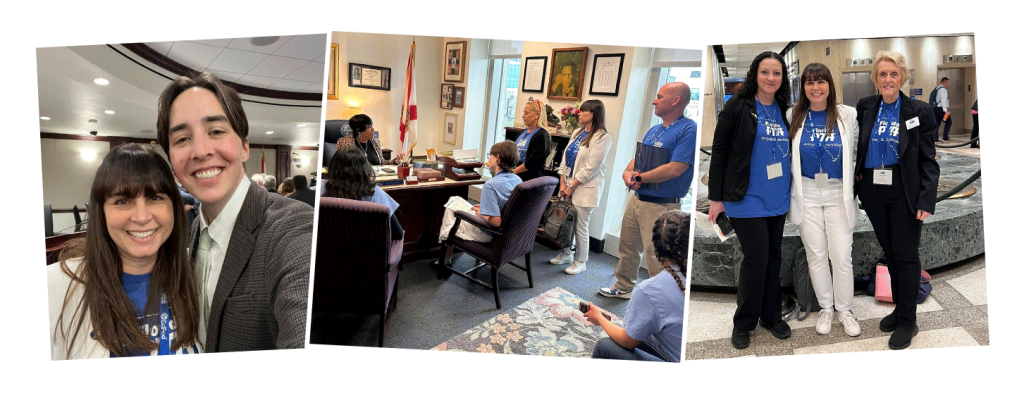
But that’s not all. Earlier this week, Jennifer Solomon — Equality Florida’s Parents and Families Support Manager and the President of Kaleidoscope PTA, which advocates for safe, supportive, and respectful learning environments for ALL students — joined parents from across the state in the Capitol for the Florida PTA’s Legislative Convention. The message from Kaleidoscope PTA was clear: we want policies that protect every student and respect every family.
Our ongoing Pride At The Capitol program is a crucial element of our goal to combat and minimize the impact of bad bills and prepare for legal challenges against any that are passed into law.
But this effort relies heavily on pro-equality supporters like YOU taking action. Your presence in Tallahassee, your stories, and your participation in committee hearings are crucial. We have a phenomenal group joining us in the Capitol next week, but we’re still signing folks up for the weeks beyond to stand with us on the front lines. Whether you can join us for a day or the entire week, find a time that works for you!
If you can’t join us in person, please consider a donation to help us get as many people to Tallahassee as possible. Every dollar counts!
Now, we’re going to take you through exactly what happened in Week #2, what’s still coming, and how you can take action.
What it does: These bills attempt to effectively End Citizen-Led Amendments that allow we the people to change the state constitution via statewide referendum. Florida already has some of the strictest requirements in the nation for citizen-led amendments, but this legislation imposes new and insurmountable barriers that put constitutional amendments even further out of reach and consolidate power toward politicians and away from the voters.
🚨Anti-Diversity In Local Government (HB 1571/SB 420)🚨
Sponsors: Sen. Clay Yarborough and Rep. Dean Black
What it does: These bills prohibit local governments from enacting DEI-related policies, ordinances, or resolutions, and can subject local officials who previously voted for them to removal from office. This outrageous state overreach censors local governments and restricts their ability to respond to community needs and priorities.
What’s coming: SB 420 has been scheduled for a vote in its first Senate Committee, Community Affairs, on Monday, March 17th at 4:00pm ET.
🚨Don’t Say Gay or Trans at Work 2.0 (HB 1495/SB 440)🚨
Sponsors: Sen. Stan McClain and Rep. Rachel Plakon
What it does: This bill enacts state regulations on pronoun use in public and certain private workplaces. It shields employees from accountability for anti-trans harassment and intentional misgendering, and prohibits the inclusion of a transgender or nonbinary gender option on any job application or related employment form. The bill also prohibits LGBTQ-related cultural competency training requirements for government workers.
What’s coming:SB 440 has been scheduled for a vote in its first Senate Committee, Governmental Oversight and Accountability, on Tuesday, March 18th at 3:30pm ET.
🚨Banning Diversity & Equity In State Agencies (HB 731/SB 1710)🚨
Sponsors: Sen. Nick DiCeglie and Rep. Lauren Melo
What it does: This legislation would defund DEI in state agencies and ban state contractors and grantees from using state funds for DEI; the House bill has additional anti-DEI measures for state boards and healthcare education.
What’s coming:SB 1710 has been scheduled for a vote in its first Senate Committee, Governmental Oversight and Accountability, on Tuesday, March 18th at 3:30pm ET.
We’re keeping up the pressure on lawmakers to support and co-sponsor these bills, and we need your help.
🏆 The Health Care Freedom Act (HB 823/SB 932) 🏆
Sponsors: Rep. Anna V. Eskamani and Sen. Shevrin Jones
Restores Reproductive Rights: Repeals Governor DeSantis’ 6-Week Abortion Ban, reinstating abortion access up until the start of the third trimester, in line with broader medical and legal standards.
Protects Medical Care For Transgender People: Eliminates restrictions on essential medical care for transgender individuals, ensuring access to treatments supported by leading medical authorities like the American Academy of Pediatrics and the American Medical Association.
🏆 Freedom to Learn Act (HB 811/SB 930) 🏆
Sponsors: Rep. Angie Nixon and Sen. Tracie Davis
Safeguards Academic Freedom: Repeals provisions of the Stop WOKE Act and the “Don’t Say LGBTQ” law, protecting the right to teach honest history, discuss systemic injustices, and fully address LGBTQ topics in educational settings.
Promotes Inclusive Education: Allows higher education institutions to fund DEI programs and activities on campus, and requires the inclusion of LGBTQ history in public education, alongside Holocaust education, African American history, and women’s contributions, and restricts book-banning practices by limiting who can raise objections to school materials to only parents of public school students.
Our public policy team has been reviewing hundreds of bills filed this legislative session. View our full legislative slate of priority bills Equality Florida supports and opposes.
Florida has been setting the example for bad policy that’s now being taken up at the federal level. Earlier this week, we held a virtual briefing with national partners to discuss ways we’re resisting attacks from the Trump Administration in the courts.
The Trevor Project, a nonprofit that provides crisis support for LGBTQ young people, surveyed almost 1,000 young LGBTQ Floridians about their mental health, and 48% felt the community they live in was accepting of their gender identity or sexual orientation.
But more than two-thirds, or 69%, say they or their family members have considered moving out of Florida because of LGBTQ-related politics and laws. It wasn’t clear where they considered moving.
“Florida might be free, but Florida is not welcoming,” said Sen. Shevrin Jones, D-Miami Gardens.
Since 2022, the Republican-led Legislature and Gov. Ron DeSantis have pushed multiple anti-LGBTQ laws in what they call the “Free State of Florida,” including banning “gender ideology” from K-12 schools, criminalizing trans people for using the bathroom that corresponds with their gender identity and restricting health care for trans people.
Florida’s Log Cabin Republicans, an organization of LGBTQ+ conservatives and allies within the Republican Party, did not respond to the USA TODAY Network-Florida’s request for comment in time for publication.
The Trevor Project also reported the following data about Florida’s LGBTQ youth. In the past year:
37% contemplated suicide
11% attempted suicide
67% reported experiencing symptoms of anxiety
54% reported experiencing symptoms of depression
24% were physically threatened or harmed because of their sexual orientation or gender identity
63% experiences discrimination because of their sexual orientation or gender identity
Jones said the passage of the Parental Rights in Education Act, called “Don’t Say Gay” by critics, and the “Stop WOKE Act” created a hostile environment for minorities in Florida. “Don’t Say Gay” prohibits the teaching of classroom instruction on gender identity and sexual orientation, and the “Stop WOKE Act” restricts how race is discussed in schools, colleges and workplaces.
The legislation also prohibits any teaching that could make students feel they bear personal responsibility for historic wrongs because of their race, color, sex or national origin.
DeSantis inveighed against ‘oppressive ideologies’
“We believe an important component of freedom in the state of Florida is the freedom from having oppressive ideologies imposed upon you without your consent,” DeSantis said when he signed the bill in 2022. “Whether it be in the classroom or in the workplace. And we decided to do something about it.”
On Tuesday in DeSantis’ State of the State speech, he made fun of Canada’s travel boycott of the U.S. and of Canadians who say they are canceling their vacations over President Trump’s tariffs and policies.
“We continue to set tourism records; 2024 saw more than 142 million visitors come to the state of Florida. This includes 3.3 million visitors from Canada,” DeSantis said. “That’s not much of a boycott in my book.”
Florida’s 12 public universities are eliminating courses that may “distort significant historical events” or “teach identity politics” to comply with S.B. 266, a law passed by the state legislature in 2023. This law restricts schools from using state or federal funds for initiatives advocating diversity, equity, and inclusion (DEI), or promoting political and social activism. In addition, it has led to the closure of LGBTQ+ student centers and the dismantling of cultural support programs on campuses.
As a result, universities are scrapping classes such as Anthropology of Race & Ethnicity, Introduction to LGBTQ+ Studies, Sociology of Gender, Women in Literature, Chinese Calligraphy, The History of Food and Eating, Humanities Perspectives on Gender and Sexuality, Social Geography, and a course on Magic, Witchcraft, and Religion. A class examining racial and gender inequality and crime, titled Social Problems, is also being impacted, according to a Politico report.
Some of these courses have been removed entirely, while others have lost their “general education” designation, meaning they will only be available as electives for upper-level students in certain disciplines, rather than as part of the broader general education curriculum. Additionally, some course descriptions and student outcomes have been revised to ensure compliance with the law.
The Board of Governors will review each institution’s proposed course offerings for the 2025-26 academic year and may suggest changes. Schools that refuse to comply could risk losing vital state funding or face other penalties from Governor Ron DeSantis and the Board.
Critics argue that this law undermines academic freedom, enforces government-approved viewpoints, and could drive talented students and educators away from Florida’s universities. Some also warn that the law could jeopardize the accreditation of certain schools that are required by national accreditation bodies to have DEI programs as a core component of their education. Others have expressed concern about the vague language of the law, which leaves many unsure about what is permitted and what is not.
Historically, decisions about course content have been left to individual universities. However, this law is part of Governor DeSantis’ broader effort to challenge DEI policies and shift the state’s educational institutions toward a more conservative ideology.
While signing the law in May 2023, DeSantis said, “DEI has basically been used as a veneer to impose an ideological agenda, and that is wrong. If you want to do things like gender ideology, go to Berkeley, go to some of these other places… You don’t just get to take taxpayer dollars and do whatever the heck you want to do and think that’s somehow OK.”
This law follows DeSantis’ 2022 signing of the so-called Stop WOKE Act, which bans educational programs on racism and gender-based discrimination in schools and businesses. That law is currently on hold as courts review its constitutionality.
Federal Judge Mark E. Walker, who blocked the Stop WOKE Act in 2022, described the law as “positively dystopian,” saying it “officially bans professors from expressing disfavored viewpoints in university classrooms while permitting unfettered expression of the opposite viewpoints.” He emphasized that academic freedom should allow professors to express their perspectives, as long as they do not only align with state-approved views.
Florida first. Alabama follows. Legislators in Louisiana and Ohio are currently debating legislation that is similar to the Florida statute. A similar bill will be his top priority during the following session, according to Texas Governor Greg Abbott.
At least a dozen states across the country are proposing new legislation that, in some ways, will resemble Florida’s recent contentious bill, which some opponents have dubbed “Don’t Say Gay.”
You must be logged in to post a comment.