
This blog originally appeared at CNN World.
San Salvador, El Salvador — For years, many Salvadorans felt they had only two options: flee or face death. Once known as the “murder capital of the world,” El Salvador saw an average of one homicide per hour in early 2016. With a population of just 6 million—two million fewer than New York City—gang violence forced countless Salvadorans to seek refuge, mostly heading north to the US. Now, the security landscape has changed so dramatically that even those who built new lives abroad are returning.
This transformation is largely credited to President Nayib Bukele, whose firm hold on power has brought peace to the streets—but not without a cost. Emergency measures, including the suspension of constitutional rights like due process, have led to a spike in incarcerations and condemnation from human rights groups. CNN visited the country to gather insights on how Salvadorans feel about these sweeping changes.
Deported and Now Grateful
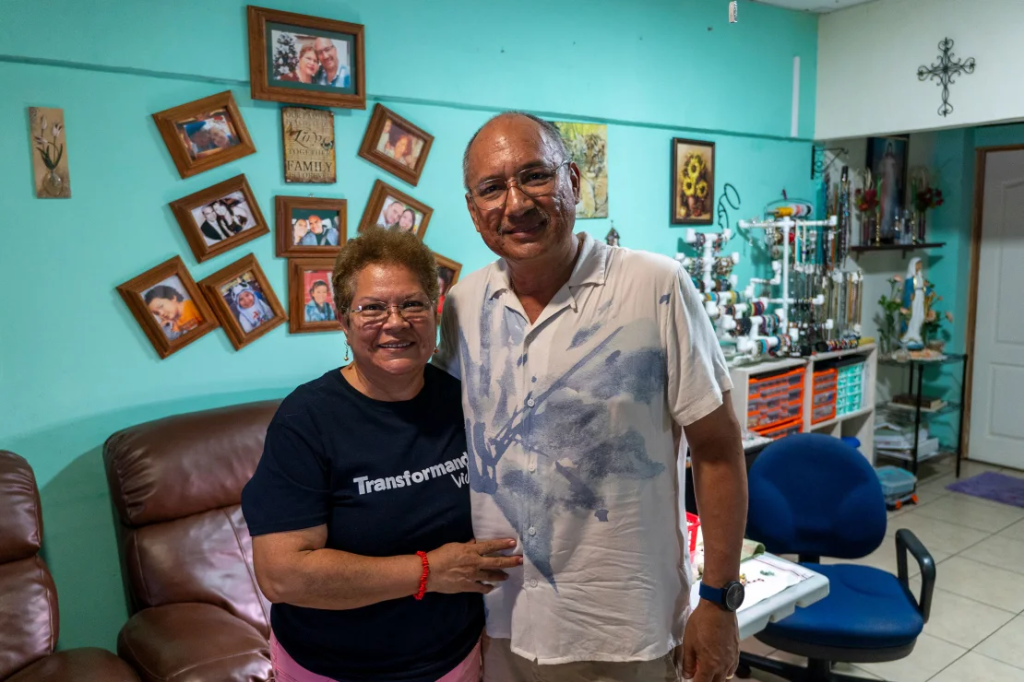
Victor Bolaños and his wife, Blanca, faced a harsh reality when they lost their asylum case in the US. After more than 15 years of building a life in Denver, they reluctantly accepted a voluntary departure and returned to El Salvador—the same country they had fled.
“We came back six years ago, and things were unsafe,” Victor says, sitting in their modest home in San Salvador. At 65, his voice is heavy with the memory of those difficult times. “There were lots of robberies, lots of gangs,” he recalls, describing the precarious situation they encountered in 2018.
But just a couple of years after their return, something unexpected happened. The relentless violence that had gripped El Salvador for decades began to ease, and the streets grew calmer. The constant fear that once dominated everyday life started to dissipate.
El Salvador, long associated with violence and mass emigration, saw a remarkable decline in crime. For many, this shift represented more than just safety—it offered a glimmer of hope. The world began to take notice. Suddenly, the small Central American nation seemed to be on a path to reinvention, largely credited to President Nayib Bukele. Elected in 2019 at just 37, Bukele’s leadership marked a turning point. When his New Ideas party later secured control of Congress, it became easier to bend—or break—the rules. Bukele went on to win re-election, despite the country’s constitution prohibiting a second term. A “temporary” state of emergency, initially enacted to combat gang violence, has now been in place for more than two years, giving the president sweeping powers of detention. Human Rights Watch has raised alarms, reporting that even children are being caught up in “severe human rights violations.”
Yet, in San Salvador, Blanca sits in her living room, carefully crafting handmade jewelry. “Now, one feels safe—freedom is felt in our country,” she says.
Blanca and her husband, Victor, credit the improved security for enabling them to start a small jewelry business from their home—something they once thought impossible. “Now you can have a business,” Blanca says. “If you look around, there are entrepreneurs everywhere in the country.” She reflects on how, just a few years ago, gang extortion would have crushed any attempt to start a venture like theirs.
For decades, people from Central America, especially from the Northern Triangle countries of El Salvador, Honduras, and Guatemala, fled violence and insecurity in search of protection and opportunity in the US. However, new data from US Customs and Border Protection (CBP) shows a surprising shift—fewer Salvadorans are now heading north.
In 2022, CBP reported over 97,000 encounters with Salvadoran citizens at the US southern border. By 2023, that figure dropped to just over 61,000, and 2024 is expected to see a continued decline.
While these numbers may seem encouraging, the underlying reasons for migration remain complex. Many Salvadorans still leave their homeland due to economic struggles and limited opportunities. Despite steady economic growth under Bukele’s presidency, as reported by the World Bank, El Salvador continues to face challenges in creating sufficient jobs for its population.
Leaving Houston to Build a Beach Resort
For 27 years, Diego Morales built a life far from home. Now 48, the real estate investor, husband, and father of three left El Salvador in 1997 in pursuit of the safety, stability, and opportunity that the US could offer. The thought of returning had never crossed his mind—until the grim stories of violence that plagued his homeland were replaced by accounts of newfound safety.
Diego’s childhood was shadowed by constant danger. “I’d wake up, go to school, and find dead bodies on the street,” he recalls, his voice heavy with the weight of those memories as he sits in his suburban Houston home.
But today, El Salvador is no longer the country Diego fled. “Now it’s safe, and many people are going back,” he says, echoing the growing optimism among Salvadorans and those in the diaspora.
The country’s image has undergone a profound transformation. Once infamous for violence, El Salvador is now drawing waves of investors. “Many people, even Americans—we have friends from Florida, from Austin, from Hawaii—are looking to buy property,” Diego says, a testament to how far the nation has come.
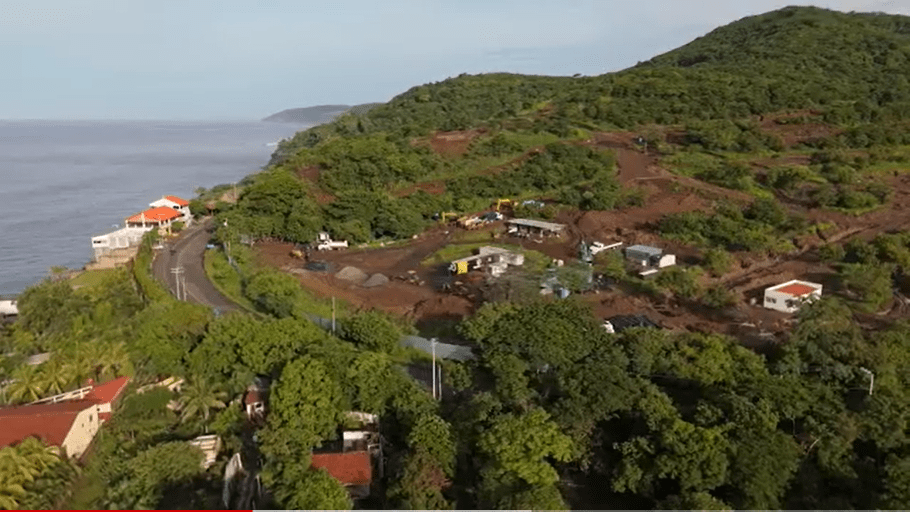
Diego himself is preparing to return to the homeland he once left behind. He has already invested in Tamanique, his hometown about an hour from the capital, where he built a beach resort that he now manages remotely.
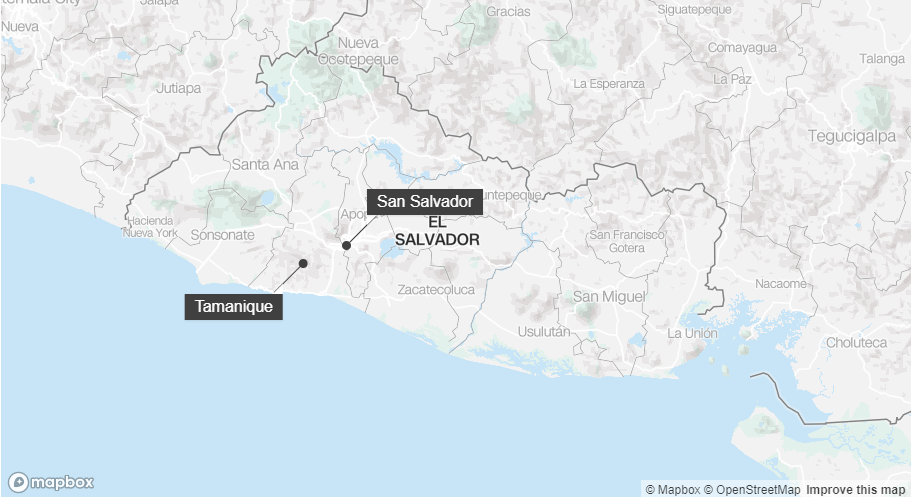
Along El Salvador’s coastline, beach towns like El Tunco, El Zonte, and La Libertad are buzzing with new construction, drawing the interest of tourists and real estate developers eager to capitalize on the country’s resurgence. Cliffs that once served as gang lookouts are now being eyed as prime locations for scenic hotels.
“As soon as President Bukele brought security to this country, everything skyrocketed in value,” Diego explains. He notes that land which sold for around $100,000 just five years ago is now going for ten times that amount, reflecting the rapid transformation and growing demand for property in the area.
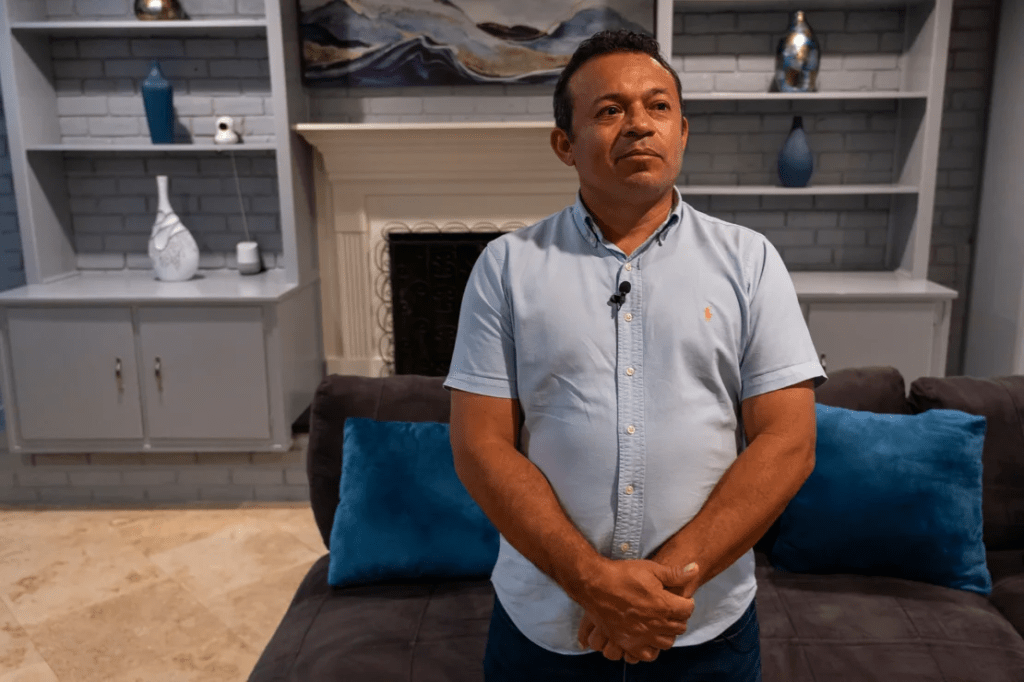
And the Salvadoran dream isn’t just Diego’s—his 23-year-old son, Jairo, a natural-born US citizen, also plans to follow in his father’s footsteps. “We’ve had conversations… it’s already starting,” Jairo says, his eyes bright with the promise of reconnecting with his roots.
El Salvador’s government is actively encouraging the return of those who left, offering tax exemptions on belongings and vehicles for citizens who come back. Since 2022, nearly 19,000 Salvadorans have moved home under this initiative, according to government figures.
‘No Mercy’ for Gang Members
A decade ago, gangs like MS-13 and Barrio 18 terrorized communities, extorting businesses and waging violent turf wars for control of neighborhoods, making El Salvador the most violent country in the Western Hemisphere, according to InSight Crime.
But something extraordinary has happened since then. By 2022, the murder rate dropped dramatically, and in 2023, there were only 154 homicides—a staggering 97.7% decrease from 2015, according to government data. Bukele even tweeted that El Salvador now had the lowest homicide rate in all of the Americas.
This sharp decline followed Bukele’s introduction of emergency measures, which granted police the power to detain suspects without charges for up to 15 days and involved deploying the military across the nation. These rules, still in effect, have led to an unprecedented crackdown on gang activity, with more than 80,000 people detained since the state of emergency was declared in March 2022.
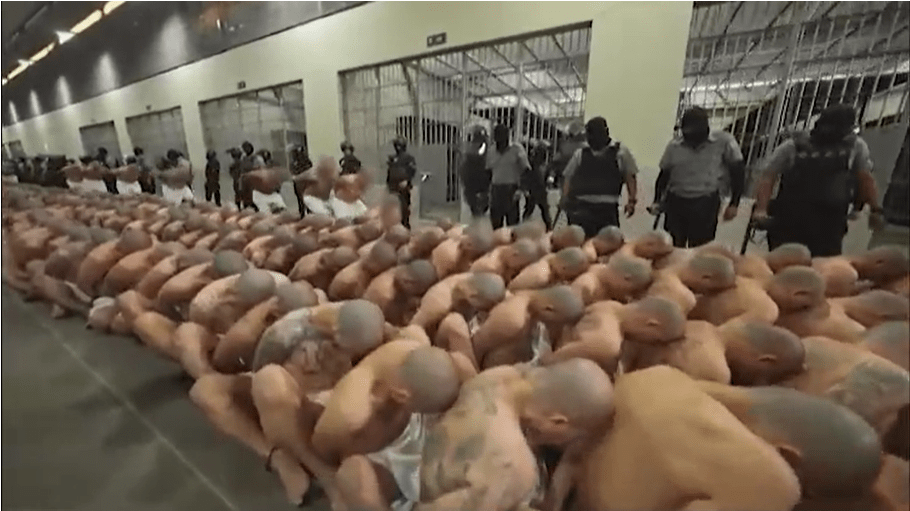
Central to this effort is the newly built “Terrorist Confinement Center,” or Cecot, a massive prison complex designed to hold up to 40,000 inmates. Currently, it houses 14,000 gang members, all accused of having committed at least one murder. Disturbing images from Cecot show heavily tattooed men with shaved heads packed into warehouse-sized concrete rooms, filled with metal bunks or seated in tight rows on the ground. Dressed only in white shorts, their heads are bowed, hands behind their backs. According to Salvadoran authorities, those sent to Cecot will never be released.
“We have no mercy for crimes against life,” Security Minister Gustavo Villatoro told CNN. “This is how you deal with a serial killer. You need laws that ensure once they’re imprisoned, they never get out—because society deserves better,” he emphasized. “Someone who kills people daily, who rapes our girls… How can you change their mind? We are not fools.”
Villatoro’s words reflect the harsh reality El Salvador has faced for years. He claims that gang members from groups like MS-13 and Barrio 18 were required to commit at least one murder as part of their initiation.
“Imagine a serial killer in your state, in your community, being released by a judge—how would you feel as a citizen?” Villatoro asks. “We have no evidence that a serial killer can be rehabilitated, and we have more than 40,000 of them in El Salvador.”
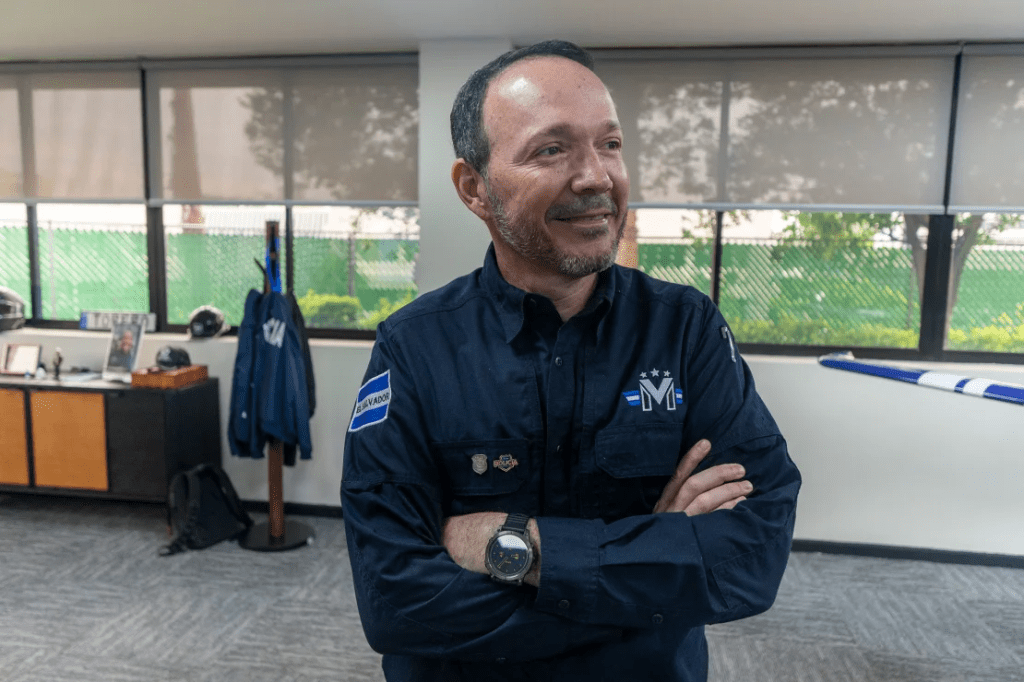
The government’s hardline approach was not a spontaneous decision; it was meticulously planned. Security Minister Gustavo Villatoro and members of President Bukele’s cabinet began studying the gangs as early as 2017.
“Before you start a war, you have to know your enemy,” Villatoro explained.
While the government’s aggressive campaign has been praised by many for restoring peace, it has also drawn significant criticism. Human rights groups accuse the Bukele administration of widespread abuses in its fight against the gangs. Villatoro, however, dismisses these accusations, arguing that the focus should be on the victims, not the criminals.
“What about the society, the good citizens in our country? Where were these human rights groups when we were losing 30 Salvadorans a day?” he asks pointedly.
Bukele has remained firm in his stance. In 2022, he famously challenged human rights advocates, telling them to “take” the gang members if they cared so much. “Come pick them up—we’ll give them to you, two for the price of one,” he declared.
Bukele’s iron-fist approach has garnered praise from some US conservatives, who applaud his tactics. However, during this year’s Republican National Convention, former US President Donald Trump unexpectedly criticized Bukele while addressing El Salvador’s newfound safety.
“In El Salvador, murders are down 70 percent. Why are they down? Because they’re sending their murderers to the United States of America,” Trump claimed, without providing any evidence.
When CNN asked Villatoro whether there was any truth to Trump’s assertion, Villatoro flatly denied it. “No,” he responded. “The problem is, you (Trump) don’t have facts, you don’t have evidence, but we have evidence of where we put our terrorists,” referring to Cecot, the massive prison where thousands of gang members are detained.
For months, CNN has sought access to Cecot, but the Salvadoran government has repeatedly denied requests to visit the facility.
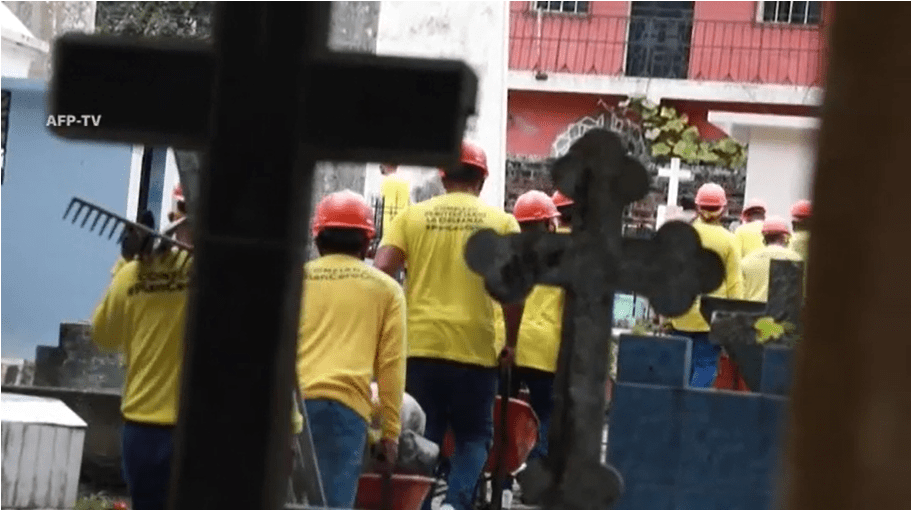
In other detention centers, lower-ranking gang members and criminals are tasked with repairing what the gangs destroyed. Some inmates rebuild homes, while others smash tombstones commemorating underworld leaders, erasing the gangs’ presence bit by bit.
Jailed ‘for Having Long Hair and Tattoos’
In early 2024, Juan Carlos Cornejo was swept up in Bukele’s mass arrests after an anonymous tip accused him of “illicit association.” Hours later, he found himself in jail, confused and terrified.
Juan Carlos believes he was targeted solely based on his appearance.
“I was accused of illicit association, but I have nothing to do with that. I love music, especially rock, so my look is different. I had long hair,” he explained from his dimly lit, mosquito-ridden home in Santa Ana, a city about 35 miles from the capital. “I have tattoos, but they are just artistic expressions,” he added, frustration evident in his voice.
“There was no investigation, nothing,” he claims.
Juan Carlos spent five long months in prison. Before his detention, he had been working as a veterinary assistant, caring for sick or injured pets, and insists he had never been arrested before.
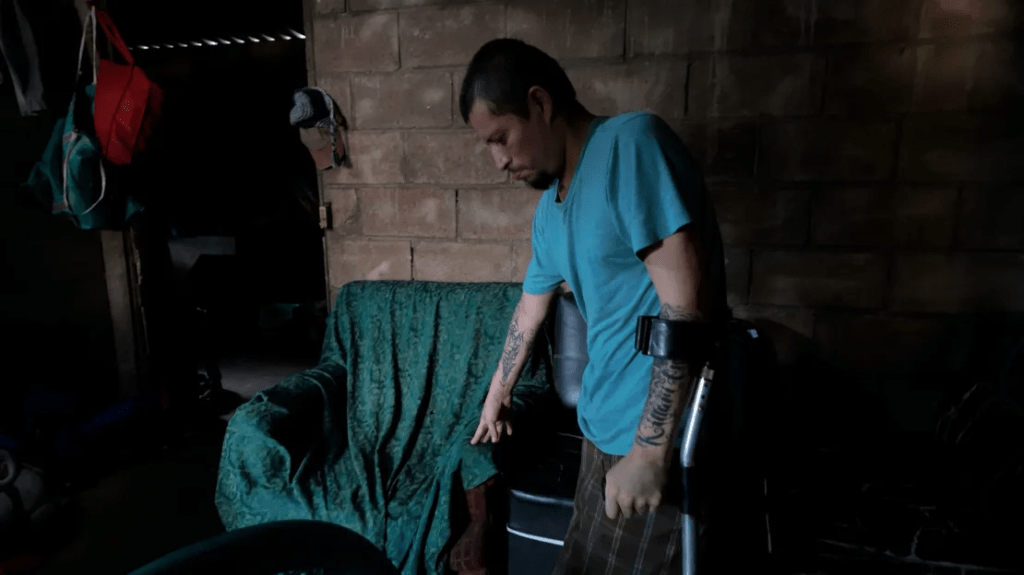
His release came only after Socorro Jurídico Humanitario (SJH), a group dedicated to providing legal counsel in human rights violation cases, successfully filed a writ of habeas corpus on his behalf. However, Juan Carlos’ story is far from unique. According to SJH, between 33,000 and 35,000 people have been “detained arbitrarily without any justification” since the state of emergency began.
“The only argument given was that his arrest stemmed from an ‘anonymous call’ that had been received, but no proof of this alleged call was ever provided,” the organization told CNN.
Despite widespread criticism of these tactics, the Bukele government remains resolute. Officials argue that these measures—though harsh—are lawful and necessary for securing the country’s future. They also emphasize efforts to rehabilitate tens of thousands of inmates convicted of lesser crimes.
Armed Soldiers on the Streets — and Thanked
Critics contend that Salvadorans have traded freedom for security, but the people we met express that they have never felt so free. There’s the mother laughing as she takes her skipping toddler to the park, unafraid of getting caught in a gun battle, stumbling over a corpse, or paying gang extortion “rent” just to enter her own neighborhood. There’s the father, relieved that his son is no longer at risk of being recruited by gangs. Unlike in places like Cuba or China, where residents may seem hesitant to criticize repressive regimes, the optimism in El Salvador appears genuine.

Teresa Lilian Gutierrez is caught in the middle, and her experience illustrates the complexities of life in El Salvador today.
“Now it’s safe, it’s calm,” she told us on a street in La Campanera, once one of the most dangerous neighborhoods in San Salvador. “Before, no one would visit, not even family.”
However, her son, who used to help her financially, is unable to visit.
“He’s been detained for two years in Mariona prison. He is not a gang member; he was arrested during the state of emergency,” she explained, showing pictures of her son working as a cashier in a restaurant.
“I ask the government to release him, please… I spoke to the lawyer last year because they were supposed to let him go, but she said no; they’re not going to release him,” she added.
President Bukele enjoys one of the highest approval ratings in Latin America, a sentiment echoed by the people we meet while touring a previously gang-infested area outside San Salvador with the Salvadoran army.
Armored cars and uniformed soldiers, once sources of fear, have transformed into opportunities for curious children to ask questions or for supporters to take selfies.
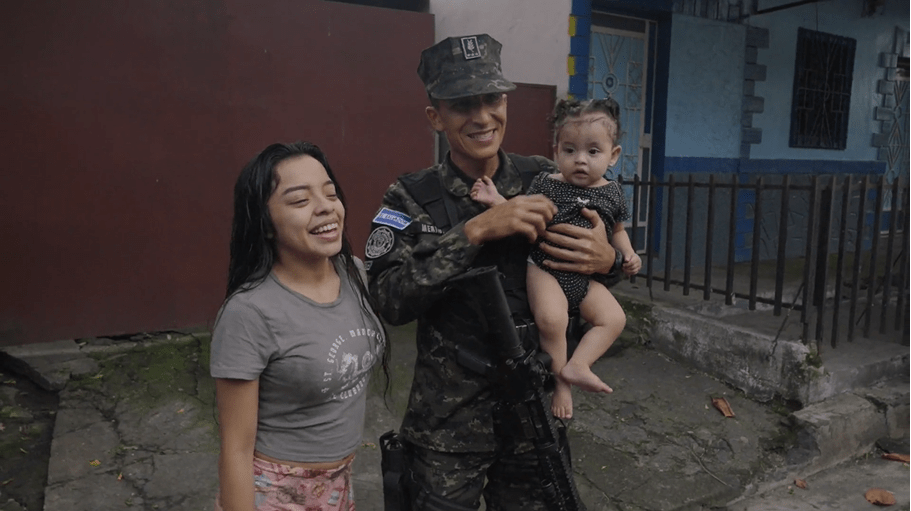
“It was so bad before; you couldn’t go anywhere,” one woman beams as she snaps a picture with Defense Minister René Merino, who has become a symbol of the government’s hardline security strategy. A few years ago, no one in this area would have dared to look police or army members in the eye, Merino recalled, but now everything has changed. Moments later, another resident steps forward to thank the minister and pose for a photo, apologizing for interrupting our interview. It feels more like a victory parade than a law enforcement patrol, as we stop dozens of times over the course of a couple of hours while residents excitedly express their gratitude.
“Only God knows how we were living before,” one woman told CNN, her voice trembling with emotion as tears filled her eyes. Her feelings reveal the deep scars left by the violence that once engulfed their daily lives — and the relief that has followed.
But the looming question remains: what will happen after 2029, when Bukele’s term ends? In a recent interview, the president declared he would not seek a third term, leaving many to ponder the future.
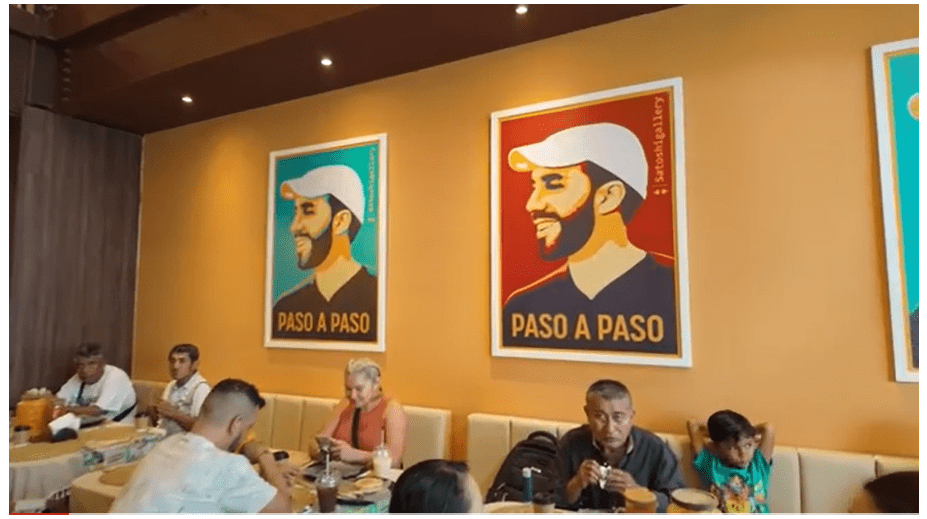
For some, like Blanca Bolaños, the answer is already clear. “I voted for Nayib this time, and the last time, and if he runs again, I will vote for him,” she says with unwavering conviction.
As the country grapples with its transformation, Bukele’s legacy and controversial tactics will face scrutiny. Whether El Salvador’s newfound stability endures or falters remains to be seen. But for now, among those who say their lives have changed, there is little doubt: they believe in Bukele and would follow him again.
 fleeredstates.blog
You must be logged in to post a comment.