Puerto Rico’sRepublican Gov. Jenniffer González-Colón signed into law Wednesday a far-reaching ban on gender-affirming medical care for transgender people under 21, enacting one of the harshest measures of its kind in the United States and its territories and prompting swift condemnation from medical experts and LGBTQ+ advocates.
The law received the governor’s approval late in the day, according to the Associated Press.
The law, Senate Bill 350, prohibits the use of puberty blockers, hormone therapy, and gender-affirming surgeries for anyone under 21, threatening doctors and other health professionals with up to 15 years in prison, a $50,000 fine, and the permanent loss of their licenses and permits. Public funds are also barred from being used for such care.
In recent days, the College of Physicians and Surgeons, the Association of Psychology, the College of Social Work Professionals, the Puerto Rican Association of Professional Counseling, and the Bar Association, among other organizations, had urged that the bill be vetoed.
The Advocate previously reported that González-Colón had asked for amendments to protect access to puberty blockers and allow minors already undergoing treatment to continue care, but lawmakers did not adopt those changes. Last month, the U.S. Supreme Court ruled in Skrmetti that a Tennessee ban on gender-affirming care for minors could be enacted, which allowed other states and territories to continue to ban such care.
“What a disgrace! Jenniffer González, through her actions, declares herself the most anti-equality governor in history. She ignored her own Secretary of Health and the medical associations that support treatment for trans minors. By signing Senate Bill 350 into law, she has just endangered trans youth and their families and criminalized health professionals for doing their job,” Pedro Julio Serrano, president of the Puerto Rico LGBTQ+ Federation, said in a statement to The Advocate.
Harvard Law Instructor Alejandra Caraballo reacted to the law’s signing on Bluesky. “A twenty-year-old trans person can go drink themselves to death but can’t legally get hormones,” she wrote, noting that the drinking age in Puerto Rico is 18.
The Federation, a coalition representing hundreds of individuals and more than 100 organizations, said it would pursue legal action against the new law.
Ohio Gov. Mike DeWine (R) vetoed three anti-LGBTQ+ provisions in the state’s latest budget bill yesterday, in a partial victory for civil rights that still leaves several assaults on LGBTQ+ identity signed into law.
The budget passed by Republicans over Democrats’ objections included a raft of measures targeting the LGBTQ+ community, including a prohibition on flying the Pride flag on state property; defunding shelters that welcome trans youth; language defining sex in the state as binary; removing library books related to sexual orientation or gender identity from areas accessed by minors; and denying Medicaid funding for mental health services for transgender people.
DeWine vetoed the prohibition on the Pride flag, the defunding of youth shelters, and the mandate on library materials.
“The budget is supposed to be a reflection of Ohio’s shared values,” Equality Ohio said in a statement shared with the Columbus Dispatch after the governor vetoed the provisions. The group said lawmakers tried to make the bill “a vehicle for cruelty.”
“But because of community action—because we showed up, we sent emails, we made calls, and we told your stories — some of that cruelty was stopped in its tracks,” the organization said.
DeWine, a lifelong conservative and former United States senator, was circumspect in explaining the reasoning behind his vetoes.
On the subject of youth shelters, DeWine told reporters, “We want homeless shelters to be open for everyone. That’s kind of it.”
Of the library provision, which ordered books addressing LGBTQ+ identity kept “out of sight” of minors, the governor said, “As parents or grandparents, no one wants their child to have a book or something that is inappropriate, something that is obscene. But I just felt that the language did not work.”
The provision banning the Pride flag would have limited flags flown on state properties to the American flag, the Ohio flag, the POW/MIA flag, and flags of official state agencies.
Wins for MAGA Republicans in the GOP-dominated Ohio House and Senate included copycat language from the president’s “gender ideology” executive order mandating the government recognize only two biological sexes, male and female, as well as a ban on Medicaid funding for mental health services for transgender people.
How the latter would be enforced in a mental health setting has yet to be tested and will likely be challenged in court.
DeWine also let stand a prohibition on distributing menstrual products in men’s public restrooms.
Republican leaders can override any of DeWine’s line-item vetoes between now and the end of the two-year legislative session in December 2026. The GOP holds overwhelming and veto-proof majorities in both the House and Senate.
In January 2024, Republicans overrode DeWine’s veto of a bill banning gender-affirming care for minors and trans women and girls from participating in school sports in the state.
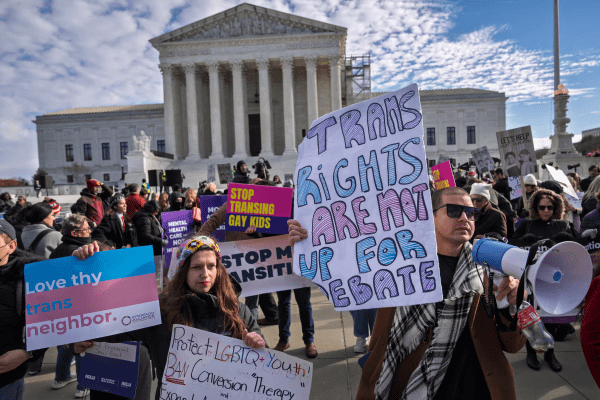
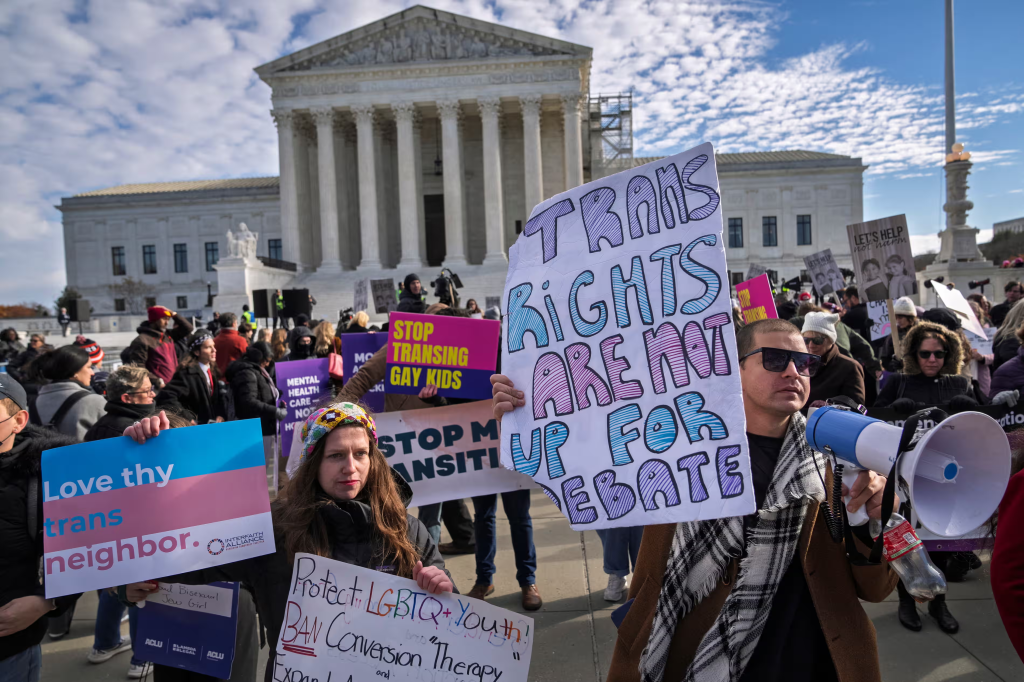
A Tennessee state law banning gender-affirming care for minors can stand, the US supreme court has ruled, a devastating loss for trans rights supporters in a case that could set a precedent for dozens of other lawsuits involving the rights of transgender children.
The case, United States v Skrmetti, was filed last year by three families of trans children and a provider of gender-affirming care. In oral arguments, the plaintiffs – as well as the US government, then helmed by Joe Biden – argued that Tennessee’s law constituted sex-based discrimination and thus violated the equal protection clause of the 14th amendment. Under Tennessee’s law, someone assigned female at birth could not be prescribed testosterone, but someone assigned male at birth could receive those drugs.
Tennessee, meanwhile, has argued that the ban is necessary to protect children from what it termed “experimental” medical treatment. During arguments, the conservative justices seemed sympathetic to that concern, although every major medical and mental health organization in the US has found that gender-affirming care can be evidence-based and medically necessary. These groups also oppose political bans on such care.
All six of the supreme court’s conservative justices joined in at least part of the decision to uphold the law, although several also wrote their own concurring opinions. In his majority decision, Chief Justice John Roberts emphasized that the ruling primarily rested on the justices’ finding that the law did not violate the equal protection clause, rather than on an ideological opposition to trans rights.
“This case carries with it the weight of fierce scientific and policy debates about the safety, efficacy and propriety of medical treatments in an evolving field. The voices in these debates raise sincere concerns; the implications for all are profound,” Roberts wrote. He added: “We leave questions regarding its policy to the people, their elected representatives, and the democratic process.”
In recent years, the question of transgender children and their rights has consumed an outsized amount of rightwing political discourse. Since 2021,26 states have passed bans on gender-affirming care for minors, affecting nearly 40% of trans youth in the US. Twenty-six states have also outlawed trans kids from playing on sports teams that correspond with their gender identity.
Many of these restrictions have been paused by court challenges, but the supreme court’s decision could have vast implications for those lawsuits’ futures. A study by the Trevor Project, a mental health non-profit that aims to help LGBTQ+ kids, found that anti-trans laws are linked to a 72% increase of suicide attempts among trans and nonbinary youth.
Justice Sonia Sotomayor dissented from the majority opinion, alongside Justices Ketanji Brown Jackson and Elena Kagan. Because the law discriminates on the basis of sex, Sotomayor argued in her dissent, it should face higher legal scrutiny than the majority decided to give it.
“Male (but not female) adolescents can receive medicines that help them look like boys, and female (but not male) adolescents can receive medicines that help them look like girls,” Sotomayor wrote. “By retreating from meaningful judicial review exactly where it matters most, the Court abandons transgender children and their families to political whims. In sadness, I dissent.”
While largely avoiding the same level of heated pushback of years’ past, Texas lawmakers passed several bills that give LGBTQ+ people in Texas, specifically transgender residents, less opportunity to receive care and maintain their identities in state records.
Texas legislators filed over 100 anti-trans bills through the session, some containing provisions that have been shot down in years’ prior while others proposed new restrictions. Less than 10 were ultimately approved by lawmakers.
The new bills that are likely to be signed by Gov. Greg Abbott represent a yearslong movement from state conservatives to find new ways to restrict the presence of trans and LGBTQ+ Texans, advocates say. The bills that failed may also be resurrected by lawmakers in future sessions. Here’s what to know.
State definitions of man and woman
Several bills filed in the Legislature aimed to craft legal definitions of sex and gender in addition to their target goals — but House Bill 229 makes that goal its sole purpose, establishing state definitions for male and female and applying those definitions across statute.
HB 229 defines a woman as “an individual whose biological reproductive system is developed to produce ova,” and a man as “an individual whose biological reproductive system is developed to fertilize the ova of a female.”
Most immediately, the bill will bolster an already existing block from stateagencies on changes to gender markers on state documents, which was backed by a nonbinding opinion from Attorney General Ken Paxton in March. The bill may also force those who have already switched their documents to match their identified gender to have changes reverted when they are renewed.
The longer-term effects of HB 229 are still not immediately apparent, as references to man and woman are used hundreds of times in statute and may ripple into other laws affecting people’s lives. Texas joins 13 other states that have also crafted their own definitions, and several other bills that also passed in the state have individual definitions for related terms like “biological sex.”
President Donald Trump issued an executive order named “Defending Women From Gender Ideology Extremism” in January providing federal definitions of male and female. Similarly, HB 229 has been dubbed the “Women’s Bill of Rights” by supporters, claiming it protects women in the state from men invading their spaces.
Abbott released an executive order of his own shortly after Trump’s affirming the president’s directive, but did not provide his own definitions. In a May post on social media, the governor said he would immediately sign HB 229 into law.
New requirements for medical records and insurance coverage
Tightening the ability to change the gender on state records like drivers’ licenses has been a key issue for conservative lawmakers for years, and while HB 229 sets a precedent in disallowing new changes, another bill creates new requirements entirely. Senate Bill 1188 creates a new section on all state medical records listing patients’ assigned sex at birth and any physical sexual development disorders. It also bans changes to those gender markers for any reason other than clerical errors, and creates civil penalties for medical professionals who do change them.
House Democrats opposing the measure during floor discussion worried that SB 1188 may scare medical providers into inputting vague or inaccurate health information out of fear of fiscal or legal retribution. The bill does allow the new section to include information on a patients’ gender identity, however health care services must opt-in to provide it.
The bill also creates restrictions on where health care providers can store patient data and the physical servers they use to store them, and new regulations on how artificial intelligence can be used to create diagnoses.
SB 1188 is not the only bill opponents have said will create a chilling effect on the LGBTQ+ community. Some bills may be more immediate in blocking options people have to do things like change their state records, but others like SB 1188 and Senate Bill 1257 may reduce what resources are available. SB 1257 was signed by Abbott in May and mandates that insurance companies provide coverage for gender detransitioning care if they already cover gender transition care.
Proponents of the law claim it enforces responsibility onto insurance companies. The law is not a ban on gender-affirming care, however opponents worry it may act as one by incentivizing insurance companies to pull coverage altogether rather than take on potential new costs.
SB 1257 is the first legal mandate for detransition care in the United States, making Texas a testing ground for insurance companies’ appetite to keep or pull coverage. Similar bills in Arizona, Florida and Tennessee did not pass out of their respective state legislatures in 2024.
Less protections and resources for LGBTQ+ youth
Medical gender transition care for minors was banned in Texas by the Legislature in 2023, a restriction that was upheld by the state Supreme Court in 2024. House Bill 18, primarily an overhaul of rural health care including a rural pediatric mental health care program, bans minors from accessing its resources for gender-affirming mental health counseling “inconsistent with the child’s biological sex.”
The current gender transition care ban for minors does not include mental health services, only puberty blockers, hormone therapy and surgery, which is rare for those under 18. Another proposal headed to Abbott’s desk, House Bill 1106, asserts that parents who do not recognize or affirm their child’s gender identity cannot be held liable for abuse or neglect because of that lack of recognition.
More restrictions on LGBTQ+ presence in schools
Access to materials and resources related to LGBTQ+ subjects are also being restricted by legislators through two key bills primarily aimed at schools. Senate Bill 12 bans Texas schools from teaching about sexual orientation or gender identity and forbids student clubs “based on” those subjects.
The bill would prevent clubs like Gay-Straight Alliances and pride clubs, which are often tailored toward anti-bullying initiatives in schools. Opponents of the bill claim a ban on those clubs would cut off LGBTQ+ students from communities and resources that can save lives.
“One of the deadliest things that our youth go through is experiencing the perception at least of isolation, and GSAs are a powerful way that we can combat that and make sure that our youth are getting support,” said Ash Hall, ACLU Texas’ policy and advocacy strategist for LGBTQIA+ rights.
While SB 12 restricts instruction and student groups, Senate Bill 13 gives school boards and new advisory councils greater oversight to remove books from school libraries that go against “local community values.” Some lawmakers and advocates worry school boards and advisory councils would be able to restrict books containing LGBTQ+ material.
A third bill, Senate Bill 18, would have banned “drag-time story hours” at municipal libraries and cut funding to those who host them, however that bill was unintentionally killed by Lt. Gov. Dan Patrick after a procedural error at the end of the Senate’s deadline to pass bills.
Bills that failed to pass
The small set of bills passed by legislators shift the state’s treatment of LGBTQ+ Texans significantly, but still represent a fraction of what lawmakers proposed. House Bill 239, this session’s bathroom ban bill, was one of the over 100 bills that did not survive and was never heard by lawmakers despite half of the House signing on as coauthors. House Bill 2704 sought a similar ban through private lawsuits rather than criminal charges, but was never picked up by lawmakers.
Also left unheard was House Bill 3817, filed by Rep. Tom Oliverson, R-Cypress, which would have created a new felony charge for “gender identity fraud” if a person represented themselves as a gender besides the one they were assigned at birth to state agencies or employers.
Advocates like Johnathan Gooch, communications director for Equality Texas, say that the Legislature has kept its course on anti-trans legislation for the last few sessions, and that bills that didn’t get picked up by legislators may be at the forefront of future sessions.
“We’re hearing rhetoric that we’ve heard for a very long time and just more, more bills, a variety of new ways to narrow the rights of trans people,” Gooch said. “It just doesn’t come as a mistake that the number of bills is escalating.”
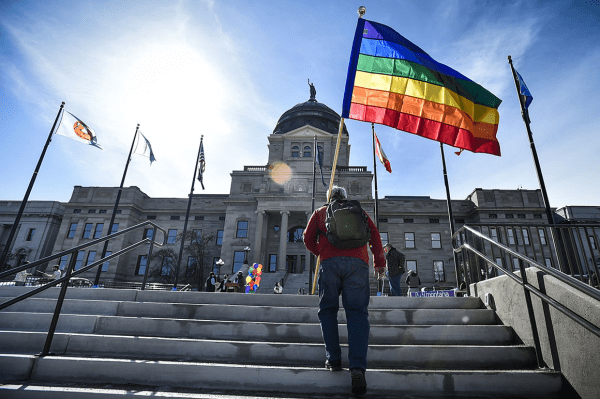
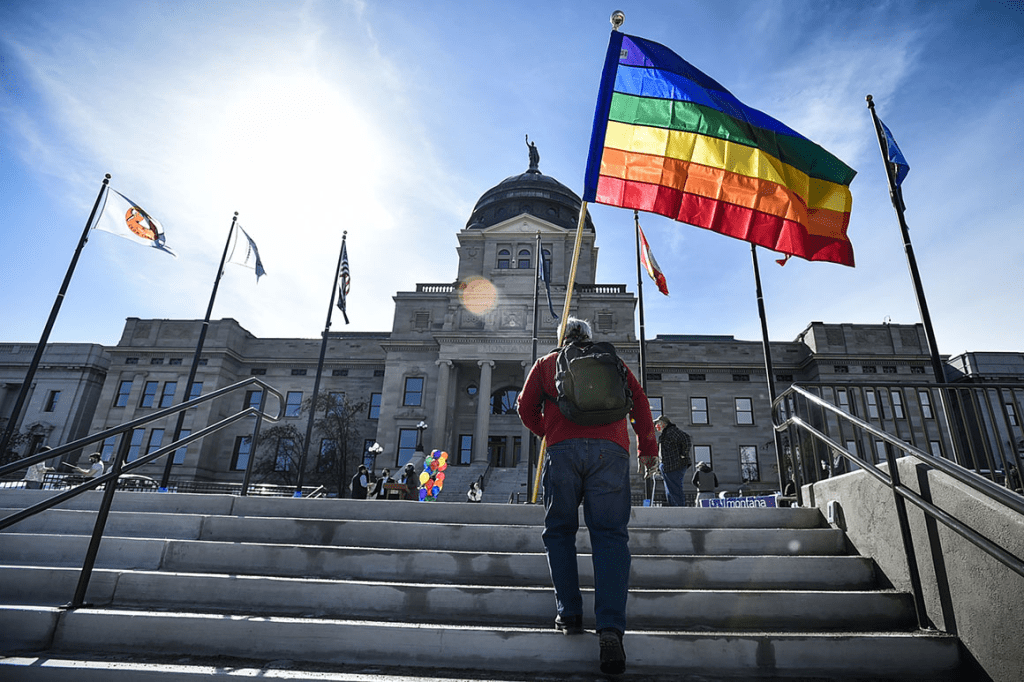
Today, a Montana Court struck down SB 99, a 2023 Montana law that categorically bans often life-saving health care for transgender youth. The Court granted Plaintiffs’ motion for summary judgment in Cross v. Montana, holding that SB 99 violates the constitutional rights of transgender youth who are seeking gender-affirming care and the healthcare professionals who are providing that care.
The lawsuit challenging SB 99 was brought by Lambda Legal, the American Civil Liberties Union (ACLU), and the ACLU of Montana. This ruling removes completely the threat hanging over Montana transgender youth and their families that their access to critical medical care would be terminated.
“I will never understand why my representatives worked so hard to strip me of my rights and the rights of other transgender kids,” said Phoebe Cross, a 17-year-old transgender boy. “It’s great that the courts, including the Montana Supreme Court, have seen this law for what it was, discriminatory, and today have thrown it out for good. Just living as a trans teenager is difficult enough, the last thing me and my peers need is to have our rights taken away.”
“Today, the court saw through the state’s vitriol and hollow justifications and put the final nail in the coffin of this cruel, and discriminatory, law,” said Lambda Legal Staff Attorney Nora Huppert. “No parent should ever be forced to deny their child access to the safe and effective care that could relieve their suffering and provide them a future. Because Montana’s Constitution protects their right to privacy, transgender youth in Montana can sleep easier tonight knowing that they can continue to thrive.”
“We are very pleased that the Court saw through the State’s unfounded arguments about why gender-affirming medical care should be treated differently from other forms of care,” said ACLU staff attorney Malita Picasso. “The Court recognizes SB 99 for what it truly is, an effort by the State to legislate transgender Montanans out of existence.”
“The Montana Constitution protects the privacy and dignity of all Montanans,” said Akilah Deernose, ACLU-MT Executive Director. “In the face of those protections, cruel and inhumane laws like SB 99 will always fail. Today’s decision should be a powerful message to those that seek to marginalize and harass transgender Montanans.”
In its ruling, the court stated:
“[t]he Court is forced to conclude that the State’s interest is actually a political and ideological one: ensuring minors in Montana are never provided treatment to address their “perception that [their] gender or sex” is something other than their sex assigned at birth. In other words, the State’s interest is actually blocking transgender expression.”
Plaintiffs in the case include Molly and Paul Cross and their 17-year-old transgender son Phoebe; Jane and John Doe joining on behalf of their 16-year-old transgender daughter; and two providers of gender affirming care who bring claims on their own behalf and on behalf of their Montana patients.
On December 11, 2024, the Montana Supreme Court upheld a preliminary injunction that SB 99 was likely unconstitutional under the Montana state constitution’s privacy clause, which prohibits government intrusion on private medical decisions. The ruling rested entirely on State constitutional grounds, insulating transgender adolescents, their families and health care providers from any potential negative outcome at the United States Supreme Court.
The U.S. Supreme Court will soon rule in U.S. v. Skrmetti, the landmark case brought by Lambda Legal, the ACLU, and the ACLU of Tennessee, Lambda Legal on behalf of three families and a medical provider challenging a Tennessee ban on gender-affirming hormonal therapies for transgender youth on the grounds the ban violates the Equal Protection Clause of the U.S. Constitution.
More information about the case is available here.
The news out of the #txlege is heavy, but we will continue to fight back against anti-LGBTQIA+ legislation at the Capitol and across Texas.
These bills will have a massive impact on trans Texans. This week is a time of grief and a source of pain for many. During this time of uncertainty and confusion, please hold on to each other and know that you are not alone. Hundreds of thousands of Texans are in your corner.
This past Monday, we passed a key landmark. All House bills that had not been referred out of committee are no longer eligible to become law. That means that 139 of the 200+ bad bills have died—bills that would have criminalized being trans or sought to ban trans care for adults outright.
“Despite some of the worst bills dying, the news of HB 229 and HB 778 passing the House weighs heavy on all of us. No matter where the fight takes us, we will survive, and we will do it together.” -Brad Pritchett, Interim CEO of Equality Texas
If you are struggling right now, please consider reaching out to:
Attorney General Pam Bondi, who has a long history of opposing LGBTQ+ rights, issued a memo to the Department of Justice (DOJ) telling employees to investigate and prosecute cases of minors accessing gender-affirming care as female genital mutilation (FGM).
“The Department of Justice will not sit idly by while doctors, motivated by ideology, profits, or both, exploit and mutilate our children,” the memo states. “Under my watch, the Department will act decisively to protect our children and hold accountable those who mutilate them under the guise of care.”
“I am putting medical practitioners, hospitals, and clinics on notice: In the United States, it is a felony to perform, attempt to perform, or conspire to perform female genital mutilation on any person under the age of 18. That crime carries a maximum prison sentence of 10 years per count. I am directing all U.S. Attorneys to investigate all suspected cases of FGM—under the banner of so-called “gender-affirming care” or otherwise—and to prosecute all FGM offenses to the fullest extent possible.”
It’s unclear what that part of the memo will do, since gender-affirming genital surgery isn’t performed on minors in the U.S. Under federal law, FGM is defined as “partial or total removal of the external female genitalia or other injuries to the female genital organs for non-medical reasons.” The only case of gender-affirming care cited in the memo involved a mastectomy.
The memo goes on to say that the DOJ will go after “on- or off-label use of puberty blockers, sex hormones, or any other drug used to facilitate a child’s so-called ‘gender transition’” as a violation of consumer protection laws. Bondi directed the Civil Division’s Fraud Section to investigate the use of puberty blockers as a violation of the False Claims Act and accused hospitals of performing gender-affirming genital surgery on minors “while billing Medicaid for an entirely different procedure.”
The memo tells the department to ignore the medical recommendations of the World Professional Association for Transgender Health (WPATH), the medical organization that sets standards of care for the treatment of gender dysphoria, saying that the group “muzzled dissenting members,” a common accusation against scientific organizations that produce recommendations that the right doesn’t like.
The memo does not discuss circumcision or genital surgeries often performed on intersex children in order to make their bodies conform to stereotypes of what male or female genitalia should look like.
Gender-affirming care is supported by all major medical associations in the U.S., including the American Medical Association, the Endocrine Society, and the American Academy of Pediatrics, as safe and life-saving for young people with gender dysphoria.
Williamette University Constitutional Law professor Robin Maril said that Bondi’s memo doesn’t create any new laws, and the parts about fraud are already part of how the DOJ handles the law.
“The bulk of this is just showing how they’re going to use resources and investigate,” she told NBC News. “That’s not a law change. It’s meant to have a chilling effect on physicians providing access to necessary care, fearing that it will be characterized as chemical and surgical mutilation of children.”
The memo comes after the president signed an executive order in January to ban gender-affirming care, even though the president doesn’t have the authority to do so. The executive order told federal departments to look for ways to fight against gender-affirming care, even though Congress has not banned the practice despite bills to ban it being introduced several times over the past few years.
Also this week, Bondi convened the first meeting of the administration’s “anti-Christian bias” task force. She started the meeting by saying that President Joe Biden – a devout Catholic – had “abused and targeted Christians,” citing a 2023 FBI memo about threats posed by anti-choice protestors.
The Trump administration has opened a new “snitch line” to report what it calls violations of Trump’s executive order “Protecting Children From Chemical and Surgical Mutilation.”
In twin actions this week, the Department of Health and Human Services (HHS) continued its efforts to end gender-affirming care for trans youth with the new whistleblower portal and the launch of an investigation of “a major pediatric teaching hospital” over the alleged firing of a nurse because she sought a religious exemption to avoid administering puberty blockers and hormones to minor patients.
Though unnamed, the nurse is likely whistleblower Vanessa Sivadge, who worked at Texas Children’s Hospital and provided testimony to Congress this week about her alleged termination.
The “snitch line” was shared publicly on Monday with guidance for potential whistleblowers published on the HHS website.
“You have three options to report a tip or complaint related to the chemical and surgical mutilation of children or whistleblower retaliation,” the guidance states, with instructions to provide identifying information of those involved in the alleged order violation.
“Please reference EO 14187 in your complaint,” the guidance states, referring to Trump’s “Chemical and Surgical Mutilation” order.
That order has been blocked by multiple federal judges with temporary restraining orders, but the Trump administration continues to invoke it in its crackdown on doctors and hospitals.
One ruling, by U.S. District Judge Lauren King in the Western District of Washington, termed the order a violation of constitutional protections by “treating people differently based on sex or transgender status.” Those cases continue to make their way through the courts.
The concurrent hospital investigation is designed to showcase the administration’s weaponization of 50-year-old federal anti-abortion provisions known as the Church Amendments to protect anti-trans whistleblowers. Those allow religious accommodation to anti-abortion healthcare providers based on “religious beliefs or moral convictions respecting sterilization procedures.”
Trump’s order characterizes gender-affirming care as “maiming and sterilizing.”
In January, the Justice Department dropped charges against Dr. Eithan Haim, a Texas surgeon accused of leaking private medical information about minors who received gender-affirming care at the same Texas hospital where Sivadge worked. He shared that information with rightwing media outlets.
The DOJ had previously charged Haim with violating HIPAA laws with “intent to cause malicious harm.” He called himself a whistleblower.
The Trump administration continues to characterize evidence-based trans healthcare as “mutilation”, despite every major medical association, including the American Academy of Pediatrics, the American Medical Association, and the Endocrine Society, supporting the practice.
Mehmet Oz, the newly confirmed administrator of the Centers for Medicare & Medicaid Services (CMS), is telling state Medicaid officials to stop covering gender-affirming care for transgender youth. Medicaid is the joint state-federal program that covers health care for people with low incomes, including 40% of minors in the U.S.
A letter sent from the CMS to state Medicaid directors said that the program should stop reimbursing gender-affirming care for minors, including puberty blockers, hormone therapy, and surgical interventions. The letter says that there is an “underdeveloped body of evidence” supporting gender-affirming care despite the research showing that it’s a safe and effective treatment for gender dysphoria, which is supported by all major medical organizations in the U.S. The letter also cites the U.K.’s “Cass review,” a report on gender-affirming care that has been criticized for its bias against transgender people.
In a statement, Oz – who was confirmed by the Senate earlier this month – said that gender-affirming care can lead to sterilization, and that’s why the CMS is cracking down on it.
“Medicaid dollars are not to be used for gender reassignment surgeries or hormone treatments in minors – procedures that can cause permanent, irreversible harm, including sterilization. CMS will not support services that violate this standard or place vulnerable children at risk.”
Republicans in the Senate at first balked at Oz’s nomination, not due to his lack of qualifications for leading the agency but because he had, on television, expressed more liberal views when it came to acknowledging that trans kids exist and supporting reproductive freedom. The White House assured Senate Republicans that Oz is now transphobic.
Taking away health care from trans minors in low-income families just a week into his tenure at the CMS may reassure Republicans of Oz’s conservative credentials.
In January, the president signed an executive order targeting gender-affirming care for trans minors and some young adults. The order told the Department of Health and Human Services (HHS) – under which the CMS is organized – to “take all appropriate actions to end the chemical and surgical mutilation of children,” including by changing “Medicare or Medicaid conditions of participation or conditions for coverage.” Referring to gender-affirming care as “mutilation” is a tactic used by anti-transgender activists to sway public opinion against the care that has been shown to save lives.
Former HHS official Adrian Shanker, who worked at the department under former President Joe Biden, said that the CMS letter misuses regulations to limit gender-affirming care coverage.
“I don’t think this letter is using those regulations in good faith,” Shanker told Advocate. “This letter is using highly politicized language that is not grounded in the mountain of evidence that supports the underlying health and well-being of trans youth.”
“It frankly looks like a campaign document,” he continued. “It looks like a document written by anti-trans activists rather than by public health professionals and health care leaders.”
Shanker pointed out that the letter itself is not legally binding but that it will lead states to cut off coverage for gender-affirming care.
“The significant fear here is that this ‘Dear State Medicaid Director’ letter will be utilized to preclude access to care even further in some states,” he said. “And the risk of that is actually very significant because we have incredible amounts of data that confirms the health impacts of denying access to care for trans youth.”
In 2015, trans reality TV personality and author Jazz Jennings appeared on Oz’s talk show, and he complimented her mother for being supportive.
“I love the support you’ve given your daughter,” Oz said. “It’s wonderful. And you can see the beautiful young woman she’s becoming because of it.”
This was before Oz entered the political realm. The exchange, though, led to Sen. Josh Hawley (R-MO) sending a letter demanding the administration explain the ten-year-old episode.
“Have your views on this issue changed since you hosted your television show?” Hawley’s letter demanded, asking if Oz supports the administration’s position that “gender transition procedures for minors should be banned.”
In a statement, a spokesperson for the White House said that Oz would follow the president’s views on the matter, saying that everyone in the administration will follow his “playbook.”
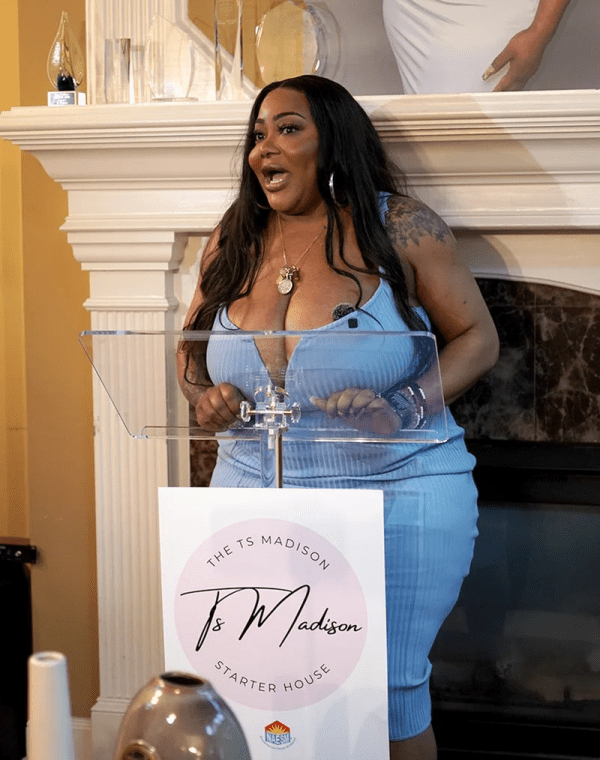
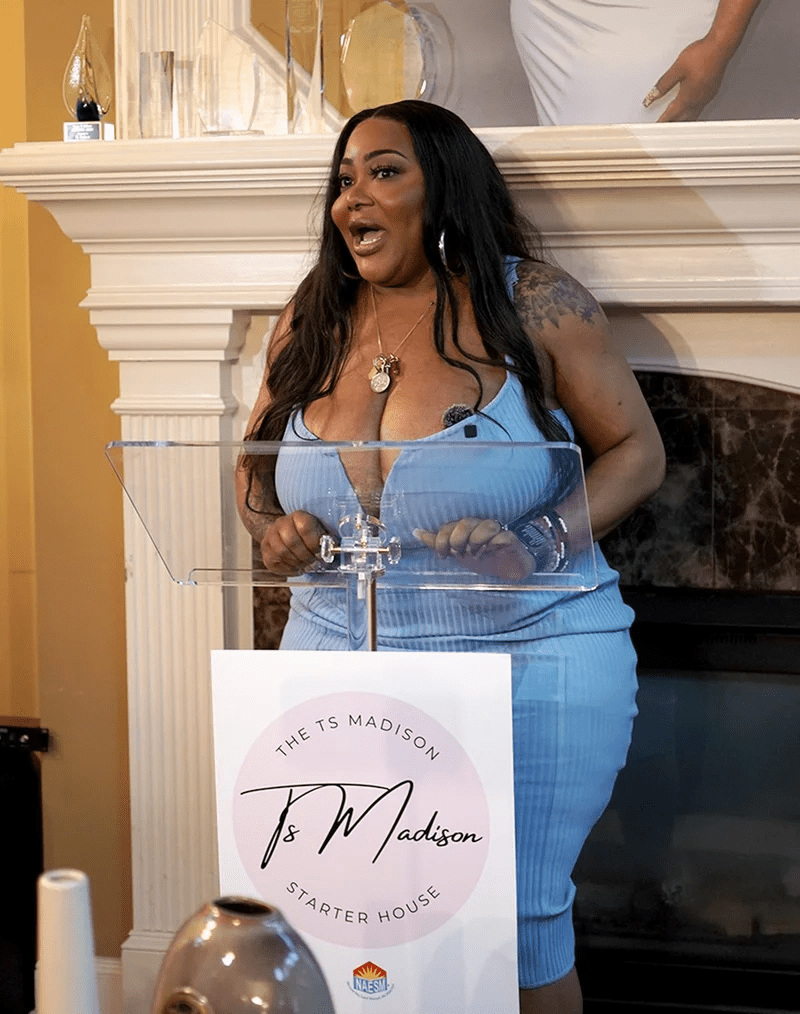
Trans icon Ts Madison has now opened a groundbreaking new initiative — dubbed as a “Starter House” — for trans women in Atlanta, GA, coinciding with 16th annual Transgender Day of Visibility. The trans advocate has partnered with NAESM, a historic Black HIV/AIDS organization, to launch a groundbreaking housing initiative aimed at supporting Black trans women engaged in sex work.
Located in Ts Madison’s former residence, the facility offers Black trans individuals access to safe housing, gender-affirming healthcare, economic opportunities, and holistic support.
The grand opening stirred deep emotions for the RuPaul’s Drag Race judge. “This morning I was having withdrawals because this is a big thing. Like, this is my house. I’m like, I’m giving my house to the community. That means people are going to be transitioning in and out and in and out of this house. I built a legacy here, but I’m still attached to this house. These are girls that are disenfranchised. These are girls that are homeless. These are girls that are trying to find another way in their life.”
The Ts Madison Starter House is part of A New Way of Life’s SAFE Housing Network, a global coalition of over 30 organizations focused on providing reentry support for women who have been incarcerated. Founded in 1998, the SAFE Housing Network aims to reduce incarceration rates in the U.S. by offering safe housing, assisting individuals in healing from the trauma of their experiences, and empowering them to take a leadership role in the movement to end mass incarceration.
Dominique Morgan, the Executive Director of the project, emphasized the importance of community support. “I think so many of us feel the fear of what’s happening in this climate, and so many folks feel like, oh my goodness, are we going to make it. And what today really symbolizes for me is that we have answers happening all over the place, and that we have the power to decide how we show up for each other.”
This facility will serve as a vital stepping stone for women, providing safe, affirming housing that prioritizes dignity and stability. To learn more and/or make a donation to the project, visit the official page for the Ts Madison Starter house.








 The news out of the
  If you are struggling right now, please consider reaching out to: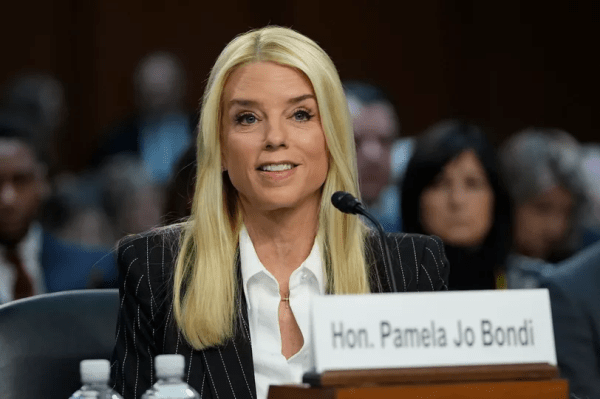





 fleeredstates.blog
You must be logged in to post a comment.