Supreme Court reinstates Trump administration’s transgender passport policy

Read more at The Hill.

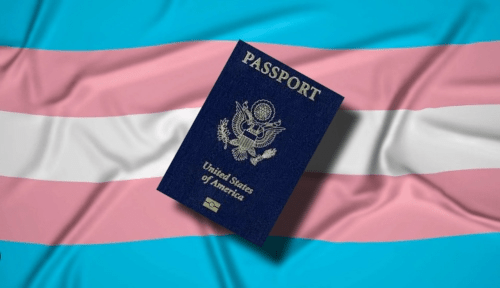
The Supreme Court on Thursday ruled President Trump’s State Department can prohibit transgender Americans from listing their gender identity on their passports, for now. 

It hands another legal victory for Trump in his efforts to eviscerate what his administration calls “gender ideology.” The Justice Department brought the emergency appeal after lower courts blocked the passport policy for being rooted in “irrational prejudice.” 

“Displaying passport holders’ sex at birth no more offends equal protection principles than displaying their country of birth—in both cases, the Government is merely attesting to a historical fact without subjecting anyone to differential treatment,” the majority wrote in its unsigned ruling

The ruling appeared to be along the court’s 6-3 ideological lines, though the justices do not have to publicly disclose their votes. 

In dissent, the court’s liberals called the ruling “pointless but painful perversion.” 

“Such senseless sidestepping of the obvious equitable outcome has become an unfortunate pattern,” wrote Justice Ketanji Brown Jackson, joined by Justices Elena Kagan and Sonia Sotomayor. 

“So, too, has my own refusal to look the other way when basic principles are selectively discarded,” the dissent continued. 

Solicitor General D. John Sauer called lower rulings blocking the administration’s policy “untenable,” casting them as infringing on Trump’s constitutional authority over foreign affairs. 

“The President’s choice to revert to prior policy and rely on biological sex—a choice that bound the State Department—should be the last place for novel equal-protection claims or Administrative Procedure Act objections,” Sauer wrote in court filings. 

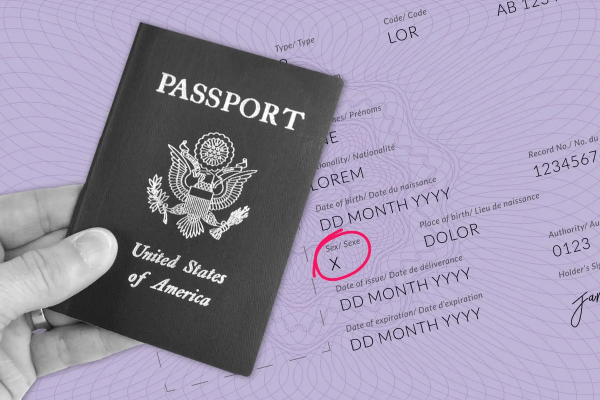
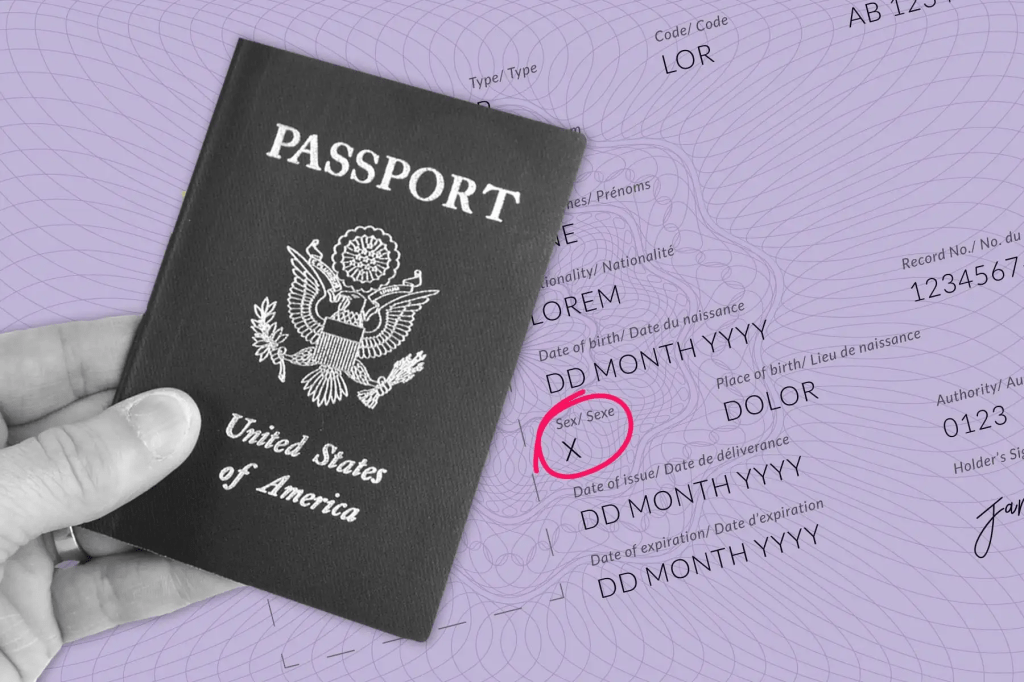
The State Department policy requires passport holders to use their sex assigned at birth as their sex designation, prohibiting transgender people from matching it with their gender identity. The policy also removed the option for people to select “X,” leaving male and female as the only two options. 

“This new policy puts transgender, nonbinary, and intersex people in potential danger whenever they use a passport,” American Civil Liberties Union (ACLU) attorney Chase Strangio warned in court filings. 

Strangio and the ACLU represent transgender and nonbinary Americans who are suing over the State Department’s changes. 

They argue it violates federal law and constitutional equal protection rights, convincing a federal district judge appointed by former President Biden and later the 1st U.S. Circuit Court of Appeals to halt the policy.  

It marked the latest case implicating Trump’s Day 1 executive order that cracks down on what he calls “gender ideology” to reach the Supreme Court. Previously, the justices issued emergency orders allowing the administration to enforce its transgender troops ban and cancel diversity-linked health grants. 
Virgin Islands make history by allowing trans & intersex people to change their gender markers

Read more at LGBTQ Nation.

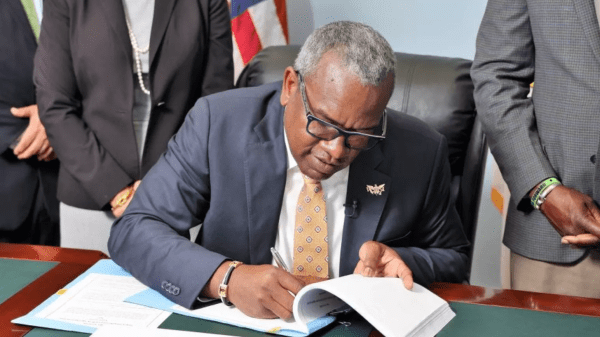
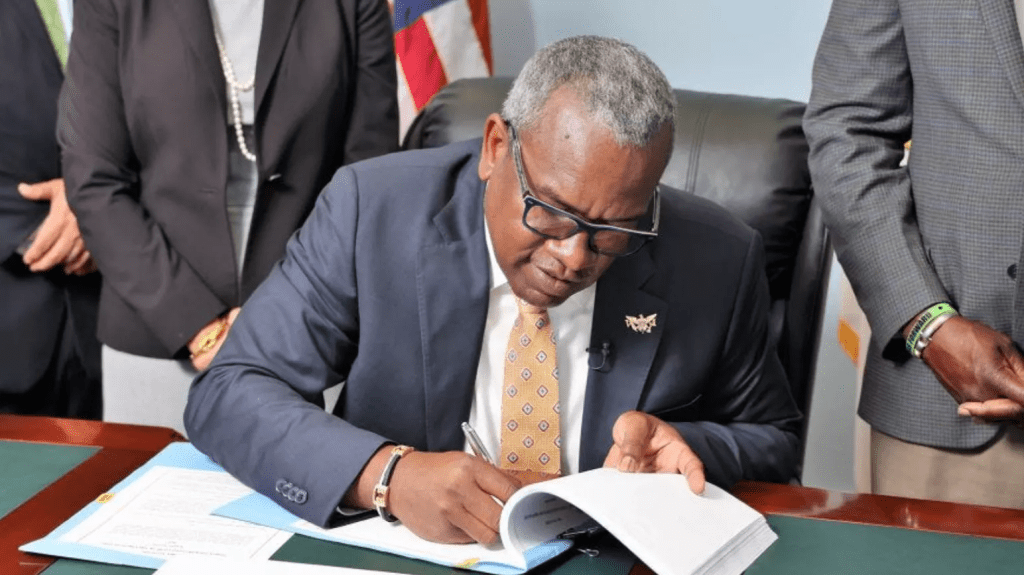
U.S. Virgin Islands (USVI) Gov. Albert Bryan Jr. (D) submitted a bill to the legislature last year that would have allowed trans and intersex people in the territory to change the gender marker on their official documents. The measure didn’t advance past a committee hearing.

So, last Wednesday, the governor enacted the policy anyway by signing an executive order, making the change to USVI policy. His order marked the first instance ever of official recognition of trans people in the territory, according to Transitics.

“Virgin Islanders have reached out to our administration seeking a way to have their documents reflect who they truly are,” Gov. Bryan said in a statement following the signing ceremony. “This Executive Order provides a fair and compassionate process where none existed before. It ensures that our government recognizes and respects the lived realities of all our residents.”

Intersex Virgin Islanders and trans individuals with a court order stating they’ve had “surgical, hormonal, or other treatment for the purpose of gender transition,” can now easily revise the gender markers on both their birth certificates and government-issued ID cards.

The Virgin Islands counts itself as one of the friendlier territories for the trans community. It’s the only U.S. territory that prohibits discrimination based on sexual orientation and gender identity, and there have been no known attempts to restrict gender-affirming care in the USVI. There are no restrictions on trans student-athletes in girls’ sports in the territory’s schools, and no bathroom bans relating to gender identity.

Six states and no U.S. territories deny citizens the ability to change a gender marker on birth certificates, including Texas, Florida, Tennessee, Iowa, Kansas, and Oklahoma. That number drops to four for state IDs.

Revised documents on island will now use the term “gender” rather than “sex” for the new designations.

Under the new process, an individual aged 18 or older, or a parent or guardian on behalf of a minor, may request a gender marker change from the issuing agency in writing.

One of two alternative documents must accompany the request: a statement, “signed under penalty of perjury,” from a licensed healthcare provider who has treated or evaluated the individual, confirming they have an “intersex condition” and that a gender designation change is appropriate; or, a judicial order from the Virgin Islands or another jurisdiction granting a gender change designation may be submitted in lieu of a healthcare provider’s statement.

A requirement for a healthcare provider’s attestation that an applicant has had surgery or gender-affirming care was deemed unfair by critics of Bryan’s 2024 legislative proposal, who called it a burden on individuals lacking health insurance.

The governor noted his action aligns the Virgin Islands with at least 25 states, Puerto Rico, and the District of Columbia, which have adopted administrative procedures for amending gender designations on birth certificates, and more than 30 states, Puerto Rico, and D.C., which have similar processes for driver’s licenses.

“Our administration remains committed to fairness, dignity, and respect for every Virgin Islander,” Gov. Bryan added. “This Executive Order brings the Virgin Islands in line with modern standards of inclusion and ensures that all residents have access to accurate and affirming government identification.”

Kansas Supreme Court Delivers Big Win For Driver’s License Gender Markers

Read more at Erin in the Morning.

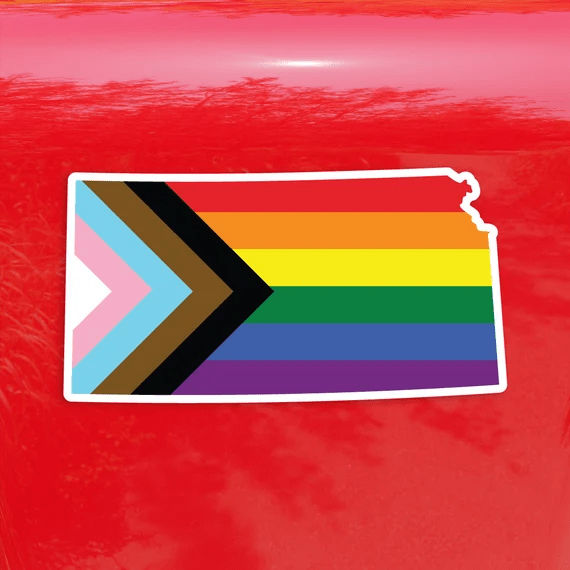
After a grueling two-year fight, starting on Tuesday, the Kansas Department of Revenue (KDOR) will resume issuing accurate driver’s licenses to transgender Kansans, a spokesperson for the ACLU of Kansas told Erin in the Morning.

Last week, the Kansas Supreme Court declined to hear Attorney General Kris Kobach’s request to uphold a district court order preventing the state from updating IDs for trans residents. And while there is still a fight ahead, it marks a notable victory for trans people in a state that has been holding their driver’s licenses hostage for years.

“I want every transgender Kansan to be able to live their lives authentically,” said Kathryn Redman, a 65-year-old resident and a plaintiff in the case, Kansas v. Harper, brought on by the ACLU and Stinson LLP.

AG Kobach asserted that the courts needed to put a stop to the license updates indefinitely, claiming it would interfere with law enforcement’s ability to identify and apprehend criminal suspects. The Court of Appeals called this “mere speculation.”

“There is no hidden agenda,” Redman told Erin in the Morning. “All I tried to accomplish and what I have accomplished by my transition is, I now live my life at peace with myself.”

In theory, the case should now be returned to a new trial court for final resolution. But the conservative Kobach doesn’t want to let that happen. He and other Republican officials have sought to call a special legislative session on the matter—a process they were already undertaking in a transparent attempt at gerrymandering, and it has seen renewed fanfare in light of the court events this past week.

The fight to strip trans Kansans of their rights, state Senate President Ty Masterson wrote in an Oct. 1 letter, is considered “even more important than redistricting.” He called on the Kansas State Republican Caucus to simply “add a few words” to state law to stop Kansans from updating their gender markers.

The legal proceedings have ricocheted from court to court since July 2023, when legislators overrode Democratic Governor Laura Kelly’s veto on Senate Bill 180. The anti-trans law takes after legislation proposed by right-wing, anti-trans organizations, misleadingly dubbed the “Women’s Bill of Rights.” In practice, the only thing the bill does is codify sex segregation and target the equal rights of transgender people. It makes no mention of forcing Kansans to carry a driver’s license with an inaccurate gender marker.

“Rather than accepting the decisions of the two highest courts in our state, Mr. Kobach is resorting to backroom attempts to change the law and shut the courts out of our government so he can have full, unchecked power,” Micah Kubic, executive director of the ACLU of Kansas, said in a statement. “This is, simply put, a power grab by the attorney general that goes beyond his baseline of cheap political theater and wasteful litigation.”

Kubic denounced Kobach’s “extremist and discriminatory agenda,” adding that it “threatens not just the privacy and agency of all Kansans but also the very checks and balances of our state government.”

Trans People Can Now Get Passports Indicating Their Authentic Gender

*This is reported by Planet Trans.

After two weeks of noncompliance with a court order from a class action lawsuit, the State Department’s help page, updated two days ago, indicates that transgender people can get a passport with their authentic gender at least temporarily, as Orr. Vs. Trump moves through the legal process.

On June 17, 2025, U.S. District Judge Julia Kobick in Boston expanded a preliminary injunction she issued in April that allowed six transgender and nonbinary individuals who challenged the policy to obtain passports consistent with their gender identities or with an “X” sex designation while the lawsuit moves forward, Reuters Reports.

Kobick did so after concluding the policy the U.S. Department of State adopted pursuant to an executive order Trump signed likely discriminated on the basis of sex and was rooted in an irrational prejudice toward transgender Americans that violated the U.S. Constitution’s Fifth Amendment.

Will Trump appeal this to the Supreme Court? According to the Trump Anti-LGBTQ+ Executive Order Litigation Tracker he hasn’t done that yet.

US judge blocks Trump passport policy targeting transgender people

*This is reported by Reuters

A federal judge on Tuesday blocked President Donald Trump’s administration from refusing to issue passports to transgender and nonbinary Americans nationwide that reflect their gender identities.

U.S. District Judge Julia Kobick in Boston expanded, opens new tab a preliminary injunction she issued in April that allowed six transgender and nonbinary individuals who challenged the policy to obtain passports consistent with their gender identities or with an “X” sex designation while the lawsuit moves forward.

Kobick did so after concluding the policy the U.S. Department of State adopted pursuant to an executive order Trump signed likely discriminated on the basis of sex and was rooted in an irrational prejudice toward transgender Americans that violated the U.S. Constitution’s Fifth Amendment.

While Kobick’s April ruling was limited in its scope, the judge, an appointee of Democratic President Joe Biden, on Tuesday granted the case class action status and halted the policy’s enforcement against transgender, nonbinary and intersex passport holders.

Kobick said granting class action status to two categories of passport holders was appropriate given that the administration’s actions affected them uniformly “by preventing them from obtaining passports with a sex marker consistent with their gender identity.”

Li Nowlin-Sohl, a lawyer for the plaintiffs at the American Civil Liberties Union, called the ruling “a critical victory against discrimination and for equal justice under the law.”

White House spokeswoman Anna Kelly in a statement called the decision “yet another attempt by a rogue judge to thwart President Trump’s agenda and push radical gender ideology that defies biological truth.”

The case is one of several concerning an executive order Trump signed after returning to office on January 20 directing the government to recognize only two biologically distinct sexes, male and female.

The order also directed the State Department to change its policies to only issue passports that “accurately reflect the holder’s sex.”

The State Department subsequently changed its passport policy to “request the applicant’s biological sex at birth,” rather than permit applicants to self-identify their sex, and to only allow them to be listed as male or female.

Prior to Trump, the State Department for more than three decades allowed people to update the sex designation on their passports.

In 2022, the Biden administration allowed passport applicants to choose “X” as a neutral sex marker on their passport applications, as well as being able to self-select “M” or “F” for male or female.

Trans woman now fears travelling without legal gender documents. She’s not alone.

*This is reported by LGBTQ Nation

Transgender woman Michelle Rosenblum, of Ventura, California, has been planning a family vacation to Hawaii, but recent law changes regarding identification documents have made her wary of travel.

After President Donald Trump’s election to a second term last November, Rosenblum had been rushing to get her identification in order as a safety precaution.

According to Rosenblum, she updated her California birth certificate to show she had transitioned and renewed her passport.

Rosenblum was shocked to receive a letter from the State Department telling her she needed to correct her information on her passport application to show her biological sex at birth.

As Rosenblum prepares to fly, she fears that the discrepancies between her California Real ID and her passport will create problems when traveling. While the federal government requires Real ID for air travelers, states oversee the gender marker listed on the IDs.

Rosenblum is now debating traveling with a stack of documents, such as her birth certificate, Social Security card, and a court order showing her gender change.

Rosenblum tells The Los Angeles Times, “In the 10 years that I’ve been transitioned, I have never felt like, ‘Whoa, I need to get all my papers together.’ I was never concerned about traveling.” 

Rosenblum’s experience echoes similar concerns that trans people have about traveling, as noted in a recent survey conducted by the Williams Institute at the UCLA School of Law. In the survey, 302 trans, nonbinary, and other gender non-conforming American adults were surveyed — nearly a third said they were travelling less frequently as a result of the 2024 election.

Though the survey was conducted a month before Trump’s official inauguration. Trump’s campaign focused heavily on attacking the rights of trans people. On the day of his inauguration, President Trump issued an executive order directing the federal government to no longer acknowledge the existence of trans people in any capacity. This led the State Department, which issues passports to U.S. citizens, to announce they no longer accept gender markers that do not align with a person’s sex assigned at birth.

Trump’s continual attacks on the trans community in his official capacity as president have emboldened many GOP members to begin proposing anti-trans legislation in their home states, making travel even less desirable.

In the survey, nearly 70% of respondents said they’d be less willing to vacation in states they viewed as more hostile to trans people, particularly states that hold a GOP majority.

The survey also showed that 48% of respondents were considering moving to or had already moved to states they viewed as safer, particularly states with a liberal majority, such as Washington, California, New York, and Minnesota.

Lead author of the survey, Abbie Goldberg, wrote, “When you feel that you need to consider moving, you’ve been pushed to a certain point…. If you’re a trans person living in the U.S., particularly in a state with not a lot of protections and some explicitly anti-trans legislation, you’re thinking about your physical safety, your children’s safety at school, the possibility you could be fired from your job, and no way to push back.”

Rosenblum said she is grateful to live in California, where she is protected by anti-discrimination laws but as she gets ready for vacation, she said, “It feels like people are trying to shove me back into the closet.”

Texas AG Paxton ‘opinion’ claims courts lack authority to order gender marker changes, tells state agencies to ‘immediately correct’ any such changes

*This is being reported by the Dallas Voice. A response by the Texas House LGBTQ Caucus is here.

Texas Attorney General Ken Paxton ramped up his war on transgender Texans yet another notch today (Friday, March 14), issuing a “legal opinion” declaring that state district courts do not have the judicial authority to order governmental agencies to change the gender markers on a trans person’s government-issued identification documents to reflect their actual gender identity rather than their gender assigned at birth.

Paxton also instructed state agencies to “immediately correct any unlawfully altered driver’s licenses or birth certificates that were changed pursuant to such orders.”

But the AG’s “opinions” are not legally binding on the courts, and Lambda Legal’s South Central Regional Director Shelly Skeen noted that her organization, as well as the ACLU, already have legal challenges in the works.

Paxton’s “opinion” was issued in response to a request made last September by the Texas Department of Public safety, the state agency which issues driver’s licenses in this state. A summary of the “opinion” reads:

“The ‘judicial power’ endowed to district courts does not countenance ex parte orders directing state agencies to amend a person’s biological sex on driver’s licenses or birth certificates. The underlying proceedings are coram non judice, and the resulting orders are void. State agencies must immediately correct any unlawfully altered driver’s licenses or birth certificates that were changed pursuant to such orders.”

(Ex parte means “on one side only; by or for one party.” Coram non judice means “not before a judge,” or “before one not a judge.”)

What Paxton is saying, Skeen explained, is that courts have been issuing orders directing state agencies to change gender markers on official documents such as birth certificates and driver’s licenses “without the agency being a part of the case.”

But, she added, “Courts have the authority to issue court orders based on what they find given the facts in any given case. The state doesn’t need to be party to that case.”

Skeen continued, “A court order is part of what the judiciary gets to do — interpret the law. The legislature makes the law, and the executive branch [of which Paxton is a part in Texas] is supposed to enforce the law. When a court issues an order, that order [applies to] the executive branch, and that order is entitled to full faith and credit under the U.S. Constitution.”

That means, basically, that Texas is required to honor court orders issued in other states, with a very few exceptions.

“We know the attorney general’s opinion is non-binding. But we also know state agencies will try to comply with it. Nevertheless, his opinion — in my opinion — is wrong. He is choosing to issue a non-binding opinion that is contrary to many legal doctrines, including separation of powers.” Shelly Skeen, Lambda Legal South Central Region director

“We know the attorney general’s opinion is non-binding. But we also know state agencies will try to comply with it,” Skeen said. “Nevertheless, his opinion — in my opinion — is wrong. He is choosing to issue a nonbinding opinion that is contrary to many legal doctrines, including separation of powers.”

Ash Hall, policy and advocacy strategist on LGBTQIA+ rights for the ACLU of Texas, said in a written statement, “We condemn Ken Paxton’s misuse of his office to repeatedly target transgender Texans. Attorney general opinions are non-binding and cannot supersede court orders. State agencies have no authority to retroactively change anyone’s valid legal documents.

“If state agencies attempt to implement this non-binding opinion, it would be an unlawful waste of resources that will not hold up in court nor stand the test of time,” Hall said. “We should all have identity documents that match who we are as a matter of basic safety and Paxton cannot erase transgender Texans’ right to exist.”

“We condemn Ken Paxton’s misuse of his office to repeatedly target transgender Texans … State agencies have no authority to retroactively change anyone’s valid legal documents.” Ash Hall, policy and advocacy strategist on LGBTQIA+ rights for the ACLU of Texas

An ACLU of Texas spokesperson added that there “not much more we can comment on beyond that yet since we don’t know how they plan to enforce this.”

Skeen said that anyone who finds their government-issued IDs have been or are being changed should contact the Lambda Legal Help Desk or the ACLU of Texas as soon as possible. She also stressed that legal challenges are already moving through the courts, including Fowler et al v. Stitt et al which is currently pending before the U.S Supreme Court.

According to the website, Lambda Legal filed that lawsuit in the U.S. District Court for the Northern District of Oklahoma on behalf of three transgender people born in Oklahoma — Rowan Fowler, Allister Hall and one plaintiff identified by his initials C.R.  — after Oklahoma Gov. Kevin Stitt issued an executive order in late 2021 that other state officials have invoked in denying transgender people’s applications to correct their birth certificates. That order is a reversal of prior policy, which had permitted such corrections for years, the lawsuit says, arguing that the government’s actions violate equal protection, privacy and liberty under the Equal Protection and Due Process Clauses of the U.S. Constitution and that forcing transgender people through their birth certificates to identify with a sex that conflicts with who they are violates their free speech rights under the First Amendment.

Blog at WordPress.com.

Up ↑