Judge nixes Justice Department subpoena of telehealth trans health care provider

Read more at The Advocate.

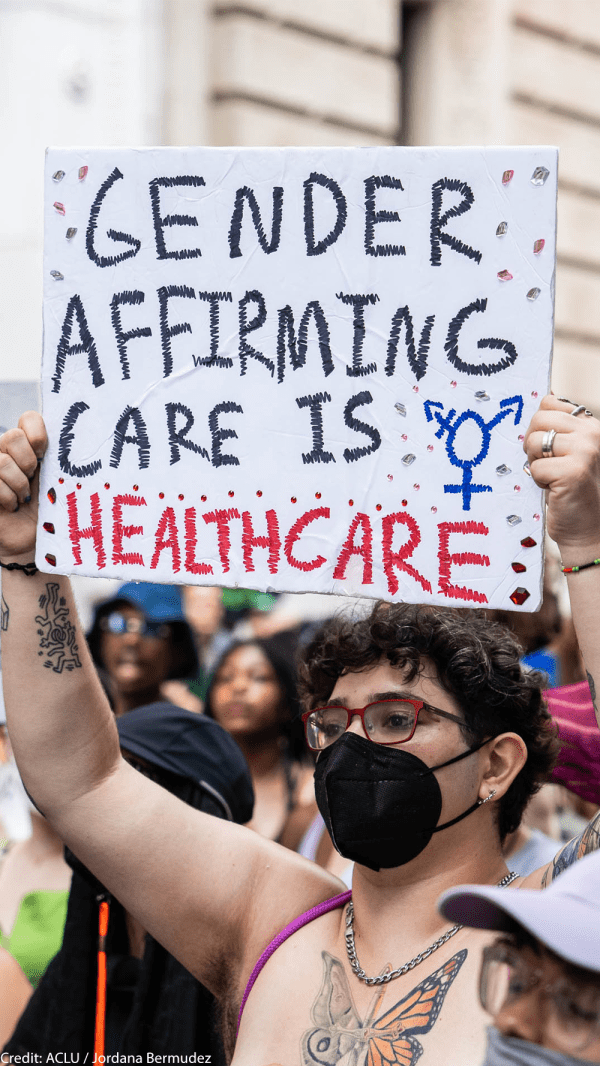
A federal judge has quashed the Department of Justice’s subpoena for the records of QueerDoc, a telehealth service that prescribes medications and offers consulting for gender-affirming care in 10 states.

The DOJ subpoenaed QueerDoc June 11, requesting personnel information, documents identifying patients, patients’ medical records, billing records, insurance claims, communications with drugmakers, and more. It was among more than 20 such subpoenas issued.

The same day, the DOJ’s Civil Division issued a memo saying it would “prioritize investigations of doctors, hospitals, pharmaceutical companies, and other appropriate entities” for “possible violations of the Food, Drug, and Cosmetic Act and other laws” regarding medications used in gender-affirming care and False Claims Act violations by health care providers who “evade state bans on gender dysphoria treatments by knowingly submitting claims to Medicaid with false diagnosis codes.”

These investigations derived from Donald Trump’s executive order recognizing only male and female sexes as assigned at birth and another denouncing gender-affirming care for minors as “a stain on our Nation’s history” that “must end” and threatening federal funding that provide such care. He also directed the DOJ to investigate providers. In April, Attorney General Pam Bondi released a memo saying the DOJ would “act decisively to protect our children and hold accountable those who mutilate them under the guise of care.” She used the same language about mutilation in a later press release. That a day after QueerDoc filed motions with a U.S. District Court in Washington State to quash the subpoena and seal the court proceedings, according to the court.

“DOJ issued its inflammatory press release declaring that medical professionals have ‘mutilated children in the service of a warped ideology,’ one day after QueerDoc filed these motions, effectively destroying any claim to investigative confidentiality while attempting to sway public sentiment against healthcare providers like QueerDoc,” Judge Jamal Whitehead wrote in his ruling, which came out Monday. “Such conduct appears calculated to intimidate rather than investigate.”

“The question before the Court is whether DOJ may use its administrative subpoena power to achieve what the Administration cannot accomplish through legislation: the elimination of medical care that Washington and other states explicitly protect. The answer is no,” he continued. He noted that gender-affirming care is supported by major medical groups and many courts.

Whitehead added, “When a federal agency issues a subpoena not to investigate legal violations but to intimidate and coerce providers into abandoning lawful medical care, it exceeds its legitimate authority and abuses the judicial process.”

He denied the motion to seal the proceedings “because, despite legitimate safety concerns, transparency in judicial proceedings remains paramount when challenging executive power,” he wrote.

QueerDoc welcomed the ruling. “The court affirmed that government power cannot be used to intimidate providers or breach the confidentiality of patients seeking medically necessary care,” the organization said in a statement on its website. “This is a win not just for QueerDoc, but for every clinician and patient fighting for the right to safe, private healthcare.”

The subpoena was “a calculated attempt by the Trump administration and Attorney General Pam Bondi to weaponize the Department of Justice against transgender people and the clinicians who care for them,” the statement noted. QueerDoc did not surrender any patient information to the DOJ, and care was not disrupted, the group said.

A federal judge in Massachusetts quashed a similar DOJ subpoena to Boston Children’s Hospital in September, and the department is appealing, Politico reports. The Children’s Hospital of Philadelphia and the University of Pittsburgh Medical Center are in court fighting DOJ subpoenas on gender-affirming care as well.

Asked by Politico for comment on the QueerDoc ruling, the DOJ issued this statement: “As Attorney General Bondi has made clear, this Department of Justice will use every legal and law enforcement tool available to protect innocent children from being mutilated under the guise of ‘care.’”


Trump seeks to kill all medical care for trans youth by defunding hospitals that provide it

Read more at LGBTQ Nation.

Trump’s Department of Health and Human Services (HHS) seeks to end all Medicaid and Medicare funding for young people’s gender-affirming care (GAC), according to newly proposed rules shared by NPR. A trans activist said the rules would amount to a “de facto national ban” on GAC.

The proposed rules would prohibit all federal Medicaid and Medicare funding — as well as funding through the federal Children’s Health Insurance Program (CHIP) — for any services at hospitals that provide GAC for trans youth.

“These would be proposals that would go out for public comment, it would take months for the Trump administration to issue a final rule, and then, if past is prologue, we would see litigation over whatever the final rules are,” Katie Keith, director of the Center for Health Policy and the Law at Georgetown University, told NPR.

Terry Schilling, president of the American Principles Project, a right-wing think tank that has pushed national transphobia as an effective Republican political strategy, said of the proposed rules, “I think these restrictions are very good. It’s going to change the entire transgender industry, and it’s going to take away a lot of their funding streams.”

“This would be a de facto national ban,” wrote trans activist and civil rights attorney Alejandra Caraballo via Bluesky. “There would still be providers in blue states that don’t take federal funding but the large interdisciplinary teams of just a few years ago would be nearly impossible to maintain. The result is that the care that remains would largely be underground with worse support and likely outcomes.”

“They’ll never be able to fully ban this care,” Caraballo added. “There will always be providers willing to provide it like abortion. Even without access to providers, many trans youth will simply go DIY [do-it-yourself] like trans folks have done for decades. They’re not actually banning this care, they’re making it less safe.”

The administration’s “toxic” war on gender-affirming care

Though there is no federal law banning gender-affirming care, the current presidential administration has sought to eradicate the practice through a January executive order (that has since been blocked by several courts). The order instructed the DOJ to extend the time that patients and parents can sue gender-affirming doctors and to use laws against false advertising to prosecute any entity that may be misleading the public about the long-term effects of gender-affirming care (GAC).

In April, Bondi issued a memo to DOJ employees, telling them to investigate and prosecute cases of minors accessing gender-affirming care as female genital mutilation (FGM), even though hospitals don’t conduct such female genital surgeries. The memo threatened to jail doctors for 10 years if they provide gender-affirming care to young trans people.

The following June, the DOJ sent subpoenas to 20 medical providers who offer GAC to trans youth, demanding patients’ Social Security numbers, emails, home addresses, and information on the care they received, as well as other sensitive information dating back to January 2020. A federal judge blocked the subpoena in one instance and accused the DOJ of going on a “bad faith” “fishing expedition” to interfere with states’ rights to protect GAC within its borders, to harass and intimidate providers from offering such care, and to dissuade patients from seeking such care.

Fewer than 3,000 teens nationwide receive puberty blockers or hormone replacement therapy, according to a 2025 JAMA analysis of private insurance data. Gender-affirming care is supported by all major medical associations in the U.S., including the American Medical Association, the Endocrine Society, and the American Academy of Pediatrics, as safe and life-saving for young people with gender dysphoria.

One doctor interviewed by The Washington Post called the federal government’s crusade against gender-affirming care a “toxic plan” that will force some patients to detransition, potentially forcing them into adverse psychological and physical effects, including increased anxiety, depression, and the development of unwanted physical changes.

Republican official sued a Texas doctor for treating trans kids. She left the state.

Read more at LGBTQ Nation.

A Dallas pediatrician who became the first doctor to be sued under a Texas law banning gender-affirming care for minors has given up her license to practice in the state.

According to TownFlex, the Texas Medical Board confirmed that Dr. May Lau voluntarily surrendered her medical license. In a statement, Lau’s attorney, Craig Smyser, said that she has decided to move her practice to Oregon and sees no reason to maintain her license to practice in Texas.

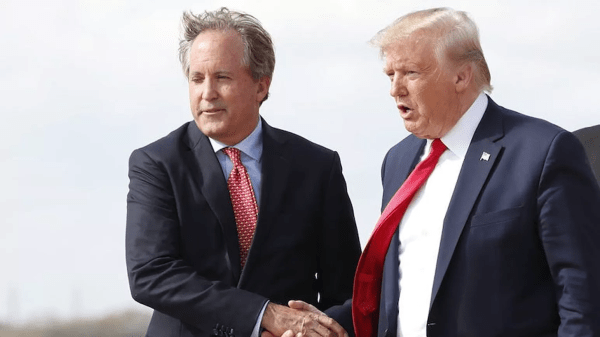
Last year, Texas Attorney General Ken Paxton (R) filed a first-of-its-kind lawsuit against Lau for allegedly providing gender-affirming care to minors in violation of S.B. 14. The state law, which went into effect in September 2023, bans doctors from prescribing hormone replacement therapy and puberty blockers to minors, and from performing gender-affirming surgery on minors.

Paxton’s suit accused Lau of prescribing hormone replacement therapy to at least 21 minors between October 2023 and August 2024. It further alleged that Lau “used false diagnoses and billing codes to mask these unlawful prescriptions.”

Notably, Paxton’s suit falsely referred to gender-affirming care as “dangerous and experimental” and a press release from his office claimed that there is “no scientific evidence” to support the benefits of gender-affirming medication.

In fact, puberty blockers and hormone replacement drugs have for decades been used safely for the purposes of gender transition in trans minors and to treat other medical issues in cisgender children. Gender-affirming care, which encompasses a range of both surgical and nonsurgical treatments, has been endorsed by every major American medical association and leading world health authority as evidence-based, safe, and in some cases lifesaving for transgender minors. Gender-affirming surgical intervention is rarely performed on minors.

In his statement, Smyser said that Lau “continues to deny the Texas Attorney General’s politically- and ideologically-driven allegations,” according to TownFlex.

Paxton, meanwhile, said that Lau’s surrender of her medical license was “a major victory for our state.”

“Doctors who permanently hurt kids by giving them experimental drugs are nothing more than disturbed left-wing activists who have no business being in the medical field. We will not relent in holding anyone who tries to ‘transition’ kids accountable,” he said in a statement, according to TownFlex.

As the outlet notes, Paxton has filed similar lawsuits against two other Texas doctors. Last month, the Texas AG withdrew the state’s suit against Hector Granados after finding no evidence that he violated S.B. 14. However, a lawsuit brought against M. Brett Cooper is ongoing and expected to go to trial in May.

Equality Texas noted that the enforcement of S.B. 14 has led many doctors who provide gender-affirming care to leave the state — making it harder for trans adults to access care.

Federal judge strikes Biden-era ban on transgender care discrimination

Read more at The Hill.

A federal judge on Wednesday struck down a former President Biden-era rule that extended federal health antidiscrimination protections to transgender health care. 

Judge Louis Guirola Jr. of the U.S. District Court for the Southern District of Mississippi ruled in favor of a coalition of 15 GOP-led states that sued over the rule, which broadened sex discrimination by adding sexual orientation and gender identity to the list of protected characteristics in certain health programs and activities.   

The Department of Health and Human Services “exceeded its authority by implementing regulations redefining sex discrimination and prohibiting gender identity discrimination,” Guirola ruled. 

The decision is a significant loss for the transgender community, which is has faced a wave of state and federal policies and court decisions rolling back previously established rights.   

The complaint centered on provisions in Section 1557 of the Affordable Care Act, which the Biden administration interpreted to bolster health care protections against discrimination for LGBTQ people.   

The rule prevented covered entities from discriminating against certain protected groups in providing health care services, insurance coverage and program participation. 

The challenged provision added gender identity to Title IX’s definition of discrimination “on the basis of sex,” which previously included discrimination based on sex characteristics, pregnancy and sex stereotypes. 

The Biden administration’s final rule, which was released in 2024, said organizations receiving federal health funding and health insurers that do business through government plans cannot refuse to provide health care services, particularly for gender-affirming care, that would be provided to a person for other purposes.   

The rule was first created under former President Obama in 2016. President Trump then reversed it during his first term before the Biden administration turned it back again.

The first Trump policy kept protections against discrimination based on race, color, national origin, sex, age or disability. But the administration narrowed the definition of sex to only mean “biological sex,” cutting out transgender people from the protections.

Guiroloa ruled that a statute “cannot be divorced from the circumstances existing at the time it was passed.”  

The word “sex” is not defined in the statute, so the court said it must interpret the term according to its meaning in or around 1972, when the statute was enacted.  At that time, the definition focused on the reproductive distinctions between males and females.  

Guirola vacated the rule universally, meaning it’s not limited to the 15 red state plaintiffs. But the impact is likely limited because the rule had not taken effect.  

In a statement, Tennessee Attorney General Jonathan Skrmetti celebrated the decision.

“Our fifteen-State coalition worked together to protect the right of health care providers across America to make decisions based on evidence, reason, and conscience.  This decision restores not just common sense but also constitutional limits on federal overreach, and I am proud of the team of excellent attorneys who fought this through to the finish,” he said in a statement. 

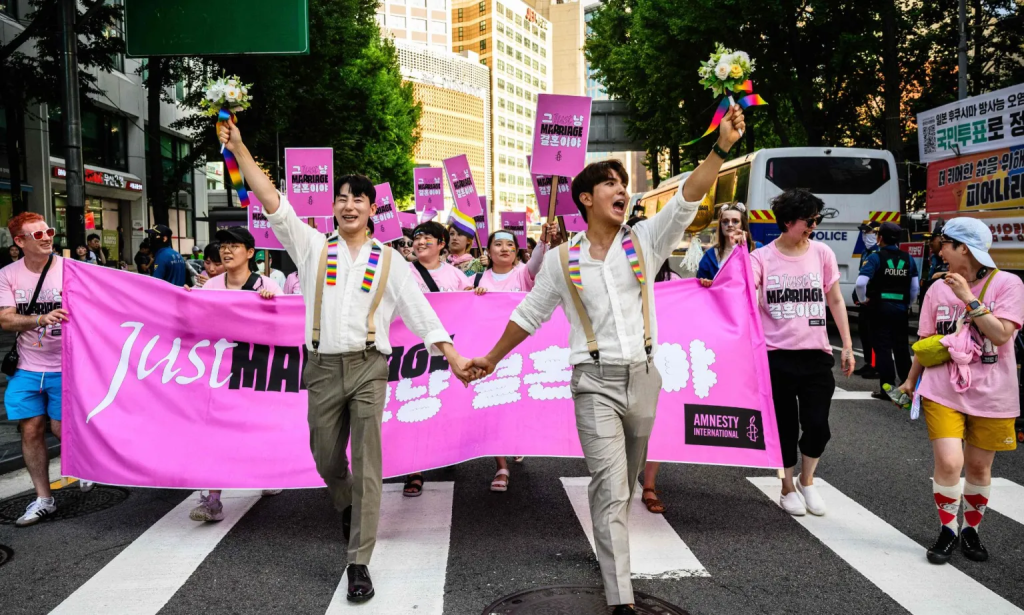
South Korea officially recognises same-sex couples in national census

Read more at Pink News.

Under newly announced policy changes, the Ministry of Data and Statistics will recognise same-sex couples living in the same household in the Population and Housing Census.

The government confirmed on Tuesday (21 October) it would allow same-gender housholds to pick “spouse” and “cohabiting partner” options on the census, which circulates every five years.

Previous iterations flagged the options as errors and rejected, according to Rainbow Action Korea – a coalition of 49 LGBTQ+ organisations.

“In past surveys, couples of the same gender could not select ‘spouse’ even if they lived together as such. The system would return an error,” They said in a statement reported by Straits Times.

“This is the first step towards having LGBTQ+ citizens fully reflected in national data.”

Same-sex marriage is not currently legal in South Korea. As of 2023, cohabiting couples can receive spousal coverage under the National Health Insurance Service (NHIS).

A 2024 ruling upholding same-sex couple’s rights to access health insurance benefits was heralded as a “significant step” towards LGBTQ+ equality, with many arguing it paves the way towards legalising same-sex marriage.

The centre-left Justice Party similarly commended the government’s decision to update the census, arguing it could lead to “further change.”

“The day will come when even transgender citizens are visible in national statistics,” a spokesperson continued.

LGBTQ+ rights progress remains slow in the East Asian country. LGBTQ+ people are banned from adoption and military service, while hate crime protections are non-existent.

While legally changing gender has been permitted without sterilisation since 2020, gender-affirming care remains heavily restricted.

An Ipsos survery found that, as of May 2025, 31 per cent of South Koreans are anti-LGBTQ+, while 51 per cent oppose same-sex public displays of affection.

Despite this, nearly a quarter believe the country is a “good place” for LGBTQ+ people.

Rainbow Action argued that, while the move was a positive step, the government hadn’t done enough to inform the public about the change which could limit participation.

Virgin Islands make history by allowing trans & intersex people to change their gender markers

Read more at LGBTQ Nation.

U.S. Virgin Islands (USVI) Gov. Albert Bryan Jr. (D) submitted a bill to the legislature last year that would have allowed trans and intersex people in the territory to change the gender marker on their official documents. The measure didn’t advance past a committee hearing.

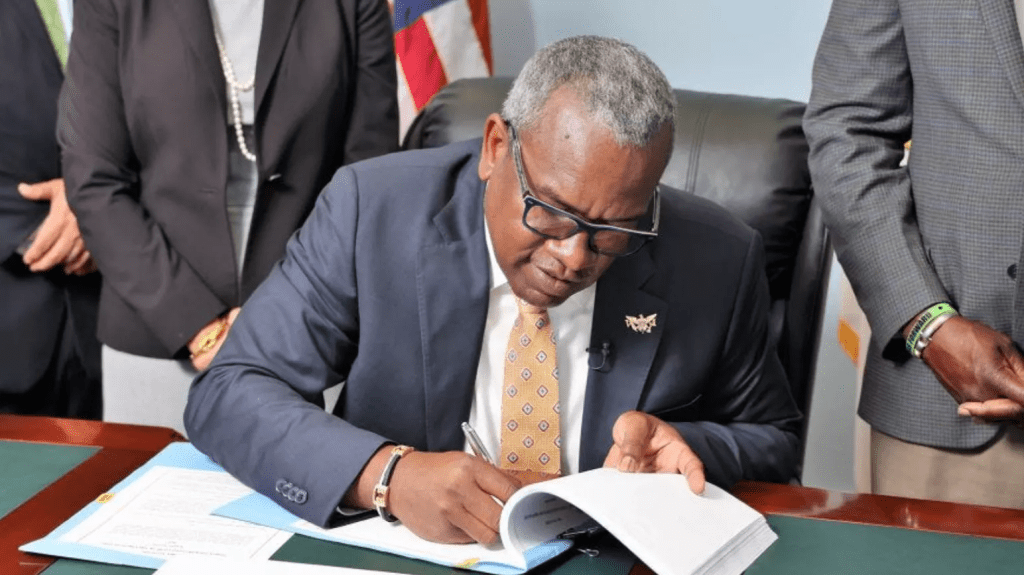
So, last Wednesday, the governor enacted the policy anyway by signing an executive order, making the change to USVI policy. His order marked the first instance ever of official recognition of trans people in the territory, according to Transitics.

“Virgin Islanders have reached out to our administration seeking a way to have their documents reflect who they truly are,” Gov. Bryan said in a statement following the signing ceremony. “This Executive Order provides a fair and compassionate process where none existed before. It ensures that our government recognizes and respects the lived realities of all our residents.”

Intersex Virgin Islanders and trans individuals with a court order stating they’ve had “surgical, hormonal, or other treatment for the purpose of gender transition,” can now easily revise the gender markers on both their birth certificates and government-issued ID cards.

The Virgin Islands counts itself as one of the friendlier territories for the trans community. It’s the only U.S. territory that prohibits discrimination based on sexual orientation and gender identity, and there have been no known attempts to restrict gender-affirming care in the USVI. There are no restrictions on trans student-athletes in girls’ sports in the territory’s schools, and no bathroom bans relating to gender identity.

Six states and no U.S. territories deny citizens the ability to change a gender marker on birth certificates, including Texas, Florida, Tennessee, Iowa, Kansas, and Oklahoma. That number drops to four for state IDs.

Revised documents on island will now use the term “gender” rather than “sex” for the new designations.

Under the new process, an individual aged 18 or older, or a parent or guardian on behalf of a minor, may request a gender marker change from the issuing agency in writing.

One of two alternative documents must accompany the request: a statement, “signed under penalty of perjury,” from a licensed healthcare provider who has treated or evaluated the individual, confirming they have an “intersex condition” and that a gender designation change is appropriate; or, a judicial order from the Virgin Islands or another jurisdiction granting a gender change designation may be submitted in lieu of a healthcare provider’s statement.

A requirement for a healthcare provider’s attestation that an applicant has had surgery or gender-affirming care was deemed unfair by critics of Bryan’s 2024 legislative proposal, who called it a burden on individuals lacking health insurance.

The governor noted his action aligns the Virgin Islands with at least 25 states, Puerto Rico, and the District of Columbia, which have adopted administrative procedures for amending gender designations on birth certificates, and more than 30 states, Puerto Rico, and D.C., which have similar processes for driver’s licenses.

“Our administration remains committed to fairness, dignity, and respect for every Virgin Islander,” Gov. Bryan added. “This Executive Order brings the Virgin Islands in line with modern standards of inclusion and ensures that all residents have access to accurate and affirming government identification.”

‘Where am I safe?’: U.K. court ruling leaves trans people’s lives in turmoil

Read more at NBC News.

Nate Rae had always felt secure living openly since coming out as a transgender man in his late 20s — until a recent U.K. Supreme Court ruling on the legal definition of biological sex changed everything.

Now, Rae — a PhD student and science communicator who grew up in a small Scottish town before moving to London — says he finds himself constantly weighing risks and assessing where it is safe — or unsafe — for him to be.

In April, the court affirmed that under equality laws, the term “sex” refers to biological sex, meaning a transgender woman is legally considered male, and a transgender man is considered female.

Equality watchdog EHRC stated in its interim guidance on the ruling’s practical implications that transgender people should be barred from facilities and services, from toilets to hospital wards and refuges, designed for the gender they live as.

“It’s almost like it’s been made legal to harass trans people,” Rae, 33, told Reuters in an interview at Gay’s The Word, Britain’s oldest LGBTQ bookshop, saying he was now “hyper aware” of people noticing him.

“I’ve got to factor in things that I’d never had to factor in before,” he said. “Where can I go? Where am I safe?”

Transgender rights flashpoint

Rae, who only started to medically transition last year, often uses the women’s bathroom as he feels he is still largely perceived as female.

Since the ruling, Rae has been told several times that he cannot use a certain bathroom and has been called “disgusting” when using a female toilet. On one occasion, someone approached him to ask: “Do you know there are kids here?”

Transgender rights have become a political flashpoint in Britain and elsewhere. In the U.S., President Donald Trump has targeted the rights of transgender people in a series of executive orders.

Some critics of the policies say the conservative right has weaponized identity politics to attack minority groups.

But others argue that support for transgender people has infringed on the rights of biological women and their safety in spaces such as hospitals, prisons and domestic violence refuges.

Britain’s government said the judgement brought clarity and a clear position to underpin gender policies, but for many transgender people, including Rae, it has left them feeling excluded from parts of society.

A report released in August by transgender rights group TransActual highlighted how, since the ruling, some trans people have planned to leave the country, concealed their identities, avoided public spaces like hospitals, felt outed at work, or have withdrawn from social life altogether.

Asked about the detrimental impacts of the ruling cited by transgender people, a government spokesperson said laws were in place to protect trans individuals from discrimination and harassment.

Young trans people ‘terrified’

Following a consultation, the EHRC, which is responsible for enforcing equality laws, submitted its updated draft guidance to the government at the start of September and parliament is expected to consider it by the end of the year.

Keyne Walker, strategy director for TransActual, said the interim guidance is already having a “dire effect” and said the EHRC’s interpretation of the judgement could have been far less “extreme”.

Some organizations have already updated their transgender policies. The Football Association has barred transgender women from competing in women’s soccer in England, and the British Transport Police now requires same-sex searches in custody to be conducted according to a detainee’s biological sex.

A spokesperson for the EHRC said everything they had done since the judgement was grounded in the law, and the guidance shared with the government was both legally accurate and clear.

Rae fears the court’s decision will discourage people from living freely in their chosen gender and threatens their safety if they do, as it has shifted public perceptions of transgender people.

“Every young trans person I’ve spoken to is terrified,” said Rae, who teaches science to young people as part of his job, adding that many were now questioning: “Am I going to be able to live the life I want to live as the person I want to be?”

Judge ends Arizona’s “irrational” policy requiring surgery for updating gender markers

Read more at LGBTQ Nation.

A federal judge in Arizona has ruled that transgender people are no longer required to get gender-affirming surgeries in order to update their birth certificates to align with their gender identity. The Arizona Department of Health Services has 120 days to comply with the ruling.

“We are grateful that the Court ruled in Plaintiffs’ favor and found that this outdated requirement violated Plaintiffs’ constitutional rights,” said Rachel Berg, a staff attorney for the National Center for LGBTQ Rights (NCLR), which filed the case on behalf of four trans youths. “We are thrilled that the Arizona Department of Health Services will be permanently enjoined from enforcing this irrational and overly burdensome requirement, and Plaintiffs will be able to amend their birth certificates to reflect who they are.”

The ruling instructs the Arizona Department of Health Services to ignore the state’s law that requires proof of surgery to be able to amend gender markers on a birth certificate. A correction of one’s gender marker on the document still requires a doctor to attest that the patient is living as a different gender from the one assigned at birth.

The Arizona Attorney General’s Office represented the state health department. The office told the Arizona Daily Star that they are studying the ruling while deciding whether to launch an appeal on the matter.

In August last year, the same federal judge, James Soto (who was appointed by former President Barack Obama), made a similar ruling recommending that the Department of Health Services reconsider the surgical requirement for amending a birth certificate.

Soto highlighted that the requirement risked forcing trans people into unnecessary surgeries in order to live authentically or risk outing themselves in potentially dangerous situations. After a failure to act from the Department of Health Services, this week’s ruling from Judge Soto takes the matter out of their hands.

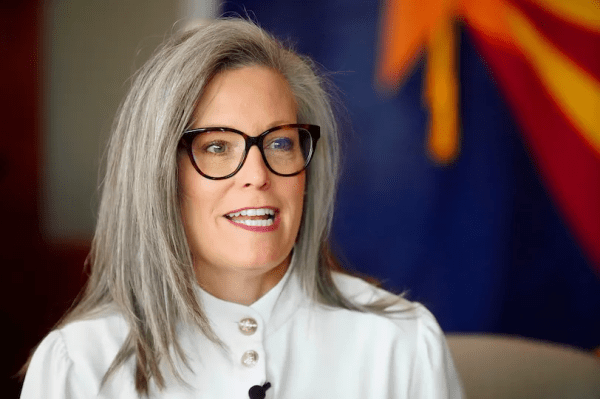
Earlier this year, Arizona Republicans tried to pass legislation to ban gender marker changes on trans people’s birth certificates entirely. While that bill passed both the state’s House and Senate, it was vetoed by Democratic Gov. Katie Hobbs.

The governor upheld her promise to veto any anti-trans bills that made it to her desk, saying the legislature should “focus on real issues that matter and impact people’s everyday lives.”

If the Arizona ruling withstands an appeal, it’ll leave only 10 states that require proof of surgery for trans people to correct their birth certificate gender markers. However, several states still refuse to allow trans people to update their gender markers in any way.

The requirement for trans people to receive surgery to update their gender markers is discriminatory, can force people to have surgeries they don’t want, and can cause particular issues for minors who cannot access gender-affirming care.

As Soto noted in his 2024 ruling, “Not every transgender person needs surgery to complete a gender transition. Starting social transitioning and other recommended therapy may eliminate the need for any potential surgical intervention.”

These requirements can mean that minors, regardless of whether they wish to pursue gender-affirming surgeries later in life, are stuck for many years with documentation that includes an incorrect marker. That can lead to situations where a trans person is forced to out themselves, which — aside from being mentally damaging — can also put them at risk for physical harm, given the current climate towards trans people.

In a statement, NCLR noted, “For young people, their birth certificate impacts everything from school records to camp registration. ”

Finally, in most cases the surgeries required for a trans person to update their birth certificate in these states result in sterilization. That forces them to either give up on having biological kids one day, go through expensive processes to preserve their sperm or eggs, or requires them to put off updating their documents until after having children.

LGBTQ advocates warn of FBI plan to label trans people as ‘violent extremists’

Read more at the Washington Blade.

The nation’s leading LGBTQ advocacy groups are sounding the alarm over reports that the FBI may soon classify transgender people as a threat group — a move advocates say would be unconstitutional, dangerous, and rooted in political retribution.

At a joint press briefing held over Zoom last week, the heads of the Human Rights Campaign, Transgender Law Center, Equality Federation, GLAAD, PFLAG, and the Southern Poverty Law Center condemned the possibility that the FBI, in coordination with the Heritage Foundation, is working to designate transgender people as “violent extremists.”

The warning comes after a story earlier this month by independent journalist Ken Klippenstein, who reported that two anonymous national security officials said the FBI is considering treating trans subjects as a subset of its new threat category. That classification — originally created under the Biden administration as “Anti-Authority and Anti-Government Violent Extremists” (AGAAVE) — was first applied to Jan. 6 rioters and other right-wing extremists.

After pardoning all of the Jan. 6 insurrectionists, the Trump administration shifted the FBI’s terminology, replacing AGAAVE with “Nihilistic Violent Extremists (NVEs),” or, in some cases, “Transgender Ideology-Inspired Violent Extremism (TIVE).” The possibility of such a label follows several high-profile media errors in which reporters incorrectly linked Charlie Kirk’s shooter to the transgender community, fueling anti-trans rhetoric on the far-right.

For more than an hour last Wednesday, LGBTQ leaders denounced the reported FBI proposal and warned of the consequences of targeting one of the country’s most vulnerable communities. They emphasized that such a move would represent a violation of basic human rights, further fuel misinformation, and give legitimacy to political attacks already directed at transgender people.

Kelley Robinson, president of the Human Rights Campaign, warned of the broader danger for the LGBTQ community if this happens.

“Americans can no longer count on the right to life, liberty, and the pursuit of happiness, not when political violence runs rampant, not when political retribution goes unchecked, not when hate is being incited by our president.”

Robinson argued that claims of “Transgender Ideology-Inspired Violent Extremism” are not rooted in reality. For example, Gun Violence Archive Executive Director Mark Bryant has said that out of 5,000 mass shootings tracked by the archive, the number of trans or LGBTQ+ suspects is in “the single digit numbers.”

“Trans Americans are more likely to be the victim of a violent crime than a perpetrator of one… violence committed by trans Americans is a lie, a lie that only begets more violence.”

Shelby Chestnut of the Transgender Law Center warned that the federal government’s posture would escalate attacks on the community.

“Bullying communities and manufacturing chaos will never erase the truth that we are far more connected than divided,” Chestnut said. “In the coming days and weeks, you will see increased targeting of our organizations and our communities and mis and disinformation being weaponized at the highest level of government.”

Fran Hutchins of the Equality Federation described the move as a direct assault on trans people, echoing Chestnut’s points — but made it clear that this will not stop organizations supporting transgender people from continuing their work.

“This is a campaign that weaponizes fear and misinformation to isolate and harm our communities,” she said. “Let’s call it what it is. It’s political violence… We will not be erased.”

Sarah Kate Ellis, president of GLAAD, the LGBTQ media watchdog organization, urged the press not to fall into false equivalencies, reminding reporters that transgender people face the highest risk of violence, contrary to the narratives pushed by some MAGA Republicans.

“Trans people exist. They always existed, and they will continue to exist,” she said. “The truth is the real trans terrorism… is the terror experienced by trans people in this country.”

Ellis also emphasized that this is an issue of civil and human rights, not something abstract — with real consequences.

“Do not treat civil rights as a both sides issue.”

Brian Bond of PFLAG (Parents, Families, and Friends of Lesbians and Gays) framed the FBI’s proposal as a betrayal of American values, calling it “un-American” and “despicable,” while warning that even if it doesn’t immediately affect everyone, it represents a slippery slope.

“Every child in their family, every family member, every neighbor, transgender or not, is affected.”

He added: “PFLAG parents… will not back down.”

Beth Littrell of the Southern Poverty Law Center underscored the constitutional implications of these potential actions, their consequences for other marginalized groups, and the role of the media in calling out the Trump administration’s tactics.

“The real threat is when the government targets a group of people and those who support them for unequal treatment based only on who they are or what they believe,” Littrell said. “It should go without saying, but I say it anyway, transgender children do not threaten anyone’s ability to safely live and thrive in our nation or anywhere else.”

“What is being reported is unconstitutional. What is happening is dangerous,” she added. “We have seen this playbook before… We fought alongside the communities then, we will continue to do so now.”

Advocates closed the call with a unified demand: that political leaders, the media, and the public reject any attempt to label transgender people as extremists and instead hold accountable those responsible for spreading violence and misinformation.

Slovakia Enshrines Only Two Sexes in Constitution, Restricting Adoption and Surrogacy for LGBTQ People

Read more at Gayety.

Slovakia’s parliament, has approved a sweeping constitutional amendment that legally recognizes only two sexes—male and female, and imposes new limits on adoption and surrogacy, sparking alarm from human rights groups and LGBTQ+ advocates.

The amendment, passed in a narrow 90‑vote majority in the 150‑seat National Council, also restricts adoption to married heterosexual couples and bans surrogate pregnancies. It was framed by Prime Minister Robert Fico’s government as a defense of “sovereignty in cultural and ethical matters” and traditional values. Fico heralded the vote as “a great dam against progressivism.”

The constitutional change marks one of the most significant curbs yet on LGBTQ+ and reproductive rights in the country, critics say, aligning Slovakia more closely with Hungary’s conservative trajectory, and raising concerns about violations of international commitments and human rights.

What the Law Does

  • Defining Sex and Gender: The amendment states explicitly that only two sexes—male and female—are recognized under Slovak law. Legal definitions of gender identity beyond that framework are excluded.
  • Adoption Restrictions: Only married heterosexual couples will now be able to adopt children. Same‑sex couples are excluded from adoption rights under the new wording.
  • Ban on Surrogacy: The law prohibits surrogate pregnancies.
  • Assertion of “National Identity”: The amendment declares that Slovakia retains sovereignty over issues of national identity, culture, and state ethics, even potentially above European Union law in certain areas.

Passage and Political Dynamics

The vote was precariously close. Fico’s coalition controls fewer than the 90 votes required for constitutional amendments, but 12 opposition lawmakers from conservative parties defected last minute, providing the margin required for passage.

Some opposition figures expressed outrage, describing defectors as traitors, alleging the vote was a political maneuver to distract from declining public approval and other unpopular measures.

President Peter Pellegrini said he would sign the amendment into law, framing the constitutional majority as a signal of political consensus in deeply polarized times.

Responses and Broader Implications

Human rights organizations were quick to condemn the change. Critics warn it will lengthen the legal limbo for trans, non‑binary, and intersex people, reduce access to gender recognition, and further institutionalize discrimination.

There are also worries it will lead to clashes with EU law, which guarantees certain protections for minority and LGBTQ+ populations. Legal scholars suggest the amendments may violate international treaties and could become the subject of legal challenges.

For Slovak LGBTQ+ individuals, the change is deeply personal. It removes recognition for anyone who doesn’t fit neatly into “male” or “female,” and restricts family formation for non‑heterosexual parents.

Blog at WordPress.com.

Up ↑