Trans inmates win right to gender-affirming care as judge calls it “a serious medical need”

Read more at LGBTQ Nation.

A federal judge has blocked a gender-affirming care ban for trans inmates in Georgia that has been in effect for several months. Judge Victoria Calvert agreed with the plaintiffs that the blanket ban violated the Eighth Amendment, which bars cruel and unusual punishment.

“The Court finds that there is no genuine dispute of fact that gender dysphoria is a serious medical need,” Judge Calvert wrote in her opinion. “Plaintiffs, through their experts, have presented evidence that a blanket ban on hormone therapy constitutes grossly inadequate care for gender dysphoria and risks imminent injury.”

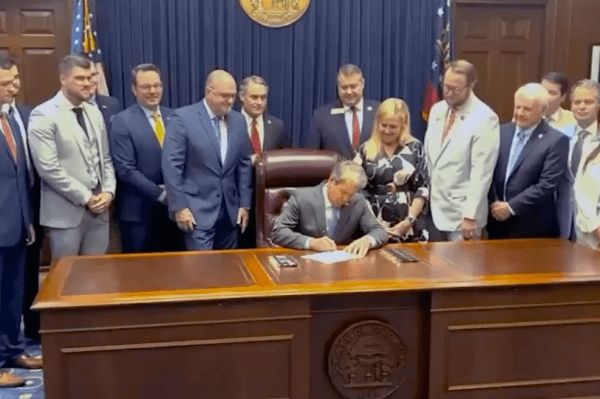
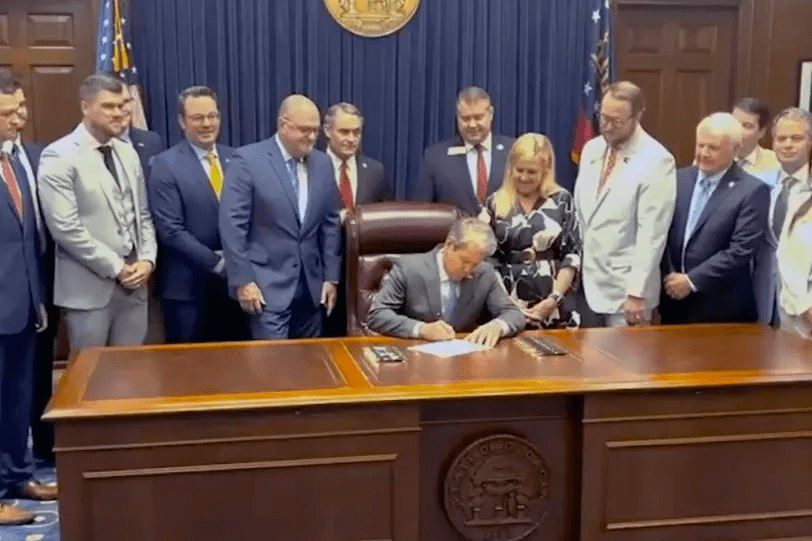
Georgia Senate Bill 185 was signed into law in May by Governor Brian Kemp (R). The bill prohibited state funds and resources from being used to provide gender-affirming care to inmates in Georgia prisons. That included hormone replacement therapy (HRT), as well as “sex reassignment surgeries or any other surgical procedures that are performed for the purpose of altering primary or secondary sexual characteristics,” and even “cosmetic procedures or prosthetics intended to alter the appearance of primary or secondary sexual characteristics.”

The bill took effect in July, and five plaintiffs filed a lawsuit against it in August. In addition to arguing that SB 185 constituted cruel and unusual punishment, the lawsuit also claimed that it violated the Equal Protection Clause. HRT and other gender-affirming care treatments were not banned under the bill for all inmates, only for those who were trans. The bill also prohibited trans inmates from paying for the care themselves while incarcerated.

“We would never allow a state to decide that people in prison with diabetes should be cut off of insulin just because the state didn’t want to pay for it anymore,” said Celine Zhu, a Staff Attorney for the Center for Constitutional Rights, which is representing the plaintiffs. “So why would we allow Georgia to cut off medically required care for people with a similarly serious diagnosis of gender dysphoria?”

SB 185 was a blanket ban that overruled the opinions of judges, doctors, and the Georgia Department of Corrections, all of whom have previously acknowledged that gender-affirming care is medically necessary for incarcerated trans people.

While the judge’s ruling makes it clear that not every inmate is entitled to gender-affirming care, it puts those decisions back in the hands of medical professionals and the patients rather than having the legislature make medical decisions for trans people.

“The Court requires healthcare decisions for prisoners to be made dispassionately, by physicians, based on individual determinations of medical need, and for reasons beyond the fact that the prisoners are prisoners,” the judge said in her ruling.

Current estimates suggest that there are around 300 out trans people incarcerated in Georgia state prisons.

After the ruling, the Department of Corrections filed a notice of appeal with the 11th Circuit Court of Appeals.

This sort of case has been litigated for over twenty years now. In 2005, Wisconsin introduced a ban on doctors providing trans inmates with gender-affirming care, affecting inmates who had been on hormones since the early 90s. The law was overturned by the 7th Circuit Court of Appeals, and the Supreme Court declined to hear the state’s appeal in 2011.

The decision in the Georgia case comes as the Department of Justice has instructed inspectors to stop reviewing prison standards aimed at preventing sexual assault against transgender, intersex, and gender-nonconforming people.
Creator of the trans flag is fleeing U.S. due to LGBTQ+ persecution

Read more at The Advocate.

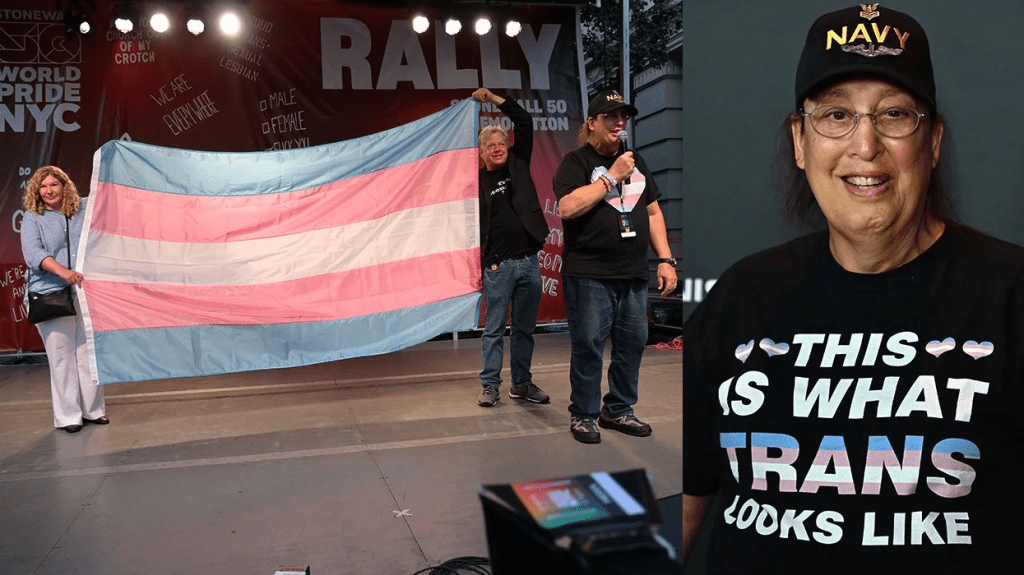
Monica Helms, the Navy veteran and creator of the original transgender pride flag, is fleeing the country due to anti-LGBTQ persecution.

She and her wife, Darlene Wagner, launched a GoFundMe earlier this year to facilitate their move abroad.

“We are worried there’s a possibility something could happen where we end up getting arrested just for being who we are,” Helms said in an interview with the Bay Area Reporter when the fundraiser first kicked off.

The couple currently lives in Georgia, which Erin in the Morning’s newest risk assessment map labeled as a “high risk” area for transgender people. Helms is by no means the only transgender refugee fleeing the United States. In May, a Williams Institute poll found that nearly half of all trans adult respondents had considered moving out of state or out of the country.

Since 2023, almost three dozen anti-trans bills have been introduced in Georgia, four of which have passed, according to the Trans Legislation Tracker. There was a ban on trans girls playing on scholastic women’s sports teams, a ban on using state funds to provide transition-related health care to incarcerated people, a ban on providing evidence-based medical treatment for minors with gender dysphoria, and the Georgia Religious Freedom Restoration Act—which does not explicitly target trans people, but is likely to make it easier to discriminate against them using religion as a legal defense. (Thankfully, there have been some successful and ongoing legal challenges to many of these policies.)

However, “even blue states are starting to see problems,” Helms told the Bay Area Reporter. California’s governor reportedly moved to kill pro-LGBTQ bills behind the scenes; New Jersey school boards have engaged in a coordinated effort to forcibly out trans students to hostile parents; and hospitals located within Democratic strongholds across the country are violating state equal protections laws to deny trans kids access to health care, capitulating to Trumpian threats.

NBC’s Jo Yurcaba profiled families of trans kids moving to places like Australia and New Zealand. Hannah Kreager, a 22-year-old trans woman from Arizona, filed a groundbreaking asylum claim in Canada earlier this year; if granted, it would mark the first time a trans person from the United States would be given asylum in another country due to their LGBT status.

Of course, all of these stories come with the presumption of privilege. Trans people in these scenarios may have had familial support and/or a source of income or wealth that enabled them to uproot their lives to a safer place. Others resort to bouncing from state to state to receive care, uprooting their lives to live in a more tolerant community or traveling across state or international lines periodically to access health care.

As for Helms, she vowed to continue to fight for trans people no matter where she lives. “We will not abandon our activism,” she wrote in her GoFundMe.

Helms designed the transgender pride flag after having a conversation with the creator of the bisexual pride flag in 1999, she told the Bay Area Reporter. She has said it is important to her that it remains open and free to use for the public. The pink, white, and blue flag has become a household symbol for trans people and their loved ones.

“No matter how you fly it, it’s always correct, which signifies finding correctness in our own lives,” Helms said.

Christian extremists in Georgia get librarian fired for displaying book about transgender child

*This is reported by LGBTQ Nation

Lavonnia Moore, a 45-year-old library manager, had worked at the Pierce County Library in Blackshear, Georgia, for 15 years. She was ultimately let go when a Christian extremist group filed a complaint to the library after Moore approved the display of a children’s book about a transgender boy.

According to Moore, the display (entitled “Color Our World”) included the book When Aidan Became a Brother (by trans male author Kyle Lukoff), a story about a family accepting a trans child named Aiden while also preparing for the birth of Aiden’s sibling. Library volunteers created the display as a part of a regional-wide summer theme featuring books that celebrate diversity.

“I simply supported community involvement, just as I have for other volunteer-led displays. That’s what librarians do — we create space for everybody… I did not tell the parents and children what they could or could not add to the display, just as I do not tell them what they can or cannot read,” she wrote in a statement.

However, the book caught the attention of a group calling themselves the Alliance for Faith and Family (AFF), not to be confused with the anti-LGBTQ+ legal group Alliance Defending Freedom. The AFF had previously been in the public eye for demanding the removal of a mural in the Waycross-Ware County Public Library, which included a Pride theme declaring, “Libraries Are For Everyone.”

The AFF campaigned on Facebook, urging their followers to pray and take a few moments out of their day to email the Three Rivers Library System and Pierce County Commissioners to “put a stop to this and show them the community supports them in taking a stand against promoting transgenderism at our local library,”

In an update post, the group wrote, “The display has been removed, and LaVonnia is no longer the Pierce County Library Manager. Please thank the Pierce County Commissioners and Three Rivers Regional Library System for quickly addressing our concerns.” 

Moore and her sister Alicia confirmed that LaVonnia Moore had been fired. A statement to The Blackshear Times from the Three Rivers Library System Director Jeremy Snell explained that the library board leadership decided to move to new leadership for the Pierce County Library. He specifically cited the display of an “inappropriate” book as his reasoning.

“The library holds transparency and community trust in the highest regard,” Snell said.

“Instead of investigating, talking to me or my team, or exploring any kind of fair process, they used the ‘at-will’ clause in my contract to terminate me on the spot. No warning. No meeting. No due diligence. Just the words ‘poor decision making’ on a piece of paper after 15 years of service,” Moore claimed.

“I am just heartbroken,” she said of her dismissal.

According to Moore’s sister Alicia, “She messaged the family group and said ‘I was just fired.’”

“I don’t think she’s doing emotionally good, because imagine having to pack up 15 years in two days,” Alicia Moore told First Coast News.

“She’s heartbroken that a place she gave so much of herself to turned its back on her so quickly. And yes, she’s still in disbelief. She didn’t expect to be punished for doing her job with integrity and love for all patrons — especially children.” the sister explained.

The sisters are currently seeking legal counsel, and Alicia is urging people to reach out to the library board and county commissioners.

“I’m hoping the same method will be useful to get her justice,” Alicia said.

Police officers forcibly remove mom of trans kid from meeting for saying just one word

*This is being reported by LGBTQNation.

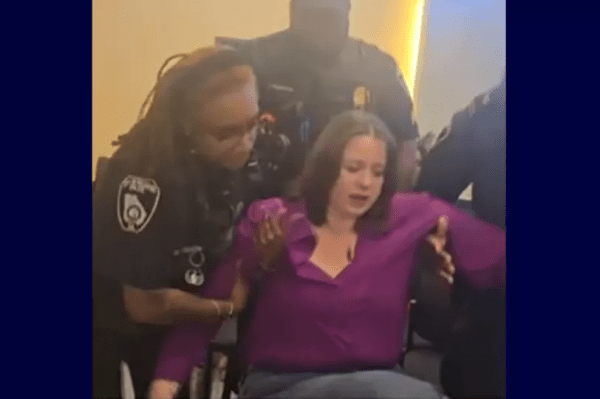
The mother of a transgender child who tried to speak out against proposed changes to her school district’s diversity, equity, and inclusion (DEI) policies was forcibly removed by four police officers when she said one word at a meeting of the City Schools of Decatur Board of Education on Tuesday evening.

That word was “cowards.”

“I’m practicing my rights as a parent. I’m in no way resisting,” she said as she was carried out. “I’m not resisting, and this is what fascists do!”

Kotler went to the emergency board meeting to speak against changes to the district’s DEI policy, which used to require that “all learning environments… be inclusive, safe, secure, and supportive while also ensuring that no student group is marginalized.” This policy, as well as four others, was changed to remove words like “equity” and “Americans with Disabilities Act.” Two of the policies were rescinded completely.

The district’s DEI policy now states that it is “designed to achieve fair and just access to opportunity and resources that provide all humans the ability to thrive.”

Kotler, who is the mother of three children, including one transgender daughter and one nonbinary child, went to the meeting and shouted “Cowards!” at the board. Advocate reports that Board Chair Carmen Sulton asked her to leave.

“I said one word, I have already stated I have no intention of speaking again until public comment,” she responded. “I’m going to sit here. I have offered that if it makes the board feel comfortable, you, as a security employee, are welcome to sit next to me. If I speak again outside of public comment, I will leave. I have the right to be here, I have not used harsh language or threats.”

Police then approached her, but she didn’t get up. So they lifted her out of her seat and dragged her away, dropping her off on the stairs in front of the building.

“I’m practicing my rights as a parent. I’m in no way resisting,” she said as she was dragged off. “I’m not resisting and this is what fascists do!”

“It’s beyond evil that anyone is threatening these programs,” she later told Atlanta News First. “Our children spend a huge chunk of their lives at school. Their own sense of self and self-worth is developed at school. If we stop policies and programs that make those spaces inclusive and safe for everyone, we know what happens.”

“There are marginalized children and economically disadvantaged children in our district who rely on these programs.”

Decatur’s is one of many school districts across the country rewording their DEI policies in light of the new presidential administration’s antipathy towards promoting equal rights for minority students, particularly those who are transgender and nonbinary.

GOP governor signs bill that could legalize LGBTQ+ discrimination

*This is being reported by LGBTQNation.

Nine years after similar legislation ignited a firestorm of protest from business and civic leaders in Georgia, state Gov. Brian Kemp (R) recently signed a new bill aimed at protecting “religious freedom.”

Modeled on the federal Religious Freedom Restoration Act (RFRA) of 1993, the bill’s sponsors say it will prevent government agents from impeding individuals’ religious rights and enforcing laws that conflict with religious expression. The Republican-led state House approved the bill in a 96-70 vote.

In previous years, state legislators failed to pass a so-called RFRA amid fierce opposition. Like those versions, the current bill is framed as an expansion and protection of religious rights.

Critics say just like earlier versions, the new bill will be used to deny the civil rights of LGBTQ+ people and other minorities. They also worry the RFRA will be cited as a basis for passing anti-LGBTQ+ laws, further restricting reproductive rights, allowing business owners to discriminate at their own discretion, and controlling educational materials in schools.

Opponents of the RFRA include state House Rep. Ruwa Romman (D), who believes that without an underlying civil rights law explicitly prohibiting discrimination, the bill will give people a license to discriminate against people or lifestyles they don’t like. Georgia doesn’t have comprehensive state civil rights protections.

“Because at the end of the day, those who will bear the brunt of this are not those in the majority. It’ll be us, people in the religious minority,” said Romman, who spoke of her own Christian faith while denouncing the bill.

Gov. Kemp disagreed with Romman’s take, telling reporters, “I don’t buy that. I don’t think we’ve seen that in other states, and I think our record speaks for ourselves here in Georgia.”

Georgia still remains a state where there is no place for hate, and I can assure all Georgians of that today,” he said at the RFRA’s Friday signing ceremony. At least 29 states have similar “religious freedom” laws.

The bill recalls highly contested legislation that former Gov. Nathan Deal (R) vetoed in 2016 amid widespread protests and concerns from Georgia’s business community that it would hurt their ability to attract employees and tourists. The Metro Atlanta Chamber once again expressed opposition to the new religious freedom legislation.

The bill’s sponsor Sen. Ed Setzler (R) said the new bill, designed in part by Gov. Kemp’s staff, is less extreme than the 2016 version.

Pro-business lawmakers took pains to distinguish this year’s bill from previous efforts, saying the new law would not override local civil rights protections in place in several Georgia municipalities.

“Every Georgian should be free to exercise their faith without unfair federal, state and local government intrusion,” Setzler said at a news conference last week. He said the bill “protects ordinary people from unfair state and local government intrusion.”

“This is not a license of private citizens to discriminate against private citizens,” said Republican Rep. Tyler Paul Smith, who presented the bill in the House. “This prohibits the government from burning religious exercise in our state.”

Republican state Rep. Deborah Silcox failed in her effort to add an anti-discrimination clause to the bill before it passed the House on Wednesday. She was one of two House Republicans to vote against it.   

Examples of “unfair state and local government intrusion” were absent, however, in testimony about the legislation.

Pressed during a House Judiciary committee meeting, Setzler couldn’t name a case where someone’s religious liberties were violated in a way that would require the bill’s protections.

“We are swatting at imaginary flies, and I’m sick of it,” Atlanta state Rep. Stacey Evans (D) said last Wednesday after the state House vote approving the bill.

Ts Madison’s ‘Starter House’ opens its doors to trans women in Atlanta

*This is being reported by Out.com

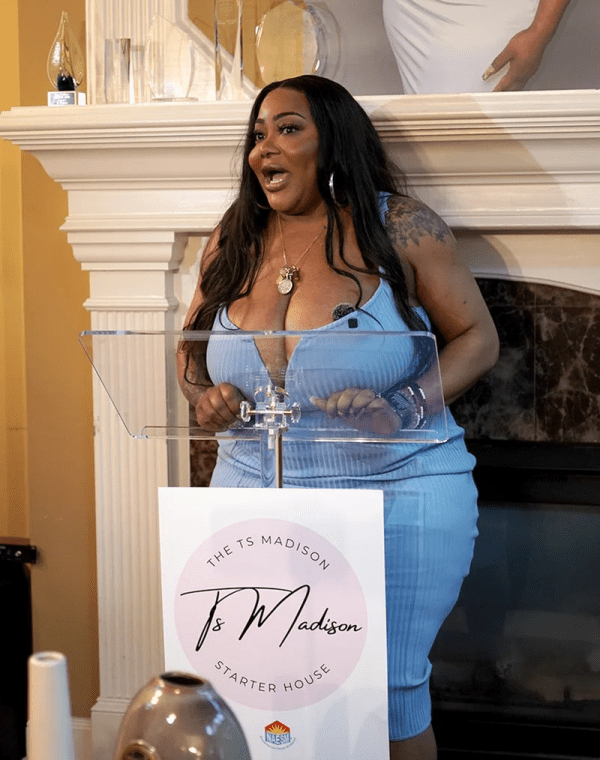
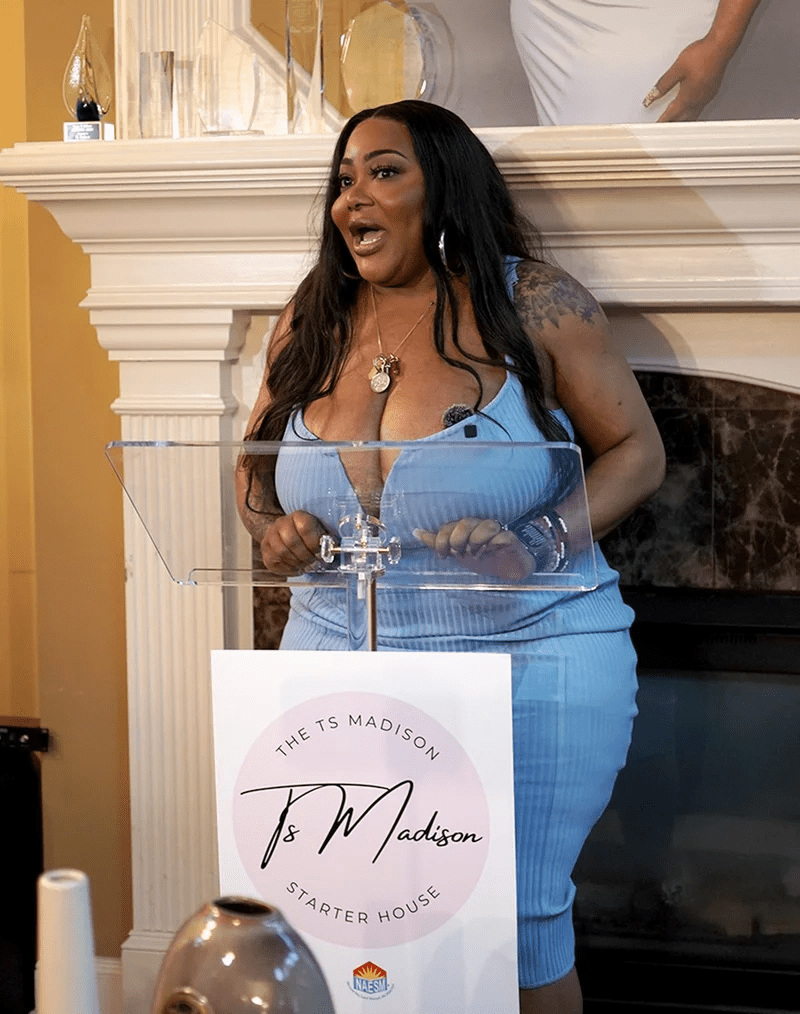
Trans icon Ts Madison has now opened a groundbreaking new initiative — dubbed as a “Starter House” — for trans women in Atlanta, GA, coinciding with 16th annual Transgender Day of Visibility. The trans advocate has partnered with NAESM, a historic Black HIV/AIDS organization, to launch a groundbreaking housing initiative aimed at supporting Black trans women engaged in sex work.

Located in Ts Madison’s former residence, the facility offers Black trans individuals access to safe housing, gender-affirming healthcare, economic opportunities, and holistic support.

The grand opening stirred deep emotions for the RuPaul’s Drag Race judge. “This morning I was having withdrawals because this is a big thing. Like, this is my house. I’m like, I’m giving my house to the community. That means people are going to be transitioning in and out and in and out of this house. I built a legacy here, but I’m still attached to this house. These are girls that are disenfranchised. These are girls that are homeless. These are girls that are trying to find another way in their life.”

The Ts Madison Starter House is part of A New Way of Life’s SAFE Housing Network, a global coalition of over 30 organizations focused on providing reentry support for women who have been incarcerated. Founded in 1998, the SAFE Housing Network aims to reduce incarceration rates in the U.S. by offering safe housing, assisting individuals in healing from the trauma of their experiences, and empowering them to take a leadership role in the movement to end mass incarceration.

Dominique Morgan, the Executive Director of the project, emphasized the importance of community support. “I think so many of us feel the fear of what’s happening in this climate, and so many folks feel like, oh my goodness, are we going to make it. And what today really symbolizes for me is that we have answers happening all over the place, and that we have the power to decide how we show up for each other.”

This facility will serve as a vital stepping stone for women, providing safe, affirming housing that prioritizes dignity and stability. To learn more and/or make a donation to the project, visit the official page for the Ts Madison Starter house.

Not just Florida. More than a dozen states propose so-called ‘Don’t Say Gay’ bills – NPR

This blog originally appeared at NPR News.

Florida first. Alabama follows. Legislators in Louisiana and Ohio are currently debating legislation that is similar to the Florida statute. A similar bill will be his top priority during the following session, according to Texas Governor Greg Abbott.

At least a dozen states across the country are proposing new legislation that, in some ways, will resemble Florida’s recent contentious bill, which some opponents have dubbed “Don’t Say Gay.”

Read Full Article – https://www.npr.org/2022/04/10/1091543359/15-states-dont-say-gay-anti-transgender-bills


If you’re ready to look for a better state or county for you and your family (or family of choice), reach out to us at www.FleeRedStates.com

Blog at WordPress.com.

Up ↑