Germany sees anti-Pride events and restricts rainbow flags ahead of LGBTQ+ parties

Read more at NPR.

The tree-lined neighborhood near Nollendorfplatz square in central Berlin is as gay today as it was a century ago.

It’s where Christopher Isherwood wrote novels chronicling the rise of the Nazis amid the city’s rich queer nightlife that inspired the musical Cabaret.

Every summer, the neighborhood throws its own smaller-scale LGBTQ+ Pride event separate from the city’s main annual parade taking place this weekend.

It’s just one of more than 200 Pride events taking place in Germany this year. But with far-right extremist groups staging anti-Pride protests, many Pride attendees fear for their safety.

Sipping on a cocktail as the street party gets underway, 62-year-old Georg Schmidt says he’s relieved that this event is a relaxed affair. He says he attended a different local pride parade last month across town in the district of Marzahn and the mood there was tense.

“There was a massive police presence to shield us from anti-Pride protests. We only felt safe because the police kept us apart,” Schmidt says.

The counter demonstration was organized by far-right groups designated by Germany’s domestic intelligence agency as violent and extremist. It’s one of 17 extreme-right anti-Pride demonstrations that have taken place so far this year, according to the Center for Monitoring, Analysis and Strategy — an organization that monitors extremism. Some cities have even canceled pride because of threats.

Sabine Volk, a researcher at the Institute for Research on Far Right Extremism at the University of Tübingen, says these groups attract young men who promote what they call traditional family values — a kind of pride that has little to do with rainbow flags.

“The key slogan is that the German flag and Germany itself is already colorful enough,” Volk says. “And the overall message is that queer life does not have a place in Germany.”

But it’s not just far-right extremists who are exacting about flags.

The new president of the German parliament, Julia Klöckner — who is a member of Chancellor Friedrich Merz’s conservative party — says the rainbow flag will no longer be raised on top of the legislature building during Pride month, which runs every year in Germany from June 28 until July 27. She has also prohibited parliamentary public servants from attending Pride in an official capacity and lawmakers have been asked to take down rainbow flags and stickers from office doors.

Speaking on public broadcaster ARD, Merz signaled his support for the rule at Germany’s parliament, the Bundestag, with the words, “the Bundestag is not a circus tent” — a remark to which many have taken umbrage.

Merz backs his colleague’s argument that the lower house must maintain neutrality and cannot support events with a political agenda.

Opposition Green Party lawmaker Nyke Slawik criticized the move. “Declaring the rainbow a political symbol is highly problematic” stressing that “queer people are not an ideology; they are people!” Slawik told public broadcaster ZDF.

Slawik argues they are people increasingly in need of protection. Germany’s federal police report an almost tenfold increase in reported queerphobic hate crimes since 2010 and they believe the majority of cases go unreported.

The issue is not divided by party political lines; criticism of Merz’s choice of words has come from within his own party. Sönke Siegmann, the chair of the Christian Democrats’ LGBTQ+ Association, says some within his party are still catching up on terminology.

“If you say queer in my party, most people take a deep breath and say: ‘Oh, that’s a left-wing term,’ ” Siegmann observes. He says he has spoken with Merz since he made his “circus tent” comments.

“We explained to him what queer really means and two days later when asked in Parliament about LBGTQ+ hate crimes and what his government will do about them, Merz actually used the term queer,” Siegmann says.

Back in the Nollendorfplatz area, rainbow flags fly every month of the year. But local resident Chris Kelly says the mood here is not as “live and let live” as it once was. He recently opened a boutique that sells high-end garments made from industrial strength rubber. He says business is good and he has a broad customer base, but it was almost impossible trying to find premises for the boutique.

“We found plenty of suitable spaces to rent and our finances are solid, but a lot of landlords rejected us, saying they didn’t want people like us,” Kelly remembers. “Real estate agents had warned us, but I was flabbergasted to encounter such prejudice in Berlin’s queerest, gayest neighborhood.”

Kelly’s store is located just down the street from Romeo and Romeo, a gay bar whose owner was attacked last month. Kelly says he too gets more verbal abuse than he used to and he hears again and again of attacks on members of the LGBTQ+ community.

“I’m almost 40 and have seen so much progress like equal marriage,” Kelly says. “But something is changing. Hatred towards people like me is becoming mainstream again.”

Kelly points out that a few doors down in the other direction is where the legendary nightclub Eldorado stood until the Nazis closed it down in 1933, eventually sending its queer clientele to concentration camps.

As preparations for Berlin’s main Pride parade get underway, the city police say they’ve received a permit request for a counterdemonstration protesting “against Pride terror and identity disorders.”

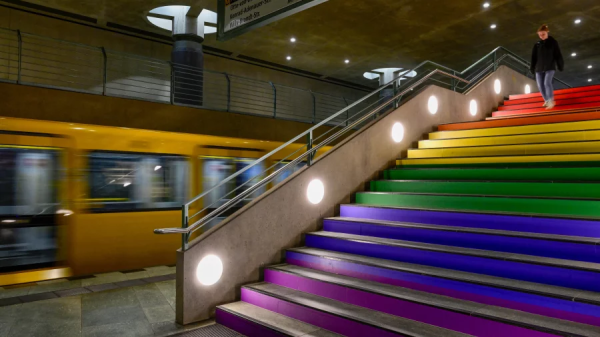
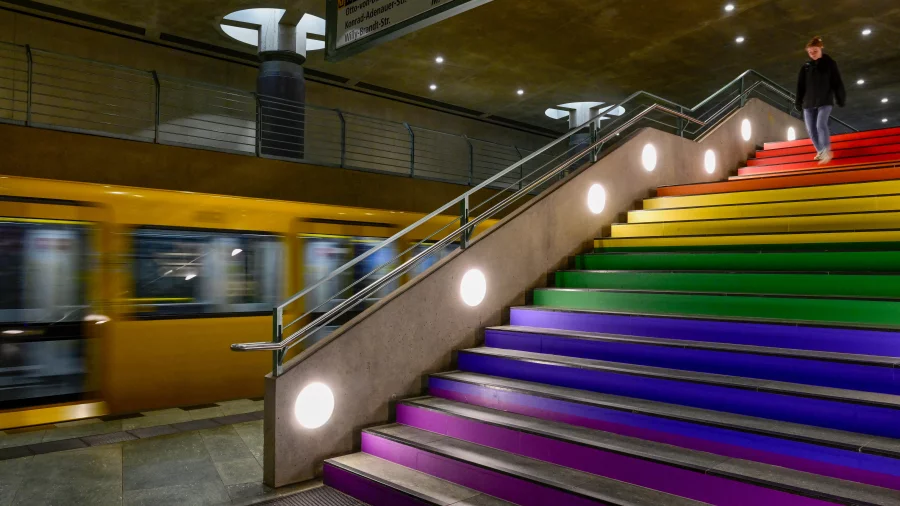
In reaction to the Bundestag president’s decision not to fly the rainbow flag on top of parliament this year, Berlin’s transport authority has decorated its Bundestag subway station stop in rainbow colors, writing on Instagram: “So our Bundestag is ready for Pride.”

Kelly urges people to attend Pride and stand up to a new generation of the far-right. He has no desire to say Goodbye to Berlin and the neighborhood around Nollendorfplatz, as Isherwood was forced to do.
This German town wants to lure new residents with free accommodation

*This is being reported by CNN.


A town in eastern Germany is offering two weeks free accommodation to encourage people to relocate there in a bid to boost its population.

Eisenhüttenstadt, which sits on the border with Poland around 60 miles from the German capital Berlin, is offering a 14-day trial stay for potential new residents, according to a statement from the local council on May 13.

“The project is aimed at anyone interested in moving to Eisenhüttenstadt—such as commuters, those interested in returning to the town, skilled workers, or self-employed individuals seeking a change of scenery,” it said, with applications open until the beginning of July.

Selected participants will live for free in a furnished apartment from September 6-20 as part of an “innovative immigration project” named “Make Plans Now,” said the council.

They “will have the opportunity to get to know the life, work and community of (Eisenhüttenstadt) in a 14-day living trial — for free and in the middle of the town,” reads the statement.

In order to help participants get a feel for the town, the council will lay on a number of activities including a tour, a factory tour and various outings.

The council will also encourage participants to stay permanently, with local businesses offering internships, job shadowing and interview opportunities.

Founded in 1950, Eisenhüttenstadt, which can be translated as Steel Mill Town, was the first fully planned town built under the socialist government of the former East Germany.

Sitting on the banks of the Oder River, socialist planners built the town around a huge steelworks.

Previously known as Stalinstadt, or Stalin Town, after former Soviet leader Joseph Stalin, it was renamed after East and West Germany reunified following the fall of the Berlin Wall in 1989.

Like many towns and cities in the former East Germany, it has seen its population decline since reunification, from a peak of more than 50,000 to the current level of around 24,000, local official Julia Basan told local media outlet RBB24.

The scheme aims to attract more permanent residents, particularly skilled workers, said Basan.

Today, Eisenhüttenstadt is home to the largest integrated steelworks in eastern Germany, which employs 2,500 people, as well as being a hub for metals processing.

Many of the socialist-era buildings are listed as historical monuments and the openness of the town’s layout is striking, attracting visitors interested in architecture.

One recent new arrival said that the architecture was responsible for his decision to move to the town.

It was “a complete coincidence,” the man said in a video posted on the town hall Instagram account.

“We were travelling to Ratzdorf with friends and drove through Karl-Marx-Straße. And I saw these houses, this architecture that completely blew me away and I said to my wife, ‘I’m going to move here,’” he said.

The man later organized a tour of the town with a local historian to learn more.

“After the tour we were so blown away by this architecture, that was actually the trigger,” he said.

Several European allies update travel advisories for LGBTQ travelers entering U.S.

*This is reported by Yahoo News.

Several European countries have updated their travel guidance for citizens visiting the U.S., including recent guidance for transgender and nonbinary travelers.

It’s common for countries to issue travel advisories or warnings for things like crime levels, terrorism threats, current conflicts, health concerns or natural disasters.

The U.S. issues its own travel advisories for Americans traveling abroad, but a number of other countries are doing the same for the U.S. These new advisories come as the Trump administration is tightening U.S. borders, cracking down on undocumented migrants and implementing a new federal policy to recognize male and female, rather than gender identity, as the only legitimate sexes.

Canada, the United Kingdom and Germany have also updated their travel guidance for their citizens planning to travel to the United States after several tourists were detained by U.S. immigration authorities in recent months.

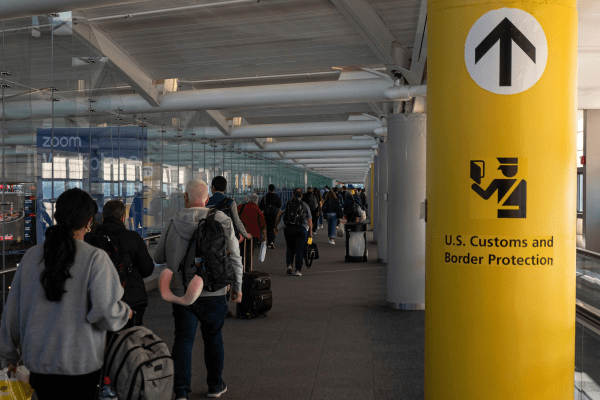
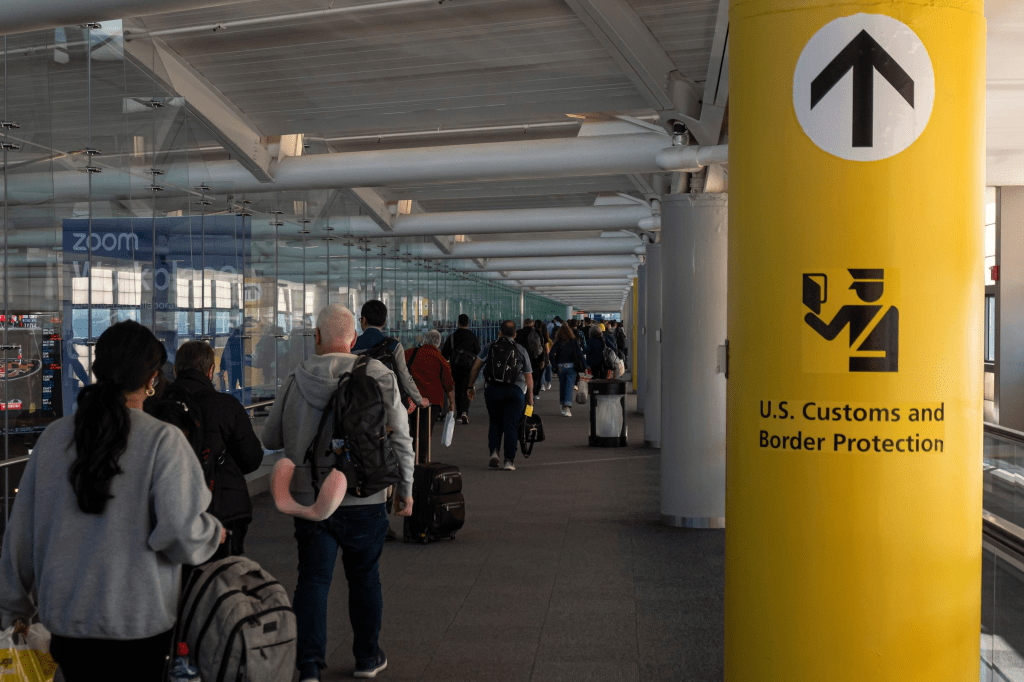
Travelers from many European countries and the U.K. can travel to the U.S. for business or tourism and stay for up to 90 days without a visa under the Department of Homeland Security’s Visa Waiver Program. But several travelers from countries within the program — like Canada, Germany, the U.K. and France — have been stopped and detained by U.S. immigration authorities within recent months.

Here’s what has transpired.

Nations with LGBTQ advisories for the U.S.

President Trump signed an executive order in January that says the federal government only recognizes two biological sexes: male and female. Per that order, a visitor applying for a visa or an Electronic System for Travel Authorization (ESTA) must declare their sex assigned at birth on the application forms.

European allies, including DenmarkFinlandGermanyIrelandthe Netherlands and Portugal, issued guidance that advises transgender and nonbinary travelers to contact the U.S. Embassy in their respective countries for more information on how to proceed if they wish to travel to the U.S.

Nations with other travel advisories for the U.S.

Canada

Recent tensions between the U.S. and Canada have risen over Trump’s trade war, not to mention his musings that he would make the northern ally the U.S.’s 51st state. Canada added new information under its U.S. travel advice page regarding the requirements for foreign nationals visiting for more than 30 days.

“Canadians and other foreign nationals visiting the United States for periods longer than 30 days must be registered with the United States Government. Failure to comply with the registration requirement could result in penalties, fines, and misdemeanor prosecution,” according to the Canadian government’s website.

The rule, enforced starting April 11, comes as part of an executive order signed by Trump, which requires all visitors staying for 30 days or longer to register with the U.S. government.

Germany

Last month, Germany updated its guidelines for its citizens looking to travel to the U.S. The European nation is investigating the cases of three of its citizens being denied entry and placed into detention by U.S. immigration authorities.

“Neither a valid [ESTA] authorization nor a valid U.S. visa constitutes a right to entry into the USA,” according to a translation of the German Foreign Office website. “The final decision regarding entry is made by the U.S. border official. It is recommended that you bring proof of your return journey (e.g., flight booking) upon entry.”

The office also warns of potential legal consequences. “Criminal records in the United States, false information about the purpose of their stay, or even a slight overstay of their visa upon entry or exit can lead to arrest, detention, and deportation.”

Two German nationals were detained in January as they were separately trying to cross the San Ysidro border between San Diego and Tijuana, Mexico, the New York Times reported. They have since returned to Germany with their cases resolved. A third remaining case involves a German national — who is a legal permanent U.S. resident who received a green card residency permit in 2008 — who was detained by ICE at Boston International Airport on March 7. He is now being held at the Wyatt Detention Center in Central Falls, R.I., NBC News reported.

The United Kingdom

The U.K. Foreign Office has updated guidance on its website in recent weeks for its citizens traveling to the U.S. It currently states, “You should comply with all entry, visa and other conditions of entry. The authorities in the U.S. set and enforce entry rules strictly. You may be liable to arrest or detention if you break the rules.”

Archived versions of the same website did not include potential legal consequences at the beginning of February and only stated, “The authorities in the U.S. set and enforce entry rules,” Reuters reported.

The Foreign, Commonwealth and Development Office did not explain the reason for the change.

The update comes around the same time a British tourist said she was held for more than two weeks in Washington state. Becky Burke, a 28-year-old from Wales, was backpacking through North America when she was allegedly denied entry into Canada on Feb. 26 “due to an incorrect visa,” according to a Facebook post by her father, Paul Burke. She was subsequently denied reentry into the U.S. and was detained at a facility in Tacoma, Wash.

Burke had stayed with a host family in Oregon, where she performed chores in exchange for food and lodging. She was told she violated her visa even though she was never paid. Travelers using a temporary visitor visa cannot accept work or employment in the country. Burke was repatriated back to the U.K. on March 18, according to U.S. Immigration and Customs Enforcement.

New Zealand

Last November, New Zealand updated its travel guidelines to the U.S. to “Exercise increased caution in the United States of America (US) due to the threat of terrorism (level 2 of 4).” The nation’s government travel website points to higher active shooter incidents and violent crime in the U.S. compared to New Zealand.

Green card holder from New Hampshire ‘interrogated’ at Logan Airport, detained

*This is being reported by NHPR.

A New Hampshire man with a green card was detained by immigration officers at Logan Airport and is being held by U.S. Immigration and Customs Enforcement at the Donald W. Wyatt detention facility in Central Falls, Rhode Island.

Fabian Schmidt’s family said they are unsure of why he is being held. They said he has a recently renewed green card, and no active issues in court.

Schmidt had been visiting Luxembourg and flew back to the U.S. on Friday. His partner had gone to pick him up at Logan Airport, and waited four hours before calling authorities.

“It was just said that his green card was flagged,” said Astrid Senior, his mother. She said she didn’t hear from her son directly until Tuesday, when she learned he’d been hospitalized.

Senior described Schmidt being “violently interrogated” at Logan Airport for hours, and being stripped naked, put in a cold shower by two officials, and being put back onto a chair.

She said Schmidt told her immigration agents pressured him to give up his green card. She said he was placed on a mat in a bright room with other people at the airport, with little food or water, suffered sleep deprivation, and was denied access to his medication for anxiety and depression.

“He hardly got anything to drink. And then he wasn’t feeling very well and he collapsed,” said Senior.

He was transported by ambulance to Mass General Hospital. He didn’t know it at the time, but he also had influenza.

On Tuesday, Schmidt was transported to the regional headquarters for ICE in Burlington, Massachusetts, and then transferred to the Wyatt facility. The family, including his partner, who is a cardiologist in Nashua, have acquired attorneys and been working with the German consulate in hopes to have him released on bail.

Schmidt and his mother moved to the U.S. in 2007, and received green cards in 2008. He moved from California to New Hampshire in 2022.

Senior described her son as a hardworking electrical engineer with a partner and 8-year-old daughter who are both U.S. citizens.

“Fabian said to me that he feels he’s very fearful and is frightened,” said Senior.

Schmidt had a misdemeanor charge for having marijuana in his car in 2015, which his mother said was dismissed after laws changed in California around marijuana possession. He missed a hearing about the case in 2022 since a notice was never forwarded to his new address. Senior mentioned that Schmidt is successfully recovering from alcoholism, and had a DUI that he’s completely worked through and paid off from around ten years ago.


Can a green card holder be deported?

It’s a complicated question, but some protections exist.

Green cards grant foreign nationals the right to live and work in the U.S. as permanent residents. They’re valid for ten years and have to new renewed.

“Only the immigration judge can take away that green card. The Trump administration thinks that they can expand that and do some crazy things,” said Curtis Morrison, an immigration attorney in California with experience litigating against the Trump administration. “But the law as it is now — he needs to be able to appear before an immigration judge.”

The government has to initiate removal proceedings in immigration court, and an individual has the right to go before a judge to defend themselves and understand the government reasoning for the potential deportation.

“[It’s the] Immigration and Nationality Act — which describes different kinds of conduct or crimes that could trigger somebody with a green card being deported and put into court proceedings to have them deported,” said Gregory Chen, senior director of government relations for the American Immigration Lawyers Association.

The law doesn’t always require convictions for green card holders to be deported.

“There is a long list of behaviors, conduct and also crimes. If somebody’s been convicted of something that could make somebody deportable if they have a green card,” he said.

Chen hadn’t heard of other green card cases like Schmidt’s other than that of Palestinian and Syrian student activist Mahmoud Khalid in New York City, a green card holder who is currently detained due to his protest activity at Columbia University. In that case, attorneys are relying partially on First Amendment right of protest.

“We have seen a disturbing trend from the federal government to target people who have legal immigration status,” said Chen, including not just those who have green cards, but people with visas and varying legal statuses.

“Denying a green card holder admission on such a minor charge would be an extreme case, but it is possible under the law,” said Jaclyn Kelley-Widmer, immigration law professor at Cornell Law School of the pot possession charge and deportation.

The reasons a green card holder can be deported include many kinds of criminal convictions, even if those convictions are from a long time ago and even some very minor convictions. For marijuana convictions, a person is deportable unless the conviction is for possession of 30 grams or less of marijuana for one’s own use, she said. Otherwise, any controlled substances offense makes a green card holder deportable.

Pro-LGBTQ Protests in Berlin Germany

Pro LGBTQ protesters took to the streets of Berlin Germany to march in support of left wing political parties that support LGBTQ rights and safety, ahead of the German Bundestag elections that will be held on February 23, 2025.

The centrist party Central Democrats hold a lead in the polls, however gains have been made by the far right party Alternative for Germany. The ruling central left party Social Democrats have lost 12 points since the last election and are currently polling 3rd.

Blog at WordPress.com.

Up ↑