The Greek Golden Visa offers one of the most accessible residence permit programs in the European Union. Investors gain the opportunity to conduct business abroad, open bank accounts in EU banks, live in Greece, and travel visa-free within the Schengen Area.
An irrefutable reality of being a member of the LGBTQ community, at any age, is that you must give more thought than non-LGBTQ people about where to live. What are the local laws that apply to LGBTQ people regarding workplace and housing discrimination, marriage equality and conversion therapy? What does available public polling reveal about acceptance of the LGBTQ community? Even if you’re not married and don’t plan to be, or even if you no longer work, such laws — or the absence of them — suggest to LGBTQ folks how safe and welcoming the locale will be for them.
The above is true whether you’re LGBTQ and 30 — or a gay retiree. You can’t just spin the globe. If you’re LGBTQ and are considering retiring abroad, it is incumbent on you to do more due diligence than your straight friends and family members would have to do in the same situation.
Best places for LGBTQ people to retire abroad
If you enlist the services of a lawyer who specializes in retirement abroad, you have to ask more questions; you have to spend more late nights googling; and you have to read more articles like this one, in which we examine the knotty issues related to gay retirement outside the U.S., include advice from both experts and expats, and make some (hopefully helpful) recommendations.
If everything falls into place, you can breathe a sigh of relief once you’re in the midst of your retirement abroad. Chris Young and Jon Kinnally, who both worked in the television industry — Young was a writer for Comedy Central, and Kinnally was a writer and producer for the sitcoms Will & Grace and Ugly Betty — lived most recently in Los Angeles before the couple moved to Spain. They chose Sitges, a vibrant, walkable beach town about 45 minutes from Barcelona. “It’s so open. You see gay and lesbian couples holding hands. And you can be old and gay here, which you can’t be in L.A.,” Young says, not entirely joking.
Below, we recommend some beautiful and culturally rich countries where LGBTQ folks can retire happily and safely. But just as the U.S. isn’t uniform in terms of acceptance, neither are most countries. The LGBTQ community scarcely needs to be told that the more populous and diverse the area — in the U.S., that means urban or coastal, or both — the more accepting the area tends to be.
But it’s worth repeating. As the founder and managing director of Mitos Relocation Solutions, Federica Grazi helps expats retire in Greece and other European countries, and she is quick to note that not all of Greece is like the gay magnets of Athens and Mykonos. “I would not recommend that gay couples move to the countryside, where there are traditional communities and not many expats — it would be harder to integrate there,” she counsels, but the same might be said of France, Spain, Italy — or the U.S.
With that in mind, here’s our hot list of retirement places.
Spain
Spain is well-known as one of the most LGBTQ-friendly countries in the world. Spain legalized same-sex marriage in 2005, a full decade before the U.S. Naturally, this factored into Young’s and Kinnally’s decision to move to Sitges, a global destination for gay tourism.
The two appreciate the fact that the resort town, while heavily gay — with a spate of gay bars, nightclubs, and hotels — is demographically diverse. “It’s not a gay ghetto,” Young says. “Sitges is a great mix,” Kinnally adds. “It’s different than a place like Provincetown. There are kids running through the streets, old Spanish ladies, and gay couples — all mixing together. It’s kind of a utopia if you want to retire.”
With health care costing the couple only 250 euros a month and three-course lunches priced from 15 to 17 euros, they can breathe easy about expenses and work on their respective book projects. (Kinnally’s I’m Prancing as Fast as I Can comes out in August.) Of the major cities, Barcelona is a gay mecca, and Madrid boasts Chueca, a festive gay neighborhood.
Greece
While same-sex marriage was only recently legalized in 2024, same-sex sexual activity was decriminalized in Greece in 1951, which compares favorably to the U.S., which granted this right far later — in 2003. Likewise, employment discrimination against gays and lesbians has been illegal in Greece since 2005 (with gender-identity protections following later), while the U.S. did not grant this protection at the federal level until 2020.
Athens boasts a large and thriving LGBTQ community, especially in the Gazi neighborhood, and the Cycladic island of Mykonos is arguably the world’s most popular summer destination for the LGBTQ community, with famous gay beaches like Elia and Super Paradise.
Former New Yorker Daniel Rentillo says that even the small, low-key island of Symi, where he retired, is a comfortable place to be LGBTQ, and he’s noticed more gay couples visiting and even making moves to relocate to the island. The fact that Greece enjoys excellent health care and a relatively low cost of living makes this country of cultural antiquities, plentiful beaches, mild weather, and fresh seafood a fine choice for retirees — LGBTQ or not.
Malta
Not only was employment discrimination against the LGBTQ community banned here, and same-sex sexual activity decriminalized years before the U.S. made these civil rights moves, but the island nation of Malta was also the first European country to ban conversion therapy. Supermajorities of Maltese support civil rights and marriage equality.
With a tiny population of half a million people living on three sunny, inhabited islands (Malta, Gozo, and Camino), the country is located south of Sicily, enjoying a similar Mediterranean climate and stunningly clear waters to swim in, especially at the natural coves at St. Peter’s Pool.
Valetta is the pedestrian-friendly capital and is the best place for gays to hole up, along with nearby Sliema. “Everyone accepts the LGBTQ community today,” says Matthew Cassar, a citizenship advocate and lawyer based in Sliema. “No one would conceive of discrimination,” noting that “there is no opposition party” set on scaling back the community’s rights. One of Cassar’s clients, worried for his transgender daughter’s rights and safety in the U.S. under the Trump administration, is in the middle of the citizenship process.
The country has two official languages: Maltese and English.
Australia
For more than a decade, public polling has shown support for gay rights and marriage quality surpassing the 70% mark. And some advances have been swift and recent: Since 2021, the country has outlawed the so-called gay panic defense, legalized marriage equality, and banned conversion therapy (in regions representing 85% of the population). In 2013, Australia implemented federal protections based on sexual orientation, gender identity, and intersex status.
Though marriage equality did not arrive in Australia until 2018, the capital of Sydney has embraced gay culture for decades: The annual Gay and Lesbian Mardi Gras, one of the world’s biggest LGBTQ celebrations, has been going strong since the 1970s. While Sydney, Adelaide and Brisbane have gay neighborhoods, the LGBTQ presence in Melbourne is more spread out.
Most retirees will find a pathway to relocate through the expensive ($500,000 to $750,000) Investor Retirement Visa. Still, it is cheaper to live in Sydney than in New York or San Francisco.
For those seeking a mild climate, beautiful cities, a friendly populace, excellent health care, and zero language barrier, “Oz” (the affectionate slang for Australia) may be the ticket.
Costa Rica
Costa Rica’s former president, Carlos Alvarado Quesada, was a notable reformer and advocate in the area of LGBTQ rights, garnering global attention when he publicly apologized for the country’s past persecution and discrimination of gays, calling it “shameful.” Same-sex marriage became legal in 2020, which was also the year that hate crimes and blackmail based on sexual orientation were criminalized. (Transgender rights already had been significantly expanded in 2018.)
A center of eco-tourism and sustainable well-being with no standing army, tropical Costa Rica has long been regarded as a kind of peaceable utopia for expats. With the Caribbean Sea on one side and the Pacific on the other, Costa Rica is known for its lush landscape and hot springs.
Gay life is centered in the capital city of San Jose and the carefree beach resort town of Manuel Antonio. Retirees will find the country very affordable, even with household help.
The Netherlands
The first country in the world to legalize same-sex marriage (in 2001) also banned discrimination based on gender identity, gender expression, and sex characteristics in 2019. Not only do most Dutch people support LGBTQ rights; many Dutch, especially those under 40, can’t even comprehend the discrimination faced by the community in other countries.
It would be an understatement to say that you can be comfortably gay in Amsterdam, with Reguliersdwarsstraat the most prominent LGBTQ area. This world-class city is postcard-perfect, teeming with cyclists, and is pedestrian-friendly (just mind the bike lanes). The visa system is straightforward and leads to residency. English is widely spoken, and the cultural opportunities seem endless.
On the downside, the country’s cost of living can feel a little pricey for those living outside major U.S. cities, and the weather in the Netherlands is rainier and chillier than in southern Europe.
Thailand
In 2024, Thailand made headlines when it became the first UN member state to approve a marriage equality law, and the country, with its myriad cultural and recreation opportunities, has long been popular with LGBTQ tourists. Therefore, LGBTQ couples and individuals may want to consider Thailand, but only if they’re of a certain stripe: adventurous and very well-traveled; tolerant of tropical heat; and veterans of previous vacations or work stints in the country.
In an exotic culture so far from friends and loved ones, it’s best to have an expat community already in place if you’re thinking of moving there. In addition, though Thailand offers the LGBTQ community a range of protections and anti-discrimination laws, local attitudes are still evolving, and social interactions should be carefully navigated (cue the established expat scene).
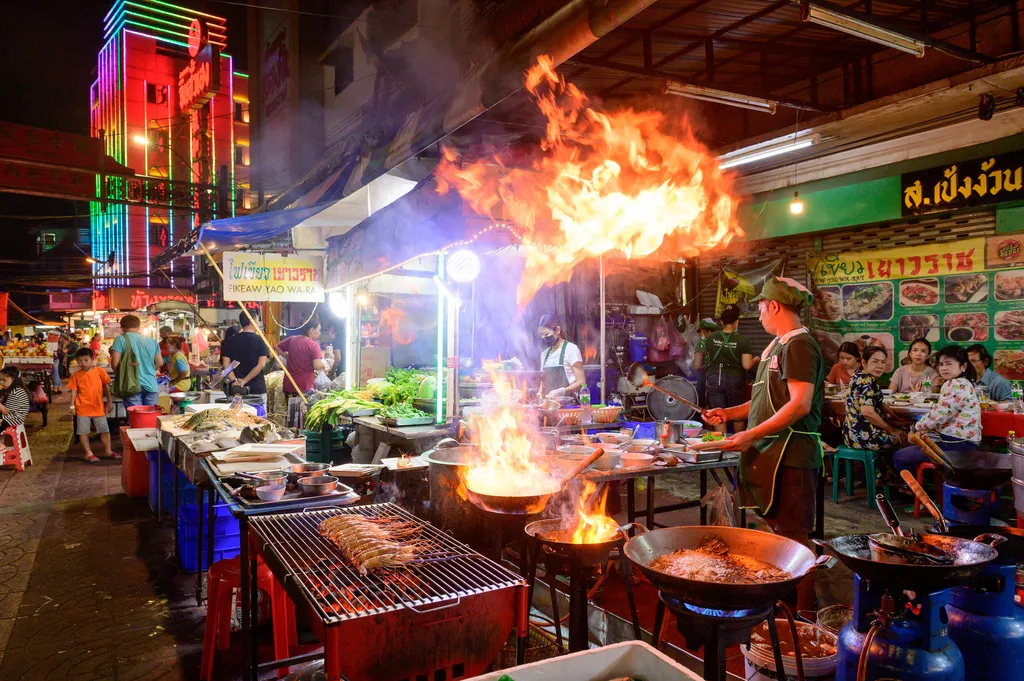
That said, this is a very inexpensive country with kind people. And if you love Thai food, having pad see ew where it was invented will be a revelation. The capital, Bangkok, is a uniquely stimulating place, where a ride on long-tailed boat along the Chao Phraya River may get you to your destination faster than an open tuk-tuk (taxi), given the city’s notoriously heavy traffic.
If you prefer a slower pace and a coastal setting, you can always base yourself in the resort areas of Phuket or Ko Samui, the latter the island where season 3 of The White Lotus was filmed.
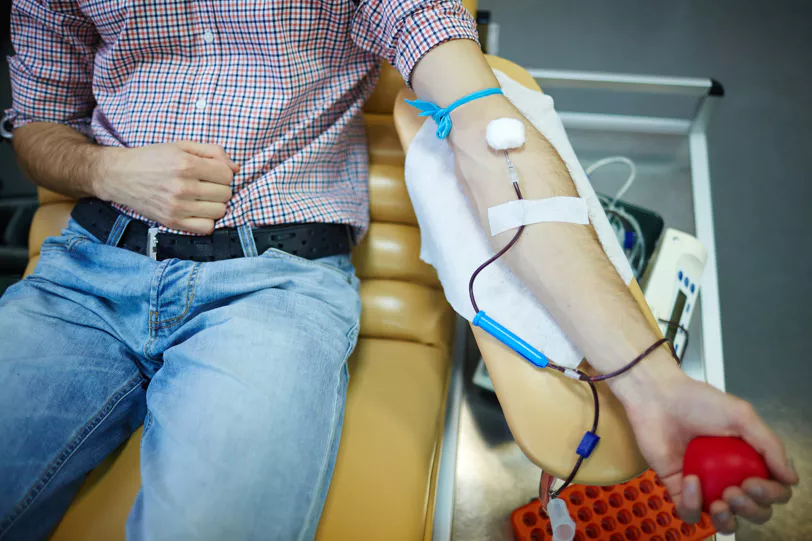
The top administrative court in Greece, the Council of State, has overturned a 2022 decision by the nation’s Health Ministry that lifted the ban on gay men donating blood. As such, the ban – which Greece originally instated during the height of the HIV/AIDS epidemic in the 1980s – has effectively been reinstated.
The court ruled that the ministry did not provide scientific evidence to support its decision and did not follow the recommendations of two health advisory panels that suggested deferral periods for high-risk donors, reported Athens-based publication Kathimerini.
Greece is often considered to be at the forefront of progressive legislation moving LGBTQ+ rights, but lately it seems to be making moves to the contrary. In addition to reinstating the donation ban, the country’s justice minister recently said that proposed changes to Greece’s civil code will clarify that only women will be able to start a family through surrogacy, preventing single straight men, single gay men, and same-sex male couples from benefiting from the procedure.
“We are now clarifying unequivocally that the concept of inability to carry a pregnancy does not refer to an inability arising from one’s gender,” Giorgos Floridis told reporters.
In 2017, the Greek Parliament passed the Legal Gender Recognition Law, which allows transgender people to change their legal gender without needing prior medical interventions or tests.
The United States loosened its own blood donation restrictions in 2023, mostly benefiting monogamous men who aren’t taking any HIV treatment or HIV prevention medications.
The new FDA guidelines focus on specific criteria rather than anyone’s gender or the genders of their partners. They require a three-month pre-donation celibacy period for anyone who has had sex with a new sexual partner, more than one sexual partner, or anal sex, as well as for anyone taking pre-exposure prophylaxis (PrEP) medication. A two-year abstinence period is required for users of injectable PrEP, which can mask the presence of HIV in blood.
The policies are meant to reduce the likelihood of donations by people with new or recent HIV infections, the FDA said. Blood donation organizations test all donated blood for transfusion-transmitted infections, including HIV, hepatitis B, and hepatitis C.
In Greece, a country at the forefront of progressive legislation moving LGBTQ+ rights forward in Europe, the country’s justice minister made a surprising announcement on Tuesday.
Giorgos Floridis said proposed changes to Greece’s civil code will clarify that only women will be able to start a family through surrogacy, disenfranchising single straight men, single gay men and same-sex male couples from benefiting from the procedure.
“We are now clarifying unequivocally that the concept of inability to carry a pregnancy does not refer to an inability arising from one’s gender,” Floridis told reporters. “In other words, a woman may be unable to carry a pregnancy whether she is in a male-female couple, a female same-sex couple or on her own.”
The changes mean gay women — single or couples — will still be able to use surrogacy to start a family, while gay men won’t.
Greece legalized same-sex marriage last year despite fierce opposition from the Orthodox Church, becoming the first Orthodox Christian-majority country to do so.
The marriage equality law will “boldly abolish a serious inequality,” Prime Minister Kyriakos Mitsotakis of the center-right New Democracy party said at the time.
Gay opposition leader Stefanos Kasselakis of the left-leaning Syriza party was instrumental in passing the landmark bill, despite opposing a prohibition on surrogacy for gay couples included in the bill. Current law does grant gay spouses — women and men — the right to adoption.
In 2022, Greece banned conversion therapy, joining a list of 14 other countries that bar the debunked practice. The same year, Greece passed a law banning “sex-normalizing” surgeries for babies born intersex.
In 2017, the Greek Parliament passed the Legal Gender Recognition Law, which allows transgender people to change their legal gender without needing prior medical interventions or tests.
The legal landscape for surrogacy varies widely. Many countries ban it outright while others impose restrictions on its use. Commercial surrogacy is common in the U.S. but barred in other countries, including Spain and Italy.
The far-right government of Prime Minister Giorgia Meloni had already banned both surrogacy and domestic or international adoption by same-sex couples in Italy before the Italian Senate pushed forward the West’s most restrictive ban on international surrogacy in 2024, making it a crime punishable by prison time for Italians to use surrogates in another country.





 fleeredstates.blog
You must be logged in to post a comment.