The Senate Appropriations Committee on Thursday rejected the presidential administration’s proposed termination of the CDC’s HIV prevention and surveillance efforts as well as massive proposed funding cuts to the National Institutes of Health (NIH), advancing a measure that would increase the agency’s budget by $400 million.
The White House budget called for slashing NIH funding by $18 billion, a decrease of 40 percent. The committee rejected those cuts and others addressing HIV prevention, treatment and care, advancing the bill with overwhelming bipartisan support on a 26-3 vote.
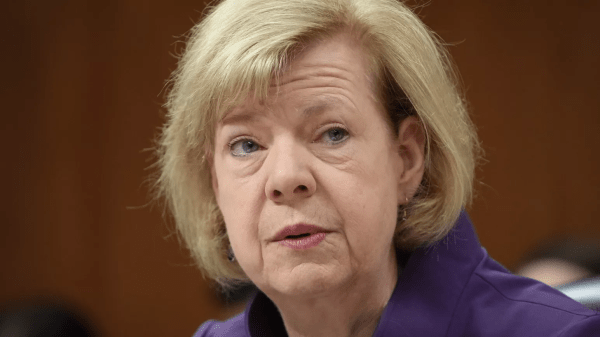
“This committee has had multiple hearings over the last several months and heard from patients, families and researchers about the importance of NIH funding,” said out Sen. Tammy Baldwin (D-WI) in remarks after the vote, The Hill reported. “This committee has, in a bipartisan manner, prioritized NIH and the research it supports to develop life-saving treatments and cures for devastating diseases.”
Earlier this month, both the House and Senate Appropriations Committees rejected the presidential administration’s proposal to eliminate the Department of Housing and Urban Development’s Housing Opportunities for Persons with AIDS program. While the House proposed maintaining the current $505 million budget, the Senate proposed to increase it by $24 million.
The committee also rejected funding cuts and block grants to states for prevention efforts focused on hepatitis and other STIs.
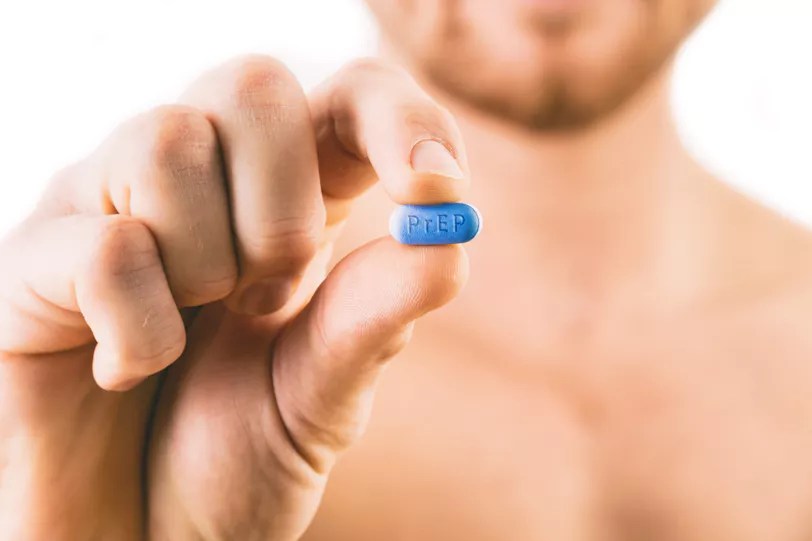
Senate appropriators preserved those parts of the administration’s budget that had maintained funding addressing HIV and PrEP programs, including $542 million for the Ending the HIV Epidemic initiative launched by the president in his first term. The initiative’s funding includes PrEP in community health centers and enhanced HIV prevention and treatment programs.
Most of the Ryan White HIV/AIDS Program was preserved, as well.
The committee also rejected the administration’s plan to revamp the way the NIH pays universities, medical schools and other research centers.
“To the scientists wondering if there will even be an NIH by the end of this administration: this committee’s resounding message is yes,” said Sen. Patty Murray (D-WA), the committee’s vice chair.
“Congress has your back — we’re not going to give up the fight against cancer, Alzheimer’s, or rare diseases,” Murray said.
Carl Schmid, executive director of the HIV+Hepatitis Policy Institute, was cautiously optimistic following the committee’s bipartisan rebuke of the president’s funding priorities.
“We are pleased that senators of both parties recognize the critical importance of preventing HIV in the United States and the value of nationwide surveillance, testing, education, and PrEP programs,” he said in a statement.
“The president’s proposed elimination of HIV prevention and surveillance programs, along with on and off staff and grant cuts and delays, have left HIV prevention in disarray. We hope the Senate’s vote of confidence for HIV prevention will start to bring the stability we need so that state and local health departments, other grantees, and staff can get back to doing their work.”
Healthcare professionals in the United States now have a faster and easier path to work in British Columbia. If you’re a U.S.-trained nurse looking for meaningful work and a stable healthcare system, B.C. just made the move more attractive than ever.
In 2025, the province launched a streamlined credential recognition process, slashing wait times from months to mere days. The result? A massive 127% surge in applications from U.S. nurses. This isn’t just policy on paper, it’s creating real change for health professionals and Canadian patients alike.
If you’ve ever considered working in Canada as a nurse, there has never been a better time.
Why B.C. Is a Top Destination for U.S. Nurses
British Columbia offers more than beautiful landscapes and mild winters. It provides a public healthcare system that values stability, team-based care, and inclusivity, qualities many U.S. nurses now actively seek.
This combination of speed, support, and stability is why over 1,200 healthcare professionals from the U.S., including 413 nurses, have already shown interest.
How the New System Works
Instead of going through multiple layers of red tape, U.S. nurses can now apply directly to the college. B.C.’s healthcare authorities work closely with American regulators to confirm your credentials using shared systems.
This efficient model is designed not only to bring in talent faster but also to ensure quality and safety remain intact. The ultimate goal? More boots on the ground in critical care areas such as cancer treatment, emergency departments, and rural clinics.
Here’s a quick comparison:
Process Step
Old System
New System
Registration Timeline
3–4 months
Few days
Third-party Assessment
Required
Eliminated
Credential Verification
Manual
Automated via database
Support for Applicants
Limited
Full support via Health Match BC
Real Opportunities for Real People
Whether you’re from Washington, Oregon, or California, B.C. wants you. A major recruitment campaign is launching soon in these states, targeting areas where interest is already high.
This isn’t just about filling vacancies. It’s about building a better healthcare system, one that supports team-based care and is culturally aware, inclusive, and patient-first.
Take the new Victoria Primary Care Network Allied Health Centre as an example. Here, nurses, physicians, social workers, and Indigenous wellness providers work side by side to offer complete care. It’s the kind of environment many nurses dream of but struggle to find in the U.S.
Who Is Eligible to Apply?
To qualify for this fast-tracked process, U.S. nurses need:
Proof of nursing education from an accredited U.S. institution
Active nursing license in good standing
No disciplinary action on record
Willingness to live and work in British Columbia
Want to check your eligibility? Book a consultation with RCIC through ImmigCanada and speak with a licensed expert who can guide you every step of the way.
Besides the improved process, many American healthcare professionals are leaving behind the U.S. system for reasons like:
Political uncertainty affecting healthcare rights
Rising health insurance costs
Limited access to team-based care in underfunded facilities
British Columbia offers a safe, stable, and inclusive alternative. Plus, with competitive salaries, government support, and fast registration, it’s not just an option, it’s a smart move.
Ready to Start Your New Life in Canada?
If you’re a qualified nurse in the U.S. and looking for a rewarding career shift, this is your chance. British Columbia is actively welcoming U.S. nurses with open arms and an efficient path to employment.
More than three-quarters of scientists in the U.S are weighing leaving the country and are looking at Europe and Canada as their top relocation spots, according to a survey released Thursday.
The scientific journal Nature poll found that 75.3 percent of scientists are considering leaving the U.S. after the administration cut funding for research. Nearly a quarter of respondents, 24.7 percent, disagreed.
The highest contingent of researchers who are looking to move out of the country were those who are early in their careers. Nearly 550, out of 690 who responded to the survey, said they are considering leaving the U.S. Out of the 340 Ph.D. students, 255 shared the same inclination, the poll found.
The administration, along with tech billionaire and close Trump adviser Elon Musk, with the help of the Department of Government Efficiency, has terminated entire agencies and made cuts in the last two months in an effort to shrink the size and scope of the federal government.
Some of those reductions were felt at the National Institutes of Health (NIH), where all grants for equity issues, which encompass studying Black maternal health and HIV, were canceled. The cap on indirect costs of NIH grants was capped at 15 percent.
The NIH was also ordered recently to halt efforts to terminate the funding for grants intended for hospitals, universities and other institutions by a federal judge after numerous lawsuits.
Former Health and Human Services (HHS) Secretary Kathleen Sebelius said she was concerned about the recent cuts to grants flowing through the NIH.
“I’m worried on a lot of fronts,” Sebelius said Wednesday. “The kinds of cuts that were just announced are devastating and will set science back and set research back.”
These cuts have also affected the National Oceanic and Atmospheric Administration (NOAA), which has been hit with layoffs.
More than three-quarters of Americans, 76 percent, said they have a great or fair amount of confidence in scientists to do what is best for the public, according to a Pew Research Center survey that was published in mid-November last year. The figure was a minor uptick from October 2023, when 73 percent of respondents said the same.
Around 1,650 people responded to Nature’s survey. The margin of error and the dates the survey was conducted were not available to The Hill.
A surge of grant cancellations hit researchers focused on the health of gay, lesbian and transgender people last week, as the Trump administration continues to target what it describes as ideologically driven science.
Last week the U.S. government terminated at least 68 grants to 46 institutions totaling nearly $40 million when awarded, according to a government website. Some of the grant money has already been spent, but at least $1.36 million in future support was yanked as a result of the cuts, a significant undercount because estimates were available for less than a third of grants.
Most were in some way related to sexual minorities, including research focused on HIV prevention. Other canceled studies centered on cancer, youth suicide and bone health.
Health and Human Services spokesman Andrew Nixon said the agency is “dedicated to restoring our agencies to their tradition of upholding gold-standard, evidence-based science.” The grants were awarded by the National Institutes of Health, an agency under HHS.
One canceled project at Vanderbilt University had been following the overall health of more than 1,200 LGBTQ people age 50 and older. Most of the money has been spent from the grant funding the project, but it was up for renewal in April, said Tara McKay, who leads Vanderbilt’s LGBTQ+ Policy Lab.
She said the grant won’t be renewed because of the termination, which jeopardizes any long-term results. Still, the Vanderbilt project had already generated two dozen published papers, including work used to train doctors to provide better care to LGBTQ people, increasing the likelihood of cancer screenings and other preventive care.
“That saves us a lot of money in health care and saves lives,” McKay said.
Insights from minority populations can increase knowledge that affects everyone, said Simon Rosser, who studies cancer in gay and bisexual men at the University of Minnesota.
“We now no longer have anywhere studying LGBT cancer in the United States,” said Rosser, who saw his grants canceled on Friday.
“When you decide to cancel all the grants on sexual minorities, you really slow down scientific discovery, for everyone,” Rosser said. Young researchers will lose their jobs, and the field as a whole will suffer, he added.
“It’s a loss of a whole generation of science,” Rosser said.
Termination letters seen by The Associated Press gave as reasons that the research was “unscientific” or did “nothing to enhance the health of many Americans.”
That language felt personal and stinging, McKay said.
“My project’s been accused of having no benefit to the American people. And, you know, queer and trans folks are Americans also,” McKay said.
Last year, the U.S. fell out of the top 20 for the first time in the report’s history, landing at No. 23. The 2025 report, published Thursday, shows Americans dropping another level down to No. 24.
Several organizations conduct the annual report that ranks countries from the most to least overall happiness. Once again, Nordic countries lead the list, dominating the top 4 spots.
The World Happiness Report also shares illuminating information such as the fact that declining joy and social trust is a contributor to a rise of political polarization in the U.S. and parts of Europe.
Here’s what to know what about this year’s report, including the global rankings and how researchers calculate joy.
Who are the 25 happiest countries?
Finland
Denmark
Iceland
Sweden
Netherlands
Costa Rica
Norway
Israel
Luxembourg
Mexico
Australia
New Zealand
Switzerland
Belgium
Ireland
Lithuania
Austria
Canada
Slovenia
Czechia
United Arab Emirates
Germany
United Kingdom
United States
Belize
Costa Rica and Mexico enter the top 10 for first time
Costa Rica and Mexico both made their top 10 debut on the World Happiness Report this year, coming in at the No. 6 and No. 10 spots, respectively.
European nations Lithuania (No. 16), Slovenia (No. 19) and Czechia (No. 20) are continuing upward trends, according to the report.
The report also listed three nations that have improved happiness since the ranking began in 2012: Serbia (No. 31), Bulgaria (No. 81), and Georgia (No. 91).
What increases happiness in countries?
Several factors are linked to overall wellbeing, from meal sharing to income and employment status, according to the report.
The report states that households of four to five people typically enjoy the highest happiness levels in Mexico and Europe, though many people in Europe live on their own. Researchers also suggest that social connections are vital for young adults to avoid the toxic effects of stress.
The report suggests that countries where acts of generosity and kindness are frequent often lead to less despair related deaths such as suicide or drug overdose.
What is the World Happiness Report?
The World Happiness Report is a partnership between Gallup, the University of Oxford’s Wellbeing Research Centre, the UN Sustainable Development Solutions Network and the WHR (World Happiness Report) Editorial Board offering insight on happiness levels globally.
“The World Happiness Report reflects a worldwide demand for more attention to happiness and well-being as criteria for government policy,” according to its website. “It reviews the state of happiness in the world today and shows how the science of happiness explains personal and national variations in happiness.”
How do World Happiness Report researchers measure happiness?
The poll gathers responses from over 100,000 people from all around the world.
People in different countries rank their happiness by imagining a ladder with 10 steps. The first and lowest step of the ladder represents the worst of the worst a person’s life can be. The tenth and highest step represents a person’s best life. Researchers then ask people which step they believe they’re on.
World Happiness Report: What factors impact happiness?
The UN’s Sustainable Development Solutions Network lists six factors that can explain the different levels of happiness.
Social Support: This is the best predictor of happiness. If people feel like they have at least one person they can reach out to when they’re in need, they are more likely to feel secure.
GDP per capita: This is how much a country produces divided by its population.
A healthy life expectancy: Researchers look at the physical and mental health of a country’s population.
Freedom to make life choices: This plays a key role in how happy one feels.
Generosity: This factor looks at how charitable a country’s people are.
Perception of Corruption: How corrupt are a country’s government and business policies? This factor looks at both and researchers use what they find to estimate happiness levels.
The Supreme Court announced Monday it will hear a case regarding whether state bans on “conversion therapy” trying to change minors’ sexual orientation or gender identity are legal—a case that could carry billions of dollars in repercussions, as a 2022 study found conversion therapy carries an economic burden of approximately $9 billion annually for patients and their families.
Key Facts
The Supreme Court took up Chiles v. Salazar, a case challenging Colorado’s ban on LGBTQ “conversion therapy” for minors, which asks the justices to more broadly decide whether laws that “[censor] certain conversations between counselors and their clients based on the viewpoints expressed” are constitutional.
LGBTQ “conversion therapy,” as it’s commonly known, refers to any practices—including both emotional efforts, like talk therapy, or physical efforts, like electroconvulsive therapy—that aim to influence a patient’s sexual orientation or gender identity, which are typically framed as efforts to “cure” homosexuality or being transgender.
Repeated studies have shown such efforts are ineffective at changing people’s sexual orientation or gender identity and carry a variety of harmful effects—such as elevated risks for suicide, drug abuse and mental health issues—which has led to bans on conversion therapy for minors being enacted in more than 20 states.
Conversion therapy and its negative effects also have an economic impact, as a 2022 study published in JAMA Pediatrics found conversion therapy and its “associated harms” result in an economic burden of approximately $9.23 billion per year.
Conversion therapy alone costs approximately $650 million for participants annually in the U.S., with individuals who undergo it paying an extra $97,985 for treatment as compared with people who don’t undergo any counseling, according to the study, which was based on data from LGBTQ youth ages 13-24.
There are also significant costs associated with knock-on effects from conversion therapy and the study estimates each conversion therapy patient pays an extra $83,366 on average to treat the “downstream consequences” associated with the procedure, which combined raise the total economic burden of conversion therapy to $9.2 billion.
What To Watch For
The Supreme Court will hear the case on conversion therapy at some point during its next term, which begins in October, so any ruling in the case is likely more than a year away.
What Did The Study Conclude?
The study, which was conducted by pro-LGBTQ rights organization The Trevor Project and research group Cytel, concluded there is a “high economic burden and high societal costs” that come along with conversion therapy, which the study refers to as sexual orientation and gender identity change efforts (SOGICE). Researchers analyzed the difference in costs between patients who underwent conversion therapy, LGBTQ youth who received no therapy and those who received therapy that affirmed their sexual orientation or gender identity. The study found conversion therapy carried the highest economic burden: In addition to the $650 million per year in total attributed to the therapy itself, there are also total annual costs of $190 million related to anxiety or “severe psychological distress” among those that underwent conversion therapy, $1.36 billion related to depression, $2.42 billion from suicide attempts, $1.17 billion from fatal suicides, $1.26 billion from alcohol use disorder and $2.18 billion from substance abuse. The likelihood of those negative outcomes was largely markedly higher among those who underwent conversion therapy as compared with other LGBTQ populations—except alcohol use disorder, where those without any therapy registered the highest number by one percentage point (42.26% among those with no intervention versus 41.26% among conversion therapy patients). As a result, the total costs incurred by conversion therapy patients were higher than the $4.85 billion in total annual costs among those who hadn’t received any treatment, and $3.04 billion among those who received affirmative therapy.
Contra
Researchers noted there were some limitations with the study’s methodology that may affect its results, such as being based on studies in which patients self-reported their experiences. That means it might not be fully representative of all LGBTQ patients, as many people may be unwilling to discuss their experiences. It also assumes the risks are the same across the LGBTQ population and for various types of conversion therapy, which may not be the case. Researchers argued they took a “conservative approach” with their findings, however, and noted the $9 billion figure is likely an underestimate of the total economic impact. The study only looked at adverse impacts from conversion therapy for three years after the treatment, for instance—though such effects could likely extend for much longer—and did not examine some other potential impacts, like post-traumatic stress disorder or medical consequences from various medications or electroconvulsive therapy.
Big Number
13%. That’s the share of LGBTQ youth who have either been subjected to or threatened with conversion therapy, according to a 2024 survey conducted by The Trevor Project among more than 50,000 Americans ages 13-24. That includes 5% who have been subjected to the therapy and 8% who were threatened with it. The 5% share is down from 10% who said in 2020 they were subjected to the therapy, though that number could rise again should the Supreme Court outlaw state bans.
Key Background
The Supreme Court case was brought by Kaley Chiles, a licensed counselor in Colorado who said in a court filing “she believes that people flourish when they live consistently with God’s design, including their biological sex.” Chiles objects to Colorado restricting her from counseling clients to change their sexual orientation or gender identity, claiming it violates her First Amendment rights and classifying state bans on conversion therapy as “silenc[ing] counselors’ ability to express views their clients seek on a topic of ‘fierce public debate.’” Chiles asked the Supreme Court to take up the case after a federal appeals court upheld Colorado’s policy restricting conversion therapy, ruling that it was regulating counselors’ professional conduct, rather than chilling First Amendment-protected speech. The case is the latest in a string of major cases related to LGBTQ rights the 6-3 conservative-leaning court has decided in recent years—such as cases over businesses being allowed to discriminate against same-sex couples or discriminate on the basis of sexual orientation and gender identity—and the court is deliberating on a case this term over gender-affirming care for minors.
The U.S. State Department has issued a memo stating that the President’s Emergency Plan for AIDS Relief (PEPFAR), a program to prevent HIV in low- and middle-income foreign countries, can only offer HIV-preventing pre-exposure prophylaxis (PrEP) medications to pregnant and breastfeeding women (PBFW) rather than to LGBTQ+ people, sex workers and other groups at high-risk for contracting HIV.
The memo circulated by the State Department’s Global Health Security and Diplomacy program states, “People other than PBFW who may be at high risk of HIV infection or were previously initiated on a PrEP option cannot be offered PEPFAR-funded PrEP during this pause of U.S. Foreign Assistance or until further notice.”
The “pause” mentioned in the memo refers to a 90-day hold on all foreign aid issued by President Donald Trump’s executive order on “reevaluatig and realigning” U.S. foreign aid. The State Department added that Trump’s order is “rooting out waste” and “blocking woke programs” to ensure that funding only benefits efforts “fully aligned” with Trump’s foreign policy.
“We are outraged by the Trump Administration’s puritanical distribution of life-saving medication that brazenly discriminates against anyone not having sex exclusively for procreation,” said Wayne Besen, executive director of the LGBTQ+ advocacy organization Truth Wins Out. “This… could cruelly lead to the infection, and eventual death, of hundreds of thousands of people worldwide.
“There is no other explanation for these guidelines other than cruel, vindictive behavior meant to cause pain and suffering to vulnerable communities disfavored by President Trump’s right-wing base,” Besen continued, adding, “Aren’t conservatives supposed to be pro-life, or do they only care about ‘life’ for those who are just like them?”
Secretary of State Marco Rubio issued a waiver for lifesaving medicines and medical services affected by the pause, but his memo explained that PEPFAR funds will be restricted in various ways. In addition to denying PrEP medications to all but PBFW, Rubio’s restrictions also prohibit surveys and systems tracking the spread of HIV and child abuse in regional populations, as well as any projects scheduled beyond December 31 of this year.
As a result, the program’s HIV-prevention drugs are reportedly still not reaching their intended recipients, many clinics have ceased offering services, and healthcare workers haven’t been paid, the Kaiser Family Foundation (KFF) reported. These all increase the likelihood of rising HIV rates, outbreaks, and HIV-related deaths abroad, KFF and Besen said.
The freeze and restrictions on PEPFAR funding have coincided with the dismantling of USAID – the independent U.S. international development agency that implements most U.S. global health programs – by Trump’s unofficial Department of Government Efficiency (DOGE). DOGE, which is not an official federal department created through required congressional approval, is headed by the world’s richest man, Elon Musk.
Musk has made the elimination of the agency a top DOGE priority, stating, “USAID is a criminal organization. Time for it to die,” without citing any evidence. Although USAID is the primary source of funding for HIV/AIDS relief for over 25 million people in 54 countries, the agency’s website has since been disabled.
A large portion of USAID’s personnel have been furloughed or fired; PEPFAR recipients have been left with no way to reach longtime contacts or access guidance. The Trump administration announced its intention to remove almost all USAID workers from their jobs and out of the field worldwide. Rubio said recipient organizations would have to apply for waivers to restart the funding.
Opponents have called Trump and Musk’s actions against PEPFAR and USAID illegal and unconstitutional. Lawsuits against the dismantling of the agency have been filed by USAID contractors – who say that the Trump administration owes them millions in unpaid bills that had been pledged in the last congressional budget – and also by a pair of nonprofit organizations, including the AIDS Vaccine Advocacy Coalition (AVAC), an HIV-prevention nonprofit.
*This commentary by Matt Keeley was originally published by LGBTNation.
Some cisgender people think the recent Republican fad of banning of transgender people from sports and bathrooms won’t affect them, and that if people just conform closely to gender stereotypes, they won’t have trouble. But these don’t realize that random nuts have confronted cis women in the ladies’ room just for wearing pants and having short hair.
Gender policing goes from controlling how we look to controlling how we behave. And cis people who have never been misgendered may not realize just how much it can hurt… but as a cis man who has been misgendered, I do.
As a kid, I had gynecomastia, a condition where prominent breasts develop on a boy or man. And my breasts were indeed prominent — probably a C- or D-cup in bra size. It started around when I was 10 or so. While we never figured out the reason, it doesn’t really matter when you’re in middle school and kids confront you in the bathroom, calling you “titty boy.”
Even friends would make the occasional crack to my chagrin. I remember once talking about how my uncle’s internal organs were backwards; one of my friends immediately joked, “And you’ve got two hearts: here and here,” gesturing at each breast. It didn’t feel great!
I hated my breasts. I often fantasized about chopping them off. It was never gory or gross in my mind — it usually was more like picking off a scab — a little bit of pain at first, but then perfectly fine with a normal chest just like every other boy.
The teasing changed my relationship with my body. My nipples usually inverted into my areolas by nature. But whenever they weren’t, I’d push them back in because, in my weird kid mind, women’s breasts had outward-facing nipples for babies to feed. If mine pointed inward, then that meant they weren’t breasts like what women had, and were…. something different.
I didn’t know the word “dysmorphia” at the time, but looking back, it seems like a manifestation of that. Most of all, I wanted to ignore that my breasts even existed. I hated even using the word “breast” in any context. While taking swimming lessons, I’d refer to the breaststroke as the “whip-kick stroke” based on the leg movements. When I wore collared shirts, they had chest pockets — men had chests, women had breasts.
While the teasing and bullying was bad, unintentional cruelty was somehow even worse. One expects bullies to be mean and to focus on one’s flaws. But if someone unintentionally misgendered me, it felt like they couldn’t help but hurt me, based solely on my appearance, infringing on my misguided attempts to ignore and feel indifferent to my own body.
One moment that’s seared in my brain (and will be for the rest of my life) happened around age 11 one afternoon at an office supply store. I needed a new graphing calculator for math class. I approached a worker kneeling on the floor, re-stocking the bottom shelf.
“Pardon me, do you know where the graphing calculators are?” I asked.
“Oh, sure, sir,” he said, turning and seeing my shoes.
His eyes raised to my chest and said, “…ma’am…”
His eyes then hit my face and he quickly went back to “sir,” before telling me where they were located.
I could tell he wasn’t being mean, he was just processing the visual stimuli in the order presented. I could tell he was embarrassed and neither of us wanted to call attention to his error, so I thanked him, and went to pick up the TI-85 calculator I needed.
I have no idea if he remembers that day at all. Probably not. But it’s a moment I relive over and over. I was wearing my standard uniform of jeans and a loose-fitting green/yellow Hypercolor T-shirt — it was the early ‘90s after all.
It’s hard to explain why it hurt so much to be mistaken for a woman. It wasn’t merely that it proved I was “different” from other boys. It wasn’t shame at being seen as a woman or less than “manly” — in fact, I don’t think real-or-perceived misogyny played a part in what happened or how I felt. I’ve always had various “feminine”-coded interests even as a kid: In first grade, I loved The Baby-Sitter’s Club book series (which features mostly girl characters) and I’d often pretend to be the magical Mrs. Piggle-Wiggle from the classic children’s novels.
The misgendering bothered me more so because it just wasn’t me — I wasn’t being perceived correctly. I couldn’t put it into words; I wasn’t necessarily “manly” and had no real desire to be seen as such, but I was a man (or at least, I would be one day when I grew up).
I was lucky; I was able to get a breast reduction — top surgery in trans masc parlance — the summer I turned 13. My surgeon, Dr. Kropp — whose name somewhat matched his surgical specialty — was excellent, and confirmed that I had excess breast tissue, not just fat.
That fall, I came into a new school as a high school freshman, and no one ever commented on my chest again; I was thankfully average. Friends even seemingly forgot about it, and no one asked about the change.
It took me a very long time to get over it — my chest was the one thing I was sensitive about. I’m pushing 45 now; it’s been 30 years, and the wounds have finally scabbed over. (The figurative ones, I mean. As for the actual surgical scars, those healed very nicely and relatively quickly after the procedure.)
But it took decades for me to get over the misgendering. And I immediately “passed as male” otherwise, if you wanted to call it that. It was just: one day boobs, one day none. So I can only imagine the pain that accumulates over when a trans person gets misidentified for so long, sometimes even after transitioning.
Misgendering can lead to depression and psychological distress. (It certainly did for me.) It can also create a sense of emotional exhaustion. I know that when I came home from a particularly bad day at school, I just wanted to shove everything out of my mind, and just veg in front of the TV. But the teasing made me think about self-obliteration. I never attempted suicide — but the idea of just not existing for a while definitely appealed to me.
Truthfully, these days, when I start feeling very anxious, stressed, or depressed, the idea of not existing for a while still appeals to me. And I can’t help but think that this desire to disappear first began when people mocked and mistook me for having “female” body parts.
I have just a glimpse of how cruel Trump and his transphobic followers have been in their constant crusade to demonize and misgender trans people. I can’t imagine feeling the full force from a lifetime of this meanness — the years I endured it was enough for me.
Jan 31 (Reuters) – The U.S. Centers for Disease Control and Prevention and other federal health agencies on Friday took down webpages with information on HIV statistics and other data to comply with Trump administration orders on gender identity and diversity, raising concerns among physicians and patient advocates.
CDC webpages that appear to have been removed include statistics on HIV,among transgender people and data on health disparities, among gay, lesbian, bisexual and transgender youth. A database tracking behaviors,that increase health risks for youth was offline.
The Office of Personnel Management gave agencies more specific guidance on how to comply with the orders in a Jan. 29 memo,saying they were to be completed by 5 p.m. ET (2200 GMT) on Jan. 31.
It specified that agencies must end all programs that promote or reflect “gender ideology extremism” by recognizing a self-determined gender identity rather than biological sex. The measures include removing references to gender identity online.
A spokesperson for the Health and Human Services Department, which oversees the CDC, said any changes to websites follow this guidance.
“There’s a lot of work going on at the agency to comply,” said a source who was not authorized to speak publicly, adding that the CDC is “taking down anything on the website that doesn’t support this executive order.”
Deletions from the CDC’s site include pages with data on HIV in the United States in general, as well as pages with statistics on HIV in Hispanic/Latino people, women, by age, and by race and ethnicity.
The elimination of such data “creates a dangerous gap in scientific information and data to monitor and respond to disease outbreaks,” the Infectious Diseases Society of America and the HIV Medicine Association said in a joint statement.
For example, a page with information about how people can get HIV tests was offline on Friday, according to the Internet Archive, as was a page for doctors with information about testing for HIV and treating patients.
“This is very alarming,” said John Peller, head of the AIDS Foundation Chicago. “In many cases, basic health information is going dark.”
Timothy Jackson, senior director of policy and advocacy at the group, said they are going through the CDC website and printing out information used to educate people about HIV that may not be accessible after Friday.
Also missing from the CDC’s website was the Youth Risk Behavior Surveillance System, which tracks trends in tobacco use, teen pregnancy, unsafe sexual behavior and other aspects of teen health.
At the National Institutes of Health, a senior employee this week urged agency leaders to refuse to implement the Trump administration’s guidance in an email to acting NIH Director Matthew Memoli and other top officials that was seen by Reuters.
The employee, Nate Brought, director of the NIH executive office, said Trump’s orders ran contrary to years of NIH research and findings about sexuality and gender.
“By complying with these orders, we will be denigrating the contributions made to the NIH mission by trans and intersex members of our staff, and the contributions of trans and intersex citizens to our society,” he wrote.
“These policies will lead to mental health crises or worse for tens of thousands of Americans who contribute productively to our communities.”
Reporting by Julie Steenhuysen in Chicago and Ted Hesson in Washington; Additional reporting by Jaimi Dowdell in Los Angeles and Brad Heath in Washington; Editing by Leslie Adler and Bill Berkrot.
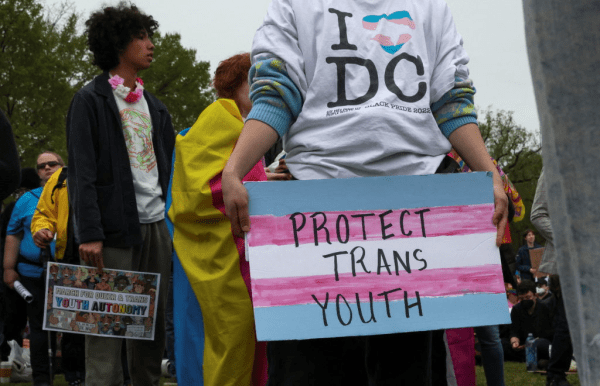
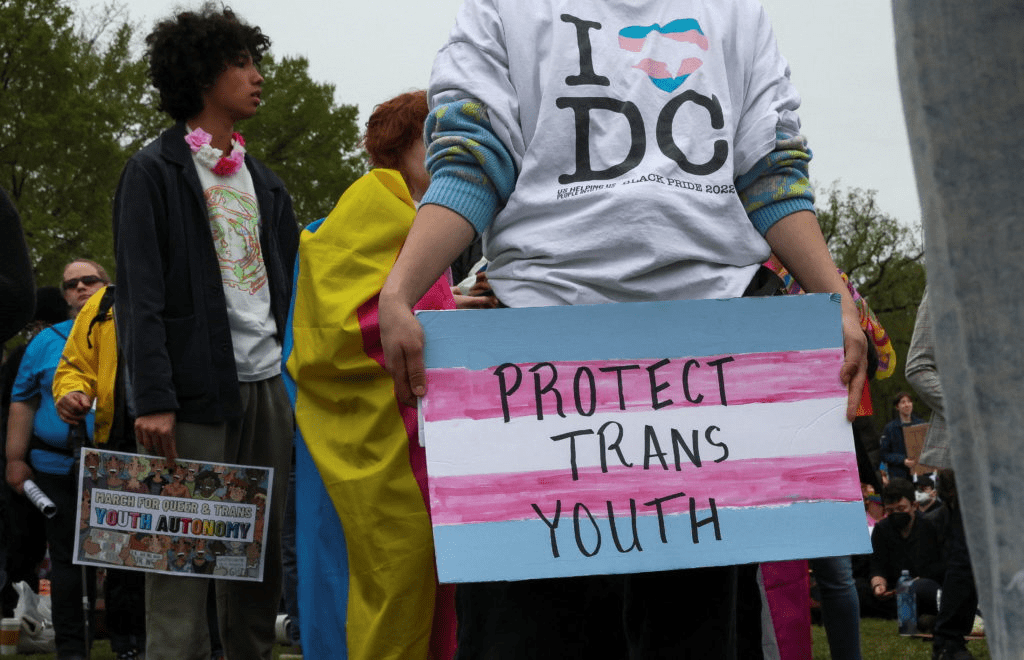
President Trump on Tuesday signed a sweeping executive order meant to broadly restrict access to gender-affirming care for transgender children and teenagers younger than 19, inching closer to fulfilling a key campaign promise to ban treatments that he and his administration have cast as experimental and dangerous, in conflict with major medical associations and transgender health experts.
“Across the country today, medical professionals are maiming and sterilizing a growing number of impressionable children under the radical and false claim that adults can change a child’s sex through a series of irreversible medical interventions,” Tuesday’s order states. “This dangerous trend will be a stain on our Nation’s history, and it must end.”
“Accordingly, it is the policy of the United States that it will not fund, sponsor, promote, assist, or support the so-called ‘transition’ of a child from one sex to another, and it will rigorously enforce all laws that prohibit or limit these destructive and life-altering procedures,” the order states.
Every major medical organization supports gender-affirming care for transgender adults and minors, although not every trans person chooses to medically transition or has access to care.
Trump’s executive order, titled “Protecting Children from Chemical and Surgical Mutilation,” tasks federal agencies with rescinding or amending policies that rely on guidance from the World Professional Association for Transgender Health (WPATH), including the organization’s latest standards of care, released in 2022.
WPATH, a nonprofit professional organization devoted to transgender health care, did not immediately return a request for comment.
Trump’s order tasks the incoming Secretary of Health and Human Services (HHS) with publishing a review of existing literature on best practices “for promoting the health of children who assert gender dysphoria, rapid-onset gender dysphoria, or other identity-based confusion.”
Rapid-onset gender dysphoria, which claims that adolescents identify as transgender because of influence from friends or social media, is not recognized as a valid medical diagnosis by major professional medical organizations. In 2021, 61 professional health care organizations, including the American Psychological Association, signed a letter stating the condition lacks “rigorous empirical support for its existence.”
According to Tuesday’s order, heads of executive departments and agencies that provide research and education grants to medical institutions, including medical schools and hospitals, should take immediate steps to block funding for institutions that continue providing gender-affirming care to minors.
Meredithe McNamara, an assistant professor of pediatrics at Yale University specializing in adolescent medicine, said the provision amounts to “an immediate de facto ban on medical care” for trans youth who receive care at academic medical centers.
“It basically defunds those medical centers if they continue to provide that care,” McNamara said of the order.
“This is a stunning example of how all health care is tied together, and how the most effective way to attack gender-affirming care is to attack the entire health care apparatus as a whole,” she added in an interview. “They’re holding everyone hostage and saying, ‘We’re going to take away everyone’s healthcare unless you systematically deprive just these people.’”
Trump’s executive order additionally directs the HHS Secretary — a position he wants for Robert F. Kennedy, Jr. — to bar access to gender-affirming care for transgender minors through federal programs like Medicaid and Medicare and withdraw the department’s 2022 guidance supporting gender-affirming care. The secretary should issue new guidance, in consultation with the incoming attorney general, “protecting whistleblowers who take action related to ensuring compliance with this order,” according to Tuesday’s order.
The executive order also directs Defense Secretary Pete Hegseth to draft a rule to exclude coverage for gender-affirming care for minors from TRICARE, the military’s health program. Former President Biden in December signed a $895 billion defense policy bill barring TRICARE from covering transition-related care for transgender children of active-duty service members, a provision that military families with transgender kids called a “slap in the face.”
Tuesday’s order similarly tasks the director of the Office of Personnel Management with taking steps to remove coverage for gender-affirming care for trans youth from federal health plans.
It also asks the attorney general to prioritize enforcement of existing federal laws against female genital mutilation, which carry a penalty of up to 10 years in prison. The attorney general should also “prioritize investigations and take appropriate action to end deception of consumers, fraud, and violations of the Food, Drug, and Cosmetic Act” by entities that may be “misleading the public” about the long-term side effects of transition-related care.
Republican state attorneys general have, in recent years, used consumer protection laws to investigate individuals and organizations that provide gender-affirming care to minors. A Senate Finance Committee report released in April claimed that at least four GOP attorneys general — Ken Paxton of Texas, Todd Rokita of Indiana, Jonathan Skrmetti of Tennessee and Andrew Bailey of Missouri — abused their oversight authorities to “further ideological and political goals.”
Trump’s executive order additionally directs the attorney general to work with Congress to “draft, propose, and promote legislation” to enact a private right of action for children, as well as their parents, “whose healthy body parts have been damaged” by medical professionals practicing transgender health care.
The attorney general should also take “appropriate action,” the order states, “to end child-abusive practices by so-called sanctuary States,” including through the potential application of the Parental Kidnapping Prevention Act, a federal law preventing one parent from interfering with another parent’s custody rights.
Conservative organizations celebrated Trump’s executive order Tuesday evening. In a joint statement, Independent Women’s Forum and Independent Women’s Voice said the move restores the “true meaning of ‘care’ for America’s youngest generation.”
Kristina Rasmussen, executive director of Do No Harm, a health policy group that opposes gender-affirming care for minors, said Trump’s order prioritizes “safety, scientific integrity, and family autonomy.”
Omar Gonzalez-Pagan, senior counsel and health care strategist at the LGBTQ civil rights organization Lambda Legal, called the order “morally reprehensible and patently unlawful” and said the group would sue.
“The federal government — particularly, this administration — has no right to insert itself into conversations and decision-making that rightly belongs only to parents, their adolescent children, and their medical providers,” he said.
The executive order comes after Trump signed separate orders declaring that the federal government recognizes only two sexes, male and female, and barring transgender people from serving openly in the military.











 fleeredstates.blog
You must be logged in to post a comment.