22 states sue Trump admin over “unprecedented” attack on gender-affirming care

Read more on LGBTQ Nation.

A coalition of blue states has come together to file a lawsuit against the Trump administration challenging its plan to strip federal funds from gender-affirming care for minors. The lawsuit alleges that the administration is overstepping its authority by trying to dictate what medical procedures can and can’t be covered by federal funding.

“[The Department of Health and Human Services (HHS)] has disregarded the law and its own policy precedent in another attempt to restrict transgender individuals’ access to crucial care,” California Attorney General Rob Bonta said in a statement. “We will not stand by as the Trump administration oversteps its authority and twists the facts to justify its bad-faith agenda against transgender Americans. We will continue to fight to secure access to medically necessary care and protect transgender individuals’ abilities to prosper as their authentic selves.”

The lawsuit targets Robert F. Kennedy Jr. as the head of HHS, as well as Dr. Mehmet Oz in his role as administrator of the Centers for Medicare & Medicaid Services (CMS). Last month, the departments finalized a plan to prevent federal Medicare and Medicaid plans from covering gender-affirming care for anyone under the age of 18, and to bar plans under the federal Children’s Health Insurance Program (CHIP) from covering the care for anyone under 19.

The plan spent months in a public comment period during which is received nearly 35,000 comments, over 90% of which opposed the plan. Despite this, the rule is set to go into effect on October 13 with little change to the text of the final document.

The lawsuit wastes no time highlighting to the US District Court for the District of Massachusetts that the administration’s new plan is not about healthcare, but an attack on trans people.

The introduction states, “The Administration seeks such broad and unprecedented powers in part to advance its social policy agenda, a key component of which involves relentless attacks on a small and vulnerable population—transgender individuals—whose very existence the President scapegoats to stoke national division.”

The lawsuit makes a case that the proposed rule oversteps states’ rights by regulating the practice of medicine, a responsibility that both Congress and existing legal precedent have made clear is reserved for the states themselves. The suing states also say that HHS has cherry-picked its evidence and failed to make a case for its ban on gender-affirming care funding, and that the plan change violates the Social Security Act and HHS precedent by excluding care that has been deemed medically necessary by the states.

The lawsuit also highlights that Congress left the decision for what should be covered by Medicare and CHIP to the states, and therefore the federal government cannot simply impose a rule to prevent the states from exercising their own will.

“The federal government does not have the authority to dictate what medically necessary care New York provides to its residents,” said New York Attorney General Letitia James in a statement. “This unlawful rule threatens access to health care for transgender young people and undermines states’ ability to administer our own Medicaid programs. New York will continue to stand up for patients and defend our authority to provide the care they need.”

The lawsuit additionally includes a nod towards a longstanding argument that banning gender-affirming care is discrimination based on sex, as under the proposed rule cis patients will still be able to receive coverage for the same treatment and care that is being denied to trans patients.

In his statement, Attorney General Bonta was keen to highlight that this proposed rule does not stop anyone from practicing gender-affirming care in any state where it is still legal (which includes California). The only restriction is on the use of federal funds, and the rule explicitly still allows for state funds to be used for the care.

An earlier HHS attempt saw the department pushing a rule that would have barred hospitals and clinics that provided gender-affirming care from receiving any form of federal funding at all. However, a judge struck that rule down in April and the Trump administration seemed to back off from trying to appeal that ruling in July.

Trans journalist Erin Reed called the states’ lawsuit “the next major step in the fight to protect transgender healthcare,” since the removal of federal funding would be ” a virtual death sentence for any hospital system.”

Reed noted that over “40 hospitals and health systems have stopped or paused their programs in capitulation” to the administration despite there being no federal law against the care. Some of these institutions have stopped providing the care in violation of state or local laws that explicitly protect transgender people from healthcare discrimination.

Medicaid to stop covering gender-affirming care for transgender kids

Read more at USA Today.

The federal agency that runs Medicaid and the Children’s Health Insurance Program will no longer pay for gender-affirming care for minors who don’t identify with the sex they were assigned at birth.

The Department of Health and Human Services announced Aug. 12 that it finalized a rule after more than a year of taking steps to use the federal government’s power to limit this type of medical care.

“We are not going to pay for our innocent children to undergo these barbaric surgeries and practices, which result in unthinkable and irreversible harm to their young bodies,” President Donald Trump wrote in a social media post.

More than 30 major medical associations and health organizations worldwide support health care for transgender adults and youth, which they say can help prevent suicide in this vulnerable population.

The rule goes into effect Oct. 13 and includes a six-month grace period for children with government insurance who are currently using hormone therapy, according to HHS. It does not affect mental health coverage.

“Children deserve our protection, not experimental interventions that pose serious risks and convey no proven benefits,” Dr. Mehmet Oz, who runs the Centers for Medicare and Medicaid Services, said in a news release. He said the move is “protecting children from potentially irreversible harm.”

HHS did not say how much federal money it currently spends on surgeries, puberty blockers or hormone therapy, or how many children enrolled in government health insurance are receiving gender-affirming care.

Most gender-affirming care is sought by young adults, not children, but as many as one in four people getting this type of care are covered by Medicaid.

Rep. Mark Takano, a Democrat who chairs the Congressional Equality Caucus, called the move “another cruel, overreaching attack” on transgender youth.

“Decisions about a young person’s care should be between the patient, their parents, and their provider – not politicians,” Takano wrote.

Trump first took action against gender-affirming care for minors with an executive order in January 2025. In April 2025, Oz told states not to use Medicaid funding for surgeries or hormone treatment.

In December, HHS Secretary Robert F. Kennedy Jr. announced his department was beginning an administrative process to end funding for hospitals who provide gender-affirming surgeries.

The Food and Drug Administration, which regulates medical devices, also sent warning letters to manufacturers of breast binders telling them not to market their devices to children with gender dysphoria.

New Jersey becomes latest blue state to pass health care shield law for trans care & IVF

Read more at LGBTQ Nation.

The New Jersey General Assembly passed new legislation on Tuesday, the last day of Pride Month, that strengthens the protections around gender-affirming health care, reproductive care, including abortion and IVF, and more. The bill now sits on Gov. Mikie Sherrill’s (D) desk awaiting her signature, which it is expected to receive.

The passage is a win for the trans community. The bill passed the same day the Supreme Court dealt a blow to trans rights with its West Virginia v. B.P.J. ruling.

Speaking with the New Jersey Monitor after the vote, Jennifer Williams, a Trenton city council member who is trans, said, “New Jersey is a great, liberty-loving state that will remain a safe haven for those who want to live happy, productive lives while accessing medically necessary and proven medical care.”

The bill’s passage comes after a long battle from LGBTQ+ advocacy groups, including Garden State Equality. In a statement, Lauren Albrecht, the organization’s senior director of advocacy & organizing, said, “By passing this bill, the Legislature has sent the message that bodily autonomy and access to medically necessary, best-practice healthcare are New Jersey values. As other states and the federal government attack reproductive and trans healthcare, we have made it clear that the Garden State will protect both the lifesaving care itself and the people who provide it. Our priorities now will be to ensure Governor Sherrill swiftly signs this legislation and, afterwards, to educate healthcare providers on these new and bolstered protections.”

The new legislation makes no changes to what medical care is or isn’t available in the state, but protects access for all to the services that are already provided.

A major aspect of the bill protects providers and patients from being prosecuted by other states, affirming that those who receive or provide care in New Jersey are solely subject to the state laws of New Jersey and to federal law.

That applies not just to citizens of New Jersey, but to “those who travel to [New Jersey] for health care services,” with the bill noting that all “deserve the ability to safely access health care facilities in this State and the critical reproductive health and gender-affirming care services that they provide.”

This prevents states from prosecuting their residents who have crossed state lines to receive healthcare that is banned in their state but legally protected in New Jersey. The authors of the bill point to the fact that since Roe v. Wade was overturned in 2022, 21 states have either banned or restricted abortion access. Since then, New Jersey has seen a 30% increase in out-of-state patients.

They also highlighted Alabama’s ruling that embryos are “extrauterine children” and the threat that sort of ruling could pose to IVF fertility treatments, which are often used by same-sex couples to build their families. New Jersey has legally protected the right to access IVF treatment.

While New Jersey is the latest blue state to pass such a bill, theirs includes an aspect that hasn’t been seen in other legislation. The bill includes prohibitions on “interference with reproductive or gender-affirming health care services.” That includes inflicting injury, physically obstructing them, defacing property, recording people accessing care within 100 feet of the entrance to a clinic, or distributing such recordings.

The legislators cite the fact that since Roe was overturned, there has been a 538% increase in obstructions to reproductive health facilities, and in 2023, there were 23 reported violent incidents and threats made to gender-affirming care providers. The legislation states, “This act is intended to ensure that anti-abortion and anti-LGBTQ+ persons cannot harm patients or providers.”

Mirroring a proposed shield law in California, the bill also requires the written consent of a patient or their guardian for any of their medical records to be provided to an out-of-state authority. A similar shield law in New York was the reason that patients were informed when NYU Langone Health received a criminal subpoena, insisting that they hand over the medical records for minors who received gender-affirming care at the institution.

Ohio Republicans are trying to strip transgender adults of health insurance coverage

Read more at the Advocate.

Ohio Rep. Josh Williams (R-Sylvania Twp.) has introduced his latest bill in his crusade against transgender Ohioans.

Williams introduced HB 838 last Thursday. The bill would prohibit Medicaid from covering most gender-affirming surgeries and procedures for transgender Ohioans and ban state and local municipalities from providing a contract to their employees that includes “coverage, benefits, or services for gender reassignment surgery.”

The legislation also stipulates that if these benefits are offered, the cost would then be subtracted from the local authority’s “local government fund payments,” the revenue-sharing portion of the state’s General Revenue Fund.

The bill has not yet been assigned to a committee.

Williams has broken a record, introducing more than 100 bills in a single General Assembly as he runs for a spot in the U.S. House of Representatives.

Six of those bills are explicitly anti-LGBTQ+, complementing his public statements that it would be “harmful to society” to affirm trans identity.

  • HB 249 (“The Indecent Exposure Modernization Act”), which would ban drag and gender performance in public spaces where minors are present. (Status: The bill passed the Ohio House and now moves to the Ohio Senate.)
  • HB 262, to designate “Natural Family Month,” to celebrate only heterosexual married couples with children. (Status: The bill is sitting in a House committee; three hearings have been held.)
  • HB 693 (“The Affirming Families First Act”), to grant protections to parents who reject their trans children. (Status: The bill is sitting in a House committee; two hearings have been held.)
  • HB 796 to ensure that all incarcerated people in state custody are housed according to the state’s definition of “biological sex.” (Status: The bill has been introduced, but not assigned to a committee.)
  • HB 798 (“The Privacy Protection Act”) that would limit trans Ohioans’ access to public bathrooms and ban Ohioans from being able to change the sex marker on birth and death certificates. (Status: The bill has been introduced, but not assigned to a committee.)

In the Cleveland suburb of Lakewood, the city’s robust “Gender Freedom Policy” would protect LGBTQ+ employees from the effects of HB 838.

The policy was introduced by Council President Sarah Kepple and out LGBTQ+ Councilmember Cindy Strebig, and will allow the city to provide medical coverage for transgender employees and covered family members who seek gender-affirming care, “even if such care must legally be provided outside the State of Ohio.”

“This is another attempt by the Republican led and out of touch state government to draw attention away from their continued failure to serve Ohioans,” Strebig told The Buckeye Flame. “I will continue to fight for my community and the dignity and respect of all people.”

Dara Adkison, executive director of TransOhio, said that HB 838 is just the latest bill in an “exhausting pattern of a single politician repeatedly targeting transgender Ohioans instead of addressing the real challenges facing our state.”

“Continued increasing of restrictions and limitations to healthcare undermines the safety, health and wellbeing of not only trans Ohioans but everyone,” Adkison said.

Adkison called HB 838 “reprehensible,” but reminded Ohioans that the bill was just introduced and is not law.

“Everyone deserves the ability to make informed decisions about their own healthcare, and every municipality deserves to maintain the authority over what will be covered by city employee insurance plans,” Adkison said.

Doctors can refuse to treat LGBTQ+ patients in several states – these religious exemption laws lead to drops in HIV testing

Read more at The Conversation.

An increasing number of U.S. states have passed laws that allow health care providers – including doctors, nurses and pharmacists – to refuse to treat patients based on their personal or religious beliefs. While these conscientious objection laws have long existed for issues such as abortion, their effects on LGBTQ+ people have not been well studied.

As of April 2026, 11 U.S. states have enacted conscientious objection laws specifically targeting LGBTQ+ people. As public health researchers who study the effects of public policies on the health of LGBTQ+ people, we wanted to examine how these laws have affected the roughly 1 in 5 LGBTQ+ Americans living in a state where a provider can legally refuse them care.

Specifically looking at sexual minorities, our research found that lesbian, gay, bisexual and queer adults living in states that passed conscientious objection laws were 28% less likely to report receiving a first-time HIV test, compared to peers in states without conscientious objection laws. These laws did not affect HIV testing rates for heterosexual adults.

Similarly, LGBQ+ adults in affected states were 71% more likely to report being in fair or poor health after the laws passed, compared to those in states without the laws.

Measuring the harm

We analyzed data from the Centers for Disease Control and Prevention on the health outcomes of more than 109,000 lesbian, gay, bisexual, queer and heterosexual adults from 2016 to 2018. We focused on eight states, comparing two that enacted conscientious objection laws during that period (Illinois and Mississippi) and six that did not (Louisiana, Minnesota, Ohio, Texas, Wisconsin and Virginia).

To isolate the effect of the laws themselves, we compared changes in health outcomes among LGBQ+ and heterosexual adults living in states with or without religious exemptions to health care, both before and after the laws passed. Making all these comparisons at once allowed us to identify differences in health outcomes due to the laws rather than preexisting differences between states.

We found that conscientious objection laws were associated with significant harms to LGBQ+ adults, including a decline in HIV testing and a worsening of self-rated health.

Our findings highlight how laws permitting clinicians to refuse to provide health care to LGBQ+ patients deepen existing health disparities. Notably, conscientious objection laws are just one type of policy restricting LGBTQ+ people’s access to health care.

The Trump administration has slashed budgets for the federal Ryan White HIV/AIDS program and state-level AIDS drugs assistance programs, reducing the availability of HIV prevention and treatment services. States have also moved to restrict access to gender-affirming care for both minors and adults, despite its additional benefit of helping to reduce new HIV infections. Employers have successfully declined to provide insurance coverage of highly effective HIV prevention medications under religious freedom laws.

Worsening disparities

LGBTQ+ people already face greater health challenges than their heterosexual peers, including higher rates of unmet health care needs and discrimination in medical settings.

HIV preexposure prophylaxis, or PrEP, can lower the risk of contracting HIV from sex by 99%. However, patients are required to receive an HIV test before PrEP can be prescribed. If providers are unwilling or unable to engage with LGBQ+ patients on their sexual health, people who could benefit most from HIV prevention tools, such as PrEP, may never receive them.

Moreover, since the risk of contracting HIV is closely linked to the social determinants of health, such as having safe and stable housing and employment, barriers to HIV testing could further widen health gaps.

Similarly, the worsening in self-rated health among LGBQ+ adults suggests that the cumulative effect of these laws on well-being is real and immediate. A person’s perception of their own health status is one of the strongest predictors of earlier death.

What can be done

Acknowledging the health consequences of conscientious objection laws could help policymakers and the public better understand their impact.

A 2026 national study found that Americans were more motivated to support policies that address LGBTQ+ inequality when these laws were framed as improving health inequality rather than economic inequality or sense of belonging. This finding suggests that people perceive health inequality as unjust and are less likely to blame LGBTQ+ individuals for those circumstances.

Health care systems can build more affirming environments that actively reassure LGBTQ+ patients will receive fair and equitable care. This can encourage more timely access to preventive services, such as vaccinations and cancer screenings.

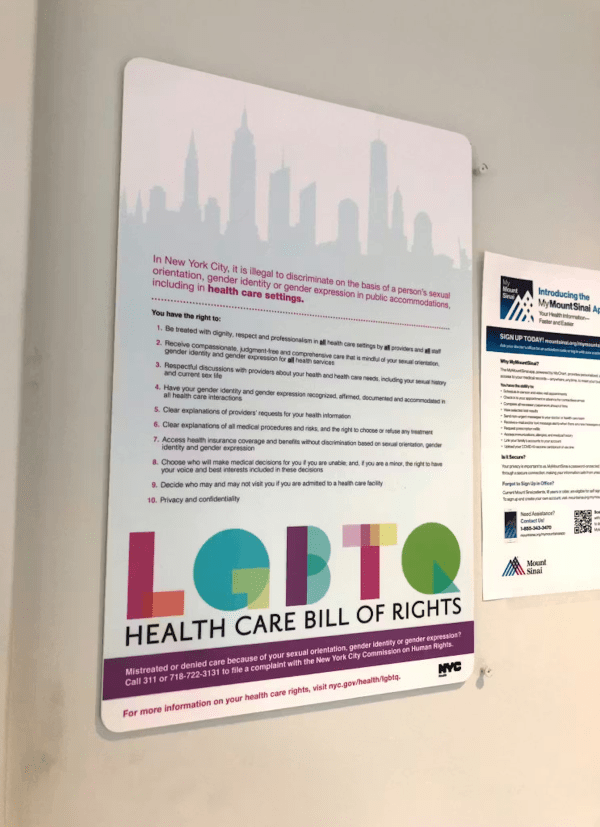
For LGBTQ+ people, knowing your rights as a patient and seeking out LGBTQ+-affirming providers and community health centers can help mitigate some of the harms of restrictive laws.

American Medical Association reaffirms support for trans health care after controversial statement

Read more at LGBTQ Nation.

The American Medical Association (AMA) reaffirmed its support for gender-affirming care and said media outlets that reported a change in its policy (including LGBTQ Nationmisinterpreted a recent statement from the organization.

AMA’s March 2026 newsletter devoted a section to the debacle and explained that it all started in February when Dr. Mehmet Oz, the head of the Centers for Medicare and Medicaid Services, held a meeting for the leaders of the nation’s major medical organizations to discuss why they all endorsed medical interventions for trans teenagers.

Sources told the Times that Dr. Oz’s tone was measured, rather than hostile, but that it was clear he hoped to sway the organizations away from supporting gender-affirming care for young trans people. At the meeting, the American Society of Plastic Surgeons (ASPS) reportedly shocked everyone by announcing it was indeed changing its stance on gender-affirming care. 

The ASPS announced the change in its stance publicly on February 3, releasing a statement advising against conducting “gender-related breast/chest, genital, and facial surgery” on people under the age of 19. The ASPS based its statement on two recent reports from the U.K. and the U.S. that were widely criticized by transgender healthcare advocates as being biased.

Surgical interventions, however, are already almost never performed on minors. Trans minors don’t receive bottom surgery, though some teenagers who meet certain rigid requirements get top surgery or facial procedures.

The AMA newsletter explained that once ASPS released its statement, the AMA’s Executive Committee of the Board met to craft a statement to provide to probing media outlets.

“During our Board discussion, we were clear that we were not changing AMA policy,” the newsletter said, emphasizing that the statement was exclusively to be used if media outlets contacted the organization, rather than preemptively.

“While some media coverage characterized this as agreement with the ASPS statement, that phrasing did not come from the AMA,” the newsletter continued. “Unfortunately, how reporters frame their stories is beyond our control.”

The newsletter emphasized that the statement did not reflect a policy change or an endorsement of ASPS’s policy change: “AMA policy on gender-affirming care is unchanged. Our recent response to questions about ASPS’s position statement was intended to preserve—not diminish—access to gender-affirming care, and to clarify and reinforce what our policy has long reflected and standards of care. The AMA supports gender-affirming care as medically necessary per our policy.”

The language in AMA’s initial statement sowed chaos because it does state:  “In the absence of clear evidence, the AMA agrees with ASPS that surgical interventions in minors should be generally deferred to adulthood.”

But because gender-affirming surgery is already rare for minors, it seems AMA is trying to say it was merely reaffirming the position it has always held, which is that it supports non-surgical interventions for minors and, in rare cases, surgical ones.

At the time the ASPS walked back support for gender-affirming care, and many at least believed AMA did, too, the American Academy of Pediatrics (AAP) released its own statement emphasizing it still fully endorses gender-affirming care. “The AAP continues to hold to the principle that patients, their families and their physicians — not politicians — should be the ones to make decisions together about what care is best for them,” the statement read, according to the New York Times.

The World Professional Association for Transgender Health (WPATH) also spoke out: “There is no definitive age or one-size-fits-all approach for every patient, which is why they are built on case-by-case assessments, involve experts on adolescent development, and are designed to support thoughtful and ethical shared decision-making in a multidisciplinary field.”

Recent studies have shown that trans youth tend to be consistent in their identities, even after a decade. The findings mirror what has overwhelmingly been found in studies on trans adults, that very few people detransition. A 2024 study found that 97% of trans youth don’t regret transitioning, and another study from the same year showed that fewer than 1% of patients who undergo gender-affirming surgical procedures end up regretting it. In fact, rates of regret are higher for people who get tattoos, elective plastic surgeries, bariatric weight loss surgeries, or have children, the study found.

First puberty blockers, now hormones: England’s NHS bans more gender-affirming drugs

Read more at LGBTQ Nation.

This week, England’s National Health Service (NHS) threw up yet another roadblock to gender-affirming care for transgender youth in the UK.

On Monday, the NHS announced it was pausing new referrals for feminizing and masculinizing hormones for 16- and 17-year-olds suffering from gender dysphoria, citing a collection of studies commissioned by the health service after publication of the controversial Cass Report in 2024, the Guardian reports.

That study recommended “extreme caution” initiating hormone treatments, including estrogen and testosterone, and a “clear clinical rationale for providing hormones at this stage rather than waiting until an individual reaches 18.”

The new NHS report comes to a similar conclusion.

“Following the Cass review, NHS England commissioned an in-depth review of all available clinical evidence for using estrogen or testosterone either alone or with other medications to treat gender incongruence and dysphoria,” the report states. “This review has established that the available evidence does not support the continued use of masculinizing or feminizing hormones to treat gender incongruence or dysphoria for young people under 18.”

The Cass Review, which contradicted long-established guidance around the efficacy of gender-affirming care for trans youth, has already prompted the health service to halt prescriptions of puberty-suppressing drugs for trans youth, with an indefinite ban for trans minors enacted by the UK government in December 2024.

The UK’s Health Secretary cited an “unacceptable safety risk” for halting new prescriptions of the drugs, though puberty blockers are still prescribed for early onset puberty and other conditions for children not suffering from gender dysphoria.

Puberty blockers, or GnRH analogues, slow down or halt the onset of puberty in young people taking them, and have preceded and been accompanied by the use of estrogen or testosterone for gender transition.

The positive effects of that combination therapy were all but ignored in the new NHS review, say critics of the decision to halt new prescriptions.

The Dutch Protocol, the “gold standard” for transition care, “involves prescribing GnRH analogues (puberty blockers) first to suppress puberty, then adding hormones later,” writes trans journalist Erin Reed in a story questioning the report’s findings.

“When hormones are introduced, the GnRH analogues are sometimes continued alongside them — the blocker keeps suppressing the body’s natural hormones while the prescribed estrogen or testosterone does its work. This overlap period means patients are on both GnRH analogues and hormones at the same time. That is the ‘combination therapy’ the reviews claim to examine.”  

But the reviews “inexplicably excluded every study” where GnRH analogues and feminising and masculinising hormones were taken in succession or combination. The review tossed out hundreds of such studies in favour of a “salami slicing” approach that examined the hormones in isolation.

NHS was explicit in its methodology.

“Any reference to GnRH analogues in the context of puberty suppression or used as puberty-suppressing hormones must be excluded,” the report states.

“NHS England’s own data, cited in the reviews themselves, confirms that 98% of its patients followed the very pathway every review was designed to exclude,” Reed writes.

She called the NHS evidence reviews “an extreme example of politically-manufactured science.”

Gender Plus, a leading private trans healthcare and education service in the UK, accused NHS England of ignoring clinical expertise and evidence provided by leaders in the field, including the Endocrine Society, which recommends introducing the hormones for trans youth once “persistence of gender incongruence has been confirmed and the young person has sufficient capacity to consent.”

“NHS England’s interpretation of the evidence is in contrast to every reputable expert body in the field of transgender healthcare,” said a spokesperson for the health group.

NHS said patients currently receiving hormone treatments can continue the therapy, “but this will need to be reviewed individually with their clinical team.”

“Banning new prescriptions of gender-affirming hormones for 16- and 17-year-olds is a profound attack on young people’s bodily autonomy,” said Tammy Hymas, policy lead at British advocacy organization TransActual, “with trans people yet again cruelly singled out by this government.”

17 states consider cutting assistance for HIV meds as prices increase

Read more at LGBTQ Nation.

States across the U.S. have either implemented or are considering measures that limit access to life-saving medications for tens of thousands of low-income people living with HIV. The moves, experts warn, are likely to lead to economic and public health crises.

According to new data published this week by the National Alliance of State and Territorial AIDS Directors (NASTAD), 17 states and D.C. have already taken steps to cut costs for their AIDS Drug Assistance Programs (ADAP), while five others are considering similar measures.

Since 1996, federally funded ADAPs have helped low-income, uninsured, and underinsured people afford HIV and AIDS medication, primarily through federal grants via the Ryan White Comprehensive AIDS Resources Emergency Act of 1990.

But as NASTAD’s report notes, “Federal funding for ADAPs has remained relatively unchanged over the last decade, while client enrollment and healthcare costs, including prescription drug, insurance premium, and cost-sharing expenditures, have continued to increase.” According to nonprofit health policy research group KFF, congressionally allocated funding for ADAPs “has not kept pace with inflation, even before accounting for enrollment growth and increased costs.”

According to both NASTAD and KFF, the expiration of enhanced premium tax credits for the purchase of insurance through the Affordable Care Act marketplaces is another key factor driving up costs for ADAPs.

“Effectively, programs are being asked to do more with less federal funding,” Lindsey Dawson, associate director of HIV policy at KFF, told the New York Times.

That has led to 10 state ADAPs reporting budget deficits for the current fiscal year, while 19 ADAPs expect to face deficits in the upcoming fiscal year, according to NASTAD.

NASTAD reports that five states — including Pennsylvania, Kansas, Delaware, and Rhode Island — have already lowered income eligibility for the ADAP.

By far the most drastic change took effect in Florida on Sunday. The state’s move to reduce income eligibility for its ADAP from 400% of the federal poverty level to 130%. That means people living with HIV in Florida who make more than approximately $20,500 annually — down from around $64,000 prior to the change — are now ineligible to receive ADAP assistance for medication that can cost more than $5,000 per month. By one estimate, 16,000 people living with HIV in Florida are now at risk of losing access to HIV/AIDS medications.

Other states, including Arkansas, Louisiana, New Jersey, Virginia, and Washington, are similarly considering changes to financial eligibility criteria. Others have or are considering other measures, including reducing formularies (the list of drugs covered), annual spending caps, restricting or ending health insurance assistance, and implementing recertification requirements that will likely lead to disenrollment, according to KFF. NASTAD reports that Arkansas, Louisiana, and New Jersey are also considering implementing waitlists for assistance.

Such cost-cutting measures “could leave growing numbers of people with HIV ineligible for safety-net services,” according to KFF.

Esteban Wood, director of AIDS Healthcare Foundation, which is suing to block Florida’s ADAP changes, warned the New York Times this week that the changes represented not only a “moral disaster,” but would likely lead to both public health and economic disasters. HIV medications not only keep people living with the virus healthy, they also make it essentially impossible to transmit it, and cutting off access to those meds will inevitably lead to an increase in new infections. The Times also notes that if people begin rationing their pills, the likelihood that the virus becomes resistant to medication increases.

The untold costs of such outcomes will have to be absorbed by other parts of the U.S. public health system, according to the Times.

Republican TX AG bans “radical” mental health workers from affirming trans youth: It’s “child abuse”

Read more at LGBTQ Nation.

Texas Attorney General Ken Paxton (R) has declared that it is illegal for mental health care providers licensed by the state to affirm trans youth and that doing so is child abuse.

The virulently anti-trans official issued the opinion on Monday to explain that the state’s gender-affirming care ban applies to mental health care as well. In a press release, Paxton’s office referred to the practice of affirming someone’s gender as “‘transitioning’ our kids.”

“Any radical facilitating the ‘transitioning’ of our kids is committing child abuse,” Paxton said in a statement. “The law is clear that these radical procedures are illegal and in no world should Texans’ tax dollars be used to permanently harm children. This opinion should send a clear warning there will be consequences for any medical professional, whether a doctor or a therapist, who is illegally ‘transitioning’ Texas kids.”

Trans news site Transitics said the opinion can be interpreted as essentially requiring mental health professionals to either refuse to see young trans patients or else engage in conversion therapy. The opinion states that therapists have an obligation to help children with “overcoming” an “underlying… condition,” which in this case is gender dysphoria.

“Even if they want to, they can no longer affirm a trans kid’s identity, offer alternatives in another state, or encourage parents to accept their kids for who they are,” Aleksandra Vaca at Transitics explained. “Under Paxton’s opinion, doing anything other than push a child to accept being their assigned sex at birth will result in providers losing their license and/or being imprisoned. This is conversion therapy, which is recognized by the United Nations as being tantamount to torture.”

Paxton has spent his tenure as attorney general terrorizing the trans community. In 2022, he issued a non-binding opinion calling gender-affirming health care a form of child abuse, which led Gov. Greg Abbott (R) to order the Texas Department of Family and Protective Services (DFPS) to investigate for child abuse any parents who allow their trans children to access gender-affirming medical care prescribed by their doctors.

In a post at the time, Paxton called gender affirming care and puberty blockers – which have been shown to reduce lifetime suicide risk for transgender people who have access to them before puberty – “monstrous and tragic.”

Paxton has also argued it should be legal to discriminate against trans people at work, and he once tried to force a school to cancel its Pride week. He has sued for the right to discriminate against LGBTQ+ students, sued a group that highlighted the rise in hate speech on Elon Musk’s social media platform X, and sued the National Collegiate Athletic Association (NCAA) to force it to inspect every athlete’s gender before allowing them to play.

He has also said consensual encounters between consenting same-sex adults should be illegal, and that state workers can deny marriage licenses to same-sex couples. 

Paxton was previously impeached by the Texas House in 2023 for 16 counts of bribery but was later acquitted by the Texas Senate. The FBI also investigated him for years for securities fraud, but the Department of Justice eventually dropped its investigation. He also settled a state securities fraud case against him, paying $300,000 and participating in community service to avoid legal charges.

In July, it came to light that his wife filed for divorce from him due to adultery.

Paxton told his staff about an extramarital affair in September 2018 while holding hands with his wife, The Texas Tribune reported. But while he recommitted to their marriage during that confession, he continued to cheat on her, the publication reported, even going through great lengths to hide affairs from her: using burner phones, secret email addresses, and secret rideshare accounts to meet with his mistress.

Ken Paxton sues Children’s Health and Dallas doctor for allegedly providing transgender youth care

Read more at KERA News.

Attorney General Ken Paxton sued Children’s Health System of Texas and a Dallas doctor Wednesday for allegedly violating a Texas ban on gender-affirming care for minors.

The AG asked a Collin County judge for a temporary injunction to stop the two defendants from providing any gender-affirming care or filing any claims to Texas Medicaid for that care.

The suit alleges Jason Jarin, a pediatric and adolescent gynecologist at Children’s Health and associate professor at UT Southwestern Medical Center, violated the law with 19 patients. It alleges he violated a 2023 law that prevents health care providers from giving transgender youth puberty blockers, hormone replacement therapy or surgery for the purpose of transitioning — one of a number of Texas laws aimed at limiting the type of care transgender adults and children can receive.

Paxton also argues Jarin filed claims for these services with Texas Medicaid, which doesn’t cover any gender-affirming care.

“This criminal extremist not only permanently harmed children, but he also then defrauded Medicaid and stuck Texas taxpayers with the bill for this insanity,” Paxton wrote in a statement. “Experimental ‘transition’ procedures on minors are illegal, unethical, and will not be tolerated in Texas.”

Jarin told KERA News Wednesday morning he had just learned of the lawsuit, and declined to comment.

Children’s Health told KERA in a statement its “top priority is the health and well-being of the patients and families we serve.”

“We comply with all applicable local, state and federal health care laws. Due to ongoing legal proceedings, we are unable to comment further at this time,” the statement read.

Jarin became an assistant professor at UT Southwestern in 2016 and has published studies on transgender children, according to his faculty profile.

Many of the lawsuit allegations claim he intentionally prescribed extra hormones for transgender kids leading up to Sept. 1, 2023, when the law took effect, so that they could continue to get treatment.

The law, known as Senate Bill 14, did allow for prescriptions to continue for children who were “already subject to a continuing course of treatment that began prior to June 1, 2023,” and children who “attended at least 12 mental health counseling or psychotherapy sessions over a period of at least six months prior to starting treatment,” according to Paxton’s suit. But those prescriptions had to be for the purpose of weaning the patient off the drug.

Jarin is accused of violating SB 14 with 12 of the 19 patients. If found liable, he could lose his medical license — SB 14 requires the Texas Medical Board to revoke the license of any physician who provides gender-affirming care to a child.

Blog at WordPress.com.

Up ↑