On March 19, the University of North Texas (UNT) in Denton announced it would cut over 70 courses, including its LGBTQ Studies course, as part of broader budget reductions.
President Harrison Keller and Provost Michael A. McPherson sent a statement detailing the upcoming budget cuts for the fall 2026 semester.
The university plans to eliminate over 70 programs, including courses, minors, and certificates. The cuts are expected to save $45 million.
The university cited declining enrollment, particularly among international students, as the reason for its significant budget cuts.
The enrollment decline contributed to a $32 million budget deficit for the upcoming fiscal year.
The university will allow currently enrolled students to complete their degree programs. New students will not be able to register for these majors or courses.
The cuts include three master’s programs, one undergraduate major, 25 undergraduate minors, 21 graduate programs, and 21 undergraduate certificates.
UNT ordered a review of its courses last fall as part of the budget planning process.
Some courses, including LGBTQ Studies and Women’s and Gender Studies, were eliminated as part of the budget cuts.
Texas university systems reviewed courses in response to federal directives issued during the Trump administration.
The review was conducted in response to H.B. 229, which recognizes only two genders, male and female.
UNT has not confirmed whether the law influenced its decision to cut certain programs.
The university also plans to eliminate the Department of Linguistics, citing a “consistent decline.”
UNT said it continues to monitor its strategic budgeting model, which began in fall 2024, amid declining enrollment and sponsored research.
Monitoring the strategic budgeting model has helped identify budgeting issues for the upcoming school year.
University officials emphasized the importance of the budget plan in maintaining program quality and financial stability.
Harrison Keller said, “We will continue to make strategic investments for the health of the university. Most importantly, we remain steadfast in our commitment to the long-term success of our students.”
UNT stated it aims to support staff and faculty as part of its long-term planning.
Keller and McPherson added at the end of their letter on March 19 that, “By making these difficult but necessary decisions, we will be able to strengthen the quality and impact of our current academic programs while investing in new areas that help us build momentum for the future.”
Campus Reform has reached out to the university for further comment.
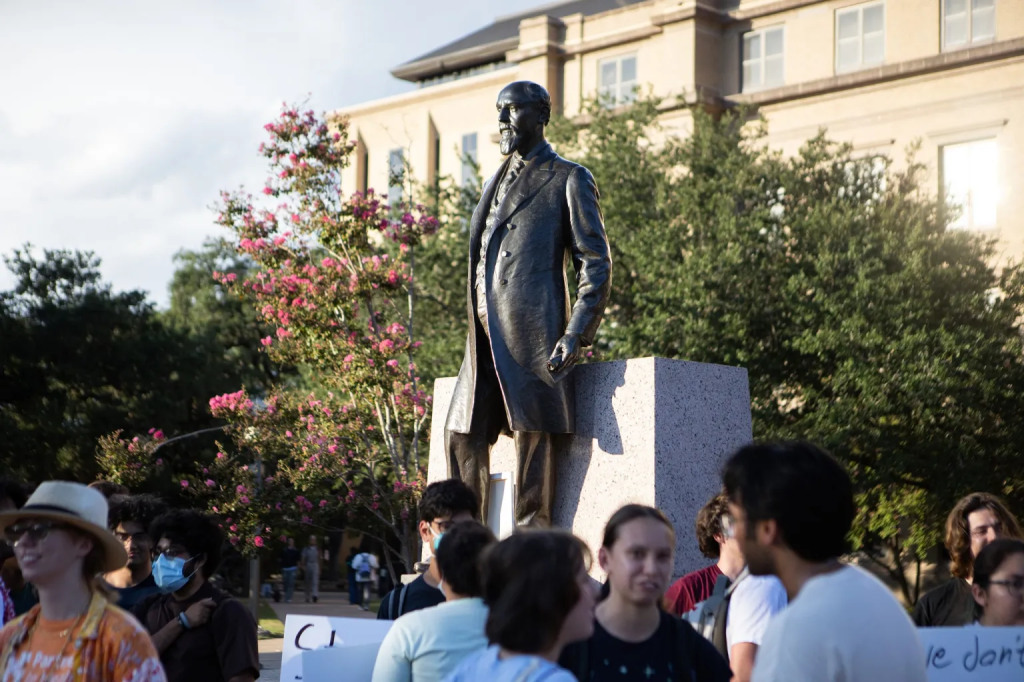
The Texas A&M University System’s board of regents will vote on Thursday on whether to prohibit faculty at its 12 universities from teaching “race or gender ideology” unless those lessons are pre-approved by each campus president or a delegate.
The proposal appears to be the first time that a Texas public university system offers definitions of what kind of instruction related to race and gender should not be permitted.
“Race ideology,” the draft of the proposal says, would encompass any concept that “attempts to shame a particular race or ethnicity” or “promotes activism on issues related to race or ethnicity rather than academic instruction.” The proposal would define “gender ideology” as “a concept of self-assessed gender identity replacing, and disconnected from, the biological category of sex.”
The policy does not say how the university would decide what constitutes “race ideology” or “gender ideology,” or what would happen if a faculty member is accused of violating the rule. A Texas A&M University System spokesperson did not respond to a request for comment.
The regents’ Committee on Academic and Student Affairs will hear presentations and consider the proposed policy on Thursday morning, according to the agenda for the meeting. The full board of regents will take public testimony on the proposal and vote on it later that day. The meeting will be livestreamed and the public is invited to testify.
Leonard Bright, president of the Texas A&M Chapter of the American Association of University Professors, said faculty were not consulted on the proposed changes, which he called “a direct violation” of their expertise and freedom to teach.
“And if that’s the case, there’s just going to be a further black eye on higher education here in Texas,” he said.
Robert Shilby, special counsel for campus advocacy at the Foundation for Individual Rights and Expression, said the proposal would “invite unlawful censorship, chill academic freedom, and undermine the core purpose of a university,”
“Hiring professors with PhDs is meaningless if administrators are the ones deciding what gets taught,” he said. “Faculty will start asking not, ‘Is this accurate?’ but ‘Will this get me in trouble?’ That’s not education, it’s risk management.”
In a Monday email to faculty, Simon North, interim dean of Texas A&M’s College of Arts and Sciences, acknowledged that the proposal raised many questions about its implementation, “such as the criteria that will determine when course content is considered relevant, controversial, or inconsistent with a syllabus; the mechanisms by which course material would be approved and compliance evaluated; and the timing of implementation.” He added that he is working with the provost’s office to answer those questions and that he will seek input on the proposal from other leaders in the college and department heads.
“Approval of these revisions could have far-reaching implications for undergraduate education, and the scope of the implications will depend on the answers to these questions,” North said.
Faculty are already signaling they will show up in force to the regents’ meeting to push back against the proposal. Bright, a professor at Texas A&M’s Bush School of Government and Public Service, said professors are organizing testimony, drafting statements and coordinating with colleagues across Texas to oppose the revisions.
He said the policy would affect disciplines across the university — from political science and history to public service and biology — and that some faculty fear it would shift control over classroom content from faculty to administrators. He added that some of his colleagues believe the revisions are an attempt to “institutionalize indoctrination” and that if the proposed changes are approved, they will likely be challenged in court.
The proposed prohibition comes two months after the system’s College Station flagship fired Professor Melissa McCoul, whose discussion of gender identity in a children’s literature class was secretly recorded by a student and later circulated online, drawing fire from Republican lawmakers and ultimately toppling the university’s former president.
Since McCoul’s firing, other university systems have begun imposing their own restrictions on classroom content.
On Sept. 25, the Texas Tech University System instructed its faculty to ensure their courses comply with a federal executive order, a letter from Gov. Greg Abbott and a new state law that recognizes only two sexes. In the weeks that followed, Texas’ other public university systems — including the University of Texas, University of North Texas, Texas State and Texas Woman’s University — announced or began internal audits of their course offerings. All said they were acting to ensure compliance with state or federal law, though few detailed what they were looking for or what changes might follow.
No state or federal law prohibits instruction on race, gender or sexual orientation in universities. However, recent state legislation has put direct and indirect pressure on how universities implement policies related to race and gender.
In 2023, the Texas Legislature approved Senate Bill 17, which banned diversity, equity and inclusion offices and initiatives at the state’s public universities. Earlier this year, lawmakers approved Senate Bill 37, which gave governor-appointed university regents the final say on whether to approve new courses and prohibited lessons that “advocate or promote the idea that any race, sex, or ethnicity or any religious belief is inherently superior to any other.” An earlier version of the legislation would have required that college courses “not endorse specific public policies, ideologies or legislation,” but the proposal was narrowed down after pushback from professors who said such a restriction would lead to self-censorship and infringe on academic freedom.
The Texas A&M Board of Regents will also consider on Thursday a new policy that would bar faculty from teaching material “inconsistent with the approved syllabus for the course.” The clause mirrors the reason university officials gave McCoul for firing her. They said she refused to change her course content to match the catalog description, but McCoul and other faculty have countered that course descriptions are often broad and that professors are expected to design their own syllabi and teach according to their expertise.
McCoul has appealed her termination through the university’s Committee on Academic Freedom, Responsibility and Tenure, which concluded its hearing last week. The committee is expected to share a recommendation with interim university President Tommy Williams in the coming weeks on how to respond to McCoul’s appeal, but Williams is not obligated to follow it.
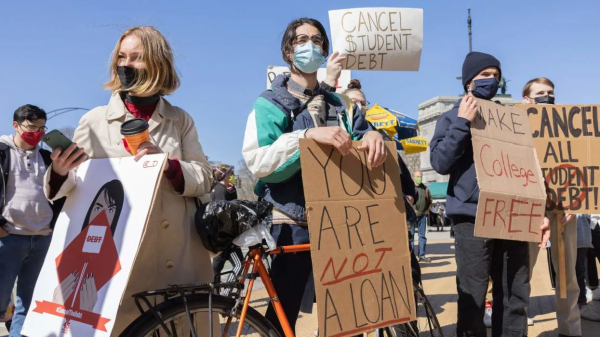
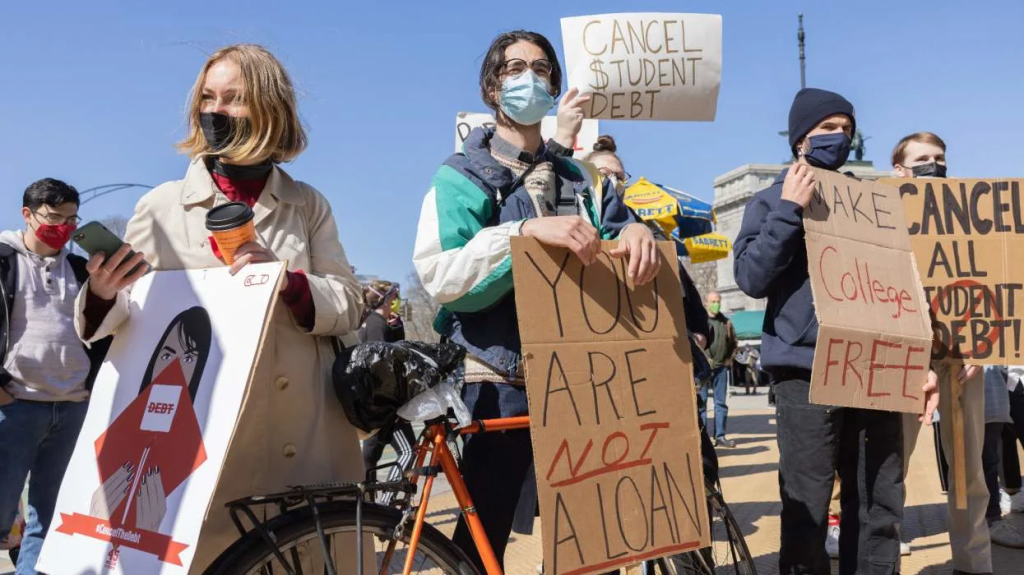
Donald Trump‘s Department of Education has unveiled a new policy that will make workers of LGBTQ+ nonprofits ineligible for student loan forgiveness.
The department will publish a rule tomorrow in the Federal Register that would allow the Secretary of Education, Linda McMahon, to disqualify government and nonprofit employers that do not align the Trump administration’s agenda from participating in the Public Service Loan Forgiveness (PSLF) program.
While no specific organizations have yet been named publicly as ineligible for PSLF under the rule, LGBTQ+ organizations operating as 501(c)(3) nonprofits are likely to be targeted. Even large legal groups like the American Civil Liberties Union or Lambda Legal working to legally protect gender-affirming care could be misconstrued as the “subsidization of illegal activities.”
“This is a direct and unlawful attack on nurses, teachers, first responders, and public service workers across the country,” Democracy Forward and Protect Borrowers said in a joint statement. “Congress created the Public Service Loan Forgiveness (PSLF) program because it is important for our democracy that we support the people who do the hard work to serve our communities.”
“This new rule is a craven attempt to usurp the legislature’s authority in an unconstitutional power grab aimed at punishing people with political views different than the administration’s,” it continued. “In our democracy, the president does not have the authority to overrule Congress. That’s why we will soon see the Trump-Vance administration in court.”
The Public Service Loan Forgiveness (PSLF) program forgives the student loans of those who work for federal, state, tribal, or local government, or for non-profit organizations, after they’ve made payments for ten years (120 payments). The program was created as part of the 2007 College Cost Reduction and Access Act and signed into law by President George W. Bush as a way to encourage students to pursue careers in public service.
Trump signed an executive order in March that drastically limits who qualifies for PSLF, preventing forgiveness for people who work at organizations that engage in the supposed “subsidization of illegal activities, including illegal immigration, human smuggling, child trafficking, pervasive damage to public property, and disruption of the public order.”
The order directly singled out organizations that assist trans people, including with gender-affirming care, which it falsely refers to as “child abuse, including the chemical and surgical castration or mutilation of children.”
More than one-third (35 percent) of LGBTQ+ adults ages 18 to 40 — an estimated 2.9 million — held more than $93.2 billion in federal student loans at the beginning of the Biden Administration, according to a March report from the Williams Institute and the Point Foundation, including over half (51 percent) of trans adults, 36 percent of cisgender LBQ women, and 28 percent of cisgender GBQ men.
Luis Vasquez, Senior Legal Writer for the Human Rights Campaign, told The Advocate that “this rule is simply about bullying LGBTQ+ people and nonprofits and other progressive groups and making life more difficult for those who Donald Trump dislikes.”
“The result is that it would keep talented people from pursuing careers in public service, fearing that they may suddenly lose eligibility for this program on a whim,” Vasquez said. “The administration is once again going beyond what Congress has authorized, pursuing a discriminatory policy without legal basis. This hurts innocent people and should be rescinded immediately.”


 fleeredstates.blog
You must be logged in to post a comment.