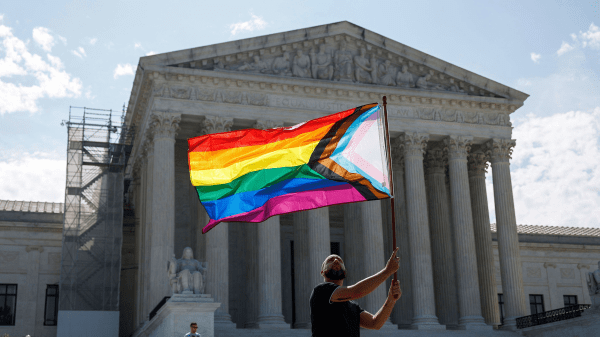
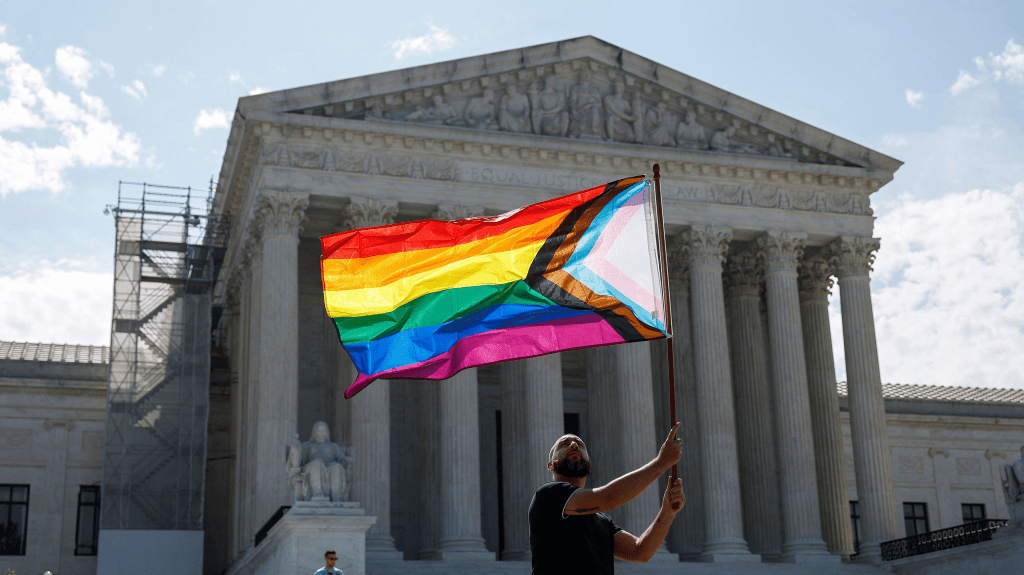
The United States Supreme Court has ruled in favour of a group of parents seeking to exempt their children from public school instruction that conflicts with their religious beliefs, in a 6-3 decision that reinforces constitutional protections for religious freedom.
The case was brought by Christian, Muslim, and Jewish parents in Montgomery County, Maryland, who objected to the use of LGBTQ-themed storybooks in elementary school classrooms, particularly books addressing same-sex marriage and gender identity.
Justice Samuel Alito, delivering the majority opinion, wrote that refusing to permit parents to opt their children out of such instruction “poses a very real threat of undermining their religious beliefs and practices” and violates the First Amendment’s guarantee of the free exercise of religion.
“The Montgomery County Board of Education’s introduction of the ‘LGBTQ+-inclusive’ storybooks, along with its decision to withhold opt outs, places an unconstitutional burden on the parents’ rights to the free exercise of their religion,” Alito wrote.
The justices found that the parents were likely to succeed in their legal challenge and should be granted a preliminary injunction while the case continues, meaning the school board must temporarily accommodate their request to be notified in advance of any related instruction and allow their children to be excused.
“In her dissent, Sotomayor accused the court of inventing a ‘constitutional right to avoid exposure to subtle themes contrary to the religious principles that parents wish to instill in their children.’” She was joined in dissent by Justices Elena Kagan and Ketanji Brown Jackson.
The dispute stems from a 2022 policy change when the school district introduced several LGBTQ-themed books into its language arts curriculum and initially allowed parents to opt out. A year later, the board reversed that decision, arguing the opt-out system was unmanageable and conflicted with the district’s commitment to inclusion.
The parents argued that mandatory exposure to the material, without an option to decline, amounted to “government-led indoctrination about sensitive matters of sexuality.” School officials, however, maintained that the books are intended to introduce children to “diverse viewpoints and ideas.”
During oral arguments in April, the court’s conservative majority signaled strong support for parental rights in such cases, indicating that allowing families to opt out of instruction on sensitive subjects should be “common sense.”
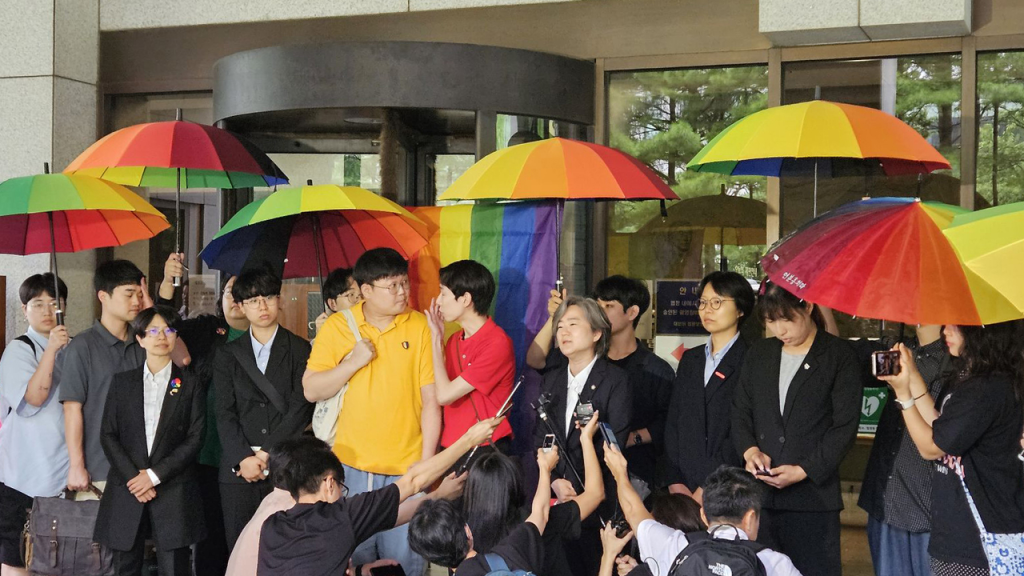
South Korea made a quiet but meaningful policy change in October. For the first time, the national census now allows same-sex couples living together to identify each other as “spouse” in official records.
While this adjustment does not confer any legal rights, it marks a symbolic step in recognizing LGBTQ+ households in the state’s demographic data.
But as same-sex couples slowly appear in national statistics, legal marriage still remains out of reach. And public support for it is not growing. In fact, it is recently shrinking.
Two major opinion surveys in 2025 have confirmed the trend. In a Hankook Research poll, 31 percent of South Koreans said they supported the legalization of same-sex marriage, down from 36 percent in 2021. In a separate survey by Gallup Korea, 34 percent backed legalization while 58 percent opposed it, a reversal that returns the numbers to where they stood nearly a decade ago.
Although many advocates have long assumed that rising visibility and generational change would drive progress, the latest data presents a different picture. The Korea Herald consulted two advocates who argue that it may be time to ask a different question: Does same-sex marriage need broad public support to move forward, or can the law lead the way?
Public may seem unsure until ‘law decides for them’
Yi Ho-rim, executive director of Marriage for All Korea, a leading local LGBTQ+ advocacy group, sees this moment as a reminder that legal change is not always a popularity contest. “The support for legalization has declined somewhat, but that doesn’t mean the conversation is stagnant,” Yi said.
“In fact, we see the current moment as a result of political polarization, not public apathy.”
Yi links the decline to the broader social climate. “Far-right mobilization earlier this year, combined with heightened political tension and increased online radicalization among young men, likely influenced the shift,” she noted. “When public discourse is overwhelmed by noise and fear, minority issues like same-sex marriage naturally become sidelined.”
Yi has argued that laws can reshape public perception. “In Taiwan, support for same-sex marriage was limited before legalization in 2019. But once the law passed, social attitudes evolved quickly. That pattern is not unique to Taiwan. We’ve seen similar changes in many countries.”
This pattern is not just anecdotal. Yi points to a notable case in South Korea’s own polling history. “There’s no way to prove causality,” she said, “but it’s hard to see it as a coincidence that Gallup Korea’s support numbers jumped by 10 percentage points between 2013 and 2014, exactly when countries like New Zealand, France and several US states made headlines by legalizing same-sex marriage.”
Park Dae-seung, a political philosopher at Seoul National University and director of the Institute for Inequality and Citizenship in Seoul, agrees. “Constitutional democracies are designed to protect minority rights, even when those rights are unpopular,” Park said.
“Laws that affirm dignity and equality are rarely embraced by a majority at first. But they send a powerful social signal. They tell people what is ‘normal’. In other words, it’s the law that decides for them what’s acceptable.”
“Korean politicians routinely cite ‘lack of public consensus’ as a reason to delay bills like the Life Partnership Act or Marriage Equality Act, both of which remain stalled in the National Assembly for years,” he added. “But it’s an excuse.”
While younger South Koreans have historically been more supportive of LGBTQ+ rights, the generational divide is showing unexpected shifts. The latest Gallup Korea poll revealed that support for same-sex marriage among people in their 20s dropped by 15 percentage points between 2023 and 2025. At the same time, support among those over 70 nearly doubled, from 10 percent to 19 percent.
Yi sees this as a sign that older generations are not immovable. “These are people who still get most of their information from legacy media. When the 2024 Supreme Court ruling recognized same-sex cohabiting partners as eligible for health insurance benefits, it was widely reported. That may have helped normalize the issue.”
Groups like the Coalition Against Homosexuality and Same-Sex Marriage, backed by conservative Christian organizations, have actively resisted even symbolic shifts. In October, the group filed a criminal complaint against government officials who authorized same-sex partner recognition in the 2025 census. They claimed it violated the law by creating “false public records” and warned of a wider moral collapse.
Yi has contended that public discomfort should not be used to delay basic rights. “Many of these objections rely on the idea that LGBTQ+ people do not value love, care or long-term commitment,” she said.
“But that is only because most people have never met a same-sex couple in their daily lives. We are still largely invisible, and the numbers show it. In the 2025 Hankook Research survey, people who personally know an LGBTQ+ person were nearly twice as likely to support same-sex marriage. Visibility alone makes a real difference.”
Karen Hinkley, an attorney in Belmont, filed a lawsuit in Gaston County on October 30 claiming the city of Belmont violated North Carolina’s open-government laws when the city council removed workplace protections for LGBTQ employees in March.
The City of Belmont, a suburban community with a population around 15,000, is generally viewed as more politically moderate than the rest of Gaston County, where Donald Trump received about 62% of the vote in 2024.
In June 2020 Belmont added protections based on sexual orientation and gender identity for its employees after a statewide moratorium on local nondiscrimination ordinances was due to expire. Several other cities such as Asheville, Charlotte, and Durham also added protections for LGBTQ residents and employees around this time.
The lawsuit centers on a March 3 vote in which the city council unanimously approved a new personnel policy that no longer includes explicit nondiscrimination protections based on sexual orientation and gender identity. The Gaston Gazette reported that “After several unsuccessful public records requests for documentation of behind-the-scenes conversations among City council members, Hinkley filed a lawsuit.”
North Carolina’s Open Meetings Law states that it “is the public policy of North Carolina that the hearings, deliberations, and actions of public bodies be conducted openly.”
According to the suit, city officials discussed the policy change outside of public meetings and used private text messages to coordinate the decision, violating North Carolina’s Open Meetings Law and Public Records Law. Hinkley argues that these private exchanges and the lack of transparency denied residents their legal right to witness how local policies are made.
The Gazette also reported that Hinckley “spoke about the policy change during public comment at a meeting on April 7. The video recording of that meeting began late and lacked audio for about 30 minutes, she said in the lawsuit, and minutes of the meeting misrepresented her comments. To Hinkley, the paraphrased notes about her comments in the official minutes of that meeting make it sound like she was supporting the removal of the protective language when the opposite is true,” she said.
Belmont city officials have not publicly commented on the lawsuit.
If the lawsuit is successful, the case could require Belmont to revisit its decision and restore LGBTQ protections, while also serving as a reminder that local governments must conduct business openly and transparently, and that secret policymaking, even on sensitive issues, can carry legal repercussions.
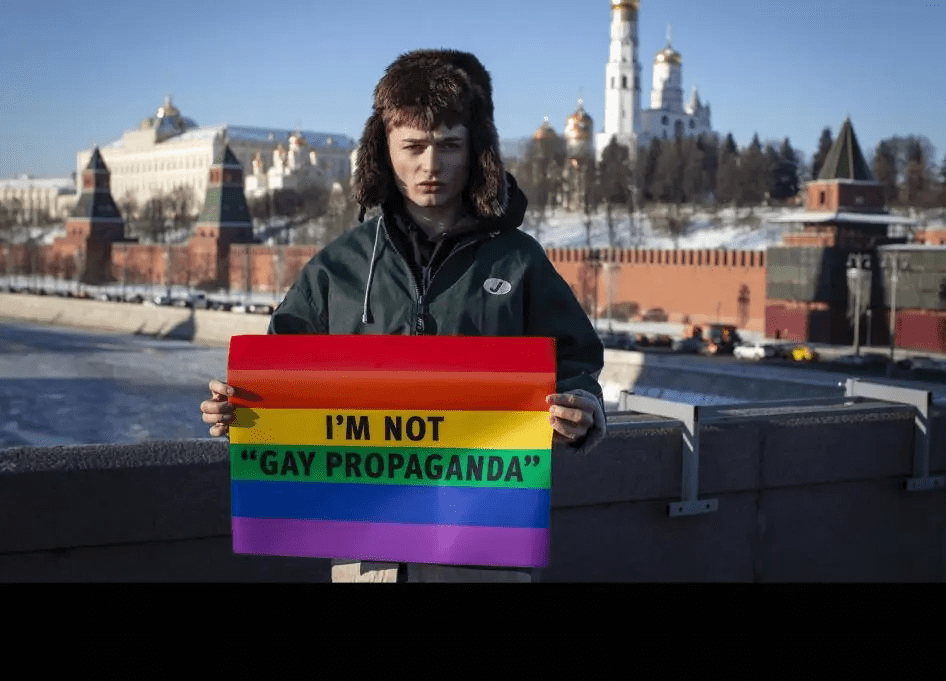
A Moscow court Friday found an LGBTQ travel agent who had killed himself in custody a year ago guilty of extremism, as Russia increasingly targets individuals it says undermine “traditional” values.
The posthumous ruling came a year after 48-year-old Andrei Kotov was found dead in his cell in a Moscow pre-trial detention centre.
Russia has heavily targeted the LGBTQ community under President Vladimir Putin, and Friday’s ruling against somebody who had died a year earlier is seen as a particularly symbolic example of how zealous the crackdown is.
Kotov, who ran a travel company called Men Travel, had said he was beaten by 15 men when he was arrested in November 2024.
The Moscow Golovinsky court found him guilty of taking part in “extremist activity” as well as using underage people for pornography, the independent Mediazona website reported from inside the court.
His lawyer had said in December 2024 that Kotov’s body was found in his cell and that investigators told her he died by suicide.
Rights groups have accused authorities of using the case as a show trial — not dropping it after his death to scare LGBTQ people.
In November 2024, Kotov described his arrest in court: “Fifteen people came to me at night, beat me, were punching me in the face.”
Putin has for years denounced anything that goes against what he calls “traditional family values” as un-Russian and influenced by the West.
In 2023, Russia’s Supreme Court banned what it called the “international social LGBT movement” as an “extremist organisation”.
Human Rights Watch has said that the ruling “opened the floodgates for arbitrary prosecutions of individuals who are LGBT or perceived to be, along with anyone who defends their rights or expresses solidarity with them”.
Russia has never been a hospitable environment for LGBTQ people, but has become far more dangerous since Moscow’s Ukraine offensive, which massively accelerated the country’s hardline conservative turn.
The Supreme Court rejected a longshot effort Monday to overturn its ruling guaranteeing same-sex marriage nationwide.
Former Kentucky county clerk Kim Davis directly asked the justices to overrule the 2015 landmark decision after a jury awarded damages to a couple whom Davis refused to issue a marriage license.
“The Court can and should fix this mistake,” her attorneys wrote in court filings.
In a brief order, the justices declined to take up Davis’s appeal alongside dozens of other petitions up for consideration at the justices’ weekly closed-door conference. There were no noted dissents.
Court watchers viewed Davis’s appeal as a longshot effort, but it sparked trepidation among LGBTQ rights groups since several conservative justices who dissented in the decade-old case remain on the court.
Davis gained national attention after she raised religious objections to issuing marriage licenses to same-sex couples despite the Supreme Court’s decision in Obergefell v. Hodges.
Among the refused couples was David Ermold and David Moore, who sued. Davis was found to have violated a judge’s order in another case, which required her to keep issuing licenses.
Davis was jailed for five days, the couple obtained their license and Kentucky later passed a law enabling clerks to keep their signatures off marriage certificates.
But Davis kept fighting in court after the couple won $100,000 in emotional distress damages from a jury plus $260,000 in attorneys’ fees.
Primarily, Davis’s appeal concerned arguments that she has a private First Amendment religious defense against the award, despite acting as a government official.
She tacked onto it a request to overturn Obergefell outright, insisting the whole lawsuit would fall if the justices do so.
The Texas Supreme Court on Friday gave judges in the state a pass if they don’t want to marry same-sex couples, unilaterally granting public officials the right to discriminate against queer couples.
In an end run around equal protection concerns, the high court amended the Texas Code of Judicial Conduct to read, “It is not a violation of these canons for a judge to publicly refrain from performing a wedding ceremony based upon a sincerely held religious belief.”
The change follows years of litigation that inspired a lawsuit by a county judge in Texas asking federal courts to declare that Texas law does not and cannot punish him for his practice of officiating opposite-sex, but not same-sex, marriages in the state.
Jack County Judge Brian Umphress, who sued in 2020 because he only wanted to perform weddings for opposite-sex couples, argued that his conduct would run afoul of the Texas State Commission on Judicial Conduct, despite protections he believed he enjoyed consistent with his religious freedom rights under the First and Fourteenth Amendments, Houston Public Media reports.
In response, the U.S. Court of Appeals for the Fifth Circuit put the lower federal-court proceedings on hold and asked the Texas Supreme Court to answer the question, “Does Canon 4A(1) of the Texas Code of Judicial Conduct prohibit judges from publicly refusing, for moral or religious reasons, to perform same-sex weddings while continuing to perform opposite-sex weddings?” That part of the code requires judges to refrain from behavior that would “cast reasonable doubt on the judge’s capacity to act impartially as a judge.”
The high court’s answer came with the amended code of conduct, bypassing public argument.
Judge Umphress’ fear of sanction for his discriminatory conduct was based on the case of McLennan County Justice of the Peace Dianne Hensley in Waco, who spent years in court arguing she had a right to refuse to marry gay couples.
Hensley replied to requests from gay couples with a statement that read, “I’m sorry, but Judge Hensley has a sincerely held religious belief as a Christian, and will not be able to perform any same-sex weddings.”
That conduct earned a public warning from the Judicial Conduct Commission, which said Hensley was violating a requirement that justices of the peace be impartial, even in extrajudicial duties like officiating weddings.
Her refusal to treat LGBTQ+ people equally cast “doubt on her capacity to act impartially to persons appearing before her as a judge due to the person’s sexual orientation,” the commission wrote.
Hensley claimed that no one’s rights were denied since a same-sex couple could have found another judge to marry them, despite the fact that she was the only justice of the peace performing marriages in Waco at the time.
Hensley filed a lawsuit against the commission with help from the First Liberty Institute, a Texas-based anti-LGBTQ+ legal organization, arguing for protections under the Texas Religious Freedom Restoration Act. The commission eventually dismissed its sanction a few months after the Texas Supreme Court allowed Hensley’s case to proceed.
That decision from the Texas high court earned Hensley a supportive concurring opinion from the chief justice, who publicly supported the Waco judge before his appointment.
“Judge Hensley treated them respectfully,” Chief Justice Jimmy Blacklock wrote of the couples she refused to marry. “They got married nearby. They went about their lives. Judge Hensley went back to work, her Christian conscience clean, her knees bent only to her God. Sounds like a win-win.”
Jason Mazzone, a law professor at the University of Illinois at Urbana-Champaign who’s familiar with both cases, said the Texas Supreme Court’s code of conduct workaround still leaves open the possibility for a gay couple with standing to challenge a judge’s decision not to marry them on constitutional equal protection grounds.
“One of the claims that I think will be made in response to litigation that is likely is that, ‘Well, there are other people who can perform the wedding ceremony, so you can’t insist that a particular judge do it,’” Mazzone said. “But that, of course, is not how equal protection works, and it’s not how we expect government officials to operate.”
Hate crimes against LGBTQ+ people are rising around the world as politicians target them through legislation and rhetoric.
Anti-LGBTQ+ hate crimes have increased in the past five years across the United States, the United Kingdom, and Europe, according to a new report by the Institute for Strategic Dialogue, with transgender and gender nonconforming people particularly affected. The spike may in part be attributed to world governments passing anti-LGBTQ+ policies, which has “escalated internationally in tandem with political rhetoric.”
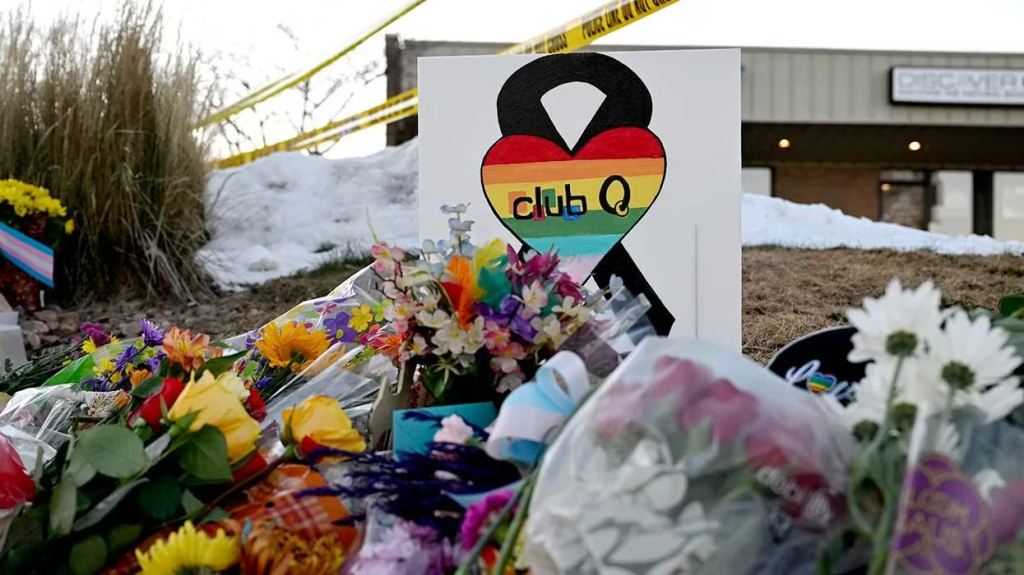
Some of the high profile incidents cited in the report include the mass shooting at the LGBTQ+ bar Club Q in Colorado that left five dead, the 2023 murder of a woman in California who was not LGBTQ+ because she flew a rainbow flag in her store, and the arrests of 20 members of the white supremacist group Patriot Front in 2023 who intended to riot at a Pride event in Idaho.
“These threats come from across the spectrum of ideological extremism, but frequently from groups that also pose a threat to the state and are openly opposed to democratic norms,” the report notes.
In the U.S., hate crimes against LGBTQ+ people remained high despite an overall decrease in violent crime. Out of 11,323 single-bias incidents the FBI reported in 2024, 2,278 (17.2 percent) were based on sexual orientation and 527 (4.1 percent) were based on gender identity. Hate crimes based on sexual orientation were the third-largest category, with crimes based on race, ethnicity, or ancestry being first and religiously motivated crimes second. Gender identity bias was the fourth-largest category.
Threats and harassment against school board officials in the U.S. also increased by 170 percent from the previous year in November, 2024 to April, 2025, the ISD report notes. Many of these threats were explicitly motivated by an anti-LGBTQ+ bias, with the perpetrators objecting to age appropriate queer books or content in public schools.
“LGBTQ+ individuals, who gained unprecedented civil rights in previous decades, are now increasingly targeted by online and offline hate, political rhetoric, censorship and legislation,” the report states. “A series of actions have sought to exclude LGBTQ+ people and culture from public life, ranging from book bans to a spread of legislation restricting trans people. In tandem, terror attacks (or the threat of terror attacks), violent extremist activity, and hate crimes targeting LGBTQ+ individuals have increased or remained consistently high since 2020.”
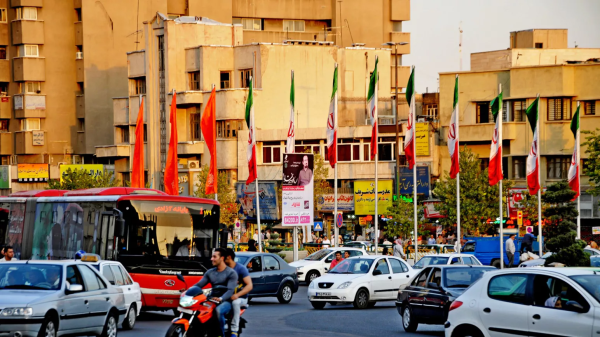
In Iran, where being gay can carry the death penalty and the idea of marriage equality is an abomination, gender transition-related medical care has long been a booming business serving locals and foreigners alike.
Part of the Islamic Republic’s expertise in the field comes from 40 years of forcing gay people to choose between transitioning and death.
But now, in a desperate search for currency in the cash-strapped country, the government is luring patients from around the world with steep discounts and luxury lodging, The New York Times reports.
Crippled by war and economic sanctions, Iran has launched a PR blitz promoting its expertise to a global audience, luring foreigners with trans-themed packages including budget-conscious surgeries, luxury hotel stays, and sightseeing tours.
Iran’s theocratic government has set a goal of generating more than $7 billion from medical tourism annually, according to Iranian state news media, a seven-fold increase over a year ago.
In addition to nose jobs and hair transplants, glossy brochures and a social media campaign are offering vaginoplasties, mastectomies, and penis constructions for a song.
“We handle everything from start to finish, providing the best medical services to ensure a stress-free experience,” said Farideh Najafi, the manager of two medical tourism companies. “This includes booking hotels, hospitals, transportation, and more.”
According to one operator, while the cost of comprehensive surgery in the U.S. could be “around $45,000, and in Thailand, it’s approximately $30,000,” patients can pay “less than $12,000” in Iran. A government hospital stay can go for as low as $4,500.
The cut-rate prices are luring patients from wealthier countries like Australia, the United States, and Europe, according to medical tour operators and surgeons, despite the dark backdrop to the country’s transgender expertise.
Many gay and lesbian Iranians who are not trans are “pressured into undergoing gender reassignment surgery without their free consent,” according to a United Nations Human Rights Council report issued in March, and the alternative can be execution.
Amnesty International says more than 5000 gay people have been put to death in the Islamic Republic since the Iranian Revolution in 1979. Public flogging is even more common.
A British Home Office report in 2022 found that roughly 4,000 people underwent transition surgery each year in Iran, compared to just under 13,000 in the U.S. in 2020, which has a population four times greater. The vast majority of patients come from inside Iran, experts say.
The extraordinary number has its basis in a fatwa issued by Ayatollah Khomeini, the founding supreme leader of the Islamic Republic. He declared in the 1980s that transgender individuals could gain legal recognition of their identifying gender on the condition that they underwent transition surgery.
The volume of surgeries has come with a questionable safety record. A 2015 U.N. report described botched procedures like “abnormally shaped or located sexual organs.” Some activists have likened the country’s gender clinics to “butcher” shops.
Raha Ajoudani, a 20-year-old trans woman and activist, fled Iran rather than submit to a forced transition.
“I never wanted to undergo gender reassignment surgery,” she said. “I’ve defined myself outside of this binary. I didn’t want to live according to the governmental definition of cultural expectations of being a woman or a man, nor did I submit to Khomeini’s fatwa.”
Eric, a 45-year-old trans man living in Canada, did take advantage of Iran’s expertise in the field, but acknowledged competing feelings over his choice and the plight of gay people in the country.
“I have heard a lot, especially among trans women, that because they are gay, and they cannot be gay in Iran, they try to do the surgery,” he said. “I’m really sad that gays and lesbians are not recognized in Iran, but on the other hand, I’m happy for trans people because they can do what they’re willing to do.”
Philadelphia’s tourism agencies are planning to have a queer-friendly information center that will highlight LGBTQ+ events, restaurants and businesses to visitors coming to the city during a busy 2026.
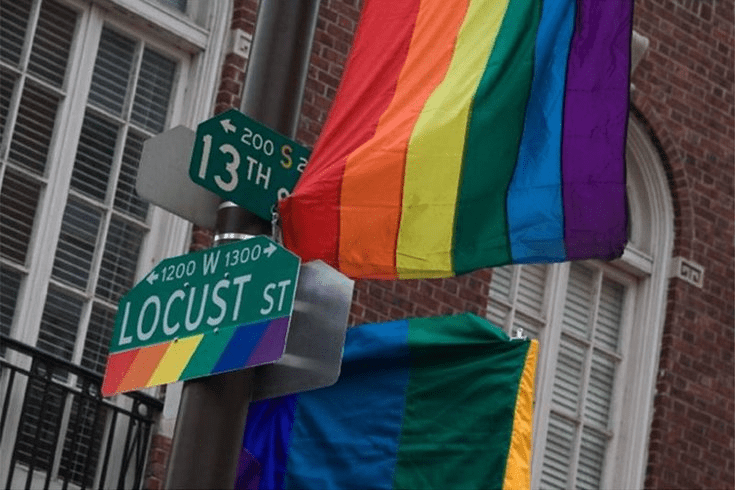
The Philly Pride Visitor Center, operated by the Philadelphia Visitor Center and Visit Philadelphia, will open at 12th and Locust streets in the Gayborhood in January. Organizers said it will help travelers who are here for the World Cup, MLB All-Star Game and numerous celebrations for the 250th anniversary of the signing of the Declaration of Independence.
The center will offer itinerary planning, ticketing, travel advice and souvenirs from queer-owned businesses. It will also feature exhibits on some of the city’s queer history, including the first LGBTQ+ sit-in at Dewey’s restaurant in 1965 and the Annual Reminders demonstrations outside Independence Hall from 1965 to 1969. The historical content was curated with community input in partnership with Mark Segal, founder of Philadelphia Gay News.
“Our city helped launch the fight for representation in media, shaped national policy, and created safe, visible spaces for our community,” Segal said in a statement. “Now, with the opening of the Philly Pride Visitor Center, Philadelphia proudly honors that legacy and reaffirms its commitment to those who call this community home.”
Visit Philadelphia said it was one of the first supporters for creating the Stonewall National Monument Visitor Center in New York City, which was the first queer institution of its kind in the National Park System. Leaders said they’re eager to bring this support back home.
“For more than 20 years, Visit Philadelphia has worked to show LGBTQ+ travelers that they belong here,” said Angela Val, president and CEO of Visit Philadelphia. “This new center gives visitors and residents a place to connect with Philadelphia’s LGBTQ+ history, discover affirming businesses and see how this city helped shape a national movement. It is both a resource hub and a testament to Philadelphia’s role in advancing LGBTQ+ rights.”
Visit Philadelphia and the Visitor Center said that the move is both an investment in its values and reflective of the strong support from queer tourists.
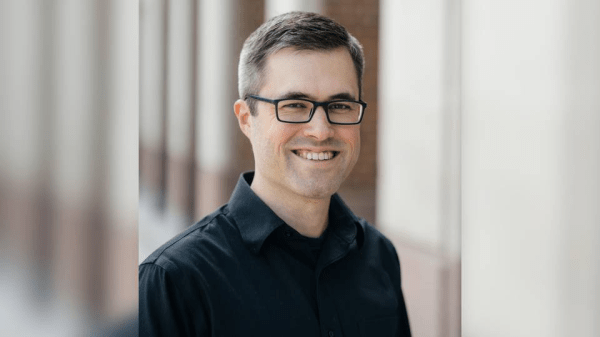
Mark Bray, an assistant professor of history at Rutgers University who was nicknamed “Dr. Antifa” by students, left the U.S. for Spain Thursday night due to death threats he has received after he was accused of antifa membership.
The campus chapter of Turning Point USA and other conservative groups accused Bray of involvement with antifa and started a petition to get him fired, The Associated Press reported.
Bray has studied the history of the left and is considered an expert in anti-fascist movements but denies any involvement with antifa, which the Trump administration has labeled as a terrorist organization
“I am not now, nor have I ever been, part of any kind of antifascist or anti-racist organization – I just haven’t. I’m a professor,” Bray told The Guardian.
He took off on Thursday for Spain from Newark Liberty International Airport with his family, according to his social media, after initially being told his reservation had been canceled.
Conservative students labeled Bray a danger to campus.
“You have a teacher that so often promotes political violence, especially in his book ‘Antifa: The Anti-Fascist Handbook,’ which talks about militant fascism, which is on term with political violence,” student Megyn Doyle told Fox News.
The Hill has reached out to Rutgers for comment.
Conservatives said Bray donated to antifa when he committed 50 percent “of the author’s proceeds would go to the International Anti-Fascist Defense fund” from his 2017 book.
He countered those funds go “to help with the legal or medical costs of people facing charges for organizing pertaining to anti-fascism or anti-racism” and that the antifa group referenced does not have a centralized committee or leader, according to The Guardian.
Bray said the threats to him picked up with the petition and President Trump’s executive order to designate antifa as a terrorist group, prompting him to leave the country.
In his order, Trump said antifa is a “domestic terrorist organization” and gave the government authority to investigate anyone who provides “material support” to the group.
“Individuals associated with and acting on behalf of Antifa further coordinate with other organizations and entities for the purpose of spreading, fomenting, and advancing political violence and suppressing lawful political speech,” the order states. “This organized effort designed to achieve policy objectives by coercion and intimidation is domestic terrorism.”
When Bray first tried to leave the country with his family on Wednesday, they were not allowed on the plane and their reservation was canceled.
“‘Someone’ cancelled my family’s flight out of the country at the last second,” Bray posted on Bluesky. “We got our boarding passes. We checked our bags. Went through security. Then at our gate our reservation ‘disappeared.’”
The news he was trying to leave the country was first reported by NJ.com. The airline rescheduled them for the Thursday flight, which they successfully boarded.
Turning Point says it doesn’t support threats or doxing to any person, but students who have rallied in support of Bray are calling for its Rutgers chapter to be shut down.
“The Rutgers chapter of Turning Point USA (TPUSA) has been continuously promoting hate speech and inciting violence against our community. This disturbing behavior has created a toxic environment that has already led to tragic consequences,” a petition against the chapter reads.
The Hill has reached out to Turning Point for comment.








 fleeredstates.blog
You must be logged in to post a comment.