The Japanese government has expanded legal protections to same-sex couples.
According to The Japan Times, the government has decided to recognise same-sex couples as being in “de facto marriages” under nine additional laws, including the Disaster Condolence Grant law.
This follows a decision earlier this year to extend 24 existing laws – including the Domestic Violence Prevention Act, Land and House Lease Act, Child Abuse Prevention Act, and Public Housing Act – to same-sex couples.
Japan’s LGBTQIA+ community has long been engaged in a battle for marriage equality.
Currently, the country’s constitution defines marriage as “mutual consent between both sexes” and does not recognise marriage equality.
“From the perspective of individual dignity, it can be said that it is necessary to realise the benefits of same-sex couples being publicly recognised through official recognition,” the court said on 20 June.
“Public debate on what kind of system is appropriate for this has not been thoroughly carried out.”
A few months later, a Tokyo court upheld the ruling.
However, despite the court doubling down on its stance, the presiding judge also stated that the lack of a legal system and protections for same-sex couples infringes on their human rights (per CNN).
While the marriage equality movement in Japan has suffered a handful of setbacks, it has also seen a few notable wins over the last three years.
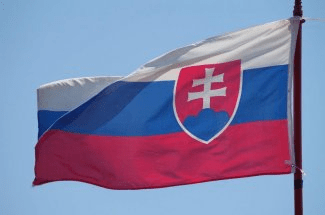
Slovakia’s parliament, has approved a sweeping constitutional amendment that legally recognizes only two sexes—male and female, and imposes new limits on adoption and surrogacy, sparking alarm from human rights groups and LGBTQ+ advocates.
The amendment, passed in a narrow 90‑vote majority in the 150‑seat National Council, also restricts adoption to married heterosexual couples and bans surrogate pregnancies. It was framed by Prime Minister Robert Fico’s government as a defense of “sovereignty in cultural and ethical matters” and traditional values. Fico heralded the vote as “a great dam against progressivism.”
The constitutional change marks one of the most significant curbs yet on LGBTQ+ and reproductive rights in the country, critics say, aligning Slovakia more closely with Hungary’s conservative trajectory, and raising concerns about violations of international commitments and human rights.
What the Law Does
Defining Sex and Gender: The amendment states explicitly that only two sexes—male and female—are recognized under Slovak law. Legal definitions of gender identity beyond that framework are excluded.
Adoption Restrictions: Only married heterosexual couples will now be able to adopt children. Same‑sex couples are excluded from adoption rights under the new wording.
Ban on Surrogacy: The law prohibits surrogate pregnancies.
Assertion of “National Identity”: The amendment declares that Slovakia retains sovereignty over issues of national identity, culture, and state ethics, even potentially above European Union law in certain areas.
Passage and Political Dynamics
The vote was precariously close. Fico’s coalition controls fewer than the 90 votes required for constitutional amendments, but 12 opposition lawmakers from conservative parties defected last minute, providing the margin required for passage.
Some opposition figures expressed outrage, describing defectors as traitors, alleging the vote was a political maneuver to distract from declining public approval and other unpopular measures.
President Peter Pellegrini said he would sign the amendment into law, framing the constitutional majority as a signal of political consensus in deeply polarized times.
Responses and Broader Implications
Human rights organizations were quick to condemn the change. Critics warn it will lengthen the legal limbo for trans, non‑binary, and intersex people, reduce access to gender recognition, and further institutionalize discrimination.
There are also worries it will lead to clashes with EU law, which guarantees certain protections for minority and LGBTQ+ populations. Legal scholars suggest the amendments may violate international treaties and could become the subject of legal challenges.
For Slovak LGBTQ+ individuals, the change is deeply personal. It removes recognition for anyone who doesn’t fit neatly into “male” or “female,” and restricts family formation for non‑heterosexual parents.
The U.S. Air Force said Thursday it would deny all transgender service members who have served between 15 and 18 years the option to retire early and would instead separate them without retirement benefits. One Air Force sergeant said he was “betrayed and devastated” by the move.
The move means that transgender service members will now be faced with the choice of either taking a lump-sum separation payment offered to junior troops or be removed from the service.
An Air Force spokesperson told The Associated Press that “although service members with 15 to 18 years of honorable service were permitted to apply for an exception to policy, none of the exceptions to policy were approved.” About a dozen service members had been “prematurely notified” that they would be able to retire before that decision was reversed, according to the spokesperson who spoke on condition of anonymity to discuss internal Air Force policy.
A memo issued Monday announcing the new policy, which was reviewed by the AP, said that the choice to deny retirement benefits was made “after careful consideration of the individual applications.”
All transgender members of the Air Force are being separated from the service under the Trump administration’s policies.
Separation process has hit some bumps
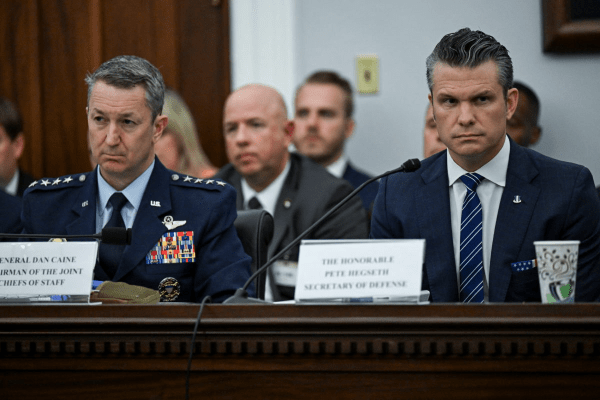
The move comes after the Pentagon was given permission in early May by the Supreme Court to move forward with a ban on all transgender troops serving in the military. Days later, Defense Secretary Pete Hegseth announced a policy that would offer currently openly serving transgender troops the option to either volunteer to leave and take a large, one-time separation payout or be involuntarily separated at later date.
A Pentagon official told reporters in May that they viewed the policy as treating “anyone impacted by it with dignity and respect.”
However, in late July, transgender troops told Military.com that they were finding the entire separation process, which has included reverting their service records back to their birth gender, “dehumanizing” or “open cruelty.”
Shannon Leary, a lawyer who represents LGBTQ+ people in employment discrimination cases, says she expects lawsuits to challenge Thursday’s decision. “It seems quite arbitrary on its face and cruel,” she said. “These military members have dedicated their lives to serving our country.”
Normally, Leary said, when early retirement is offered in the military, it’s available to all members who have served over 15 years. She said she expects other service branches to follow the Air Force’s path.
One Air Force service member says he’s ‘devastated’
Logan Ireland, a master sergeant in the U.S. Air Force who has 15 years of service, including a deployment to Afghanistan, is one of the airmen impacted by the policy. “I feel betrayed and devastated by the news,” he said.
Ireland said he was told that his retirement was being denied on Wednesday when his chain of command, “with tears in their eyes,” told him the news.
Officials have said that as of Dec. 9, 2024, there were 4,240 troops diagnosed with “gender dysphoria” on active duty, National Guard and Reserve. Pentagon officials have decided to use the condition and its diagnosis as the main way to identify troops who are trans.
However, the two are not an exact match — not every transgender person has the condition. As a result, there is an understanding that the actual number of transgender people within the military’s roughly 2 million troops may be higher.
Under the latest policy, active duty troops had until June 6 to voluntarily identify themselves and receive a payout while troops in the National Guard and Reserve had until July 7. Pentagon officials previously told reporters that they plan to lean on commanders and existing annual medical screenings to find any transgender service members who do not come forward.
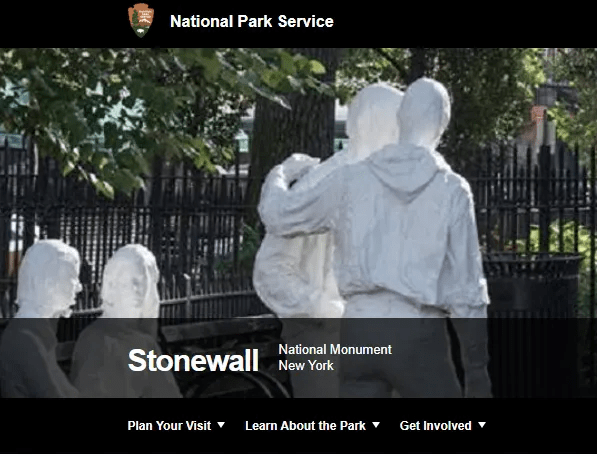
Earlier this year, the Trump administration digitally erased transgender people from the Stonewall National Monument, scrubbing them from the history they helped shape. The decision sparked widespread protests at the civil rights landmark and raised alarm about broader efforts to censor transgender people from the public record. Now, new signs suggest the administration has set its sights on another target: bisexual people. Key historical and cultural pages associated with the Stonewall site have been updated to describe the uprising as a milestone for “gay and lesbian rights,” quietly removing any mention of bisexual or transgender individuals.
Signs that the pages dedicated to Stonewall were being tampered with emerged early in Trump’s second presidency. Before the first update, the Stonewall National Monument page acknowledged that “before the 1960s, almost everything about living openly as a lesbian, gay, bisexual, transgender, or queer (LGBTQ+) person was illegal.” The revised version then stated, “almost everything about living openly as a lesbian, gay, bisexual (LGB) person was illegal.” Now, a new version of the page indicates that “Before the 1960s, almost everything about living authentically as a gay or lesbian person was illegal.”
You can see the changes here:
The changes were not limited to the front page. In the “History and Culture” section, the page once indicated “Stonewall was a milestone for LGBTQ civil rights that provided momentum for a movement.” Then it was changed to “Stonewall was a milestone for LGB civil rights that provided momentum for a movement” by the Trump administration. Now, the page says that it was a milestone for “gay and lesbian” civil rights. Likewise, the page now reads that living “openly as a member of the Stonewall comunity |SIC| was a violation of law,” rather than living as an openly LGBTQ+ person, as it had previously read.
The erasure is historically inaccurate. Stonewall was heavily led by transgender and gender-nonconforming leaders like Sylvia Rivera, Marsha P Johnson, and Zazu Nova. At Stonewall, Sylvia Rivera famously stated that while she did not “throw the first Molotov cocktail,” she did throw the second. Transgender woman Zazu Nova is among those credited with “throwing the first brick,” sparking the uprising. Marsha P. Johnson, another key figure in the protests that followed, played a critical role in shaping the movement.
Likewise, bisexual people played a pivotal role in the Pride movement that emerged from Stonewall. Brenda Howard, a bisexual rights activist often referred to as “the mother of Pride,” helped organize the rally that became the Christopher Street Liberation Day March on the first anniversary of the uprising. Both transgender and bisexual people have long viewed Stonewall as a civil rights milestone—and for good reason. Living openly as either in the 1960s carried enormous risk, and both communities were targeted in the police raid that sparked the movement.
These edits were not the only ones made to Stonewall since Trump took office. Individual pages dedicated to transgender figures instrumental in the Stonewall uprising were also altered to erase transgender references. The changes were often sloppy and rushed, revealing the haphazard nature of the effort. In one glaring example, Sylvia Rivera’s section originally stated, “At a young age, Sylvia began fighting for gay and transgender rights.” The revised version read, “gay and rights,” with the word “transgender” removed entirely, rendering the sentence nonsensical:
Bisexual, transgender, and queer people were at the forefront of the Stonewall movement. Though the language was still evolving, many of the patrons defied conventional categories of gender and sexuality, refusing to be neatly classified. Erasing them from Stonewall is not only historically false—it is a deliberate act of political revisionism. The recent removal of “bisexual” from official Pride histories is a warning: attacks on transgender people will never stop with us. They are part of a broader effort to narrow the scope of who is allowed to belong, to be seen, and even to be remembered.
Pride Month is not quite over yet! Just in time for some more LGBTQ friendliness is this list from Big 7 Enjoy Travel. They rank the top 30 LGBTQ friendly cities on the planet.
For a city to rank highly as LGBTQ+ friendly, first and foremost, it needs to protect LGBTQ+ people with laws and legislation. Then, it needs a vibrant gay nightlife and dating scene, whether within a gay village or across the city. Either way, there needs to be a safe community for LGBTQ+ people, as well as open-minded citizens and low levels of hate crime.
Ranking criteria:
Gay Index Rating – measures how safe a country is for LGBT people, considering the legal situation and living conditions
Equality Index Rating – measures the status of LGBT rights, laws, and freedoms as well as public attitudes towards LGBT people
The final scores show the Top 30 LGBTQ+ Friendly Cities in the World! Here’s your ultimate gay-friendly travel list…
30. Vienna, Austria
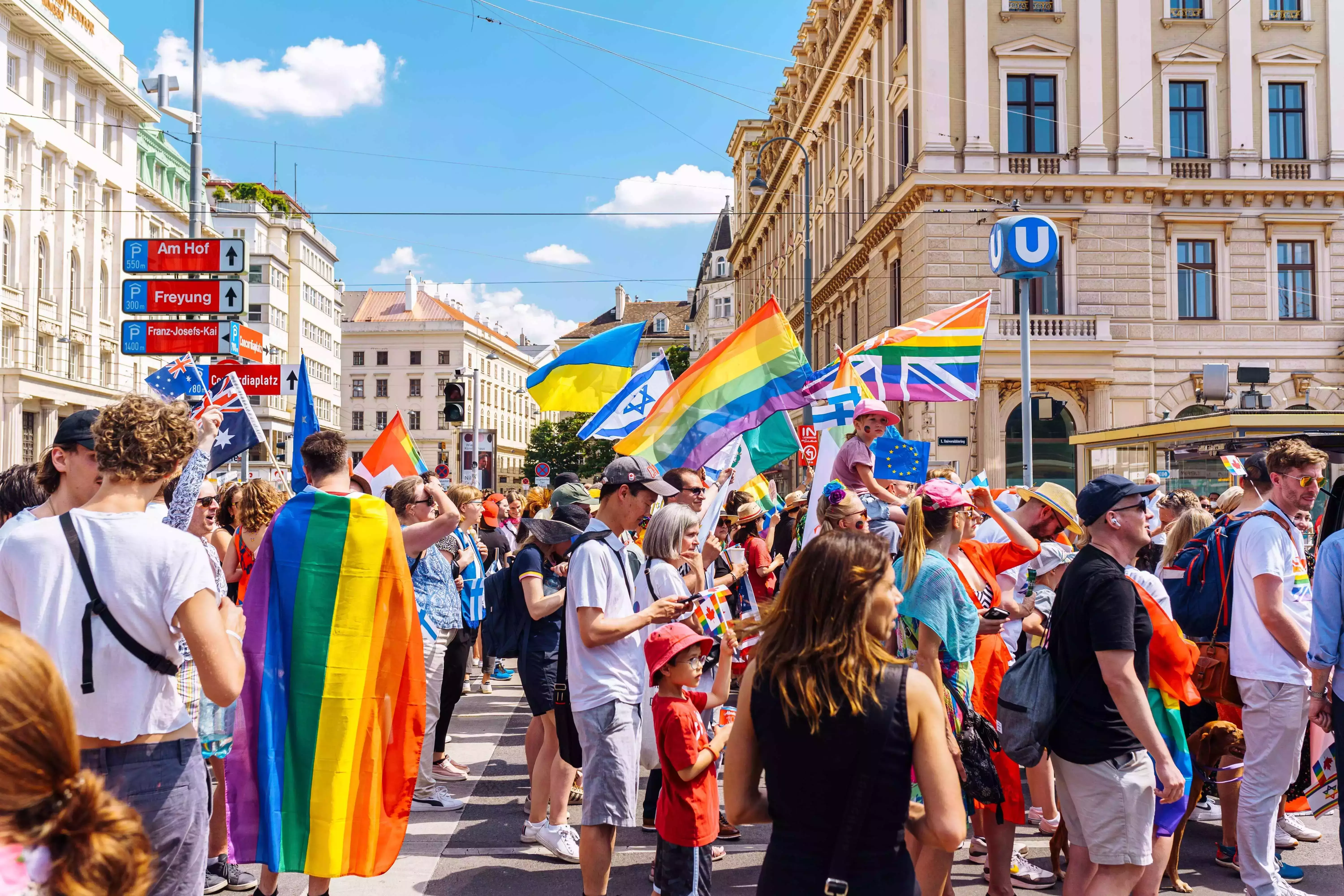
Vienna is widely known for its gender, disability, LGBTQ and racial inclusivity and equality, with many parades, pride events and specialist causes. While Vienna doesn’t have a specific gay village or district, its Naschmarkt area is full of gay bars and clubs, making it a hotspot for LGBTQ+ members.
Vienna has also hosted the EuroPride and hosts an annual citywide Pride parade in June. Vienna is also an LGBTI Core Group member and has a reasonably high Gay Index Rating, making it a safe and appealing place for LGBTQ+ members. It’s safe to say that Vienna is a welcoming and inclusive city for not just LGBTQ+ people, but for everyone, no matter your sexuality, gender, religion or ethnic group.
29. Puerto Vallarta, Mexico
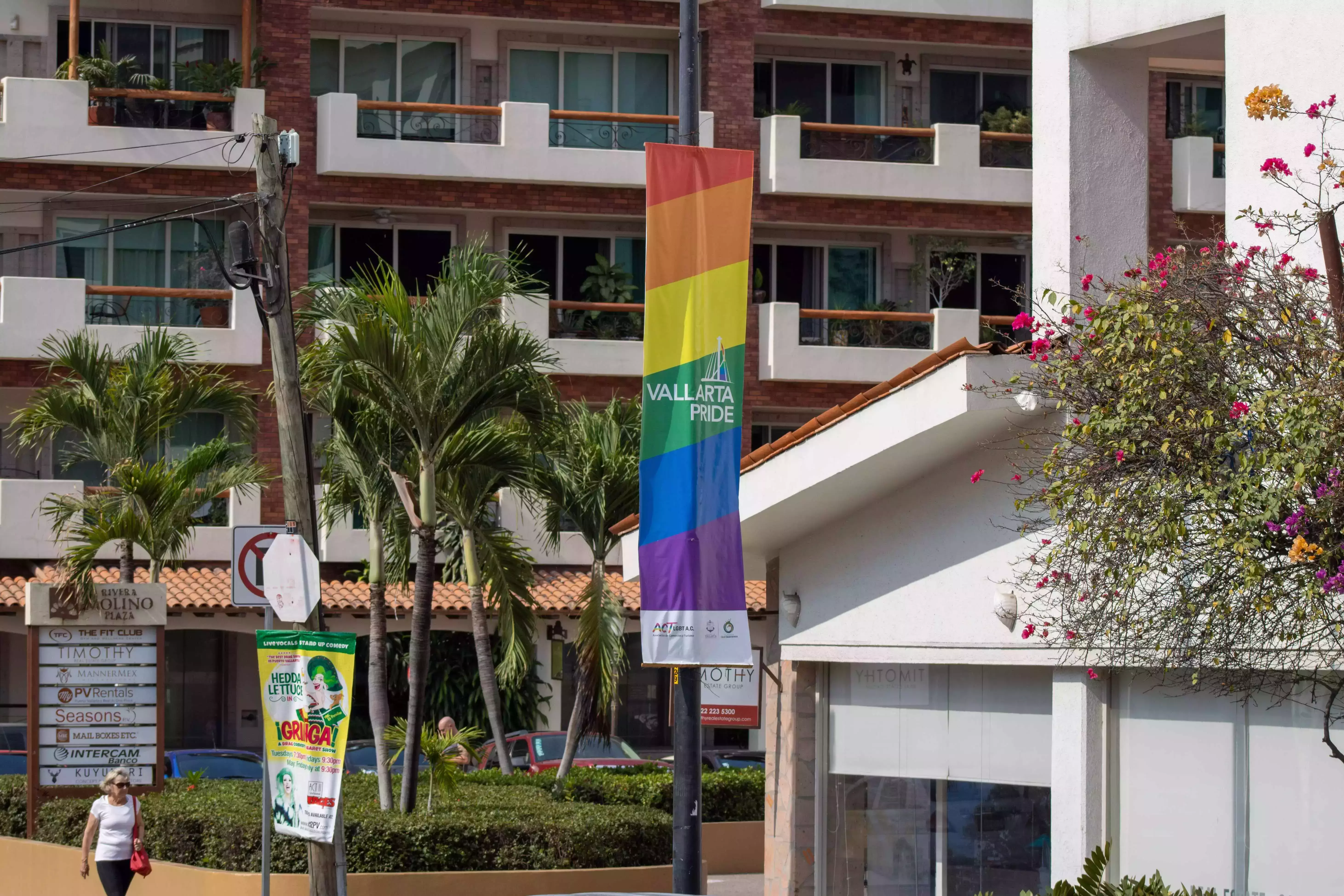
You may not have heard of this city against its larger and more tourist-centred neighbours of Mexico City and Cancun, but Puerto Vallarta deserves to be celebrated for its strong LGBTQ+ representation and inclusivity. According to our rankings, Puerto Vallarta scored highly in terms of Gay Index Rating, and attendance to the city’s annual Pride event is significant.
Puerto Vallarta has been cited as the ‘gay capital of Mexico’, thanks to its bustling Zona Romantica area, which is heavily centred around LGBTQ+, with vibrant gay bars, inclusive hotels and lively clubs. While you’re likely to find LGBTQ+ friendly areas across Mexico, Puerto Vallarta is one of the best places to celebrate being a member of the community.
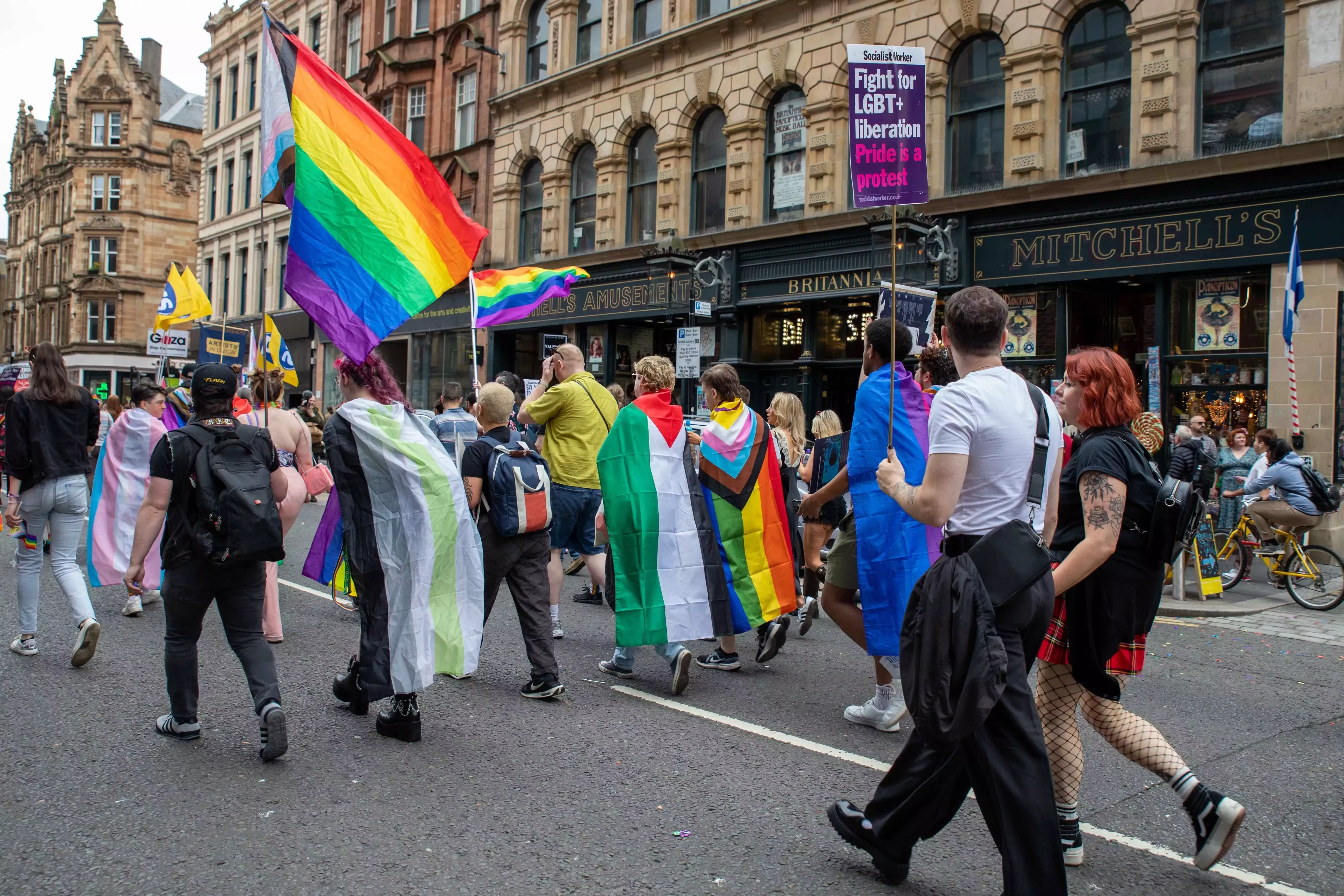
28. Glasgow, UK
Glasgow, Scotland’s largest city, is a hub for inclusivity, with its lively Merchant City district being the LGTBQ+ capital. You can expect to find a variety of LGBTQ+ friendly bars and clubs, as well as a welcoming and open-minded atmosphere. Glasgow’s annual pride event amasses thousands of attendees each year, seeing proud members of the community come together to march and parade, surrounded by the signature rainbow flags.
Glasgow’s quality of life and general acceptance for the LGBTQ+ community is high, giving an indication of how strong its LGBTQ+ community and representation is. The city is also an LGBTI Core Group Member.
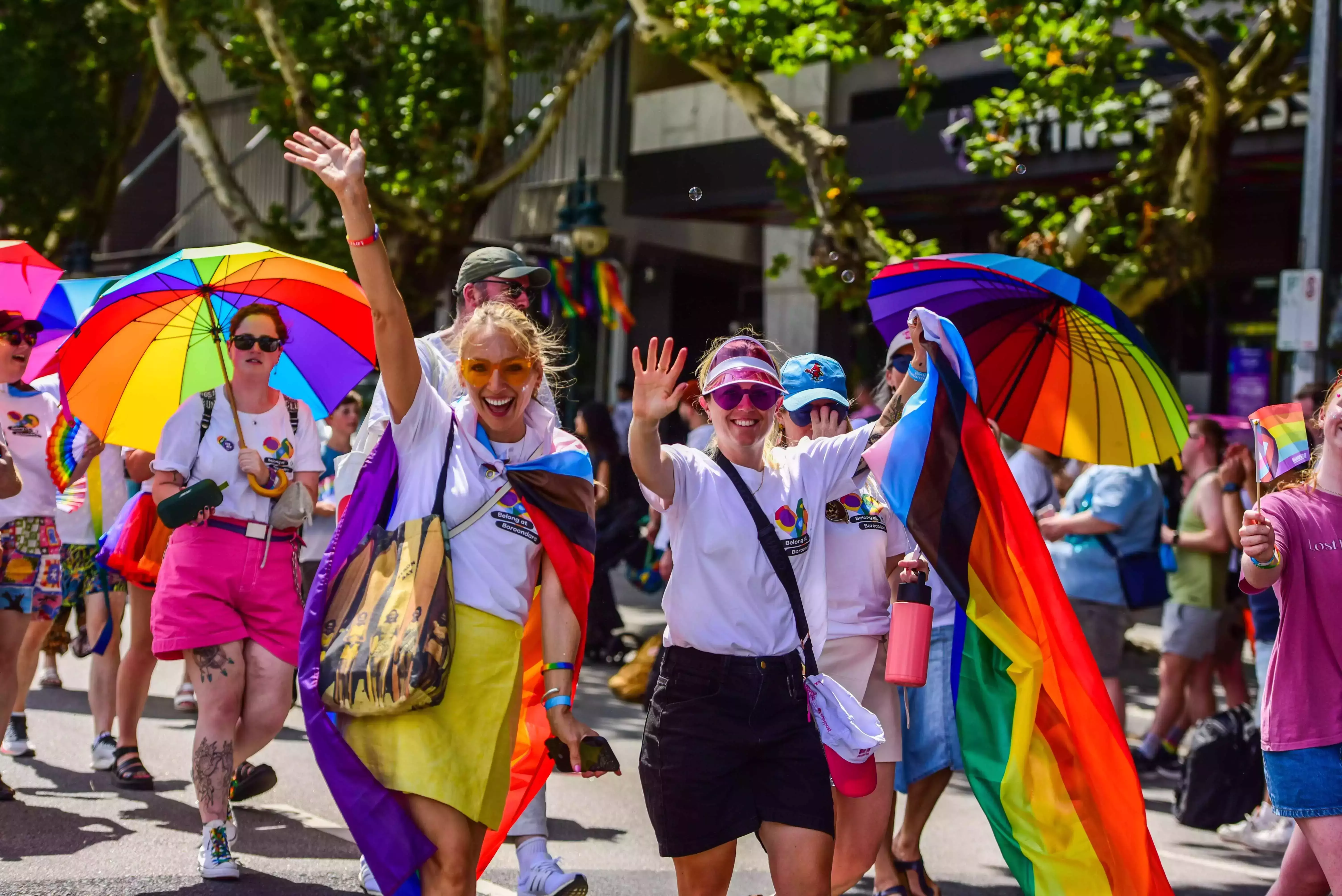
27. Melbourne, Australia
Melbourne is generally an accepting city for most types of groups within society, which gives an indication as to its welcoming and inclusive atmosphere. It scores highly on the Gay Index Rating, and is a member of the LGBTI Core Group, as well as scoring highly on the Equaldex Score. But, data aside, there is a thriving and welcoming community right at its core that appeals to all groups in society, whether members of the LGBTQ+ community or not.
Its annual Pride march has also surpassed 60,000 attendees in recent years. Melbourne’s Fitzroy area is considered to be the ‘gay village’, with a number of LGBTQ+ friendly bars and clubs and a buzzing atmosphere both before and after dark, but generally no matter where you go in Melbourne you’ll be met with a warm and friendly welcome.
26. Taipei, Taiwan
You may not commonly associate Taiwan with LGBTQ+ communities, but its capital Taipei has one of the largest LGBTQ+ presences, with a vibrant LGBTQ+ presence in its Ximen Red House area of the city, which features a lively and bustling scene with bars and clubs. Taipei is known for its inclusivity, and is perhaps a hidden gem amongst the most LGBTQ+ friendly cities, but definitely worth a visit. Taipei also hosts its annual Pride march, which is considered to be the largest of its kind in East Asia, seeing an attendance of more than 120,000 in recent years.
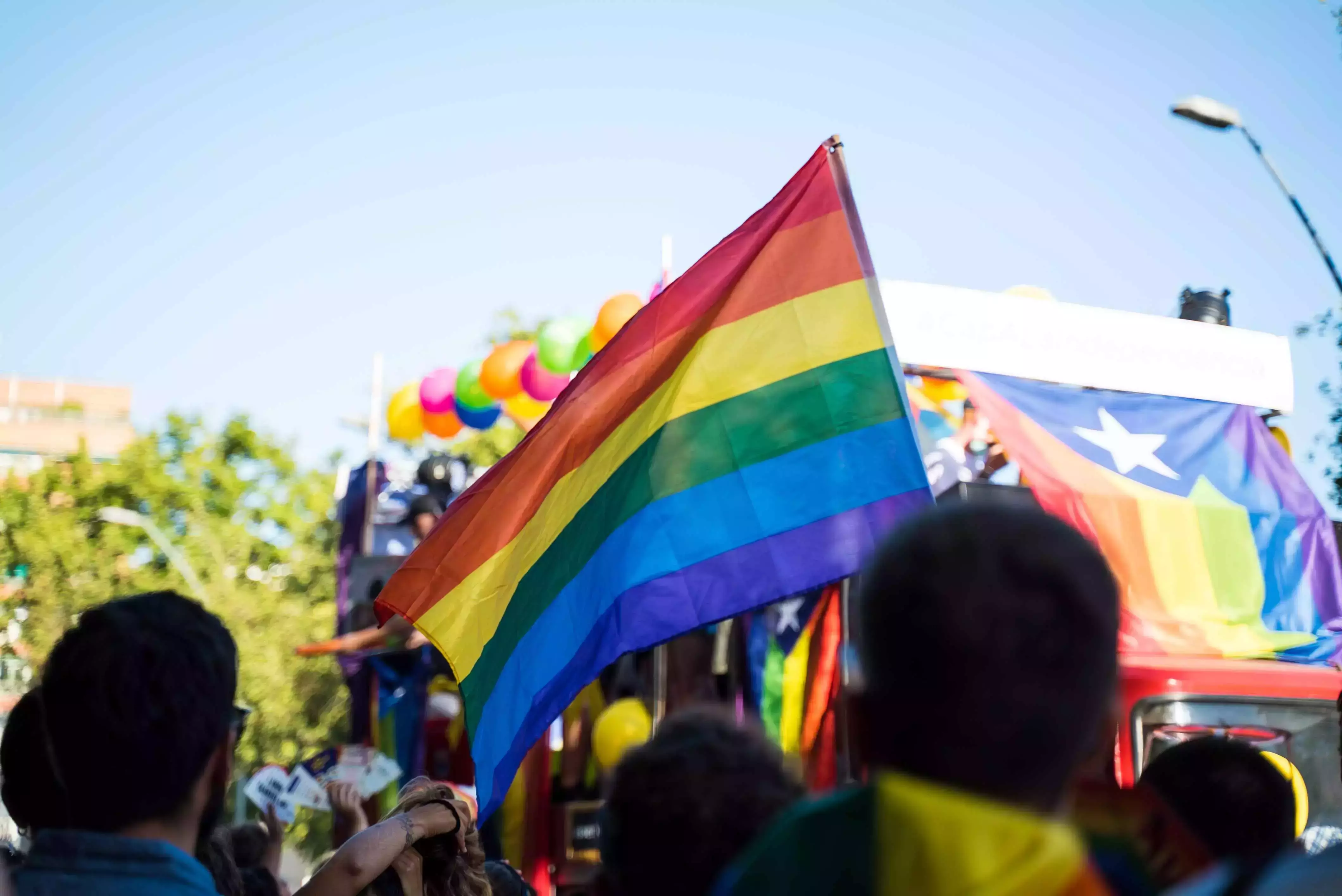
25. Barcelona, Spain
Barcelona, along with Madrid, are widely known as the LGBTQ+ capitals of Spain, with a high Gay Index Rating and a large Pride attendance across each city. Barcelona and the rest of Spain are highly regarded for their acceptance of the LGBTQ+ community, as Spain was one of the first countries in the world to legalise gay marriage in 2005. Barcelona has a thriving LGBTQ+ scene, with an abundance of gay bars, clubs and even beaches that cater to the LGBTQ + community – no matter where you go in Barcelona, you’ll be welcomed with open arms regardless of your sexual orientation or gender.
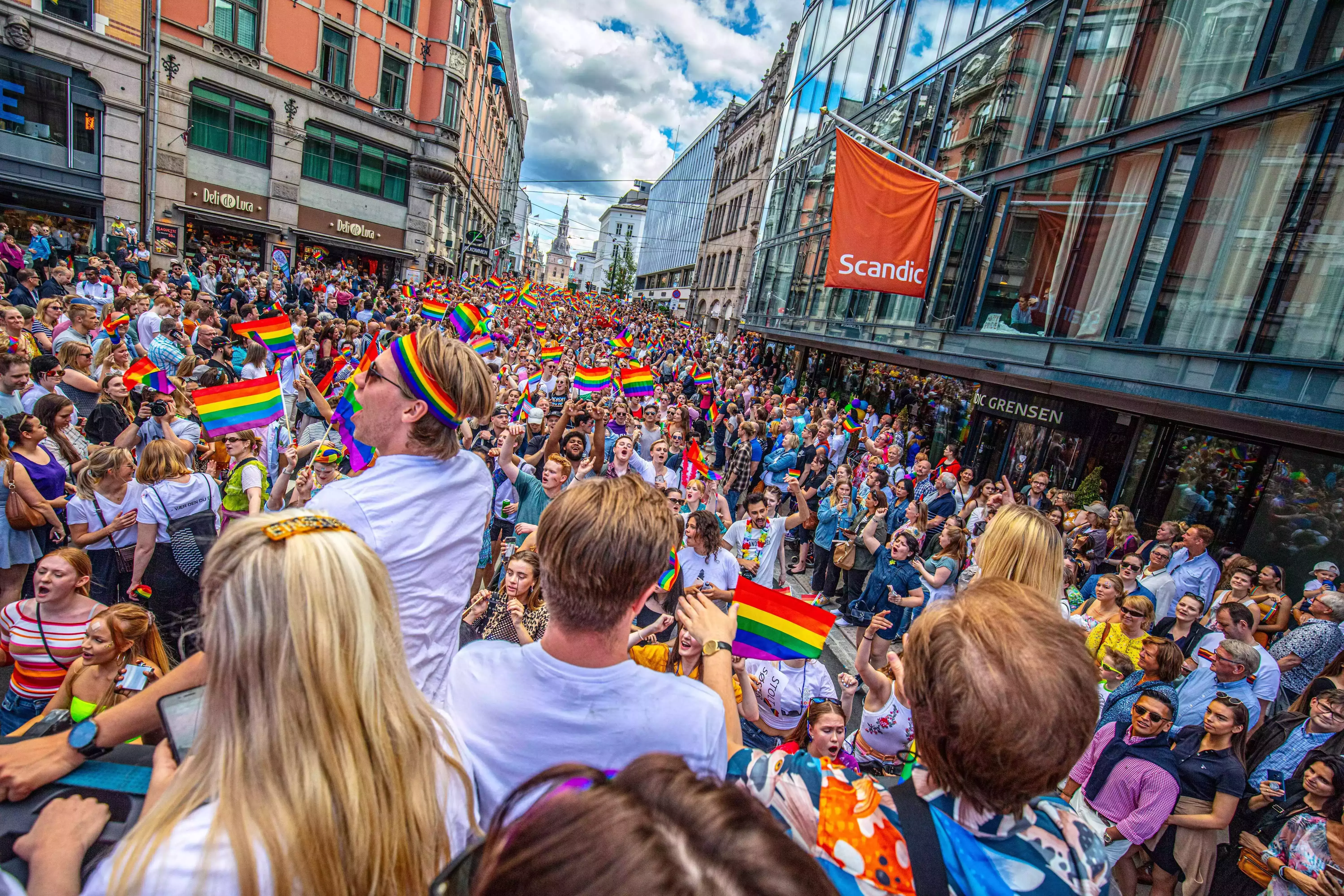
24. Oslo, Norway
Norway is commonly associated with being a liberal, inclusive and welcoming country, and its capital Oslo comes out on top in terms of LGBTQ+ representation and inclusivity. The city has high Equaldex Score and Gay Index Rating, so is a must-visit for members of the LGBTQ+ community. Did you know that Oslo also hosts an annual Pride event that has amassed around 90,000 attendees in recent years? Oslo’s main LGBTQ+ friendly area is Grünerløkka, where you’ll find a large collection of LGBTQ+ friendly bars, restaurants and clubs, although the city as a whole is welcoming and accepting no matter where you go.
23. Helsinki, Finland
Scoring highly on both the Equaldex and Gay Index Rating, as well as having a large Pride attendance and overall LGBTQ+ presence, Helsinki is one of the best places to be if you want to feel welcomed with open arms in every corner of the city, no matter your sexual orientation, gender or who you identify as.
Helsinki’s annual Pride march and parade typically sees more than 100,000 attendees, giving an idea of how inclusive the city really is. Finland is known for being a progressive and liberal country, and same-sex marriage has been legal in the country since 2017, having been decriminalised since the early 1970s and views changing in the early 80s.
22. Montreal, Canada
Montreal is one of the LGBTQ+ capitals of Canada, celebrating the community with a designated ‘gay village’ district and a large attendance to the city’s annual Pride events. Montreal is considered a trailblazer in terms of promoting and accepting LGBTQ+ rights, as Quebec was the first province of Canada to ban discrimination around sexuality and sexual orientation in 1977. As with much of the rest of Canada, Montreal has since adopted a liberal and accepting stance on LGBTQ+ communities, and scores highly on both the Equaldex and Gay Index rankings.
21. Buenos Aires, Argentina
Argentina’s capital is often cited as the ‘gay capital of South America’, with a downtown district that is rife with gay bars, restaurants and clubs, and a high Gay Index Rating. Argentina was also the first Latin-American country to legalise same-sex marriage in 2010, and has since become the place to be in terms of inclusivity and LGBTQ+ rights.
Buenos Aires also has a large Pride attendance and citywide celebrations, with a thriving LGBTQ+ presence that makes the city rank highly for equality, inclusivity and representation. Aside from the obvious inclusivity that Buenos Aires offers, the city is a vibrant social hub and welcomes people from all social groups and communities.
20. Reykjavik, Iceland
Reykjavik has long been considered a haven for LGBTQ+ members and most groups in society, and although the city may be small, it packs a punch in terms of LGBTQ+ rights and representation. Reykjavik’s most recognisable street is so iconic thanks to its rainbow road, which indicates and highlights Reykjavik’s support for equality surrounding the LGBTQ+ community. Reykjavik’s Pride event is a large-scale affair, with thousands of locals and tourists attending to show their support. Reykjavik also has one of the highest Gay Index Ratings and Equaldex Scores.
19. Bogotá, Colombia
Although Bogota has the lowest Equaldex score, it has a high Gay Index Rating and a vibrant gay village that features what is considered to be the largest gay club in South America, Theatron.
Bogota’s annual Pride event has also seen crowd sizes of more than 100,000 people, making it one of the largest Pride celebrations around. It’s clear that Bogota is a friendly, inclusive and welcoming place for every tourist, whether they’re part of the LGBTQ+ community or not.
18. Valletta, Malta
This small city packs an almighty punch in terms of LGBTQ+ inclusivity. Valletta ranks highly on both Gay Index Rating and Equaldex, with scores of 8.5 and 100, respectively, giving an idea of how supportive the city is for the rights of LGBTQ+. Valletta also sees a large turnout for its annual Pride festival and march, and has hosted the widely renowned EuroPride in 2023, adding to Valletta’s reputation as one of the most LGBTQ+ friendly cities in Europe.
17. Copenhagen, Denmark
The Scandinavian countries are known for their progressiveness, inclusivity, liberal stances and welcoming and accepting cultures, especially when it comes to LGBTQ+ rights and support. Copenhagen, Denmark’s capital, is known for its lively and thriving LGBTQ+ community, with many gay bars and clubs, as well as a large Pride event. Denmark was one of the first countries in Europe to legalise gay marriage in 2012, and has recognised and accepted homosexuality since the 1930s.
16. Cape Town, South Africa
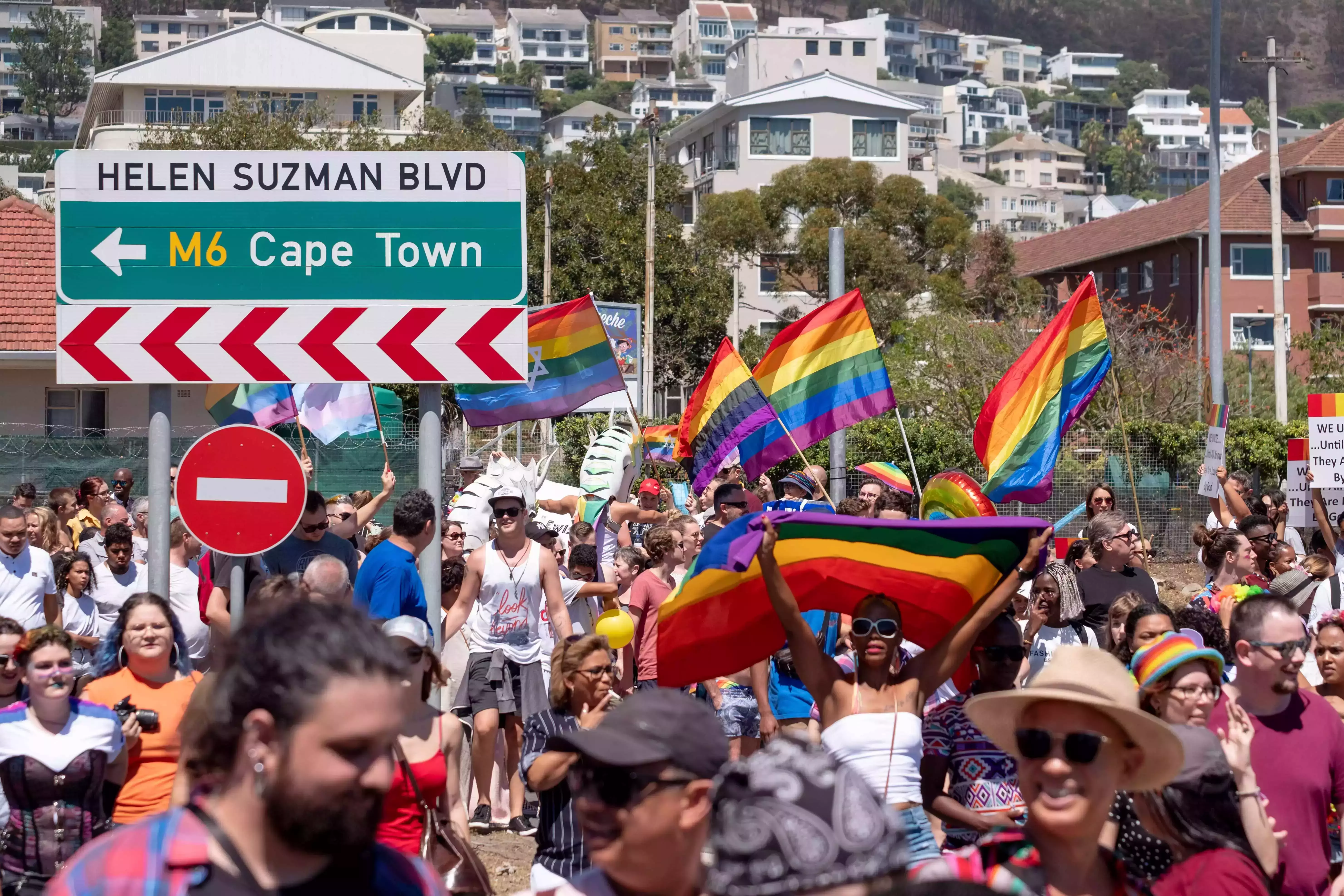
South Africa is a trailblazer for LGBTQ+ rights on the continent, becoming the first country in Africa to legalise same sex marriage in 2006, and Cape Town is at the heart of this legacy. The progressive and inclusive stance makes the city both welcoming and fun for queer locals and visitors, with a schedule of gay-friendly events throughout the year. The coastal capital bursts into the colours of Pride every February/March, and other vibrant celebrations include the Mother City Queer Project and the Out in Africa Film Festival. The De Waterkant neighbourhood is the city’s LGBTQ+ hub, with gay-owned bars, gyms, shops, and cafes, as well as the iconic rainbow crossing – a visual representation of South Africa’s anti-discrimination laws.
15. Mexico City, Mexico
Mexico City was the first Latin American city to legalise same-sex marriage in 2007, and since then, the city has upheld their views and stances on LGBTQ+ support. The city celebrates with one of the world’s largest Pride events, having been attended by more than 1 million people in recent years.
Mexico City scores well on the Gay Index and Equaldex Rating, and its Zona Rosa region is one of the liveliest LGBTQ+ hubs around. It’s safe to say that you’ll be welcomed and supported as a member of the LGBTQ+ community in Mexico City.
14. Cologne, Germany
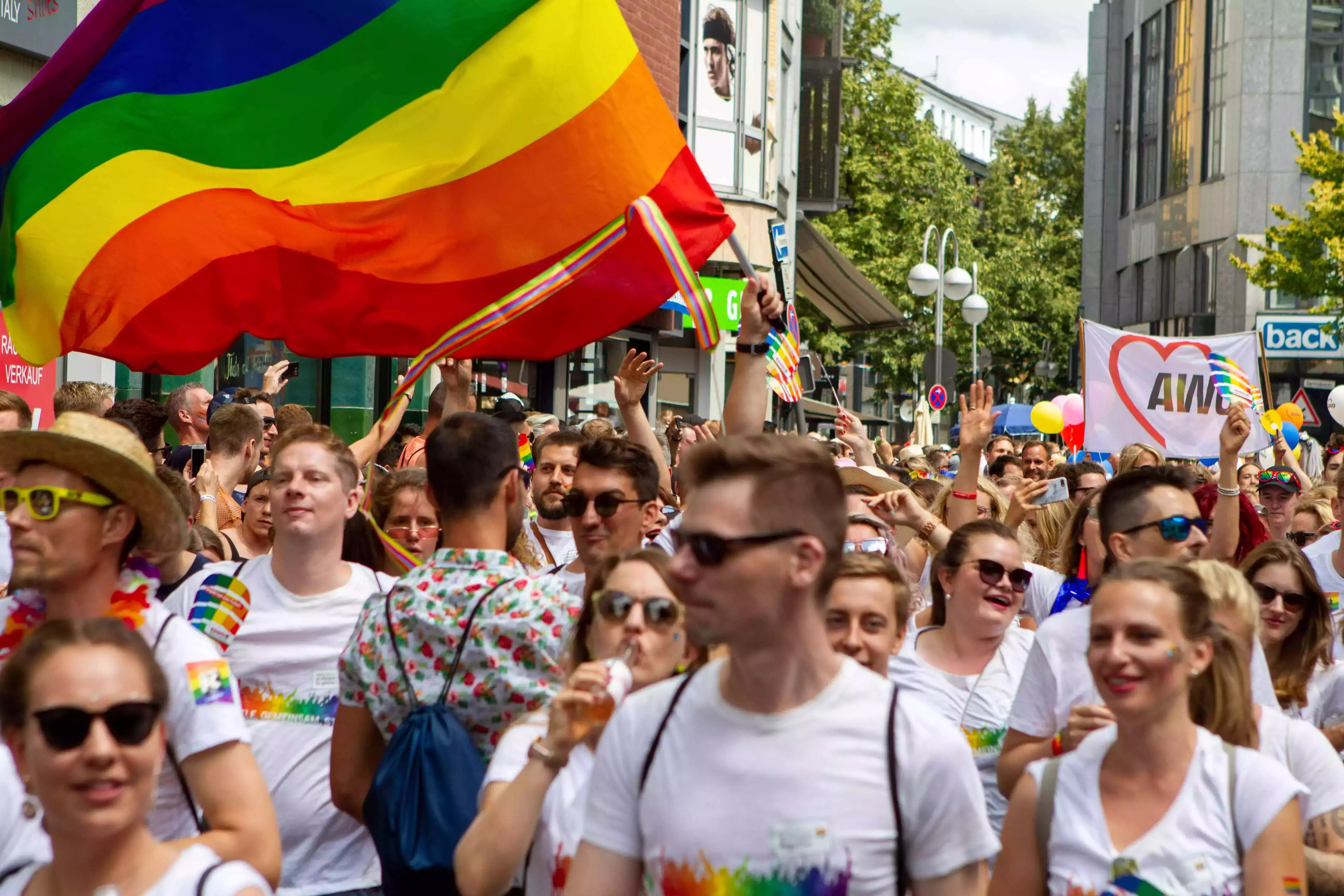
Although this city underperforms on the Gay Index Rating, its quality of life and inclusivity for members of the LGBTQ+ community far outweigh this. Cologne’s Pride is the largest in Germany and one of the largest in Europe, with over 1 million attendees in recent years.
Cologne is also often considered by many as the ‘gay capital of Germany’, thanks to its large-scale Pride attendance and modern and progressive views on the LGBTQ+ community and rights. Cologne is a vibrant and lively city, with a population that is accepting, friendly and welcoming to every tourist, no matter their social group or community.
13. Brighton, UK
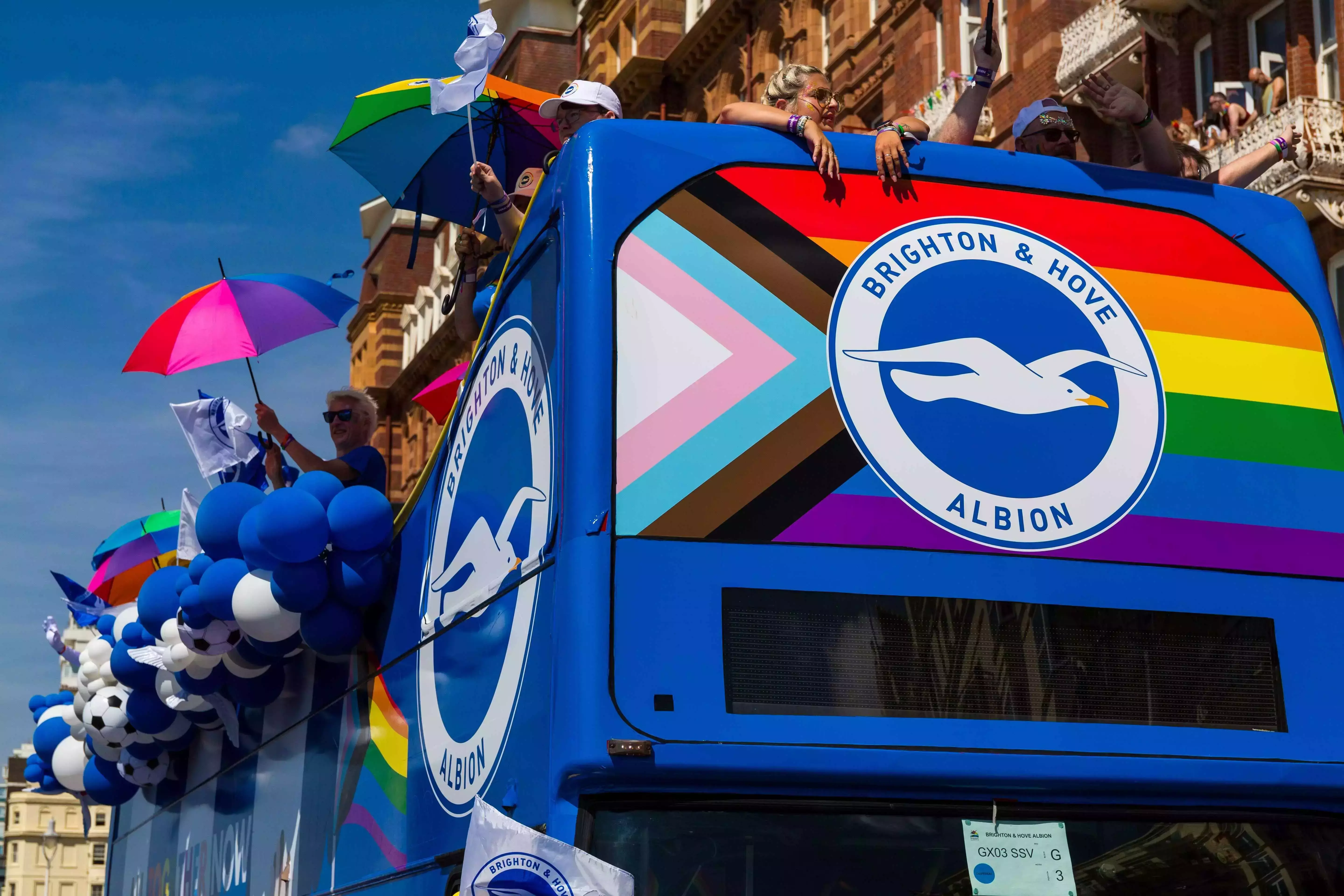
Brighton has a reputation in the UK for being the ‘gay capital’, with a strong sense of community, support and representation for all members of the LGBTQ+ community. Brighton has long had a reputation for its LGBTQ+ scene, dating back to the 1930s, when the city flourished as an inclusive and openly LGBTQ+ space.
The city has since embraced its LGBTQ+ population with an annual large-scale Pride event that sees more than 500,000 attendees. The city is well known for its Pride event, which has been cited as the best in the UK, and its resident gay village and LGBTQ+ district of Kemptown is rife with inclusive bars, clubs and spaces.
12. Paris, France
Paris really comes out on top with its diversity and inclusion for all groups in society. Paris’s annual pride event regularly attracts more than 700,000 attendees, and its vibrant and thriving Marais district is associated with a large LGBTQ+ population. Paris and France as a whole legalised same-sex marriage in 2013, making them one of the first countries/cities in Europe to do so.
11. São Paulo, Brazil
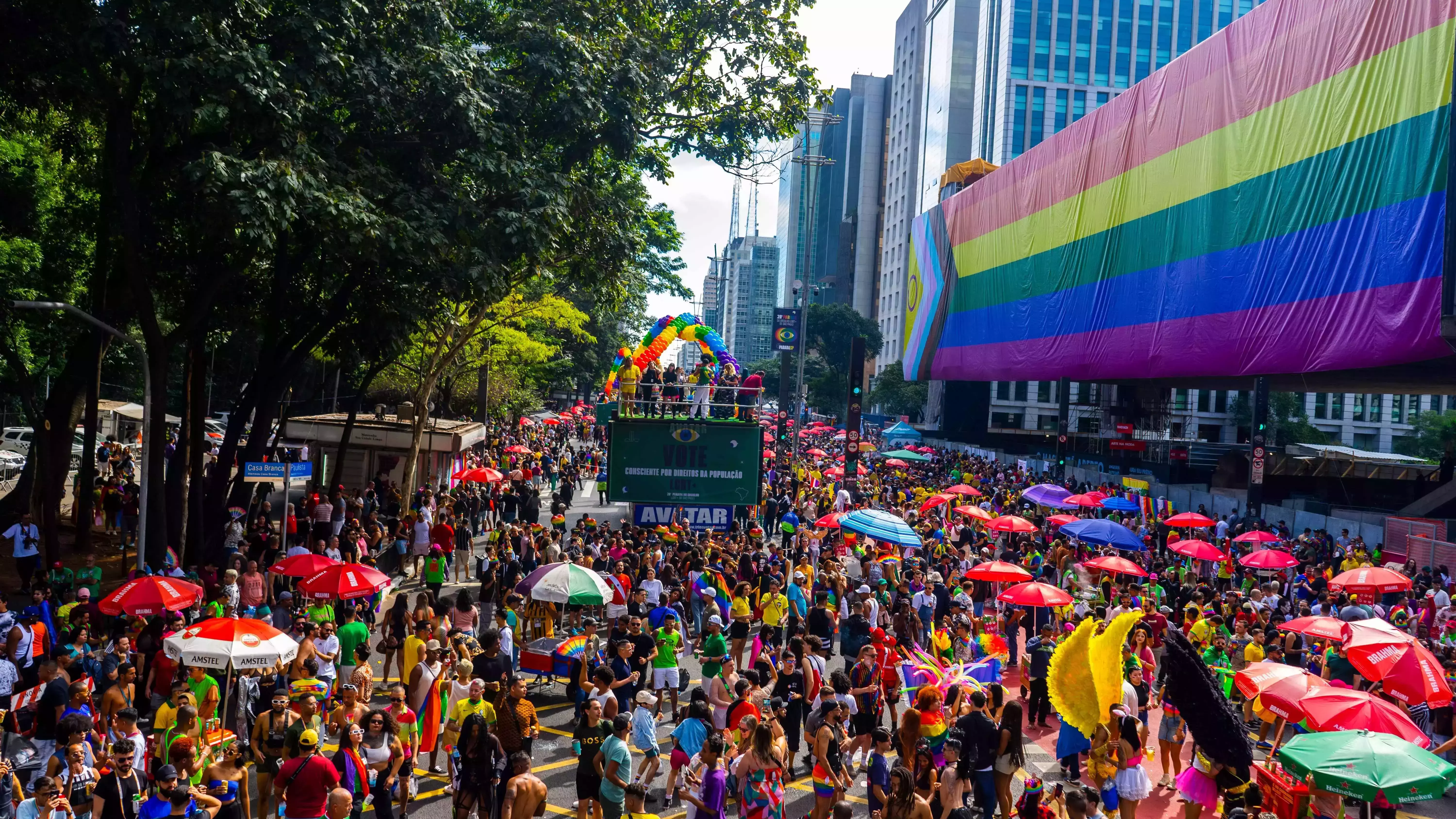
If there’s one thing Brazil knows how to do, it’s throw spectacular street parties and parades. São Paulo’s annual Pride is often considered to be the largest in the world, with more than three million attendees in recent years. São Paulo has also featured in the Guinness World Record for the size and scale of its Pride event.
What’s more, the city is a hub for all things LGBTQ+, with a lively district dedicated to welcoming and representing its LGBTQ+ population. Although the city has a relatively low Gay Index Rating and Equaldex Score, its citywide celebration of LGBTQ+ is enough to make it rank highly for best LGBTQ+ friendly cities.
10. Sydney, Australia
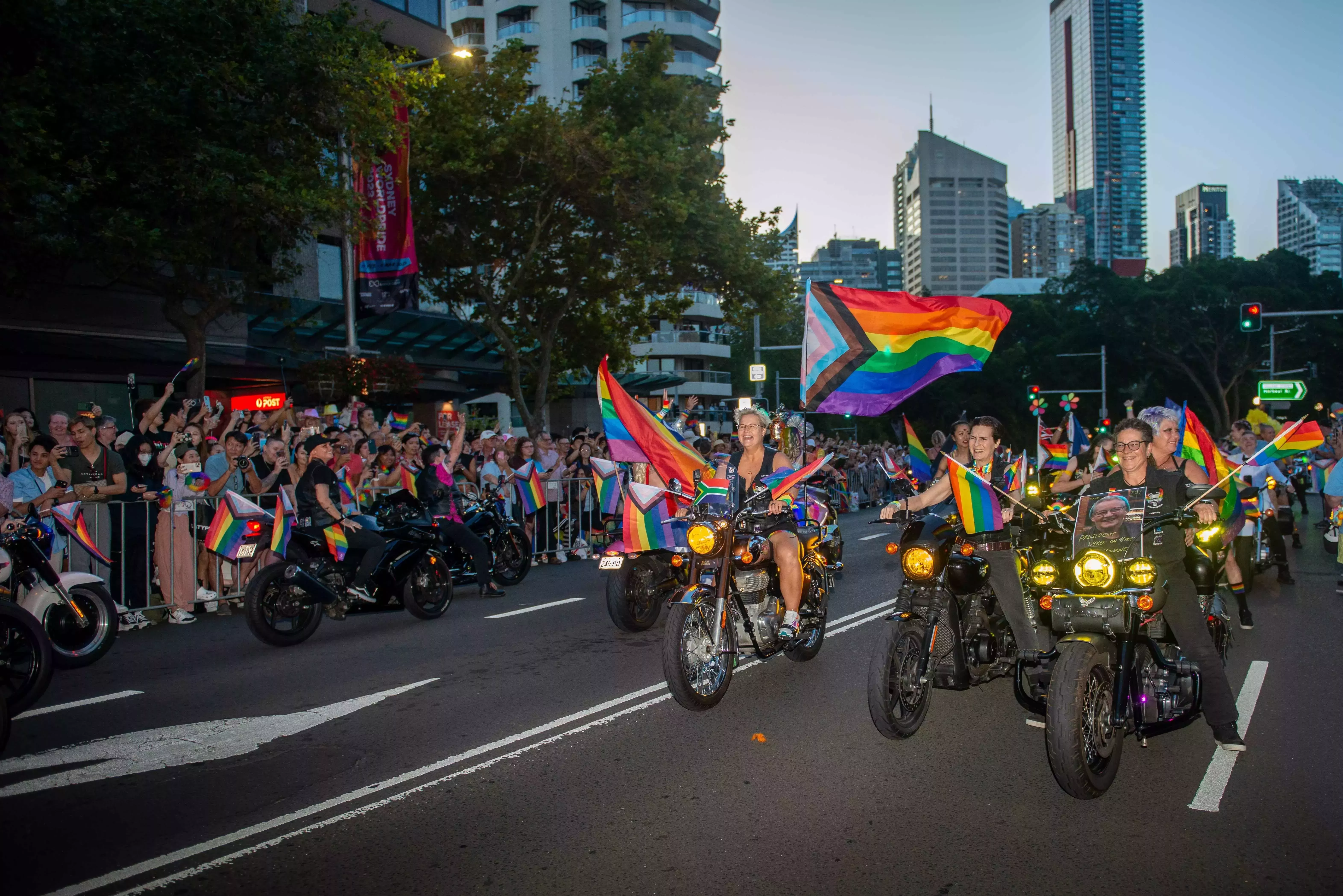
Sydney is one of the most LGBTQ+ friendly cities in the world, and the gay capital of Australia, with its annual Gay and Lesbian Mardi Gras festival leading the way in LGBTQ+ representation and support. Sydney’s Darlinghurst region is considered the gay hub of the city, and has a lengthy history of supporting and upholding LGBTQ+ community rights. Sydney ranks highly on both the Equaldex and Gay Index rankings, and it is a member of the Core LGBTI Group.
Sydney and Australia as a whole have a long history of protecting and supporting the rights of LGBTQ+ members, as homosexuality was decriminalised in the state of New South Wales in 1984, and same-sex marriage was legalised in Australia in 2017. Its annual Gay and Lesbian Mardi Gras event also sees attendees of more than 200,000, making it the largest Pride event in Australia and Oceania as a whole.
9. Toronto, Canada
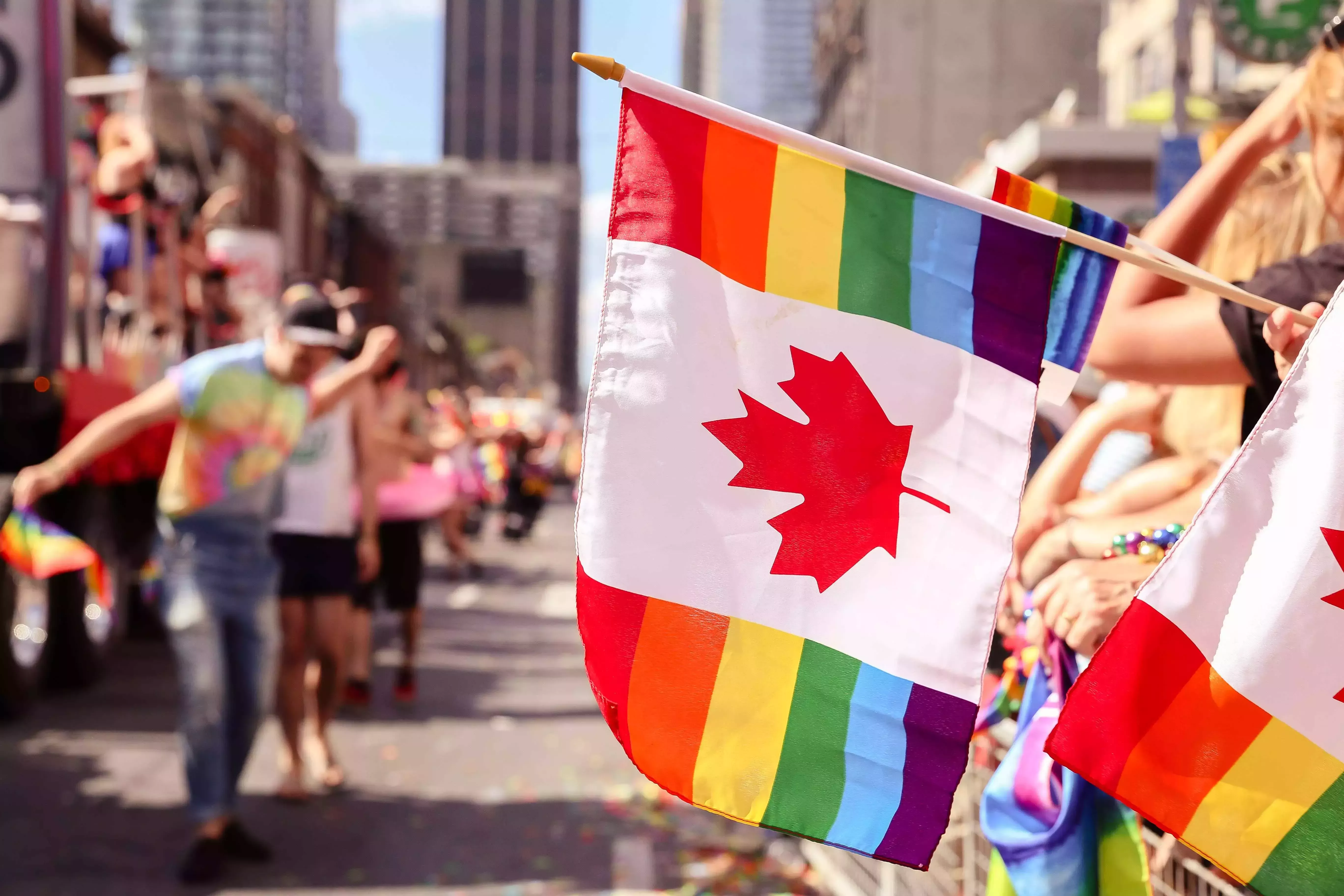
Canada’s largest city hosts the country’s largest Pride event, with just shy of 3 million attendees in recent years, making it North America’s largest and most spectacular Pride Event. Toronto is a buzzing hub for queer peoples, and is one of the most LGBTQ+ friendly cities in the world. Its Church and Wellesley district is the focal point for the LGBTQ+ community, as it is rife with bars, clubs and spaces that are openly supportive.
In terms of statistics, Toronto has a Gay Index Score of 8 and an Equaldex Score of 100, making it one of the best cities for the community. Toronto and Canada as a whole’s LGBTQ+ history is lengthy, with homosexuality becoming decriminalised in the late 1960s, and same-sex marriage being legalised in 2003 in Ontario Province, with the rest following suit not long after.
8. San Francisco, USA
San Francisco is a trendy and diverse Californian city, considered the gay capital of the state. The city is often ranked highly among the world’s most LGBTQ+ friendly cities, and has a sprawling LGBTQ+ scene and district that makes it welcoming and appealing to all members of the community. The city’s annual Pride event is also one of the largest in the US and the world, with around 1 million attendees in recent years. San Francisco and California State are known for their more liberal and progressive views on several matters, not just gay rights, so it makes sense that San Francisco adopts the same inclusive views and atmosphere.
San Francisco ranks at 8.5 on the Gay Index Ranking and at 100 on the Equaldex, giving an indication of its support of LGBTQ+ rights and representation. San Francisco was also one of the first cities in the US to allow same-sex marriage in 2004, despite it not being legal statewide until 2013. Since this, San Francisco has been recognised as one of the LGBTQ+ capitals of the US.
7. Amsterdam, Netherlands
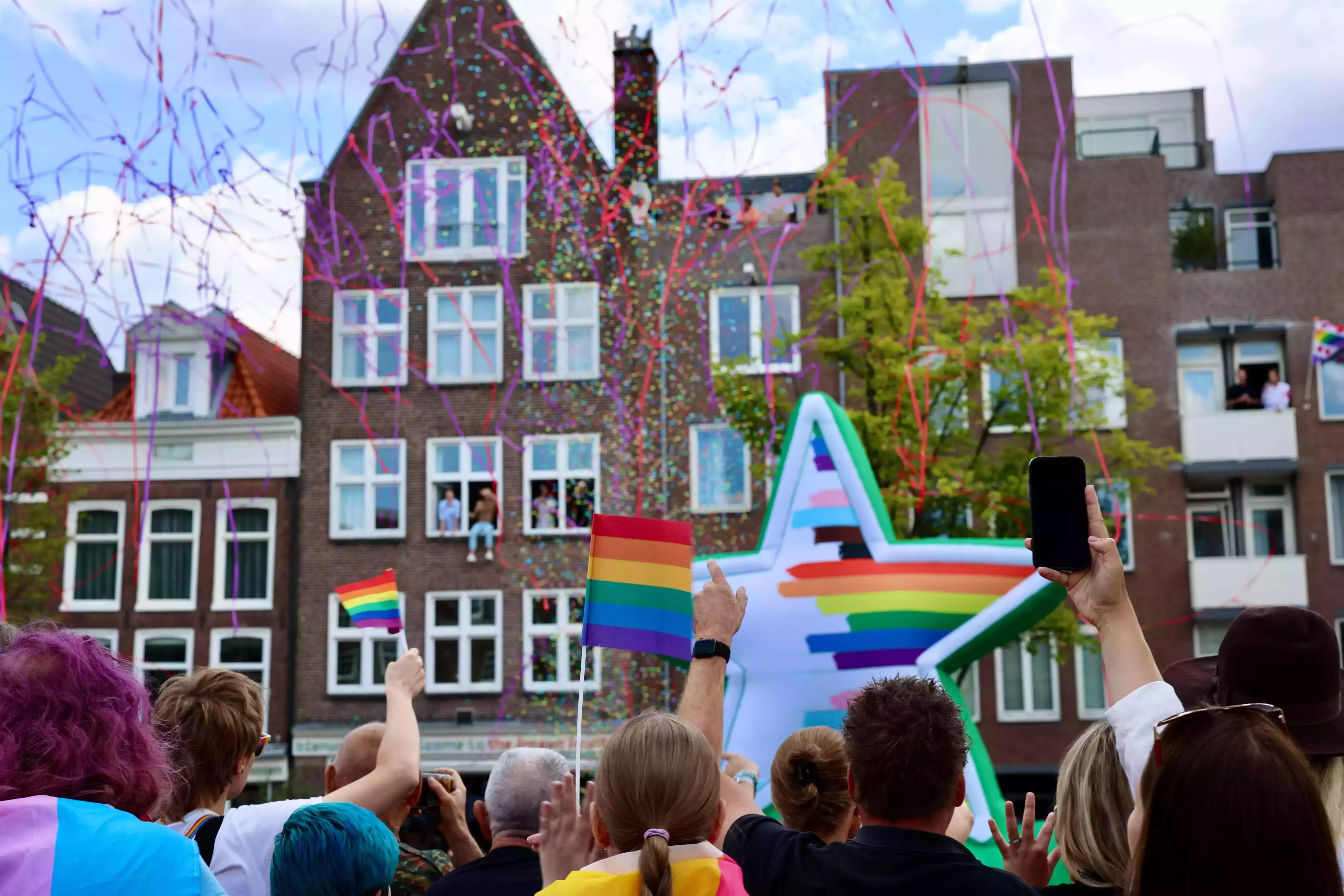
Did you know that the Netherlands was the first country in the world to legalise same-sex marriage in 2001? The city is home to some of the most progressive and liberal views on LGBTQ+ communities in the world. It also has one of the longest LGBTQ+ histories, with homosexuality apparently being decriminalised as far back as 1811, and gay bars and clubs being established in the late 1920s. Since then, Amsterdam and the Netherlands as a whole have become inclusive, supportive and proud of their resident LGBTQ+ communities.
Amsterdam itself has a Gay Index ranking of 8, and an Equaldex score of 100, and its lively Canal Parade Pride event sees attendee numbers of more than 500,000, making Amsterdam’s Pride scene one of the largest in Europe and the world. Amsterdam’s Reguliersdwarsstraat region is the most significant LGBTQ+ area in the city, with a collection of LGBTQ+ friendly establishments, bars, clubs and restaurants.
6. Berlin, Germany
Berlin has a lengthy history of supporting and protecting LGBTQ+ rights, and is one of Germany’s ‘gay capitals’, and certainly one of the ‘gay capitals’ of Europe. The city has, for a long time, recognised and respected the rights of LGBTQ+ members, with a thriving gay village and a strong sense of community and inclusivity across the city.
Berlin ranks highly on the Gay Index and has a high Equaldex score, demonstrating how inclusive and safe it is for proud LGBTQ+ members. Its annual Pride event attracts between 500,000-1 million attendees, with the whole city and tourists coming together to support the community and partake in parades and marches. Germany is known for its progressive and liberal stance on LGBTQ+ rights and protection, so it makes sense that Berlin is a thriving hub for community members.
5. Madrid, Spain
With a thriving LGBTQ+ culture, Europe’s largest Pride event with more than 2 million attendees, and a plethora of LGBTQ+ friendly bars, clubs and restaurants, Madrid is definitely the place to be. Spain was one of the first countries in the world to legalise same-sex marriage in 2005, and homosexuality was legalised in 1979.
Madrid has a thriving LGBTQ+ community and scene, and caters to the community in a number of inclusive ways. Its Pride event is one of the city’s most important events of the year, and sees well over 2 million people attend each year. Madrid also has one of the highest Gay Index scores and an Equaldex score of 100.
4. London, UK
London is associated with a thriving and strong LGBTQ+ presence, and a number of gay bars, restaurants and exclusive LGBTQ+ spaces. Soho is the beating heart of the LGBTQ+ community, with a wide range of LGBTQ+ friendly spaces, but most of London is accepting and inclusive towards the community. Not only does London score highly on both the Gay Index and Equaldex rankings, but since the late 1960s, views and laws surrounding same-sex activities have become much more liberal and accepting, with same-sex marriage becoming officially legal across the UK in 2013.
London’s annual Pride event sees a turnout of more than 1 million people, making it one of the largest Pride events in the world. London also has a lengthy and significant LGBTQ+ history, with activism, marches and events being at the forefront. It’s safe to say that London is not only the capital of the UK, but it is one of the capitals of the world when it comes to LGBTQ+ rights and acceptance.
3. Porto, Portugal
First and foremost, Portugal was one of the first countries to legalise same-sex marriage in 2010, with its cities of Lisbon and Porto becoming thriving LGBTQ+ hubs since.
,Porto’s main LGBTQ+ district is Galerias de Paris and several other spots around the city, but the city as a whole has an inclusive and accepting feel no matter where you go. Although Porto has one of the lowest Gay Index scores of 6.9, it makes up for it with its Pride celebration that sees a significant turnout and its high Equaldex score of 93.
2. Dublin, Ireland
Dublin hasn’t always been the safe and accepting place for the LGBTQ+ community that it is now, but views and laws have drastically changed since homosexuality was decriminalised in 1993, and same-sex marriage was legalised by popular vote in 2015, making Ireland the first country in the world to legalise it in this way.
Dublin is now a thriving hub for all members of the community. The city’s progressive stances on LGBTQ+ make it all the more welcoming and inclusive to people of all backgrounds. To further Dublin’s changing views on LGBTQ+, its annual Pride event sees attendees of more than 70,000 take to the streets in solidarity for the community and its rights.
1. Lisbon, Portugal
Now we come to number 1, the world’s most LGBTQ+ friendly city: Lisbon. The city is a trailblazer in cultivating a safe, supportive, and fun community for queer people. It’s not just the capital that’s gay-friendly; Portugal decriminalised homosexuality in 1982 and was the eighth country in the world to legalise same-sex marriage in 2010.
The city’s chart-topping Equaldex score of 100 solidifies it as an inclusive powerhouse, and Lisbon celebrates in true festive style with a colourful, fun-filled Pride weekend in June. Lisbon also hosts the International Queer Film Festival.
June 26, 2015 was a milestone day in the United States when the SCOTUS decision was announced in the case of Obergefell v Hodges. A narrow 5-4 ruling brought nationwide marriage equality for LGBTQ people much sooner than many expected it. I certainly did not even think it would occur in my lifetime. The nation was split down the middle on the topic. A piecemeal approach was commonplace, with some states making it legal before the ruling, and others staunchly opposed to it in their state constitutions. Yet, a conservative justice saw fit to challenge the status quo and actually base a ruling on the US Constitution for a change, rather than political ideology.
We had already been married for almost 4 years at that point. We were living in Texas in July 2011 and my boyfriend at the time decided to ask me to marry him (now her, but that is another story for another day). We had been living together nearly 10 years. Going to Canada was floated as an idea. I had family in New Jersey and Andrew Cuomo in New York had just its own marriage equality law June 24 that year to take effect in July. So, New York it was! I had become an internet wedding planner of my own wedding by then to be wed on October 09, 2011, one day difference from our “10th anniversary”. It was tedious. It was stressful. It was fun. It was one of the best days of my life. I will never do it again. Sorry boys and girls.
While our own wedding anniversary of 14 years is coming this fall, I sit here writing this and worried that we will have to go through even more bullshit to not only keep our marriage legally intact, but to ensure future generations maintain their right to due process and equality under the law. We have a Supreme Court who has already shown it has the balls to revisit and repeal established forward thinking case law precedent. See, Roe v Wade’s death as a result of Dobbs v. Jackson Women’s Health Organization. Chief Justice Roberts and Justices Thomas, and Alito, who each wrote a dissenting opinion in Obergefell v Hodges are still proudly part of the conservative super majority on the bench. Yes, there is a Respect for Marriage Act that was finally passed in 2022 to help reaffirm O v H.
But we also have a President and House who are willing to turn back time. We have state legislators, who are now firing the opening salvo towards repeal of marriage equality. House reps in 9 states in 2025 proposed resolutions urging SCOTUS to repeal O v H. Those resolutions were passed in North Dakota and Idaho. 4 other states introduced bills, which failed, to introduce covenant marriage to their books, which would have created an exclusive category for opposite sex couples.
I hope everyone enjoys their anniversary, whether you were married today or at another point in time. But please remain vigilant and pay fucking attention to what is going on around you. Your rights can always be removed with the stroke of a pen. And sometimes that pen needs to be shoved into an uncomfortable place.
This is us. Climate change was on full display.
John Turner-McClelland is the editor of several blogs including FleeRedStates. He is a licensed real estate agent in Texas and North Carolina. He was on a Vice News panel once and was allowed to speak for 5 seconds on air. He has been a proud liberal LGBTQ activist and former elected official for a few decades or so. Yes, he is still married.
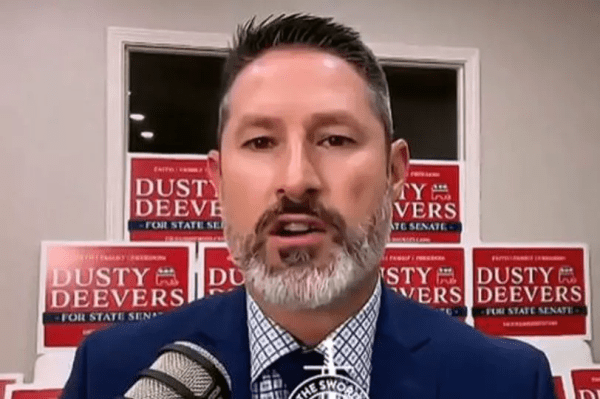
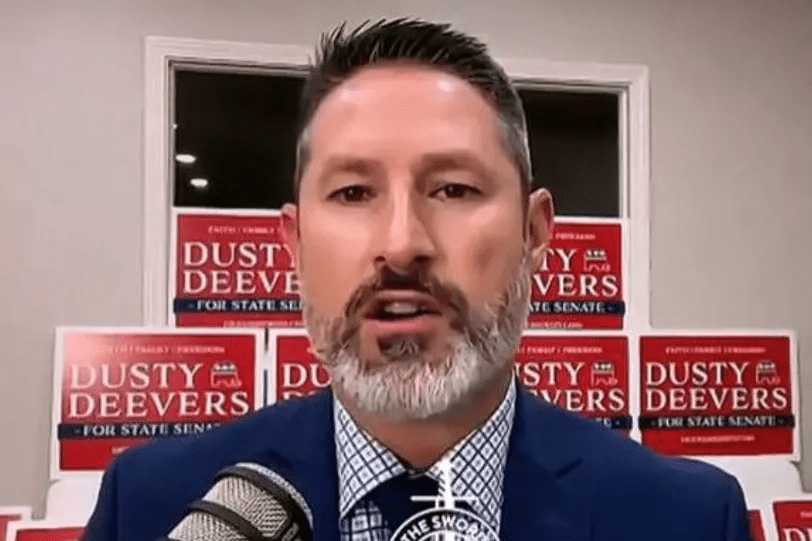
Christian nationalist Oklahoma state Sen. Dusty Deevers (R) and state Rep. Jim Olsen (R) have filed a resolution asking the U.S. Supreme Court to overturn Obergefell v. Hodges, the 2015 U.S. Supreme Court decision that legalized same-sex marriage nationwide. Republican lawmakers in at least five other states have introduced similar resolutions, all of which are largely symbolic and non-binding.
Senate Concurrent Resolution 8 claims that the 2015 high court ruling conflicts with the original meaning of the U.S. Constitution, the country’s founding principles, and “the deeply rooted history and tradition” regarding state regulation of marriage rights. It also notes that 75% of Oklahoma voters supported banning any recognition of same-sex unions in a 2004 ballot measure.
The resolution refers to the Supreme Court decision as an “unwarranted governmental intrusion,” accuses the high court of abusing “the Fourteenth Amendment’s Due Process Clause to fabricate substantive rights,” and says the 2015 decision is “undermining the civil liberties” of states “without any valid constitutional warrant for doing so.”
“For millennia marriage has been understood, both in biblical teaching and in the Anglo-American common-law tradition, as the lifelong covenant union of one man and one woman,” the resolution states. “Obergefell arbitrarily and unjustly rejected and prohibited states from recognizing this definition of marriage in favor of its own definition of marriage and a novel, flawed interpretation” of the U.S. Constitution.
It also notes that both Democratic Justices Ruth Bader Ginsburg and Elena Kagan had previously officiated same-sex weddings before the ruling and “should have recused themselves” from the Obergefell case. It further states that the decision has resulted in litigation directly targeting Christian business owners who refuse to accommodate same-sex couples and has resulted in Christians being vilified as “bigoted.”
“Obergefell played a role in erasing biological distinctions in other arenas, threatening women’s privacy, safety, and athletic opportunities,” the resolution adds, drawing a dubious connection between same-sex marriage and transgender people’s civil rights.
If the resolution is approved by state lawmakers, copies of it will be distributed to the Supreme Court, the president of the U.S. Senate, the Speaker of the House of Representatives, members of the Oklahoma congressional delegation and the Oklahoma attorney general, the resolution states.
Similar resolutions have been introduced in at least five other states: Michigan, Idaho, Montana, North Dakota, and South Dakota.
Deevers & Olsen’s resolution relies on legal misinterpretations
The court’s 2015 decision relied partially on the 1967 high court ruling in Loving v. Virginia, which granted marriage rights to heterosexual couples consisting of individuals from different racial ethnicities.
“If rights were defined by who exercised them in the past, then received practices could serve as their own continued justification and new groups could not invoke rights once denied,” the Supreme Court wrote in its 2015 decision.
The court’s majority opinion also ruled that governmental refusal to recognize same-sex marriages denies them numerous benefits of marriage, including the ability to care for children and family members. State bans on same-sex marriages also restricted same-sex couples’ and their families’ ability to move freely around the country, since their rights could vary greatly if they moved to an anti-marriage state, the court ruling said.
As such, the court ruled that same-sex marriage bans violate both the Due Process Clause and the Equal Protection Clause by needlessly introducing instability into same-sex relationships for no justifiable or compelling government interest.
While some Christian businesses have been sued for refusing to serve LGBTQ+ people and same-sex couples based on “sincerely held religious beliefs,” these lawsuits have focused on how such refusals violate public accommodations protections in state anti-discrimination laws, which require businesses to treat citizens equally, regardless of sexual orientation.
Deevers has long opposed same-sex marriages
Speaking last month to Tony Perkins, president of the Family Research Council (FRC) — which has been certified as a hate group by the Southern Poverty Research Center — Deevers said, “The fact is, Obergefell is fundamentally antithetical to all of these, and there is just no right to gay marriage in the Constitution.”
Despite this claim, the Supreme Court believes that the Constitution’s equal protection and due process provisions require the government to treat all individuals equally under the law unless there’s a compelling government interest to do otherwise.
“Ultimately, marriage is not the state’s institution, it’s God’s institution,” Deevers said. “No Supreme Court ruling that redefines a God-ordained institution is ever truly settled: not morally or culturally, and even constitutionally. The rogue court will stand in judgment before God for their decision.”
Deevers’s campaign website also clearly states his anti-LGBTQ+ beliefs.
“It is outrageous that drag queens are permitted to dance and twerk for children at pride parades and story hours in our state,” his website states. “It is outrageous that … public schools have exposed elementary and middle school children to… LGBTQ+ propaganda…. It is outrageous that Critical Race Theory and Queer Theory dominate in many of our public institutions. I promise to support legislation to put a stop to all of this.”
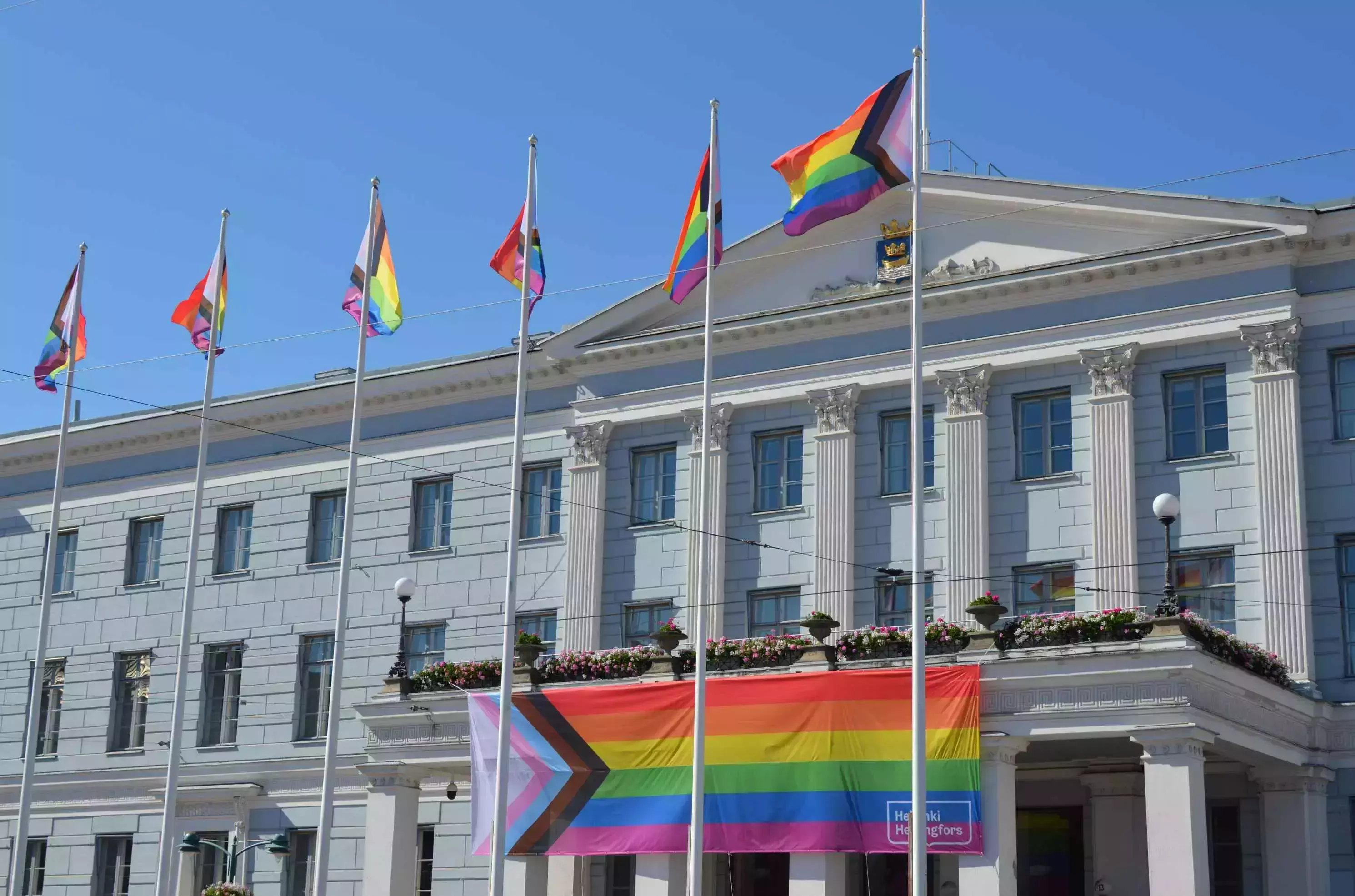
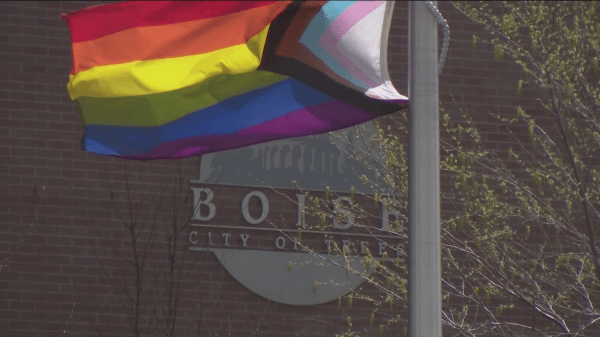
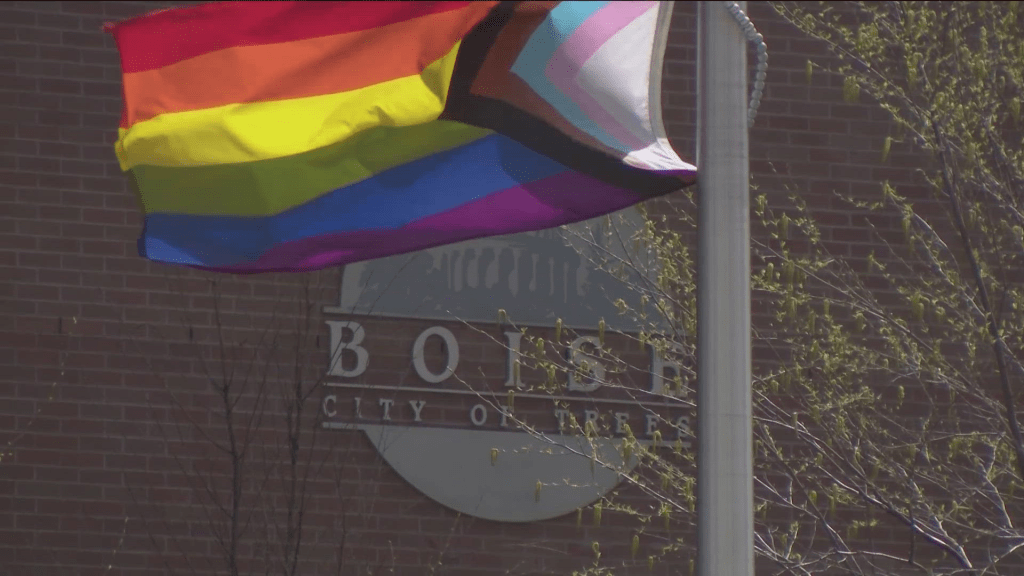
On Tuesday, Boise City Council members approved a resolution designating three flags, including the Pride flag, as official flags of the City of Trees.
The vote comes amid ongoing tensions between Boise Mayor Lauren McLean and the Idaho Attorney General over a new state law, House Bill 96, which regulates which flags local governments can display.
“A city should be able to put up flags at various times for whatever reason the community might want,” community member Patti Raino said, “and this is a community that supports, certainly pride. Has always supported pride.”
Hundreds of people showed up to rally in support of the city before the meeting started. About a dozen of those were protestors against the resolution — including Robert Coggins.
“I’m just a native Idahoan,” he said. “I feel like I do not have a voice, and this mayor does not let me have a voice. I think [the flag is] exclusionary. It doesn’t represent me.”
Council President Colin Nash, who sponsored the resolution, said it would help “memorialize” flags the city flies and ensure compliance with state law.
“It’s important for us, not only to communicate to any law enforcement that might be interested, but also to the public that we’re doing this out of a sense of duty, rather than defiance of the state legislature,” Nash said before the vote.
Nash added the flags represent the city’s values and responsibilities.
“This is our lawful expression of our dedication to ensuring all members of our community feel seen, respected, and welcome,” he said. “I think there is an expectation among the opponents of it, that the government should remain neutral in issues like this. I’m not neutral on defending marginalized neighbors.”
The resolution includes not only the Pride flag but also designates the blue City of Boise flag and the white organ donor flag honoring National Donate Life Month as official city flags.
City officials say the resolution acknowledges and formally ratifies that flags flown at Boise City Hall comply with Idaho state law.
The council meeting did not include public testimony on the resolution. During the council discussion, McLean reminded the public in attendance they could not speak after several members of the audience made comments towards the council.
The city announced last week, attorneys from Holland & Hart have volunteered to represent Boise pro bono if any legal action is taken against the city regarding this matter. The volunteer legal team includes Erik Stidham, Jennifer Jensen, Alex Grande and Anne Haws.
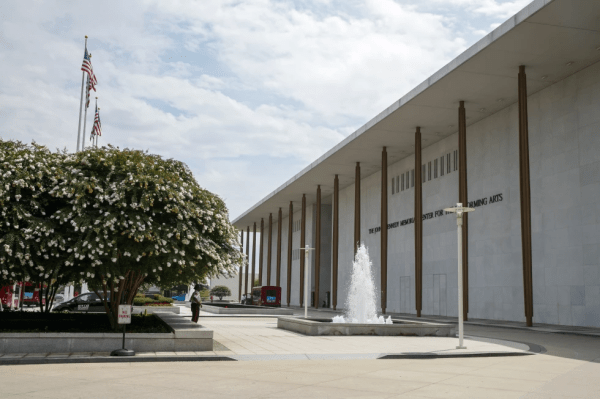
Organizers and the Kennedy Center have canceled a week’s worth of events celebrating LGBTQ+ rights for this summer’s World Pride festival in Washington, D.C., amid a shift in priorities and the ousting of leadership at one of the nation’s premier cultural institutions.
Multiple artists and producers involved in the center’s Tapestry of Pride schedule, which had been planned for June 5 to 8, told The Associated Press that their events had been quietly canceled or moved to other venues. And in the wake of the cancellations, Washington’s Capital Pride Alliance has disassociated itself from the Kennedy Center.
“We are a resilient community, and we have found other avenues to celebrate,” said June Crenshaw, deputy director of the alliance. “We are finding another path to the celebration … but the fact that we have to maneuver in this way is disappointing.”
The Kennedy Center’s website still lists Tapestry of Pride on its website with a general description and a link to the World Pride site. There are no other details.
The Kennedy Center did not respond to a request from the AP for comment.
The move comes on the heels of massive changes at the Kennedy Center, with President Donald Trump firing both the president and chairman in early February. Trump replaced most of the board with loyalists, who then elected him the new Kennedy Center chairman.
The World Pride event, held every two years, starts in just under a month — running from May 17 through June 8 with performances and celebrations planned across the capital city. But Trump administration policies on transgender rights and comments about Kennedy Center drag performances have sparked concern about what kind of reception attendees will receive.
“I know that D.C. as a community will be very excited to be hosting World Pride, but I know the community is a little bit different than the government,” said Michael Roest, founder and director of the International Pride Orchestra, which had its June 5 performance at the Kennedy Center abruptly canceled within days of Trump’s takeover.
Roest told the AP he was in the final stages of planning the Kennedy Center performance after months of emails and Zoom calls. He was waiting on a final contract when Trump posted on social media Feb. 7 of the leadership changes and his intention to transform the Kennedy Center’s programming.
Immediately the Kennedy Center became nonresponsive, Roest said. On Feb. 12, he said, he received a one-sentence email from a Kennedy Center staffer stating, “We are no longer able to advance your contract at this time.”
“They went from very eager to host to nothing,” he said. “We have not since heard a word from anybody at the Kennedy Center, but that’s not going to stop us.”
In the wake of the cancellation, Roest said he managed to move the International Pride Orchestra performance to the Strathmore theater in nearby Bethesda, Maryland.
Crenshaw said some other events, including a drag story time and a display of parts of the AIDS Memorial Quilt, would be moved to the World Pride welcome center in Chinatown.
Monica Alford, a veteran arts and culture journalist and event planner, was scheduled to organize an event June 8 as part of Tapestry of Pride, but said she also saw communication abruptly end within days of Trump’s takeover.
Alford has a long history with the Kennedy Center and organized the first-ever drag brunch on the Kennedy Center rooftop in 2024, and said she regarded the institution — and its recent expansion known as The Reach — as “my home base” and “a safe space for the queer community”
She said she was still finalizing the details of her event, which she described as “meant to be family-friendly, just like the drag brunch was family-friendly and classy and sophisticated.”
She said she mourns the loss of the partnership she nurtured with the Kennedy Center.
“We’re doing our community a disservice — not just the queer community but the entire community,” she said.
Roest said he never received an explanation as to why the performance was canceled so late in the planning stages. He said his orchestra would no longer consider performing at the Kennedy Center, and he believes most queer artists would make the same choice.
“There would need to be a very, very public statement of inclusivity from the administration, from that board, for us to consider that,” he said. “Otherwise it is a hostile performance space.”
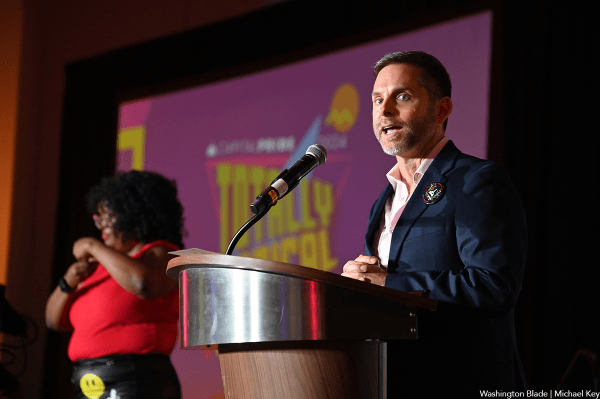
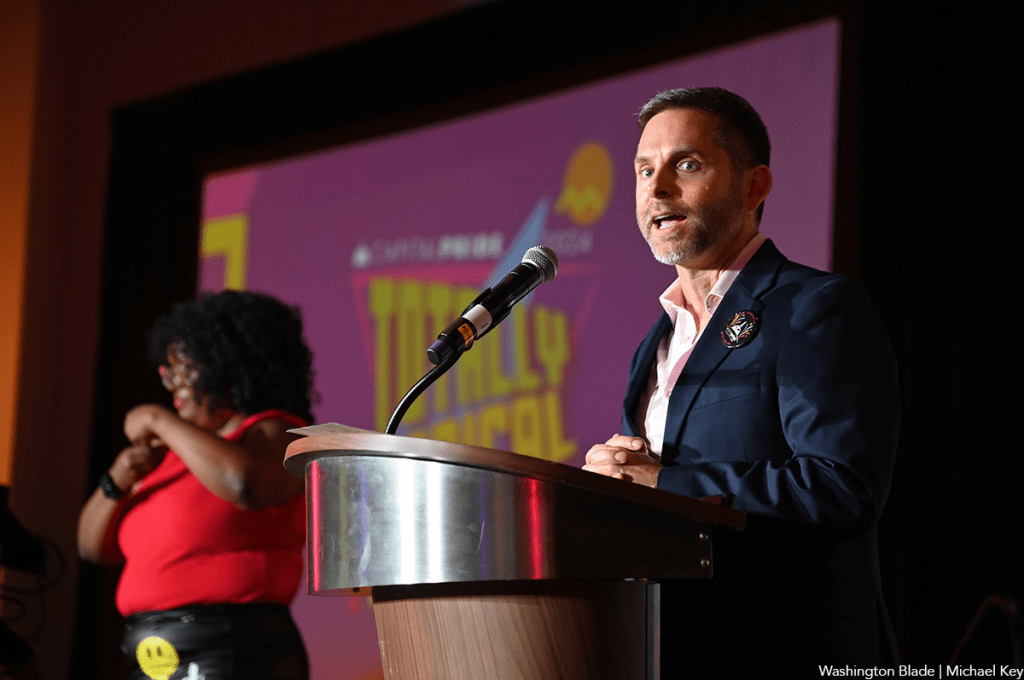
One of the lead organizers of WorldPride 2025, set to take place in D.C. May 17-June 8, told members of the Metropolitan Washington Council of Governments, known as COG, on April 9 that due to the recently implemented anti-trans policies of the Trump administration, it may be dangerous for trans people traveling from abroad to attend WorldPride in D.C, according to a report by WTOP News.
The WTOP report says the message of concern was delivered by Ryan Bos, executive director of D.C.’s Capital Pride Alliance, which is the lead organizer of WorldPride 2025. The news report says Bos spoke at a meeting of COG, which consists of local government officials from D.C. and the surrounding suburban counties in Maryland and Virginia.
“It’s possible that we may actually issue a statement telling trans folks internationally not to come, or if they come, they come at their own risk,” WTOP quoted Bos as saying.
“So, these are the things that we will be discussing with the D.C. government and our partners to determine how best to communicate that to ensure that we’re getting the resources to the folks that need it,” Bos said according to the WTOP report.
WTOP reported that some members of the COG board expressed concern over the news that it may be harmful for trans people to travel to the D.C. area for WorldPride.
“It’s really shameful that you all are having to consider making statements like that,” WTOP quoted Frederick County, Md., Executive Jessica Fitzwater as saying. “It’s really heartbreaking.”
D.C. Council member Charles Allen (D-Ward 6), who attended the COG meeting, told Bos, “I’m disheartened to hear that, but I hope you also recognize you’ve got partners in this room that want to be right there with you to make sure this is a wonderful, successful event, a safe event, that’s going to take place across the whole region,” WTOP reports.
Capital Pride Alliance, in response to a request for further comment on Bos’s remarks at the COG meeting, said in a brief statement that Bos’s presentation was limited to what “may happen.” The statement said no official decision has been made regarding a possible warning for trans people considering attending WorldPride.












 fleeredstates.blog
You must be logged in to post a comment.