State Department to remove LGBTQ information from annual human rights report

*This is being reported by the Washington Blade

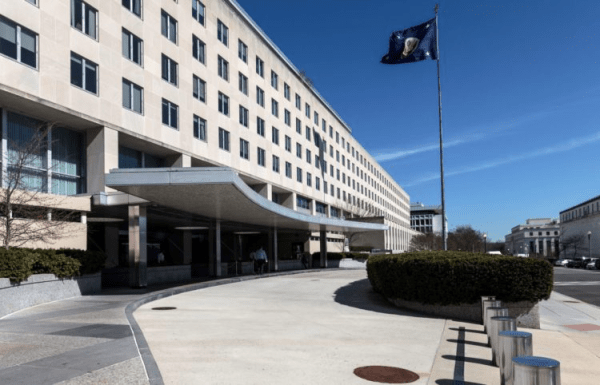
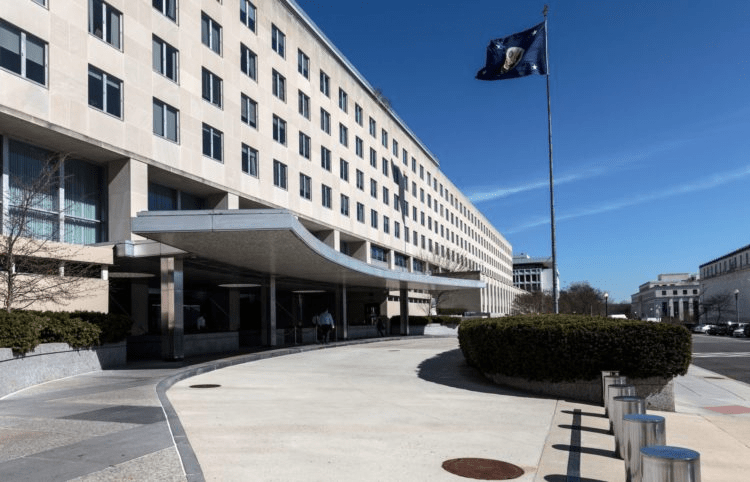
The State Department has not commented a report that indicates it plans to remove LGBTQ-specific information from their annual human rights report.

Politico on March 19 reported the Trump-Vance administration “is slashing the State Department’s annual human rights report — cutting sections about the rights of women, the disabled, the LGBTQ+ community, and more.” The Politico article notes it obtained “documents” and spoke with “a current and a former State Department official who were familiar with the plan.”

“We are not previewing the human rights report at this time,” a State Department spokesperson told the Washington Blade on March 21.

Congress requires the State Department to release a human rights report each year. 

The 2023 report specifically noted Uganda’s Anti-Homosexuality Act that contains a death penalty provision for “aggravated homosexuality.” The 2022 report highlighted, among other things, anti-LGBTQ crackdowns in Afghanistan, Russia, and Hungary and so-called conversion therapy.

President Donald Trump since he took office has signed a number of executive orders that have specifically targeted the LGBTQ and intersex community. These include the “Defending Women from Gender Ideology Extremism and Restoring Biological Truth to the Federal Government” directive that, among other things, bans the State Department from issuing passports with “X” gender markers.

The State Department has eliminated references to transgender travelers from its travel advisories. Germany, Denmark, and Finland have issued travel advisories for trans and nonbinary people who are planning to visit the U.S.

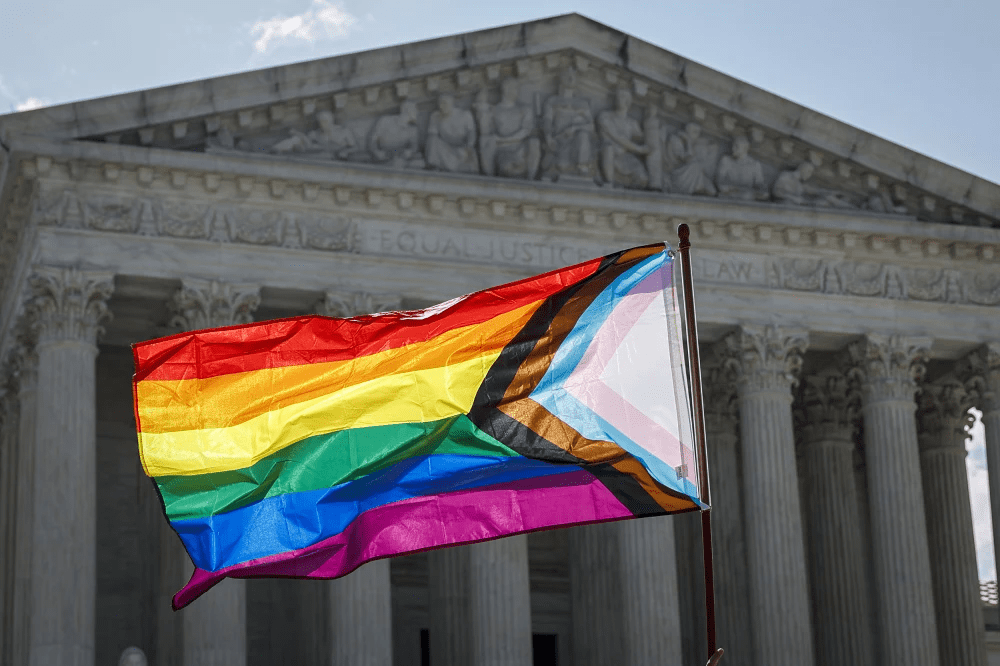
A directive that Secretary of State Marco Rubio issued bans embassies and other U.S. diplomatic institutions from flying the Pride flag. (Former President Joe Biden in March 2024 signed a government spending bill with a provision that banned Pride flags from flying over U.S. embassies.)

The U.S. has withdrawn from the U.N. LGBTI Core Group, a group of U.N. member states that have pledged to support LGBTQ and intersex rights, and the Organization of American States’ LGBTI Core Group. The Trump-Vance administration’s decision to suspend most U.S. foreign aid spending has been a “catastrophe” for the global LGBTQ and intersex rights movement.

Thousands take to the streets after Hungary passes anti-LGBTQ law banning Pride events

*This is being reported by NBC.

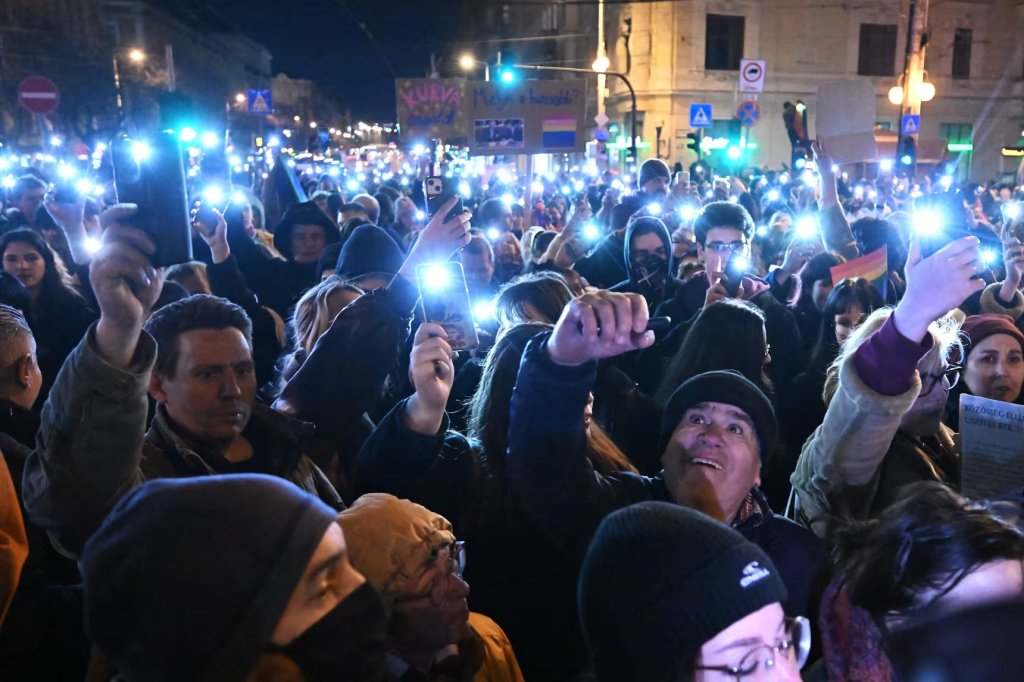
A new anti-LGBTQ law banning Pride events and allowing authorities to use facial recognition software to identify those attending the festivities was passed in Hungary on Tuesday, leading to a large demonstration on the streets of Budapest.

Several thousand protesters chanting anti-government slogans gathered after the vote outside Hungary’s parliament. They later staged a blockade of the Margaret Bridge over the Danube, blocking traffic and disregarding police instructions to leave the area.

The move by Hungarian lawmakers is part of a crackdown on the country’s LGBTQ+ community by the nationalist-populist party of Prime Minister Viktor Orbán, who is an ally of Russian President Vladimir Putin and U.S. President Donald Trump.

The measure, which is reminiscent of similar restrictions against sexual minorities in Russia, was passed in a 136-27 vote. The law, supported by Orbán’s Fidesz party and their minority coalition partner the Christian Democrats, was pushed through parliament in an accelerated procedure after being submitted on Monday.

Opposing legislators led a vivid protest in the legislature involving rainbow-colored smoke bombs.

At the protest outside parliament, Evgeny Belyakov, a Russian citizen who immigrated to Hungary after facing repression in Russia, said the legislation went at the heart of people’s rights to peacefully assemble.

“It’s quite terrifying to be honest, because we had the same in Russia. It was building up step by step, and I feel like this is what is going on here,” he said. “I just only hope that there will be more resistance like this in Hungary, because in Russia we didn’t resist on time and now it’s too late.”

The bill amends Hungary’s law on assembly to make it an offense to hold or attend events that violate Hungary’s contentious “child protection” legislation, which prohibits the “depiction or promotion” of homosexuality to minors under 18.

Attending a prohibited event will carry fines up to 200,000 Hungarian forints ($546), which the state must forward to “child protection,” according to the text of the law. Authorities may use facial recognition tools to identify individuals attending a prohibited event.

In a statement on Monday after lawmakers first submitted the bill, Budapest Pride organizers said the aim of the law was to “scapegoat” the LGBTQ+ community in order to silence voices critical of Orbán’s government.

“This is not child protection, this is fascism,” wrote the organizers of the event, which attracts thousands each year and celebrates the history of the LGBTQ+ movement while asserting the equal rights of the gay, lesbian, bisexual and transgender community.

Following the law’s passage Tuesday, Budapest Pride spokesperson Jojó Majercsik told The Associated Press that despite Orbán’s yearslong effort to stigmatize LGBTQ+ people, the organization had received an outpouring of support since the Hungarian leader hinted in February that his government would take steps to ban the event.

“Many, many people have been mobilized,” Majercsik said. “It’s a new thing, compared to the attacks of the last years, that we’ve received many messages and comments from people saying, ‘Until now I haven’t gone to Pride, I didn’t care about it, but this year I’ll be there and I’ll bring my family.’”

Government crackdown

The new legislation is the latest step against LGBTQ+ people taken by Orbán, whose government has passed other laws that rights groups and other European politicians have decried as repressive against sexual minorities.

In 2022, the European Union’s executive commission filed a case with the E.U.’s highest court against Hungary’s 2021 child protection law. The European Commission argued that the law “discriminates against people on the basis of their sexual orientation and gender identity.”

Hungary’s “child protection” law — aside from banning the “depiction or promotion” of homosexuality in content available to minors, including in television, films, advertisements and literature — also prohibits the mention of LGBTQ+ issues in school education programs, and forbids the public depiction of “gender deviating from sex at birth.”

Booksellers in Hungary have faced hefty fines for failing to wrap books that contain LGBTQ+ themes in closed packaging. Critics have argued Orbán’s campaign amounts to an attempt to cut LGBTQ+ visibility, and that by tying it to child protection, it falsely conflates homosexuality with pedophilia.

Hungary’s government argues that its policies are designed to protect children from “sexual propaganda.”

Is Orbán trying to distract the electorate?

Hungary’s methods resemble tactics by Putin, who in December 2022 expanded Russia’s ban on “propaganda of nontraditional sexual relations” from minors to adults, effectively outlawing any public endorsement of LGBTQ+ activities.

Orbán, in power since 2010, faces an unprecedented challenge from a rising opposition party as Hungary’s economy struggles to emerge from an inflation and cost of living crisis and an election approaches in 2026.

Tamás Dombos, a project coordinator at Hungarian LGBTQ+ rights group Háttér Society, said that Orbán’s assault on minorities was a tactic to distract voters from more important issues facing the country. He said allowing the use of facial recognition software at prohibited demonstrations could be used against other protests the government chooses to deem unlawful.

“It’s a very common strategy of authoritarian governments not to talk about the real issues that people are affected by: the inflation, the economy, the terrible condition of education and health care,” Dombos said.

Orbán, he continued, “has been here with us for 15 years lying into people’s faces, letting the country rot basically, and then coming up with these hate campaigns.”

North Dakota Legislature close to asking Supreme Court to undo landmark gay marriage ruling

*This is reported by NBC.

North Dakota lawmakers are on the verge of making their state the first to tell the U.S. Supreme Court to overturn its decade-old ruling that legalized same-sex marriage nationwide.

Similar efforts — which would not have any direct sway with the nation’s top courts — have been introduced in a handful of states this year. North Dakota’s resolution passed the Republican-led House in February but still requires Senate approval, which is not assured.

“The original Supreme Court ruling in 2015 went totally against the Tenth Amendment, went totally against the North Dakota Constitution and North Dakota Century Code (state laws),” sponsor Republican Rep. Bill Tveit said. “Why did I introduce it? Every one of us in this building took an oath to uphold the Constitution of the United States and the state.”

When the Legislature considers such resolutions, attorney and North Dakota National Guard member Laura Balliet said she wonders why she stays in her home state. The measure makes her feel unwanted, unwelcome and judged because of who she is, she said. She married her wife in 2020.

“I don’t know what this resolution does other than to tell people like myself, my friends and my family that we’re not welcome here, and I’m angry about that because I want to be welcome here. This is my home,” Balliet told the Senate panel that heard the measure on Wednesday — one in a stream of opponents who testified against it.

A push across states

Massachusetts-based MassResistance, which describes itself as an “international pro-family group” but has been labeled “anti-LGBTQ hate group” by the LGBTQ advocacy organization GLAAD, is pushing the resolution across the country.

Massachusetts became the first state to recognize same-sex marriage, in 2004. Over the next 11 years, most states began to recognize it through laws, ballot measures or court decisions before the Supreme Court made it legal nationwide.

Outside of Idaho and North Dakota, the measures have not progressed far, according to an analysis of legislation collected by the bill-tracking service Plural.

By contrast, there have been additional protections for same-sex marriage over the years, including a federal law in 2022. Since 2020, California, Colorado, Hawaii and Nevada have repealed old constitutional amendments that defined marriage as being allowed only between a man and a woman, and Virginia lawmakers advanced a similar measure this year. It could be on the ballot there in 2026.

Differing views

The North Dakota measure states that the Legislature “rejects” the 2015 Obergefell v. Hodges decision and urges the U.S. Supreme Court “to overturn the decision and leave unaddressed the natural definition of marriage as a union between one man, a biological male, and one woman, a biological female.”

In the court’s 2022 ruling that overturned the constitutional right to an abortion, Justice Clarence Thomas said the court should reconsider its precedents in the marriage decision and other past cases.

Soon after the measure passed the North Dakota House last month, several Republican state reps who voted for it stated they meant to vote no or regretted voting yes.

Republican Rep. Matt Ruby said he wished he had voted against the measure, saying his yes vote was for a different intent he realized wasn’t going to happen. The vote sent a bad message “that your marriage isn’t valid and you’re not welcome,” Ruby said. He said he supports the right for same-sex couples to be married.

Republican Rep. Dwight Kiefert said he voted for the resolution because of his Christian faith and that the institution of marriage was established in the Bible in the Garden of Eden between Adam and Eve.

‘Slap in the face’

The measure is a slap in the face to North Dakotans who are happily married and invested in their state, said Democratic Sen. Ryan Braunberger, who is gay and sits on the Senate panel that heard the resolution. The measure sends a dangerous message as North Dakota wants to grow its population and expand economically, he said.

“We want to make sure that we bring everybody in the best of the crop, and that runs the gamut of all sorts of different races, ethnicities, sexual orientations through that,” Braunberger said.

The measure is a declaration, if passed, that lawmakers would want to define marriage through what is arguably a religious lens, which dangerously gets close to infringing upon the Establishment Clause of the U.S. Constitution, said Cody Schuler, advocacy manager for the American Civil Liberties Union’s North Dakota chapter.

“Marriage defined as ‘one man, one woman’ is a particular religious view. It is not held by all religions, all societies or by nonreligious people, and so therefore it is dangerous to be making that kind of statement because it puts legislators on record as to how they might vote on law, on a binding law versus this nonbinding resolution,” Schuler said.

10 years of the Utah Compromise on religion and gay rights

*This is reported by Deseret News.

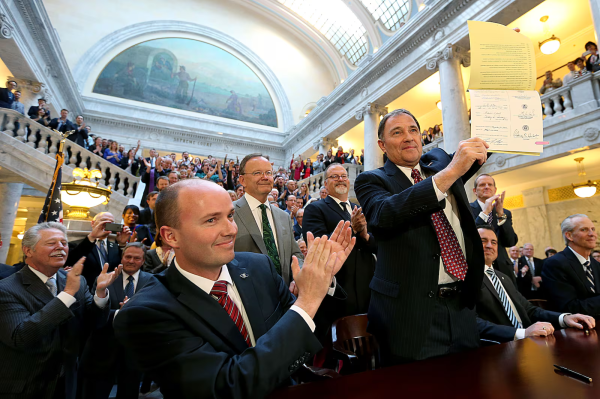
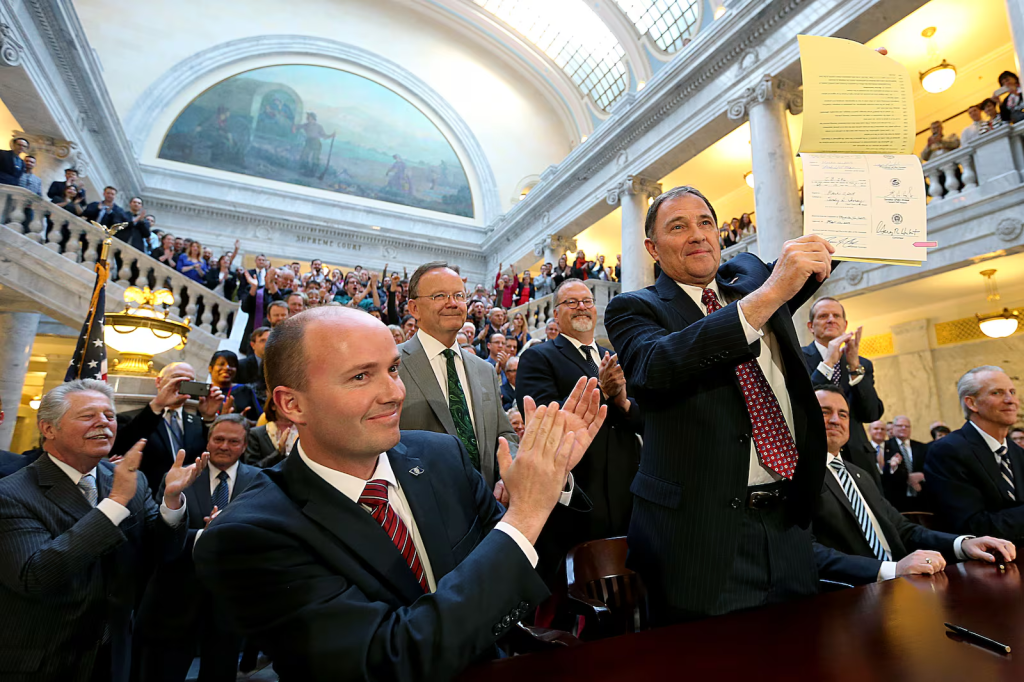
Ten years ago, Utah passed a landmark pair of bills that combined religious freedom protections with LGBTQ nondiscrimination protections.

Five years ago, many of the people behind what became known as the Utah Compromise spoke to me about why their balanced approach to religion and LGBTQ rights hadn’t yet caught on nationwide.

Last week, I checked in again with one of the key players to hear about where things stand today and whether she’s still hopeful that Utah’s “fairness for all” approach will spread to other states.

Robin Fretwell Wilson, a professor of law at the University of Illinois College of Law, told me that Utah remains united behind the Utah Compromise and has passed several more carefully constructed religion-related policies in recent years on topics like adoption and conversion therapy.

But she added that today, just like five years ago, it’s rare to find a lawmaker outside the Beehive State who is willing to plant their flag in the middle ground between opposing groups and champion balanced solutions to contentious conflicts.

“Right now, we’re mining a streak of meanness,” Wilson said. “Fairness for all doesn’t feel like it’s in the air.”

From 2015 to 2020, Wilson and other stakeholders met with policymakers from 10 to 15 other states about the fairness for all approach to lawmaking.

That list hasn’t grown over the past five years, and the federal Fairness for All Act from 2019, which drew inspiration from the Utah Compromise, hasn’t advanced in Washington.

However, the act’s supporters did score a big win in December 2022 when federal lawmakers passed the Respect for Marriage Act, which strengthened legal protections for married same-sex and interracial couples while affirming religious freedom rights.

The Respect for Marriage Act built on aspects of the Fairness for All Act and Utah Compromise, and it likely wouldn’t have passed if work hadn’t been done in the years preceding its introduction to educate lawmakers about the value of balancing religious freedom and gay rights, Wilson said.

But although it was significant, it feels like a missed opportunity to Wilson and others.

That’s because, instead of holding it up as an example of what’s possible when religious liberty advocates and LGBTQ rights advocates work together, the Biden administration chose to put the spotlight on the importance of protecting gay marriage.

“You can’t be doing something that marries up the interest of gay folks and religious folks on that scale and forget to say anything about the religious folks,” said Wilson, who was at the White House ceremony for the law.

Even before that event, Wilson placed her hope in state rather than federal policymakers because she’s long believed they’re better-positioned to find balance.

Today, as in 2020, as in 2015, she believes that states like Utah will lead the way to a world in which people of faith and LGBTQ individuals — and LGBTQ individuals who are people of faith — can live authentically in public and private without fear of retribution.

“I’ve never really placed my hopes in Congress. I’ve always placed my hope in state legislators,” Wilson said. “I’m hopeful because I’ve seen fairness for all become a script for Utah.”

800 service members kicked out under DADT just got discharges upgraded to honorable

This blog is originally appeared at LGBTQ Nation.

The Department of Defense has announced that 800 military members who were discharged under Don’t Ask, Don’t Tell (DADT) have received upgrades to honorable discharges.

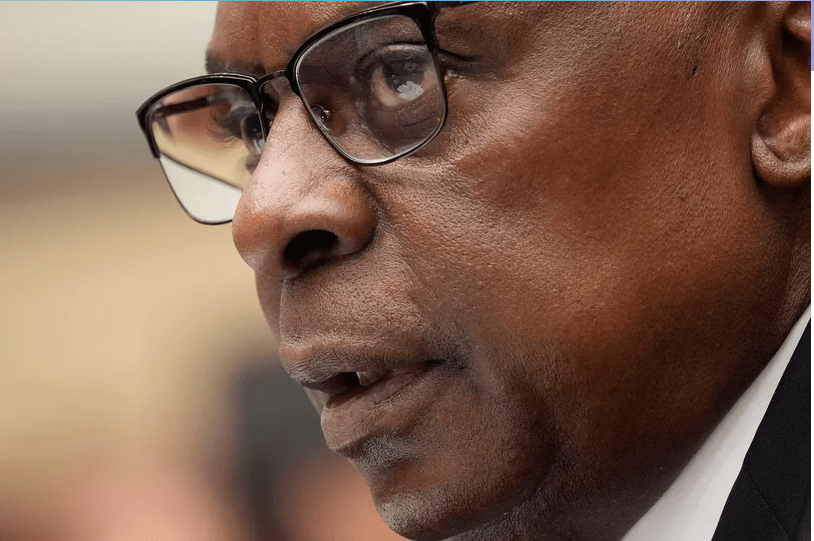
Defense Secretary Lloyd Austin shared the news today, highlighting that just over a year ago, the Department began proactively reviewing the records of former service members discharged due to their sexual orientation under DADT. These individuals may have been eligible for an upgrade to their discharge status or a change to their reason for separation but had not yet applied for the change.

“After a year of exceptional work, the Military Department Review Boards directed relief in 96.8% of the 851 cases that they proactively reviewed,” Austin said.

This marks a significant step in addressing the injustices faced by LGBTQ+ service members during the DADT era.

Don’t Ask, Don’t Tell (DADT) was a 1990s policy that prohibited gay and bisexual individuals from serving openly in the military. Under this policy, service members couldn’t openly declare their sexual orientation, but the military was also barred from actively investigating, harassing, or discriminating against non-straight personnel. While it aimed to provide some level of protection, the policy still enforced secrecy and led to the discharge of countless LGBTQ+ service members.

An estimated 14,000 service members were separated under Don’t Ask, Don’t Tell (DADT) with less-than-honorable discharges before the policy was repealed in 2011. These discharges meant that veterans received fewer benefits from the Department of Veterans Affairs, including assistance with home loans, tuition, and healthcare.

Last year, a group of veterans filed a civil rights lawsuit against the Department of Defense, seeking to overturn their less-than-honorable discharges. The lawsuit argued that many veterans, discharged because of their actual or perceived sexual orientation, were given a discharge status or separation codes publicly linked to “homosexuality,” depriving them of the benefits they earned through their service.

Veterans with less-than-honorable discharges often face significant hurdles when applying for jobs, apartments, and loans, as they are required to present their DD-214 discharge papers — documents that can involuntarily out them as LGBTQ+ every time they are shown.

“This case is not about damages,” said Jocelyn Larkin, one of the lawyers involved in the lawsuit. “It’s about changing that piece of paper because the impact of changing it is so incredibly consequential for our clients.”

This past January, Reps. Robert Garcia (D-CA), Mark Pocan (D-WI), and Chris Pappas (D-NH) sent a letter to Secretary Austin urging him to expedite the process of upgrading less-than-honorable discharges for LGBTQ+ service members. They noted that many veterans who sought upgrades have experienced a prolonged, burdensome process that often required legal help, and that many were unaware they even had the option to seek an upgrade.

Today, Secretary Austin reported that 96% of the service members separated under DADT have now received honorable discharges. “We will continue to strive to do right by every American patriot who has honorably served their country,” Austin said.

To stay up-to-date on the latest news shaping LGBTQ+ communities worldwide, subscribe to the LGBTQ Nation newsletter.

Pizzeria Employee Hospitalized After Homophobic Mob Attacks Restaurant Over Pride Flag Display

This blog originally appeared at LGBTQ NATION

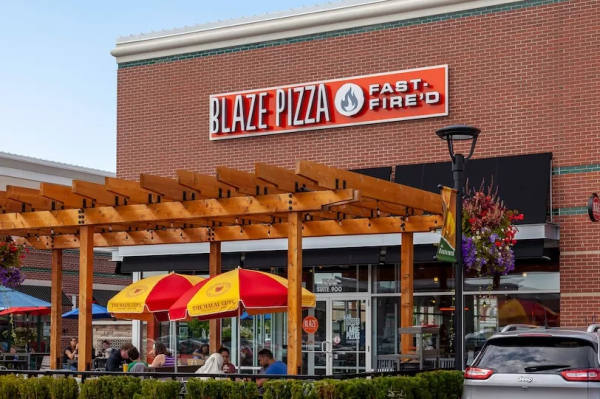
Police in Roseville, California, are searching for three suspects in connection with a hate crime at a Blaze Pizza restaurant, where workers were assaulted after one suspect tore down a Pride flag on display. The assault was captured on a smartphone video.

The incident took place at 10:50 p.m. on a Thursday when a food delivery driver entered the restaurant, noticed the Pride flag near the register, and threw it to the ground. When the store manager and employees confronted him, the man allegedly used a homophobic slur before leaving. He later returned with two other men, who then attacked the restaurant staff.

Related:

Republicans terrorized a gay couple’s home. What happened next surprised the couple.

Haters yelled obscenties, sent a threatening letter, and vandalized their Pride flag and political signs. But the reaction has emboldened the targeted men.

A witness named Chance Chacon told KCRA that the manager and employee had defended the flag’s display, but then, when the three assailants returned, “It was like a mob. They were just kind of swinging at him.”

A video captured inside the restaurant shows one worker repeatedly shouting at the assailants, “Get the f**k out of here!” while another employee urges a co-worker to “Call the cops.”

The three men fled the scene before police arrived, but an ambulance later transported one employee on a stretcher. This worker was taken to the hospital, where he was briefly treated for a concussion and head trauma but has since been released.

A still image from the footage shows a shoeless, light-skinned suspect wearing a torn dark-colored t-shirt and hand wraps commonly used in mixed martial arts.

Police have asked for the public’s help in identifying the assailants involved in the September 20 incident. Anyone with information can submit an anonymous tip online or contact their non-emergency line at 916-774-5000.

Ruby Shields, a lesbian who owns a restaurant in the nearby town of Granite Bay, told The Sacramento Bee that she doesn’t consider the area LGBTQ+ friendly. She has been too scared to display a rainbow flag at her own restaurant, and is often mistaken as the wife of her male business partner, even though she has a wife.

“We’ve been looked at with respect, but it’s always on the back of your mind, you know, ‘Should I be saying this?’” Shields said of not knowing whether to come out to restaurant patrons. “It’s not even something that I really even want to put out there because you never know. I mean, it’s horrible that it’s so close to home. Roseville is right down the street from where we’re at.”

This wouldn’t be the first time that an anti-LGBTQ+ person has committed violence in California after tearing down a Pride flag. Last August, Travis Ikeguchi — a 27-year-old man who posted anti-LGBTQ+, antisemitic, anti-vaccination Christian Nationalist content online — murdered Laura Ann Carleton, a 66-year-old LGBTQ+ ally and mother of nine, complained about the Pride flag hanging in front of her Cedar Glen, California business.

Police killed Ikeguchi shortly afterward.

Paul Feig — the director of BridesmaidsGhostbusters (2016), and other films — wrote, “We are all devastated for her husband Bort and her family and the LGBTQ+ community, for whom Lauri was such a true ally…. This intolerance has to end. Anyone using hateful language against the LGBTQ+ community has to realize their words matter, that their words can inspire violence against innocent loving people. Let’s all keep moving forward with tolerance and love. Let’s not let Lauri’s tragic death be in vain.”

Carleton’s friend, director Paul Feig, wrote of the incident, “Lauri Carleton was my friend. She was a wonderful person who did so much for the LGBTQ+ community as well as the community at large. What happened to her is an absolute tragedy. If people don’t think anti-gay & trans rhetoric isn’t dangerous, think again.”

Subscribe to the LGBTQ Nation newsletter and be the first to know about the latest headlines shaping LGBTQ+ communities worldwide.

Blog at WordPress.com.

Up ↑