Referral claims for refugee protection in Canada from people in the U.S. have already surpassed last year’s total, based on data from Immigration and Refugee Board of Canada (IRB). These referrals also spiked the last time President Donald Trump was in office.
While there were 204 U.S. claim referrals to the board’s Refugee Protection Division total last year, 245 claims were referred to the RPD from January through June of this year. Trump was inaugurated in January.
For some perspective, there were 216 referrals listed from Afghanistan during that same time period this year, 62 listed from El Salvador, 2,784 listed from Mexico, 265 listed from Palestine, 260 listed from Syria, 403 listed from Venezuela and 131 listed from Yemen.
At the start of former President Joe Biden’s term in 2021, there were 118 claim referrals from the U.S., with the same number the following year – both a drop from 154 in 2020. In 2023, the number of referrals increased to 157.
However, back in 2013 – the first year that the IRB has data for – there were just 69 referrals. That was during the second term of former President Barack Obama, and while he was in office during 2014 and 2015 referrals were at 88 and 69 respectively. They increased to 129 in 2016, when Trump was campaigning against Democratic candidate and former Secretary of State Hillary Clinton.
During Trump’s first year in office in 2017, the referrals skyrocketed to 869. In 2018, they were still higher at 642, followed by 423 in 2019.
When asked by Newsweek about the referral increase this year, White House Deputy Press Secretary Anna Kelly said: “Why does Newsweek care about this .00007 percent of the population who want higher taxes, worse health care, and anti-American trade policies?”
Bloomberg reported this week that officials from the U.S. and Canada are expected to discuss tariffs soon. That outlet has also reported on an influx of people from the U.S. attempting to cross the border into Canada. It said that “during the first six days of July, Canadian officials at the Saint-Bernard-de-Lacolle border crossing – the busiest land port between New York and Quebec – received 761 asylum claims, a more than 400% increase from the same period a year ago.”
In Canada, refugee advocates, federal government departments and immigration lawyers were already bracing for asylum claimants from the U.S. in January, according to the CBC.
“With Trump, crystal balls are hard to keep clear,” said Gabriela Ramo, past chair of the Canadian Bar Association’s immigration section, per the outlet.
In addition to the crackdown on illegal immigration, reasons why people might be seeking to leave the U.S. cited by Newsweek include U.S. policy shifts and court rulings have restricted access to gender-affirming care, limited who can serve in the military, and imposed rules on participation in sports and the use of certain facilities. This month, Audacy reported that the president’s approval rating even among his own party was slipping. This Tuesday, Gallup reported that Trump’s polling was “tepid” this month at 40%. Economist approval tracking updated Tuesday showed that his rating was up slightly compared to the previous week at 41%.
Better Abroad? explores the lives of expatriates around the world who have uprooted their lives to move across physical and emotional boundaries in search of a better life. Through an artful lens, historical and cultural context, and engaging and authentic interviews, viewers will get to know each expat intimately—deeply feeling the experience of each character through their own narrative. Episodes will explore the critical moments or events that motivated their decisions as well as the peaks and valleys of their life-changing journeys. In this raw but beautiful look at the complexities of expat life, this series will provide viewers with a new thought provoking experience in each episode. Different expats on different paths. Different countries. One question. Is life Better Abroad?
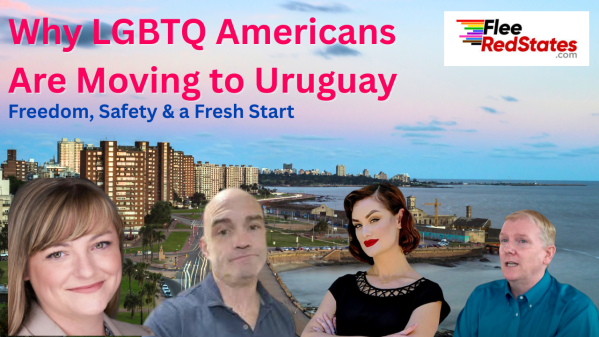
We sit down and discuss this topic with Liz and Sarah.
If you’re an LGBTQ person looking for a better place, listen to Shasta as she tells you about Mexico.
For many LGBTQ+ Americans, the current political climate in the U.S. feels increasingly hostile and unsafe. In this video, we explore what it’s like to escape to Mexico — a country with growing LGBTQ+ protections, thriving queer communities, and a much lower cost of living.
We’ll cover: ✅ The most LGBTQ-friendly cities in Mexico ✅ Visa and residency basics for U.S. citizens ✅ Healthcare access and affordability ✅ Safety and community support ✅ Stories from real LGBTQ+ expats who made the move
From Mexico City’s vibrant queer scene to the laid-back beach towns of Puerto Vallarta and Mérida, discover why more and more LGBTQ+ people are finding freedom, safety, and joy south of the border.
🧭 Whether you’re looking for adventure, community, or simply peace of mind, this video will help you weigh your options and envision a new life abroad.
In this candid conversation, LGBTQ+ real estate professionals Cassie Villela, Bob McCranie, Kimber Fox, and Leslie Wilson sit down to discuss the evolving challenges of being openly queer in an industry—and a country—facing political pushback.
🏳️🌈 Topics covered include:
How anti-LGBTQ+ legislation affects clients
The role of advocacy in real estate
Why “just doing business” isn’t neutral anymore
Personal stories from the frontlines of inclusion in housing
📍 Whether you’re an agent, ally, or advocate, this video unpacks the real stakes of LGBTQ+ visibility in today’s market.
Out gay Rep. Robert Garcia (D-CA) talked to LGBTQ Nation about a new letter signed by a coalition of 50 other Democratic congress members demanding that the State Department conduct a wellness check on Andry José Hernández Romero, an openly gay 32-year-old Venezuelan makeup artist who was detained by Immigration and Customs Enforcement (ICE) on March 15 despite legally applying for asylum in the U.S. after fleeing anti-gay persecution in his home country.
Hernández Romero legally entered the U.S. last year via San Diego and passed a credible fear interview for his official asylum process but was arrested by ICE two days before his scheduled court hearing. For the last 86 days, he has been imprisoned at the Centro de Confinamiento del Terrorismo (CECOT), an El Salvador prison known for its human rights abuses. The letter’s signatories are demanding that the State Department facilitate his access to legal counsel and immediately facilitate his release, having presented no evidence of any crimes or wrongdoing.
Romero’s family and lawyers have had no contact with him in more than a month,” the letter states. “His mother does not even know whether he is alive. Given both the well-documented concerns about conditions at CECOT and the history of anti-LGBTQI+ persecution in El Salvador, there is serious cause for concern about Mr. Hernández Romero’s well-being.”
Romero was among 260 Venezuelans accused by the presidential administration of being members of Tren de Aragua, a terrorist group. A disgraced former police sergeant’s report accused Hernández Romero of having crown tattoos associated with the transnational Tren de Aragua gang. But both the Venezuelan government and Hernández Romero’s lawyer have said he has no connections whatsoever to the gang, and his family has said that his crown tattoos are in honor of his hometown’s annual Three Kings Day festival.
“The idea that our country said, ‘Come to your asylum appointment,’ and then we send him to a country he’s not even from — and we’re unwilling to check how he’s doing — is so wrong, and more people need to know Andrew’s story,” Garcia told LGBTQ Nation. “Our Constitution is clear that both citizens and non-U.S. citizens in the United States have a right to due process, and he has never even had a chance to see a judge or for anyone to rule. No one can prove that he was gang-affiliated, because he was not. He was described as a very sweet and gentle person by his family, and we just need to bring attention to his case.”
On April 21, Garcia and three other Congress members sent a letter to Secretary of State Marco Rubio and U.S. Ambassador William Duncan, urging them to confirm Hernández Romero’s safety through a wellness check inside CECOT. That month, Garcia visited El Salvador with a delegation of three other Democratic lawmakers. Though the delegation met with U.S. Embassy officials, the ambassador, and human rights advocates, they weren’t allowed to see Hernández Romero.
In a May 14 hearing, Homeland Security Secretary Kristi Noem refused Garcia’s request to let Romero’s mother know if he’s still alive — Noem callously claimed that prison is outside of her “jurisdiction” and told Garcia to ask the President or the Salvadoran government instead.
Political pundits have noted that the administration could proactively negotiate for Hernández Romero’s release but has so far refused to. In late May, a federal judge dismissed Hernández Romero’s asylum case, making it even harder to ensure his return to the United States. Hernández Romero’s deportation violated his constitutional rights to due process and his sexual orientation puts him at grave risk inside CECOT, Garcia says.
While Garcia admits that the State Department ignored his first letter, he told LGBTQ Nation, “With this [new] letter … a much broader coalition of folks are signed on, and so we’re hopeful that that continues to get more attention.”
The new letter’s signatories include Garcia and other out Democratic Congress members including Rep. Mark Takano (CA), Rep. Becca Balint (VT), Rep. Mark Pocan (WI), Rep. Sarah McBride (D-DE), and notable congressional allies like Rep. Alexandria Ocasio-Cortez (D-NY), Rep. Rashida Tlaib (MI), Rep. Jasmine Crockett (D-TX), and Sen. Adam Schiff (CA).
Garcia added that the American Civil Liberties Union (ACLU) has been actively involved with Hernández Romero’s legal team and hopes to pressure the administration to ensure that Hernández Romero is still alive.
Though LGBTQ+ people from all over the world have long come to the U.S. for the freedom to live authentically as themselves, Garcia acknowledges that queer would-be asylum seekers are currently scared and don’t see the U.S. as a place of refuge at the moment.
As an immigrant to the U.S. himself, Garcia told LGBTQ Nation, “What’s important is that the United States fight for folks that fight for a country that can still be welcoming of other people…. Our asylum system right now is broken and it we need to get back to a place where asylum is done as it has been in the U.S. We have a history in this country of welcoming people that are being persecuted in other countries, and that seems to be not the case right now, and I think it’s really horrible to see.”
Garcia has warned that — by kidnapping Hernández Romero and other undocumented immigrants off U.S. streets — the president has violated due process, the Constitution, and democratic norms in an attempt to intimidate immigrant communities. Federal courts and the U.S. Supreme Court have agreed, demanding that the administration return some detainees stateside and provide greater transparency about its immigration processes and possible defiance of court orders.
“If they’re going to break the Constitution, to illegally take someone that was in an asylum process to a foreign country, then that means that they’re going to continue to break due process, and that means that everyone is at risk in our country,” Garcia told LGBTQ Nation. “I think it’s a slippery slope — now we know that U.S. citizens have been deported, [including] children without any sort of due process. So this is only going to get more difficult if people aren’t engaged.”
“I think Pride Month, especially in Andrea’s case, provides an opportunity for more folks to hear his story,” he added.
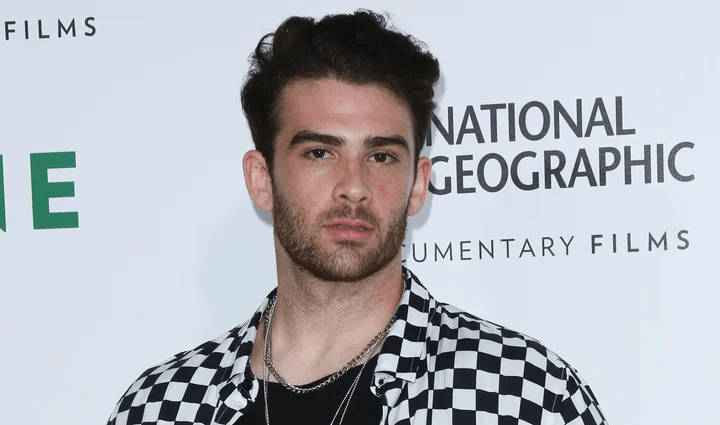
Hasan Piker, an online streamer and political commentator, was detained for several hours by Customs and Border Protection officers over the weekend and asked leading questions about what he thought of President Donald Trump and Hezbollah, among other topics, he said.
Piker discussed the surprise detention in a Monday afternoon stream on Twitch, telling his nearly 3 million followers he was questioned at O’Hare International Airport in Chicago after returning from a trip to France.
“They literally, they tried to straight-up get something out of me that I think they could use to basically detain me permanently,” he said.
“He kept asking over and over again, Hamas, Houthis, all this shit, trying to be like, ‘Oh, do you support them, do you like them? What do you think about them?’”
Piker conceded that he probably “yapped away” more than was in his own interest because he was hoping to cut the detention short, and also because he wanted to see what sort of information they were looking for.
“Instead of just pleading the Fifth as I’m supposed to do in situations like this, I just kept giving him answers,” he said.
“Knowing full well that they know exactly what they’re looking for, I saw no reason to hold back on certain things, so I said, ‘I don’t like Trump. What are you going to do? It’s protected by the First Amendment … [Trump] said he was going to end the wars. He hasn’t ended the wars. What the f**k is up with that?’”
Piker said he was bracing for the officer to ask for his phone. In preparation, he’d turned off Face ID on his iPhone and set it to only use a passcode to unlock, which CBP officers can’t legally compel you to provide if you’re detained.
Reflecting on his detention, Piker said he suspects his it was a deliberate attempt to sow fear in the media.
“The reason for why they’re doing that is, I think, to try to create an environment of fear,” he said. “To try to get people like myself, or at least others that would be in my shoes that don’t have that same level of security, to shut the fuck up.”
He later called it a “completely idiotic and ridiculous [tactic] not knowing that I’m a stubborn piece of shit, and that’s not going to work at all.”
A Customs and Border Protection spokesperson couldn’t immediately verify Piker’s detention, nor could they discuss why Piker might’ve been selected for additional questioning.
While Piker may be the highest-profile person detained by CBP on their return to the United States, he’s far from the only one.
In April, Amir Makled, a lawyer representing a pro-Palestinian student protester, was detained at the Detroit Metro Airport on his way back from a spring break trip abroad with his family.
Makled told HuffPost at the time that federal agents did seize his phone, though he stood his ground amid the 90-minute detention as he argued that, as a lawyer, his phone contained privileged work-related information.
“I don’t know if it was a fishing expedition or not,” he told HuffPost. “My gut tells me they were trying to see who I was associating with. But there’s no real way to tell.”
Piker didn’t immediately respond to a request for comment.
*Opinion written by Harvey Haberman on the Dallas Voice.
I recently received a message on Facebook from my friends from Florida (and I use the term “from” loosely because they no longer live there) who, like several other friends, are leaving the country. They have moved to Curaçao in the Dutch West Indies. It’s an LGBTQ-friendly country that they felt was a safe haven in a world marching toward authoritarianism.
I don’t blame them for leaving, nor do I blame my other friends who have moved to Ireland, Canada and Mexico. They believe the handwriting on the walls of social media warning that the United States is becoming 1930s Germany.
And, frankly, that scares me.
What I find frightening is that a billionaire huckster and his cronies can so easily create chaos in a country which I had seen as being on the right track. Instead, they have derailed the country for no other reason than to grab power and steal money from American’s pockets. What I find even more frightening is that so many of my friends are willing to give up and leave.
And it’s frightening also because I know the poem that starts, “First they came for the socialists, and I did not speak out — because I was not a socialist.”
That poem was a sad commentary on Germany at the time, but the key take away for me from it is that part: “and I did not speak out because I was not a socialist.”
The poem as a whole was not so much about the oppression of certain groups, but instead about the inaction and silence of the general populace: They let it happen. In their complacency they collaborated with the Nazis as surely as if they were active supporters.
But the poem says nothing about packing up and leaving.
If all the Jews had left Germany, Hitler would have still been in power, and he would have found other scapegoats. He would have still been in power and would have continued his quest for an empire. He would have still bombed England and invaded France.
Hitler was successful, at least for a while, because not enough people spoke out.
My partner and I have discussed whether moving out of the country would be the prudent thing to do. But while it may be the prudent thing to do, I see it as capitulation. Leaving the country would leave a lot of our friends behind. I would be leaving behind my home, my family, my country. And that would be playing into the hands of a megalomaniac and a damned stupid one at that.I was heartened by Cory Booker, senior senator from New Jersey, standing up in the Senate and delivering his epic marathon speech against Trump and Musk and the whole cabal that backs them. I am heartened by the Supreme Court election in Wisconsin where — even as Elon Musk gave million-dollar checks to a few individual voters and backed a massive media campaign to install a right-wing candidate — Susan Crawford, the progressive candidate, triumphed.
Small victories as these are, they show that people are still willing to stand up and speak out against the most un-American administration in history.
A couple of weeks ago I attended a protest outside the Tesla Service Center calling for Musk to get out of the government — a government to which he was not elected. Though the turnout was small, it was visible. The turnout protesting the unlawful kidnappings by ICE drew hundreds more. And those protests are going on in every city in America. Over this past weekend, on April 5, millions turned out at events around the country in a massive national call for the administration and its unelected minions to keep their “Hands Off” things like Social Security and more.
People are speaking out. And the LGBTQ community knows a lot about speaking out. We have done it before, and we can and will do it now.
Now, I’m a stubborn old goat. My friends and I worked hard to build a community here, and, though they are a small thing, the rainbow sidewalks in Oak Lawn let me and the world know that we are here and not going away. And no matter how Trump and Musk and his cronies try to erase history and erase us, I refuse to let their fear campaign chase me away.
So, to anyone who feels they must leave, please do it safely. But as for me — I ain’t going nowhere! And I ain’t staying quiet.
Hardy Haberman is a longtime local LGBT activist and a board member of the Woodhull Freedom Alliance. His blog is atDungeonDiary.blogspot.com.
Alexei was married to a woman in Russia before fleeing both his marriage and the country for the safe haven of Argentina.
“[In Russia] there’s a lot of pressure to be in a relationship at a young age,” the 24-year-old dental student told the Herald. “I thought that being in a heterosexual marriage would stop people from asking so many questions.”
In recent years, Russians have emigrated to Argentina in droves to avoid conscription in the Russia-Ukraine war. Others, meanwhile, have fled a country that has grown increasingly hostile to its LGBTQ community under the authoritarian rule of President Vladimir Putin.
Over a period of weeks, the Herald spoke with several such emigrés about their experiences in Buenos Aires — and why they ultimately decided to abandon their native Russia. Because their sexual preferences and political views could violate Russian law against “illegal propaganda,” several asked to be identified exclusively by their first names.
“I’ve been dreaming of living in a gay-friendly country since I learned I was gay,” said Sergei Vakhrushev, a blogger based in Buenos Aires.
Vakhrushev was bullied relentlessly as a teenager in the small port city of Vladivostok and finally came out after moving to Moscow. Even then, he was only willing to tell a few close friends, as an adult.
Pride celebrations criminalized
As recently as 2010, conditions for the LGBTQ community in Russia were not significantly worse than in most western countries. But in 2013, Vladimir Putin signed into law a ban on the distribution of “propaganda” depicting “non-traditional sexual relationships” to minors. The ban’s definition of “propaganda” was purposefully ambiguous, which left a range of activities, from pride celebrations to public displays of affection, subject to criminal penalty.
In the years after the law went into effect, the government increased its attacks on LGBTQ representation in media and public affairs. As a result, hate crimes against queer people in Russia jumped drastically, with one study finding that attacks had tripled. For many in the LGBTQ community, going to the police was often not an option, as doing so was tantamount to confessing to a crime.
Like in other hostile societies, these persecuted groups have developed strategies to navigate Russia’s social and political pressures. But after Putin invaded Ukraine in February 2022, many in the queer community felt a new urgency to leave the country.
One such Russian was Nika, 29. She was able to access hormone replacement therapy in Russia when she began her transition in 2019, legally changing her name to reflect her gender identity.
When the Russian government criminalized all gender-affirming healthcare in July 2023, Nika had been living in Argentina for over a year. And by the time Russia expanded its propaganda law to apply to anyone, regardless of age, she had already made a new life for herself in Buenos Aires. “They decided to search for new targets,” Nika said. Under the new law, “existing is propaganda.”
Like many queer Russian immigrants, Nika applied for asylum when she first arrived in Argentina. During the application process, which she described as “chaotic,” she knew few Russians with whom she could compare her experience. As more emigrés arrived and shared their stories, however, she found — and helped build — a community of her own.
‘I just wanted to hold hands’
Many queer Russian immigrants expressed surprise at the extent to which members of the LGBTQ community in Argentina could openly express themselves.
“I just wanted to hold hands with a man and not feel judged,” said Vitalii Panferov, a psychologist based in Buenos Aires. “Even in Moscow, I would only do that at night, where no one could see in the dark. When I got to Argentina, I saw so many gay couples holding hands freely.”
Vitalii initially moved to South Africa in October 2022 to get legally married. He and his partner moved to Buenos Aires the following January. They ended up initiating divorce proceedings later that year.
As he was going through this difficult process, Vitalii found a not-for-profit support group for LGBTQ people in abusive relationships run by a Russian psychologist. In Russia, such a service would be considered illegal.
In Vitalii’s telling, the group not only helped him get back on his feet but inspired him in his own psychological practice, which primarily consists of counseling gay men and couples.
Vakhrushev hopes to get married and raise a family — something that would have been impossible in Russia. In November 2023, he came out to his mother and sister, who still live in Vladivostok, after attending his first Pride march in Argentina.
“I knew I was safe here,” he said.
‘I feel good for the first time’
Kirill Dolgov found it impossible to be openly gay in Russia. A former employee of the Russian government, he told the Herald that he was forced to change careers after being repeatedly questioned about his sexuality. In 2022, Dolgov finally moved to Argentina, where he co-founded a marketing firm with a fellow Russian emigré.
“I feel good for the first time,” he said.
After living a “closed life” in Russia, Dolgov works to foster opportunities and social spaces for other queer Russian immigrants in Argentina by collaborating with fellow emigrés and hosting events.
He also manages a wine company, Bodegas Arte, which hires immigrant artists from Russia to design its labels, each drawing inspiration from Argentine culture. It doesn’t make much money, but he claims it has helped familiarize him with Latin American markets while supporting the Russian community.
In October, Bodegas Artes co-sponsored the queer film festival Side to Side at the LGBTQ cultural center Casa Brandon in the Villa Crespo neighborhood of Buenos Aires. The festival was first held in St. Petersburg but has been barred from showing films in Russia since 2021.
Last year’s event marked the first of its kind held outside of Europe and offered films with Russian, English, and Spanish subtitles — as well as an opportunity for queer Russians to mingle with Argentina’s LGBTQ community.
“Queer expats will often turn to other queer expats because both have the experiences of being sexual dissidents and foreigners, in common,” explained Ryan Centner, a professor of urban geography at the London School of Economics who studies LGBTQ expatriate populations. “Queer expatriates often feel the most ease and trust with other queer people. You don’t have to explain or strategize in the same way that you likely would when engaging with someone who is not queer.”
Last year, Jeny, a 44-year-old art teacher, launched Feria DA! — a bazaar at the LGBTQ bar and social club Feliza in Almagro where queer Russian artists and small business owners can advertise and sell their products. As she told the Herald, many of its vendors are struggling to make ends meet amid the rising cost of living.
Jeny hopes to educate people not just about Russian arts and culture but about the diversity within the Russian immigrant population.
“There’s a problematic stereotype that all Russians in Argentina are rich,” she said.
Recent events at Feria DA! have included lesbian speed dating and queer tango, as well as sales of everything from Russian food to artisanal jewelry and ceramics.
‘I don’t want to go back into the closet’
On February 1, thousands took part in anti-fascist pride marches across Argentina and the West to protest Javier Milei’s attacks on the “LGBT agenda” at the 2025 World Economic Forum. While some Russian immigrants considered the comments harmless compared to the oppression they experienced in Russia, others expressed concern that the country that had provided them sanctuary was regressing.
When Max, 29, sought asylum in Argentina in January 2023, they discovered that they were able to indicate “other” on their application form. It was the first time that they had been able to identify as nonbinary in an official capacity.
Although they acknowledged that the 2023 elections in Argentina were democratic, Max admitted to the Herald that they sometimes feel as though they’ve left “one dictatorship for another.”
“We are not the kinds of refugees this government wants,” Max said. “Do we have the luxury of tolerating what’s happening in Argentina?”
Nika likewise noted that after escaping a ruthlessly anti-LGBTQ regime, “it feels like Groundhog Day. We are used to preparing for the worst. I don’t want to go back into the closet.”
“I see people scared or skeptical [about Milei’s comments], but we already lived it,” she added. “I want to share our experience.”
Here to stay
The LGBTQ Russian community in Buenos Aires largely organizes on Telegram, a messaging application commonly used in the Russian-speaking world. A single queer channel has well over 1,000 members.
Kirill described the group as one “big family” comprising people from many different backgrounds. Not everyone gets along all of the time — what community does? — but its members generally “want to help people with their troubles.”
Not long after his divorce, Panferov joined a Russian-Argentine choir in the hopes of making new friends. It was the first time he said that he didn’t feel judged by his fellow Russians for his sexuality.
“After living in Argentina for a while, you start to realize that it’s actually less normal to be judgmental,” he told the Herald. “That kind of judgment is not okay here.”
After escaping Russia a little over two years ago, Alexei started learning Spanish and immersing himself in his new home. “I never considered staying in my bubble,” he said, referring to the Russian immigrant community.
Even so, he is grateful for the support he received from fellow Russians in navigating the asylum process and finding work early on. He told the Herald that he invites fellow Russian queer people to his clinic for dental work as a way to practice and pay it forward.
“99% of the Russians I know [here] are gay,” he laughed. “We help each other however we can.”
Several European countries have updated their travel guidance for citizens visiting the U.S., including recent guidance for transgender and nonbinary travelers.
It’s common for countries to issue travel advisories or warnings for things like crime levels, terrorism threats, current conflicts, health concerns or natural disasters.
The U.S. issues its own travel advisories for Americans traveling abroad, but a number of other countries are doing the same for the U.S. These new advisories come as the Trump administration is tightening U.S. borders, cracking down on undocumented migrants and implementing a new federal policy to recognize male and female, rather than gender identity, as the only legitimate sexes.
Canada, the United Kingdom and Germany have also updated their travel guidance for their citizens planning to travel to the United States after several tourists were detained by U.S. immigration authorities in recent months.
Travelers from many European countries and the U.K. can travel to the U.S. for business or tourism and stay for up to 90 days without a visa under the Department of Homeland Security’s Visa Waiver Program. But several travelers from countries within the program — like Canada, Germany, the U.K. and France — have been stopped and detained by U.S. immigration authorities within recent months.
Here’s what has transpired.
Nations with LGBTQ advisories for the U.S.
President Trump signed an executive order in January that says the federal government only recognizes two biological sexes: male and female. Per that order, a visitor applying for a visa or an Electronic System for Travel Authorization (ESTA) must declare their sex assigned at birth on the application forms.
European allies, including Denmark, Finland, Germany, Ireland, the Netherlands and Portugal, issued guidance that advises transgender and nonbinary travelers to contact the U.S. Embassy in their respective countries for more information on how to proceed if they wish to travel to the U.S.
Nations with other travel advisories for the U.S.
Canada
Recent tensions between the U.S. and Canada have risen over Trump’s trade war, not to mention his musings that he would make the northern ally the U.S.’s 51st state. Canada added new information under its U.S. travel advice page regarding the requirements for foreign nationals visiting for more than 30 days.
“Canadians and other foreign nationals visiting the United States for periods longer than 30 days must be registered with the United States Government. Failure to comply with the registration requirement could result in penalties, fines, and misdemeanor prosecution,” according to the Canadian government’s website.
The rule, enforced starting April 11, comes as part of an executive order signed by Trump, which requires all visitors staying for 30 days or longer to register with the U.S. government.
Germany
Last month, Germany updated its guidelines for its citizens looking to travel to the U.S. The European nation is investigating the cases of three of its citizens being denied entry and placed into detention by U.S. immigration authorities.
“Neither a valid [ESTA] authorization nor a valid U.S. visa constitutes a right to entry into the USA,” according to a translation of the German Foreign Office website. “The final decision regarding entry is made by the U.S. border official. It is recommended that you bring proof of your return journey (e.g., flight booking) upon entry.”
The office also warns of potential legal consequences. “Criminal records in the United States, false information about the purpose of their stay, or even a slight overstay of their visa upon entry or exit can lead to arrest, detention, and deportation.”
Two German nationals were detained in January as they were separately trying to cross the San Ysidro border between San Diego and Tijuana, Mexico, the New York Times reported. They have since returned to Germany with their cases resolved. A third remaining case involves a German national — who is a legal permanent U.S. resident who received a green card residency permit in 2008 — who was detained by ICE at Boston International Airport on March 7. He is now being held at the Wyatt Detention Center in Central Falls, R.I., NBC News reported.
The United Kingdom
The U.K. Foreign Office has updated guidance on its website in recent weeks for its citizens traveling to the U.S. It currently states, “You should comply with all entry, visa and other conditions of entry. The authorities in the U.S. set and enforce entry rules strictly. You may be liable to arrest or detention if you break the rules.”
Archived versions of the same website did not include potential legal consequences at the beginning of February and only stated, “The authorities in the U.S. set and enforce entry rules,” Reuters reported.
The Foreign, Commonwealth and Development Office did not explain the reason for the change.
The update comes around the same time a British tourist said she was held for more than two weeks in Washington state. Becky Burke, a 28-year-old from Wales, was backpacking through North America when she was allegedly denied entry into Canada on Feb. 26 “due to an incorrect visa,” according to a Facebook post by her father, Paul Burke. She was subsequently denied reentry into the U.S. and was detained at a facility in Tacoma, Wash.
Burke had stayed with a host family in Oregon, where she performed chores in exchange for food and lodging. She was told she violated her visa even though she was never paid. Travelers using a temporary visitor visa cannot accept work or employment in the country. Burke was repatriated back to the U.K. on March 18, according to U.S. Immigration and Customs Enforcement.
New Zealand
Last November, New Zealand updated its travel guidelines to the U.S. to “Exercise increased caution in the United States of America (US) due to the threat of terrorism (level 2 of 4).” The nation’s government travel website points to higher active shooter incidents and violent crime in the U.S. compared to New Zealand.
Italy’s government tightened its citizenship laws on Friday, preventing people from delving deep back into their family history to try to claim a much sought-after Italian passport.
Under existing rules, anyone who can prove they had an Italian ancestor who was alive after March 17, 1861, when the Kingdom of Italy was created, can seek citizenship.
However, Foreign Minister Antonio Tajani said the system was being abused, with would-be Italians swamping consulates abroad for requests for passports, which provide visa-free entry to more countries than almost any other nationality.
As a result, in future only individuals with at least one parent or grandparent born in Italy, a European Union member state, will automatically qualify for citizenship by descent.
“Being an Italian citizen is a serious thing. It’s not a game to get a passport that allows you to go shopping in Miami,” Tajani told a press conference.
The foreign ministry said there had been a surge in people abroad being granted citizenship, particularly in South America, where millions of Italians emigrated in the 19th and 20th centuries, often to escape grinding poverty back home.
Between 2014 and 2024, the number of Italians living abroad rose by 40%, from 4.6 million to 6.4 million, many registering thanks to their newfound nationality. In Argentina alone, citizenship recognitions jumped to 30,000 in 2024 from 20,000 in 2023, while Brazil saw a rise to 20,000 from 14,000.
Tajani said companies were making a fortune by helping people track down their long-forgotten ancestors and seek birth certificates needed for applications – clogging up municipal offices with their demands for documentation.
“We are striking down very hard against those who want to make money from the opportunity of becoming an Italian citizen,” Tajani said, adding that in future, nationality requests would be handled directly in Rome to free up overburdened consulates.
Italy has a population of around 59 million, which has been shrinking for the past decade. The foreign ministry has estimated that under the old rules, 60 to 80 million people worldwide were eligible for citizenship.
Prime Minister Giorgia Meloni has previously suggested that Italy could overcome its demographic decline by seeking Christians of Italian ancestry from nations like Venezuela.
Critics of ancestry-based citizenship say it is grossly unfair, offering nationality to people who had no meaningful connection with Italy.
By contrast, the children of migrants born and raised in Italy who speak Italian fluently, have to wait until they are 18 before being able to apply for a passport.






 fleeredstates.blog
You must be logged in to post a comment.