Transgender people in Kenya just won a major court victory

Read more at LGBTQ Nation.

A trans woman’s court victory in Kenya could have wide-ranging implications for trans rights in the East African nation, after a judge agreed she suffered inhuman and degrading treatment at the hands of government authorities and directed Parliament to enact protections and recognition in law for trans Kenyans.

The plaintiff, Shieys Chepkosgei, was detained in 2019 and charged with “impersonation,” despite the fact that she had held official documents, including a birth certificate and passport with female sex markers, while living in another country where she had also competed in women’s athletics.

Chepkosgei was arrested by Kenyan police while visiting a teaching hospital, Q News reports.

She was remanded to a women’s facility, strip-searched, and ordered by a court to undergo “gender determination,” which included a genital examination, hormone testing, blood sampling, and radiological testing.

Chepkosgei challenged her detention and the nonconsensual medical examinations in court, arguing they were unconstitutional, violated her inherent dignity, and highlighted a legislative gap in the treatment of transgender persons in custody in Kenya.

Justice R. Nyakundi of the Eldoret High Court agreed that Chepkosgei’s rights to dignity, privacy, and freedom from inhuman and degrading treatment had been violated, according to Jinsiangu, a Kenyan intersex, transgender, and gender non-conforming rights group. She was awarded the equivalent of about $8000.

But the judge went a step further, directing the Kenyan government to initiate legislation in Parliament addressing the rights of transgender Kenyans, either with new protections or by amending current legislation on the rights of intersex people currently moving through Parliament.

“This is the first time a Kenyan court has explicitly ordered the State to create legislation on transgender rights, and a first on the African continent,” Jinsiangu’s Lolyne Ongeri told Mamba Online.

“If implemented, it could address decades of legal invisibility and discrimination faced by transgender persons by establishing clear legal recognition of gender identity, protections against discrimination in employment, housing, healthcare, and education, and access to public services without bias or harassment.”

Kenya has a fraught history with LGBTQ+ rights, with colonial-era penalties for same-sex behavior still in effect, and discriminatory legislation modeled on Uganda’s notorious Anti-Homosexuality Act – which allows for the death penalty for homosexuality – introduced in Parliament.

Same-sex relations remain criminalized, with “carnal knowledge against the order of nature” and “gross indecency” punishable by up to 14 years in prison.

Transgender people in Kenya face widespread stigma, discrimination, and violence. Current law bars trans Kenyans from legally changing their gender identity from the one assigned at birth.

While LGBTQ+ people have found relief in the courts, homophobia pervades Kenyan society and the legislature.

In 2023, Kenya’s Supreme Court affirmed a decision granting an LGBTQ+ rights group official status and legal recognition as a non-governmental organization (NGO). The decision ignited protests in the country’s second-largest city, led by clerics and homophobic politicians.

LGBTQ refugees say Kenya’s reform plan risks leaving them out

*This is being reported by NBC News.

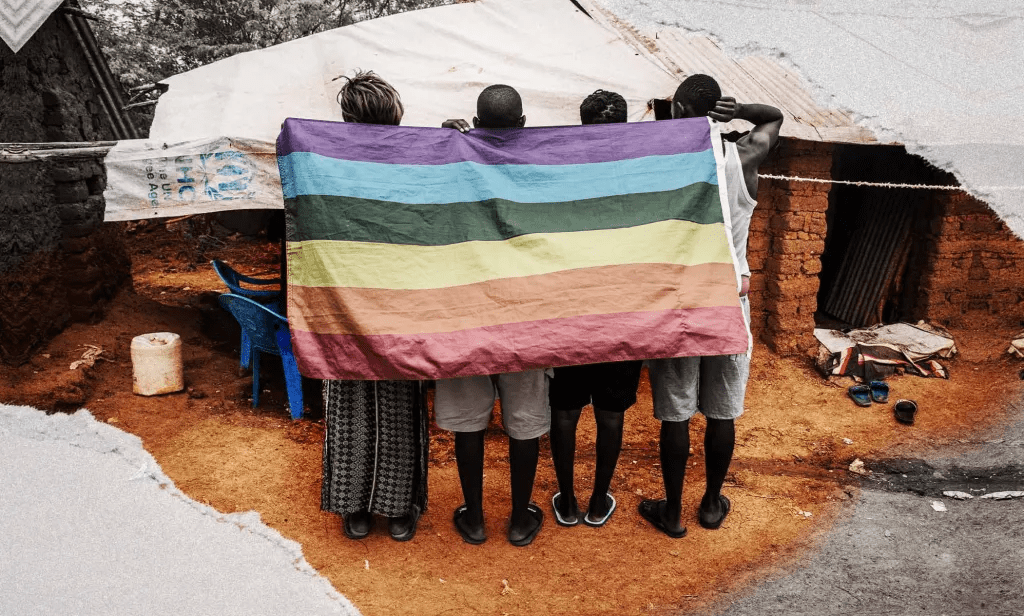
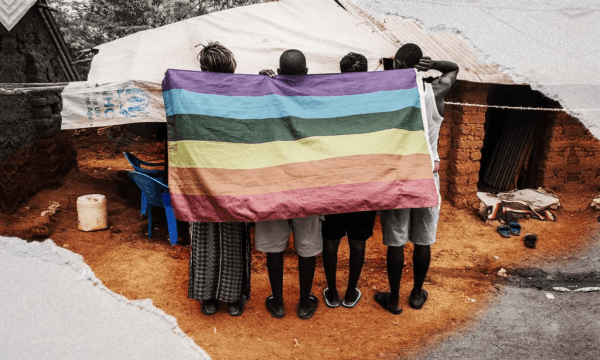
Already an outsider, Ugandan refugee Constance fears a plan to integrate hundreds of thousands of asylum seekers into Kenyan society will instead further alienate him and other LGBTQ refugees at a time of rising hostility.

The Shirika Plan, launched by President William Ruto last month, will transform two of the world’s largest refugee camps into open cities and allow the country’s more than 800,000 refugees to finally get jobs, health care and other services.

Under Shirika, which means “coming together” in Swahili, the nearly half-million refugees at the Kakuma camp in the north and the Dadaab camp near the Somali border can choose to leave the settlements to live alongside other Kenyans.

“The idea of integration is good, because it will guarantee refugees a free life and all rights, like any other Kenyan,” said Constance, who runs a safe house for Ugandan LGBTQ refugees. He did not give his last name for safety reasons.

But Constance said groups representing LGBTQ people have not been invited to public forums held in major cities to debate the plan, which was first floated in 2023.

“Unlike other refugees, we have serious concerns about security, health and housing that should be incorporated … But how will we voice these issues when we are not part of the process?” he said.

Kenya’s refugee commissioner John Burugu said all those affected by the Shirika Plan had been invited to comment.

“We have not locked any one or group out of the process,” Burugu told the Thomson Reuters Foundation by phone.

“You don’t have to physically attend the public participation forums. We have people, groups and organizations who submitted written memoranda, and we captured their views.”

But organizations defending the rights of LGBTQ refugees fear this vulnerable group is being ignored.

Chance for inclusion

The multi-year Shirika Plan has been lauded by the U.N. refugee agency UNHCR as an opportunity to improve the lives of refugees and create economic opportunities for Kenya.

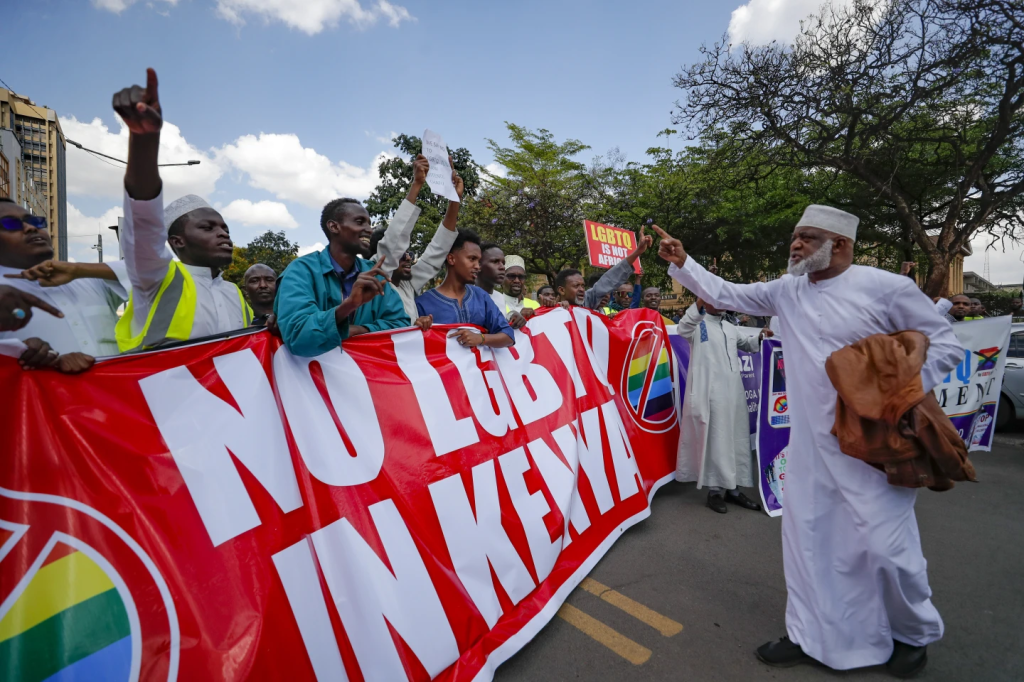
Muslims in Kenya protest at Supreme Court over its endorsement of LGBTQ right to associate

This blog originally appeared at The San Diego Union – Tribune

Nairobi, Kenya (AP) — In the Kenyan capital, Nairobi, hundreds of Muslims gathered for a rally outside the Supreme Court on Friday. They were protesting the court’s recent decision to uphold the right of the LGBTQ community to associate, asserting that the ruling endorsed what they deemed immoral behavior. Their demands included calls for certain justices to resign.

After Friday prayers, a protest unfolded in Nairobi, with participants displaying signs that attributed the verdict to ‘Neo Colonialists’ and called on three of the five judges who supported the majority decision to ‘Repent and Resign.’ Some conservative Christians were also present at the protest.

The court’s decision last month reiterated a prior ruling, affirming that Kenya’s Non-Governmental Organization Board had discriminated against LGBTQ individuals by denying their association registration. The two dissenting judges opposed the ruling, citing Kenya’s laws that criminalize same-sex relationships.

Legislator Mohamed Ali conveyed to The Associated Press that Kenya is a predominantly religious nation, emphasizing the need for the court to respect this aspect of its culture and society.

“Islam and Christianity are against gayism,” he said. “Our country’s constitution doesn’t recognize same-sex marriages. Three people in a court should not go against the societal values.”

Following the ruling, President William Ruto acknowledged his respect for the court’s decision. However, he also highlighted that Kenya’s culture and religious beliefs do not align with same-sex relationships.

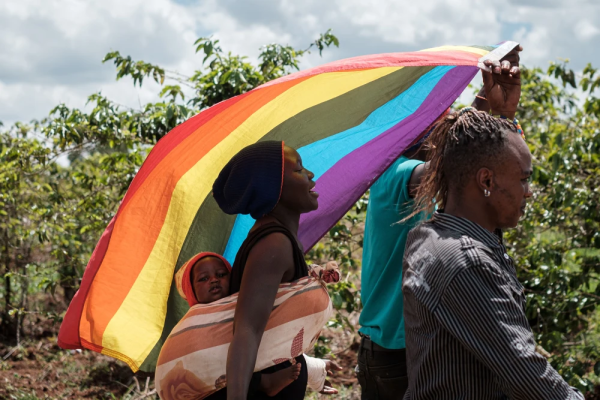
The LGBTQ community in Kenya frequently faces discrimination and persecution, including instances of both physical and verbal abuse.

Across the border in Uganda, an anti-LGBTQ law was enacted in May, imposing the death penalty for aggravated homosexuality cases. This category includes same-sex sexual relations involving a minor or other vulnerable individuals, as well as cases in which the perpetrator is infected with HIV.

In Kenya, a legislator named Peter Kaluma has introduced a similarly stringent law in the national assembly. This proposal is currently under review before it proceeds to the House for debate.

Blog at WordPress.com.

Up ↑