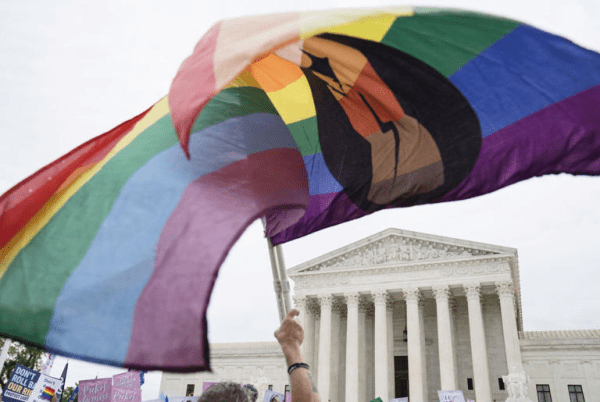
Supreme Court Will Review Ban on LGBTQ ‘Conversion Therapy’

Read more at MSN.

The US Supreme Court agreed to consider whether scores of state and local governments are violating the Constitution by barring licensed counselors from trying to change a child’s sexual orientation or gender identity.

The justices said they will hear a challenge to Colorado’s ban on what critics call “conversion therapy.” A counselor says the 2019 law violates her free speech rights.

The case adds to a growing list of culture-war clashes the Supreme Court has agreed to hear. The justices are already assessing a Tennessee law that outlaws certain medical treatments for transgender children. And in April they will hear a dispute over the use of LGBTQ-friendly books in the classroom and a case over efforts to create the country’s first religious public charter school.

Twenty-eight states and more than 100 other jurisdictions either fully or partially ban the disputed practice, according to Movement Advancement Project, an LGBTQ advocacy group that tracks laws around the country. The Supreme Court rejected a challenge to Washington state’s ban in 2023.

The Colorado law is being challenged by Kaley Chiles, a licensed counselor who says she views her work as an outgrowth of her Christian faith. She is represented by the Alliance Defending Freedom, a Christian legal group that has been behind some of court’s highest profile cases in recent years, including the successful effort to overturn the constitutional right to abortion.

In a call with reporters, Chiles said the law “silences diverse perspectives and interferes with my ability to serve my clients with integrity.” One of her lawyers, ADF’s Jim Campbell, said Chiles had turned away multiple clients because of the law, though he didn’t disclose how many.

In upholding the law, the Denver-based 10th US Circuit Court of Appeals said it legitimately regulates professional conduct and only incidentally affects speech. Colorado officials urged rejection of the appeal, likening the measure to malpractice laws and informed-consent requirements.

The Constitution “allows states to reasonably regulate professional conduct to protect patients from substandard treatment, even when that regulation incidentally burdens speech,” Colorado argued.

The court will hear arguments and rule in the case in the nine-month term that starts in October.

The case is Chiles v. Salazar, 24-539.

(Updates with comments from counselor in sixth paragraph.)
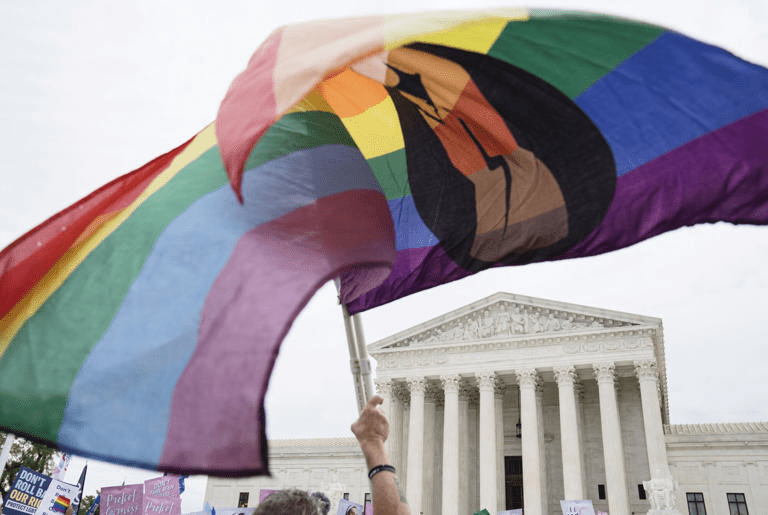
Trinidad & Tobago bans homosexuality… again

*This is being reported by LGBTNation.

Trinidad and Tobago has reinstated its ban on homosexuality, which was lifted by the Caribbean nation’s High Court in 2018.

That year, the High Court in the Christian-majority nation ruled in a lawsuit brought by LGBTQ+ activist Jason Jones that Sections 13 and 16 of the Sexual Offenses Act are “irrational and illegal” because they violate the rights to privacy and freedom of expression.

“What I think the judge pointed out was ‘here every creed and race find an equal place,’ and I think we must all come together now and embrace each other in true love and respect,” Jones said at the time.

But on March 25, the Court of Appeals reversed that decision, saying that only Parliament can overturn the country’s ban on homosexuality. The Court of Appeals also reduced the maximum sentence associated with homosexuality to five years in prison. Prior to 2018, the maximum penalty was 25 years in prison.

“Judges cannot change the law,” Tuesday’s ruling states. “We give effect to Parliament’s intention…. It is, therefore, left to Parliament to repeal the criminalization of buggery and the related offense of gross indecency by legislation. It is an emotive issue which engages vibrant discussion in the court of public opinion.”

“Parliament is ultimately responsible for ensuring that laws reflect the evolving standards of a democratic society. That is their role and function. Any provisions found to be unconstitutional must be taken from the statute books by Parliament through legislative reform and not by judicial overreach.”

Jones spoke out against the Court of Appeals decision.

“We are talking about the rights of some 100,000 LGBTQIA+ citizens in [Trinidad and Tobago],” he told Trinidad and Tobago Newsday. “Why are we spending all this money and retaining these laws?”

“The modernization of our democracy is at stake here, and this is the beginning of this modernization.”

According to 76crimes.com, the ruling brings the total number of countries banning homosexuality up to 66. The African nation of Mali also recently criminalized homosexuality.

In the original 2018 case, religious conservatives argued that God’s wrath would be visited on Trinidad and Tobago if the anti-homosexuality laws were overturned. Conservatives argued that legalizing homosexuality would violate their religious beliefs.

The judge said the ruling “is not an assessment or denial of the religious beliefs of anyone.”

Christian conservatives also told the press that they’re worried about “homosexual rights trumping heterosexual rights.”

Blog at WordPress.com.

Up ↑