

This blog originally appeared at REUTERS.
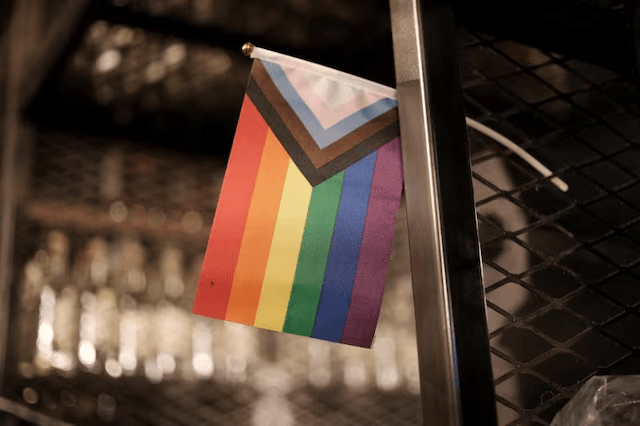
WASHINGTON, Aug 16 (Reuters) – On Friday, the U.S. Supreme Court refused to allow the Biden administration to enforce a significant portion of a new rule aimed at protecting LGBT students from discrimination based on gender identity in schools and colleges. This decision affects 10 Republican-led states that had challenged the rule.
The justices declined the administration’s request to partially lift lower court injunctions that had blocked the rule from being implemented under Title IX, which prohibits sex discrimination in federally funded education programs. As a result, the U.S. Education Department is unable to enforce the rule, which was announced in April and scheduled to take effect on Aug. 1, in Tennessee, Louisiana, and eight other states while litigation continues.
The Biden administration aimed to reinstate a crucial provision that clarifies that discrimination “on the basis of sex” includes sexual orientation and gender identity. Additionally, the rule contains several other provisions unrelated to gender identity.
The administration requested the Supreme Court’s emergency intervention in two lawsuits: one filed by Louisiana, Mississippi, Montana, Idaho, and multiple Louisiana school boards, and another brought by Tennessee, Kentucky, Ohio, Indiana, Virginia, West Virginia, and an association of Christian educators.
When the rule was announced, U.S. Assistant Secretary for Civil Rights Catherine Lhamon stated, “These final regulations clarify Title IX’s requirement that schools promptly and effectively address all forms of sex discrimination. We look forward to working with schools, students, and families to prevent and eliminate sex discrimination.”
On the other hand, Louisiana Attorney General Liz Murrill criticized the rule as a federal overreach, arguing that it would undermine Title IX. She also condemned what she referred to as Biden’s “extreme gender ideology.”
Louisiana Attorney General Liz Murrill criticized the federal rule as part of a political agenda that disregards significant safety concerns for young women in schools across the country. “This rule forces schools to change their behavior, language, and policies regarding private spaces for girls and women. It is enormously invasive and goes far beyond a mere suggestion; it is a mandate that well exceeds their statutory authority,” Murrill said when announcing the state’s lawsuit.
The plaintiffs, including the states, argued that the rule would compel schools to allow transgender students to use restrooms and locker rooms aligning with their gender identities, and require faculty to use the pronouns that correspond with those identities. These lawsuits are among several that have successfully blocked the rule in 22 states, nearly all Republican-governed, contending that the Biden administration is unlawfully rewriting a law originally designed over 50 years ago to protect women from discrimination in education.
On July 30, the administration achieved a victory when a federal judge in Alabama declined to block the rule in that state, as well as in Florida, Georgia, and South Carolina. However, the following day, the Atlanta-based 11th U.S. Circuit Court of Appeals temporarily halted that ruling.
The Biden administration’s rule introduces numerous changes to regulations combating sex discrimination under Title IX of the Education Amendments of 1972, extending protections to LGBT individuals and strengthening safeguards for pregnant students, parents, and guardians. The administration argued that protecting LGBT students under Title IX is a “straightforward application” of the Supreme Court’s landmark 2020 decision, which determined that a similar law, Title VII, prohibits workplace discrimination against gay and transgender employees.
However, U.S. Judge Terry Doughty in Monroe, Louisiana, and U.S. Judge Danny Reeves in Lexington, Kentucky, concluded that Title IX’s reference to sex pertains only to “biological” males and females, and that the Supreme Court’s 2020 ruling does not apply in this context.
The administration has emphasized that most of the rule does not concern gender identity and should be allowed to take effect. However, they agreed that two key provisions—one regarding restrooms and locker rooms and the other potentially involving the use of pronouns—could remain blocked while the appeals proceed.
Additionally, the administration clarified that the rule does not alter “existing requirements governing sex separation in athletics,” noting that this issue is subject to a “separate rulemaking.”
Both the New Orleans-based 5th U.S. Circuit Court of Appeals and the Cincinnati-based 6th U.S. Circuit Court of Appeals denied requests to partially enforce the rule, leading the administration to seek intervention from the Supreme Court.
In June, the Supreme Court agreed to hear another case from Tennessee, involving a Republican-supported ban on gender-affirming medical care for transgender minors. The court is scheduled to hear that case in its next term, which begins in October.
 fleeredstates.blog
You must be logged in to post a comment.